
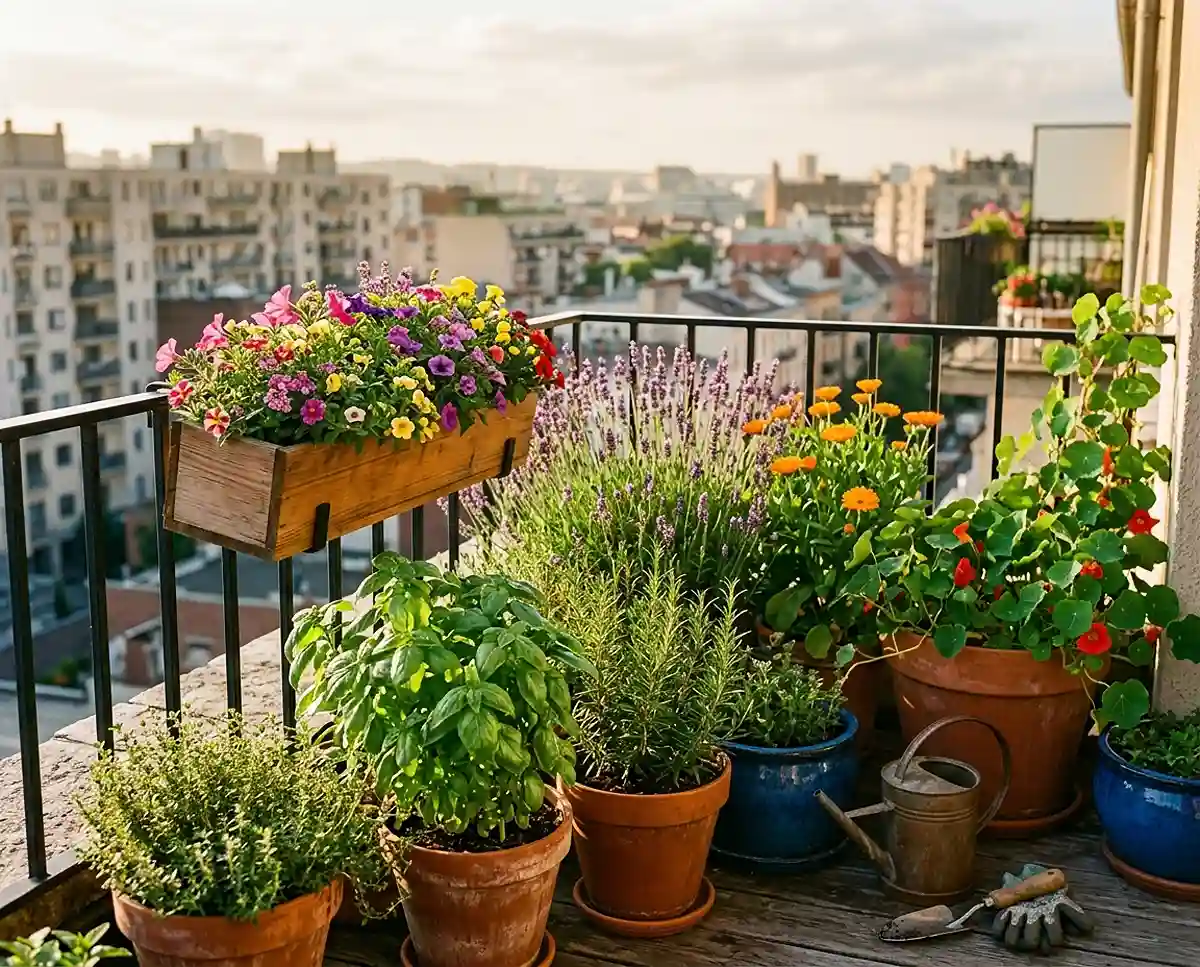
Balcony Garden Ideas With Herbs and Flowers
Short on space? These balcony garden ideas with herbs and flowers turn a tiny ledge into a thriving small balcony garden full of color, scent, and fresh herbs.
Table of Contents
Why Balcony Garden Ideas With Herbs and Flowers Work So Well
Pairing culinary herbs with flowering plants does more than look nice. Many flowers pull in bees and other pollinators, which means better yields from your basil, mint, and other herbs. It is one of the easiest pollinator container garden tricks for tight spaces.
Herbs like rosemary and lavender also confuse pest insects with their strong scent, so they protect nearby blooms naturally. Mixing both gives you steady color through the season plus a real harvest, all packed into a few pots.
Assessing Your Balcony Before You Plant
Before buying a single plant, spend ten minutes checking your actual conditions. Light, weight limits, and drainage decide what survives in apartment gardening, not what looks good on a nursery tag.
Measuring Light and Sun Exposure
Track sunlight for one full day, checking every hour or two. Full sun means six or more hours of direct light, part shade is three to six hours, and shade is anything less.
- Full sun (6+ hours): basil, rosemary, thyme, and most flowering annuals
- Part shade (3-6 hours): mint, parsley, chives, and calendula
- Shade (under 3 hours): stick to leafy herbs and skip flowering varieties
If your balcony leans shady, our guide to herbs that grow in shade has more reliable picks.
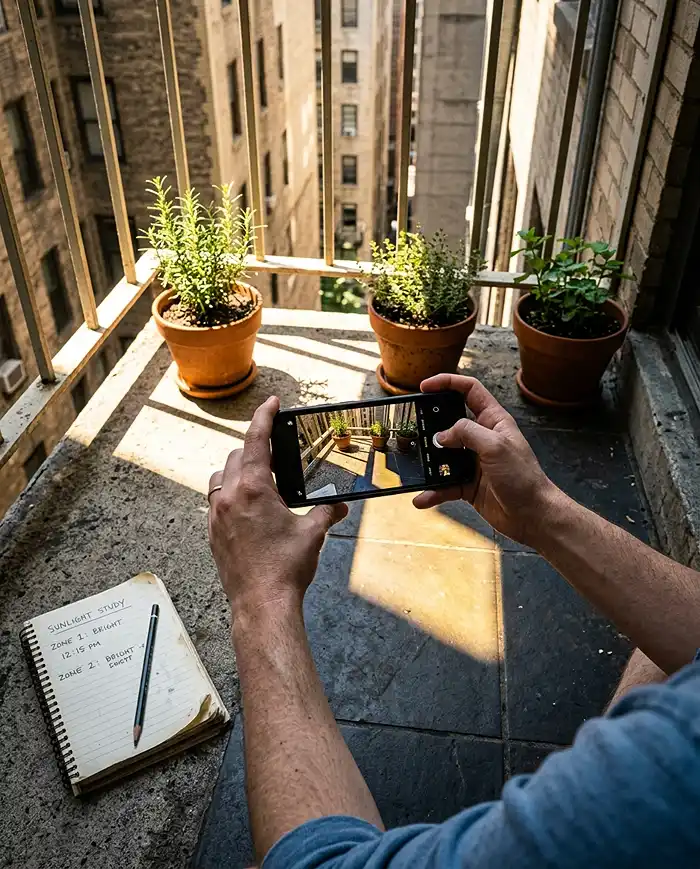
Checking Weight Limits, Wind, and Drainage
Wet potting mix is heavy, and high-rise balconies often have strict railing weight limits, so check your building’s rules before filling pots. Wind picks up fast above the third floor and can snap stems or tip over tall containers.
Drainage water has to go somewhere, and your downstairs neighbor will not appreciate a surprise shower. Use saucers under every pot and skip railing planters on windy, high floors.
For setups built to handle gusts, see our guide to the best containers for windy balconies.
Essential Tools and Materials Checklist
You do not need a shed full of gear to start a small balcony garden. Here is the short list that covers nearly every herb and flower combination you will plant this season.
- Containers with drainage holes, 8-10 inches deep for herbs and 12+ inches for perennials like lavender
- Quality potting mix, not garden soil, since soil compacts and suffocates roots in pots
- Hand trowel, pruning snips, and a small rake for tight spaces
- Watering can with a narrow spout, or a simple drip kit for trips away
- Slow-release fertilizer or liquid feed, since containers leach nutrients fast
- Stakes, small trellises, or railing hooks for climbing and trailing plants
For more on choosing the right mix, the University of Maryland Extension’s guide to container growing media breaks down the options well.
Want greens in the mix too? Our container salad garden guide pairs nicely with this setup.
Best Herbs for Balcony Gardens
These herbs show up in nearly every solid list of balcony garden ideas with herbs and flowers, since they handle pot life and irregular watering better than most edibles.
Sun-Loving Herbs
Basil, rosemary, thyme, oregano, and sage all want six or more hours of sun and can share one large container if you do not overcrowd them.
| Herb | Container Size | Notes |
|---|---|---|
| Basil | 8-10 in pot | Pinch off flowers to keep leaves coming |
| Rosemary | 12+ in pot | Often goes dormant indoors over cold winters |
| Thyme | 6-8 in pot | Drought-tolerant, spills nicely over edges |
| Oregano | 8 in pot | Spreads fast, harvest before it flowers |
| Sage | 10-12 in pot | Prune hard each spring for bushy growth |
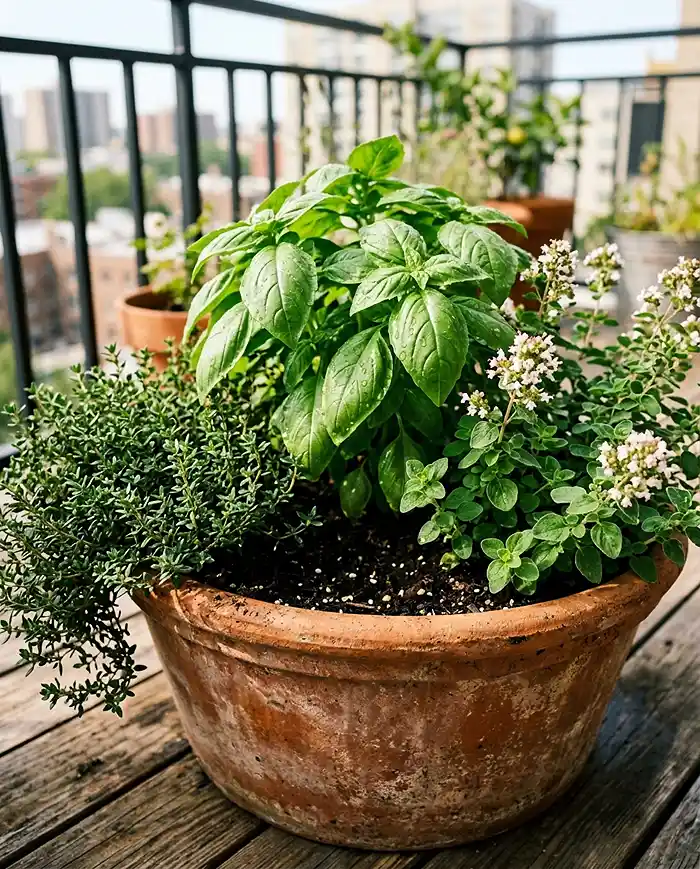
Real example: on my own south-facing balcony, one 14-inch pot holds basil, thyme, and oregano together, and I have harvested from it weekly since May without it looking thin.
Herbs That Tolerate Partial Shade
Mint, parsley, chives, and cilantro handle three to six hours of light, making them solid herb garden ideas for balconies shaded by buildings or awnings.
- Mint: always grow alone in its own pot, since its roots spread aggressively
- Parsley: sow every 4-6 weeks for a steady, non-bolting supply
- Chives: comes back reliably each spring, even with modest light
- Cilantro: bolts fast in heat, so plant in early spring or fall
Pro tip: succession-sow cilantro and parsley every few weeks instead of one big batch, so you are never without fresh leaves.
Best Flowers to Pair With Herbs
The right flowers turn a practical herb garden into a true pollinator container garden that looks intentional, not accidental.
Pollinator-Attracting Flowers
Lavender, calendula, borage, and nasturtium pull in bees and other pollinators, which boosts pollination for nearby herbs and any fruiting plants close by.
- Lavender: full sun, well-drained soil, pairs beautifully with rosemary and thyme
- Calendula: edible petals, blooms for months, self-seeds for next year
- Borage: star-shaped blue flowers bees love, also edible with a cucumber-like flavor
- Nasturtium: trails nicely, edible flowers and leaves, tolerates poor soil
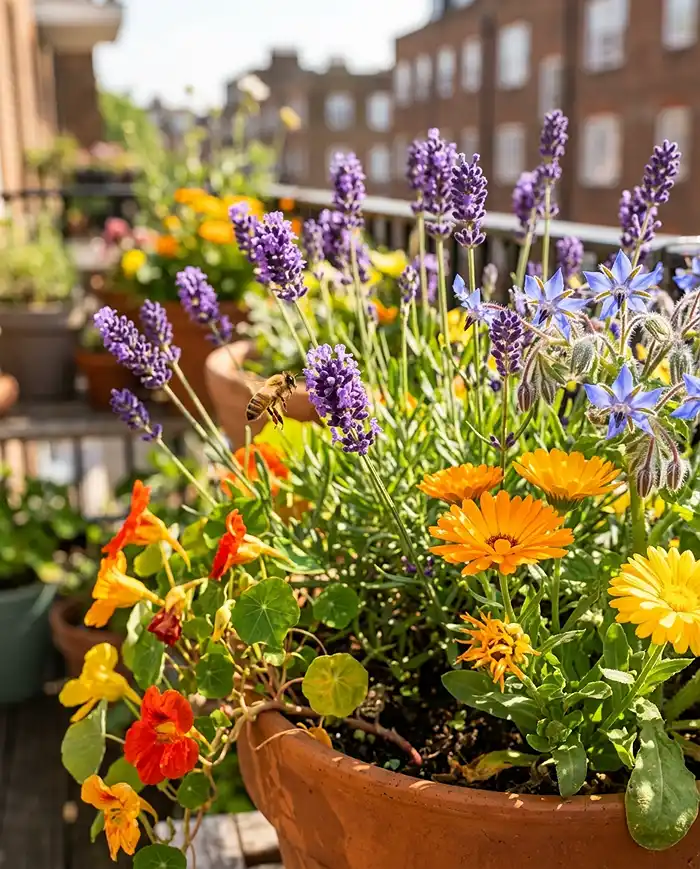
For a deeper look at pollinator-friendly choices, the Xerces Society’s guide to building a pollinator garden is a solid resource.
Colorful Trailing and Filler Flowers
Petunias, marigolds, geraniums, and lobelia fill gaps and cascade over container edges, adding steady color between herb harvests.
- Petunias: full sun, deadhead regularly for continuous blooms
- Marigolds: natural pest deterrent for nearby herbs and vegetables
- Geraniums: drought-tolerant once established, a classic railing planter pick
- Lobelia: prefers afternoon shade in hot climates, gentle trailing habit
Designing Your Balcony Garden Layout
Good layout is what separates a cluttered ledge from balcony garden ideas with herbs and flowers that actually feel like a retreat.
The Thriller-Filler-Spiller Method
This classic container formula uses one tall “thriller” plant, several medium “filler” plants, and a trailing “spiller” around the edge. Try rosemary as the thriller, marigolds as filler, and trailing nasturtium as the spiller in one 14-inch pot.
Vertical and Railing Solutions for Small Spaces
When floor space runs out, go up instead. Tiered stands, hanging baskets, and railing planters can double your growing area without taking another inch of walking room.
- Tiered stands: great for compact herbs that share similar light needs
- Hanging baskets: ideal for trailing lobelia above a row of herb pots
- Railing planters: check weight limits first, secure with brackets, not gravity alone
- Wall pockets: good for shallow-rooted herbs like thyme or chives
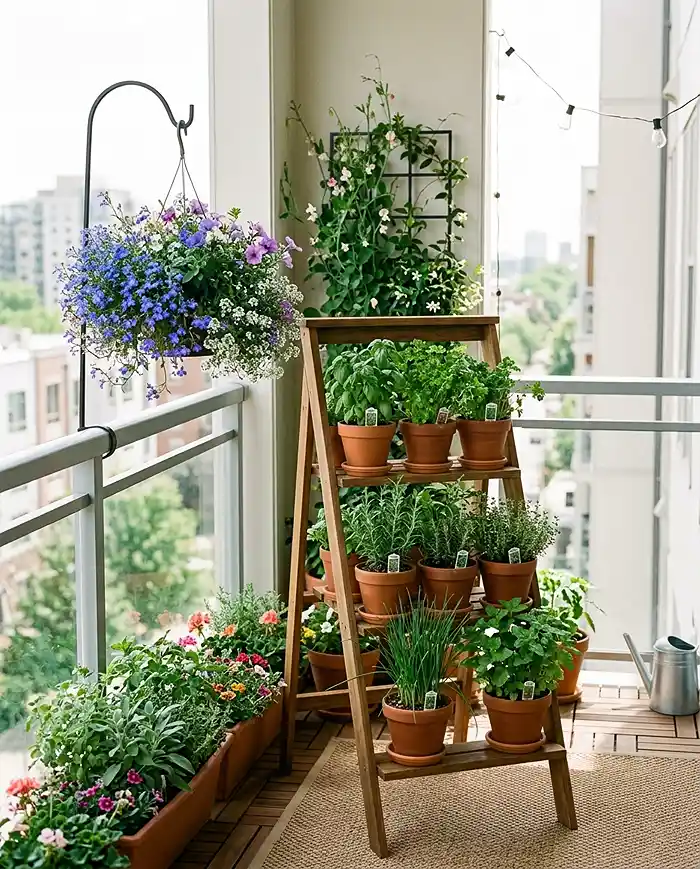
If you have room for one more pot, dwarf tomatoes and peppers for small patios pair well with this kind of layout.
Step-by-Step Planting Guide
Preparing Containers and Soil
Start with containers that have at least one drainage hole, and lay a coffee filter or mesh over it so soil does not wash out. Fill with quality potting mix, leaving an inch of space at the top.
Mix in a slow-release fertilizer at planting time, following the package rate for container plants specifically, since pots need more frequent feeding than garden beds.
Planting and Arranging Your Combinations
Group plants with similar water needs in the same pot. Pairing thirsty basil with drought-loving rosemary in one container usually ends with one of them suffering.
Loosen root balls gently before planting, space according to mature size rather than current size, and water thoroughly until it drains from the bottom.
Ongoing Care and Maintenance
Watering and Feeding Schedule
Check soil moisture daily in summer by pushing a finger an inch deep. Container herbs and flowers usually need water every one to three days, more often in heat or wind.
Feed flowering plants every two weeks with a diluted liquid fertilizer, and feed herbs more lightly, since heavy feeding pushes leafy growth at the expense of flavor.
Pruning, Harvesting, and Deadheading
Regular harvesting keeps herbs bushy instead of leggy, so do not be shy about cutting basil and mint back hard. Deadheading (removing spent flowers) tells plants to keep blooming instead of setting seed.
Pro tip: harvest herbs in the morning, right after the dew dries, for the strongest flavor and oil content.
Seasonal Care Through the Year
Spring and Summer Tasks
Plant most herbs and annual flowers after your last frost date, which you can check using your USDA Plant Hardiness Zone Map. Watering and feeding both ramp up through peak summer growth.
Fall and Winter Protection
Bring tender herbs like basil indoors before the first frost, since they will not survive cold nights. Hardy picks like rosemary and lavender often stay outside in milder zones if sheltered against a wall.
Real example: I lost an entire pot of basil to one unexpected October frost before I started tracking my zone’s first-frost date every fall.
Common Problems and Solutions
Most balcony garden problems trace back to water, light, or pests. Here is a quick troubleshooting reference.
| Problem | Likely Cause | Fix |
|---|---|---|
| Wilting despite watering | Root rot from poor drainage | Repot into fresh mix with better drainage |
| Yellow lower leaves | Overwatering or low nitrogen | Let soil dry out more, then feed lightly |
| Sticky leaves, tiny bugs | Aphids or whiteflies | Spray with insecticidal soap or neem oil |
| Tall, sparse growth | Not enough light | Move to a sunnier spot or prune hard |
| Few or no flowers | Too much shade or skipped deadheading | Increase light and deadhead weekly |
Wilting or Yellowing Plants
Wilting usually means soggy roots or a thirsty plant, so check the soil before assuming it needs water. Yellowing lower leaves often point to overwatering rather than a nutrient problem.
Pests Like Aphids and Whiteflies
Aphids and whiteflies cluster on new growth and the undersides of leaves. Insecticidal soap or neem oil handles most outbreaks within a week if you spray every few days.
Leggy Growth and Poor Flowering
Leggy stems and weak flowering almost always trace back to insufficient light, so check your actual sun hours before blaming the plant. Skipping deadheading also slows new blooms.
balcony garden ideas with herbs and flowers FAQs
Can I grow herbs and flowers in the same pot?
Yes, as long as you match water and sun needs. Rosemary and lavender share a pot well since both want full sun and dry soil between waterings.
How much sun does a balcony herb garden need?
Most herbs want six or more hours of direct sun daily. If your balcony gets less, lean on shade-tolerant options like mint, parsley, and chives instead.
What are the easiest herbs and flowers for beginners?
Mint, chives, marigolds, and nasturtium forgive missed waterings and inconsistent light, making them solid starting points for a first small balcony garden.
Will my balcony herbs and flowers survive winter?
Tender herbs like basil will not survive frost and need to move indoors or get replaced each spring. Hardy picks like thyme and lavender often survive outside in milder zones.
How do I keep balcony watering from bothering my downstairs neighbor?
Use saucers under every pot, water slowly so it does not overflow, and avoid railing planters that drip directly over walkways or other balconies below. That one habit solves most apartment gardening complaints.
Key Takeaways
- Match herbs and flowers to your balcony’s real sun hours, not what you wish it got
- Check weight limits and drainage before committing to railing planters
- Use containers with drainage holes and proper potting mix, never garden soil
- Pollinator-friendly flowers like lavender and calendula boost herb yields, not just looks
- These balcony garden ideas with herbs and flowers work in pots as small as 8 inches across