
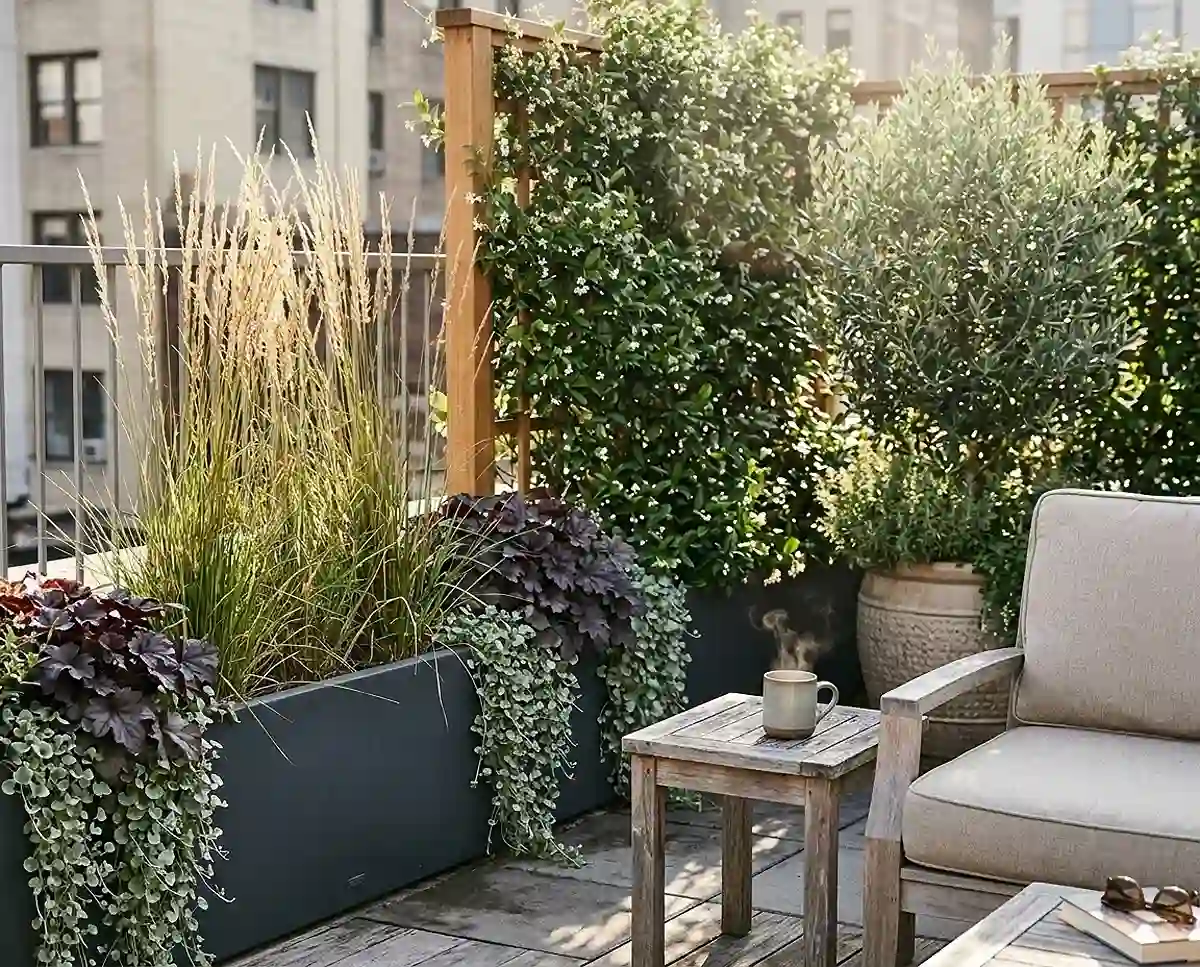
17 Balcony Privacy Plants That Still Look Like a Garden
Your coffee’s hot, but the window across the street is staring right at you. Balcony privacy plants and a living balcony screen fix that without a wall. I’m a rooftop gardener in zone 7a, and I’ve screened my terrace with pots for 12 years.
My setup: a sunny, windy, south-facing rooftop terrace with about 30 containers, from 10-inch pots to 36-inch fiberglass troughs. Last frost lands around mid-April. The wind up here is no joke, so everything below has been tested in real gusts.
Table of Contents
Designing Natural Balcony Privacy: Sightlines, Wind, and Weight Limits
Short Answer: Layered plant groupings block views better than a single hedge row because they fill every height where eyes land. They also let wind pass through leaves instead of fighting it, so tall pots stay upright. Mix grasses, climbers, and shrubs, and keep load limits in mind.
A row of identical hedge shrubs is a wall with one weakness: a single gap, one dead plant, and everyone sees in. A mixed screen hides gaps because grasses, vines, and shrubs fill different heights. Wind slips through the foliage instead of shoving the whole planter.
Mapping “Seated vs. Standing” Sightline Angles and Sun Orientation
Short Answer: Sit in your balcony chair and note where neighbor or street views enter, then repeat standing. Mark those heights and angles with tape. Match each zone to its daily sun hours, because full-sun and shade plants need different picks for each gap.
Have a friend stand where the neighbor would and shout when they spot your head. Mark that spot. Six or more hours of direct sun means full sun. Under three hours means shade.
Wind Permeability, Structural Weight Loads, and USDA Hardiness Zone Adjustments
Short Answer: Living foliage filters wind by roughly 50 to 70 percent, so it doesn’t topple like solid tarps. Put heavy troughs over load-bearing wall edges, never mid-span. Pick plants hardy two zones colder than yours, since pots freeze faster than ground.
In zone 7a, that means shopping for zone 5 hardiness. As of fall 2026, the USDA Plant Hardiness Zone Map (2023 update) is the one to check by ZIP code. Wet soil adds up fast, so confirm your building’s weight limit.
Essential Containers, Trellises, and Soil Prep for Tall Privacy Plants
Short Answer: Tall screening plants need wide, deep, heavy-bottomed containers, a firm vertical support, and a soil mix with weight at the bottom. Skimp on any of the three and your screen leans, wilts, or lands on the neighbor’s patio. Here’s the short checklist.
- Wide-base rectangular troughs, at least 14 to 16 inches deep
- A trellis, obelisk, or jute-twine net anchored to the railing
- Pot feet, so water drains and wind can’t slide the pots
- 30 pounds of river rock in the base of top-heavy pots
- Galvanized wire or zip ties for tethering
Renting? These renter-friendly balcony planter options skip the drilling.
Choosing Wide-Base Troughs, Weighted Trellis Planters, and Railing Brackets
Short Answer: Choose low, wide rectangular troughs at least 14 to 16 inches deep, because they resist tipping better than tall round pots. Planters with integrated cedar trellises save you building a frame. Inward-facing railing boxes add three feet of height instantly.
| Plant type | Minimum container | Best support |
|---|---|---|
| Annual vines (6 ft) | 12 inches deep, 3 to 5 gallons | Jute-twine net |
| Tall grasses, bamboo (5 to 6 ft) | 16 to 18 inches deep, 16 inches wide | Wide trough, no stake |
| Dwarf conifers, shrubs | 18 inches deep, about 10 gallons | Railing strap |
| Standard trees (olive, photinia) | 20 inches deep, 15 gallons | Trunk stake |
The “Ballast & Moisture” Potting Mix Recipe for Top-Heavy Screening Plants
Short Answer: Mix 35 percent coco coir, 25 percent composted pine bark, 15 percent worm castings, and 25 percent pumice or horticultural grit. Coir holds water, bark adds structure, castings feed roots, and the grit adds weight low in the pot while keeping drainage fast.
Moisten the mix before filling, because dry coir repels water at first. Keep the bottom two inches grit-heavy for extra ballast [weight added low in a pot to keep it from tipping].
17 Balcony Privacy Plants and Pairings That Look Like a Lush Garden
Short Answer: These 17 pairings mix ornamental grasses, fragrant climbers, tiered shrubs, and edible vines. Each one layers heights and textures so it reads as a garden, not a fence. Every idea lists its light needs, so start with your sun hours.
Idea 1: Rustling Feather Reed Grass and Purple Verbena Meadow Trough
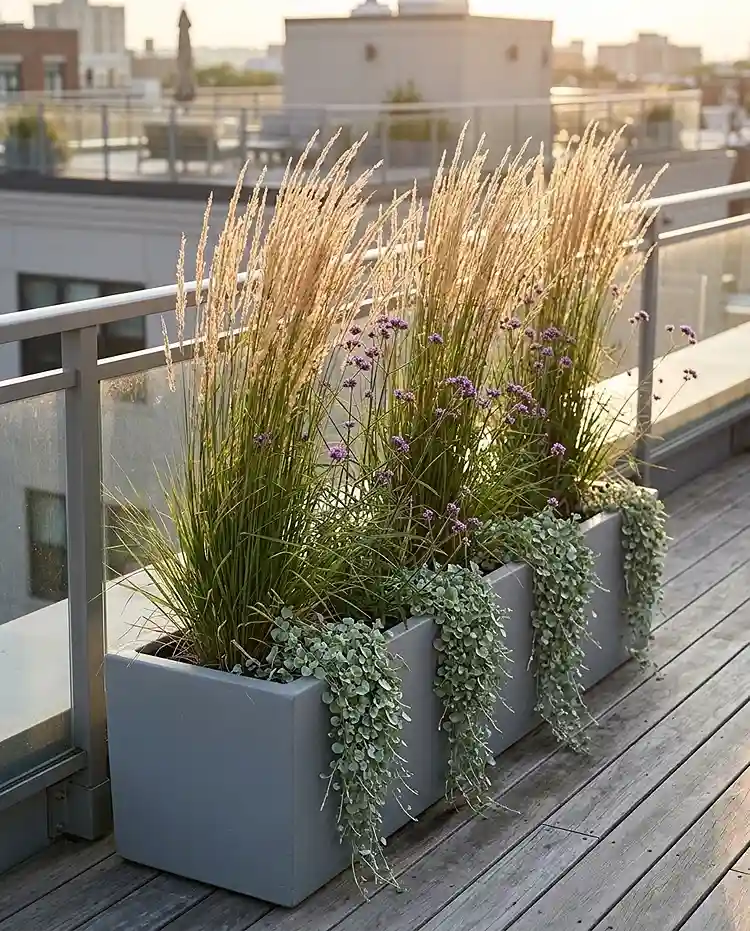
Plant upright ‘Karl Foerster’ feather reed grass (Calamagrostis x acutiflora, Zones 4-9) in an 18-inch trough with Verbena bonariensis and trailing silver dichondra. Full sun only. The 5-foot plumes sway in wind and screen sightlines without the stiffness of a hedge.
I planted three clumps in April. By late June, they hit 5 feet and hid the roof deck next door.
Idea 2: Fragrant Star Jasmine Woven Across a Cedar Slatted Planter Trellis
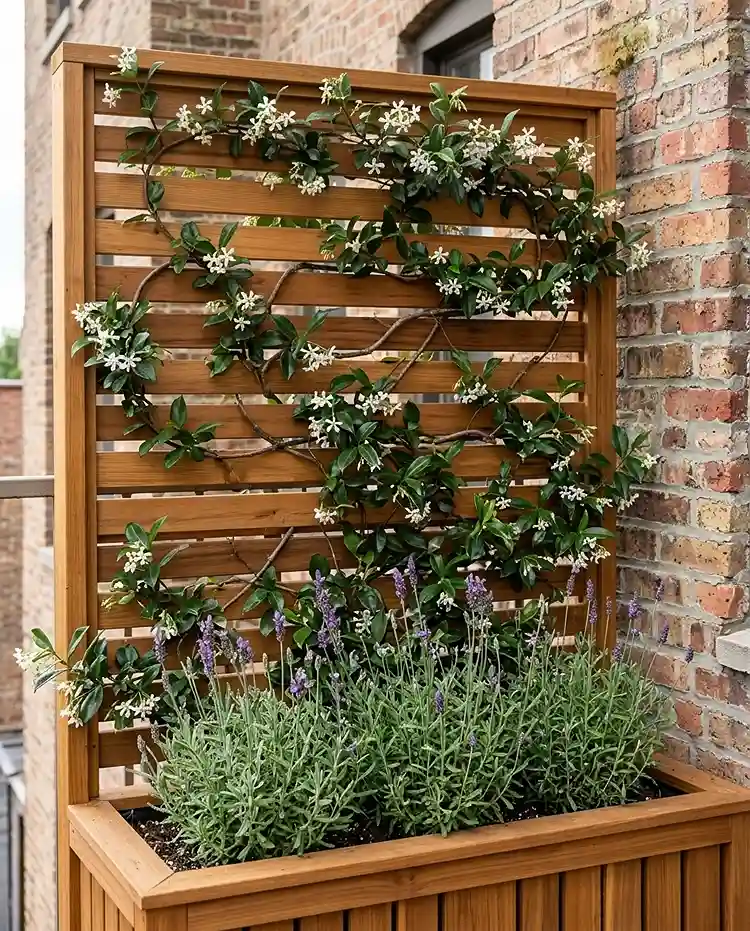
Train evergreen star jasmine (Trachelospermum jasminoides) in a horizontal zig-zag across a cedar slatted trellis, with lavender underneath. The glossy leaves make a perfumed wall, and it’s among the best climbing plants for balcony privacy. Hardy in Zones 8-10, so zone 7a needs a sheltered winter spot.
Idea 3: Non-Invasive Clumping Bamboo and Golden Hakonechloa Zen Screen
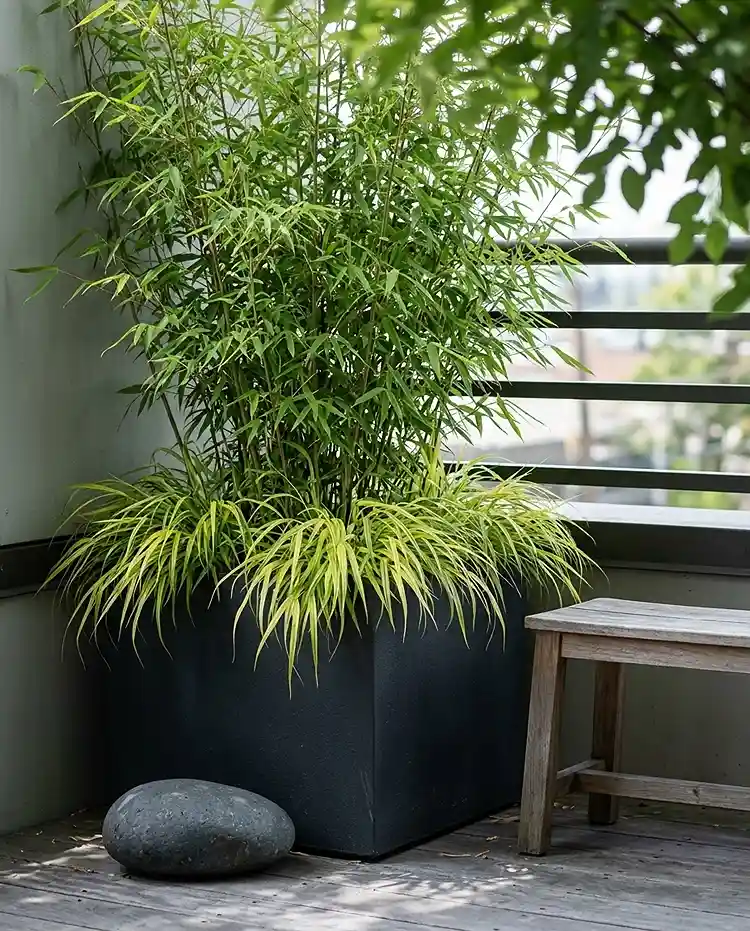
Pair clumping Fargesia rufa bamboo (hardy to Zone 5) with golden Japanese forest grass (Hakonechloa macra ‘Aureola’) at its base. Clumping types stay in a tight bunch instead of spreading by runners [aggressive underground stems]. Best in part shade.
Idea 4: Tiered Woodland Hedge of Dwarf Conifers, Coral Bells, and Trailing Ivy
Stagger pyramidal ‘Degroot’s Spire’ arborvitae or Hinoki cypress at the back, burgundy coral bells (Heuchera) in the middle, and variegated English ivy spilling off the front. Part sun works best. The layers look like a woodland border, and the conifers stay green all winter.
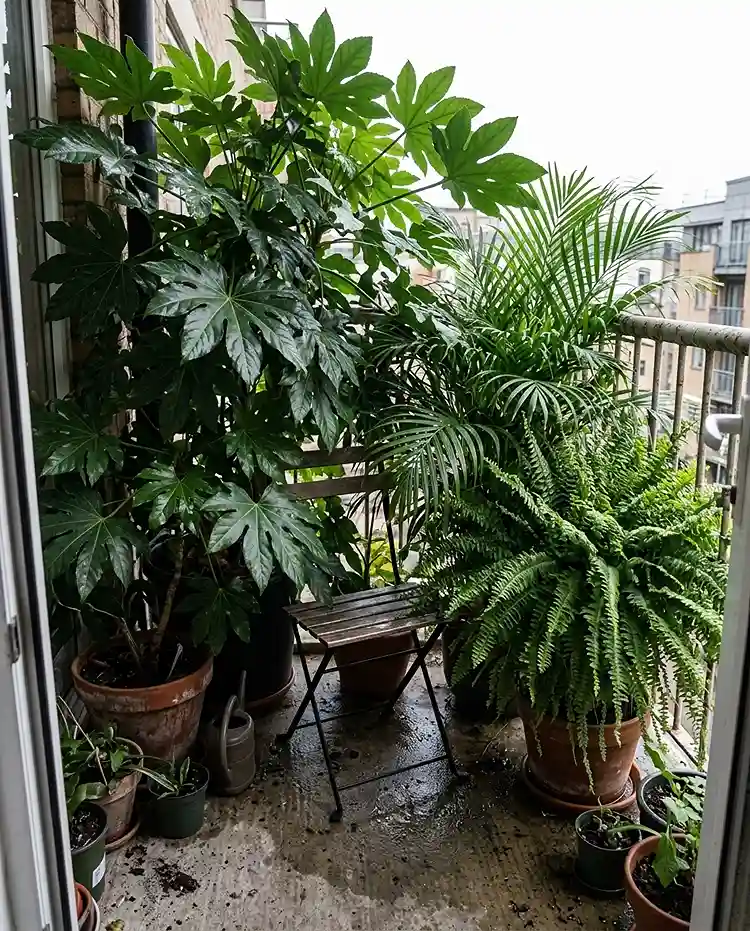
Idea 5: Shady Tropical Jungle Screen with Fatsia Japonica, Parlour Palms, and Ferns
On a north- or east-facing balcony, combine the big palmate leaves of Fatsia japonica with parlour palms (Chamaedorea elegans) and Boston ferns. Fatsia handles Zone 7 with shelter. The palms and ferns go indoors before nights dip below 50°F.
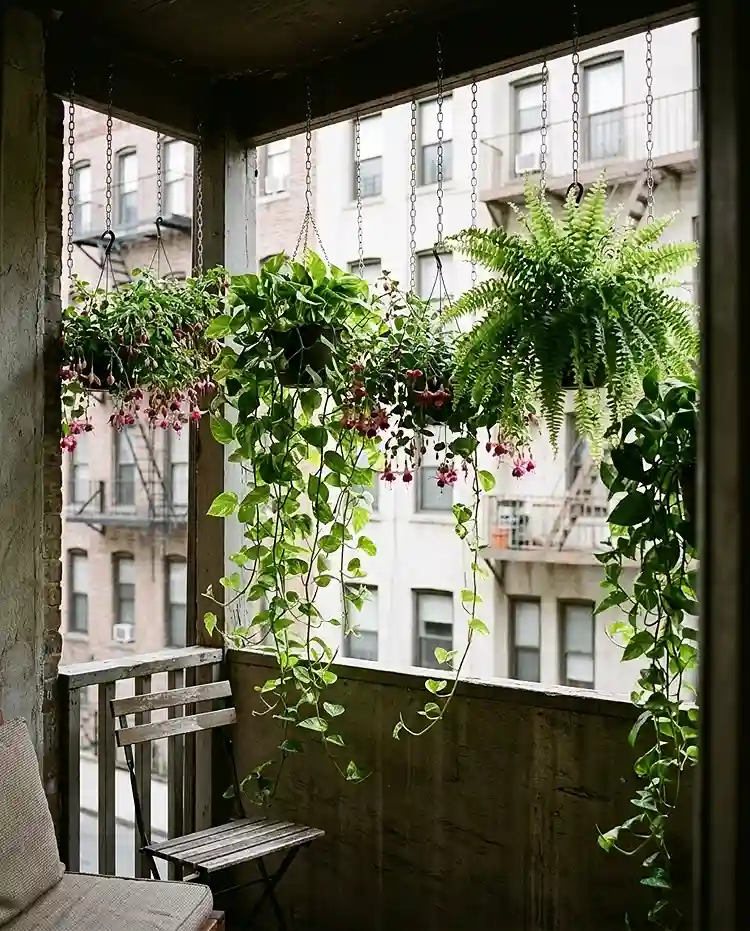
Idea 6: Cascading Ceiling-to-Rail “Green Curtain” of Hanging Pothos, Fuchsias, and Boston Ferns
Hang pothos, trailing fuchsias, and Boston ferns at two different chain lengths from the overhang. The staggered baskets block upper-floor neighbors from looking down into your seating nook. Give them shade, and expect to water daily in July.
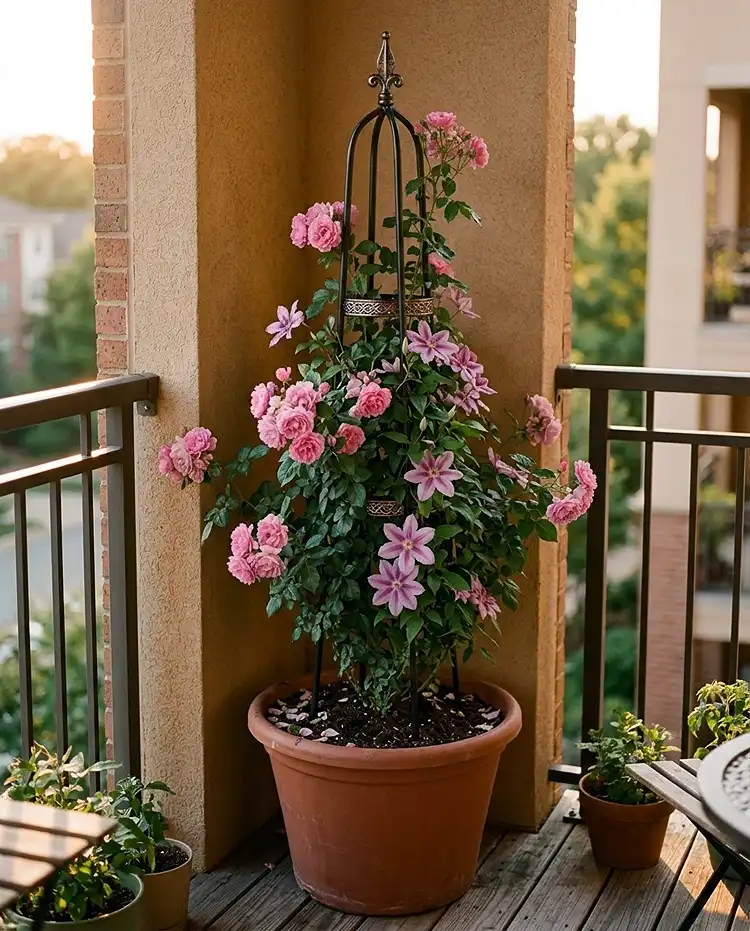
Idea 7: Romantic Cottage Obelisks with Climbing Roses and Compact Clematis
Set a thornless climbing rose like ‘Zephirine Drouhin’ (Zones 5-9) and free-flowering ‘Piilu’ clematis on obelisks in deep corner tubs. Use 20-inch tubs and six-plus hours of sun. Prune the rose to 6 or 8 feet so it doesn’t catch wind like a sail.
Idea 8: Fast-Growing Annual Vine Screen of Black-Eyed Susan Vine and Morning Glories
Sow Black-eyed Susan vine (Thunbergia alata) and ‘Heavenly Blue’ morning glories at the base of a jute-twine trellis net. It’s a renter-friendly living balcony screen, since you simply pull it out in fall. Expect about 6 feet of coverage in six weeks.
I sowed ‘Heavenly Blue’ on May 10, with soil at 65°F. By June 20, the vines topped 6 feet. That’s 41 days from seed. For more drill-free ideas, see these renter-friendly balcony privacy ideas.
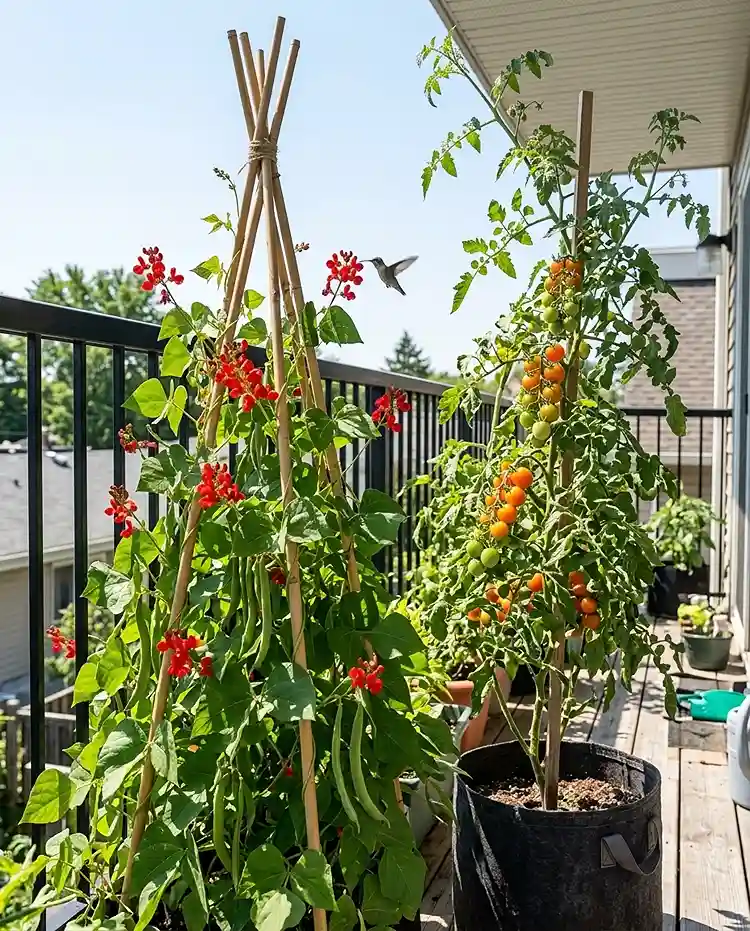
Idea 9: Edible Vertical Kitchen Screen of Scarlet Runner Beans and Indeterminate Cherry Tomatoes
Train red-flowering scarlet runner beans and tall ‘Sungold’ cherry tomatoes up a bamboo teepee along the exposed edge. Full sun, with a 5-gallon pot minimum per tomato. You get privacy, hummingbird visits, and snacks, with ‘Sungold’ ripening about 57 days after transplant.
Idea 10: Mediterranean Sun Sanctuary with Potted Olive Trees, Rosemary, and Lavender
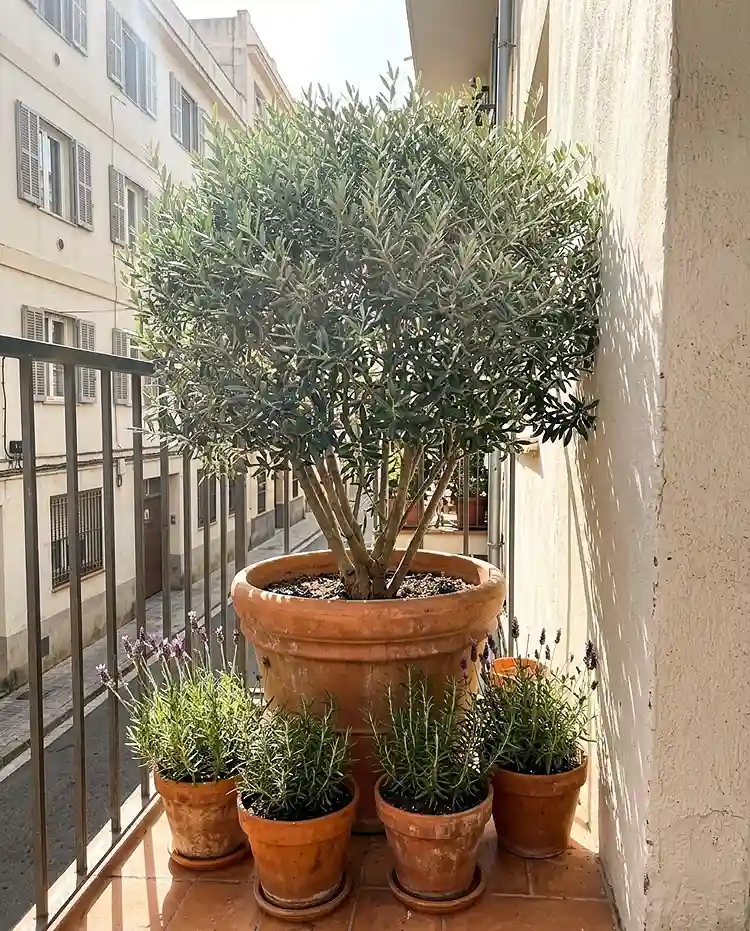
Place a multi-stemmed dwarf olive (Olea europaea) or standard bay laurel in a 15-gallon pot, with rosemary and lavender at its feet. The canopy blocks eye-level views while the floor stays airy and bright. Both trees want Zone 8 or warmer, so winter them in a cold garage in zone 7a.
Idea 11: Over-the-Rail Horsetail Reed and Trailing Creeping Jenny Modern Trough
Mount a deep trough on the railing, filled with vertical horsetail reed (Equisetum hyemale) and trailing creeping Jenny (Lysimachia nummularia ‘Aurea’). It adds 3 feet of green exactly where views enter. Keep the horsetail in the pot only, since it spreads fast in open ground. Check your lease and rail strength first.
Idea 12: Subtropical Resort Wall of Dwarf Canna Lilies, Mandevilla, and Elephant Ears
Pair bronze-leafed dwarf cannas and heart-shaped elephant ears (Colocasia) with jewel-toned climbing Mandevilla in 16-inch-deep tubs. Full sun, heavy feeding. In zone 7a, treat them as summer stars: lift the tubers before frost and bring the Mandevilla indoors.
Idea 13: Four-Season Broadleaf Screen of Spotted Laurel (Aucuba) and Sweet Box
Plant ‘Gold Dust’ spotted laurel (Aucuba japonica, Zones 7-10) with fragrant sweet box (Sarcococca, Zones 6-9). Both tolerate city air and deep shade. The gold-flecked evergreen leaves brighten dark balconies, and the sweet box perfumes late winter.
Idea 14: Stepped Ladder Stand of Bushy Coleus, Caladiums, and Rex Begonias
Arrange bushy coleus, caladiums, and rex begonias on a four-tier wooden A-frame stand. It makes a colorful, movable divider without giant tubs. Use part shade, and shuffle pots to patch holes. Bring the tender ones indoors once nights fall below 50°F.
Idea 15: Climbing Hydrangea and Hostas for a Lush North-Facing Privacy Wall
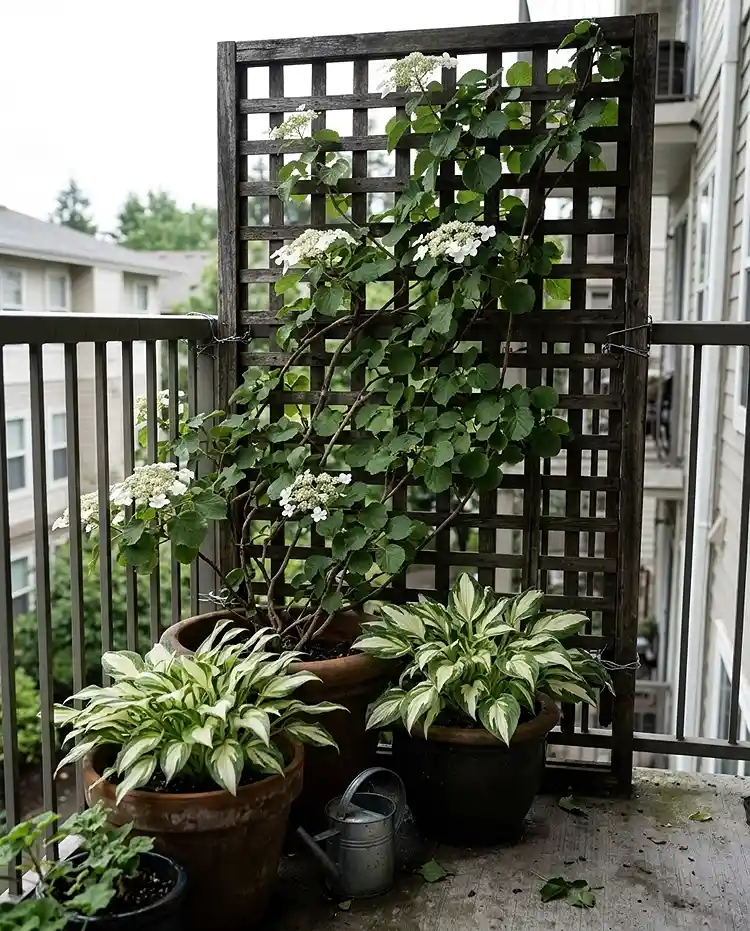
Train self-clinging climbing hydrangea (Hydrangea anomala subsp. petiolaris, Zones 4-8) onto a heavy freestanding lattice panel, tied to the railing. Underplant with white-variegated hostas to brighten deep shade. It’s slow, so expect about three seasons to fill in.
Idea 16: Pollinator Privacy Screen of Tall Salvia, Dwarf Butterfly Bush, and Passionflower
Combine passionflower (Passiflora incarnata, Zones 5-9) on a corner trellis with waist-high Salvia ‘Amistad’ and compact Buddleia. Full sun. Bees and hummingbirds arrive by July. ‘Amistad’ is tender below Zone 8, so grow it as an annual in 7a.
Idea 17: Pleached “Tree-on-a-Stem” Patio Photinia or Privet Above Flowering Annuals
Lift a dense crown 4 to 6 feet up with a lollipop-pruned or flat-pleached [trained flat against a frame] standard photinia or privet. It blocks across-the-street windows while the railing boxes below stay free for petunias. Use a 20-inch pot and stake the trunk.
Planting, Training, and Seasonal Maintenance for Living Screens
Short Answer: Space plants tight enough to merge, prune to force lateral growth, and water deeply, because tall leafy canopies lose water fast. Do those three things and your foliage stays thick from the pot rim to the top of the trellis.
Staggered “Zig-Zag” Trough Spacing and Horizontal Vine Weaving for Zero Gaps
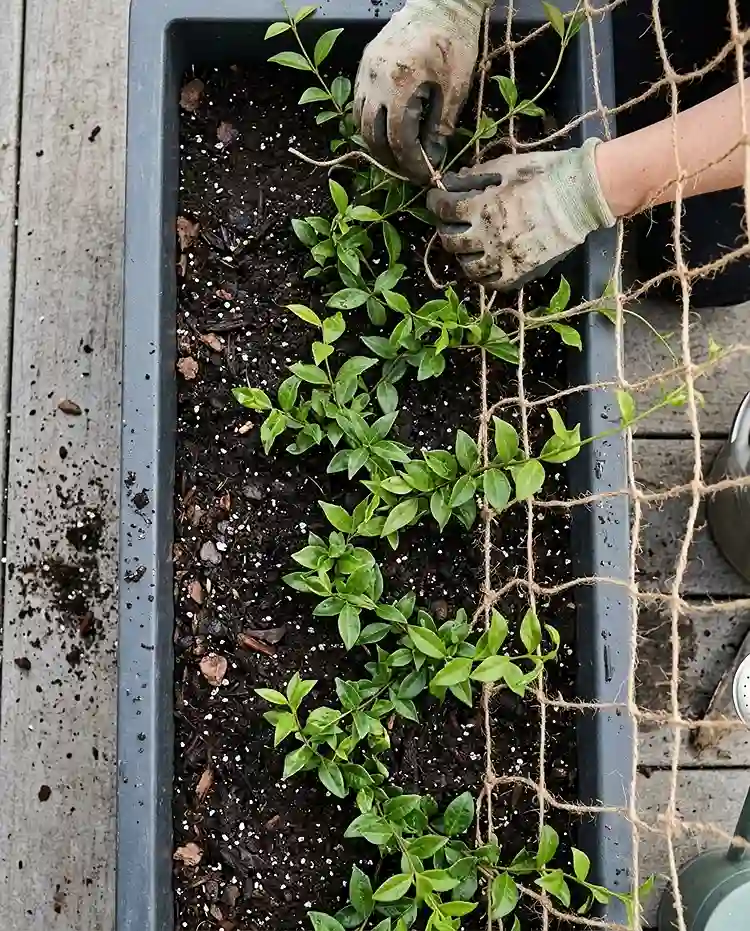
Short Answer: Plant troughs in a double-staggered W pattern instead of a single straight line, so no gap lines up with a sightline. Train your vine stems horizontally at about 45 degrees. That stimulates dense new side shoots all along the stem.
Weave stems through the trellis and tie them loosely with soft twine. Vertical stems send energy to the tip, while horizontal ones push buds along the whole length. Pinch new tips to thicken the screen.
Deep Watering Schedules, Wind-Anchoring, and Winterizing Evergreen Screens
Short Answer: Tall canopies lose water fast through transpiration [water loss through leaves], so soak pots deeply and check daily in summer. Tether trellises to railings with galvanized wire. In Zones 4 to 7, spray evergreens with Wilt-Pruf in winter to cut leaf scorch.
| Season | Watering | Extra task |
|---|---|---|
| Spring | Deep soak every 2 to 3 days | Pinch tips, add slow-release feed |
| Summer | Daily, twice in heat above 90°F | Rinse foliage, check tethers |
| Fall | Every 3 to 4 days | Stop feeding, secure trellises |
| Winter | When the top 2 inches are dry | Spray Wilt-Pruf on a day above 40°F |
Common Problems & Solutions
Short Answer: The three most common problems with tall screening plants are bare lower stems, planters blowing over, and yellowing leaves from spider mites. All three are fixable with pruning, extra weight, and better airflow. Here’s what has worked on my own terrace.
Bare, Leggy Lower Stems Leaving Eye-Level Gaps in Your Privacy Screen
Short Answer: Vines and shrubs drop lower leaves when shaded or left unpruned. Pinch back the top leaders [the main upright stems] by about 20 percent each spring to push growth lower down. Then underplant the base with mounding fillers like Heuchera or dusty miller to cover bare ankles.
Top-Heavy Privacy Planters Blowing Over in High-Rise Wind Gusts
Short Answer: Tall foliage acts like a sail, especially when the soil dries out and the pot gets light. Put 30 pounds of river rock in the pot base, choose flat-bottomed rectangular troughs, and strap pots to railing posts. Water before forecast gusts, too.
My mistake: one February, two 10-inch plastic pots holding 4-foot ‘Degroot’s Spire’ arborvitae toppled in 40 mph gusts. I switched to 16-inch-deep fiberglass troughs with 30 pounds of river rock. No tip-overs in the three winters since.
Yellowing Inner Foliage and Spider Mites in Densely Packed Screening Plants
Short Answer: Crowded evergreens and bamboo trap dry heat against building walls, which breeds spider mites. Rinse foliage monthly with a shower wand, thin a few interior stems for airflow, and apply neem oil every 7 to 10 days until the mites vanish. Skip neem in midday sun.
Frequently Asked Questions
What is the fastest-growing plant to block neighbors’ views on a balcony?
Annual vines like purple hyacinth bean, morning glory, and Black-eyed Susan vine cover 6 to 8 feet in under eight weeks. For instant perennial height, buy clumping Fargesia bamboo or feather reed grass. Annuals win on speed, while perennials win on year-round presence.
Which balcony privacy plants stay green all year round, even in freezing winters?
Cold-hardy evergreens rated to Zone 4 or 5 work best, including ‘Degroot’s Spire’ arborvitae, clumping Fargesia bamboo, dwarf Alberta spruce, Hinoki cypress, and boxwood. In Zones 7 to 10, star jasmine and olive trees can join the lineup. Remember that containers freeze harder than ground.
How deep do planters need to be for 5-to-6-foot tall balcony privacy plants?
Shrubs, bamboo, and tall grasses need containers at least 14 to 18 inches deep and 16 inches wide. That gives roots room, prevents daily wilting, and counterbalances wind leverage. Go bigger for standard trees.
How do I create plant privacy on a balcony that gets almost no direct sunlight?
Combine tall shade-tolerant evergreens like Fatsia japonica, spotted laurel (Aucuba), and cast iron plant (Aspidistra) on the floor. Hang baskets of Boston ferns and English ivy overhead. Layering heights fills your sightlines without needing sun.
What are the best climbing plants for balcony privacy?
Star jasmine, climbing hydrangea, clematis, passionflower, and scarlet runner beans all grow well in containers. Pick by sun and zone: hydrangea for shade, clematis and roses for sun, beans for fast annual cover. Give every climber a sturdy trellis anchored to the railing.
How much weight can my balcony hold for big planters?
Limits vary by building, so ask your landlord or property manager before loading up troughs. Wet soil is heavy, and a large trough can pass 80 pounds. Spread weight over load-bearing edges and consider tiered stands instead of giant tubs.
Quick Recap
- Sit and stand on your balcony, mark every sightline, and match each gap to its sun hours.
- Choose balcony privacy plants hardy two zones colder than yours, and mix grasses, climbers, and shrubs.
- Use troughs 14 to 18 inches deep, the ballast mix, and 30 pounds of river rock in top-heavy pots.
- Stagger troughs in a W pattern, train vines at 45 degrees, and pinch leaders by 20 percent each spring.
- Tether everything to the railing, and confirm your building’s weight limit before loading up.