
Potting Soil for Balcony Plants
Compare weight, drainage, and water retention to choose the right potting soil for balcony plants. Here’s how to read any potting mix label before you buy.
I garden on a north-facing sixth-floor balcony in zone 6b, plus a sun-blasted southwest one at my sister’s place. Between them I’ve killed enough plants to know that soil decides whether a balcony garden lives.
Table of Contents
Why Balcony Containers Demand Specialized Potting Soil
An elevated pot has a harder life than a backyard one. Wind hits it from every side and strips moisture from the soil and the pot walls. Dark pots can swing from 55°F at dawn to over 100°F by mid-afternoon.
Weight adds another limit. Many balconies are designed for roughly 60 pounds per square foot of total load, so ask your building manager. Good balcony container soil has to hold water, drain fast, and stay light.
Potting Mix vs. Garden Soil vs. Raised Bed Soil: Why Bagged Topsoil Suffocates Pots
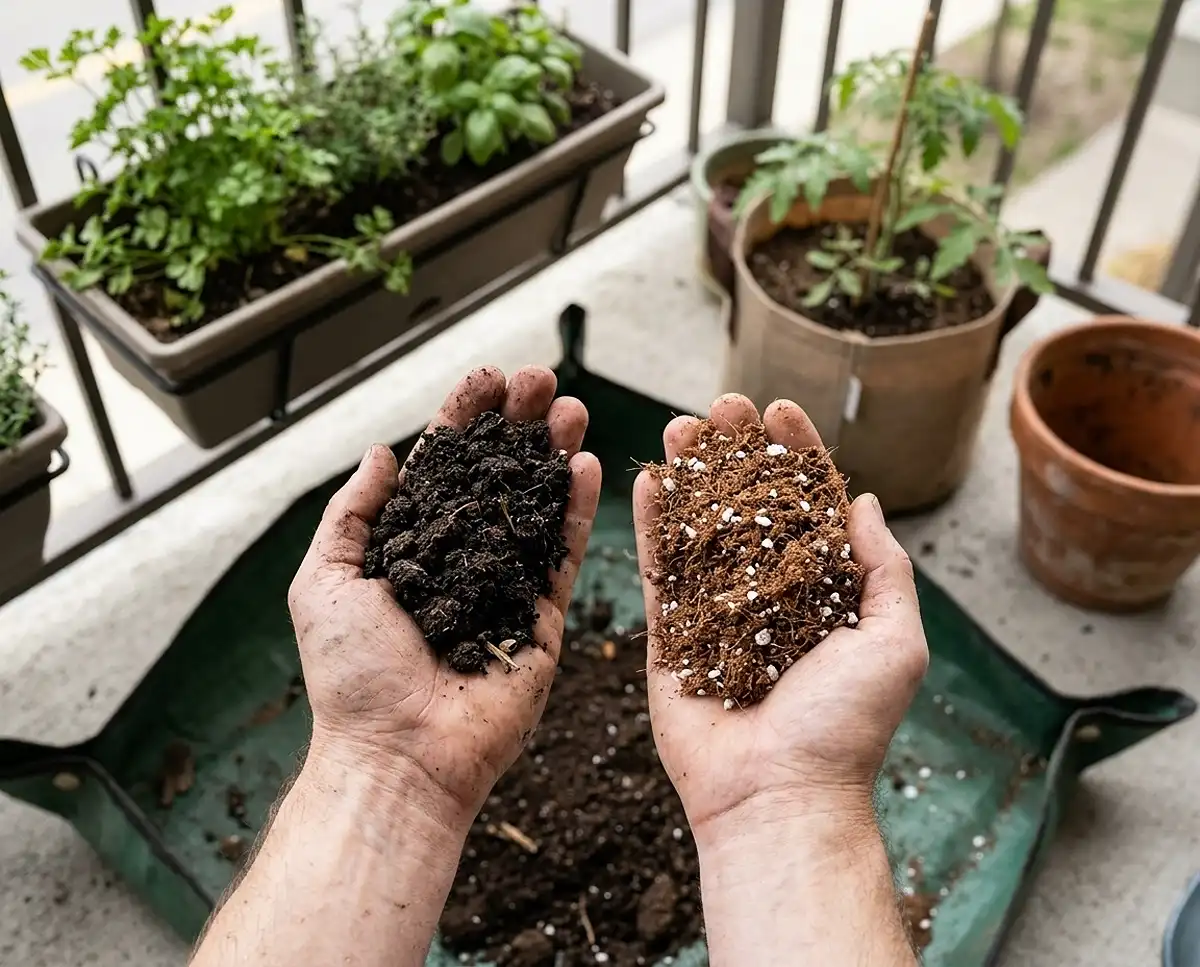
Quick Answer: Garden soil compacts in containers and traps water around roots. True potting mix is soil-less, built from bark, coir, and perlite, so air pockets survive repeated watering.
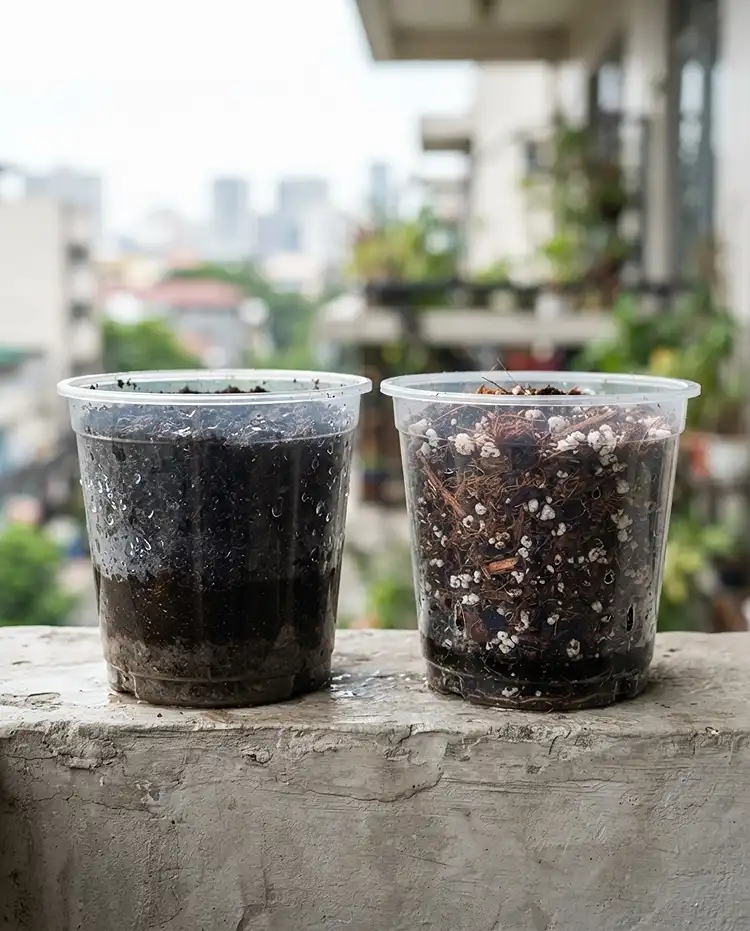
Every pot has a perched water table [a soggy layer at the bottom that holds water even when drainage holes are open]. Fine particles make that layer taller. In dense topsoil it can swamp most of the root zone.
Roots suffocate, then the soil dries into an airless brick. Raised bed soil is a middle ground, but it’s still too heavy and compost-rich for most pots.
Calculating Saturated Soil Weight for Balcony Load Safety and Easy Hauling
Quick Answer: Compost-heavy mixes weigh roughly 40-50 pounds per cubic foot when saturated. Coco coir and perlite blends weigh about 15-22 pounds. That difference decides what your railing, elevator, or stairs can handle.
| Mix Type | Dry Weight (per cu ft) | Saturated Weight (per cu ft) | Best For |
|---|---|---|---|
| Compost-based | 25-30 lbs | 40-50 lbs | Floor-level tomatoes, large shrubs |
| Coir and perlite | 8-12 lbs | 15-22 lbs | Railings, hanging baskets, upper floors |
Real Example: Last spring I hauled six compost-heavy bags up five flights. One watered 14-inch pot hit nearly 40 pounds with the plant. I switched to a coir-perlite blend and my back, and the railing, thanked me.
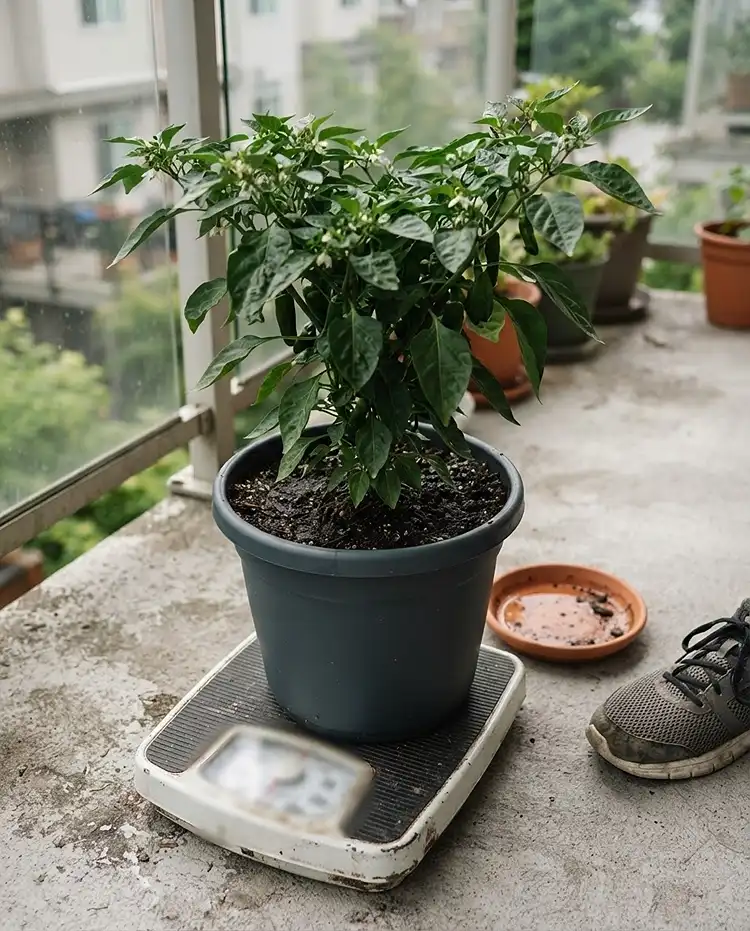
Pro Tip: Weigh a watered pot on a bathroom scale before you buy a second one.
The 5 Core Potting Soil Ingredients to Compare on the Bag Label
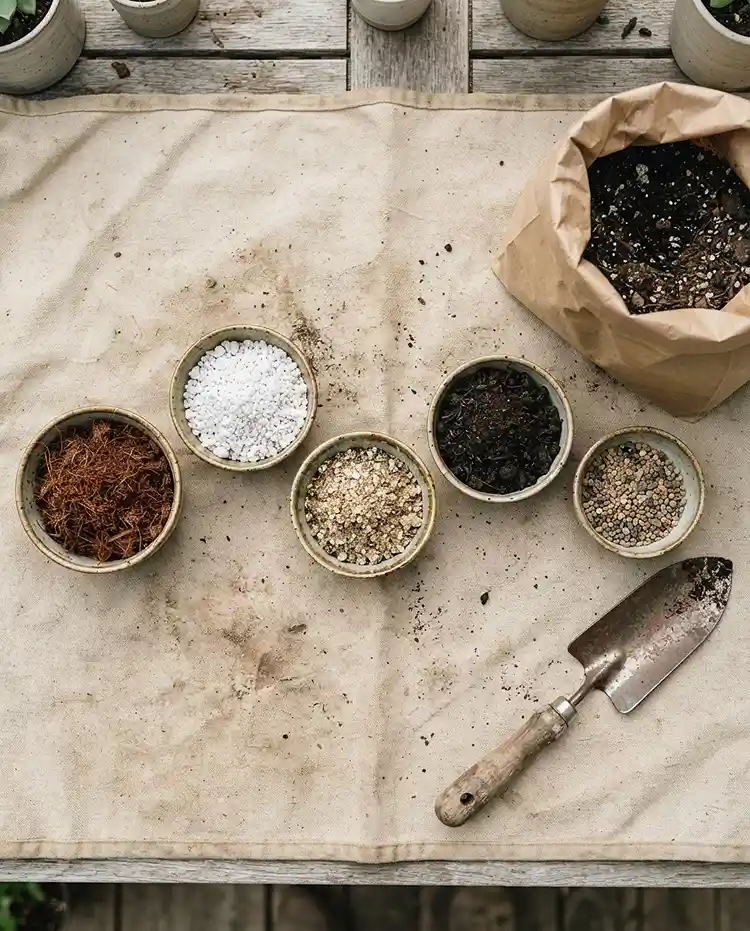
Ingredients are listed by volume, so the first three tell you most of the story. Skip the marketing claims and look for these five categories:
- Moisture base: coco coir or sphagnum peat moss
- Aeration: perlite, pumice, or pine bark fines
- Water buffers: vermiculite, biochar, or sheep wool pellets
- Natural nutrition: worm castings, compost, or mycorrhizae
- Starter fertilizer: synthetic prills or organic granules
Base Moisture Sponges: Coco Coir vs. Sphagnum Peat Moss
Both hold water well, but they behave differently once they dry out. Coco coir rehydrates almost instantly, even after baking in July sun. It’s also a renewable byproduct of coconut processing.
Peat is cheaper, but bone-dry peat turns hydrophobic [water-repellent]. I learned this when my ‘Wave’ petunia basket dried out during a heat wave. Water ran down the pot wall and straight out the holes, and the roots stayed dust-dry.
Structural Aeration and Drainage: Perlite vs. Pumice vs. Pine Bark Fines
Quick Answer: Perlite is the lightest option, pumice is heavier and doesn’t float, and pine bark fines add structure and slow decomposition. Pick perlite for railings, and pumice or bark for anchoring tall plants.
| Material | Best For | Watch Out For |
|---|---|---|
| Perlite | Weight-limited railings, hanging baskets | Floats to the surface, creates dust |
| Pumice | Top-heavy trees in windy corners | Heavier, costs more |
| Pine bark fines (aged) | Long-lasting structure, acid-loving plants | Fresh bark can tie up nitrogen |
Water-Holding Crystals and Minerals: Vermiculite, Biochar, and Sheep Wool Pellets
These additives act like tiny reservoirs, which helps shallow railing boxes that dry out by noon. They buffer moisture without making the root zone soggy.
- Vermiculite: holds water and nutrients, but compresses if you over-mix it
- Biochar: lightweight and long-lasting, and best pre-soaked in diluted fertilizer first
- Sheep wool pellets: absorb many times their weight in water and add slow nitrogen
Biological Nutrition: Worm Castings, Compost, Mycorrhizae, and Synthetic vs. Organic Starters
Slow-release synthetic prills feed reliably for months. The catch is salt buildup when you never flush the pot. Worm castings, bat guano, and compost feed more gently and support soil life.
Mycorrhizal fungi [beneficial root partners] help roots reach water and phosphorus. Whichever route you choose, flush pots with clean water a few times each season. Balcony rain rarely does it for you.
Matching Potting Soil for Balcony Plants to Your Microclimate
No single bag fits every balcony. Sun direction, container material, and crop type all shift what your mix needs to do. Start with sun exposure, then adjust for the pot, then fine-tune for the plant. For plant ideas, browse our balcony plants guide.
Hot, Sunny and Windy South/West Balconies vs. Damp, Shady North/East Balconies

Scorching south and west balconies need coir and vermiculite-heavy blends that slow evaporation. Pair them with smart watering habits from our balcony watering guide.
North and east balconies evaporate slowly, so use about 30% perlite and bark to prevent root rot. My shady north balcony taught me this the hard way. A coir-heavy mix kept my hostas wet for days.
Matching Soil to Pot Material: Porous Terracotta and Grow Bags vs. Glazed and Self-Watering Pots
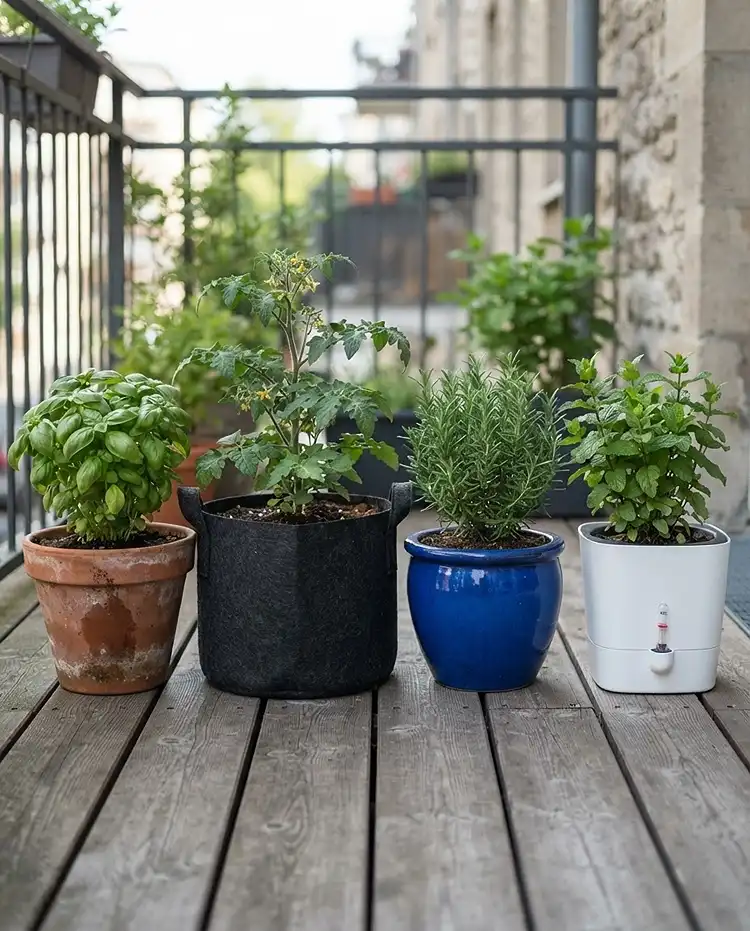
Unglazed terracotta and fabric grow bags breathe, so they lose water through their walls. They need water-retentive mixes with extra coir.
Glazed pots and self-watering planters hold moisture, and sub-irrigated reservoirs need porous, wicking mixes. Skip heavy compost there, because it goes anaerobic [airless and sour] in a constantly wet reservoir.
Customizing by Plant Type: Heavy-Feeding Vegetables, Mediterranean Herbs, and Acid-Loving Shrubs
| Plant Group | Soil pH | Ideal Mix |
|---|---|---|
| Tomatoes, greens | 6.0-6.8 | Compost-rich, up to 50% finished compost per Penn State Extension |
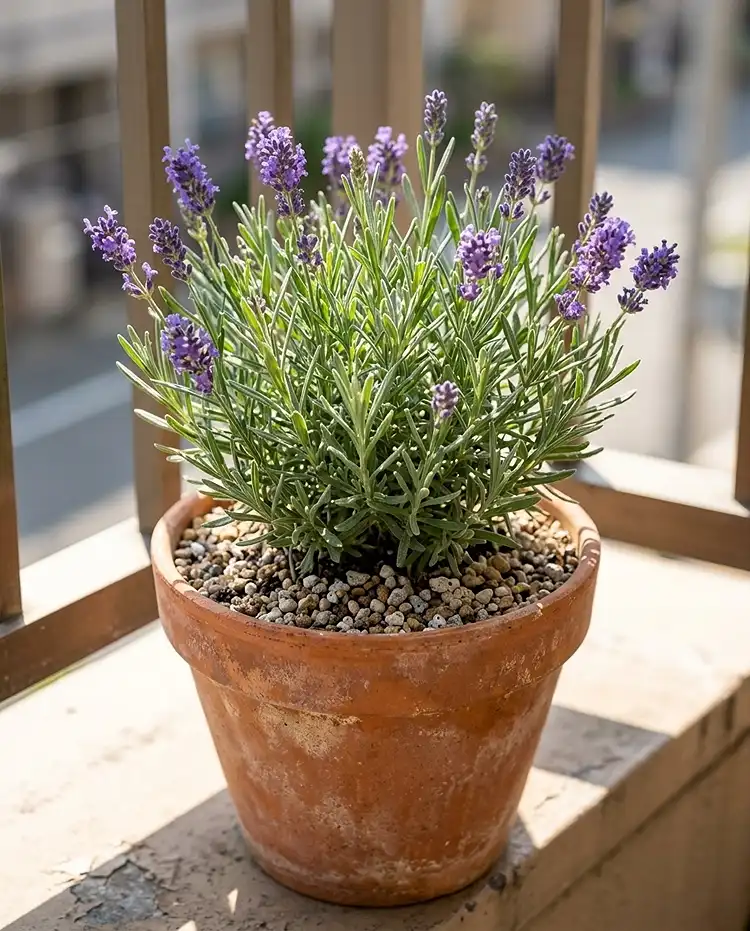
| Lavender, rosemary | 6.5-7.5 | Gritty, about 50% mineral cactus/succulent mix |
| Blueberries, camellias | 4.5-5.5 | Acidic ericaceous mix with pine bark |
Real Example: I once potted ‘Munstead’ lavender in a moisture-control mix. By August the crown had rotted. Lavender wants dry feet, and that mix held water like a sponge.
Step-by-Step Guide to Blending, Prepping, and Refreshing Balcony Potting Mix
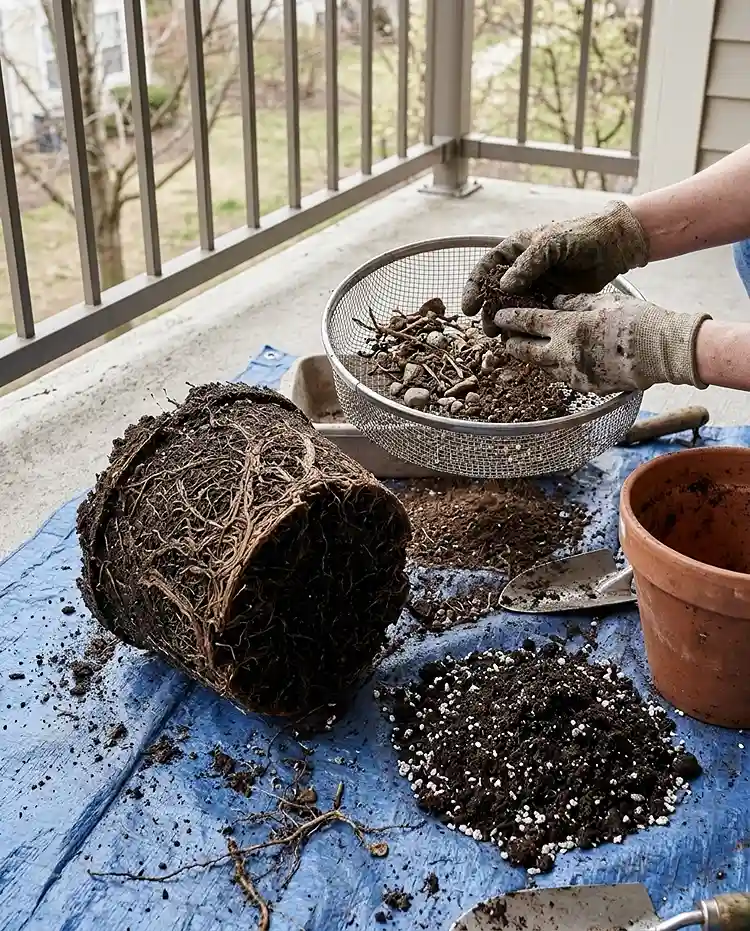
You don’t need a garden shed to blend your own. An indoor folding potting tarp, a 5-gallon bucket, and a scoop keep things clean. Upgrade a basic bagged potting mix, then recycle it season after season.
3 Custom Balcony Soil Recipes (The All-Purpose Lite, The Railing Box Sponge, and The Gritty Herb Mix)
Use a bucket as your “part.” Mix everything dry on the tarp, then moisten.
- All-Purpose Lite: 6 parts bagged potting mix, 2 parts perlite, 1 part worm castings, 1 part coco coir
- Railing Box Sponge: 4 parts coco coir, 3 parts potting mix, 2 parts vermiculite, 1 part worm castings
- Gritty Herb Mix: 3 parts potting mix, 3 parts pumice or coarse perlite, 1 part coarse sand

Pre-Moistening Compressed Bricks and Potting Up Without Muddy Balcony Runoff
Drop a 650-gram coco coir brick into a 5-gallon bucket with a gallon of warm water. In about 20 minutes it swells to roughly 8 liters. Fluff it with your hands and blend it into your mix.
Before filling, line each drainage hole with landscape mesh. It keeps soil in the pot and leached water crystal clear, so you won’t stain your neighbor’s balcony below.
Seasonal Soil Refresh Calendar: Rejuvenating Compacted Pots in Spring and Fall
Twice a year, in early spring and early fall, renew old soil instead of hauling it to the dumpster. Follow this 75/25 protocol:
- Shake off dead feeder roots and screen out debris
- Keep 75% of the old soil
- Blend in 25% fresh material: worm castings, perlite, and organic granular fertilizer
- Water thoroughly and let it settle for a week before planting
Common Problems and Solutions
Four failures show up again and again in apartment gardens. Most trace back to the potting mix, and all of them are fixable.
Bagged Potting Soil Infested with Fungus Gnats Right Out of the Store
Warehouse-stored bags are often warm and damp, which is perfect for gnat larvae. Pre-soak new soil with Mosquito Bits [Bacillus thuringiensis israelensis, or Bti] following package directions. Then top-dress with a half-inch of coarse silica sand to block egg-laying.
Soil Shrinking, Compacting, and Dropping 3 Inches Below the Pot Rim by Mid-Summer
Peat and cheap wood shavings decompose and collapse over a season. Gently aerate the root ball with a wooden dowel, then top-dress with aged pine bark fines and compost. You’ll restore both airflow and soil level.
White Crusty Mold (Saprophytic Fungi) vs. Fertilizer Salt Buildup on the Soil Surface
Fuzzy white growth is harmless saprophytic fungus [a decomposer feeding on damp bark], common in shade. Hard, crusty yellow-white deposits are mineral salts. Scrape off either one, flush the pot with plenty of water, and dust the surface with cinnamon.

Frequently Asked Questions
Should I put gravel, rocks, or packing peanuts at the bottom of my balcony pots for drainage?
No. A gravel layer raises the perched water table closer to the roots instead of improving drainage. Fill the pot completely with perlite-amended potting mix over a simple mesh screen.
Are moisture control potting soils safe for balcony containers?
They work well for thirsty hanging baskets and sunny railing troughs. They can rot drought-loving herbs, succulents, and plants on shaded north-facing balconies.
How do I store leftover potting soil in a small apartment without attracting bugs?
Move opened soil into a gasket-sealed 5-gallon bucket or latching tote and keep it in a cool, dry closet. Make sure the mix is slightly dry before sealing so it doesn’t turn anaerobic and sour.
How many quarts or cubic feet of potting soil do I need for my balcony pots?
One cubic foot equals roughly 25.7 dry quarts, or 6.4 gallons. That fills about two 12-inch pots, five 8-inch pots, or one standard 30-inch rectangular railing box.
Key Takeaways
- The best potting soil for balcony plants is soil-less, light, and matched to your sun, wind, and pot type.
- Saturated weight matters: aim for 15-22 pounds per cubic foot on railings and upper floors.
- Coir and vermiculite suit hot balconies; perlite, pumice, and bark suit shady ones and Mediterranean herbs.
- Refresh pots each spring and fall with the 75/25 method instead of replacing all the soil.
- Skip bottom gravel, flush salts regularly, and pre-moisten coir before potting.