
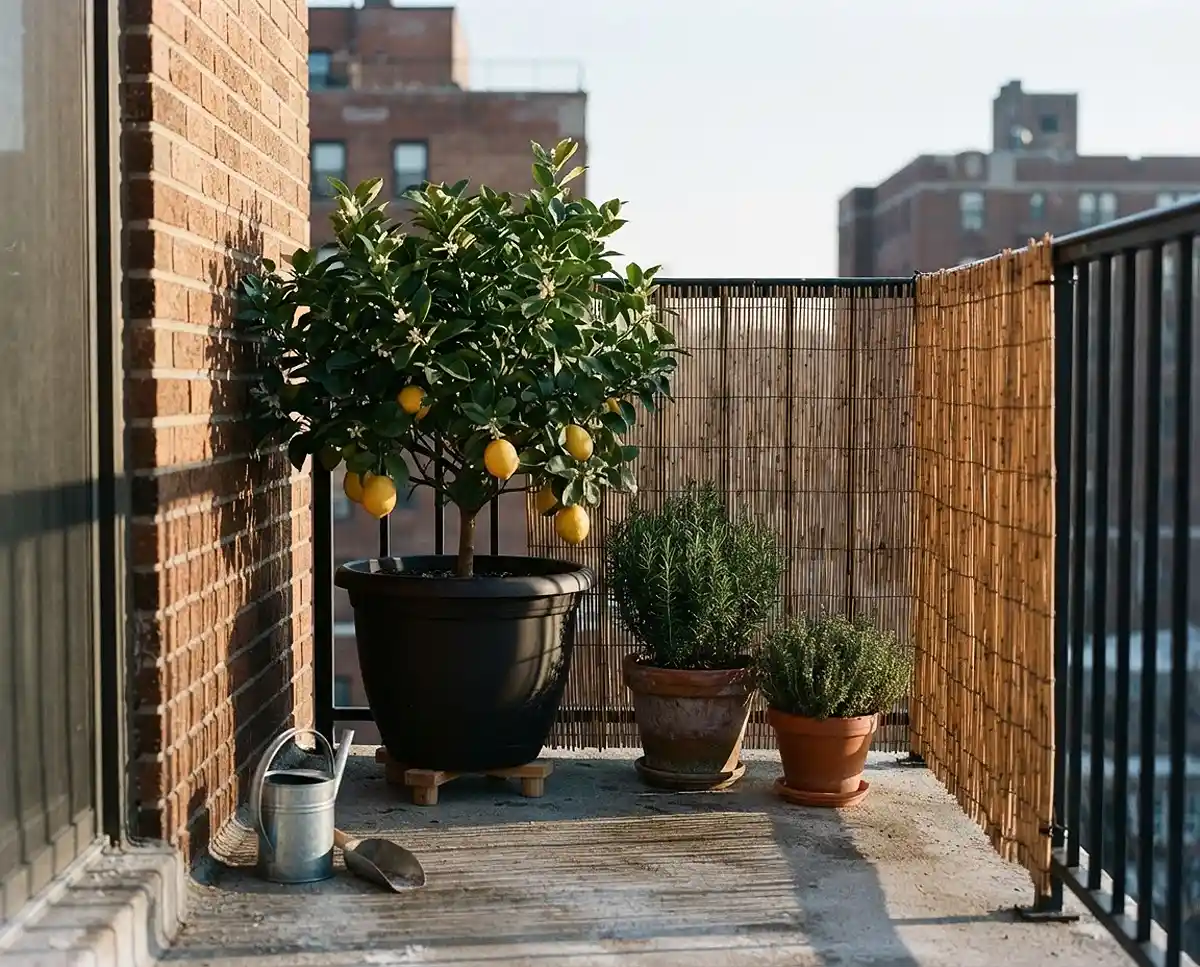
Balcony Microclimate
A sheltered balcony microclimate kept my Meyer lemon 9°F warmer overnight, which beat any fleece wrap for winter plant protection. Here’s how I mapped mine.
A microclimate (a small pocket where temperatures differ from the wider area) did the work. My test site is a south-facing concrete patio in zone 8b with a brick wall on the west side. I ran 14 containers from November 2025 through March 2026.
Think of it as a ground-floor balcony. First frost hit November 22. Last frost came March 9. Everything below applies to small space gardening on any hard-surfaced ledge.
Table of Contents
How Much Warmer Can a Balcony Corner Get?
Verdict: A brick-backed, wind-blocked corner ran 6 to 9°F warmer than open patio on my 11 freezing nights. That’s up to one full hardiness zone.
What Exactly Is a Balcony Microclimate?
Three things build one: sun, shelter, and mass. Low winter sun heats the wall. The wall and concrete floor (thermal mass, meaning material that stores heat and releases it slowly) hold that warmth after dark.
A screen then stops wind from carrying the heat away. That’s the whole trick.
None of this shows on the USDA Plant Hardiness Zone Map (bands based on average coldest winter temperature). The 2023 update shifted many areas about half a zone warmer. It still can’t see your brick wall.
The Two-Zone Container Vulnerability Rule
Potted roots sit in open air on all sides. Nothing insulates them. Treat a pot as one to two zones colder than the same plant in the ground.
Test notes: On January 14, 2026, the open patio hit 27°F. The corner held 36°F. I had two Improved Meyer lemons in 15-gallon pots. The corner lemon dropped zero leaves. The open one dropped about 40%.
Mapping Your Balcony’s Temperature Zones
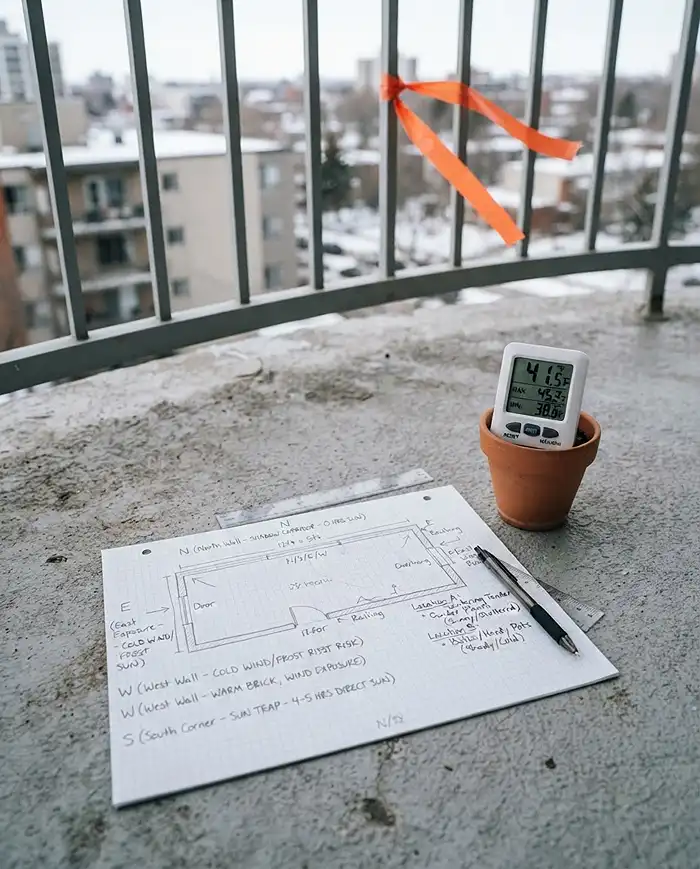
Verdict: Map before you move a single pot. Two weeks of notes and a $12 max-min thermometer beat guessing every time.
Start in January, when the sun sits low. The balcony gardening for beginners guide covers layout basics if you’re starting from scratch.
Tracking Sun Traps and Shadow Corridors
Sketch your space. At noon, 2 p.m., and 4 p.m., mark where sun hits the walls. Sun traps get 5 or more hours of winter sun. Shadow corridors get under 2.
Identifying Wind Tunnels and Freezing Drafts
Tie a ribbon to the rail and watch it. Gaps between buildings funnel gusts. Wind chill (wind stripping heat from foliage) dries leaves fast and turns a light frost into real damage.
| Spot | Low on Jan 14, 2026 | Wind | Verdict |
|---|---|---|---|
| West brick corner | 36°F | Blocked | Best |
| Along south rail | 31°F | Light | Okay |
| Open patio center | 27°F | Full | Skip |
| Shaded north side | 24°F | Funnel | Worst |
- Do: Log lows for at least 3 nights. Clear nights run colder than cloudy ones.
- Do: Place the thermometer at pot height, out of direct sun.
- Skip: Trusting one reading. One cloudy night fooled me into a bad spot.
How to Create and Enhance Warm Corners for Pots
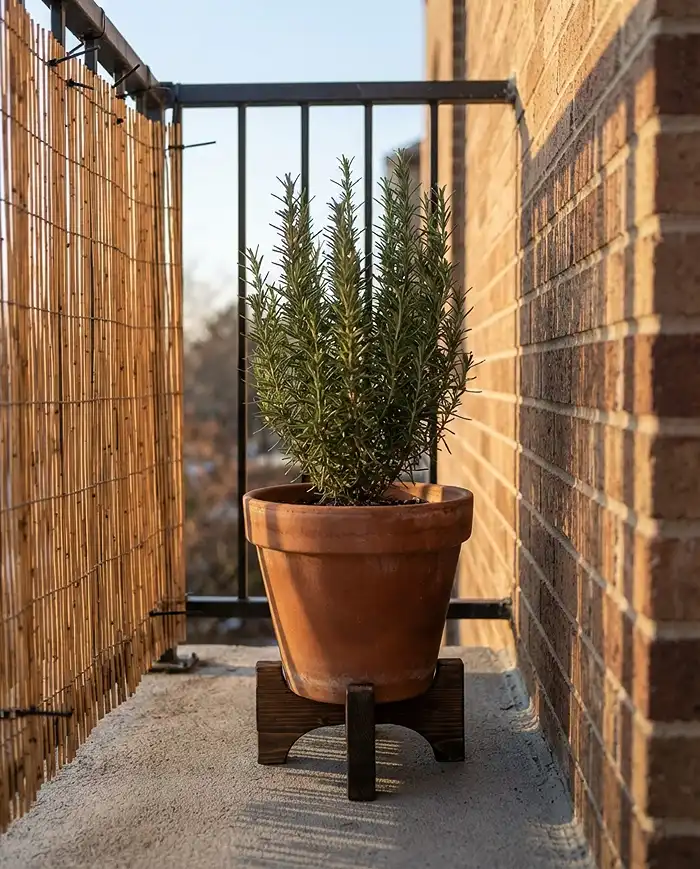
Verdict: Brick mass, a windbreak, and one inch of lift are the whole job. Together they cost me under $60.
These balcony garden ideas work for renters too. Nothing needs drilling.
Using Thermal Mass from Brick and Concrete Walls
Set pots 2 to 3 inches from a south or west brick wall. That keeps foliage off cold masonry and lets heat radiate onto the pot. At 9 p.m., my wall surface read 8°F above the air.
Building Windbreaks with Trellises and Screens
- Bamboo screen, 6 feet tall, zip-tied to the rail: $24 and gone in a minute.
- Clear acrylic panel: $35. It passes light but traps heat, so it needs venting.
- Dwarf evergreen in a 20-gallon pot: slow, but free after year one.
Elevating Pots Off Freezing Concrete Floors
Lift every pot 1 inch with wooden feet or a wheeled caddy. Soil at 6 inches deep averaged 5°F warmer on feet than flat on concrete across 8 nights.
Drainage matters here too. The container gardening for beginners guide explains why.
Best Tender Plants to Place in Warm Balcony Corners
Verdict: Citrus, rosemary, and thyme gain the most from one warm corner. Tropicals only gain a few weeks.
| Plant | Damage point in a pot | Where it went |
|---|---|---|
| Improved Meyer lemon | 28°F | West brick corner |
| Rosemary ‘Tuscan Blue’ | 20°F | Corner or south rail |
| English thyme | 10°F | Any sheltered spot |
| Monstera deliciosa | 45°F | Corner until cold nights |
Overwintering Citrus and Mediterranean Herbs
Put lemons, rosemary, and thyme in the sun trap first. They hate frozen, wet roots more than cold air. All three of my ‘Tuscan Blue’ rosemary in 5-gallon pots lived in the corner. Only one of three lived in the open.
Extending the Season for Tropical Houseplants
My corner Monstera stayed out until November 29. The open one came in November 8. That’s three weeks gained. Bring tropicals inside once nights drop below 45°F.
Seasonal Care in a Warm Microclimate
Verdict: Warm corners dry pots faster and can bake plants on sunny days. Check soil every 2 days and the thermometer every afternoon.
Adjusting Watering for Trapped Heat and Reduced Airflow
Corner pots dried out in 3 days. Open-patio pots lasted 5. Use the finger test: push a finger 2 inches into the soil and water only if it’s dry.
- Keep citrus soil near pH 6.5.
- Stop feeding in winter. Restart in March with a 6-3-3 citrus fertilizer.
- Water in the morning so roots aren’t wet at freezing.
Venting During Unseasonably Sunny Winter Days
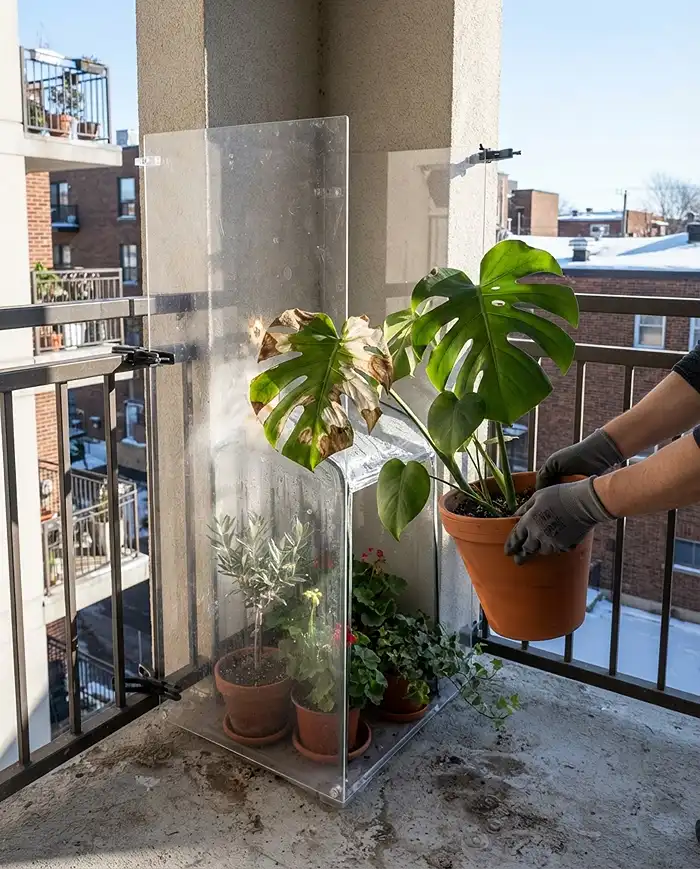
Mistake to avoid: Leaving a sealed corner alone on a warm day. This one failed for me. On February 11, a 68°F thaw pushed my acrylic-screened corner to 84°F.
Three of five Monstera leaves scorched. The panel had no vent gap, so heat had nowhere to go. Now I pull pots out whenever the forecast tops 70°F.
Common Problems and Solutions
Verdict: Warm, still corners invite mildew and pests. Three inches of spacing and a weekly spray handle both.
Fungal Diseases in Sheltered, Low-Airflow Corners
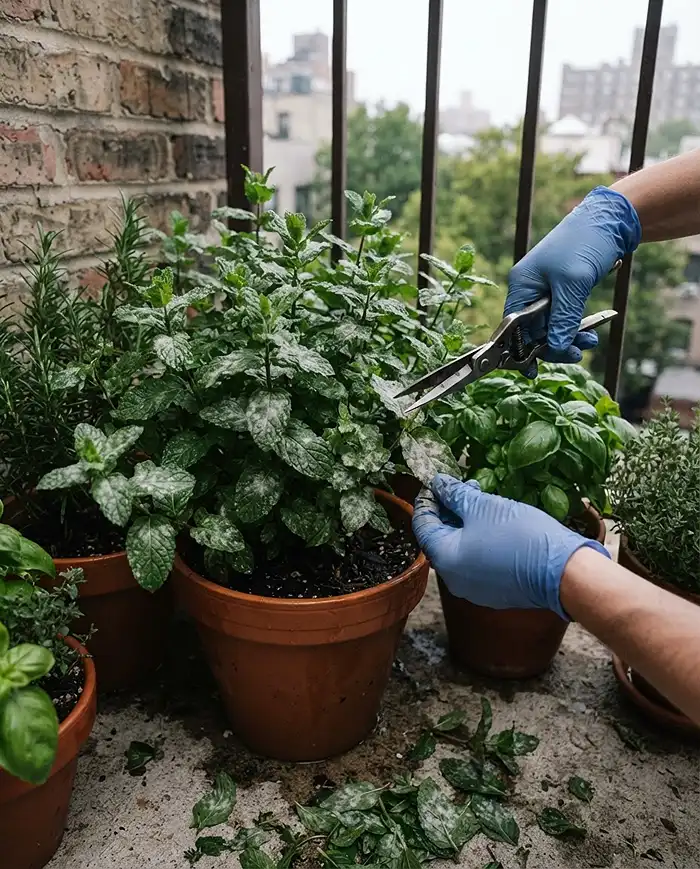
Blocking wind can leave the air stagnant and humid. That breeds powdery mildew (a white, dusty fungus on leaves). Leave 3 inches between pots and prune crowded growth.
Pests Flocking to the Warmest Spot
Aphids and spider mites overwinter in the warmest corner too. Check leaf undersides weekly. Spray with insecticidal soap or neem oil every 7 days for three weeks.
People Also Ask
Can a balcony corner really act as a different hardiness zone?
Yes. My brick-backed corner ran 9°F warmer than open patio on January 14, 2026. That’s nearly one full zone, and a sheltered, high balcony can reach two.
How do I measure the exact temperature of my balcony microclimate?
Buy a digital max-min thermometer for about $12. Set it at pot height, out of direct sun. Log the overnight lows for 3 nights before leaving any tender plant out.
Should I wrap my pots even if they are in a warm corner?
Yes, if forecast lows fall below 25°F. A warm corner protects foliage from windburn, but roots still freeze. Wrap each pot in two layers of burlap or bubble wrap.
How cold is too cold for a potted Meyer lemon?
Below 28°F for a few hours damages leaves and twigs. Keep it in a corner that stays above 32°F, or drape it with 1.5-ounce frost cloth when a freeze is forecast.
How far from a brick wall should I set pots?
Leave 2 to 3 inches. That keeps leaves off cold masonry while the pot still catches radiated heat. Keep 3 inches between neighboring pots for airflow.
The Short Version
- Map your balcony microclimate for two weeks with a max-min thermometer before moving any pot.
- Use brick mass, a windbreak, and 1-inch pot feet to gain 6 to 9°F on freezing nights.
- Put citrus and rosemary in the warmest corner. Bring tropicals in below 45°F.
- Vent on days above 70°F, and keep pots 3 inches apart.