
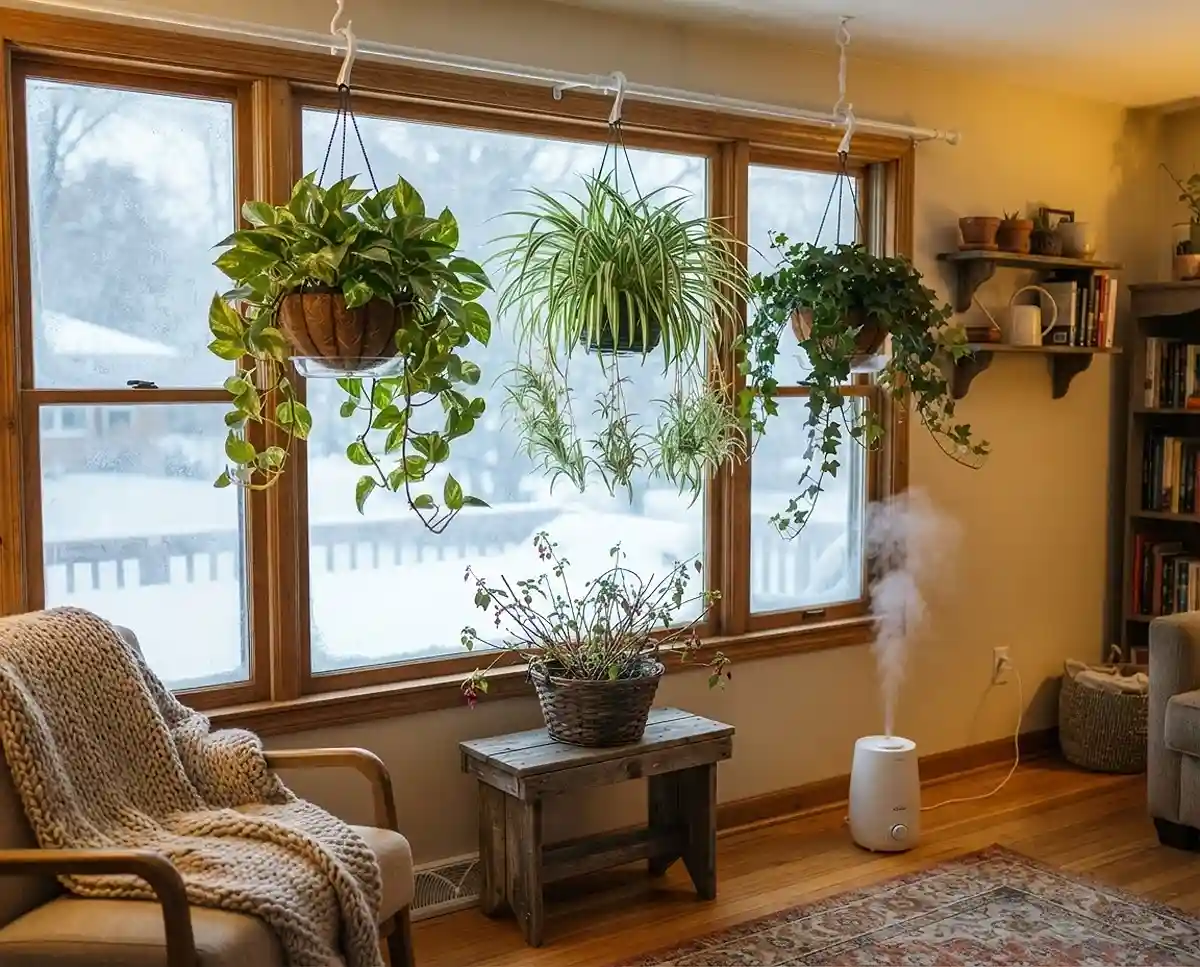
Bringing Hanging Plants Indoors for Winter
Frost is coming for your fuchsia basket. Bringing hanging plants indoors for winter saves money, and hanging planters indoors can look great all winter, too. Here’s the catch: outdoor pests hitch rides, and dry heated air crisps tropical leaves. I’ll walk you through what to save, how to bug-proof it, and how to keep it alive until spring.
I grow on a sunny rooftop terrace in zone 7a: eight hours of southern sun, wind off the parapet, and nine hanging baskets in coir, plastic, and 12-inch wire-frame liners. After 12 years coaching renters and first-timers, I’ve lost plenty of baskets. You don’t have to.
Table of Contents
The Seasonal Shift: Bringing Hanging Plants Indoors for Winter
Short Answer: As of fall 2026, a mature hanging basket costs $30 to $60, so saving five plants keeps roughly $200 in your pocket. The challenge is biological: plants move from bright, humid outdoor air to dim, dry indoor heat. A slow, planned fall plant transition prevents most of the shock.
Outdoors, my railing baskets soak up sun and moist, breezy air. Indoors, even a south window delivers a fraction of that light, and a furnace can drop humidity below 30 percent. Plants respond by shedding leaves and slowing down. That’s normal, and it’s manageable.
Planning next year’s setup while you’re at it? These hanging planters for a balcony railing are easy to unhook and carry inside each fall.
Which Hanging Plants Are Worth Saving?
Short Answer: Save tough trailing foliage first, then flowering cascaders you can prune hard, then succulents if you own a sunny window. Compost the cheap annuals like petunias and calibrachoa. They rarely recover indoors, and replacing them in spring costs less than the fight.
| Plant | Verdict | Indoor light | Key move |
|---|---|---|---|
| Pothos, spider plant | Save | Medium to bright | Trim by one-third |
| English ivy | Save, watch for mites | Bright | Rinse leaves twice |
| Fuchsia | Save with a hard prune | Bright, cool (45-55°F) | Cut back by half |
| Ivy geranium, begonia | Save | South window | Prune, cut back watering |
| String of pearls, burro’s tail | Save with strong sun | South window, 4-6 hours | Skip the soak |
| Petunia, calibrachoa | Compost | Not worth it | Replace in spring |
Resilient Tropical Foliage (Pothos, Spider Plants, Ivy)
Short Answer: Pothos, spider plants, and ivy adapt fastest because they already tolerate low light and dry air. Trim them, wash them, and hang them anywhere with indirect light. They rarely sulk longer than two weeks, which makes them the best starting point for hanging planters indoors.
In October 2024, my 10-inch ‘Vittatum’ spider plant came inside with 11 plantlets. By March, it had grown six more. I snipped four and gave them away, and the mother plant never missed a beat.
Flowering Cascaders (Fuchsia, Begonias, Geraniums)
Short Answer: Fuchsia, begonias, and geraniums can overwinter, but only with a hard prune or a cool rest. Cut them back by half, park them in a bright spot around 50°F, and water sparingly. Expect few blooms until spring, which is the trade for saving the plant.
Fuchsia naturally slips into dormancy [a rest period with little growth] when days shorten. Fight it with a warm room, and you get leggy, weak stems. Let it rest instead.
Tender Trailing Succulents (String of Pearls, Burro’s Tail)
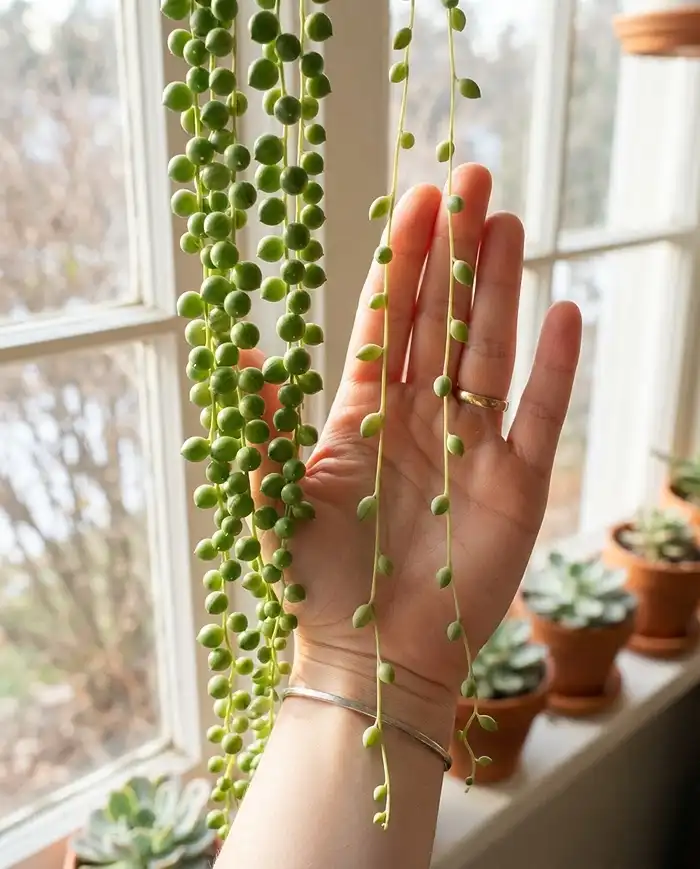
Short Answer: String of pearls and burro’s tail need the sunniest south-facing window you have. Without it, they stretch into etiolation [weak, pale growth reaching for light] within weeks. Give them four to six hours of bright light, and keep them nearly dry through winter.
In November 2023, I hung a string of pearls in an east window. Strands stretched four inches in five weeks, with big gaps between beads. After I moved it to a south window, new growth stayed compact.
Pre-Transition Prep: Cleaning and Bug-Proofing
Short Answer: Give every basket a two-week quarantine before it joins your indoor plants. Prune, soak, rinse, and spray during that window, then inspect before moving anything near your other plants. Aphids, spider mites, and fungus gnats love a warm living room more than you do.
Start when nights hover near 55°F, and keep plants on a porch or sheltered spot. The University of Illinois Extension’s tips for moving houseplants indoors suggest isolating plants for several weeks, so two weeks is my bare minimum.
| Day | Task |
|---|---|
| Day 1 | Prune with sterilized shears, soak 15 minutes, rinse |
| Day 2 | Neem oil, round one (evening) |
| Day 8 | Neem oil, round two |
| Day 14 | Final inspection, then move indoors |
Pruning for Size and Energy Conservation
Short Answer: Use shears sterilized with rubbing alcohol to trim trailing vines by one-third. Smaller tops mean less water demand while roots recover from root shock [stress after a move]. Pruning also removes hiding spots for pests and shifts energy toward survival, not long, floppy stems.
Pick off spent blooms and yellow leaves too. Clear fallen debris off the soil surface, because it shelters gnats and eggs.
The Submersion Method for Pest Eradication
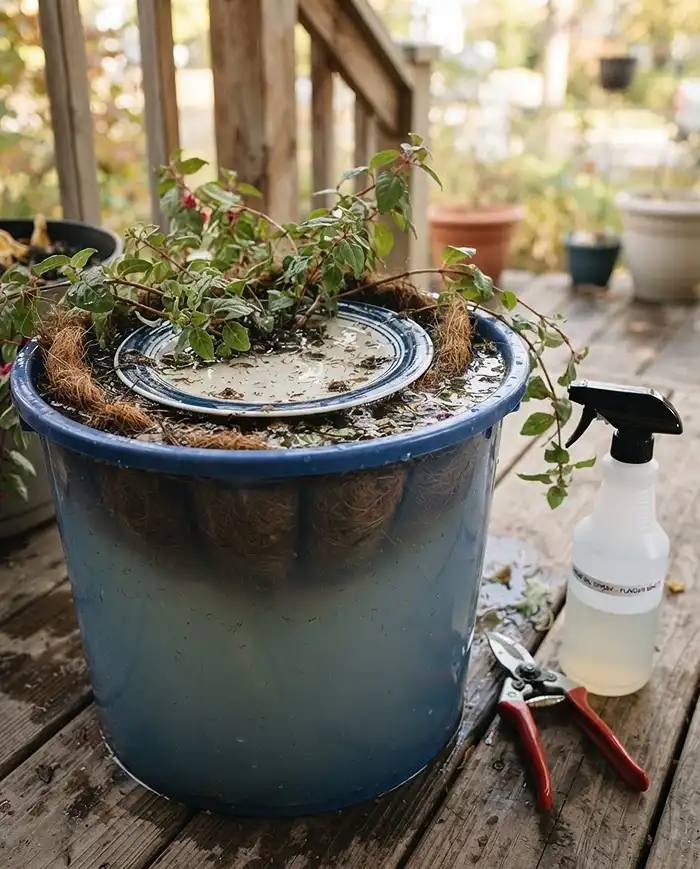
Short Answer: Fill a bucket with lukewarm water and a teaspoon of mild dish soap per gallon. Sink the whole pot for 15 minutes, using a plate to hold it down. Ants, fungus gnat larvae, and slugs drown or float up, so you can scoop them out.
My worst flop happened in November 2022. I hauled in a 14-inch coir basket of fuchsia ‘Gartenmeister Bonstedt’ and skipped the soak.
Twelve days later, a yellow sticky card held 40 fungus gnats. I repotted into fresh mix and soaked it twice. The gnats were gone in three weeks. Now nobody skips the bucket.
One exception: skip the soak for string of pearls. Wet soil rots them. Wipe and spray those instead.
Foliage Washing and Neem Oil Application
Short Answer: Rinse the whole canopy with a gentle hose spray, top and underside, then apply neem oil in the evening. Neem smothers spider mites and aphids that survive the rinse. Repeat after seven days, and keep plants out of direct sun while the oil is wet.
Mix the neem according to the label and coat the leaf undersides, where mites hide. To check for mites, tap a leaf over white paper. Moving specks mean trouble.
Creating the Ideal Indoor Environment for Suspended Pots
Short Answer: Aim for a bright, humid-ish corner away from heaters, with a hook that can hold a soaked basket. Think of it as building a small porch inside your home. Good indoor garden ideas for small spaces start with the window, not the decor.
Short on floor space? These fall vertical wall planters turn one sunny wall into a vertical garden. I also like how balcony corner hanging planters use awkward corners. The same trick works indoors.
Finding the Right Ceiling Hooks and Window Light
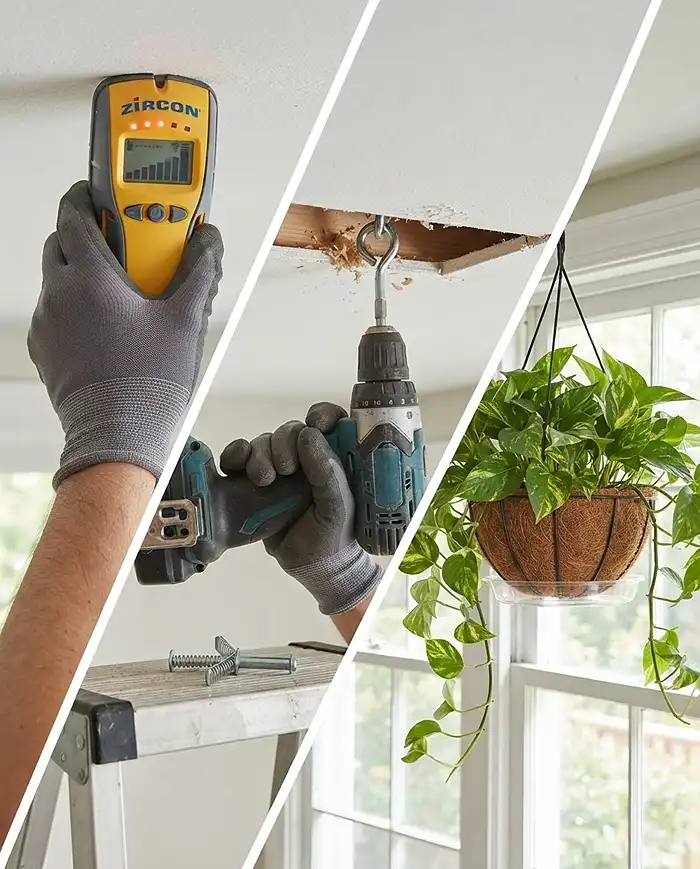
Short Answer: Screw hooks into a ceiling joist [the wooden beam behind the drywall] whenever you can. Otherwise, use heavy-duty toggle bolts rated well above the planter’s weight. A wet 12-inch basket can hit 20 pounds. Hang it within three feet of an east or south window.
- Find the joist with a stud finder before you drill.
- No joist? Use toggle bolts [anchors that spread open behind drywall] rated for 50 pounds or more.
- Hang lighter pots (under 5 pounds) from a tension rod across the window.
- Clip a saucer or drip tray under each pot.
- Rotate each pot a quarter turn every week.
Managing Indoor Humidity and Heater Drafts
Short Answer: Keep hanging plants at least three feet from radiators and heating vents, where hot, dry air crisps leaf edges fast. Run a room humidifier to hold humidity near 40 to 50 percent. Pothos and ivy show the damage first, with brown, papery edges.
A $25 hygrometer [a humidity gauge] tells you the truth. Grouping plants together also raises the humidity around each one.
Winter Maintenance for Indoor Hanging Plants
Short Answer: Water less and skip fertilizer. Indoor plants rest in winter, so they use far less water and no extra food. Check soil by touch, feed nothing until March, and treat the first month as a recovery period rather than a growing season.
Adjusting the Watering Schedule for Slower Evaporation
Short Answer: Indoor pots dry out far slower than wind-blown outdoor ones, so use the finger test. Push a finger two inches into the soil. If it’s damp, wait. Most of my winter baskets need water every 10 to 14 days instead of every 2 or 3 days in July.
Overwatering causes root rot [roots suffocating in soggy soil, then dying]. It’s the top winter killer, and it looks like drooping, so people water more. Don’t.
Halting Fertilizer Until Spring
Short Answer: Stop all feeding until new growth appears in March. Dormant plants can’t use the nutrients, so salts pile up in the soil and burn roots. Start again at quarter strength when you see fresh leaves unfurling. Skipping fertilizer feels wrong, but it’s the safest choice.
Common Problems & Solutions
Short Answer: Expect some shock after the move. Leaf drop, droopy stems, and a sticky floor are the usual signals. Most are fixable within a month. Learn the difference between normal acclimation and a pest problem so you don’t overreact. Here’s how to tell them apart.
Massive Leaf Drop Immediately After the Move
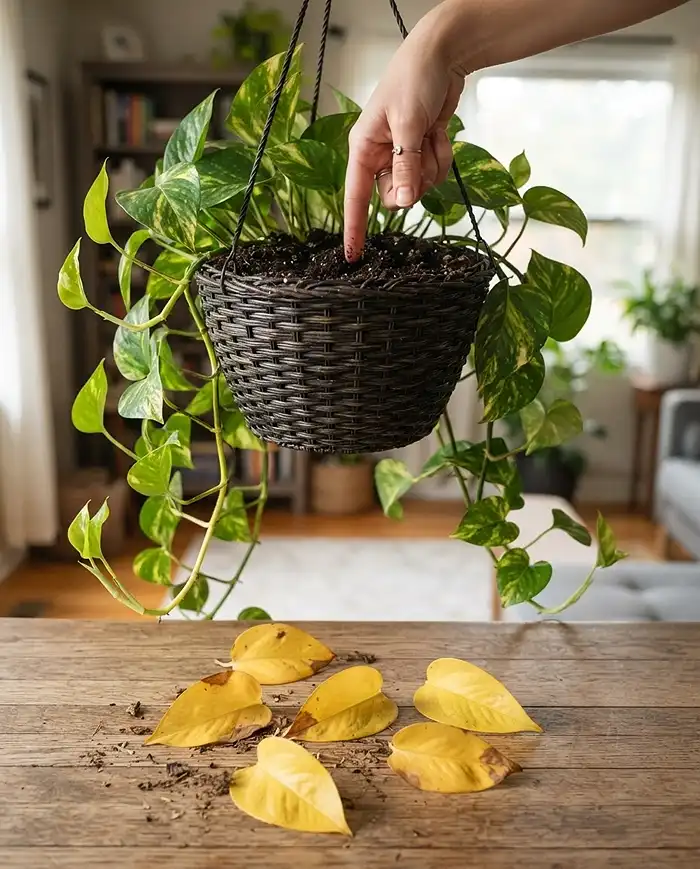
Short Answer: Dropping interior and shaded leaves right after the move is normal acclimation. The plant is shedding foliage it can’t support in lower light. Don’t panic and don’t overwater. Wait three to four weeks, keep watering on the finger test, and look for new growth at the tips.
Sticky Honeydew Sap on Floors or Furniture
Short Answer: Sticky residue on the floor under a hanging pot means honeydew [sugary waste from sap-sucking insects] from aphids or scale. Act the same day. Isolate the plant, wipe the leaves, and spray insecticidal soap every five to seven days for three weeks.
Scrape off scale [small brown bumps on stems] with a soft toothbrush or an alcohol-dipped swab before spraying.
Frequently Asked Questions
When exactly should I bring my hanging planters indoors?
Bring them in before nighttime temperatures consistently drop below 50°F (10°C). Cold shock can mark tropical leaves overnight. On my zone 7a rooftop, that usually happens in late October, so I start the quarantine about two weeks earlier.
How do I water hanging plants indoors without making a mess?
Take the pot down and water it thoroughly in the sink or shower. Let it drain for a full hour before re-hanging. Clip a saucer under it, and empty the saucer the same day so roots don’t sit in water.
Can I split a large outdoor hanging basket into smaller indoor pots?
Yes. Early fall is a good time to divide a root-bound basket, since the roots still have energy to recover. Dividing adds transplant shock on top of the move, so use fresh mix, water gently, and keep the new pots in bright, indirect light for two weeks.
Do hanging plants need a grow light indoors?
Often, yes. If your window faces north or is shaded, an LED grow light 12 to 18 inches above the plant for about 12 hours a day prevents leggy growth. Pothos and spider plants can often skip it. String of pearls and fuchsia usually can’t.
Can I bring in a hanging plant that already has bugs?
Treat it first, and keep it away from other plants until it’s clean. Light aphid or mite problems usually clear after two or three rounds of insecticidal soap or neem. If the plant is heavily infested and cheap to replace, tossing it is the safer call.
Which hanging plants should I compost instead of saving?
Petunias, calibrachoa, lobelia, and trailing verbena rarely survive indoors. They want strong sun and cool air, and they pick up pests fast. Replacing them in spring costs less than the effort of keeping them alive.
Quick Recap
- Bring plants in before nights stay below 50°F, and start the two-week quarantine earlier.
- Save pothos, spider plants, ivy, pruned fuchsia, and sunny-window succulents. Compost petunias.
- Prune by one-third, soak for 15 minutes, rinse, and treat with neem oil.
- Hang pots near an east or south window, away from vents, on hooks rated for 20 pounds or more.
- Water by the finger test and hold fertilizer until March, because bringing hanging plants indoors for winter is a slow handoff, not a rescue.