
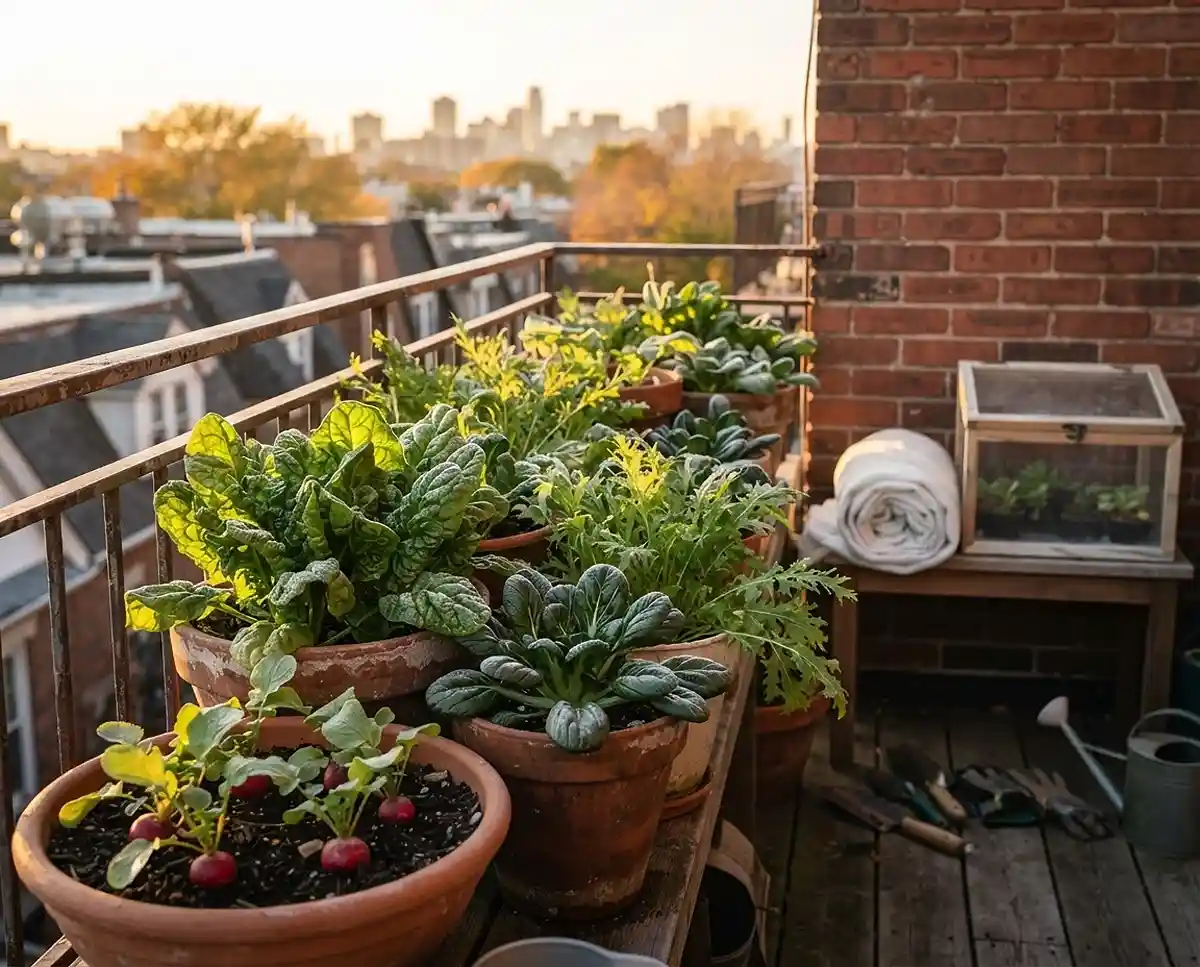
Vegetables to Plant in October: Best Crops for Winter
Think the growing season’s over? It’s not. The right vegetables to plant in October actually get sweeter from frost, and I’ve harvested fresh greens from my zone 6b balcony straight through December.
Table of Contents
The Secret to Vegetables to Plant in October
Most people pack up their trowels in September. That’s a mistake. October sowing targets “overwintering” crops — plants that biologically convert starches into sugar when temperatures drop, which is why frost-kissed spinach tastes noticeably sweeter than the summer version.
I learned this the hard way my first year gardening in Denver. I ripped out a half-grown mâche patch in early November because I assumed the cold would kill it anyway. It wouldn’t have. Mâche shrugs off snow.
This guide covers exactly which seeds to sow this month, how to time them against your first freeze, and the container garden tips that make this work even on a small balcony.
Planning Your October Garden and Microclimate
Before you sow anything, walk your space and note where the sun actually hits in late autumn — it’s lower in the sky and your summer sun spot may now be shaded.
Calculating Frost Dates and “Days to Maturity”
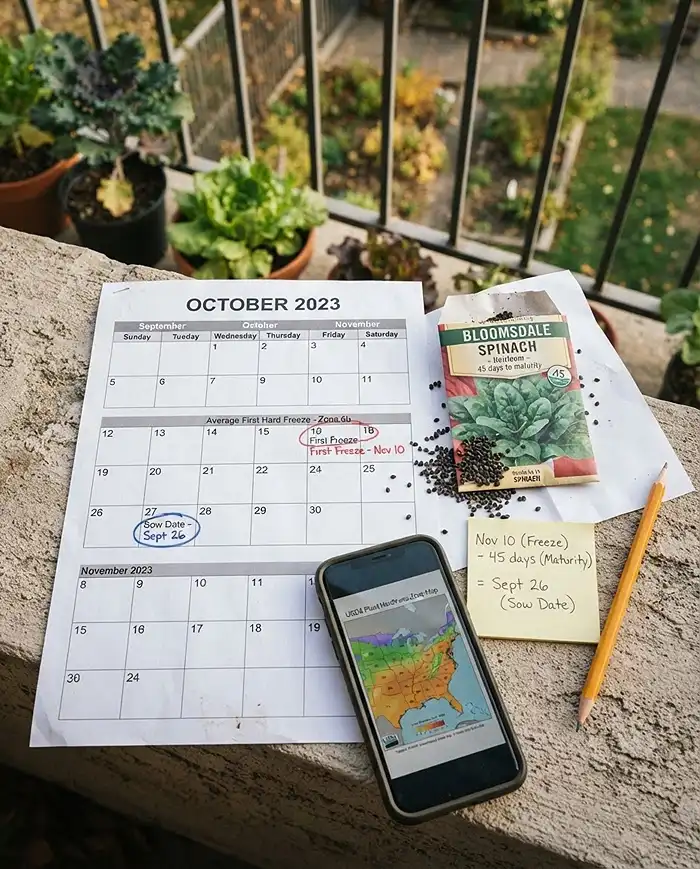
Quick Answer: Find your USDA hardiness zone’s average first hard freeze date, then count backward using the seed packet’s “days to maturity,” plus a 14-day buffer for slower fall growth.
Diminishing daylight in October slows photosynthesis, so a “30-day” radish often takes closer to 40-45 days this time of year. I always add that buffer after underestimating it my first two seasons and ending up with radishes the size of marbles.
You can check your zone and expected freeze window using the USDA Plant Hardiness Zone Map, which is updated with current climate data.
Utilizing Sun Angles and Thermal Mass
Quick Answer: Plant along south-facing walls made of brick or concrete — this “thermal mass” soaks up daytime heat and slowly releases it overnight, buying your seedlings several extra degrees of protection.
On my own balcony, I line containers against the brick exterior wall starting in mid-October. It’s one of the simplest container garden tips I know, and it’s saved multiple trays of tatsoi during early cold snaps.
- South or southwest-facing exposure captures the most low-angle autumn sun
- Brick, concrete, and stone all hold and radiate heat well after dark
- Avoid low spots where cold air pools — heat rises, cold sinks
Best Leafy Greens to Sow in October
These shade-tolerant, frost-hardy greens are the most forgiving place to start, especially if this is your first attempt at an october balcony garden.
Cold-Hardy Spinach and Mache (Corn Salad)
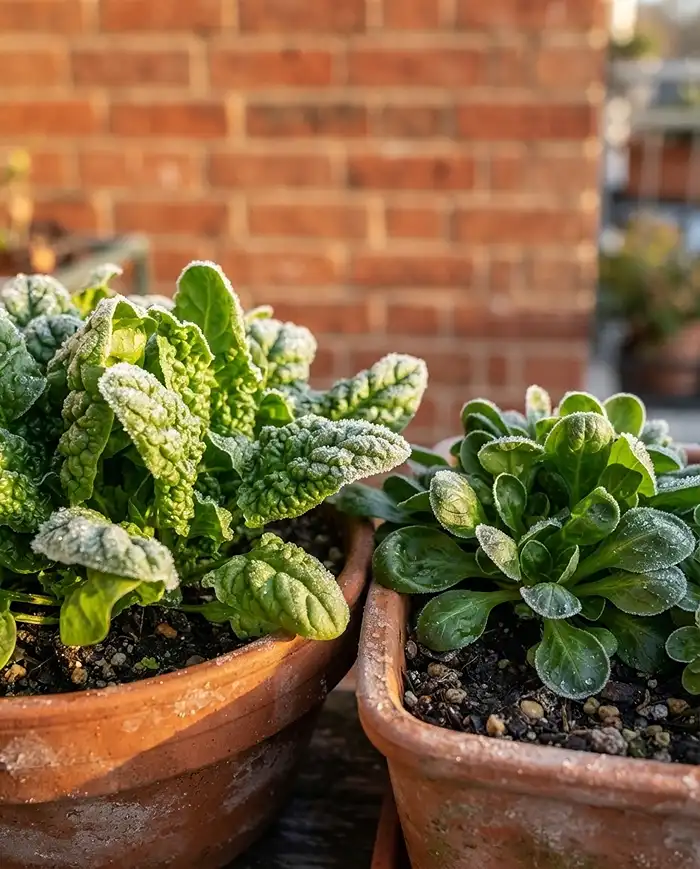
Quick Answer: ‘Bloomsdale’ spinach and mache (corn salad) are two of the toughest greens you can sow in October, both capable of surviving under snow cover and producing harvests into December.
‘Bloomsdale’ handles temperatures down to about 15°F once established, and mache goes even further, tolerating drops near 5°F under a light frost blanket.
| Green | Days to Maturity | Cold Tolerance |
|---|---|---|
| ‘Bloomsdale’ spinach | 45-50 days | Down to 15°F |
| Mache (corn salad) | 50-60 days | Down to 5°F, snow-tolerant |
| Tatsoi | 45 days | Down to 15°F |
| Mizuna | 40 days | Down to 20°F |
Real Example: I sowed ‘Bloomsdale’ on October 3rd in zone 6b and was still cutting leaves for salads the week before Christmas, under nothing more than a frost blanket.
Pro Tip: Cut mache and spinach leaves individually rather than pulling the whole plant — both will keep producing new growth for weeks.
Robust Asian Greens: Tatsoi and Mizuna
Quick Answer: Tatsoi and mizuna are extremely frost-tolerant Asian greens that grow fast in cool October air and add sharp, peppery texture to winter salads.
Tatsoi forms a tight rosette of dark green, spoon-shaped leaves that hugs the soil, which naturally protects its crown from wind chill. Mizuna is feathery and fast, often ready to harvest as baby greens in under a month.
Both are staples of container vegetable gardening because their compact root systems do well in pots as shallow as 6 inches.
Best Fast-Maturing Root Crops for October
Root vegetables need to size up before the ground truly freezes solid, so speed matters more here than with leafy greens.
30-Day Radishes: French Breakfast and Cherry Belle
Quick Answer: ‘French Breakfast’ and ‘Cherry Belle’ radishes are ideal vegetables to plant in October because they go from seed to harvest in under a month, well ahead of a hard freeze.
‘French Breakfast’ has an elongated shape with a mild, slightly peppery bite, while ‘Cherry Belle’ is the classic round, crisp radish most people picture.
- ‘French Breakfast’: 25-30 days, sow every 10 days for a continuous harvest
- ‘Cherry Belle’: 22-28 days, tolerates light frost once roots have formed
- Both need at least 6 inches of loose soil depth in pots
Real Example: I direct-sowed ‘Cherry Belle’ in a 10-inch container on October 5th and pulled the first batch October 30th, right on schedule.
Baby Turnips for a Quick Winter Yield
Quick Answer: ‘Hakurei’ baby turnips are a fast, sweet option for vegetables in pots, maturing in about 38 days with golf-ball-sized white roots.
Unlike older turnip varieties, ‘Hakurei’ is tender enough to eat raw, and a touch of frost in late November actually boosts its sugar content noticeably.
Pro Tip: Thin turnip seedlings to 3 inches apart early — crowded roots stay small and woody instead of rounding out.
Essential Supplies for Late Autumn Sowing
A few key materials make the difference between seedlings that limp along and ones that thrive as temperatures drop toward freezing.
Cold Frames and Frost Blankets
Quick Answer: Heavy-duty horticultural fleece (frost blankets) or a simple polycarbonate cold frame trap geothermal heat overnight, acting like a mini greenhouse for October-sown crops.
I run a basic cold frame built from an old window sash over one of my raised containers, and it’s routinely 8-10°F warmer inside than the outside air on clear nights.
A frost blanket rated for 4-8 degrees of protection is usually enough for the crops in this guide, as long as it’s anchored down so wind doesn’t lift it.
Formulating a Fast-Draining Winter Soil Mix
Quick Answer: Blend quality compost with 30% perlite and coarse sand to guarantee fast drainage — waterlogged winter soil is the fastest way to kill new seedlings with root rot.
This ratio matters more in containers than in open beds, since pots have nowhere for excess water to go once the ground below them freezes.
Step-by-Step Guide to Sowing Seeds in October
Quick Answer: Clear old summer debris, amend the top 3 inches of soil with fresh compost, sow seeds slightly shallower than spring depth, and water in with tepid (not cold) water.
- Pull spent summer plants and roots completely, including any diseased foliage
- Work 2-3 inches of fresh compost into the top 3 inches of soil
- Sow seeds about 25% shallower than the packet’s spring guidance to catch surface warmth
- Water gently with tepid water to avoid shocking the soil temperature
- Cover with a frost blanket immediately if nighttime lows are near 40°F
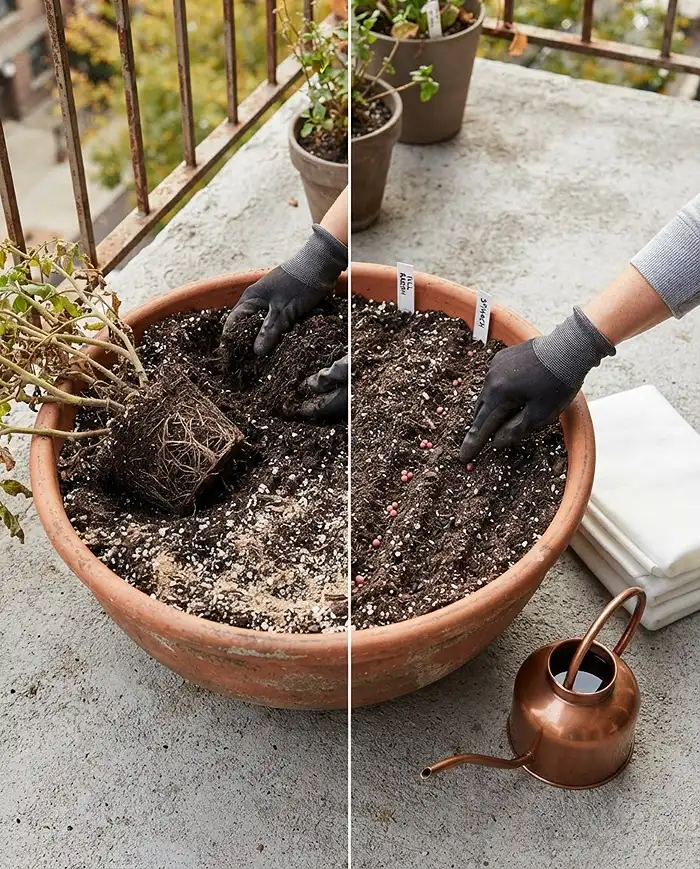
This routine is one of the simplest container garden tips for beginners — the shallower sowing depth alone noticeably speeds up germination once soil temperatures start dropping.
Winter Maintenance for October-Sown Crops
Evaporation slows dramatically as the air cools, so your watering and monitoring routine needs to shift with it, not stay on autopilot.
Adjusting Watering for Freezing Temperatures
Quick Answer: Switch to a strict finger-test method — water only on mild, sunny mornings so foliage has time to dry completely before nighttime temperatures drop below freezing.
Wet leaves going into a hard freeze are a recipe for cell damage. I water before 10 a.m. on sunny days only, never in the evening, once nights start dipping under 32°F.
Managing Frost Covers and Daily Venting
Quick Answer: Vent cold frames and frost covers on any day above 40°F (4°C) to release trapped humidity and prevent fungal disease or accidental cooking of your plants.
I once left a cold frame sealed on an unexpectedly sunny 55°F afternoon and came back to wilted, steamed tatsoi. Now I check the forecast every morning without fail.
Common Problems and Solutions
Late-season sowing brings a couple of predictable headaches, but both are easy to fix once you know what’s happening.
Seeds Failing to Germinate in Cold Soil
Quick Answer: Seeds need soil temperatures above 50°F to germinate, even for cold-hardy crops — pre-sprout seeds indoors on a damp paper towel, or warm the soil under clear plastic before sowing.
Mature spinach shrugs off frost, but a dormant seed sitting in 45°F soil simply won’t sprout. I lay clear plastic sheeting over containers for 3-4 days before sowing to nudge soil temps up.
Damping Off and Winter Fungal Rot
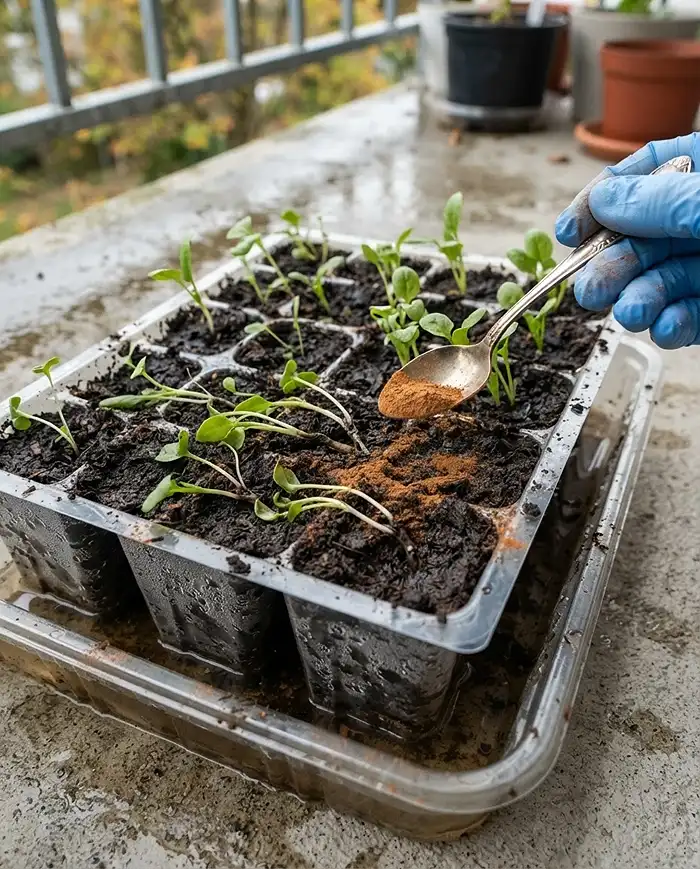
Quick Answer: Damping off causes seedlings to suddenly wither and collapse at the soil line from cold, wet dirt — prevent it by bottom-watering only and sprinkling ground cinnamon on the soil surface as a natural fungicide.
Bottom-watering (setting containers in a shallow tray) keeps the soil surface drier, which is the single biggest factor in avoiding this problem.
Frequently Asked Questions
Can I grow October vegetables in containers?
Yes, growing October vegetables in containers works well. Push pots directly against a heated building wall and wrap the outside in bubble wrap or burlap to keep the root ball from freezing solid.
Will a hard freeze kill my new seedlings?
Mature spinach and mache resist frost, but young seedlings are vulnerable until established. Use frost blankets or cloches every night until plants develop at least three sets of true leaves.
Should I fertilize my winter vegetables?
Avoid fast-acting, high-nitrogen liquid fertilizers in late autumn, since they push tender growth that frost kills instantly. Rely on slow-release compost worked in at planting time instead.
Conclusion
The best vegetables to plant in October aren’t a compromise — they’re some of the sweetest food you’ll grow all year, whether in a garden bed or a balcony pot.
Start with ‘Bloomsdale’ spinach, mache, or a batch of ‘Cherry Belle’ radishes, add a frost blanket, and check your first freeze date. For more on fall container vegetables, fast fall root vegetables in pots, and autumn balcony garden ideas, keep exploring what’s possible this season.
Key Takeaways
- October is prime time for vegetables to plant in October like spinach, mache, tatsoi, mizuna, radishes, and baby turnips
- Add a 14-day fall factor buffer to seed packet maturity dates to account for shrinking daylight
- South-facing walls with thermal mass and a basic frost blanket extend your harvest window significantly
- Container vegetable gardening works fine for winter crops if pots sit against a heated wall and get wrapped for insulation
- Water only on mild mornings once nights drop below freezing, and vent covers above 40°F to prevent fungal issues