
Pruning Tomatoes End of Season
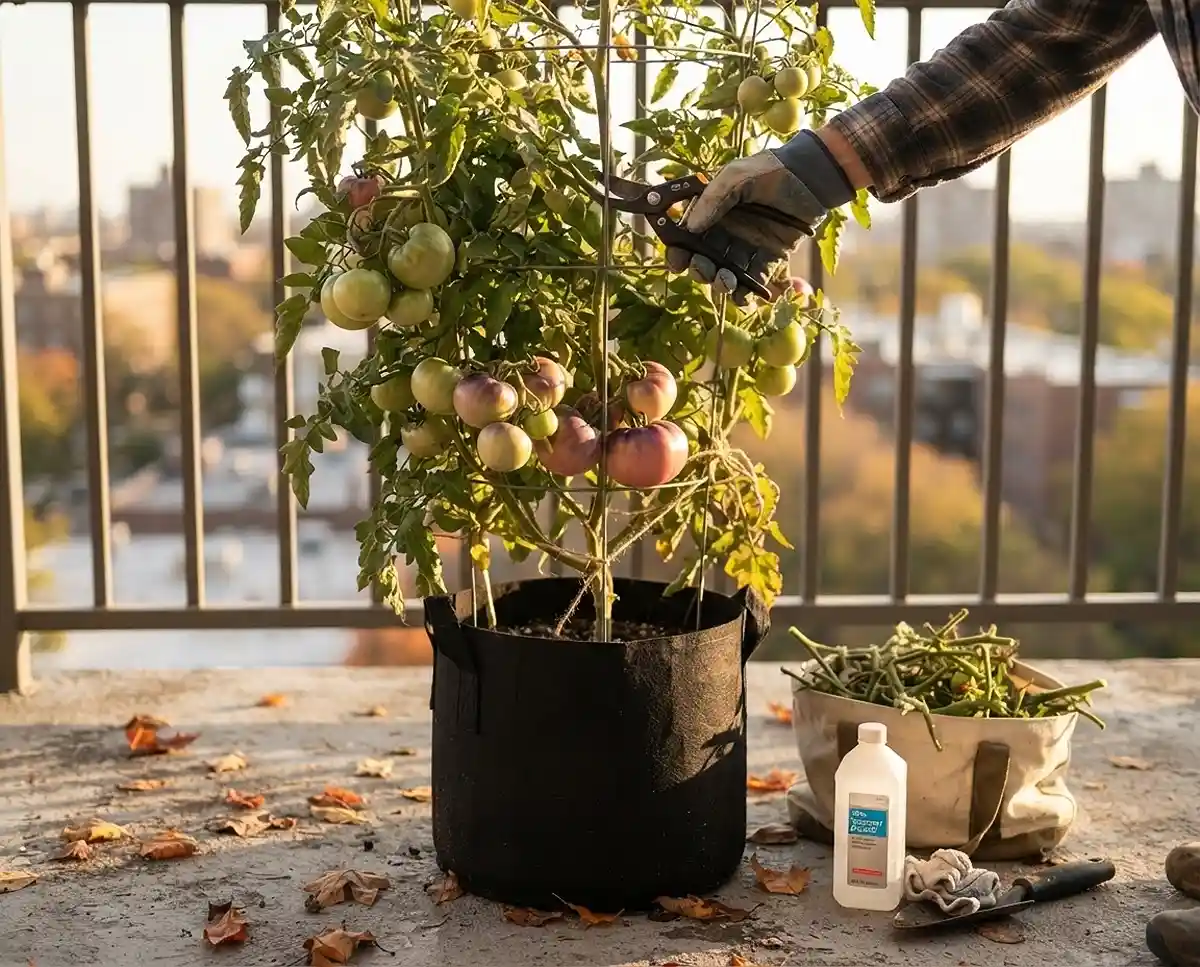
Pruning tomatoes end of season forces green fruit to ripen before frost hits. Here’s how I top tomatoes in containers on my balcony and save the harvest.
I grow indeterminate varieties like ‘Sungold’ and ‘Cherokee Purple’ in 15-gallon pots on a south-facing balcony in zone 6b. Every October I faced the same mess: dozens of green tomatoes and a frost warning. Here’s the fix that finally worked.
Table of Contents
The Final Countdown: Why Pruning Tomatoes at the End of Season Is Mandatory
Quick Answer: Left alone, an indeterminate tomato keeps making leaves and flowers until frost kills it, leaving you with hard green fruit. Topping the plant in early fall stops that growth and pushes the vine to ripen the fruit it already has.
Indeterminate tomatoes [varieties that keep growing all season] don’t know summer is ending. They keep stretching, flowering, and setting fruit until the first killing frost, which means 28°F (-2°C) or lower.
The result is a tall vine loaded with fruit that never had time to mature. Pruning is the trigger that changes the plant’s priorities before the cold arrives.
Real Example: Two Octobers ago I skipped pruning my ‘Cherokee Purple’. The night before a 29°F frost, I picked 34 tomatoes. Only three ever turned red. The rest became fried green tomatoes and compost.
Once the vine is done, you can plan what goes into the pot next with these fall container vegetables.
The Biology Behind Pruning to Force Ripening
A tomato plant has one job: produce viable seed. While it has warmth and water, it treats every new leaf and shoot as a smart investment.
Pruning flips that logic. When you remove growing tips and fresh flowers, the plant has nowhere to spend energy except the fruit already on it. It reads the loss as the season ending.
This works especially well for tomatoes in containers, because a pot holds a fixed pool of nutrients. There’s no deep soil to fuel endless new growth.
Redirecting Energy from Foliage to Fruit
Water moves up through the plant’s xylem, while sugars made in the leaves travel through the phloem to wherever demand is highest. Growing tips and new leaf nodes are the biggest drains.
Cut them off and those sugars, plus the remaining soil nutrients, flow into the swelling green fruit instead. Full-sized tomatoes gain weight and start their color change sooner.
Pro Tip: Don’t just cut the top. Pinch new side shoots [suckers] every few days after topping, or the plant will quietly rebuild the drain you just removed.
Temperature, Ethylene, and the Maturation Process
Quick Answer: Tomatoes turn red using ethylene, a ripening gas they produce internally. That process stalls below 50°F (10°C) and works best between 68°F and 77°F (20 to 25°C). Warm sunlight on exposed fruit helps it along.
| Temperature | What Happens |
|---|---|
| Above 85°F (29°C) | Red pigment production slows; fruit turns orange or yellow |
| 68 to 77°F (20 to 25°C) | Ideal ripening range |
| 50 to 67°F (10 to 19°C) | Slower, uneven ripening |
| Below 50°F (10°C) | Ripening effectively stops |
As of fall 2026, NDSU Extension’s tomato ripening tips note that chilly nights in the 50s slow ripening significantly.
Trimming the canopy lets afternoon sun warm the fruit directly, which keeps ethylene production running a little longer.
Timing Your Late-Season Pruning Intervention
This method lives or dies on timing. Prune too early and you cut into your harvest. Prune too late and the fruit can’t ripen before frost.
The fix is to work backward from your local weather data and set a hard deadline. Then stick to it, even if the plant still looks lush and productive.
Calculating the 30-Day Frost Window Formula
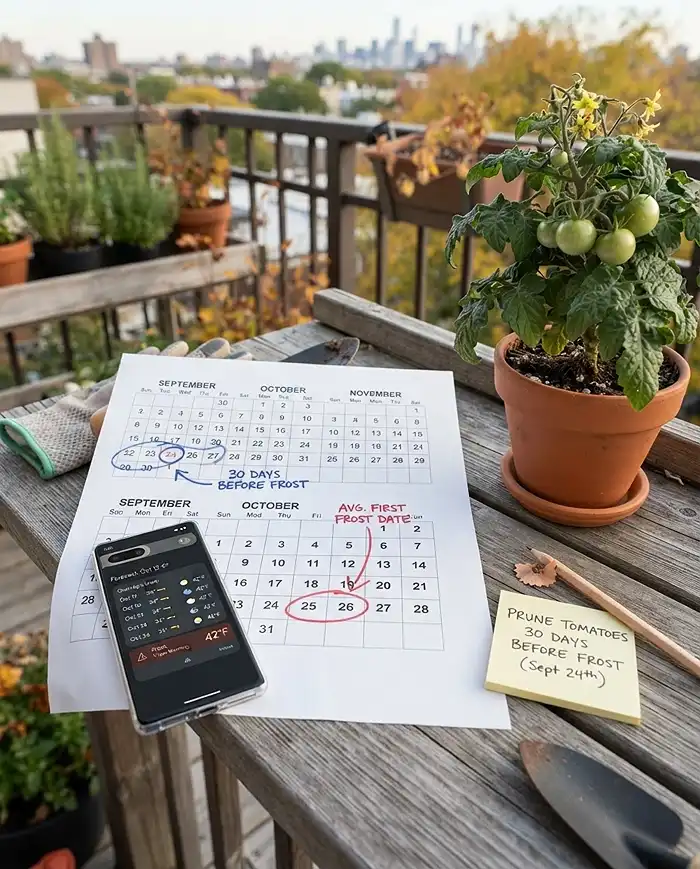
Quick Answer: Subtract 30 days from your average first frost date. That’s your mandatory pruning date. Topping the plant exactly four weeks before frost gives full-sized green fruit enough time to ripen on the vine.
Average First Frost Date − 30 Days = Mandatory Pruning Date
| USDA Zone | Typical First Frost | Prune By |
|---|---|---|
| 3 to 4 | Sept 15 to 30 | Aug 16 to 31 |
| 5 | Oct 1 to 10 | Sept 1 to 10 |
| 6 | Oct 10 to 25 | Sept 10 to 25 |
| 7 | Oct 25 to Nov 10 | Sept 25 to Oct 11 |
| 8 | Nov 10 to 25 | Oct 11 to 26 |
My zone 6b average first frost is around October 20, so I top my plants on September 20. Check your exact date with your local extension office, since frost dates shift block by block.
Essential Tools for Sanitary Autumn Pruning
Aggressive cuts on a mature plant create open wounds. Dirty tools can carry fungal and bacterial infections straight into them.
In container vegetable gardening, one sick plant can infect its neighbors fast, because pots sit only inches apart on a balcony. Clean gear is cheap insurance.
Sterilized Bypass Pruners and Disposal Bags
Use sharp bypass pruners, which slice like scissors and leave clean cuts that heal quickly. Anvil pruners crush stems, and crushed tissue invites disease.
- Bypass pruners, sharpened before the season starts
- 70% isopropyl alcohol and a rag to wipe blades between plants
- Heavy-duty trash bags for every removed leaf and stem
- Disposable gloves you can toss afterward
Bag all trimmings immediately. Don’t drop them on the soil or add them to compost, since blight spores can wash into your potting mix. Tie the bag and put it in the trash.
Pro Tip: Wipe your blades after every single plant, not just at the start. I keep an alcohol wipe in my back pocket.
Step-by-Step Guide to Pruning Container Tomatoes for Fall
Work in this order: top first, then remove flowers, then strip the bottom. Doing it in sequence keeps you from removing too much leaf area at once, which can shock the plant.
- Step 1: Top the main stem above the highest mature fruit cluster
- Step 2: Pinch off every flower and tiny fruit
- Step 3: Strip yellowing lower leaves for airflow
Step 1: “Topping” the Main Central Leader
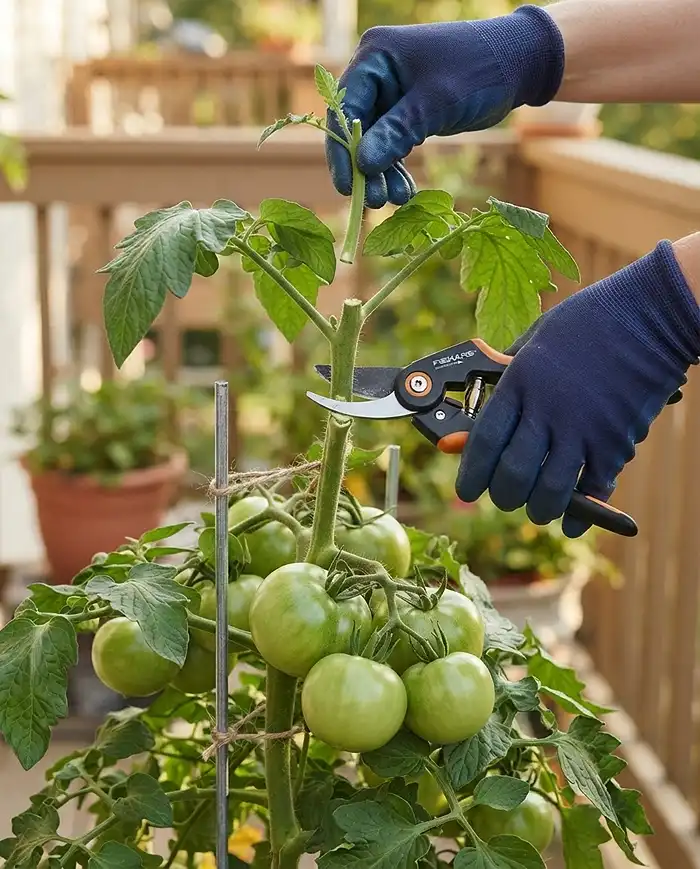
Find the highest growing point of the main stem, called the apical meristem [the tip where new growth starts]. Cut about one inch above the highest cluster of fully formed green fruit.
That cut halts upward growth for good. If a leaf sits just above the cluster, leave it to shade the fruit. If the plant has several leaders [main stems], top each one.
Real Example: On September 20 last year, I topped my ‘Better Boy’ in a 20-gallon pot. It carried 14 full-sized green fruits. By October 22, eleven had turned red on the vine.
Step 2: Ruthlessly Removing New Flowers and Tiny Fruit
Pinch off every yellow blossom and every fruit smaller than a golf ball. Be merciless. These have essentially zero chance of maturing before frost and only steal energy from the bigger tomatoes.
Use your thumbnail or pruners. Then check for suckers [side shoots growing between the stem and a branch] and pinch those too. Repeat every three or four days until frost.
Step 3: Stripping the Lower Canopy for Airflow
Remove the bottom 12 to 18 inches of yellowing or decaying leaves. Cut each stem close to the main trunk with clean pruners rather than tearing it.
Airflow near the soil line matters more than you’d think in a cramped container. Cool, humid autumn air spreads powdery mildew and other fungal problems fast through crowded foliage.
If the plant is huge, split Steps 1 and 3 across two mornings. Leave the healthy green leaves in the middle canopy for now.
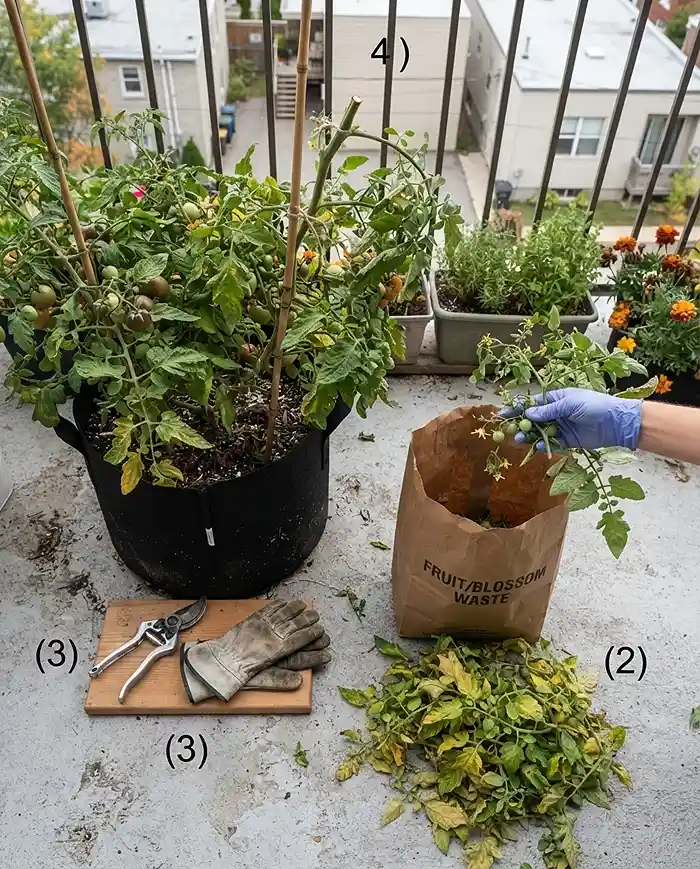
Post-Pruning Maintenance to Accelerate Ripening
After pruning, your daily routine shifts. The goal is mild stress, which acts as a second trigger telling the plant its life cycle is ending.
Here’s one of my favorite container garden tips: once the plant is topped, doing less gets you more red tomatoes.
Inducing Maturation Stress by Withholding Resources
Quick Answer: Cut your watering frequency roughly in half and stop all fertilizer, especially nitrogen. Mild dryness signals that the plant’s life cycle is ending, which speeds ripening. Water only when the top 2 inches of soil feel dry.
Nitrogen is the enemy now. It tells the plant to grow new leaves, exactly what you just spent an afternoon stopping. Skip fish emulsion, compost tea, and all-purpose feeds until the season ends.
Don’t overdo it, though. Vegetables in pots dry out faster than in-ground beds, and a severely wilted plant can crack its fruit. Water deeply, then let the soil dry before the next round.
When the tomatoes finish, refill that pot with radishes or baby turnips. These fast fall root vegetables in pots finish before the hard freezes arrive.
Common Problems & Solutions
Two problems show up most often after heavy fall pruning: sunscald and late blight. Both are easy to prevent once you know what to watch for.
Sunscald on Newly Exposed Fruit
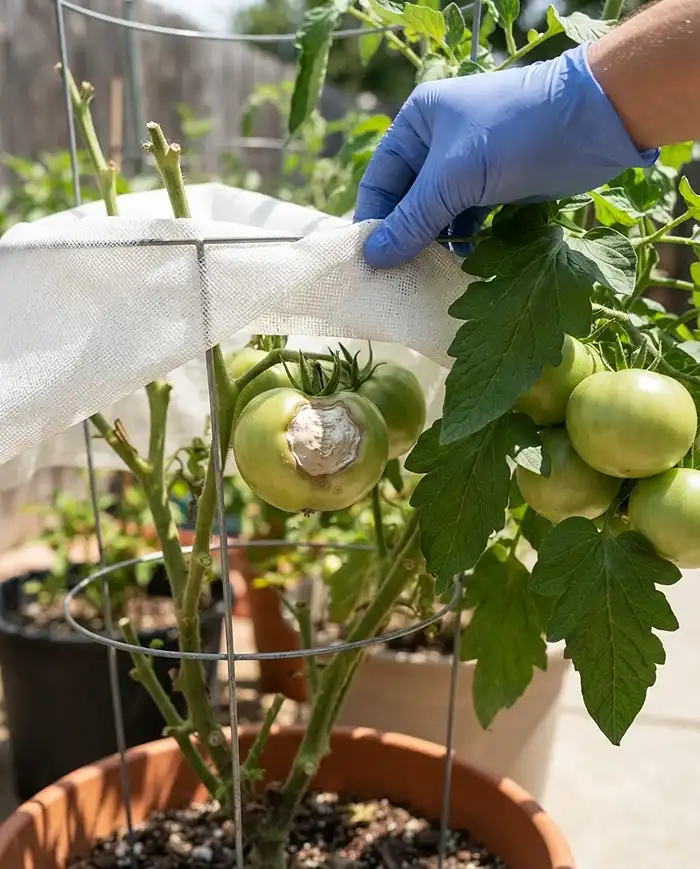
Strip too much mid-canopy foliage and shaded green tomatoes suddenly face intense UV radiation. The result is sunscald: white, blistered, papery patches on the fruit.
Leave a few umbrella leaves directly above each fruit cluster. If you’ve already overdone it, drape 30% shade cloth over the pot during the hottest afternoon hours.
Late Blight Infiltrating Open Pruning Wounds
Cool, damp autumn air invites late blight spores into fresh pruning cuts. Always prune on a dry, sunny morning so the wounds can scar over before evening dew settles.
Real Example: I once pruned a ‘Sungold’ at 5 p.m. right before a foggy night. Within a week, dark, greasy lesions crept up the stem, and I lost the plant.
Pro Tip: Skip pruning day entirely if rain is forecast within 24 hours. Wet cuts are open doors for disease.
pruning tomatoes end of season FAQs
Do I need to prune determinate (bush) tomatoes at the end of the season?
No. Determinate tomatoes like ‘Roma’ and ‘Celebrity’ stop growing on their own and ripen most of their fruit within a few weeks. Skip topping the main stem and only remove diseased or yellowing lower leaves to keep air moving around the container.
What do I do if a hard freeze is forecast before my tomatoes ripen?
Harvest every full-sized green tomato before the freeze hits. Fruit with a blush of color at the blossom end, called the breaker stage, ripens reliably indoors in a paper bag at 60 to 70°F (15 to 21°C). Check the bag every couple of days and remove ripe fruit.
Can I move my container tomato indoors to keep it growing?
It’s rarely worth it. A large tomato vine in a low-light room usually gets aphids and drops leaves everywhere. Harvest the fruit and compost the exhausted plant if it’s disease-free. For winter tomatoes, start a compact variety like ‘Tiny Tim’ under grow lights instead.
How long do green tomatoes take to ripen after end-of-season pruning?
Full-sized mature green tomatoes typically start blushing within 1 to 2 weeks and finish ripening within 3 to 4 weeks when daytime temperatures stay between 68 and 77°F (20 to 25°C). Cooler weather stretches that timeline.
What if I’m already inside the 30-day frost window?
Top the plant right away anyway. Fewer fruits will ripen on the vine, so pick every mature green tomato before the first frost and finish ripening them indoors. Late pruning still beats leaving the vine untouched.
Key Takeaways
- Pruning tomatoes at the end of season means topping the vine, pinching flowers, and stripping lower leaves so energy flows into existing fruit.
- Prune 30 days before your average first frost date, on a dry, sunny morning, using alcohol-sterilized bypass pruners.
- Cut watering roughly in half and skip nitrogen to trigger ripening, but leave umbrella leaves above fruit clusters to prevent sunscald.
- Skip topping on determinate varieties, and harvest every full-sized green tomato before a hard freeze. Iowa State Extension explains how to ripen picked green tomatoes indoors.
- Reuse the emptied pot with these cool-season shade container combos.