
Fall Planter Color Schemes
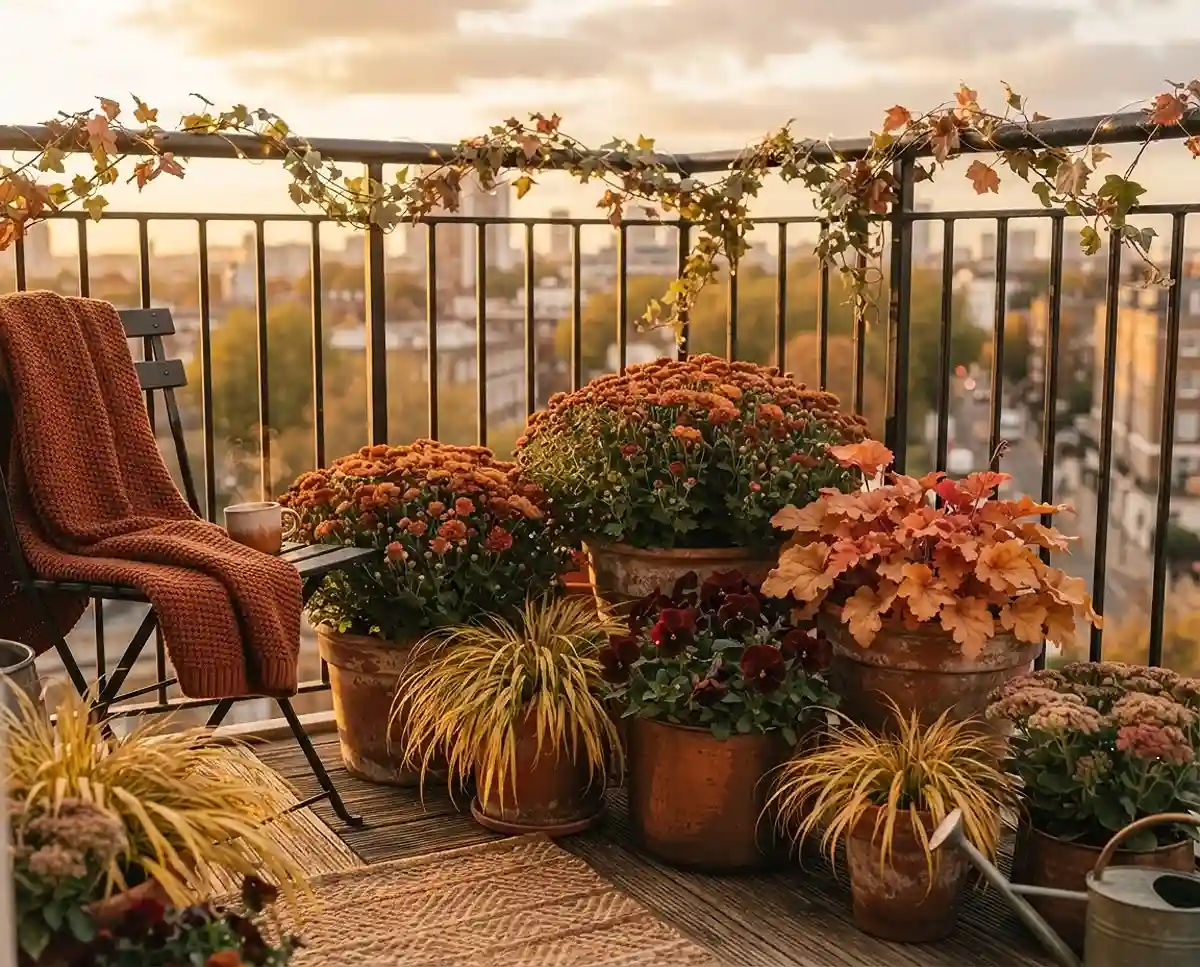
Fall planter color schemes in amber and rust turn a tired small balcony garden into a warm autumn retreat. Here’s exactly which plants and pots to use.
I’ve restyled my fourth-floor, west-facing balcony (USDA zone 6b, about 30 square feet) in these tones for six Octobers now. These balcony garden ideas cost me under $120 and work in almost any apartment.
Table of Contents
Fall Planter Color Schemes: Amber and Rust in Small Spaces
By late September, most balconies look worn out. Faded petunias, leggy basil, mismatched pots. A strict palette of amber, rust, and burnt orange fixes that fast, because repeating three warm tones makes even a chaotic corner look planned.
Small spaces reward restraint. On 30 square feet, every color competes for attention. Limiting yourself to warm foliage, copper and terracotta containers, and one soft glow of light feels calm instead of crowded.
Want more apartment balcony garden ideas for other seasons? That guide covers year-round layouts. For broader color pairing, see this balcony color palette guide.
Assessing the Autumn Microclimate for Color Vibrancy
Before you buy anything, audit your balcony. Deep amber and rust pigments only develop when foliage gets enough light and nights dip below roughly 50°F. Your balcony’s sun, wind, and temperature swings decide whether this palette actually shows up.
Sunlight’s Impact on Warm Foliage Colors
Quick Answer: Foliage plants need 4 to 6 hours of direct sun to produce rich red, rust, and amber pigments. With less light, leaves stay green or fade to a muddy brown.
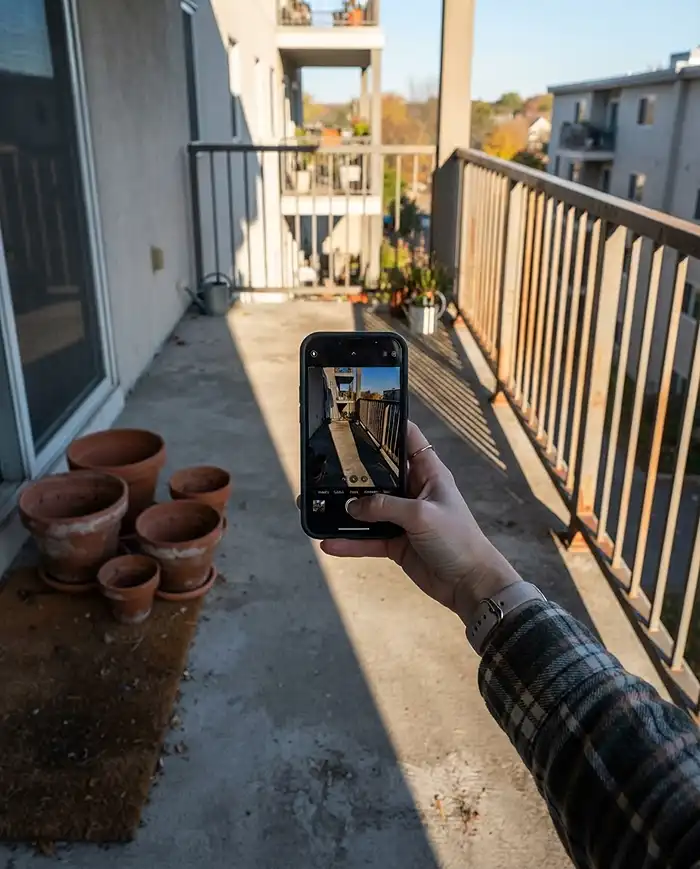
The autumn sun sits much lower than in July, so your summer sun map is wrong. On a clear day, check your balcony at 10 a.m., noon, and 3 p.m. and note which corners stay lit.
Put your color-hungry plants, like Heuchera and mums, in the brightest spots. Save the dimmer corners for pots, lanterns, and blankets, which don’t need photosynthesis.
Pro Tip: Photograph your balcony at those three times and flip between the images. Shadow patterns jump out immediately.
Wind Protection for Delicate Fall Blooms
Wind is the quiet killer of fall containers. Cold crosswinds brown petal edges and snap brittle mum stems long before frost does. Your apartment walls and railing can work as free windbreaks.
Line the tallest, sturdiest pots along the windward side. Then tuck delicate pansies and flowering mums behind them, against the wall. A slatted bamboo or reed screen on the railing, about 3 feet tall, blocks most gusts while still letting light through.
Pro Tip: Check your lease before attaching anything to the railing. Tension-mounted or freestanding screens usually avoid the issue.
Selecting Plants for an Amber and Rust Palette
You want cold-hardy plants that show warm color naturally and stay compact enough for containers. Here’s my short list, as of fall 2026. Remember that container roots are more exposed than in-ground roots, so treat every zone rating as about one zone less hardy.
| Plant | Best For | Watch Out For |
|---|---|---|
| Garden mums (Chrysanthemum) | Copper and bronze focal blooms | Fade fast if bought in full bloom |
| Pansies | Mahogany-red color that shrugs off light frost | Melt in warm spells above 80°F |
| Heuchera ‘Caramel’ and ‘Peach Flambé’ | Amber and rust leaves, zones 4-9 | Crown rot in soggy soil |
| Coleus | Bronze and copper foliage until frost | Frost-tender, dies below freezing |
| Bronze hair sedge (Carex comans) | Spilling bronze texture, zones 7-9 | Marginal in zone 6b containers |
| Japanese forest grass (Hakonechloa ‘Aureola’) | Golden arching leaves, zones 5-9 | Scorches in hot afternoon sun |
Rust-Toned Floral Thrillers: Mums and Pansies
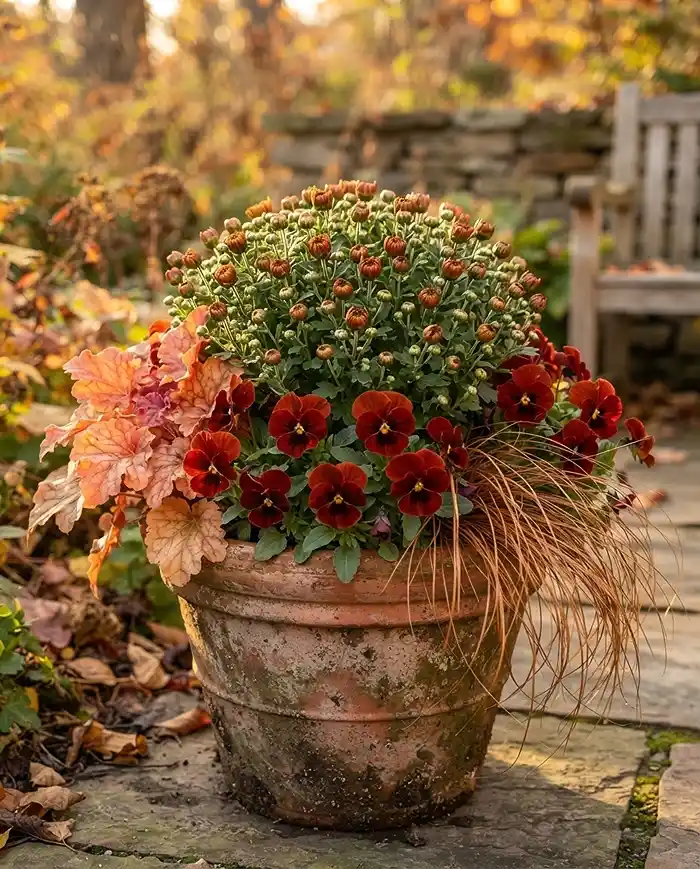
Quick Answer: Buy copper-colored mums with tightly closed buds, showing color only at the tips. Pair them with mahogany-red pansies at their base. Closed buds keep blooming through late November instead of peaking in three weeks.
Real Example: In October 2022, I grabbed bronze mums already in full bloom. By October 24, they were brown and crispy. The next year I bought tight-bud mums in mid-September and got flowers until November 20.
Plant pansies around the mum’s base. They fill the gaps and keep blooming after the mums finish.
Amber and Bronze Foliage Fillers: Heuchera and Coleus
Foliage does the heavy lifting in this palette, because flowers eventually fade and leaves don’t. Coral bells (Heuchera) ‘Caramel’ gives true amber, while ‘Peach Flambé’ leans rusty peach. Both deepen in color as nights cool.
Late-season coleus in bronze and copper shades adds bold texture. But it’s frost-tender, so bring it inside when nights hit 45°F, or enjoy it as a fall-only bonus.
Real Example: My 12-inch pot of ‘Caramel’ Heuchera outlasted three sets of mums and came back the following spring.
Golden Spillers and Grasses for Sweeping Movement
Grasses add movement, and they catch warm afternoon light beautifully. Bronze hair sedge (Carex comans) drapes over pot edges like copper threads. Golden Japanese forest grass (Hakonechloa ‘Aureola’) arches into soft, glowing waves.
Both are compact enough for a 10-inch pot. Carex is only rated to zone 7, so in colder zones treat it as a seasonal accent. Forest grass prefers morning sun and afternoon shade, so give it a spot near the wall.
Choosing Complementary Containers and Decor
Plants set the palette, but containers and decor finish the look. The right materials should feel like part of the same amber and rust story, not an afterthought.
Unglazed Terracotta and Copper Planters
Quick Answer: Unglazed terracotta matches the rust palette and breathes, which helps prevent cold-weather root rot. Mix it with genuine copper or bronze-toned metal planters that reflect low autumn sunlight.
In a small balcony garden, stick to three sizes: 14-inch anchors for corners, 10-inch mid-size pots, and 6-inch accents. Repeating sizes looks intentional.
- Terracotta pots wick excess water through their walls, so roots stay drier during damp autumn weeks.
- Copper planters need drainage holes, so drill them if they don’t have any.
- Raise every pot on feet so water can escape underneath.
Integrating Cozy Amber Lighting and Textiles
Hard railings and concrete need softening. Drape a washable, rust-colored outdoor blanket over your seating. Then add warm-white LED fairy lights (2200K to 2700K) for a low, amber glow when the sun sets around 6 p.m.
- Choose weatherproof, low-heat LED strings, not candles, since open flames are a hazard on balconies.
- Pick solar strings if you have no outlet.
- Wash blankets monthly, because damp fabric mildews fast.
Step-by-Step Guide to Planting Your Color-Themed Balcony
Here’s the order I follow every fall. It takes one weekend. For more layout inspiration, check these balcony garden ideas for apartments.
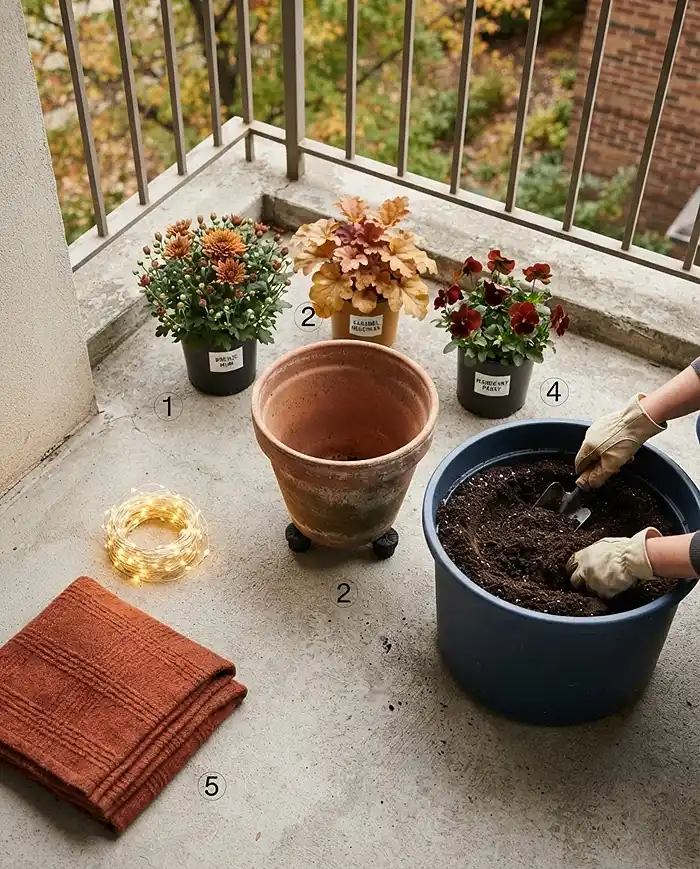
- Deep clean the floor, railings, and old pots. Remove summer debris and scrub away algae.
- Position the heavy terracotta anchor pots in the corners first, before filling them.
- Refresh old potting soil by mixing in about one-third fresh compost.
- Plant densely: one mum or grass in the center, Heuchera beside it, pansies around the edge.
- Finally, stage the lighting and textiles, then step back and adjust.
Maintenance to Preserve Fall Plant Colors
Summer’s daily soaking routine no longer applies. As heat fades into cooler, damp weather, your care shifts from watering often to watching closely and trimming often.
Adjusting Watering to Prevent Leaf Fade
Switch to the finger test. Push a finger 1 to 2 inches into the soil, and water only when it feels dry. Cooler temperatures slow evaporation dramatically, so a pot that needed daily water in August may need it weekly now.
Overwatering is the fastest way to ruin this palette. Soggy soil suffocates roots, and vibrant leaves turn a sickly, rotting yellow within days.
Deadheading to Maintain the Color Scheme
Deadheading [removing spent flowers] keeps the palette sharp. Pinch off fading mum blooms and snip pansy heads at the base as soon as they brown. Decaying petals dull the color scheme and invite fungus.
Do this every 3 to 4 days. Each removed bloom pushes the plant to send up fresh, brightly colored flowers instead of setting seed.
Common Problems & Solutions
Cool-weather color-themed containers fail in predictable ways. Most problems trace back to too little light or too much moisture, and both are fixable.
Fading Colors Due to Sun Starvation
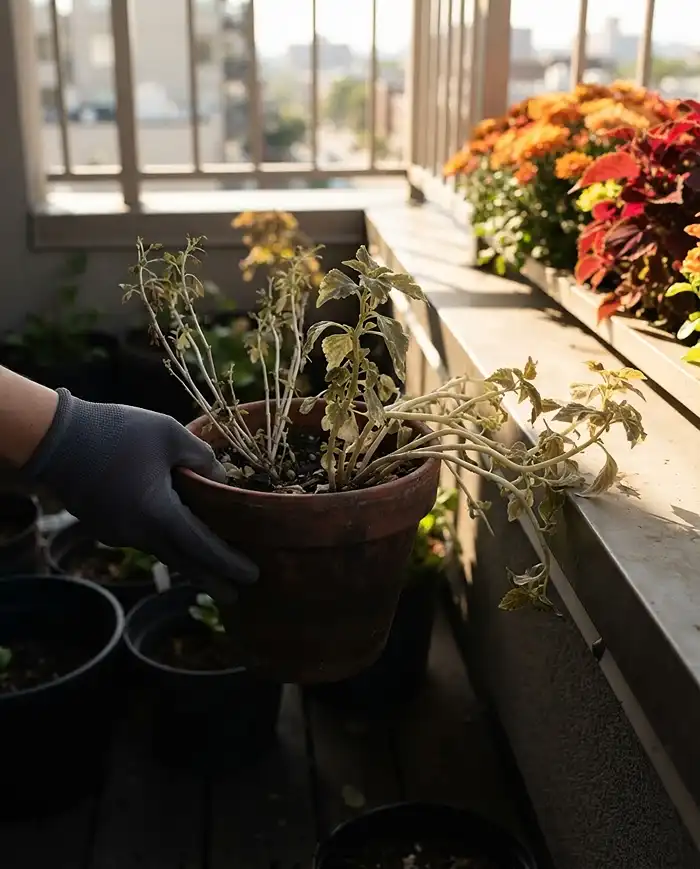
Etiolation [stretched, pale growth reaching for light] and washed-out pigment mean your plant is starving for sun. Amber foliage in deep shade looks green and floppy.
Move struggling pots to the outermost, brightest edge of the balcony railing right away.
Real Example: I once parked amber coleus behind my patio chair. Within two weeks it went stretched and greenish-brown. Moved to the railing, new growth came in bronze.
Powdery Mildew Discoloring Autumn Leaves
Powdery mildew is a white, dusty coating that ruins dark foliage during cool, humid autumn nights. Mums and coleus are common victims.
Mix 1 tablespoon of potassium bicarbonate per gallon of water and spray all leaf surfaces, including undersides. Repeat every 7 to 14 days, following the label.
The UConn Home and Garden Education Center’s mildew guide explains why airflow matters as much as any spray.
Leave 3 to 4 inches between pots so air can move through the foliage.
fall planter color schemes FAQs
How do I keep terracotta pots from cracking in winter?
Terracotta cracks because water trapped in the porous clay expands when it freezes, a process called frost heave. Empty saucers completely after every rainstorm, and move pots indoors or into a sheltered spot before the first deep winter freeze.
Can I use summer potting soil for my fall color garden?
Yes, unless the summer plant died of disease. Remove the old root mass, then amend the top third of the pot with fresh, nutrient-rich compost. Completely replacing the soil is not necessary.
What is the best way to contrast amber and rust plants?
Add a few subtle cool elements in the background so warm tones pop. Silvery-blue fescue grass or dark, moody purple foliage gives a high-end contrast to orange and rust hues.
When should I buy fall mums for a balcony?
Buy mums in early to mid September while buds are still tightly closed and showing color only at the tips. This timing gives you blooms into late November instead of a three-week peak.
How many plants fit in a 14-inch fall planter?
A 14-inch pot holds about five to seven small plants. Try one mum or grass in the center, two Heuchera beside it, and two or three pansies around the edge for a full, layered look.
Key Takeaways
- Great fall planter color schemes stick to three warm tones: amber, rust, and burnt orange.
- Give color plants 4 to 6 hours of direct sun, and shield delicate blooms from wind.
- Buy mums with tight buds, and rely on Heuchera and grasses for long-lasting foliage color.
- Use terracotta and copper containers, and water only when the top 1 to 2 inches feel dry.
- Deadhead often and space pots apart to prevent powdery mildew.