
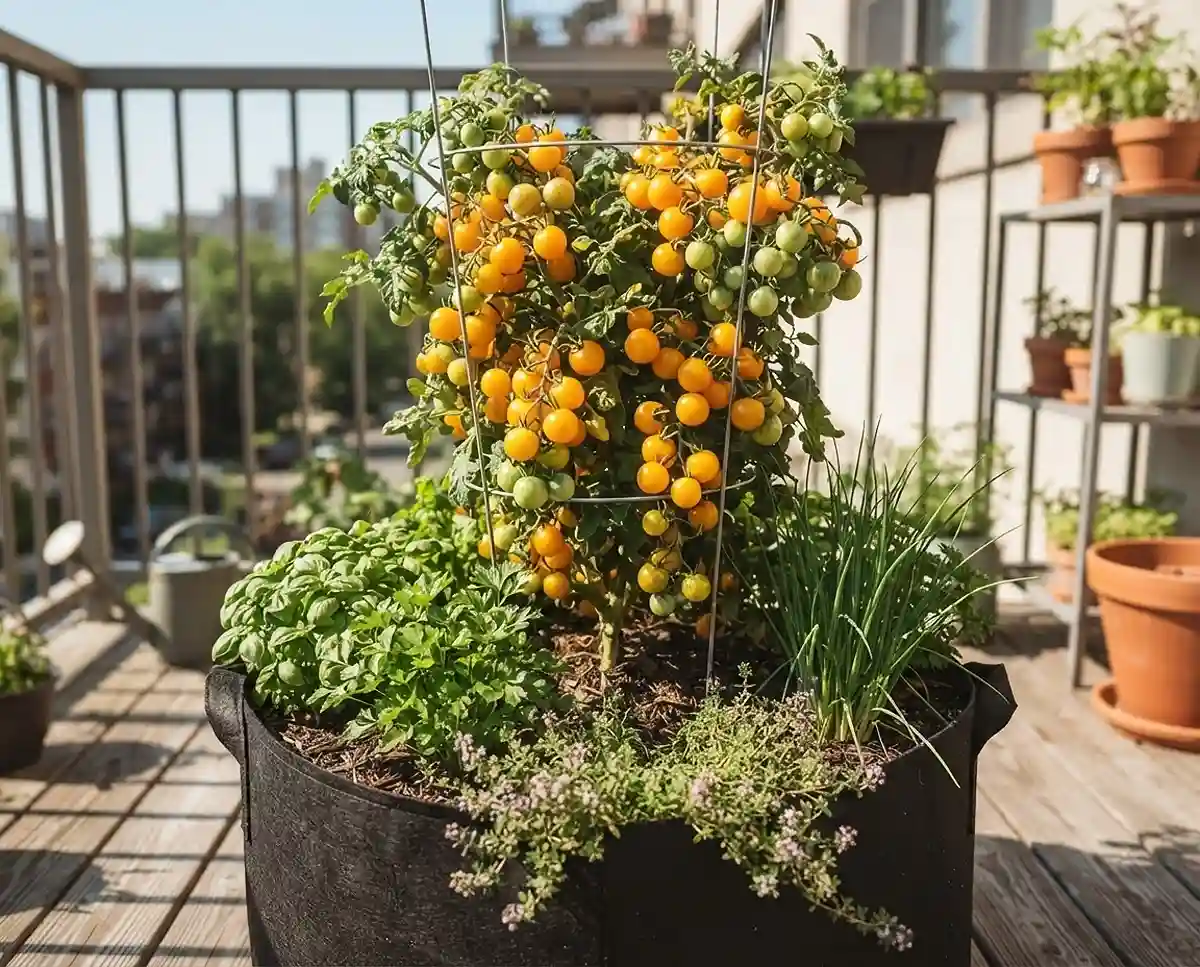
Companion Herbs for Cherry Tomatoes
The right companion herbs for cherry tomatoes do three things at once: repel pests, cool the soil, and genuinely improve fruit flavor — all without choking out your tomato’s roots. I grow ‘Sun Gold’ cherry tomatoes on a south-facing balcony in zone 6b, and the right herb pairing has been the single biggest upgrade to my container harvests.
Table of Contents
The Science of Companion Planting for Potted Cherry Tomatoes
Companion planting isn’t garden folklore. There’s real horticultural chemistry behind it. Certain herbs release volatile compounds — like linalool from basil or thymol from thyme — that confuse or repel pest insects at the olfactory level.
In a container, those benefits are amplified because the plants share an enclosed root zone. Herbs with shallow roots and dense, low foliage also act as a living mulch, shading the potting mix to reduce moisture loss by up to 25% during peak summer heat.
Some companions go further. Flat-leaf parsley, for example, attracts parasitic wasps that prey on aphids and hornworm eggs. Chives release sulfur compounds from their roots that inhibit certain soil-borne fungal blights. Pairing the right plants isn’t just cosmetic — it’s a functional pest and disease management system in a single pot.
Pre-Planning Your Mixed Tomato and Herb Container
Mixed containers fail most often because of two mistakes: choosing a pot that’s too small, and using standard potting mix that can’t sustain two hungry plants. Get these two decisions right before you buy a single transplant.
Selecting the Right Container Size for Mixed Plantings
Quick Answer: Use a minimum 10- to 15-gallon container for one cherry tomato and two to three compact herbs. Anything smaller and you’ll hit severe root competition by mid-July.
A breathable fabric grow bag is my top pick for tomatoes in containers. The air-pruning effect prevents roots from circling the pot wall, and the breathability keeps root-zone temperatures lower on concrete balconies where heat radiates hard.
Large resin tubs work well too — they’re lighter than terracotta and hold moisture longer. Whatever you choose, confirm it has adequate drainage holes. Waterlogged roots are the fastest way to lose both the tomato and the herbs simultaneously.
I run a 15-gallon black fabric bag for my ‘Sun Gold’ setup. It comfortably holds the tomato’s central taproot plus a ring of basil and chives at the perimeter without any visible stress by late August.
Pro Tip: Place a layer of coarse gravel or broken terracotta over the drainage holes before filling — it prevents the potting mix from washing out while keeping drainage fast.
Formulating a Heavy-Feeder Soil Mix
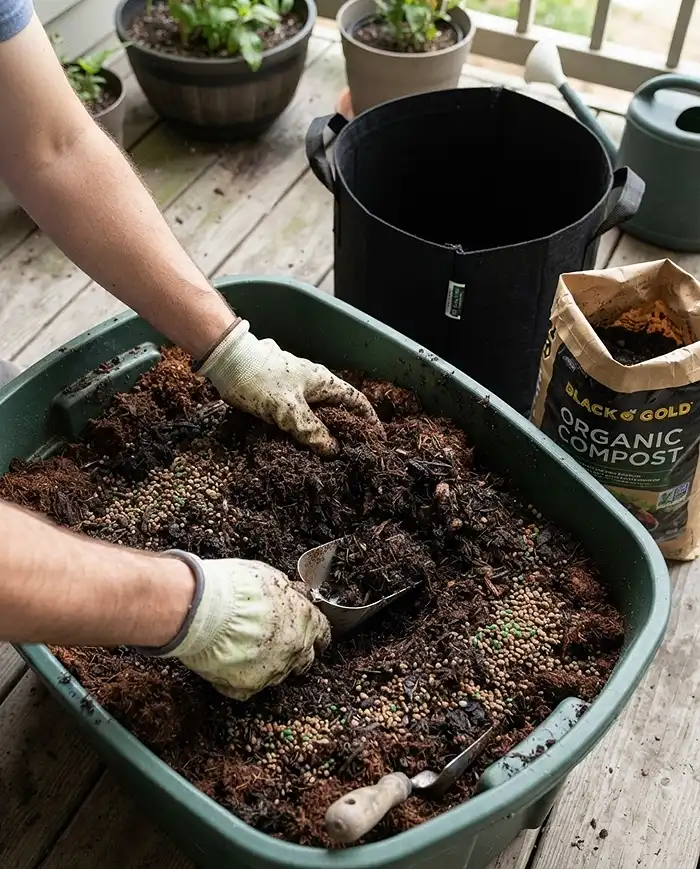
Quick Answer: Blend high-quality peat-free potting mix with 30% compost, a generous handful of worm castings, and a slow-release organic fertilizer like Osmocote or Blood, Fish & Bone mixed into the bottom third of the pot.
Cherry tomatoes are extreme feeders. Add companion herbs to the same container, and your potting mix will deplete nutrients roughly twice as fast as a single-plant pot. A compost-heavy base gives you a biological buffer.
Worm castings are worth the extra cost here. They improve soil structure, add beneficial microbes, and provide a slow trickle of nitrogen that herbs especially appreciate. Add about one cup per 10 gallons of mix.
I avoid cheap all-purpose potting soils for this setup. In 2023, I filled a 12-gallon tub with a budget mix and hit nitrogen deficiency by the first week of August — yellowing lower leaves on the tomato while the basil looked stunted. Switching to a compost-enriched mix the following year made a visible difference within two weeks.
Pro Tip: Mix a tablespoon of mycorrhizal fungi granules into the planting hole for your tomato transplant. It dramatically expands the root’s water and nutrient uptake range in a confined soil volume.
The Best Compact Companion Herbs for Cherry Tomatoes
Not all herbs belong in a shared pot. The ones below were chosen specifically for compact growth habits, shallow root systems, and proven pest-deterrent benefits in a container herb garden. Each earns its place without competing aggressively with the tomato’s root system.
Here’s a quick reference before we dig into the details:
| Herb | Primary Benefit | Root Depth | USDA Zones |
|---|---|---|---|
| Basil (‘Spicy Globe’) | Repels hornworms, whitefly; flavor boost | Shallow (6–8 in.) | Annual, all zones |
| Flat-leaf Parsley | Living mulch; attracts predatory wasps | Shallow (6 in.) | Annual/biennial, 2–11 |
| Chives / Garlic Chives | Repels aphids, spider mites; fungal deterrent | Very shallow (4–6 in.) | Perennial, 3–9 |
| Creeping Thyme | Soil cooler; cascading spiller; drought tolerant | Very shallow (3–5 in.) | Perennial, 4–9 |
Basil: The Ultimate Tomato Flavor Enhancer
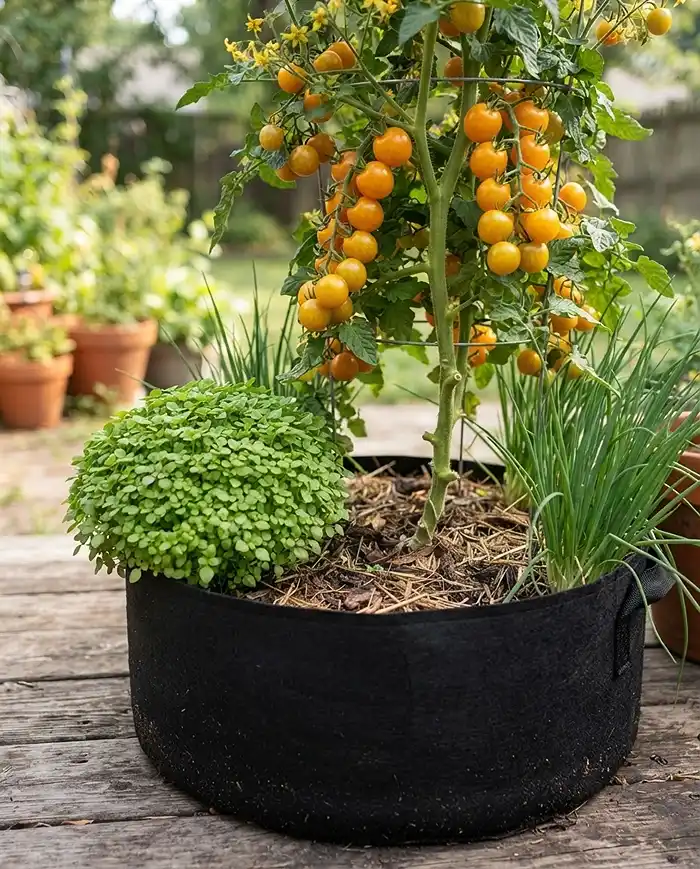
Quick Answer: Compact basil varieties like ‘Spicy Globe’ or ‘Bush Basil’ are the best all-round companion herb for cherry tomatoes. They repel tomato hornworms and whiteflies while releasing aromatic compounds that many gardeners report improve fruit sweetness and complexity.
The mechanism isn’t fully proven by controlled trials, but the anecdotal evidence from growers is consistent: basil planted within 12 inches of tomato stems correlates with cleaner plants and richer-tasting fruit. The volatile linalool and eugenol that basil releases appear to mask the scent cues that lure whitefly in particular.
Stick to compact varieties for container vegetable gardening. Standard Genovese basil gets tall and leggy, eventually shading lower tomato stems. ‘Spicy Globe’ stays a tight 10- to 12-inch mound, ‘Minette’ is even smaller at 8 inches, and both fit neatly at the perimeter of a 15-gallon pot.
In summer 2024, I ran a side-by-side test: one pot with ‘Sun Gold’ and ‘Spicy Globe’ basil, one with ‘Sun Gold’ alone. The companion pot had zero hornworm damage. The solo pot lost two lower branches to a hornworm by mid-August. That was enough data for me.
Pro Tip: Pinch basil flower heads the moment you see them. Once basil bolts, it stops releasing pest-deterrent volatiles at useful concentrations. Check for flower buds twice a week in July and August.
Parsley: A Low-Profile Living Mulch
Quick Answer: Flat-leaf parsley’s low, spreading growth habit shades the potting soil surface to slow evaporation and cool roots. It also draws parasitic wasps — natural predators of aphids and hornworm eggs — into the immediate area of your pot.
Flat-leaf (Italian) parsley is the better choice over curly for a container setup. It grows in a wider, flatter rosette that maximizes soil coverage. Curly parsley grows a bit more upright and doesn’t shade the soil surface as effectively.
Plant two or three parsley transplants evenly around the pot’s edge. By midsummer, they’ll have formed a dense green skirt covering most of the exposed soil. That living mulch layer can reduce the frequency of watering by a noticeable margin on hot days — I went from daily to every 36 hours in one summer by adding parsley.
Check out our guide to the best herbs to grow together in pots if you want to extend this pairing approach to a dedicated herb container alongside your tomato setup.
Pro Tip: Parsley is a biennial. If you’re in zone 7 or warmer, you can leave it in the pot over winter and it’ll flower in year two — those flowers are excellent for attracting predatory insects early in the following tomato season.
Chives and Garlic Chives: The Fungal Deterrent
Quick Answer: Chives and garlic chives release sulfurous root exudates that deter aphids, spider mites, and certain soil-borne fungal blights. Their very shallow root system makes them ideal for planting right at the pot’s rim without competing with the tomato.
The sulfur compounds that give alliums their sharp scent are the same compounds that repel soft-bodied insects like aphids. Aphid colonies on container tomatoes can explode fast in the heat — a ring of chives at the pot’s edge gives you a passive, permanent deterrent that doesn’t require spraying.
Garlic chives are worth considering over standard chives for one extra benefit: their broader, flat leaves provide slightly more soil coverage. They also bloom a bit later in the season, giving you a second wave of wasp-attracting flowers in August when tomatoes need pollinator support most.
Plant them at the outermost edge of the pot, 6 to 8 inches from the central tomato stem. Their roots genuinely stay in the top 4 to 5 inches of soil, so root competition is minimal even in a 10-gallon container.
Pro Tip: Don’t cut chives all the way to the base. Leave 2 inches of stem to regrow. Harvesting a third of the plant at a time keeps it productive and continuously releasing deterrent compounds throughout the season.
Creeping Thyme: The Cascading Spiller
Quick Answer: Drought-tolerant creeping thyme planted along a pot’s rim cascades over the edges to shade the topsoil and reduce heat stress at the root zone. It also releases thymol, a natural antiseptic compound that appears to deter fungus gnats and certain soil pathogens.
Creeping thyme is the most low-maintenance option on this list. Once established, it tolerates dry spells better than any other herb here, which matters because tomatoes in containers dry out fast and irregular watering is one of the main causes of blossom end rot.
The cascading growth habit means it doesn’t compete vertically with the tomato canopy. It simply drapes over the container edges, keeping harsh afternoon sun off the dark potting mix. In zones 4 through 9, it’ll come back perennially — meaning your container framework just needs a new tomato transplant each spring.
This works especially well in vegetables in pots setups where aesthetics matter. A 15-gallon fabric bag full of lush tomato foliage with thyme spilling over the edges and small purple flowers blooming at midsummer looks genuinely intentional, not makeshift.
Pro Tip: ‘Magic Carpet’ creeping thyme is one of the best cultivars for this — it has a particularly dense, low mat habit and flowers prolifically in shades of pink to purple, which are irresistible to pollinators.
Herbs to Strictly Avoid Planting With Tomatoes
Two categories of herbs will actively harm a potted cherry tomato. The threat isn’t mild — both can kill the tomato within a single growing season if planted in the same container. This applies to even the most experienced container herb gardeners.
Fennel and the Mint Family Rule
Quick Answer: Never plant fennel or any member of the mint family in the same container as a cherry tomato. Fennel releases allelopathic chemicals that stunt tomato growth. Mint sends out aggressive underground runners that will choke out the tomato’s root system within weeks.
Fennel is allelopathic — it secretes chemical compounds from its roots that inhibit the growth of nearby plants. Tomatoes are particularly sensitive to it. In a closed container with shared soil, those compounds have nowhere to dilute. I’ve seen potted tomatoes show curled, stunted new growth within three weeks of fennel being added to the same pot.
Mint is a different problem. Its runners don’t respect boundaries. In open ground, it spreads but eventually gets outcompeted. In a container, it circulates through the entire root zone in a single season, physically displacing and outcompeting everything else. Spearmint, peppermint, chocolate mint — they’re all equally aggressive in a shared pot.
Keep fennel in its own container, at least three feet away from your tomatoes. Mint can go in a dedicated pot too — and if you want to use it near tomatoes, see the FAQ below for a containment workaround.
Pro Tip: If you love the smell of mint near your tomato pot, hang a bundle of fresh-cut mint from the tomato cage instead. You get some of the scent benefit without any root competition risk.
Step-by-Step Guide to Planting the Mixed Pot
Sequence matters here. Plant in the wrong order and you’ll disturb roots or end up with a poorly positioned cage you can’t adjust later.
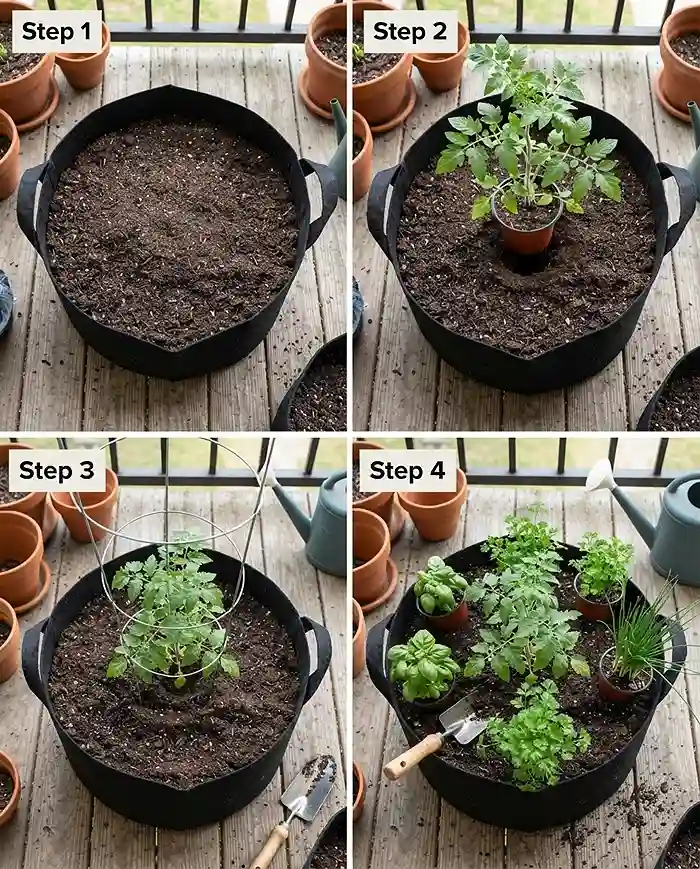
- Fill your container two-thirds full with your enriched potting mix and pre-moisten it thoroughly before planting anything.
- Dig the central planting hole deep enough to bury your tomato transplant up to its lowest set of true leaves — tomatoes form adventitious roots along their buried stem, increasing their uptake capacity significantly.
- Plant the tomato transplant in the center and firm the soil around it gently.
- Install your tomato cage or stake immediately after planting, before you add the herbs. Driving stakes in later risks piercing roots.
- Plant companion herbs 6 to 8 inches from the central tomato stem around the perimeter, spacing them evenly to maintain airflow between plants.
- Top up with potting mix to within one inch of the pot rim, then water deeply until it drains from the bottom holes.
I always plant my mixed containers in late May in zone 6b — once nighttime temperatures are reliably above 55°F. Tomatoes planted into cold soil stall for two weeks even if the daytime temps are warm. The herbs can handle a bit more cold, but there’s no benefit to rushing the whole setup before the tomato is ready.
For more on maximizing your late-season harvest, our guide to ripening green tomatoes in fall covers exactly what to do when the season ends earlier than expected.
Maintenance and Feeding for High-Yield Pots
A mixed container doesn’t run on autopilot. Two plants sharing one root zone means you need to check in daily during August and follow a consistent feeding schedule. The good news is the routine is simple once it’s established.
Watering and Fertilizing Shared Root Zones
Quick Answer: Water a mixed tomato-herb container daily during peak summer heat, and fertilize with a water-soluble tomato fertilizer (high in phosphorus and potassium) every two weeks from first flower set onward. The shared pot depletes nutrients roughly twice as fast as a single-plant container.
Check soil moisture by pushing your index finger two inches into the soil near the pot’s edge. If it comes out dry, water deeply until it drains from the bottom. A surface that looks moist can hide a bone-dry root zone six inches down — especially with creeping thyme shading the topsoil.
For fertilizer, I use a 5-10-10 water-soluble organic formula (higher phosphorus and potassium than nitrogen) every two weeks once flowers appear. High nitrogen at fruit-set pushes leafy growth at the expense of tomatoes. The herbs benefit from the same feed without any separate intervention.
One note for container vegetable gardening beginners: don’t feed during the hottest part of the day or when the soil is dry. Fertilizing into dry soil can chemically burn roots. Water first, wait an hour, then apply diluted liquid feed.
Pro Tip: Add a self-watering spike or ollas (clay pot insert) to the center of the container if you travel or work long hours. A single-fill reservoir can extend the watering interval by 24 to 48 hours in hot weather without stress to the plants.
Common Problems and Solutions
High-density container gardening creates some predictable challenges. Here’s how to catch them early before they become harvest-ending problems.
Overcrowding and Powdery Mildew
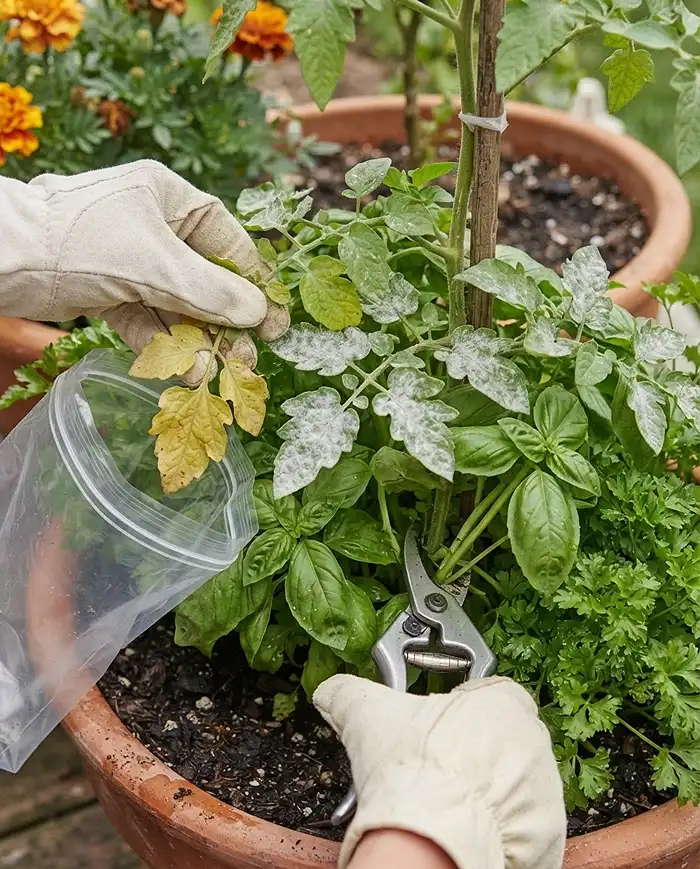
Quick Answer: Dense herb foliage at the tomato’s base blocks airflow, creating the humid, stagnant conditions that powdery mildew thrives in. Aggressive pruning of the bottom 12 inches of the tomato and regular herb trimming are the fix.
Powdery mildew typically appears first on the lowest tomato leaves — the ones most sheltered by herb foliage. As soon as you see the white powdery coating, remove those leaves entirely and bag them (don’t compost). Then trim back any herb growth that’s pressing against the tomato stem.
Prevention is easier than cure. Every two weeks, remove all tomato leaves from the bottom 12 inches of the main stem. This creates an open, airy zone at soil level that dramatically reduces mildew risk, even when herbs are planted nearby.
Nutrient Depletion from Heavy Root Competition
Quick Answer: Purple-tinged lower leaves indicate phosphorus deficiency. Yellowing lower leaves that progress upward signal nitrogen deficiency. Both happen faster in mixed containers. A compost tea drench or liquid kelp application stabilizes plants within 7 to 10 days.
Mixed containers hit deficiency walls faster than single-plant setups — often by week six or seven of the growing season. If you see purple tinging on the undersides of lower tomato leaves, that’s classic phosphorus lock-out, often triggered by cold root-zone temperatures or waterlogged soil.
For a rapid response, mix a tablespoon of liquid kelp and a tablespoon of fish emulsion into a gallon of water and drench the root zone. Repeat after five days. This combination delivers a fast-absorbing hit of nitrogen and micronutrients while supporting microbial activity that unlocks any locked phosphorus.
You can also explore the best root vegetables for container gardening if you want to build a separate high-nutrient pot alongside your tomato setup — root crops like carrots and radishes have very different feeding schedules and don’t compete for the same nutrient windows.
Frequently Asked Questions
How close to the tomato stem can I plant herbs?
Leave a strict minimum of 6 to 8 inches of bare soil directly around the central tomato stem. Planting herbs closer than that restricts basal airflow, which promotes stem rot and fungal blights at soil level. The 6-to-8-inch bare zone around the stem is non-negotiable in a shared container.
Can I plant mint with tomatoes if I keep it in a smaller pot inside the big pot?
Yes, with one condition: cover the mint’s drainage holes with fine mesh before sinking it into the main container. Without the mesh, mint runners will escape through the drainage holes into the main soil body within a few weeks. With mesh in place, this is a workable and effective containment method.
Do I need to prune my cherry tomato if it’s sharing a pot?
Yes, especially for indeterminate (vining) varieties like ‘Sun Gold’ or ‘Sweet Million’. You must remove suckers — the shoots that sprout in the crotch between the main stem and a branch — to maintain a single central leader. An unpruned indeterminate tomato creates a dense canopy that blocks sunlight from reaching the herbs below, eventually killing them.
Which cherry tomato varieties work best in containers with companion herbs?
Determinate and semi-determinate varieties are easiest to manage in a mixed pot because they stay more compact. ‘Tumbling Tom’, ‘Patio Choice Yellow’, and ‘Bush Early Girl’ are good options. If you prefer indeterminate varieties like ‘Sun Gold’ or ‘Juliet’, commit to weekly sucker pruning to keep the canopy manageable for the herbs below.
How often should I harvest the herbs to keep them from overtaking the tomato?
Harvest herbs every 7 to 10 days during peak growing season. Regular harvesting keeps compact varieties like Spicy Globe basil and chives from spreading into the tomato’s root zone and prevents bolting. A plant that’s regularly harvested puts energy into new leafy growth rather than seed production — which is exactly what you want from a pest-deterrent companion.
Key Takeaways
- The best companion herbs for cherry tomatoes in pots are compact basil (‘Spicy Globe’), flat-leaf parsley, chives or garlic chives, and creeping thyme — all chosen for shallow roots and active pest-deterrent properties.
- Use a minimum 10- to 15-gallon container and a compost-enriched potting mix with worm castings to prevent the rapid nutrient depletion that hits shared pots by midsummer.
- Plant herbs 6 to 8 inches from the central tomato stem and keep the lowest 12 inches of the tomato stem bare to maintain airflow and prevent fungal problems.
- Never plant fennel or mint directly in the same pot as a cherry tomato — both will actively damage or kill it through allelopathy or aggressive root competition.
- Fertilize every two weeks with a high-phosphorus, water-soluble organic tomato feed and check soil moisture daily in August for a high-yield harvest from a single shared pot.