
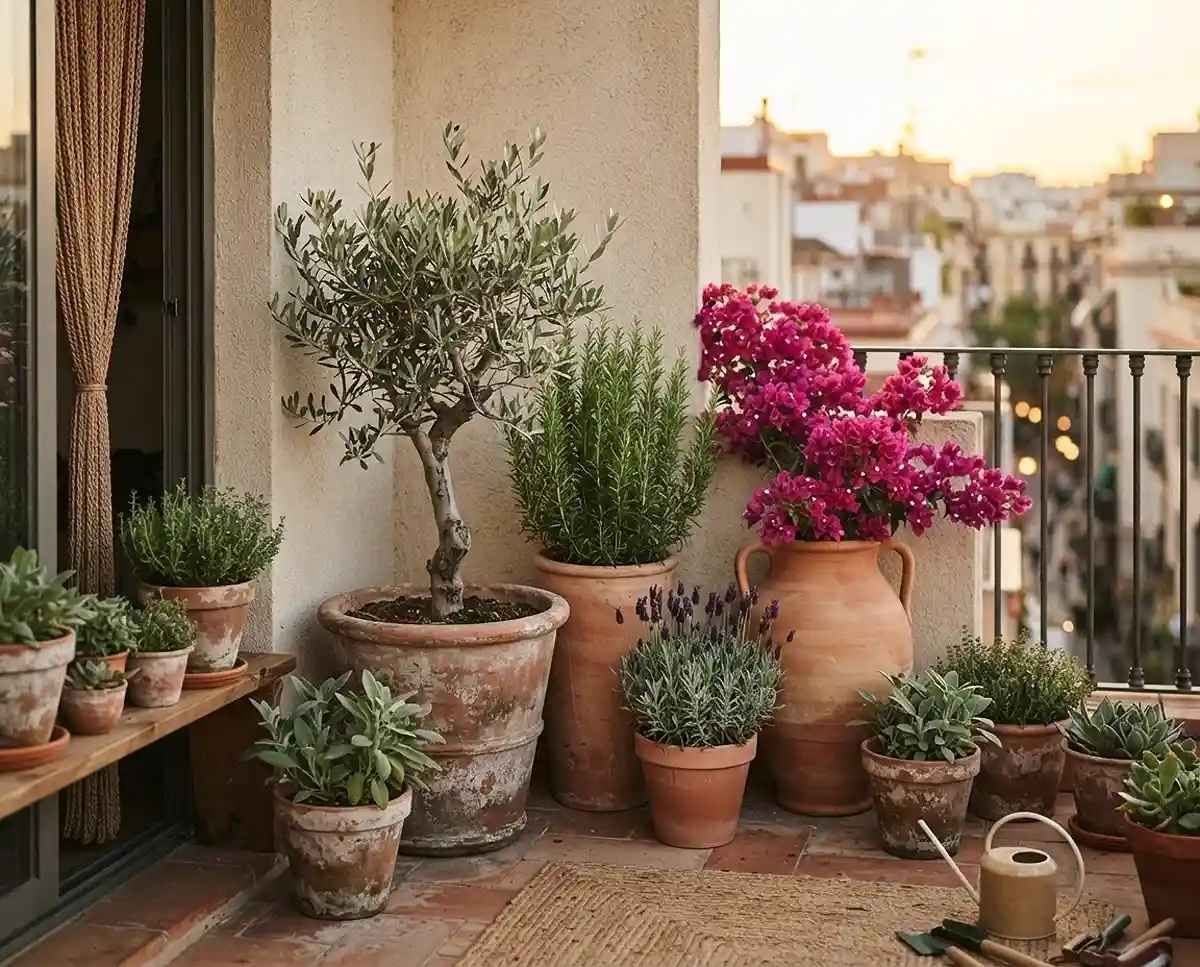
Terracotta Balcony Ideas for a Cozy Small Balcony Garden
Terracotta balcony ideas turn a bare apartment balcony garden into a warm, Mediterranean-style retreat. I grow mine on a north-facing balcony in zone 6b, and unglazed clay pots changed everything.
Table of Contents
Designing a Warm, Mediterranean Escape on a Small Balcony
Swap cheap plastic containers for unglazed terracotta and your balcony stops feeling like a storage ledge. The rusty orange tone, the slightly rough texture, the way clay ages with white mineral streaks over a season, all of it reads as intentional.
When I replaced my black nursery pots with terracotta three summers ago, my small balcony garden finally looked designed instead of accidental. Guests started asking where I “got the plants professionally installed.” I didn’t. I just changed the pots.
The Unique Horticultural Science of Terracotta
Terracotta isn’t just a look. It’s a porous, unglazed clay that actively interacts with water and air, which changes how roots grow compared to plastic or glazed ceramic.
That porosity is the whole reason terracotta suits certain plants and punishes others. Understanding it saves you from losing plants your first season, which is exactly what I did with my first batch of ferns.
The Benefits of Breathable Clay
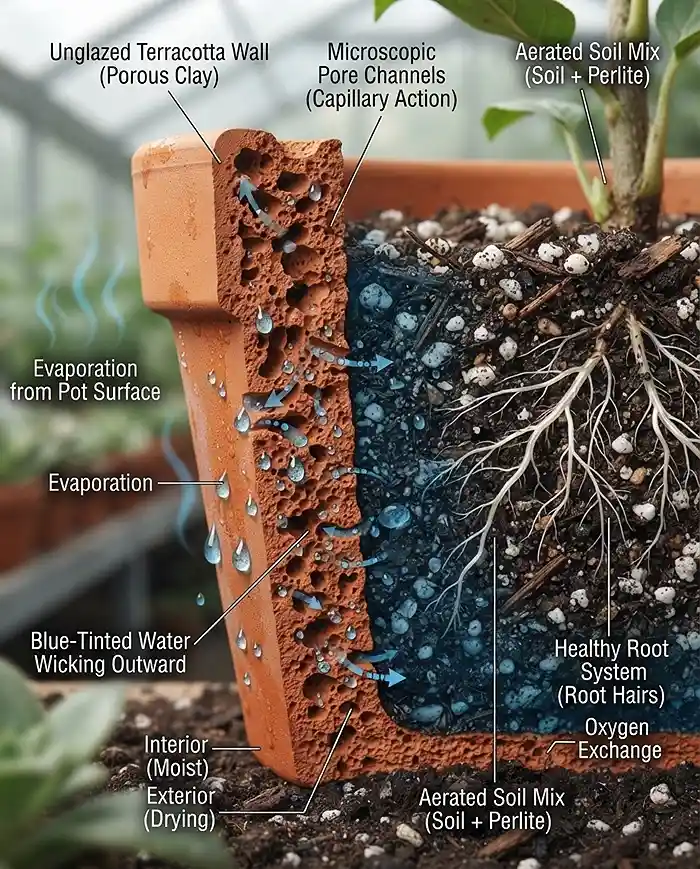
Quick Answer: Terracotta’s microscopic pores let oxygen reach plant roots while wicking away excess moisture, which is why it’s one of the best defenses against root rot and fungal disease in containers.
The clay body is full of tiny channels, roughly 20 to 100 microns wide, that pull water sideways through the pot wall and let it evaporate off the surface. That constant airflow keeps the root zone from sitting waterlogged.
It’s why nurseries have used clay for centuries with plants that hate “wet feet,” meaning roots sitting in soggy soil.
Managing Rapid Evaporation in High Heat
Quick Answer: The same porosity that prevents root rot also means terracotta dries out fast in full sun, sometimes needing water daily in a summer heat wave.
On my balcony, a 10-inch terracotta pot of rosemary in July sun can go from moist to bone-dry in under 24 hours. Plastic pots in the same spot stay damp for three or four days.
Budget for that. If you’re away often, terracotta on a blazing south-facing rail is a plant-killer, not a design choice, unless you pair it with self-watering inserts or drought-hardy species.
Planning Your Terracotta Balcony Layout
Clay is heavy, wet soil is heavier, and small balconies have real weight limits. Good layout planning balances safety with the lush, clustered look terracotta does best.
Calculating Balcony Weight Limits
Quick Answer: Check your building’s load rating before filling a balcony with terracotta, since a single 14-inch clay pot with wet soil and a mature plant can weigh 40 to 50 pounds.
Most residential balconies are rated for 40 to 60 pounds per square foot, though older buildings can be lower. Your property manager or lease paperwork usually lists this.
Line up your pots along the load-bearing edge near the building wall rather than the outer railing, and always ask before installing anything permanent.
Grouping Pots for Aesthetic Impact
Quick Answer: Skip rigid rows. Cluster terracotta pots of varying heights in asymmetrical corner groupings, following a loose rule of thirds, for a lush and intentional look.
A few grouping habits that consistently work on small balconies:
- Anchor each cluster with one tall pot, one medium, one low and trailing
- Push heavy pots into corners, away from foot traffic and the railing edge
- Odd numbers (three or five pots) read as more natural than even pairs
- Leave at least 24 inches of clear walking space for daily use
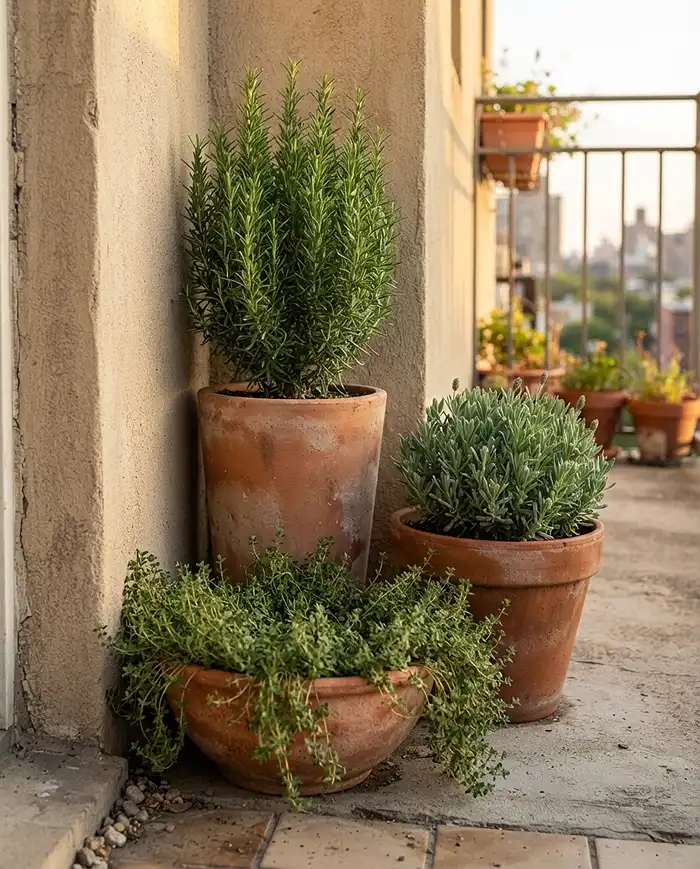
My own layout is three pots stacked into a corner reading area, with a single dwarf olive standing alone near the door as a focal point.
Best Plants for Sun-Baked Terracotta Gardens
Pairing terracotta with plants that actually want dry, airy roots is what separates a thriving balcony garden idea from a pot graveyard by August.
Drought-Tolerant Mediterranean Herbs
Quick Answer: Rosemary, thyme, oregano, and lavender are the classic terracotta herbs, since fast-draining clay mimics their native rocky, low-nutrient soils.
I grow ‘Tuscan Blue’ rosemary and ‘Hidcote’ lavender in 12-inch terracotta on my sunniest rail, both hardy to zone 6b outdoors. Oregano ‘Kaliteri’ and thyme ‘Argenteus’ fill smaller 8-inch pots underneath.
The stress of quick-draining clay actually concentrates the essential oils in these herbs, so leaves taste and smell stronger than the same variety grown in moisture-retentive plastic.
Vibrant Trailing Annuals and Spillers
Quick Answer: Zonal Pelargoniums, heat-loving Lantana, and trailing Bougainvillea bring bold color and cascade beautifully over terracotta’s warm orange rims.
Bougainvillea ‘Barbara Karst’ is my showstopper each June, spilling magenta blooms over a 16-inch urn. It’s tender below zone 9, so I treat it as an annual and don’t mourn it come frost.
Lantana ‘Miss Huff’ handles neglect better than almost anything I grow, shrugging off missed waterings that would kill more delicate spillers.
Architectural Succulents and Dwarf Trees
Quick Answer: Structural Agaves and dwarf olive trees make striking focal points in large terracotta urns, provided you use a fast-draining, sandy soil mix.
My ‘Arbequina’ dwarf olive lives in an 18-inch terracotta urn with a mix of two parts potting soil to one part coarse sand and pumice. Straight potting soil alone would suffocate its roots.
Agave ‘Blue Glow’ does the same job in half the space, and its blue-grey rosette looks striking against unglazed clay.
| Plant | Hardiness Zone | Minimum Pot Size |
|---|---|---|
| Rosemary ‘Tuscan Blue’ | Zones 7-10 (grow as annual colder) | 10 inches |
| Lavender ‘Hidcote’ | Zones 5-9 | 10 inches |
| Bougainvillea ‘Barbara Karst’ | Zones 9-11 (annual elsewhere) | 16 inches |
| Agave ‘Blue Glow’ | Zones 9-11 (bring in for winter) | 12 inches |
| Dwarf olive ‘Arbequina’ | Zones 8-10 (annual or overwinter indoors) | 18 inches |
Step-by-Step Guide to Planting in Terracotta
New terracotta is bone-dry and will pull moisture straight out of fresh potting soil if you skip one crucial step.
- Submerge the empty new pot in a bucket of water for 30 minutes so the clay is fully saturated
- Cover the drainage hole with a curved piece of broken pottery to stop soil washout
- Add a well-draining potting mix, leaving 2 inches of headspace below the rim
- Loosen the plant’s root ball gently and set it at the same depth it sat in its nursery pot
- Backfill, firm gently, and water slowly until it runs from the drainage hole
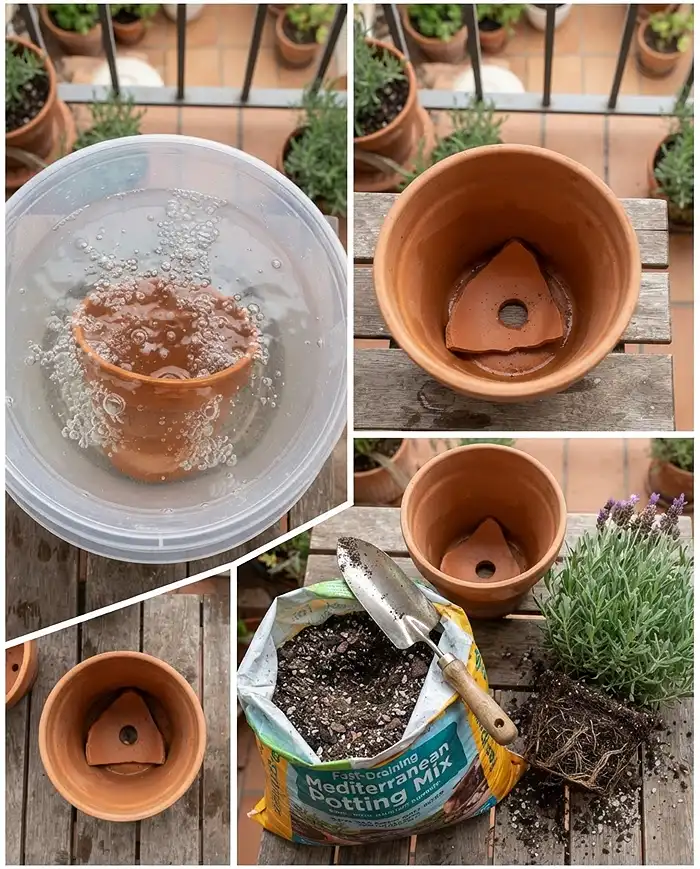
I learned the soaking step the hard way. My first summer, I planted basil straight into a dry terracotta pot, and it wilted within two hours as the clay stole every drop of moisture.
Essential Maintenance for Clay Container Gardens
Terracotta needs a bit more attention than plastic, but the routine is simple once it’s a habit.
The “Tap Test” for Watering
Quick Answer: Tap the side of a terracotta pot with your knuckle. A hollow ring means dry soil that needs water, while a dull thud means the soil is still moist.
Surface soil can look dry while the root zone underneath is still damp, so relying only on sight overwaters plants. The tap test checks moisture deeper in the pot.
I check my herbs this way every morning in July. It takes about ten seconds per pot and it’s saved more plants than any moisture meter I’ve owned.
Winterizing Terracotta to Prevent Cracking
Quick Answer: Empty, dry, and store terracotta pots before the first hard freeze, since water trapped in the porous clay expands as it freezes and cracks the pot.
This is called frost-heave, and it’s the single biggest killer of terracotta pots in cold climates. In zone 6b, I lose at least one pot a year to a freeze I forgot to prep for.
Bubble wrap works for pots too heavy to move indoors, but emptying and storing them in a dry garage or closet is safer.
Common Problems and Solutions
Two issues show up constantly once you commit to a terracotta-heavy balcony garden idea, and both have quick fixes.
White Mineral Crusts (Efflorescence) on Pots
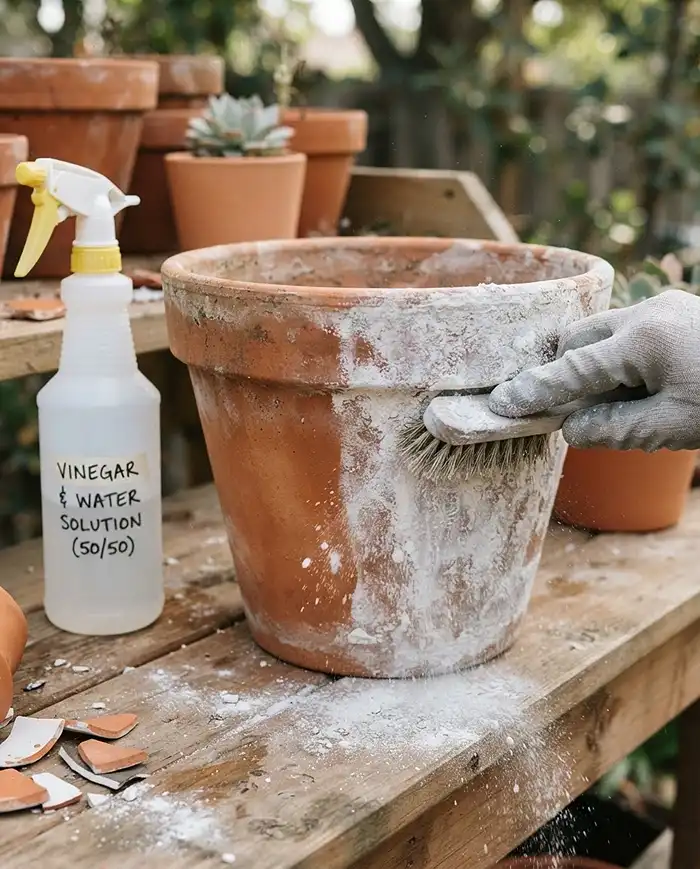
Quick Answer: The powdery white residue on terracotta is harmless efflorescence, a buildup of fertilizer salts and hard water minerals drawn to the surface as the pot dries.
It won’t hurt your plants, but it dulls the warm clay color. Mix equal parts white vinegar and water, scrub with a stiff brush, and rinse thoroughly.
Let the pot dry fully before replanting so the vinegar doesn’t linger near roots.
Water Stains on Balcony Decking
Quick Answer: Elevate terracotta pots on rubber “pot feet” to stop water rings and rot on wood decking, since it lets condensation evaporate freely from underneath the pot.
Terracotta sweats moisture from its base, not just the drainage hole, and that constant dampness stains and eventually softens wooden balcony tiles.
A set of rubber feet costs almost nothing and adds airflow that also helps the pot itself dry evenly.
For more on the physics behind clay’s water and air exchange, Cooperative Extension’s terracotta pot guide is a solid, non-commercial reference as of 2026.
If you’re still narrowing down your overall setup, this roundup of apartment balcony garden ideas is a good starting point before you commit to terracotta specifically.
terracotta balcony ideas FAQs
How do I seal the inside of a terracotta pot to retain moisture?
Use a non-toxic liquid acrylic or rubber sealant spray on just the interior walls of the empty pot before adding soil. This slows moisture loss without changing the matte look of the exterior clay.
Can I paint terracotta pots for my balcony?
Yes, but standard paint blocks the clay’s breathability. Use a breathable masonry paint, or leave the bottom third of the pot unpainted so moisture can still evaporate through the walls.
What colors pair best with warm terracotta?
Cool tones create the most striking contrast against rust and ochre pots. Silvery-blue foliage like blue fescue, deep purple Heuchera, and crisp white blooms all read as high-end next to warm clay.
Is terracotta too heavy for a rented apartment balcony?
It can be. Stick to pots under 14 inches, check your lease for weight limits, and cluster containers near the building wall rather than the outer railing to keep the load safe.
How often should I water plants in terracotta compared to plastic?
Expect to water terracotta roughly two to three times more often than the same plant in plastic, especially in full summer sun, since clay evaporates moisture through its walls as well as the soil surface.
Key Takeaways
These terracotta balcony ideas work because they respect what the material actually does, not just how it looks.
- Terracotta’s porosity prevents root rot but speeds up evaporation, so match plants and watering habits accordingly
- Always soak new pots for 30 minutes before planting to protect fresh potting soil
- Check your balcony’s weight limit before clustering heavy clay pots in one area
- Empty and store pots before the first freeze to avoid frost-heave cracking
- Pair warm clay with cool-toned, drought-hardy plants for the most polished small balcony garden look
For more layout inspiration once your plant list is set, check out these cafe-style balcony garden ideas.
Or browse these cozy balcony ideas with plants for pairing furniture with your new terracotta collection.