

Ladder Garden for Fall Herbs
A ladder garden for fall herbs setup turns one bare wall into a working pantry. I’ve run mine on a north-facing Denver balcony, zone 5b, for three autumns, and it still outproduces my old flat containers.
Table of Contents
The Benefits of a Vertical Fall Garden
A tiered ladder planter is the fix for anyone short on square footage but long on wall space. Stack four or five rungs and you’ve got room for a full container herb garden plus a couple of greens, all in a footprint smaller than a single raised bed.
It also looks the part. Come October, a wooden ladder dripping with sage, kale, and trailing ivy reads as decor first and produce second — which is exactly the point of vertical gardening for small spaces.
Why Cool Weather is Perfect for Greens and Herbs
Cooler air changes how plants behave, and mostly in your favor. Frost-kissed kale and spinach convert starches to sugar, so they taste noticeably sweeter after a light freeze than they did in August.
Cilantro and other cool-season herbs also bolt (go to flower and turn bitter) much slower once daytime highs drop below 75°F. I get a solid six extra weeks of usable cilantro just by planting it in September instead of June.
And your watering can gets a break. Summer vertical planters dry out fast because wind and sun hit every tier, but fall’s shorter days and lower evaporation rates mean I’ve cut watering from daily to every 2-3 days.
Planning Your Ladder Garden Construction and Placement
Before you build or buy, sort out two things: what the frame is made of, and where it’s going to sit. Get those wrong and no amount of good soil will save the season.
Choosing the Right Materials and Dimensions
Skip untreated pine. Cedar, cypress, or a powder-coated metal frame will survive fall rain and winter storage without rotting or rusting through in a single season.
- Planter boxes need to be at least 8 inches deep — shallower boxes can’t support kale or rosemary root systems through a full season
- Angle each rung 10-15 degrees so water drains toward the front, not straight down the back onto your wall
- Leave 12-14 inches of vertical clearance between tiers so upper plants don’t shade out the ones below
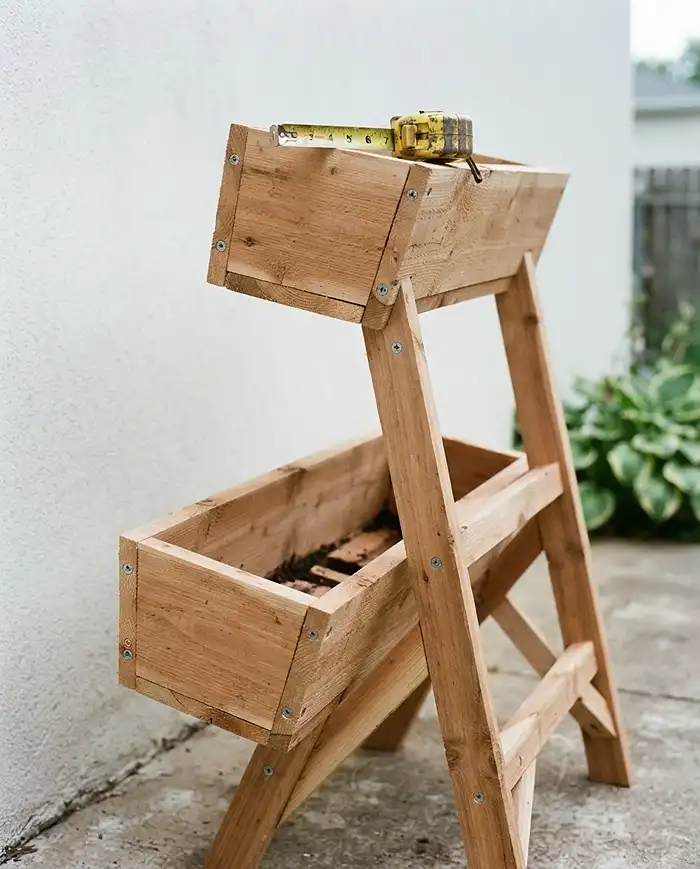
My first ladder was untreated pine from a hardware store bin. It looked great in September and was soft and flaking by the following spring — cedar costs more up front but pays for itself.
Positioning for Optimal Autumn Sun Exposure
The sun sits much lower in the sky by October, and it’s easy to misjudge. A spot that got full sun in July can fall into shadow by an hour a day come autumn.
Face the ladder south or southwest if you can. That orientation catches the most direct light during the shorter days ahead, which matters more as daylight hours keep shrinking through November.
Walk your space at 10 a.m. and 2 p.m. in early fall and note where shadows fall. If a fence or building blocks the low afternoon sun, shift the ladder a few feet before you plant, not after.
Selecting the Best Crops for Tiered Growing
Not every rung wants the same plant. Match root depth, sun needs, and water habits to each tier and the whole system runs itself.
| Tier | Best Crops | Why It Works |
|---|---|---|
| Top | Rosemary, thyme, sage | Full sun, fast drainage, drought-tolerant |
| Middle | Parsley, chives, cilantro | Moderate sun, steady moisture |
| Bottom | Kale, Swiss chard, spinach | Partial shade, catches runoff, stays cool |
Top-Tier Herbs: Rosemary, Thyme, and Sage
Mediterranean herbs like rosemary, thyme, and sage evolved on rocky, sun-baked hillsides, so they want the brightest, driest spot you’ve got. The top rung is exactly that.
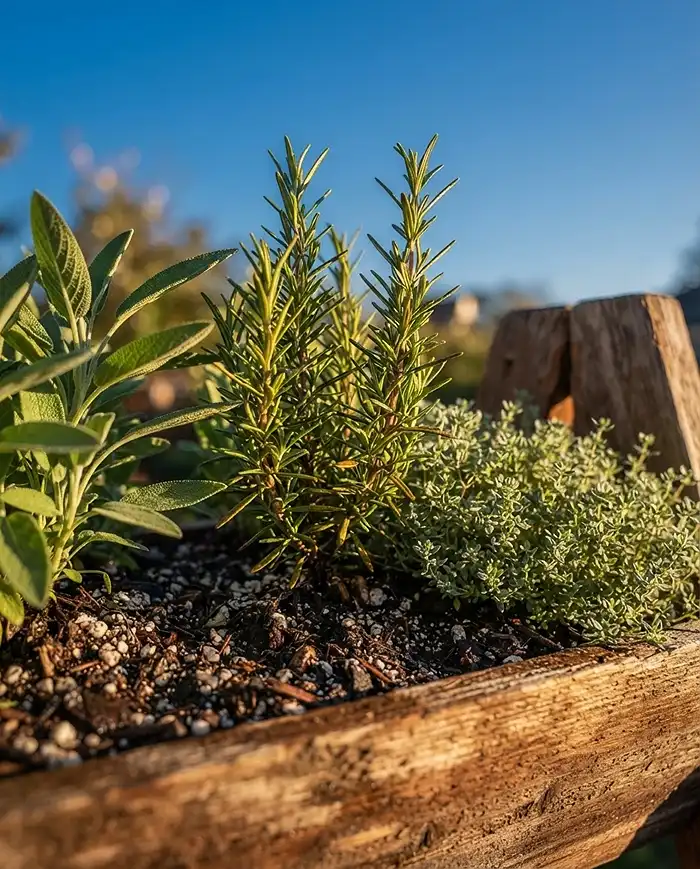
These herbs also drain fastest up there, which suits them fine — soggy roots kill rosemary far quicker than cold ever will. I lost a ‘Tuscan Blue’ rosemary two autumns ago by planting it on a lower, shadier rung where it sat wet for a week straight.
Give them a gritty mix (more on that below) and full southern exposure, and they’ll shrug off light frosts well into November.
Bottom-Tier Greens: Kale, Swiss Chard, and Spinach
Leafy greens want the opposite conditions: steadier moisture and a bit of relief from harsh midday sun. The bottom boxes, which run cooler and catch drips from the tiers above, suit them perfectly.
This is also where leafy greens in containers perform best in a ladder system, since gravity does some of your watering for you. ‘Winterbor’ kale and ‘Bright Lights’ chard have both handled light frost on my bottom rung without missing a beat.
Spinach is pickier about heat but thrives once fall temperatures settle — sow it directly once daytime highs stay under 75°F for a reliable germination rate.
Step-by-Step Planting and Styling Guide
Once the frame is placed and the crop map is set, it comes down to soil, planting, and a little styling to make the whole thing feel intentional rather than accidental.
Preparing the Soil Mix for Vertical Drainage
Line each wooden box with breathable landscape fabric before adding soil. It keeps roots from touching damp wood directly, which slows rot on the frame itself.
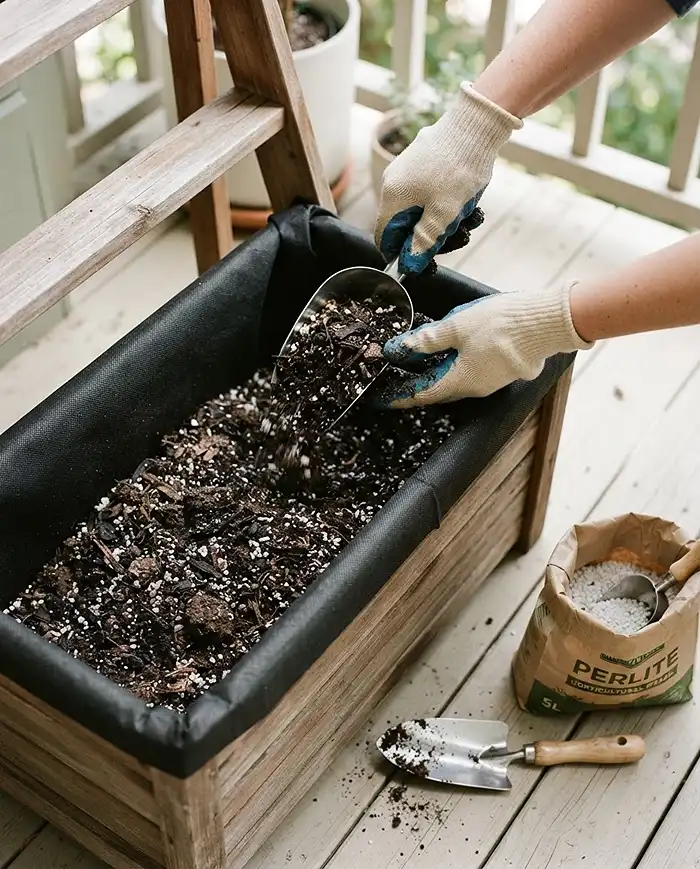
For the mix, I go with roughly 60% quality potting soil, 25% compost, and 15% perlite. The perlite is non-negotiable for a vertical herb ladder — without it, tiered boxes compact fast and drainage backs up.
Check drainage holes on every tier before filling. A clogged bottom box turns into a swamp within a week of fall rain.
Styling with Autumn Colors and Companion Plants
Tuck ornamental cabbage into any gaps along the middle tiers — it adds deep purple and cream color without competing for root space with your herbs.
Trailing ivy or creeping thyme softens the box edges nicely, and a couple of small decorative gourds wedged between pots on the bottom rung finish the harvest look. None of this crowds the edible plants if you space it right.
For a deeper walkthrough of this exact build, I go step-by-step through the whole project in my fall vertical ladder garden guide.
Fall Maintenance and Weather Protection
A tiered planter needs a different care rhythm than a flat bed, especially as nights get colder and gravity starts working against you.
Watering Strategies for Tiered Planters
Water moves downward through a ladder system, so the top tier dries out fastest and the bottom tier can end up waterlogged if you’re not careful.
- Water the top tier lightly and more often — a light daily pass beats one heavy soak
- Water the bottom tier deeply but less frequently, since it’s already catching runoff from above
- Use the finger test before every watering: push a finger 1 inch into the soil, and skip watering if it’s still damp
I learned this one the hard way. My first fall, I watered every tier the same amount and drowned a whole box of spinach on the bottom rung while the rosemary up top stayed bone dry.
Shielding Your Plants from Early Frosts
Most of these crops handle a light frost fine, but an unexpected hard freeze can still take out tender growth overnight. Keep frost cloth or an old bedsheet on hand once nighttime lows start dipping toward 32°F.
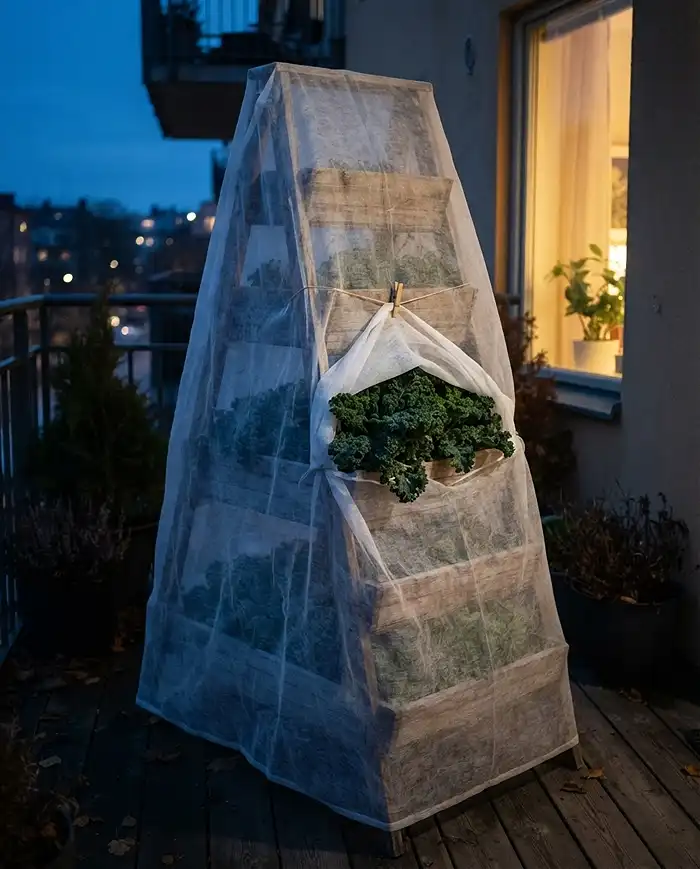
Drape it loosely over the entire ladder before sunset, letting it reach the ground on all sides to trap rising heat. Pull it off again by mid-morning so plants don’t overheat or lose light.
A surprise October freeze caught me off guard last year, and an old sheet thrown over the whole structure saved a full box of thyme that would’ve otherwise turned to mush. According to the USDA Plant Hardiness Zone Map, checking your zone’s average first frost date ahead of time makes this kind of scramble a lot less likely.
Common Problems & Solutions
Two issues show up again and again in tiered systems once temperatures drop. Both are easy to head off once you know what to look for.
Uneven Moisture and Dry Top Tiers
Wind and gravity conspire against the top rung, draining it far faster than the boxes below. If your upper herbs look consistently dry no matter how often you water, that’s the cause.
A 1-inch layer of straw or shredded bark mulch on top slows evaporation significantly. For a more hands-off fix, a simple drip line looped just through the top tier keeps moisture steady without extra trips outside.
Pests Hiding in Dense Lower Greens
The shadier, cooler bottom tiers that greens love are also where cabbage worms and aphids like to hide, tucked under dense kale and chard leaves where they’re easy to miss.
Check the undersides of leaves weekly. A spray of organic insecticidal soap handles most infestations, and thinning crowded leaves for better airflow makes the tier less inviting to pests in the first place.
ladder garden for fall herbs FAQs
Can I overwinter a ladder garden outdoors?
Untreated wooden ladders will rot when exposed to winter snow and freeze-thaw cycles. After your final harvest, empty all the soil, scrub the boxes with a mild bleach solution, let them dry fully, and store the frame in a garage or shed until spring.
How much weight can a wooden ladder planter hold?
Most wooden ladder planters are rated for 15-25 pounds per box once you include soil, plants, and water. Avoid heavy topsoil, which adds unnecessary weight, and anchor the top frame to a wall or balcony railing with zip-ties or L-brackets for safety.
What are the best trailing plants for fall ladder gardens?
Creeping thyme, trailing snapdragons, and winter-hardy English ivy all soften the hard edges of wooden planter boxes while adding cascading visual interest. All three tolerate cool fall temperatures well and pair nicely with culinary herbs and greens.
Conclusion
A well-planned ladder garden fall herbs setup gives you fresh rosemary, kale, and cilantro from a wall you weren’t using for anything else. Match the crops to the right tier, watch your watering direction, and keep frost cloth within reach as nights cool.
Curious which specific herbs handle cold snaps best? I break that down further in my guide to cool-weather herbs for pots, and you can round out your harvest with picks from my fall salad greens guide.
Key Takeaways
- A ladder garden fall herbs setup fits a full container herb garden and several leafy greens into a single vertical footprint
- Sun-loving herbs like rosemary and thyme belong on top; moisture-loving greens like kale and chard belong on the bottom
- Water top tiers lightly and often, bottom tiers deeply and less often — gravity does the rest
- Drape frost cloth over the whole structure once nights approach 32°F, and check your zone’s first frost date ahead of time
- Empty, clean, and store wooden frames indoors over winter to keep them from rotting