

September Balcony Garden Ideas to Save Your Space
Crispy petunias and bolted lettuce don’t mean your balcony is done. These September balcony garden ideas turn heat-fried containers into a full autumn refresh in one weekend.
I’ve gardened on a 6×3-foot south-facing balcony in Denver (zone 5b) for eight seasons, and every single September looks the same: half my pots are toast, and half just need a haircut. That’s actually good news. September gives you a “second spring” — nights cool into the 50s, soil is still warm enough for fast root growth, and every nursery within driving distance is dumping mums, asters, and kale six-packs at a discount because the big fall rush hasn’t hit yet.
This isn’t about starting over. It’s a rescue mission: rip out what’s actually dead, rehab the soil that’s been feeding tomatoes since May, and slot in plants that want shorter days and cooler nights. If you did a late-summer balcony refresh already, this is the next, more permanent step before real cold hits.
Table of Contents
Assessing the Damage and Prepping the Space
Quick Answer: Before buying a single new plant, do a ruthless audit — remove anything dead, diseased, or beyond saving, and separate that debris from healthy perennials and herbs that just need a trim and some cooler air to bounce back.
I learned this the hard way in my second year: I left a mildew-covered zucchini in its pot “to see if it recovers” and it seeded powdery spores onto three neighboring containers within a week. Now I compost fast and ask questions later.
Identifying What to Save and What to Toss
Toss anything with blight, heavy mildew, or stems that snapped and never recovered — spent petunias, leggy basil gone to seed, tomato vines with brown-spotted leaves. These harbor pathogens that overwinter in the soil and reinfect next year’s plants.
- Toss: blighted tomatoes, powdery-mildewed squash or cucumber vines, fully bolted lettuce, annuals with more brown than green
- Keep: rosemary, thyme, and sage — they’re heat-stressed, not dead, and perk up fast once nights cool
- Keep: evergreen shrubs like dwarf boxwood or holly that look scorched but have flexible, green-under-the-bark stems
- Keep: indeterminate tomatoes still setting fruit — more on saving those in the FAQ below
Rejuvenating Depleted Summer Soil
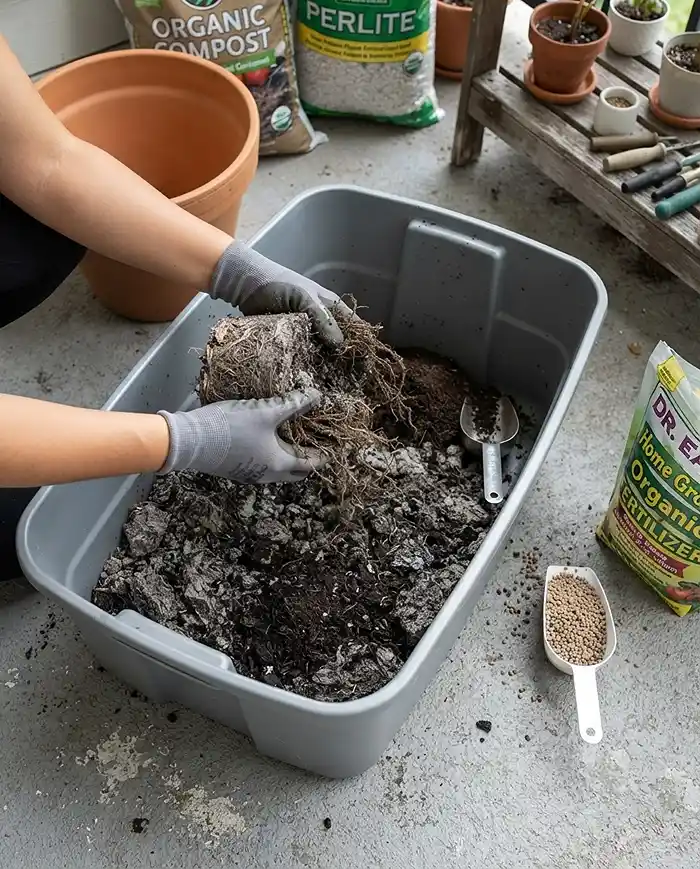
Quick Answer: Pull the root ball, break it up by hand, and mix in 30% fresh compost plus a handful of worm castings per gallon of old potting mix to replace the nutrients heavy summer feeders stripped out.
Tomatoes, peppers, and petunias are nutrient hogs. By late August, most container mix is basically inert filler. Dump the pot into a wheelbarrow or a big tub, crumble the old root mass apart with your hands, and blend in fresh compost until the texture looks dark and crumbly again, not gray and compacted.
Pro Tip: Add a tablespoon of slow-release granular fertilizer per gallon of mix now — it’ll feed new plants for six to eight weeks without the nitrogen spike that fast-acting liquid feeds cause.
Top Plant Choices for a September Refresh
The best September balcony garden picks are the ones actively waiting for shorter days — most spring and summer bloomers stall out or bolt in this exact light and temperature window, while these thrive in it.
Late-Blooming Floral Thrillers (Mums, Asters, Pansies)
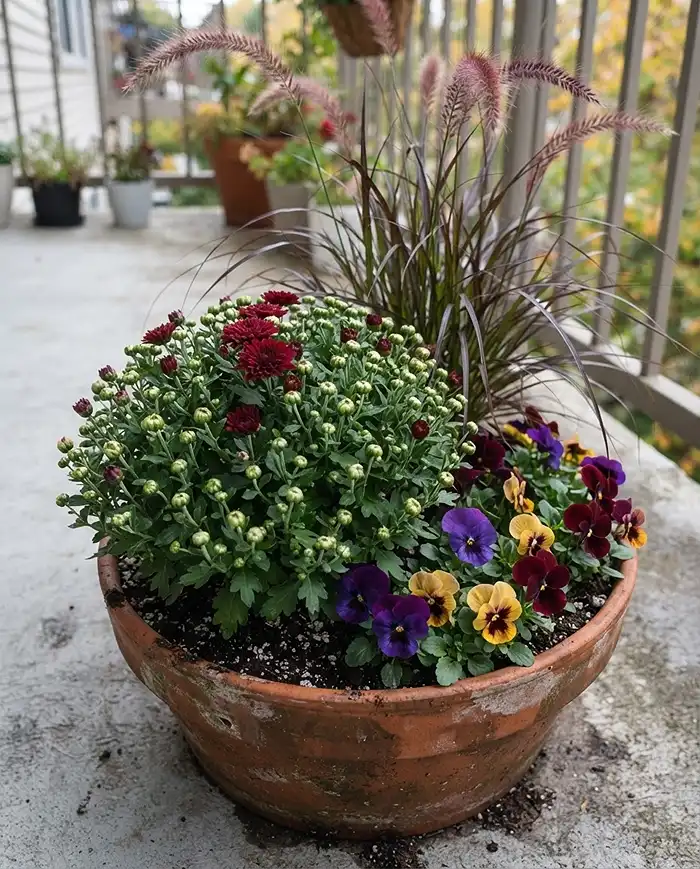
Quick Answer: Violas, pansies, and native asters bring jewel-toned color that shrugs off light frost, and garden mums bought with tight, unopened buds will keep blooming for six to eight weeks instead of fading in two.
I made the mistake my first year of buying mums already in full bloom because they looked prettiest on the shelf. They were done blooming in twelve days. Now I only buy mums with buds still closed — you lose the instant “wow” but gain almost two months of color.
Real Example: Last September I planted three ‘Igloo’ mums with closed buds alongside trailing violas in a 14-inch pot. They bloomed steadily from mid-September through Halloween, well past our first light frost around October 8.
Cold-Hardy Edibles to Sow Now (Radishes, Kale, Spinach)
Quick Answer: Direct-sow ‘Lacinato’ kale, loose-leaf spinach, and 30-day radishes straight into any empty container space — September soil is still warm enough for quick germination, and cool nights ahead will sweeten the flavor.
These are the easiest wins in any apartment balcony garden ideas list because they don’t need transplants — just scatter seed, water, and wait. Radishes are ready in about a month, kale and spinach keep producing right up to hard frost.
Textural Foliage for Autumn Drama (Heuchera, Ornamental Grasses)
Quick Answer: Pair shade-tolerant Heuchera (coral bells) in burgundy or caramel tones with the airy plumes of purple fountain grass to add height and texture that blooms alone can’t give a container.
Grasses catch low autumn light in a way flowers just can’t — worth it even in a tight small balcony garden where every pot has to earn its spot.
| Plant Type | Best For | Bloom/Harvest Window |
|---|---|---|
| Garden mums (closed bud) | Fast color, filling gaps | 6–8 weeks |
| Pansies & violas | Frost tolerance, edges/trailing | Through first hard freeze |
| ‘Lacinato’ kale | Edible + ornamental foliage | 45–60 days, sweeter after frost |
| 30-day radishes | Filling empty container gaps | 25–30 days |
| Purple fountain grass | Height and movement | Through October in most zones |
Step-by-Step September Replanting Guide
Work through pots one at a time so nothing sits half-done overnight, which invites pests looking for shelter.
- Clear out all dead summer debris and compost anything disease-free
- Rehab the soil in a wheelbarrow with 30% fresh compost, as described above
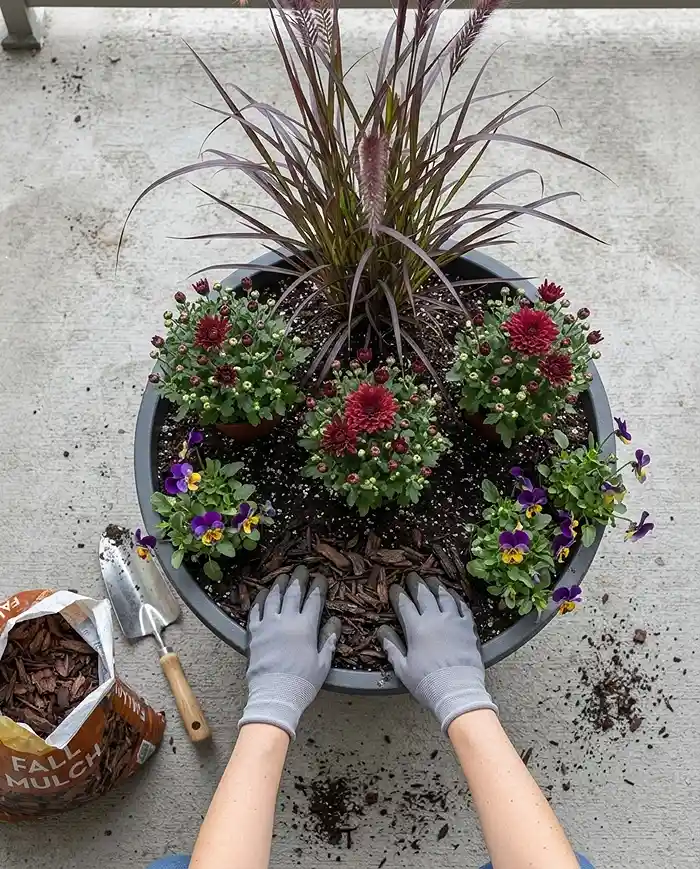
- Place tall grasses or upright foliage toward the back or center of the pot for structure
- Stage mums and asters around them for color, then tuck trailing violas at the edges
- Top-dress with an inch of bark mulch to insulate roots and slow moisture loss
Adjusting Maintenance for the Shifting Season
Your plants’ metabolism slows down as days shorten, so the daily habits that kept summer containers alive can actually kill autumn ones if you don’t adjust.
Modifying Watering Schedules for Cooler Nights
Quick Answer: Switch from daily summer watering to the finger-test method — water only when the top inch of soil is dry — because cooler temperatures slow evaporation dramatically and overwatering becomes the top cause of fall root rot.
I killed a perfectly healthy heuchera in October by watering it on autopilot the way I had all summer. Roots sat wet for a week straight and rotted. Now I check with a finger before I touch the hose, every time.
Autumn Fertilization Rules
Quick Answer: Skip fast-acting, high-nitrogen liquid fertilizer in September — it pushes tender new growth that frost will kill within days — and let the slow-release compost from your soil rehab do the feeding instead.
If a plant looks pale after a few weeks, a light dose of bloom-booster (higher phosphorus, lower nitrogen) is fine. Just skip anything marketed for rapid leafy growth.
Common Problems & Solutions
Warm days and cool, damp nights in September create the exact conditions two problems love: fungal disease and pests looking for a place to hide out before real cold arrives.
Powdery Mildew Outbreaks
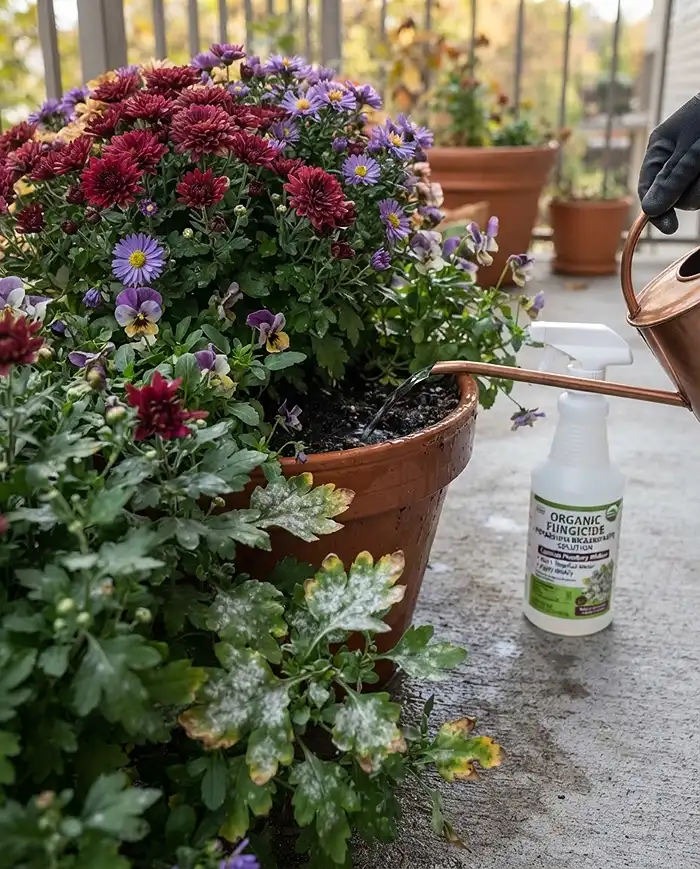
Quick Answer: Mix one tablespoon of potassium bicarbonate with a gallon of water and spray affected leaves weekly, and always water at the soil line instead of overhead to keep foliage dry.
Dense, newly packed containers are especially prone to this — give plants a little breathing room rather than cramming every gap.
Pests Seeking Late-Season Refuge
Quick Answer: Aphids and spider mites move into dense autumn foliage as temperatures drop, so hang yellow sticky traps and spray insecticidal soap directly on the pests at dusk, when beneficial insects are least active.
Check the undersides of leaves on your new mums and kale weekly — that’s where both pests hide first.
For a deeper reference on regional frost timing while you plan this transition, the USDA Plant Hardiness Zone Map is a solid, free starting point for confirming your zone before you shop.
Frequently Asked Questions
Can I keep my summer tomatoes growing in September?
If your indeterminate tomato vines are still healthy, “top” the plant by cutting off any new flower clusters. This forces the vine to channel remaining energy into ripening the green fruit already on it before October frosts arrive.
Should I change the potting soil completely for fall plants?
You don’t need to discard it entirely unless the previous plant died from a soil-borne blight. Remove the old root mass and heavily amend the top third of the pot with fresh compost, which is usually enough.
How do I protect new September plants from early frost?
Monitor local weather apps closely and keep a lightweight horticultural fleece blanket on hand. Drape it over railing pots overnight whenever temperatures threaten to drop below 32°F (0°C).
Key Takeaways
A good round of September balcony garden ideas comes down to editing, not replacing — save what’s salvageable, rehab the soil, and let cool-season plants do the rest of the work.
- Audit ruthlessly: toss diseased or fully spent annuals, keep stressed perennials and herbs
- Rehab soil with 30% fresh compost instead of buying all new potting mix
- Choose mums with closed buds, not open blooms, for weeks of extra color
- Switch to finger-test watering and skip high-nitrogen fertilizer once nights cool
- Keep fleece on hand for any surprise dip below freezing
Want more container combinations before the first freeze? Check out these apartment balcony garden ideas or these dwarf vegetables for pots to keep the harvest going a little longer.