
Autumn Balcony Garden Ideas With Cozy Fall Colors
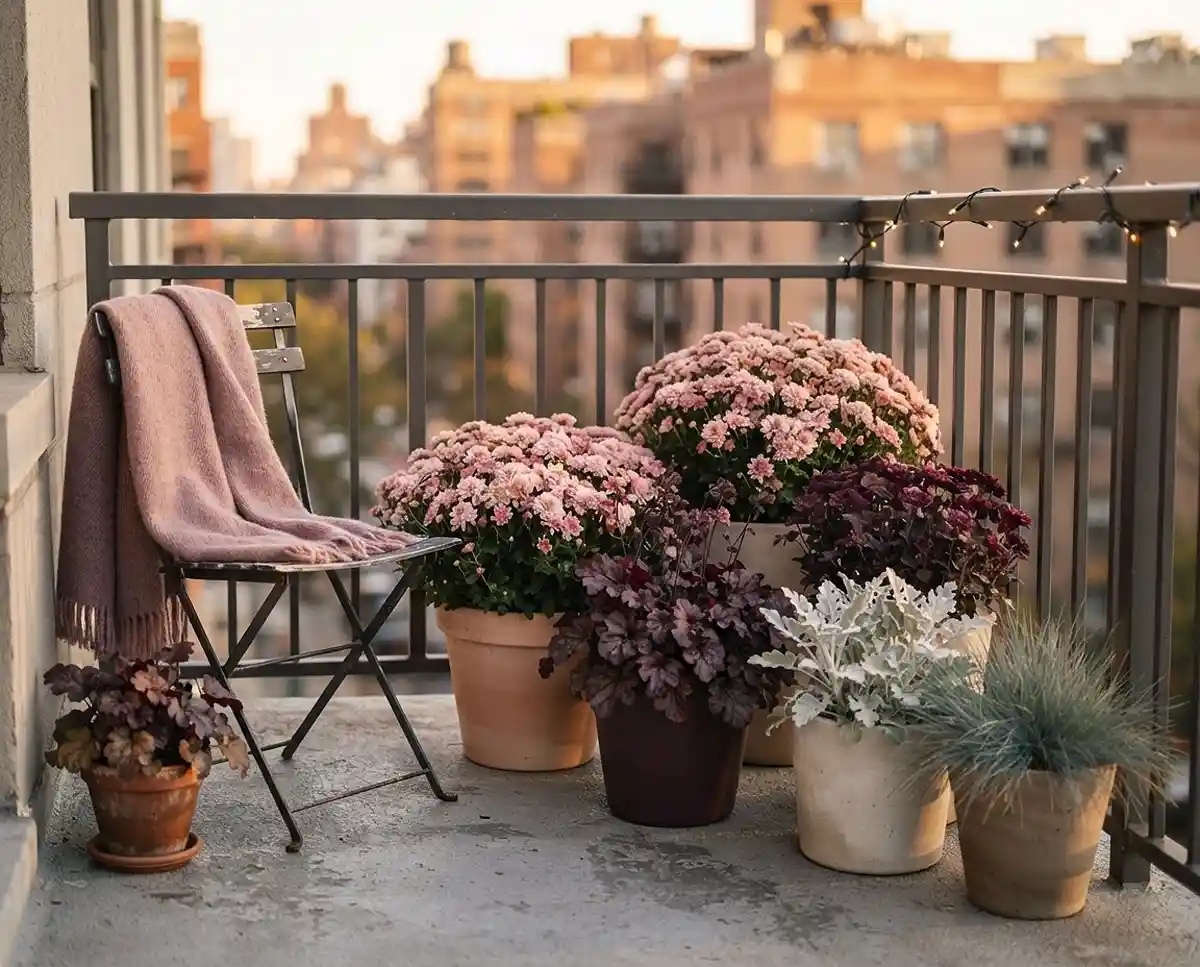
The best autumn balcony garden ideas ditch the bright-orange pumpkin cliches and lean into something far more livable: muted plums, blush pinks, creamy whites, and silvery greens that turn a tiny outdoor space into a genuinely cozy retreat.
I grow on a north-facing, 48-square-foot balcony in zone 6b, and fall is honestly my favorite season out there. The lower light gets soft and golden, the heat stress disappears, and the right plant palette makes the whole space feel like a boutique hotel terrace.
Here’s exactly how to pull it off, from auditing your light to picking the last mum of the season.
Table of Contents
Moving Beyond Bright Orange: The Soft Autumn Aesthetic
Most apartment balcony garden ideas for fall default to the same display: bold orange mums, rust-red grasses, and a plastic skeleton. It reads festive for two weeks, then it just looks tired.
A soft autumn palette works differently. You’re borrowing from interior design — specifically the principle that a restrained, cohesive color scheme makes a small space feel intentionally styled rather than cramped.
Think dusty rose, deep plum, smoky lavender, creamy ivory, and the muted silver of Stachys leaves catching low afternoon light. These tones don’t compete with each other. They layer. And they look beautiful well into November.
The result isn’t minimalist or bare — it’s rich. It just doesn’t shout.
Evaluating Your Tiny Balcony for a Fall Transition
Before you buy a single plant, spend one week in early September tracking your balcony’s actual conditions. Autumn changes everything: the sun drops lower in the sky, shadows shift, and temperatures swing hard between afternoon warmth and cold nights.
What worked in July may not work in October. A quick audit now saves you from losing plants you paid real money for.
Mapping Late Season Sunlight and Shadows
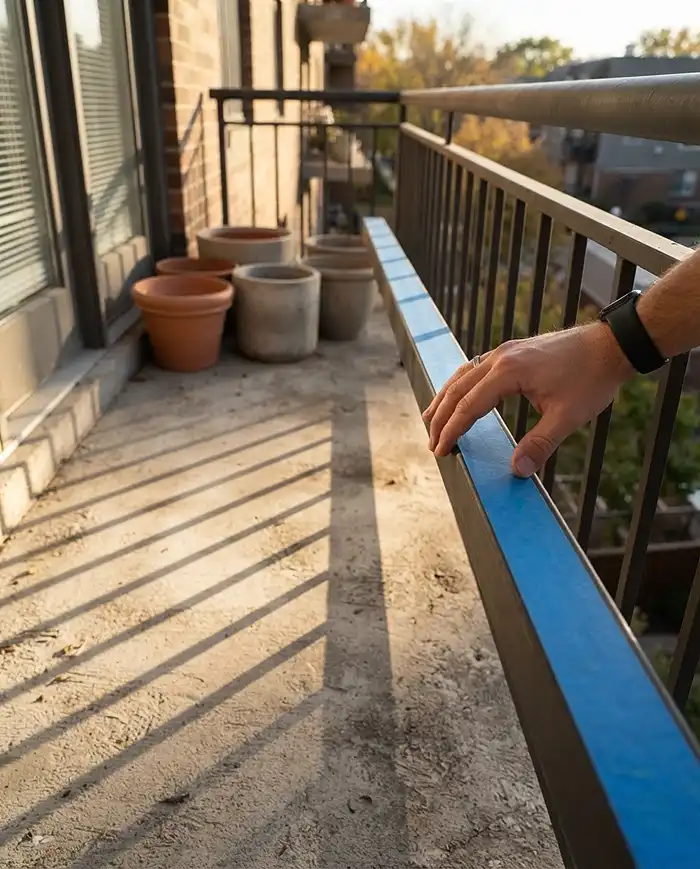
In autumn, the sun’s arc sits roughly 20 to 30 degrees lower than in summer. A balcony that got six hours of direct light in June might get three in October — especially if you have an overhang or a taller building to the south.
Stand on your balcony at 9 a.m., noon, and 3 p.m. on a clear day. Note exactly where the sun hits. Mark those spots with a piece of tape on the railing.
Your blooming plants — Japanese Anemones, Violas, Chrysanthemums — all need four to six hours of direct light to perform. Place them only in your confirmed sun pockets. Foliage plants like Heuchera tolerate two to three hours and can fill the shadier corners.
Wind and Frost Protection for Tiny Spaces
Early fall wind is the sneaky killer of soft-petaled flowers. A single cold, gusty night can shred Japanese Anemone blooms before you ever get to enjoy them.
Two easy fixes for a small balcony garden: cluster your pots tightly against the wall of the building itself, not the outer railing. Masonry holds and radiates daytime heat, acting as a natural buffer against overnight temperature drops.
Use the railing as a windbreak by placing your sturdiest containers there — grasses, Heuchera — and tucking fragile flowers behind them. This small layout change can extend your display by three to four weeks.
Crafting a Soft Autumn Color Palette
Pick three colors maximum and stick to them. On a tiny balcony, a fourth color tips the whole thing into visual noise.
A palette that consistently works: deep plum as your anchor, blush pink as your mid-tone, and creamy white or silver as your light-catching accent. Every plant, pot, and textile you add should fit one of those three buckets.
Muted Pinks, Plums, and Dusty Purples
These cool-toned shades are the backbone of a sophisticated fall display. They read as autumnal — rich and moody — without using a single orange or red.
For the deepest tones, reach for ‘Plum Pudding’ Heuchera (near-black purple leaves), ‘Wega’ Japanese Anemone (pink semi-double blooms), and Viola ‘Sorbet Plum Velvet’ (deep, almost-black purple with tiny yellow eyes).
Layer lighter pinks behind them: blush Chrysanthemum ‘Centerpiece Blush’ or a pale rose-toned Cyclamen (hardy to zone 6 with protection) softens the darker tones beautifully. As of fall 2025, many garden centers now stock these blush mum varieties specifically for this kind of palette work.
Creamy Whites, Silvers, and Pale Yellows
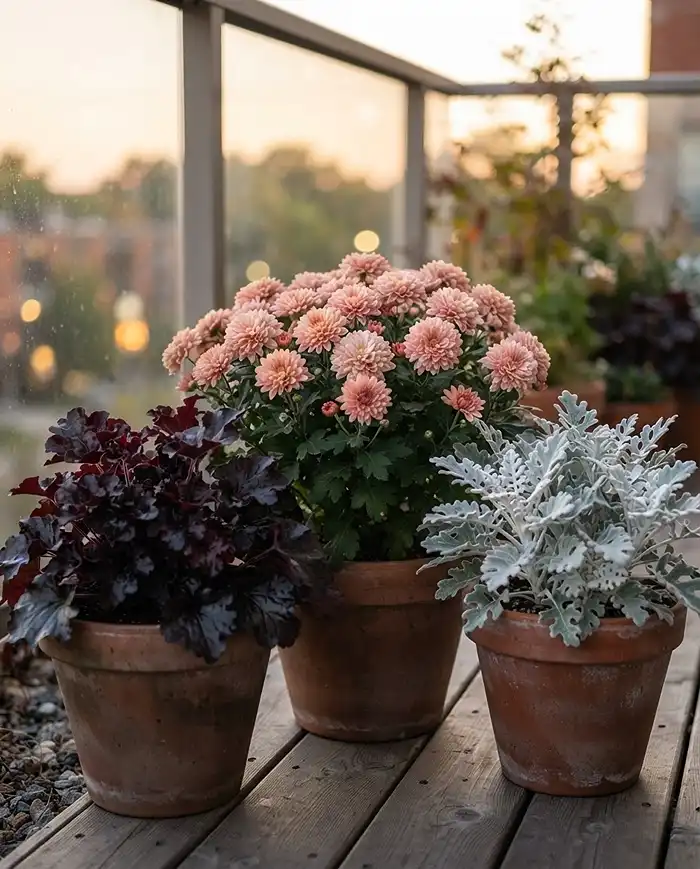
These are your light amplifiers. On a balcony garden, especially one that gets reduced autumn sun, creamy whites and silver foliage essentially act as mirrors — bouncing what light there is back into the space.
‘Silver Dust’ Dusty Miller is the workhorse here. Its fuzzy, deeply lobed leaves are a near-perfect silver-white. Pair it with creamy ivory Chrysanthemum ‘Mammoth White Daisy’ and you get a combination that genuinely glows at dusk.
Pale yellow is optional but earns its place if you add it carefully. A single ‘Prairie Winds Lemon’ Panicum grass or one pot of soft-yellow Rudbeckia ‘Toto Gold’ adds warmth without tipping toward orange.
Best Plants for a Soft Fall Balcony Display
Every plant below has earned its spot through actual performance on cool-weather balconies. These aren’t just pretty — they’re hardy enough to handle the temperature swings and lower light of a real autumn.
Check out these late summer balcony garden ideas for a smooth seasonal transition starting in August.
Floral Stars: Japanese Anemones, Violas, and Mums
Japanese Anemone (‘Honorine Jobert’ for white, ‘Pamina’ for deep pink) is the most elegant fall bloomer most gardeners overlook. It waves on wiry stems, catches the breeze beautifully, and blooms September through hard frost.
In a 12-inch pot with a perlite-rich mix, mine survived to late October in zone 6b last year — well past what I expected.
Violas are the workhorse filler. ‘Sorbet Plum Velvet’ and ‘Sorbet White’ together hit the exact color notes of this palette. They germinate happily from seed in late August or transplant easily in September.
Chrysanthemums are your centerpiece. Skip the florist-variety mums, which have shallow roots and weak stems. Reach for garden mums like ‘Sheffield Pink’ (soft salmon-blush) or ‘Centerpiece White’ — they’re bred for outdoor hardiness.
Textural Foliage: Coral Bells (Heuchera) and Dusty Miller
Flowers fade. Foliage holds. That’s why Heuchera and Dusty Miller are non-negotiable in this kind of display.
‘Plum Pudding’ Heuchera gives you a deep, near-black-purple mound that makes every other color in the palette pop. ‘Caramel’ Heuchera — a soft amber-bronze — bridges the warm and cool tones if you want to add subtle depth.
Plant Heuchera in a six-to-eight-inch pot in a mix of two-thirds quality potting soil and one-third perlite. It tolerates shade better than almost anything else in this list, making it ideal for the back corners of a balcony garden that don’t catch much direct sun.
‘Silver Dust’ Dusty Miller does the opposite job: it sits at the edge of pots and trails slightly, its silver leaves creating a clean visual border that makes everything look more intentional.
Ornamental Grasses for Sweeping Movement
A balcony garden without movement looks flat. One ornamental grass changes that entirely.
For this palette, Blue Fescue (‘Elijah Blue’) is the cleaner choice: a dense, blue-silver clump about 10 inches tall that holds its color through hard frost and adds a cool architectural note.
If you want height and drama, Purple Fountain Grass (Pennisetum setaceum ‘Rubrum’) in a 14-inch container grows 24 to 36 inches tall and its burgundy-purple plumes catch golden-hour light in a way nothing else does.
One honest note: Purple Fountain Grass is a tender perennial. In zone 6b it won’t survive the winter outdoors. I treat it as an annual — worth every penny for eight weeks of impact, but don’t count on overwintering it on the balcony.
| Plant | Palette Role | Min. Container Size | Hardiness (USDA) |
|---|---|---|---|
| Japanese Anemone ‘Pamina’ | Thriller / Pink focal point | 12 inches | Zone 4-8 |
| Viola ‘Sorbet Plum Velvet’ | Filler / Deep plum | 6 inches | Zone 4-8 |
| Chrysanthemum ‘Sheffield Pink’ | Thriller / Blush centerpiece | 10 inches | Zone 4-9 |
| Heuchera ‘Plum Pudding’ | Filler / Dark anchor foliage | 8 inches | Zone 3-9 |
| Dusty Miller ‘Silver Dust’ | Spiller / Silver accent | 6 inches | Zone 8-10 (annual elsewhere) |
| Blue Fescue ‘Elijah Blue’ | Textural / Cool movement | 8 inches | Zone 4-8 |
| Purple Fountain Grass ‘Rubrum’ | Thriller / Height and drama | 14 inches | Zone 9-11 (annual) |
Step-by-Step Styling and Planting Guide
Timing matters: aim to have your fall display planted by mid-September in zones 5-6, or early October in zones 7-8. Plants need two to three weeks to settle their roots before the first frost arrives.
- Pots: Choose matte-finish terracotta, whitewashed concrete, or weathered stone. Shiny glazed pots in warm tones fight the palette. Matte, pale, or neutral containers disappear and let the plants lead.
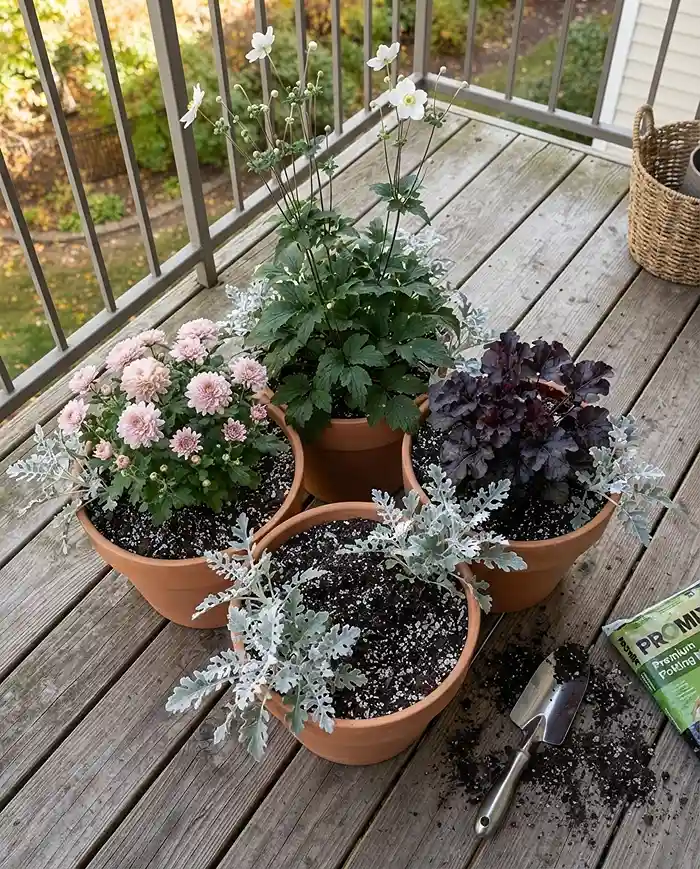
- Soil: Mix three parts quality potting soil with one part perlite. Fall plants hate wet feet, and this blend drains fast enough to prevent the root rot that cool, damp autumn weather encourages.
- Arrangement: Place your tallest thriller (Anemone or Fountain Grass) at the back or center. Mid-height fillers (Mum, Heuchera) surround it. Spillers (Dusty Miller, trailing Viola) drape over the pot edge.
- Grouping: Place pots in odd numbers (three or five) and cluster them so their foliage almost touches. Instant fullness, no gaps.
- Textiles: One woven throw in a complementary tone — dusty rose, oatmeal, or slate — draped over a chair transforms the seating area and ties the whole display together.
The University of Minnesota Extension has a solid guide on growing fall mums in containers that covers planting depth and timing in detail.
Autumn Care and Maintenance Routine
Fall care is mostly about dialing back. Less water, less fertilizer, more attention to overnight temperatures.
Your summer routine will actively hurt cool-weather plants if you don’t adjust it. The biggest risk isn’t cold — it’s overwatering into cold, heavy, wet soil.
Adjusting Watering for Cool, Damp Days
Switch from a set watering schedule to the finger-test method immediately in September. Push your finger two inches into the soil. If it’s still damp, don’t water. Only water when that two-inch depth feels dry.
In summer, a 10-inch pot might need water every one to two days. In October, the same pot in the same location might only need water every four to seven days — sometimes longer after rain.
Overwatering in autumn is the single fastest way to kill a container display. Cool temperatures slow evaporation dramatically, and roots sitting in wet, cold soil are a perfect setup for Pythium and other root rot pathogens.
When in doubt, wait one more day before watering.
Common Problems and Solutions
Two problems hit soft-palette fall displays harder than anything else: powdery mildew in the middle of the season, and overnight frost damage as temperatures push into late October and November.
Powdery Mildew on Fall Foliage
Powdery mildew shows up as a white, dusty coating on leaves — especially on Violas and Chrysanthemums crowded into tight groupings during cool, humid nights.
Treat it early. Mix one tablespoon of potassium bicarbonate with one quart of water and a few drops of liquid dish soap. Spray the affected leaves in the morning so they dry fully before night.
Prevention is easier: leave at least two inches of airflow between pot edges when you cluster them. For renters with balcony garden constraints, this is doubly important since you often can’t move larger structural elements to improve circulation.
Frost Damage and Cold Shock
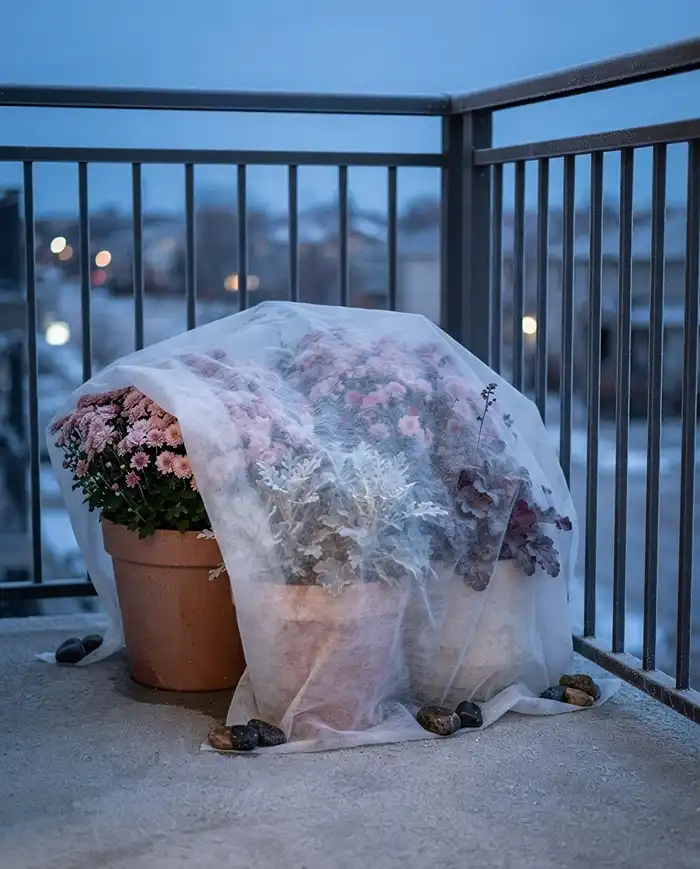
The first sub-freezing night catches most gardeners off guard. Japanese Anemone blooms and open Chrysanthemum flowers are the most vulnerable — a single night below 28°F can drop them entirely.
Watch the forecast from mid-October onward. When temperatures threaten to dip below 32°F, drape a single layer of horticultural fleece (also called frost cloth or row cover) over your containers. Secure the edges so it doesn’t blow off.
Remove it in the morning once temps climb back above freezing. This simple trick can extend your display by three to five weeks. I used this method last November in zone 6b and kept my ‘Sheffield Pink’ mums blooming through the first week of December.
autumn balcony garden ideas FAQs
Can I reuse my summer potting soil for fall plants?
You can reuse the soil structure, but summer plants strip nutrients quickly. Remove the old root balls, then amend the top half of the container with a generous layer of fresh compost before planting your fall flowers. Skip liquid fertilizer — slow-release compost is enough at this stage.
How long will an autumn balcony garden last?
Cold-hardy plants like Violas, Heuchera, and ornamental grasses will thrive for two to three months and often survive past the first light frosts. In zones 5-6, expect the display to hold until a hard freeze below 20°F forces them into dormancy, typically late November or December.
Do fall balcony plants need to be fertilized?
Avoid fast-acting, high-nitrogen liquid fertilizers in fall entirely. They push soft new growth that is highly vulnerable to frost damage. Rely on a slow-release compost worked into the soil at planting time — that’s all these plants need to perform well through the season.
What pot material works best for an autumn balcony garden?
Matte-finish terracotta or lightweight concrete pots work best for fall displays. They complement a soft, neutral palette without competing with the plants. Avoid thin plastic pots in cold zones — they offer no insulation and roots in unprotected plastic containers can freeze faster than those in heavier materials.
Can I grow a soft autumn palette on a shaded balcony?
Yes, with adjustments. Replace blooming focal points like Japanese Anemone with foliage-forward plants — Heuchera, Dusty Miller, and Blue Fescue all tolerate two to four hours of indirect light. Add one pot of Viola in the brightest spot you have and let the foliage carry the display.
Key Takeaways
- The best autumn balcony garden ideas start with a three-color palette — deep plum, blush pink, and creamy white or silver — and stick to it across every plant, pot, and textile.
- Audit your light in early September: the sun drops significantly lower in fall, and your actual sun exposure may be 30 to 50 percent less than in summer.
- For a small balcony garden, cluster pots in odd numbers against the building wall for wind protection and maximum heat retention.
- Switch to the finger-test watering method as soon as September arrives — overwatering into cold, damp soil is the fastest way to kill a fall display.
- Keep horticultural fleece on hand from mid-October onward; one layer draped overnight during a frost event can add weeks to your season.