

Decorative Plant Supports for Balcony Gardens
The best decorative plant supports for balcony gardens do two jobs at once: they keep your plants upright and actually improve how your outdoor space looks. No more ugly green plastic cages ruining a carefully styled small balcony garden.
I grow climbing nasturtiums, sweet peas, and a notoriously floppy Dahlia ‘Cafe au Lait’ on a west-facing balcony in zone 7a. Finding supports that hold up structurally AND look intentional took real trial and error — this guide shares what actually works.
Table of Contents
The Intersection of Form and Function in Balcony Plant Supports
A decade ago, your only real options were flimsy bamboo canes held together with twist ties or those chunky green tomato cages that look like construction equipment. Both worked. Neither belonged in a styled outdoor space.
The market has genuinely shifted. You can now find powder-coated geometric arches, copper obelisks, and hand-knotted macrame structures that function as sculptural focal points even before a single leaf covers them.
This matters more on a balcony than anywhere else. You’re working with limited square footage, so every object in the space either contributes to the aesthetic or fights it. A support structure is no longer just infrastructure — it’s part of the design.
The best vertical gardening solutions treat the support as a year-round visual anchor, letting plants drape and fill it through summer while the bare structure still looks intentional in winter.
Assessing Your Plant’s Climbing Mechanics and Support Needs
Before you buy anything, you need to know how your plant actually moves. This is the step most gardeners skip — then they wonder why their jasmine won’t grip the trellis or their sweet peas keep sliding down a smooth metal rod.
Different plants have completely different mechanical strategies for climbing, and the wrong support style doesn’t just look bad — it genuinely fails the plant. Match the support to the biology and everything gets easier.
Twining Vines vs. Clinging Tendrils
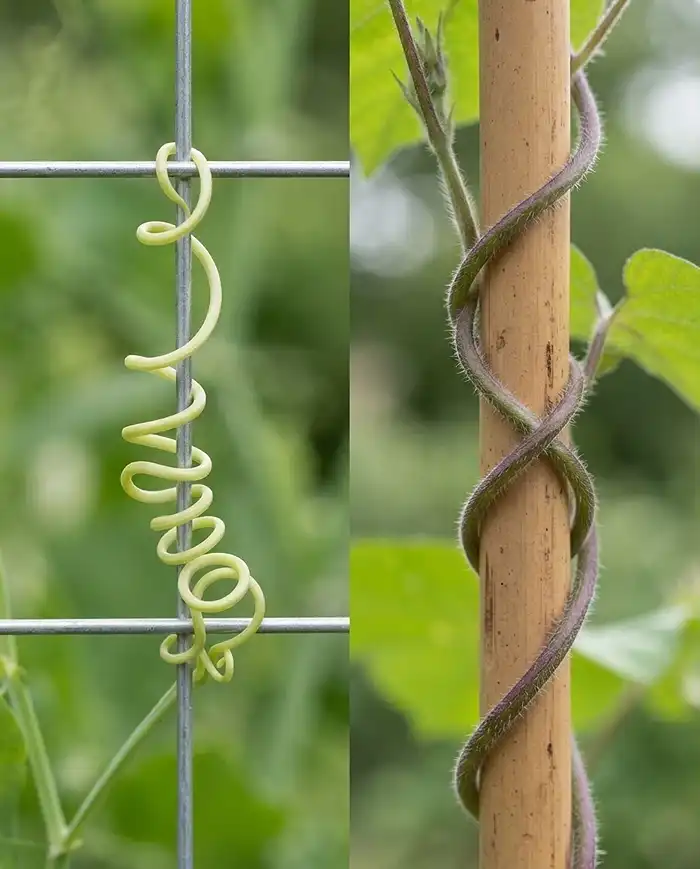
Twining vines spiral their entire stem around a support. Morning Glories, Black-eyed Susan vine, and Thunbergia all climb this way. They need vertical poles or cords with some thickness — thin wire alone won’t give them enough to grip.
Tendril producers like sweet peas, passionflower, and climbing peas shoot out tiny curling appendages that latch onto narrow horizontal elements. They need a grid or mesh with openings no wider than about 2 inches, otherwise the tendrils find nothing to grab.
I learned this the hard way with sweet peas in 2023. I mounted a beautiful single-wire vertical strand trellis — the tendrils couldn’t latch, the whole plant flopped, and I lost most of the blooms to wind damage. Switched to a 1.5-inch grid and the same variety thrived.
Pro tip: If your plant produces tendrils, your support needs horizontal elements spaced no more than 2 inches apart — regardless of how good the trellis looks.
Top-Heavy Stems and Structural Propping
Not every plant climbs. Some just get heavy and need something to lean on. Dahlias, Monsteras, pepper plants, and large-leafed tropicals all fall into this category.
These plants don’t wrap or grip — they simply need a firm point of contact to stop wind-induced rocking and fruit-weight bowing. A single decorative stake placed close to the main stem works well here.
For a Monstera in a corner planter, I use a moss pole wrapped in coir fiber — it looks natural, gives aerial roots something to grip, and lets the plant climb upward rather than flopping sideways. Dahlias respond well to single copper stakes with a small loop at the top.
For heavy-fruiting plants like peppers in a no-drill balcony setup, use semi-circle hoop supports that cradle the main stem without requiring you to tie anything.
Top Aesthetic Plant Support Styles for Balconies
These are the support styles that genuinely work in a styled small balcony garden without looking like you raided a hardware store. Each has a specific use case — pick based on your plant type, container depth, and the overall look you’re going for.
Minimalist Wire and Geometric Metal Trellises
Thin, powder-coated geometric stakes — honeycomb shapes, asymmetrical arches, angular zig-zags — are the best option for a modern or Scandi-inspired balcony. Their lines look intentional even when a plant is barely touching them.
The key is the powder coating. Matte black or dark forest green disappears against foliage. Brass and aged gold reads as a deliberate design choice. White works in Mediterranean-style spaces.
These work best for lightweight climbers: trailing pothos, climbing nasturtiums, small-leafed ivy. I have a fan-shaped black metal trellis in a 14-inch pot with a ‘Spooky’ nasturtium that took about six weeks to fully cover it — and the bare trellis looked like wall art during that waiting period.
They’re also excellent for balcony vertical garden arrangements where you want multiple pots in a line, each with a matching support structure creating visual rhythm along a railing.
Pro tip: Buy supports with a base spike of at least 8 inches so they anchor deep enough in a container to resist wind load once the plant fills in.
Classic Bamboo Hoops and Wooden Obelisks
U-shaped bamboo hoops are underrated for trailing plants like Hoya, jasmine, and indoor-outdoor herbs. They’re cheap, look organic, and can be doubled up to create a fuller hoop effect inside a single pot.
Tall wooden obelisks — ideally teak or cedar, 36 to 48 inches for a container — are the go-to for boho-chic, cottage-core, or tropical balcony styles. They have enough visual weight to anchor a corner planter without competing with the plants.
I planted a ‘Star Jasmine’ at the base of a 42-inch cedar obelisk in spring 2024. By August it had covered 70% of the structure and the fragrance was genuinely incredible. The obelisk itself cost $28 from a local garden center — by far the best money I’ve spent on balcony hardware.
These natural materials pair well with vertical herb ladder setups where the aesthetic is deliberately organic and layered.
Pro tip: Pre-soak bamboo hoops in linseed oil before use — it extends their outdoor life from one season to three or four.
Macrame Hangers with Integrated Climbing Cords
This is one of the most space saving garden ideas that nobody talks about. The technique: hang a ceiling hook above a floor pot, then drop several jute or cotton cords straight down into the soil. Fast-growing vines grab the cords and climb upward, creating a living curtain effect.
It works best with twining vines: Morning Glories, Thunbergia, and climbing black-eyed Susan vine take to it quickly. You get a vertical green feature that uses zero horizontal space — ideal for a narrow balcony where every inch counts.
The macrame hanger itself serves double duty: it holds the pot and anchors the cords. Choose natural cotton or jute over synthetic — it weathers better and looks more intentional against a plant backdrop.
Pro tip: Space cords 3 to 4 inches apart so tendrils have multiple grabbing points. A single cord produces a messy spiral; four or five cords produce a lush curtain.
Matching Support Materials to Your Balcony Aesthetic
Material choice determines whether your support looks curated or cobbled together. On an exposed balcony, it also determines how long the support lasts before it starts to look terrible.
Indoor plant stakes — the kind with little moss balls or paper-wrapped wire — will warp, rust, or disintegrate within weeks of outdoor exposure. The combination of UV rays, wind, and daily watering is genuinely harsh. Always buy supports rated for outdoor use.
Rust-Resistant Metals (Powder-Coated Steel and Copper)
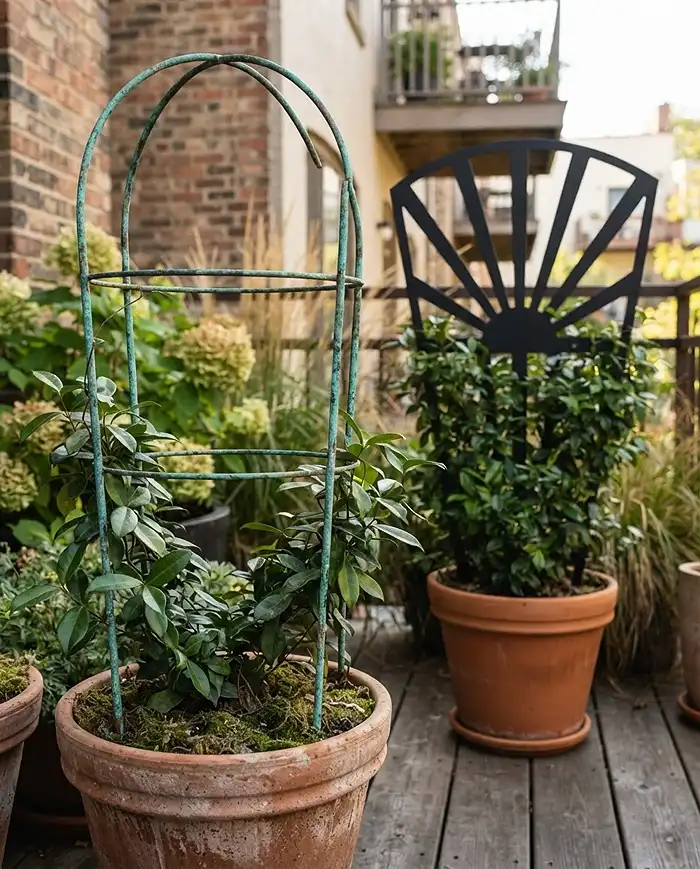
Powder-coated steel is the most durable option for exposed balconies. The coating seals the metal completely, preventing rust stains on your balcony floor — a problem I’ve dealt with from uncoated wire supports that left orange streaks across my white tile.
Check the coating before buying: run your fingernail along an edge. Thin or peeling coating on a new product is a red flag. Quality powder coating feels uniform and slightly textured.
Untreated copper stakes are a different story — and a beautiful one. They start bright and warm, then oxidize over months into a soft green patina. It’s unpredictable and organic-looking, which suits cottage or maximalist balcony styles perfectly.
Copper pairs especially well with terracotta pots and dark green foliage. I have three copper hoops in my pepper pots that have been oxidizing since spring 2022 — they look genuinely better now than when I bought them.
Sealed Woods and Natural Bamboo for Warmth
Raw wood and untreated bamboo will rot at the soil line within a single growing season if you’re watering regularly. The fix is marine-grade sealant — brush it on before you use the stake, paying extra attention to the bottom 10 inches that will sit in soil.
Reapply every spring. It takes about 20 minutes per support and extends the life of a $30 cedar obelisk by several years.
For bamboo hoops, look for heat-treated options — the treatment process closes the pores and naturally improves weather resistance without chemical sealants. They’re slightly more expensive but worth it for balcony vertical garden use where supports are permanently exposed.
Pro tip: Stand wooden stakes in a jar of linseed oil overnight before first use. The wood absorbs the oil deeply, which no surface brush-on can replicate.
Step-by-Step Guide to Installing Plant Supports in Pots
Timing and sequence matter more than most guides admit. Do this in the wrong order and you’ll either damage your plant’s roots or end up with a wobbling support that tips over in the first real windstorm.
Follow these steps in order:
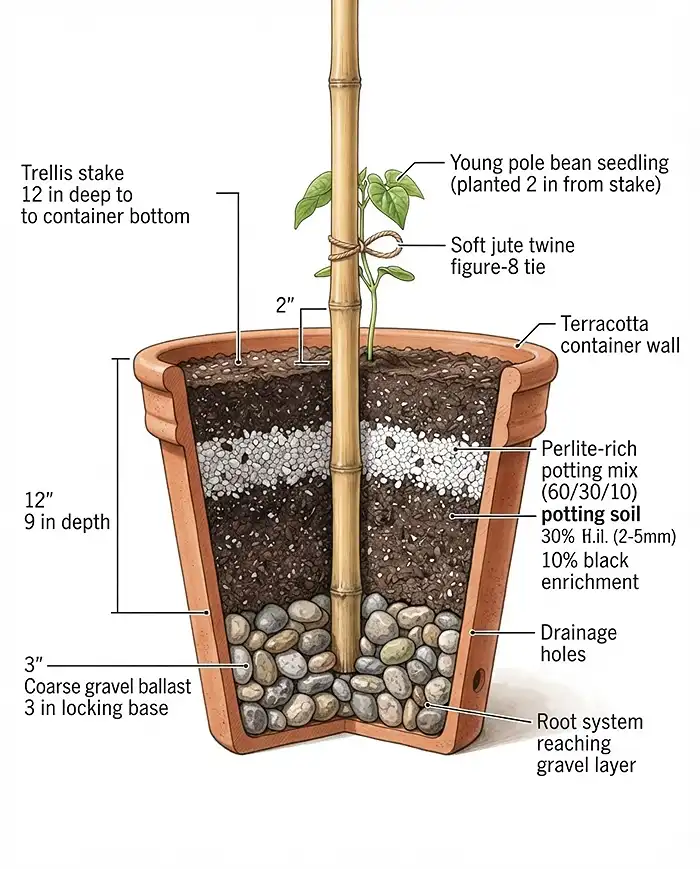
- Start with a heavy container. Terracotta or thick ceramic — at least 14 inches wide for any support taller than 24 inches. Lightweight plastic pots tip over once a plant fills out and acts as a wind sail.
- Insert the support before adding soil. Push the stake or trellis to the very bottom of the empty pot. This is critical — shoving metal or wood into a pot full of established roots causes serious damage.
- Add a layer of coarse gravel (2 to 3 inches) around the base of the support. This locks it in place and improves drainage. For taller supports, use rocks from the bottom quarter of the pot.
- Fill with a perlite-rich mix (at least 20% perlite). Pack it firmly around the base of the support — loose soil lets the stake shift under wind pressure.
- Plant your seedling close to the base of the support, ideally within 2 inches. Gently tie the main stem with soft jute twine in a figure-eight loop — not a tight knot.
For wall-mounted options, the vertical wall planter guide covers anchoring methods that work without drilling into rental property walls.
Training and Maintaining Plants on Decorative Trellises
Installing the support is the easy part. The ongoing work — training the plant to fill the structure neatly — is what separates a lush, intentional balcony garden from a tangled mess.
Check your climbers every two to three days during active growth (spring through midsummer). New shoots grow fast and will head in the wrong direction if you don’t redirect them early. A shoot that’s 3 inches long is easy to guide; one that’s 12 inches long has already committed to its path.
Weave new growth through the support structure rather than letting it climb on the outside. Plants that wrap around the exterior of a trellis look messy and can eventually pull the support out of the soil.
Deadheading [removing spent flowers] on climbing roses and sweet peas isn’t just cosmetic — it redirects energy into new stem growth and keeps the plant pushing upward through the support rather than getting top-heavy and flopping.
Prune any stems that cross back over themselves. Left unchecked, crossed stems rub against each other in wind, create wounds, and eventually form an impenetrable thicket that blocks light to the lower leaves.
Common Problems and Solutions
Two failures account for most balcony plant support disasters. Both are easy to prevent once you know what causes them.
Supports Leaning or Tipping Over in High Winds
A plant-covered trellis acts like a sail. The more foliage, the more wind resistance — and high-rise balconies can generate surprising gusts even on calm days.
The fix has two parts. First, counterbalance the pot from the inside: add 2 to 3 inches of coarse gravel at the bottom before potting. This lowers the center of gravity significantly without adding too much weight to carry.
Second, anchor the top of the trellis to your balcony railing using UV-resistant zip ties or stainless steel wire. One or two anchor points at the top of the support eliminates the tipping problem entirely — even in strong wind.
Vines Sliding Down Smooth Metal Trellises
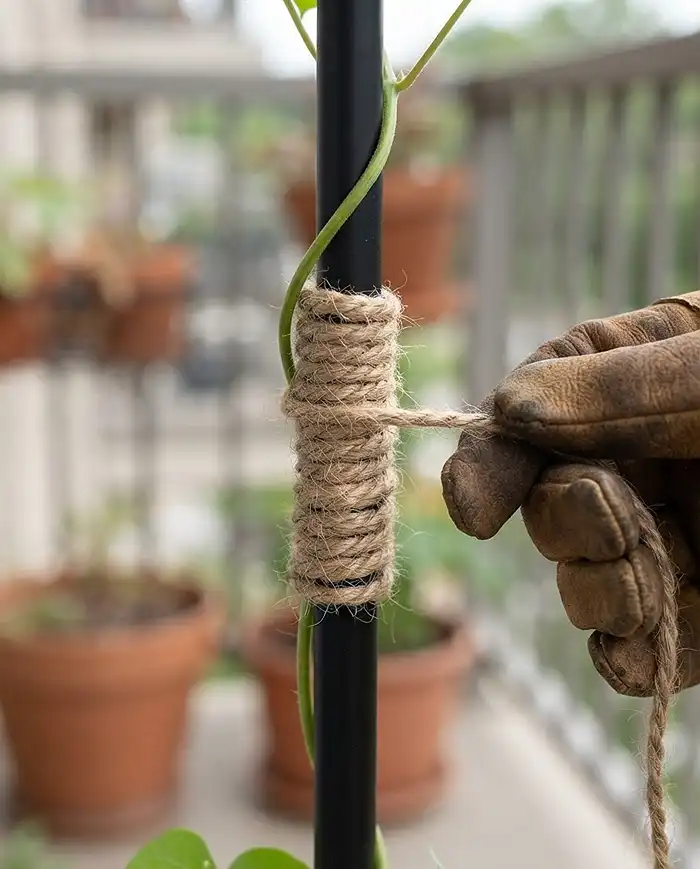
Powder-coated metal is slippery. Stems that don’t have tendrils or twining ability simply slide back down toward the pot rather than climbing upward.
The solution is friction. Wrap the metal joints and horizontal bars with rough jute twine — wind it tightly three or four times around each intersection. It creates texture that stems can grip without looking messy.
Alternatively, use specialized velcro plant tape (the RHS recommends soft-tie versions) to gently hold slippery stems in place while the plant establishes. The velcro releases as the stem thickens, so you don’t need to monitor it closely.
decorative plant supports for balcony FAQs
When is the best time to insert a plant support into a pot?
Insert your trellis or stake on the exact day you pot the seedling — before the roots establish. Pushing a metal or wooden spike into a mature plant’s container will sever established roots and cause immediate shock. There is no good workaround once the plant is established.
How do I attach plants to a decorative trellis without ugly plastic clips?
Use soft jute twine, dark green floral velcro tape, or silicone figure-eight ties. All three hold stems gently without visually clashing with the decorative support. Avoid bright green nursery clips — they draw the eye away from the plant and the structure.
Can I use indoor decorative plant stakes on an outdoor balcony?
No. Delicate wooden or uncoated wire indoor stakes will warp, splinter, or rust within a single month of exposure to UV sunlight, wind, and daily watering. Always buy supports explicitly rated for outdoor use with weather-resistant coatings or naturally durable materials.
What is the best support for a Monstera on a balcony?
A coir-wrapped moss pole is the best option. It mimics the tree trunks Monsteras climb in the wild, gives aerial roots something to grip, and looks natural in tropical or boho-chic balcony setups. Aim for a pole at least 24 inches taller than the current plant height.
How deep should a trellis stake be inserted into a container?
The stake should reach the bottom of the pot. For a 14-inch deep container, that means at least 12 inches of stake is below the soil surface. Stakes that only go 4 to 5 inches deep will pivot and lean under the weight of a mature, wind-loaded plant.
Key Takeaways
- The best decorative plant supports for balcony gardens double as sculptural features — choose designs that look intentional even before the plant covers them.
- Match support style to climbing mechanics: twining vines need vertical poles with grip, tendril producers need tight grids, and top-heavy plants need single stakes or hoops.
- Always insert supports into empty pots before adding soil — retrofitting stakes into established root systems causes real damage.
- Outdoor materials only: powder-coated steel and sealed wood handle balcony conditions; indoor stakes degrade within weeks of UV and wind exposure.
- Anchor tall, plant-covered trellises to your railing with zip ties — a leafy trellis acts as a wind sail and will tip even a heavy pot without a second anchor point.