

Cool Weather Herbs for Pots to Grow This Fall
Cool weather herbs for pots are the fastest way to rescue a balcony full of crispy, heat-exhausted summer annuals — and turn it back into a lush, productive herb garden before the first frost hits.
I grow on a southwest-facing balcony in zone 6b, and every September my summer planters look like a crime scene. Basil gone black, petunias leggy and spent. But swapping them out for cold-tolerant herbs has given me fresh parsley and thyme well into December. The secret is knowing which plants to choose and how to prep that tired soil first.
Table of Contents
The Magic of Cool Weather Herbs for an Autumn Balcony
The end of summer doesn’t mean the end of your small balcony garden. It means the beginning of a second act — one that’s often greener and more productive than the first.
Most summer annuals bolt, brown, and give up the moment temperatures drop below 60F. Cool-season herbs do the opposite. Cilantro sweetens. Parsley thickens. Thyme just keeps growing like nothing happened.
Swapping out your exhausted summer plants for frost-tolerant herbs gives you fresh culinary harvests through October, November, and even into early December in milder zones. And the aesthetic payoff is real — deep green parsley, silvery sage, and trailing thyme look stunning in a fall container.
This is also when container herbs shine. You can chase the sun, move pots indoors during a cold snap, and extend your harvest by weeks compared to in-ground gardeners.
Prepping Your Tired Balcony Planter for the Transition
You can’t just shove autumn transplants into old, compacted, nutrient-depleted summer soil and expect a good result. The prep work takes 30 minutes and makes all the difference between thriving container herbs and a soggy, rotting mess.
Safely Removing Dead Summer Plants
Start by pulling out every dead summer annual, roots and all. Don’t just yank — loosen the soil around the root ball first with a hand trowel, then lift the whole mass out.
Break up any dense, matted root clumps you find remaining in the pot. Those compressed masses block drainage and create anaerobic pockets where root rot thrives.
While you’re in there, inspect the soil carefully. I’ve pulled out grubs from my pots in late August more than once. Check for overwintering spider mites too — look for fine webbing on the inner pot walls. If you spot either, remove and discard the top two inches of soil before you do anything else.
Rejuvenating Exhausted Potting Soil
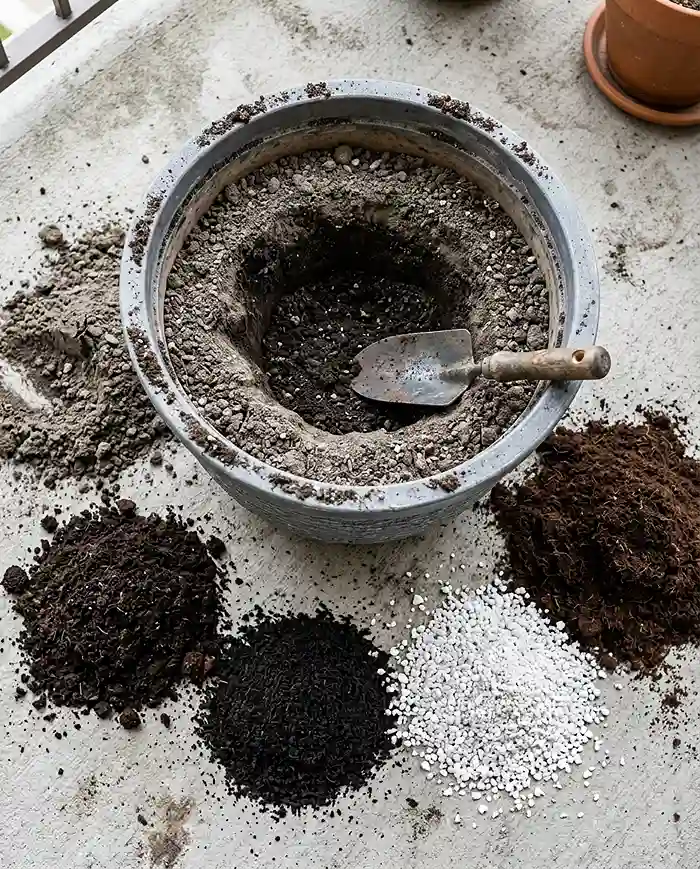
Summer potting mix is structurally and nutritionally depleted. The good news: you don’t have to throw it all out. Here’s the exact blend I use to bring it back to life.
Remove the top third of the old potting mix. To what’s left, add:
- 2 parts fresh organic compost (I use worm castings mixed with bagged compost)
- 1 part fresh potting mix to restore volume
- A generous handful of perlite per 10-inch pot to restore aeration
Mix everything together well, then water it lightly and let it settle for 24 hours before planting. The perlite is non-negotiable — compacted, dense soil in a container is the number one cause of root rot in fall herbs. As of autumn 2025, most garden centers stock bagged worm castings alongside their fall transplants.
Top Cool Weather Herbs for Fall Planters
The best cool weather herbs for pots share a few traits: they don’t bolt when days shorten, they handle light frosts without collapsing, and they actually taste better in the cold. These are the ones I reach for every September without fail.
| Herb | Frost Tolerance | Best Cultivar for Pots | Flavor Peak |
|---|---|---|---|
| Cilantro | Light frost (28-32F) | Leisure, Calypso | Below 70F |
| Flat-Leaf Parsley | Hard frost (20-25F) | Gigante d’Italia | After first frost |
| Thyme | Hard frost (10-20F) | English Thyme | Year-round |
| Sage | Hard frost (15-20F) | Berggarten | Fall and winter |
| Rosemary | Light frost (25-28F) | Arp, Hill Hardy | Year-round |
| Chives | Hard frost (0-10F) | Standard allium | Until deep freeze |
| Mint | Hard frost (varies) | Spearmint, Peppermint | Until dormancy |
Cilantro and Parsley: The Frost-Tolerant Greens
These two are the workhorses of the autumn herb garden. And here’s the thing most summer gardeners don’t know: cilantro and flat-leaf parsley perform their absolute best in cool weather.
Cilantro bolts almost immediately in July heat. Plant it in September in a container herb setup and it’ll produce lush, fragrant leaves for six to eight weeks straight. The ‘Leisure’ and ‘Calypso’ cultivars are the slowest to bolt even in mild autumn warmth.
Flat-leaf parsley, especially ‘Gigante d’Italia,’ is genuinely cold-hardy — it can survive temperatures down to 20F with some protection. I’ve harvested it under snow.
The cool air does something real to the flavor of both herbs. Parsley loses its slight bitterness and sweetens noticeably. Cilantro becomes more complex. These aren’t garden-writer claims — I’ve done side-by-side taste tests with my summer-grown batches.
Plant them as nursery transplants in early September for peak autumn production. Check out our complete guide to growing herbs in pots for spacing tips for both species.
Hardy Mediterranean Herbs: Thyme, Sage, and Rosemary
If cilantro and parsley are the flavor producers of your fall planter, thyme, sage, and rosemary are the structural backbone. They give the pot year-round architecture and stay evergreen when everything else dies back.
English Thyme is practically indestructible in zones 4-9. I’ve had plants come through -10F winters in zone 6b with nothing but a light straw mulch. In a fall pot, it trails beautifully over the edge and provides structure through the whole season.
‘Berggarten’ sage is broader-leafed than common sage and holds its silver-gray color through hard frosts. It’s also genuinely ornamental — paired with dark parsley, it looks intentional and designed.
Rosemary is the one caveat. It’s less cold-hardy than thyme and sage. In zones 6 and colder, stick with ‘Arp’ or ‘Hill Hardy’ cultivars, which tolerate temps down to about 0F. In zone 7+, standard rosemary handles autumn outdoors without drama.
Chives and Mint: The Resilient Perennials
Chives are among the most cold-hardy herbs you can grow. In zones 3-9, they’ll keep producing right up until a deep, sustained freeze forces them into dormancy. Even then, they’re just sleeping — they come roaring back in early spring.
In a fall container, chives stay compact, provide fresh allium flavor for eggs, soups, and garnishes, and look tidy throughout. They’re also a mild pollinator container garden plant — their purple blooms attract bees in spring, though you won’t get that in autumn.
Mint is a different story. It spreads aggressively, so always pot it separately — never mix it into a shared planter or it will crowd out everything else within weeks. That said, a dedicated mint pot on the balcony produces fresh leaves for tea and cocktails until the ground freeze hits.
Spearmint and peppermint both handle cold better than most herbs. I’ve had spearmint survive outdoors in zone 6b under a light frost blanket through late November.
Essential Supplies for Autumn Containers
Good plants in bad containers fail fast once autumn temperature swings hit. These are the materials worth having on hand before you plant anything.
Weather-Resistant Pots and Drainage
Unglazed terracotta is beautiful, but it’s wrong for fall container gardening. The porous walls absorb moisture, which expands when it freezes and shatters the pot. I lost three terracotta planters to a hard November freeze before I finally switched.
For autumn herb planters, use thick resin or insulated fiberglass containers. They hold heat better, don’t crack in freezes, and are lighter — which matters when you need to drag pots indoors on short notice.
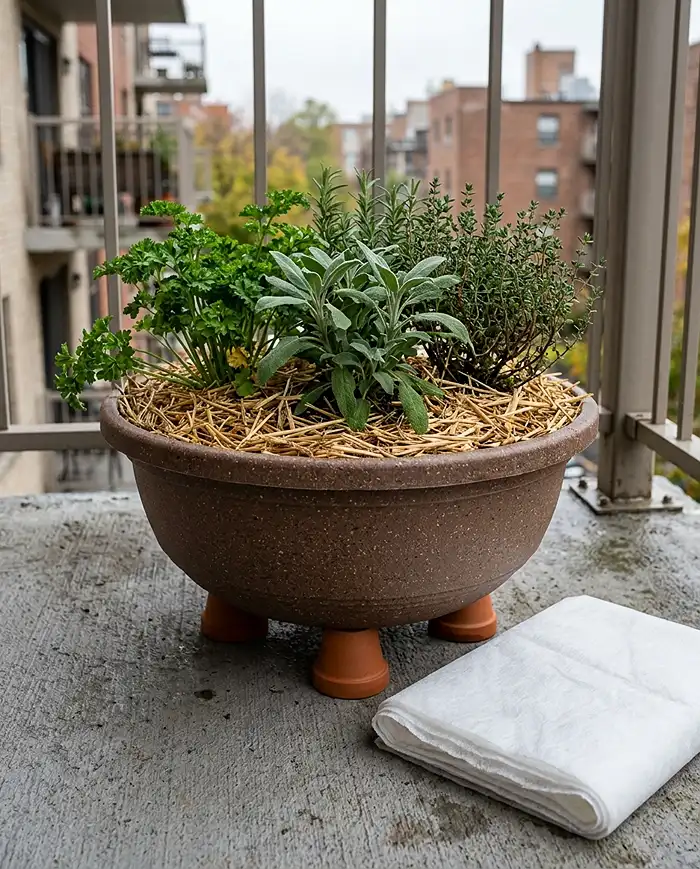
Drainage is critical. Elevated drainage holes — not holes flush with the pot base — prevent standing water in the reservoir zone. Add pot feet under every container to guarantee airflow underneath and protect your balcony surface.
Insulating Mulch and Frost Covers
Two things every fall balcony gardener needs on standby: a frost blanket and a bag of straw or bark mulch.
Apply a 2-inch layer of straw mulch over the soil surface of every autumn herb pot right after planting. This insulates the shallow surface roots — the most vulnerable part of a container herb in a sudden cold snap.
Keep a horticultural fleece or frost blanket folded and accessible. When overnight temps are forecast to drop below 28F, drape it over your pots. It’s a 60-second task that can save weeks of growth. The University of Maryland Extension has a clear breakdown of frost protection thresholds for herbs worth bookmarking.
Step-by-Step Autumn Replanting Guide
Follow these steps in order for the best results with your cool weather herb garden.
- Pre-moisten your amended soil mix the day before planting. Dry potting mix repels water initially and creates air pockets around new roots.
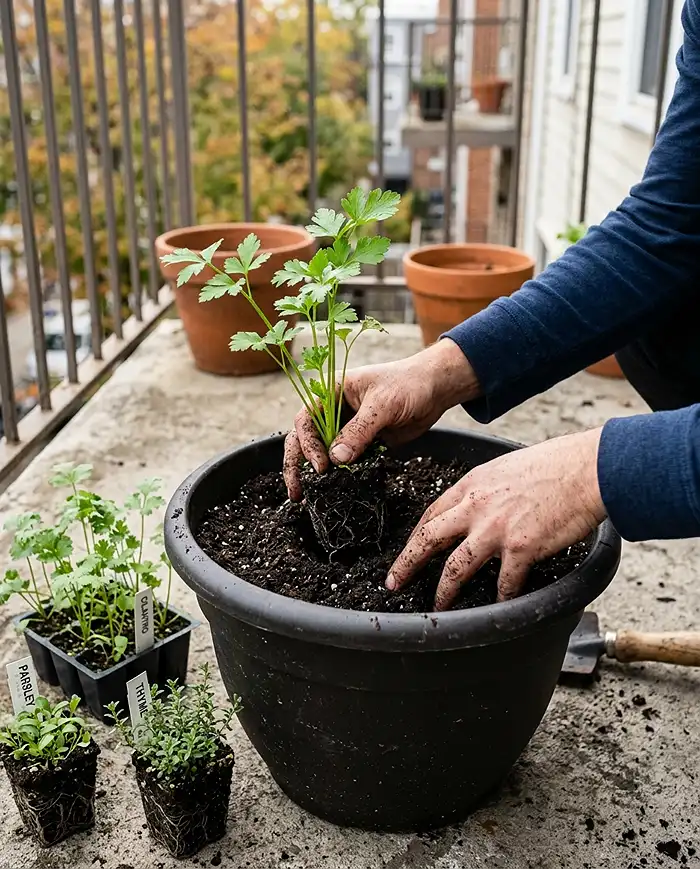
- Plan your layout before you dig. Tallest herbs (rosemary, sage) go to the back or center. Trailing thyme goes at the edges where it can cascade. Parsley and cilantro fill the mid-ground.
- Dig holes the same depth as the nursery containers. Don’t bury stems deeper — most herbs are prone to stem rot if the crown is buried.
- Remove transplants gently by squeezing the nursery pot and tipping out, not yanking from the stem. Loosen the bottom of the root ball slightly with your fingers.
- Set each plant in its hole and backfill, pressing the soil firmly around the roots to eliminate air gaps.
- Water slowly and deeply until water drains freely from the bottom. Then leave it alone for 48 hours before watering again.
- Apply your 2-inch straw mulch layer over the soil surface, keeping it a half-inch away from the plant stems.
For more layout inspiration, see our balcony herb garden ideas for arrangement examples that work in tight spaces.
Cold Weather Care and Maintenance
The rules change in autumn. What worked in July will kill your herbs in October. The two biggest mistakes are watering on the old summer schedule and reaching for fertilizer out of habit.
Adjusting Watering for Lower Temperatures
In summer, a container herb in full sun might need water every day. In October, that same pot might only need water once a week — or less. Cool temperatures slow evaporation dramatically, and overwatering is the fastest way to lose autumn herbs.
Ditch the schedule. Use the finger test instead: push your index finger two inches into the soil. If it’s dry at that depth, water. If it’s still damp, wait another day and check again.
When you do water, water deeply — until it drains from the bottom. Then let the pot dry out properly before the next drink. This keeps roots healthy and prevents the stagnant moisture that causes autumn root rot.
Feeding Herbs in the Fall
Don’t fertilize in late fall. I know that sounds counterintuitive when you’re looking at a freshly planted pot, but here’s why: fast-acting, high-nitrogen liquid fertilizers push tender new leaf growth.
That tender new growth can’t handle frost. A hard freeze will kill it, and the stress can set back your entire plant. The slow-release compost and worm castings you added during soil prep are all the nutrition your autumn herbs need.
If you feel compelled to do something, a single application of kelp meal worked into the top inch of soil in early October is gentle enough to be helpful without triggering frost-vulnerable growth.
Common Problems and Solutions
Two problems account for most autumn container herb failures. Both are predictable and fixable if you catch them early.
Overwatering and Winter Root Rot
Root rot in autumn containers has a specific look: yellowing lower leaves, stems that feel soft near the base, and soil that smells sour or musty when you disturb it. If you see that combination, act immediately.
Remove the plant, shake off the old soil, and inspect the roots. Healthy roots are white and firm. Rotted roots are brown, soft, and smell bad. Trim off any rotted roots with clean scissors, let the roots air for an hour, then repot into fresh, dry mix.
Prevention is simpler: elevate every pot on pot feet to guarantee bottom drainage and airflow. And follow the finger test religiously — never water on a fixed schedule in cool weather.
Late Season Pests and Powdery Mildew
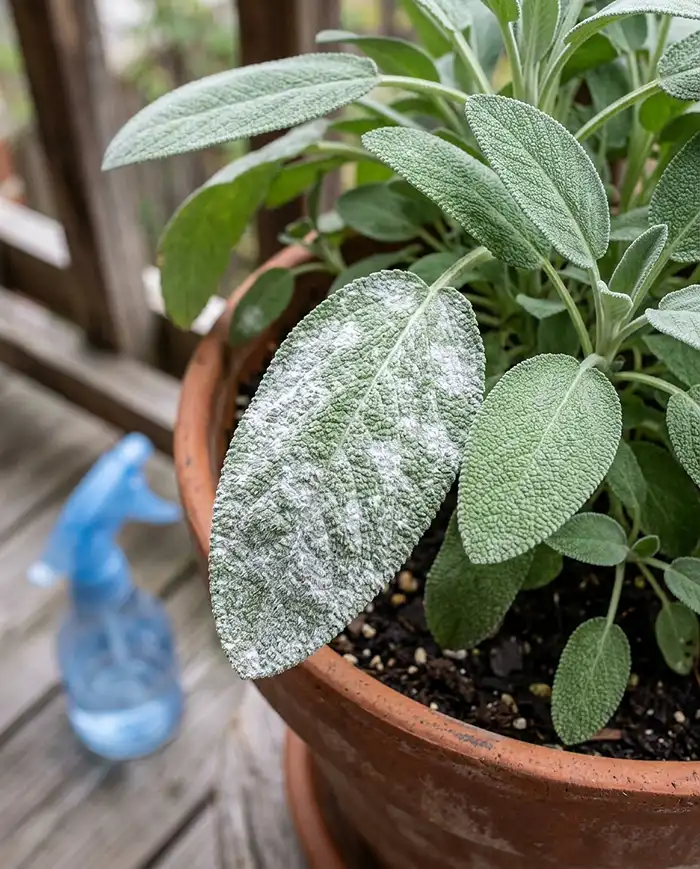
Cool nights plus lingering humidity is a perfect recipe for powdery mildew — that white, dusty coating that shows up on sage and mint leaves in October. It’s cosmetically unpleasant and, if ignored, weakens the plant.
Prevent it by spacing plants so air circulates freely between them. Don’t crowd a small balcony planter with more transplants than it can support. Three well-spaced herbs will outperform five crammed ones every time.
If mildew appears, mix 1 tablespoon of potassium bicarbonate with 1 quart of water and a few drops of dish soap. Spray the affected leaves every 5-7 days. It’s effective and safe for culinary herbs. Potassium bicarbonate is available at most home brewing supply stores and online.
Frequently Asked Questions
Can herbs survive freezing temperatures in pots?
Hardy herbs like thyme and sage can survive light frosts down to around 28F to 32F. However, roots in an above-ground container are far more exposed than in-ground plants — the pot provides almost no insulation from sustained cold. In a prolonged hard freeze, roots will die unless pots are wrapped in burlap or moved indoors.
Should I start autumn herbs from seeds or transplants?
Use nursery transplants for a fall refresh, not seeds. Shortening daylight hours and cooling soil temperatures make germination unreliable and slow. By the time a seed-grown plant matures enough to harvest, your growing window will be over. Buy 4-6 inch transplants from a nursery in early September for the best results.
How much sunlight do herbs need in the fall?
Most culinary herbs need 4 to 6 hours of direct sun per day. In autumn, the sun sits lower in the sky and shadows on balconies lengthen noticeably. Move planters to the sunniest corner available and reassess your sun exposure every few weeks as the season shifts.
Which cool weather herbs grow best in small pots?
Chives, parsley, and thyme all do well in 6 to 8-inch pots. Cilantro prefers a deeper container — at least 10 inches — to accommodate its tap root. Rosemary and sage need 10 to 12-inch pots minimum to stay productive through the season.
When should I bring container herbs indoors for winter?
Move pots indoors when overnight temperatures consistently drop below 25F, or before any sustained freeze lasting more than 48 hours. A frost blanket handles short cold snaps, but extended hard freezes will kill even hardy herbs in uninsulated containers. Place them in a sunny south-facing window indoors.
Key Takeaways
- Cool weather herbs for pots — parsley, cilantro, thyme, sage, chives — actively thrive in autumn conditions and taste better in cooler temps than they do in summer heat.
- Always prep your soil before replanting: remove the top third of exhausted mix and blend in fresh compost, worm castings, and perlite to restore drainage and nutrients.
- Switch to frost-proof resin or fiberglass containers and add pot feet under every planter to prevent standing water and freeze damage.
- Dramatically reduce watering frequency in fall — use the 2-inch finger test instead of a fixed schedule, and skip fertilizer entirely after mid-October.
- Keep a frost blanket on standby and apply 2 inches of straw mulch over your soil surface for quick protection when temps suddenly drop. See our late summer balcony garden ideas for transition timing tips.