

Vegetable Root Depth Chart for Container Gardens
A vegetable root depth chart is the single most useful reference you can have before buying containers — matching root depth to pot size is what separates thriving balcony crops from stunted, root-bound failures.
I grow on a west-facing apartment balcony in zone 6b, and I’ve killed more plants from wrong pot depth than from pests or weather combined. This guide gives you the exact numbers so you don’t repeat my mistakes.
Table of Contents
The Hidden Half: Why Vegetable Root Depth Matters for Container Gardens
Most gardeners obsess over sunlight, watering schedules, and which fertilizer to use. Meanwhile, the real bottleneck is underground — a root system that’s hit the bottom of a pot can’t feed the plant above it.
Container gardening forces a deal: you control the environment, but the plant’s roots only get what’s in the pot. Get the depth wrong and no amount of feeding or watering recovers it.
This is especially critical for small space gardening, where every square inch of balcony or patio is precious. Choosing the right container depth upfront saves you money, heartbreak, and a wasted growing season.
The good news? Most vegetables fall predictably into three depth categories. Once you know which bucket your crop lands in, shopping for pots becomes straightforward.
Understanding How Vegetable Roots Grow in Pots
In open ground, roots spread freely in all directions — horizontally for moisture and vertically for anchorage and deep nutrients. In a container, that freedom disappears.
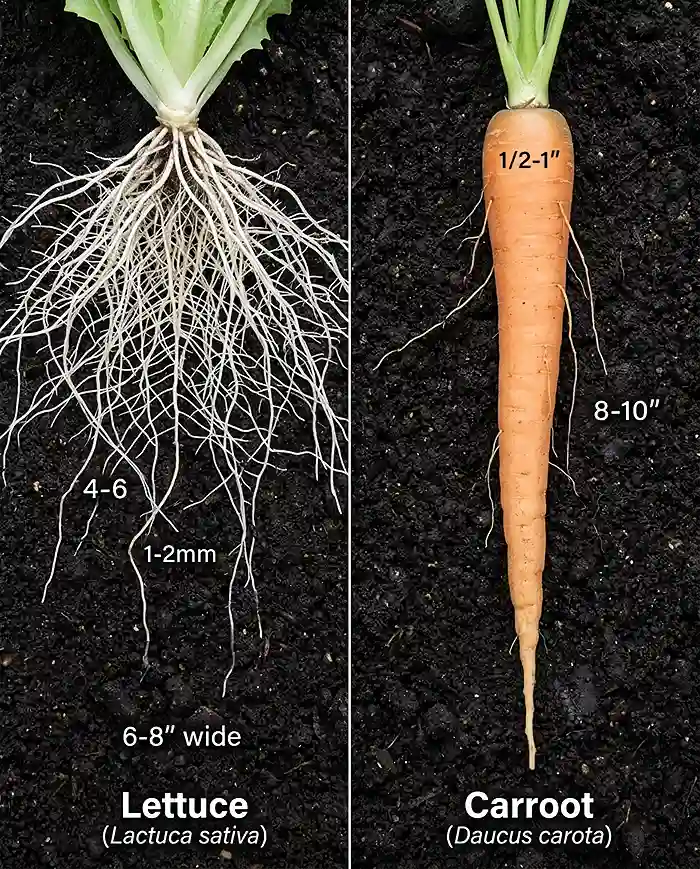
Restricted roots hit walls and bottom faster, often within weeks of transplanting. The plant signals stress before you can even see it, diverting energy from fruit production to survival. Understanding this helps you get the container size right before the plant suffers.
Fibrous Roots vs. Taproots
Fibrous roots are shallow, web-like networks that spread wide rather than deep. Lettuce, spinach, and onions all grow this way. They’re happy in wide, shallow containers like window boxes.
Taproots drive straight down. Carrots, parsnips, and beets send a single dominant root vertically, with smaller lateral roots branching off. These need strict vertical depth — width is irrelevant if the pot isn’t tall enough.
Fruiting vegetables like tomatoes and peppers are technically fibrous-rooted, but their sheer size and nutrient demands mean they still need deep containers to access enough soil volume.
Knowing your crop’s root architecture is step one. The full breakdown of deep vs. shallow root vegetables for pots goes deeper on this distinction if you want the biology.
The Dangers of Root-Bound Plants
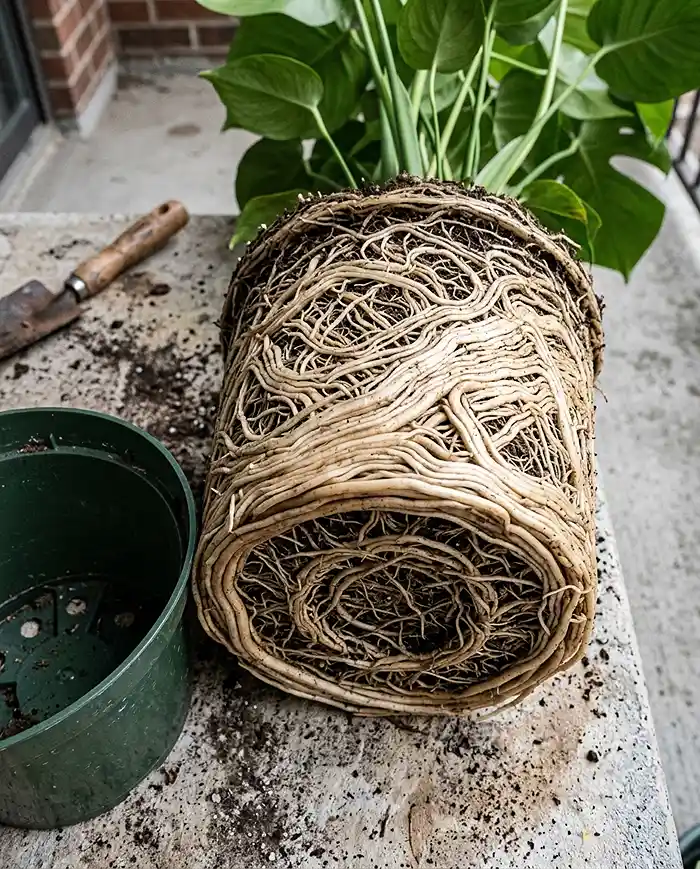
A root-bound plant is one where the roots have filled every inch of available soil and started circling the container walls. At this point, roots literally wrap around themselves and choke the plant.
The symptoms show up fast: yellowing leaves despite regular feeding, wilting even after watering, blossom drop, and zero fruit production. I lost an entire pepper harvest one summer — four ‘Lunchbox’ plants in pots that were two inches too shallow.
Once roots circle, they restrict water uptake and lock out nutrients even when the soil is loaded with them. It’s not a deficiency problem. It’s a geometry problem.
The fix is repotting — but prevention is far easier. Use this chart before you buy, not after the plant is already struggling.
The Ultimate Vegetable Root Depth Chart for Containers
Use these measurements as your absolute minimums. Going a size up from the minimum never hurts — it gives roots buffer room and reduces how often you need to water. Going smaller, even by a few inches, causes the problems described above.
These are verified across multiple growing seasons in containers from window boxes to 25-gallon fabric bags. As of summer 2025, these measurements align with recommendations from university extension programs and match what I’ve personally tested.
Shallow Root Vegetables (4 to 8 Inches Deep)
These crops are the stars of tiny garden ideas — they’re perfectly suited to window boxes, rail planters, and shallow troughs. Their fibrous roots stay in the top 4 to 6 inches of soil.
- Radishes — 4 to 6 inches. Fastest crop in this category; ready in 25 days.
- Loose-leaf lettuce — 4 to 6 inches. ‘Black Seeded Simpson’ and ‘Red Sails’ are ideal cut-and-come-again varieties.
- Spinach — 4 to 6 inches. Bolts in heat; use 6-inch depth to keep roots cooler.
- Scallions — 4 to 6 inches. Pack 12 to 16 per 8-inch wide window box.
- Garlic — 6 to 8 inches. Needs slightly more depth than most shallow-rooters.
- Arugula and mustard greens — 4 to 6 inches. Excellent for succession planting every 3 weeks.
I keep three 8-inch-deep window boxes on my balcony railing specifically for these crops. Rotating radishes, lettuce, and scallions through spring and fall gives me continuous harvests from March through November in zone 6b.
Medium Root Vegetables (8 to 12 Inches Deep)
This is the biggest category for urban gardening — most kitchen staples land here. They fit comfortably in 3- to 5-gallon containers, which are easy to move and widely available.
| Vegetable | Minimum Depth | Recommended Container | Notes |
|---|---|---|---|
| Bush beans | 8 inches | 3-gallon | Plant 6 per 12-inch-wide pot |
| Swiss chard | 8 to 10 inches | 3-gallon | ‘Bright Lights’ is compact and productive |
| Kale | 8 to 10 inches | 3 to 5-gallon | ‘Dwarf Blue Curled’ best for containers |
| Peppers | 10 to 12 inches | 5-gallon | Heavier fruiting requires stable base |
| Eggplant | 10 to 12 inches | 5-gallon | ‘Patio Baby’ is ideal for small pots |
| Beets | 10 to 12 inches | 5-gallon | ‘Detroit Dark Red’ stays compact |
One thing most guides skip: fruiting crops in this category get top-heavy. A 5-gallon pot loaded with six bell peppers will tip in a 15 mph wind. Use wide-base pots or add a layer of gravel to the bottom inch for ballast.
Deep Root Vegetables (18 to 24+ Inches Deep)
These are the high-maintenance crops of container growing, but the rewards are worth it. The key rule: never go below 18 inches for this group, no matter what the label on the pot says.
- Indeterminate tomatoes — 18 to 24 inches minimum. ‘Sun Gold’ and ‘Sweet 100’ are the most forgiving in containers.
- Cucumbers — 18 inches. Need trellising to keep vines off the pot rim.
- Zucchini and summer squash — 18 inches. ‘Patio Star’ is bred specifically for deep pots.
- Sweet potatoes — 18 to 24 inches. Vines spread wide; train them vertically on a trellis.
- Parsnips — 20 to 24 inches. Longest taproot in the vegetable garden; don’t skimp here.
I tried growing ‘Cherokee Purple’ tomatoes in 15-inch-deep pots one year. They looked fine in June. By July, the lower leaves were yellowing despite weekly liquid feeding. Classic nutrient lockout from root-bound roots. Bumped to 20-gallon fabric bags the next season — completely different plant.
Translating Root Depth to Container Sizes (Inches vs. Gallons)
Nursery tags use gallons; your vegetable root depth chart uses inches. Here’s the conversion that actually holds up across standard pot shapes.
| Root Depth Needed | Minimum Gallons | Common Pot Size | Best For |
|---|---|---|---|
| 4 to 6 inches | 1 to 2 gallons | Window box / 6-inch pot | Radishes, lettuce, scallions |
| 6 to 8 inches | 2 to 3 gallons | 8 to 10-inch pot | Spinach, garlic, herbs |
| 8 to 10 inches | 3 to 5 gallons | 10 to 12-inch pot | Bush beans, chard, kale |
| 10 to 12 inches | 5 gallons | 12-inch pot | Peppers, eggplant, beets |
| 18 inches | 10 to 15 gallons | 15 to 18-inch pot | Cucumbers, determinate tomatoes |
| 20 to 24 inches | 15 to 25 gallons | 20 to 25-gallon bag or pot | Indeterminate tomatoes, squash, parsnips |
For a deeper dive into matching pots to specific crops, the complete pot size guide for vegetables is worth bookmarking before your next nursery run.
Best Pot Shapes for Different Root Types
Wide, shallow bowls (8 to 10 inches deep, 16+ inches across) are ideal for fibrous-rooted greens. The horizontal soil volume means you can plant more per container.
Tall, narrow “tree pots” and standard 5-gallon buckets suit taprooted crops like carrots, beets, and parsnips. Width matters less — depth is everything for these.
Standard round pots work for the medium-root category. Aim for a depth-to-width ratio of roughly 1:1 for peppers and eggplants — it gives root spread without making the pot unstable.
One underrated option: deep rectangular planters (12 inches deep, 24 inches long) let you grow a mix of shallow and medium crops in one container, which is ideal for small balconies.
Fabric Grow Bags for Air-Pruning Roots
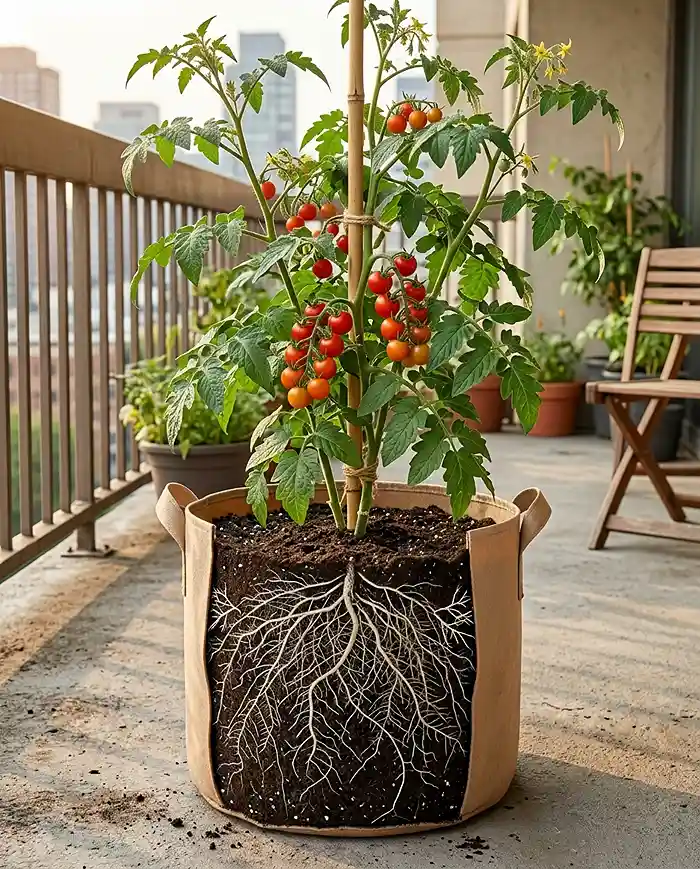
Fabric grow bags outperform rigid plastic pots for most vegetables, and the reason is air-pruning. When roots reach the breathable wall of a fabric bag, the exposed tip dries out and stops growing rather than circling the container.
This forces the plant to develop a dense, branching root system throughout the entire soil volume — which means more efficient nutrient uptake and often better yields than an equivalent rigid pot.
The practical upside: plants in fabric bags can sometimes perform as well as those in a pot one size up. My 10-gallon fabric bags consistently outperform 15-gallon rigid nursery pots for tomatoes.
The downside is watering frequency. Fabric bags dry out 30 to 50% faster than plastic in hot weather. In summer, that can mean daily watering for deep-rooted crops. A deep plastic saucer underneath helps.
Formulating the Best Soil Mix for Confined Vegetable Roots
Never use garden soil in containers. It compacts immediately in pots, cutting off oxygen to roots and causing the kind of slow rot that looks like underwatering.
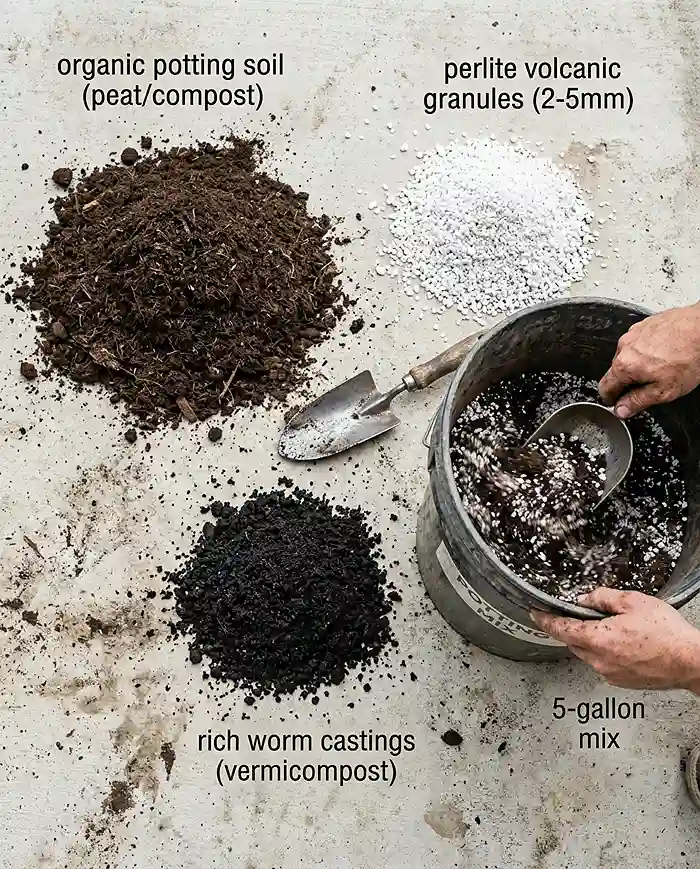
The mix I’ve used for three seasons with consistent results: 60% quality potting mix, 30% perlite, 10% worm castings. It drains fast, stays loose, and feeds plants gently without salt buildup.
Perlite is non-negotiable for deep-rooted crops. Compressed soil at the bottom of an 18-inch pot is where roots go to die — perlite keeps the lower layers aerated even after months of watering.
Worm castings add slow-release nutrients and improve moisture retention without causing waterlogging. For a 5-gallon container, two cups of castings is plenty at planting. Top-dress with another cup mid-season for heavy feeders like tomatoes.
The guide to choosing containers for small-space gardening covers how container material affects soil temperature and moisture, which directly impacts which soil mix to use.
For more on the science of container soil for vegetables, the University of Maryland Extension’s guide on growing media for container plants is one of the most thorough free resources available.
Common Problems and Solutions
Even with the right pot size, things go wrong. Most problems trace back to root depth mismatches — here’s how to diagnose and fix them fast.
Stunted Growth and Yellowing Leaves
Quick Answer: Yellowing leaves on an otherwise-watered, fertilized plant usually means root-bound stress. The roots have run out of soil, and nutrient uptake has collapsed regardless of what’s in the water.
To confirm: slide the plant out of its pot. If you see a dense, circular mat of roots with little visible soil, it’s root-bound. The fix is immediate repotting.
Before moving the plant, score the root ball gently with a knife — four vertical cuts about half an inch deep around the outside. This encourages roots to grow outward into new soil rather than continuing to circle.
Move to a pot at least 3 to 4 inches deeper than the current one. Water well, keep in partial shade for three days to reduce transplant stress, then resume normal care.
Soil Drying Out Too Quickly in Small Pots
Quick Answer: Small and shallow pots lose moisture fast, especially on hot, windy balconies. Two-inch straw mulch on the topsoil cuts evaporation by up to 50%. A deep plastic saucer allows bottom-watering, which pulls moisture up through the soil rather than evaporating from the top.
For bottom-watering: fill the saucer with 1 to 2 inches of water and let the pot absorb it over 30 minutes, then empty any remaining water to prevent root rot.
If you’re in a region with hot summers, moving shallow pots off direct concrete surfaces (which reflect heat) onto a wooden pallet or rubber mat makes a measurable difference in moisture retention.
Frequently Asked Questions
Can I grow deep-rooted vegetables in shallow wide pots?
No. Width does not substitute for depth. A taproot that hits the bottom of a shallow pot will curl sideways, creating deformed carrots or stunted root systems. For fruiting crops like tomatoes, hitting the bottom triggers nutrient collapse in the upper canopy regardless of pot diameter. Always match depth first, then width.
How much space do I need between plants in one pot?
Follow the seed packet’s thinning guidance exactly. Spacing depends on mature canopy size and underground root competition. Cramming three peppers into a single 5-gallon pot — meant for one root system — means all three compete for the same soil volume and typically produce zero fruit. One large plant per pot beats three stressed ones every time.
What happens if a pot is too deep for a shallow-rooted plant?
Oversized pots create a ‘perched water table.’ Unused, perpetually damp soil at the bottom turns anaerobic and promotes root rot. A lettuce seedling in a 20-gallon pot will likely rot from the bottom up before it ever matures. Match pot depth to root depth as closely as practical.
Do determinant tomatoes need as much depth as indeterminate varieties?
Determinate (bush) tomatoes like ‘Patio’ or ‘Bush Early Girl’ can manage in 15-inch-deep, 10-gallon containers. Indeterminate varieties need 18 to 24 inches and at least 15 gallons. Check the seed packet or plant tag for ‘determinate’ or ‘indeterminate’ — it’s the most important label detail for container tomato growers.
Can I reuse potting mix from last season?
Yes, but refresh it before reusing. Spent potting mix compacts and loses structure after one season. Mix the old soil 50/50 with fresh potting mix, add a fresh cup of worm castings and a handful of perlite per gallon of volume, and it performs close to new. Avoid reusing soil from plants that showed disease symptoms.
Key Takeaways
- Use a vegetable root depth chart as your starting point before buying any container — minimum depth is non-negotiable, not a guideline.
- Shallow-rooted crops (4 to 8 inches) thrive in window boxes and rail planters — the backbone of small space gardening.
- Medium-root crops (8 to 12 inches) fit 3 to 5-gallon pots and cover most kitchen garden staples, from peppers to chard.
- Deep-root crops (18 to 24+ inches) need 15 to 25-gallon containers; placing tomatoes or squash in anything shallower causes nutrient collapse by midsummer.
- Fabric grow bags with air-pruning, a 60/30/10 potting mix with perlite and worm castings, and correct container depth are the three variables that make urban gardening actually productive.