

Low Maintenance Balcony Plants for Busy Gardeners
Low maintenance balcony plants for busy gardeners let you build a lush small balcony garden without daily watering chores, even when work eats every spare hour of your week.
I’ve grown containers on a north-facing apartment balcony in USDA Zone 6b for eight years, and most of what I know came from plants that survived my worst travel months. This guide skips the guesswork and gets straight to what actually thrives on neglect.
Table of Contents
The Appeal of a Low Maintenance Balcony Garden
Busy schedules don’t have to mean a bare balcony. The right low maintenance balcony plants, paired with a few smart container tricks, can survive on just 10-15 minutes of care a week.
I learned this the hard way in my first apartment, where I killed three basil plants trying to “check on them” every evening. Once I switched to species built for neglect, I stopped fussing and started actually enjoying the space.
The trick isn’t finding magic plants. It’s matching plant genetics to your specific balcony, then setting up containers that buy you time between waterings.
Assessing Your Balcony Microclimate for Easy Plants
Quick Answer: “Low maintenance” only works when a plant’s natural habitat matches your balcony’s sun, wind, and heat. Skip this step and even Sedum can struggle.
Before buying anything, spend a weekend auditing your space. Note direct sun hours, wind exposure, and how hot the surface gets by 2pm. A concrete floor in full sun can hit 100°F, which rules out shade lovers immediately.
Sun Mapping for “Plant and Forget” Success
Quick Answer: Track your balcony’s direct sunlight every two hours over a Saturday and Sunday, then match that number to a plant’s tag before you buy it.
- Full sun means 6+ hours of direct light, usually south or west-facing
- Partial shade means 3-6 hours, common on east-facing balconies
- Deep shade means under 3 hours, typical for north-facing units or covered balconies
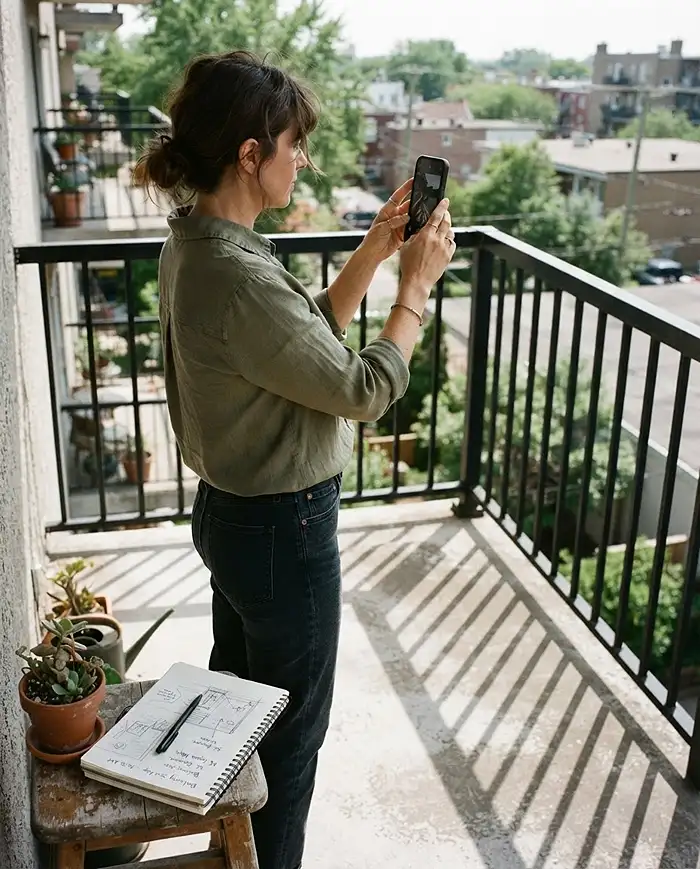
Real Example: My balcony faces north and gets barely 2 hours of morning sun. I killed two lavender plants before admitting it just wasn’t a sun-lover’s spot.
Pro Tip: Use your phone’s camera at the same time each hour. It’s faster and more accurate than trying to remember later.
Choosing Wind-Resistant Container Varieties
Quick Answer: High-floor balconies act like wind tunnels, so pick low-profile, sturdy-stemmed plants and heavy ceramic or concrete pots that won’t tip over.
Tall, top-heavy plants like ornamental grasses in lightweight plastic pots get shredded above the fifth floor. Stick to compact growers under 18 inches and containers with a wide, heavy base.
Pro Tip: Fill the bottom third of tall pots with gravel before adding soil. It lowers the center of gravity without adding real weight to your budget.
Essential Gear for a Hands-Off Garden
A handful of tools do most of the heavy lifting for apartment gardening on a schedule. None of this is expensive, and it pays for itself in saved weekends.
- Self-watering (sub-irrigated) planters with a visible water-level indicator
- A cheap moisture meter, around $8-12, to stop guessing
- Slow-release granular organic fertilizer, applied once per season
- Glass watering globes for small pots and herbs
The Magic of Self-Watering Planters
Quick Answer: Self-watering planters use a water reservoir and a wicking cord or capillary mat to pull moisture up into the soil as roots need it, often lasting 7-10 days between refills.
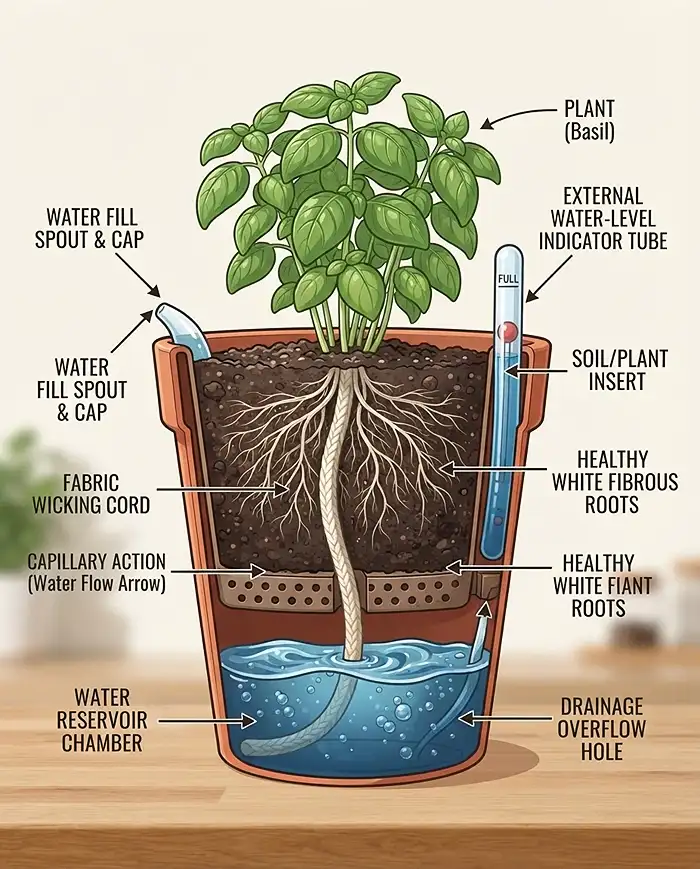
Instead of soaking soil from the top and letting it dry out unevenly, these planters keep a steady moisture level at the roots. That’s what makes them ideal if you travel for work or just forget your watering can.
Real Example: I switched my patio tomatoes to a 16-inch self-watering container two summers ago. I went on a 9-day trip and came back to plants that looked better than the ones I’d been hand-watering daily.
Pro Tip: Check the reservoir weekly during heatwaves above 90°F. Even self-watering pots can run dry faster than the label promises.
Formulating a Drought-Resistant Soil Mix
Quick Answer: Mix a quality organic potting soil with coco coir and moisture-retaining polymer crystals, then top with 1-2 inches of mulch to slow evaporation during hot workdays.
| Ingredient | Ratio | Why It Helps |
|---|---|---|
| Organic potting mix | 60% | Base nutrition and structure |
| Coco coir | 25% | Holds moisture without compacting |
| Perlite | 10% | Keeps roots from sitting in water |
| Moisture polymer crystals | 5% | Slow-release hydration for hot days |
Pro Tip: Cedar mulch or shredded bark on top can stretch watering intervals by an extra day or two in full sun.
Top Indestructible Balcony Plants for Full Sun
South and west-facing concrete balconies bake in summer, but a few tough species genuinely prefer it that way. These are the backbone of any low maintenance balcony plants list for hot exposures.
Tough-as-Nails Succulents: Sedum and Agave
Quick Answer: Cold-hardy Sedum (Stonecrop) works down to Zone 3, while structural Agave suits warm Zone 8-11 balconies. Both store water in fleshy leaves and shrug off missed waterings.
- Sedum ‘Angelina’ spreads fast and turns gold-orange in full sun
- Sedum spectabile ‘Autumn Joy’ handles Zone 3-9 and blooms in fall
- Agave americana is a striking centerpiece for Zone 8-11 balconies
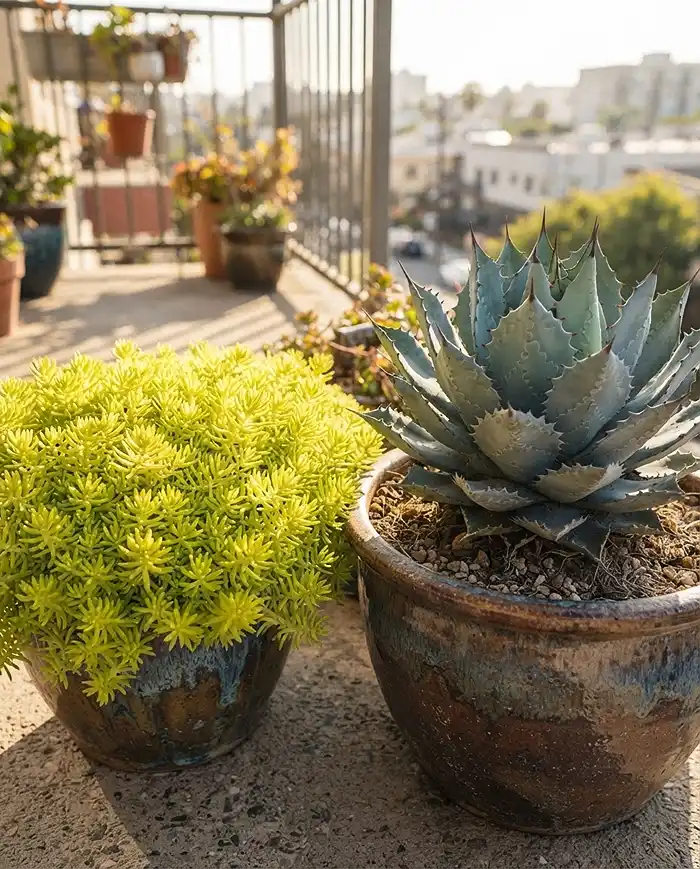
Real Example: I forgot to water my Sedum ‘Angelina’ for three weeks during a busy launch at work. It looked fine, just slightly wrinkled, and bounced back within two days of a single soak.
Hardy Mediterranean Herbs: Rosemary and Lavender
Quick Answer: Rosemary, thyme, and lavender genetically prefer dry, nutrient-poor soil, so they’re nearly immune to under-watering and reward neglect with fragrance and flowers.
These woody Mediterranean herbs actually suffer more from over-watering than from being ignored. Plant them in a fast-draining mix and resist the urge to baby them.
Pro Tip: Rosemary ‘Arp’ is one of the more cold-hardy cultivars, surviving down to Zone 6 with a sheltered spot.
Best Easy-Care Plants for Shaded Balconies
North or east-facing balconies with little direct light need species that won’t stretch and flop chasing the sun. These are foolproof picks for that spot.
Forgiving Foliage: ZZ Plants and Snake Plants
Quick Answer: Sansevieria (Snake Plant) and Zamioculcas zamiifolia (ZZ Plant) make spectacular outdoor balcony plants through summer in deep shade, tolerating weeks of drought.
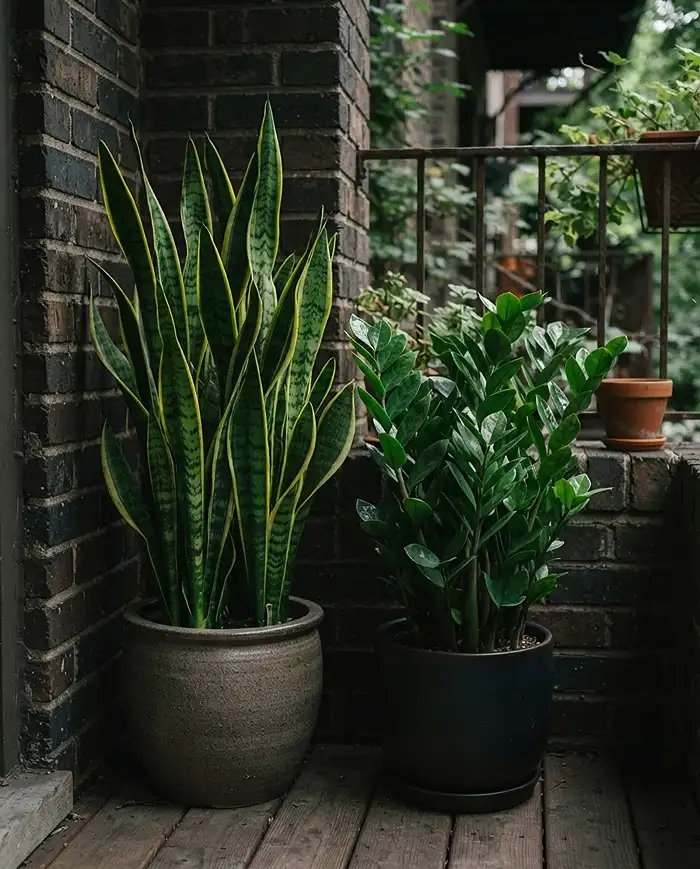
Both are traditionally sold as houseplants, but they handle outdoor humidity and irregular watering just as well outside. Bring them in before nights dip below 50°F.
Real Example: My ZZ plant spent last summer on the shaded end of my balcony and needed watering maybe once every 12 days. It’s now bigger than when I bought it.
Shade-Tolerant Perennials: Hostas and Heuchera
Quick Answer: Hostas and Coral Bells (Heuchera) return year after year in shaded pots, needing almost zero winter maintenance once established.
These perennials build permanent leafy texture without replanting each season. Heuchera cultivars like ‘Palace Purple’ add color even without flowers, which is great for balcony garden ideas that need year-round interest.
Pro Tip: Insulate pots with bubble wrap or move them against a wall before winter to protect roots from freeze-thaw cycles.
The 10-Minute Weekly Maintenance Routine
A quick weekend pass keeps a low-maintenance setup actually low-maintenance. Skip the daily liquid feeding entirely once your slow-release fertilizer is in place.
- Deadhead (remove spent flowers) to encourage new blooms, about 2 minutes per pot
- Sweep fallen leaves and debris off the balcony floor
- Finger-test the top 2 inches of soil before watering anything
- Check self-watering reservoirs and top off if low
- Apply slow-release granular organic fertilizer once per season, not weekly
That’s it. No weekly liquid feeding, no daily inspections, just a short routine that protects the time you actually have.
Common Problems and Solutions
Even indestructible plants run into a couple of predictable issues. Here’s how to spot and fix the two most common ones fast.
Overwatering and Soggy Roots
Quick Answer: The number one way people kill “indestructible” plants is loving them with too much water. Use the finger-test: the top 2 inches of soil should be bone dry before you add any moisture.
Succulents and Mediterranean herbs especially suffer from generous, well-meaning watering schedules. When in doubt, wait another day.
Pro Tip: Root rot smells sour and turns stems mushy at the base. If you catch it early, repotting into dry soil can still save the plant.
Sunburn on Neglected Plants
Quick Answer: Crispy, bleached patches on leaves usually mean a sudden jump in sun exposure or an extreme heatwave. Add temporary shade cloth or move the pot for a few days.
This often happens after moving a shade-grown plant into full sun too fast, or during an unexpected heat spike. Ease plants into brighter spots over a week instead of all at once.
Pro Tip: A simple sheer curtain clipped above the pot works as an improvised shade cloth in a pinch.
For a deeper look at your exact climate zone before buying anything, the USDA Plant Hardiness Zone Map is a reliable, free reference worth bookmarking.
If you’re still deciding on layout and style, these apartment balcony garden ideas and this balcony color palette guide pair well with the plant picks above.
Low Maintenance Balcony Plants for Busy Gardeners FAQs
What is the absolute hardest plant to kill on an outdoor balcony?
Snake Plant (Sansevieria) is nearly impossible to kill in shade, and Sedum ‘Angelina’ is the toughest option for full sun. Both survive weeks of drought, poor soil, and wide temperature swings without real stress.
How do I keep my balcony plants alive while traveling for work?
Invest in closed-reservoir self-watering pots, add glass watering globes to smaller herb pots, and group containers tightly together in shade before you leave. This creates a humid microclimate that resists evaporation for a week or more.
Can I skip fertilizing my low-maintenance outdoor plants?
You can skip frequent fertilizing, but container soil still depletes nutrients over time. Mix a single application of slow-release organic fertilizer granules into the topsoil each spring for a true set-and-forget approach.
Conclusion
The right low maintenance balcony plants turn a small balcony garden into a space you actually enjoy instead of one more chore. Match plant to microclimate, set up self-watering containers, and let a short weekly routine do the rest.
If you’re renting and want setups you can take with you, check out these renter-friendly patio garden ideas for portable container options.
Key Takeaways
- Match low maintenance balcony plants to your balcony’s actual sun hours before buying anything
- Self-watering planters and a drought-resistant soil mix can stretch care to once a week
- Sedum, Agave, and Mediterranean herbs dominate full sun; Snake Plant and ZZ Plant own the shade
- A 10-minute weekly routine beats daily fussing, and one seasonal feeding replaces weekly fertilizing
- Finger-test the soil before watering; overwatering, not neglect, kills most “indestructible” plants