

Terracotta Balcony Garden Ideas
A terracotta balcony garden turns a bare concrete slab into a sun-warmed Mediterranean nook. Here’s how to pick pots, plants, and a watering routine that actually survives August.
Table of Contents
Designing a Warm Summer Oasis with Terracotta Pots
I grow herbs and citrus on a west-facing balcony in zone 8b, and terracotta is the one material that made the space feel finished instead of thrown together. Unglazed clay has this rusty, sun-baked color that plastic and glazed pots just can’t fake.
The texture does a lot of the design work for you. Even a cheap 8-inch terracotta pot from a hardware store reads as intentional next to a folding chair and a string of bulb lights.
That’s the appeal of a small balcony garden built around clay: one material, repeated in different sizes, gives you a cohesive look without needing a design degree. It’s the same trick used on patios across apartment balcony garden ideas that lean Mediterranean.
Understanding the Science of Terracotta Containers
Quick Answer: Terracotta is fired clay that’s porous all the way through, so it breathes air and moisture through its walls. That’s great for root health but means the soil dries out much faster than in plastic or glazed pots, especially in summer heat.
This porosity is the whole reason terracotta behaves differently from other containers. It’s not just a look, it’s a microclimate you’re creating around the roots.
The Benefits of Breathable Clay for Root Health
Quick Answer: The micropores in unglazed terracotta let oxygen reach the root zone while wicking away excess water, which makes it one of the best defenses against root rot for drought-tolerant plants.
- Oxygen moves through the clay wall, feeding fine root hairs at the edge of the soil ball
- Excess moisture evaporates through the pot instead of pooling at the bottom
- Plants prone to rot, like rosemary and lavender, do noticeably better in clay than in plastic
Real Example: I lost two rosemary plants to root rot in plastic pots one rainy May in zone 8b. The same variety, ‘Tuscan Blue,’ has thrived for three summers in a 12-inch terracotta pot with zero rot issues.
Pro Tip: If a plant’s tag says “well-drained soil” or “drought-tolerant,” that’s your cue it wants terracotta, not glazed ceramic.
Managing Rapid Evaporation in High Summer Heat
Quick Answer: Sun-baked terracotta walls pull moisture out of soil fast, so mix in about 20% coco coir or vermiculite to your potting mix before planting to slow evaporation during peak summer heat.
The same porosity that protects roots from rot works against you once temperatures climb past 90°F. A pot that held moisture fine in May can dry out twice a day by late July.
Real Example: Last July, my 10-inch terracotta basil pot needed water every single morning and evening during a heat wave. Adding coco coir to the mix this year stretched that to once a day.
Pro Tip: Line the inside wall of large terracotta pots with a thin layer of plastic sheeting (leave the bottom open for drainage) to cut evaporation without losing the clay look outside.
Planning Your Terracotta Balcony Layout
Quick Answer: A good terracotta balcony layout mixes container sizes in asymmetrical groupings and accounts for the real weight of thick clay pots before you buy anything large.
Planning matters more with terracotta than with plastic, because clay pots are heavy and hard to rearrange once loaded with wet soil. Get the layout roughly right before you plant.
Scaling and Grouping Pots for Visual Impact
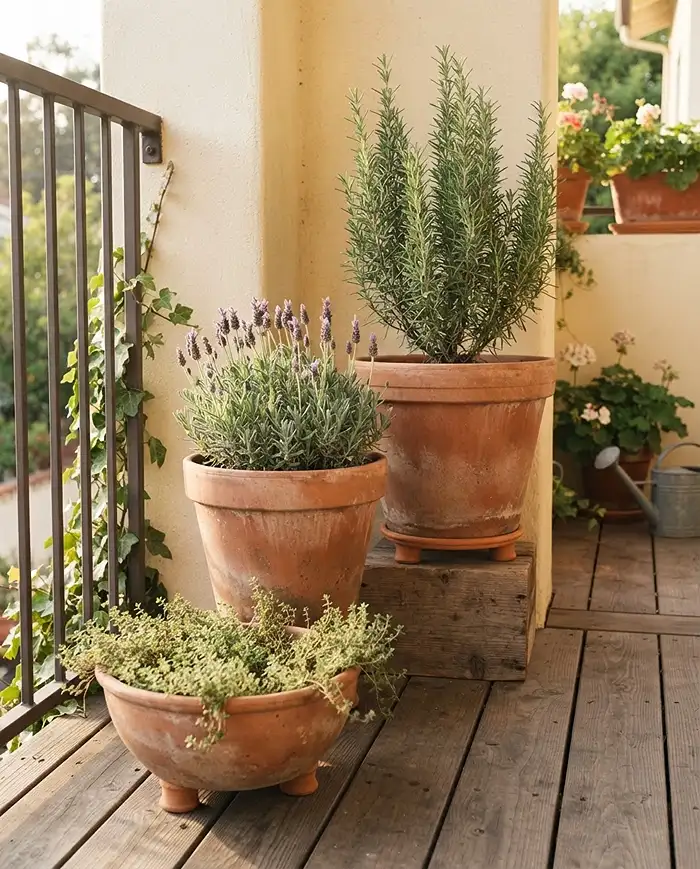
Quick Answer: Group terracotta pots of varying heights and widths in loose, uneven clusters of three or five rather than lining them up in a row, which reads as lush instead of sparse.
| Grouping Style | Best For | Watch Out For |
|---|---|---|
| Odd-numbered clusters (3 or 5) | Corners, railings | Uneven weight distribution on one spot |
| Tiered risers or plant stands | Narrow balconies | Wind knocking over top-heavy pots |
| Single statement urn | Small square balconies | Needs a strong focal plant to earn the space |
Pro Tip: Vary pot height with cheap wooden risers or upturned bricks under the smaller pots, it fakes the depth of a full garden bed in half the floor space.
Factoring Weight Limits and Floor Protection
Quick Answer: Check your balcony’s weight limit before buying large 20-gallon terracotta pots, and use heavy-duty pot feet under every clay container to prevent moisture rings on the decking.
- A wet 20-gallon terracotta pot can weigh over 150 pounds, so confirm load limits with your building management first
- Pot feet lift the base an inch or two, letting water drain instead of pooling under the pot
- Wood decking especially stains and rots under standing water from unelevated clay pots
Pro Tip: If you’re renting, felt pads plus pot feet protect the deposit and the pot; see more setups in these renter-friendly patio garden ideas.
Best Plants for Sun-Baked Terracotta Gardens
Terracotta rewards plants that actually want to dry out between waterings. Pairing the container material with the right plant genetics is what separates a thriving balcony garden from a constant chore.
Drought-Tolerant Mediterranean Herbs
Quick Answer: Rosemary, thyme, oregano, and lavender are the classic terracotta herbs because fast-draining clay mimics the rocky, dry soils these plants evolved in.
- Rosemary ‘Tuscan Blue’: upright growth, tolerates full sun in zones 8-10
- Thyme ‘French’: low, spreading, great for shallow terracotta bowls
- Oregano ‘Greek’: tough and aromatic, thrives on neglect
- Lavender ‘Munstead’: compact, blooms mid-summer, needs sharp drainage
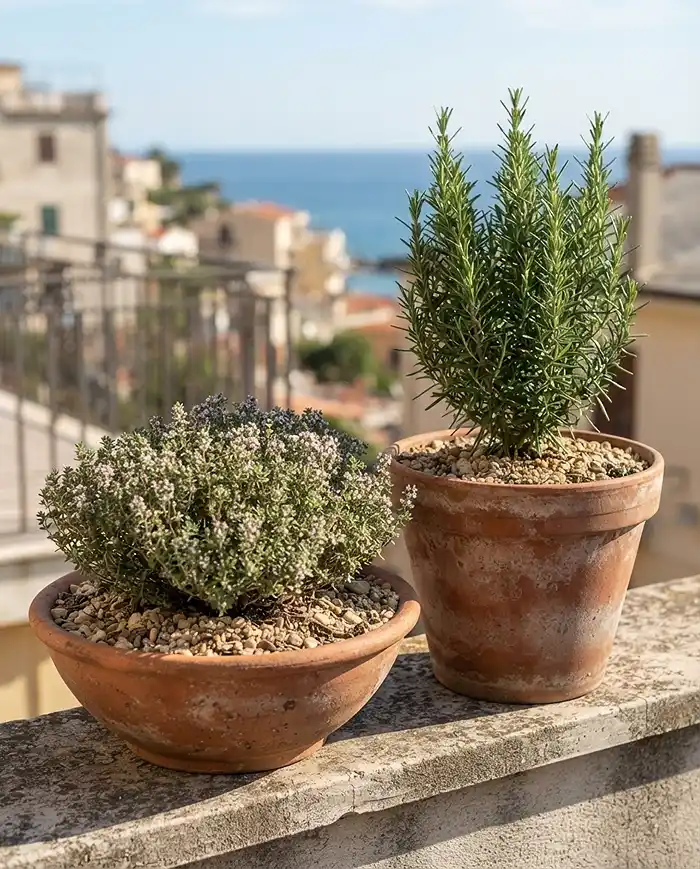
Real Example: My thyme in a shallow terracotta bowl produces noticeably more fragrant leaves than the same variety I grew in a plastic window box two summers back.
Pro Tip: Slight drought stress concentrates essential oils, so resist the urge to keep Mediterranean herbs constantly moist.
Vibrant Summer Annuals and Trailing Vines
Quick Answer: Zonal geraniums (Pelargonium), heat-tolerant Lantana, and trailing Bougainvillea deliver warm summer color and cascade dramatically over terracotta’s orange rims.
- Pelargonium ‘Maverick Red’: classic red blooms, tolerates missed waterings
- Lantana ‘Miss Huff’: thrives in full sun, blooms through the hottest months
- Bougainvillea ‘Barbara Karst’: vigorous trailer, needs a large, heavy pot to anchor its weight
Pro Tip: Plant trailing varieties near the balcony edge so the growth spills outward instead of tangling with neighboring pots. For more color pairings, see this balcony color palette guide.
Structural Succulents and Citrus Trees
Quick Answer: Architectural Agave or a dwarf Meyer Lemon tree makes a strong focal point in a large terracotta urn, provided you use a sandy, citrus-formulated soil mix.
These are the investment plants of a terracotta balcony garden. They need a bigger pot, a specific soil blend, and a bit more patience than annuals, but they anchor the whole layout.
Real Example: My dwarf Meyer Lemon has lived in the same 16-inch terracotta urn for four seasons now, repotted once with fresh citrus mix, and it fruited for the first time last winter.
Pro Tip: Mix two parts standard potting soil with one part coarse sand for citrus in terracotta, it prevents waterlogging around the root ball.
Step-by-Step Guide to Planting in Terracotta
Quick Answer: Submerge new terracotta pots in a bucket of water for 30 minutes before planting, otherwise the bone-dry clay will suck moisture straight out of your fresh potting soil.
- Soak the empty pot in water for 30 minutes so the clay is saturated, not thirsty
- Add a layer of broken pottery shard or gravel over the drainage hole
- Fill with a well-draining mix suited to your plant (add coco coir for moisture retention if needed)
- Plant at the same depth it sat in its nursery container
- Water thoroughly right after planting until it runs from the drainage hole
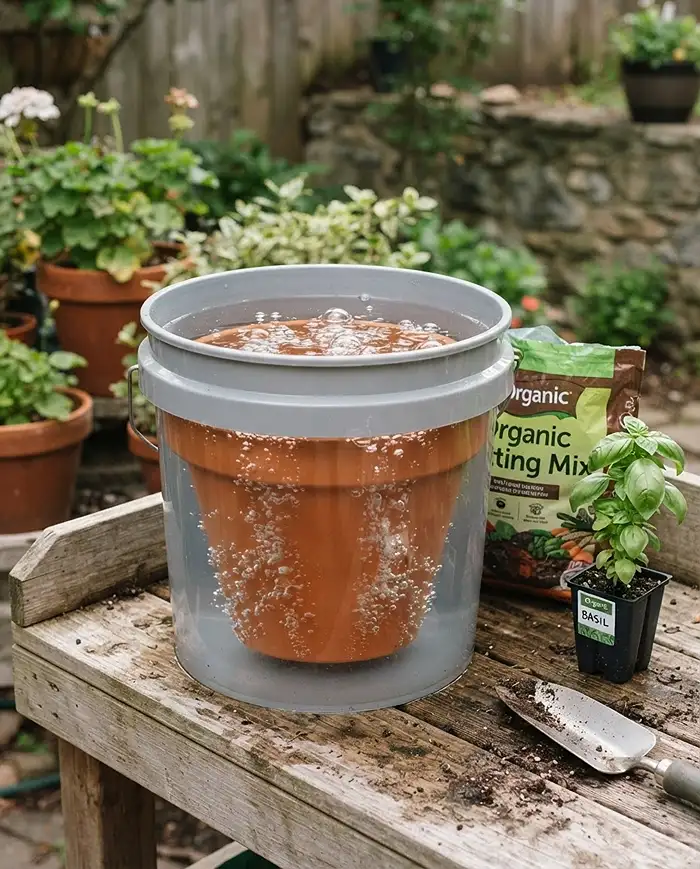
Real Example: I skipped the soaking step once with a batch of basil seedlings and lost half of them within two days, the dry clay pulled moisture out of the root zone almost overnight.
Essential Summer Maintenance for Clay Pots
Quick Answer: Use the “tap test,” tapping the pot’s side to hear a hollow ring that signals dry soil, and feed with a liquid organic fertilizer every two weeks to replace nutrients leached through porous clay walls.
A dull thud means the soil is still moist; a hollow ring means it’s time to water. This beats guessing by looking at the surface, which dries faster than the root zone underneath.
Pro Tip: Water in the early morning during summer, not midday, so plants absorb moisture before the sun’s heat pulls it back out through the pot walls.
Common Problems and Solutions
Terracotta comes with a couple of predictable quirks. Neither one is serious, but both are worth knowing before they surprise you mid-summer.
White Mineral Crusts (Efflorescence) on Pots
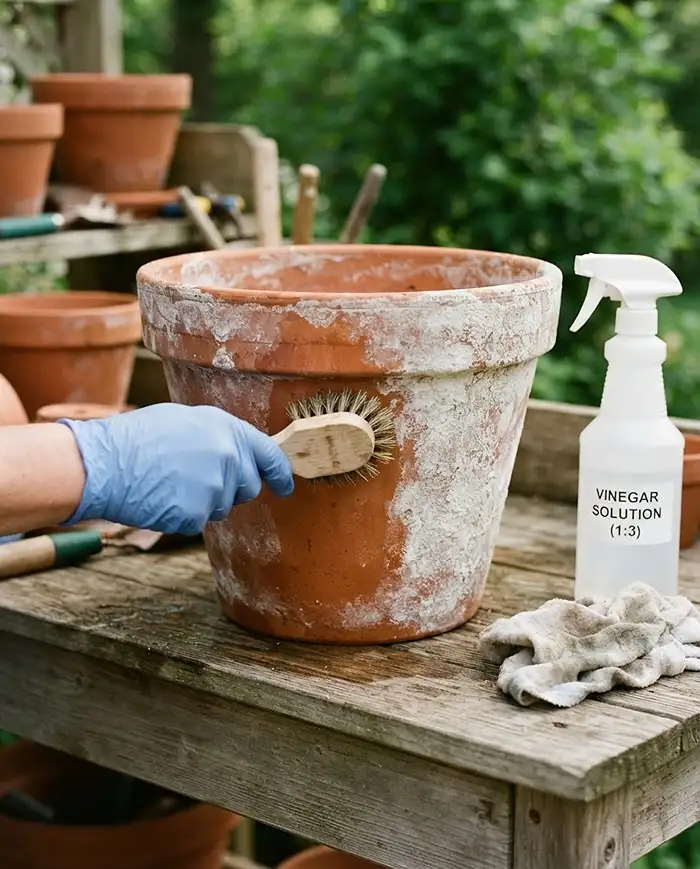
Quick Answer: The powdery white residue on terracotta is harmless efflorescence, a buildup of fertilizer salts and hard water minerals drawn out by evaporation. Scrub it off with a solution of equal parts white vinegar and water.
According to the Nebraska Extension, this crust forms as mineral salts dissolved in water wick from the potting medium through the clay wall, and it can be scrubbed away without harming the pot.
Overheating Roots and Extreme Wilting
Quick Answer: If afternoon sun is baking a terracotta pot and roots are wilting despite regular watering, double-pot by placing a plastic liner pot inside the terracotta, or move the pot into partial shade during heat waves.
Real Example: My lavender wilted hard during a 105°F heat wave two summers ago even though I’d watered that morning. Moving it to afternoon shade for a week solved it without changing the watering schedule at all.
terracotta balcony garden FAQs
Should I soak terracotta pots before planting?
Yes, soak new unglazed terracotta pots in water for 30 to 60 minutes before potting. Baked clay acts like a sponge and will rapidly dehydrate the delicate root hairs of newly transplanted seedlings if it’s left dry.
Do terracotta pots need winter protection?
Yes. Terracotta is highly susceptible to frost-heaving, since moisture trapped in the clay pores expands when it freezes and can shatter the pot. Store pots indoors or wrap them in bubble wrap for winter in freezing climates.
How do I clean and sterilize old terracotta pots?
Scrub away old dirt with a stiff wire brush, then soak the empty pot in a solution of one part household bleach to nine parts water for ten minutes. This eradicates lingering fungal spores before you replant.
How often should I water terracotta pots in summer?
Most terracotta pots need daily watering once temperatures pass 85°F, and sometimes twice a day for small pots under 10 inches. Use the tap test, a hollow sound means it’s time to water.
Can terracotta pots crack in the sun?
Direct heat alone rarely cracks quality terracotta, but repeated freeze-thaw cycles with trapped moisture will. Cracking from heat usually points to a low-fired, lower-quality pot rather than sun exposure itself.
Conclusion
A terracotta balcony garden rewards a little extra watering attention with a look no plastic pot can match. Start small, pick drought-tolerant plants, and let the clay do the design work.
Key Takeaways:
- Soak new terracotta pots for 30-60 minutes before planting to prevent moisture loss
- Add 20% coco coir or vermiculite to soil mix to slow summer evaporation
- Group pots in asymmetrical clusters and use pot feet to protect flooring
- Match drought-tolerant herbs, succulents, and citrus to terracotta’s fast-draining nature
- A well-planned terracotta balcony garden needs daily summer watering but minimal other upkeep