

Best Herbs to Grow Together in Pots
Wondering about the best herbs to grow together in pots? Group them by water needs, not flavor, and you’ll skip the root rot and wilting most beginners run into.
Table of Contents
The Secret to Thriving Mixed Herb Planters
I grow herbs on a north-facing balcony in zone 6b, and my first mixed pot was a disaster. I planted basil, rosemary, and mint together because I liked cooking with all three. Within three weeks, the rosemary was yellow and mushy while the basil looked thirsty half the time.
The mistake wasn’t the herbs themselves. It was ignoring their microclimates. Rosemary wants dry, gritty soil. Basil wants consistent moisture. Put them in the same pot and one of them loses every time.
The real trick to good herb garden ideas isn’t picking your favorite flavors. It’s grouping plants that share water, soil, and sunlight needs first, then worrying about the recipe later.
Understanding Herb Requirements Before Combining
Herbs come from wildly different parts of the world, and that history still shapes what they need in a pot. Mediterranean natives like thyme and oregano evolved in rocky, sun-baked soil, so they hate sitting in moisture.
Leafy herbs like basil and cilantro come from more humid regions and dry out fast without regular watering. Before you combine anything, sort your herbs into these environmental groups first. Skip this step and you’re gambling with at least one plant’s life.
Moisture Lovers vs. Drought-Tolerant Herbs
Quick Answer: Herbs split into two camps: tender, moisture-loving types (basil, parsley, cilantro, chives) and woody, drought-tolerant types (rosemary, thyme, sage, oregano). Never mix the two in one pot.
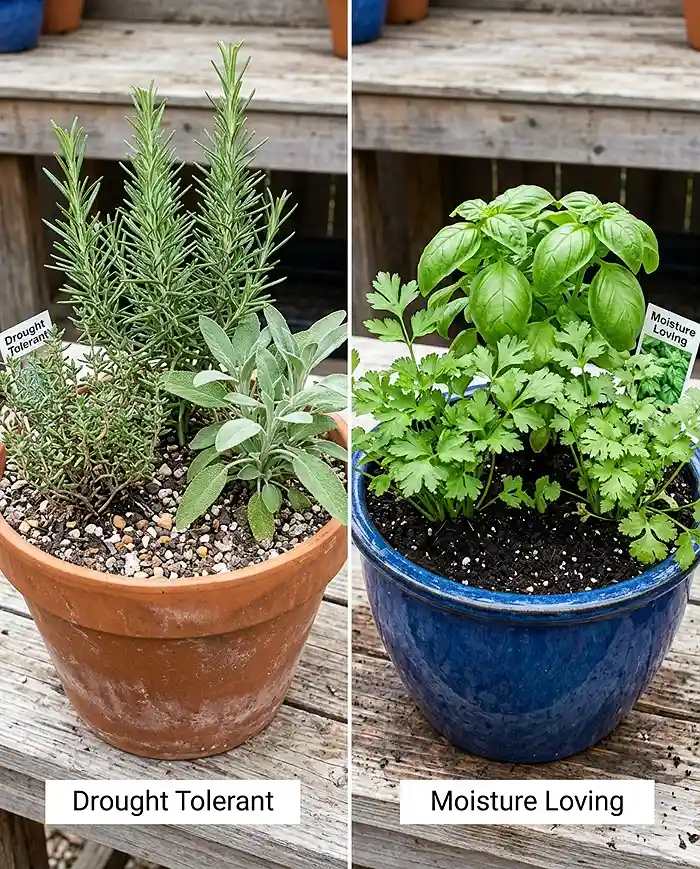
Moisture lovers have soft, water-filled leaves and shallow roots that need consistent dampness. Drought-tolerant herbs have woody stems and deep roots built to go days between watering.
Mix them and you’re stuck choosing between root rot for the Mediterranean herbs or a wilted, crispy mess for the leafy ones. There’s no watering schedule that satisfies both.
Sunlight Needs and Growth Habits
Quick Answer: Most culinary herbs want 6 or more hours of direct sun, but growth habit matters just as much. Pair upright growers with low, creeping ones so nobody gets shaded out.
Rosemary and sage grow tall and bushy by midsummer. Thyme and oregano stay low and spread outward. Put a tall herb in the center of the pot and let the shorter ones trail around the edges.
If you plant two aggressive upright herbs side by side, one will eventually block the light from the other, and you’ll end up with a leggy, weak plant reaching for sun.
Essential Supplies for Multi-Herb Containers
Packing three or four herbs into one container means more roots competing for the same soil volume. Here’s what you actually need:
- A container at least 12 to 14 inches wide with drainage holes
- Fresh, high-quality potting mix (never reuse old, compacted soil)
- Perlite or coarse sand for drainage
- A small trowel and pruning snips for regular harvesting
Overcrowded roots need excellent aeration, so don’t skimp on the perlite. It’s the cheapest insurance against root rot in a mixed planter.
Selecting the Right Pot Size and Material
Quick Answer: Choose a container at least 12 to 14 inches in diameter to fit three to four herbs comfortably. Match the material to the herb group: terracotta for Mediterranean herbs, glazed ceramic or resin for moisture lovers.
Terracotta is porous and wicks moisture away fast, which is exactly what rosemary and thyme want. That same trait will stress out basil, which prefers a container that holds moisture longer.
I switched my basil and parsley combo from a terracotta pot to a glazed ceramic one two summers ago, and I stopped watering every single day. That one swap made the biggest difference of any change I’ve tried.
The Perfect Free-Draining Soil Mix Recipe
Quick Answer: Blend two parts premium organic potting soil with one part perlite or coarse sand. This ratio drains fast enough to prevent the number one cause of container herb death: soggy roots.
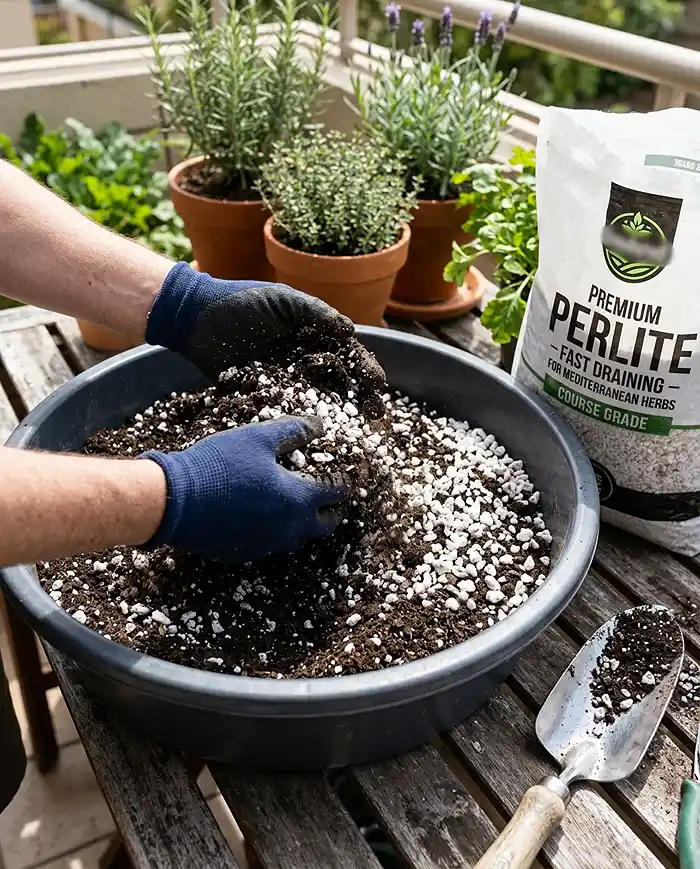
Skip garden soil entirely. It compacts in containers and suffocates roots within a season. A bagged, soilless potting mix is worth the extra few dollars.
For drought-tolerant herb pots, I go a little heavier on sand, closer to a 1:1 ratio with potting soil, to mimic their native rocky ground.
The Best Herb Combinations for Single Pots
Once you understand the groupings, picking container herbs gets simple. These pairings have worked in my own pots for years, and they show up again and again in successful herb garden ideas from other growers too.
| Combination | Best For | Watch Out For |
|---|---|---|
| Rosemary, thyme, oregano, sage | Sunny, dry spots; terracotta pots | Overwatering; needs infrequent, deep soaks |
| Basil, parsley, cilantro | Partial shade or sunny windowsills | Drying out; check soil daily in summer |
| Chives, parsley, dill | Cool-season, morning-sun spots | Dill bolts fast in heat; harvest early |
| Mint (any variety) | Its own solo container, always | Invasive roots choke out neighbors |
The Mediterranean Sun-Lovers (Rosemary, Thyme, Oregano, Sage)
Quick Answer: This classic combo thrives in nutrient-poor, sandy soil with infrequent, deep watering. Less pampering actually concentrates their essential oils and improves flavor.
Give this group at least 6 hours of direct sun and let the top 2 inches of soil dry out completely between waterings. A terracotta pot helps enforce that dry cycle naturally.
My Mediterranean pot, planted with ‘Arp’ rosemary, ‘German Winter’ thyme, and Greek oregano, has gone almost two weeks without water during a mild August stretch and never looked stressed.
Pro Tip: Skip fertilizer almost entirely with this group. Rich soil produces lush leaves with weaker flavor, which defeats the point of growing them.
The Moisture-Loving Classics (Basil, Parsley, Cilantro)
Quick Answer: This trio wants rich, compost-heavy soil and consistent moisture, making it ideal for a partially shaded balcony or a bright kitchen windowsill.
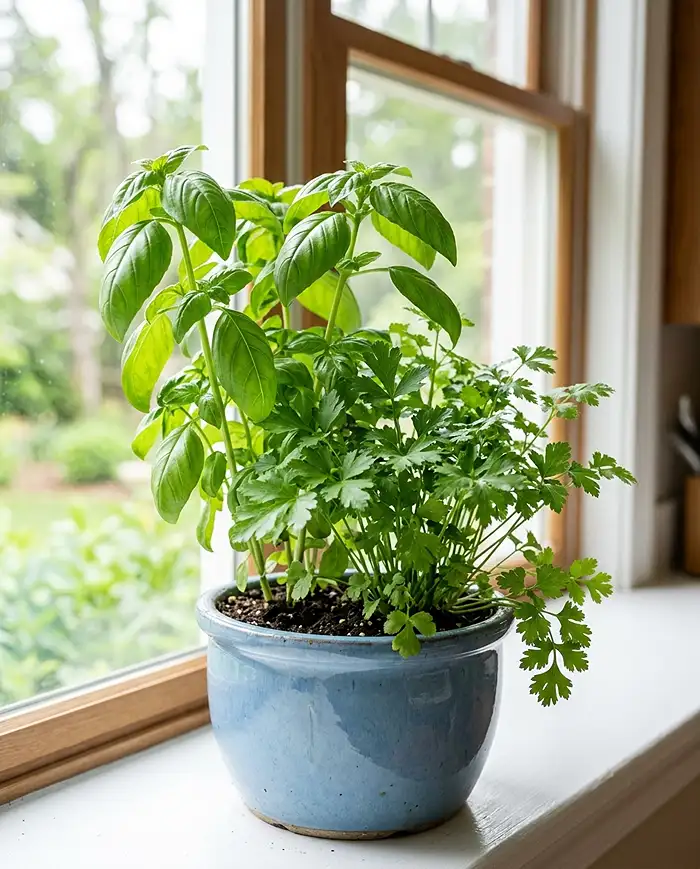
Water when the top inch of soil feels dry, which in peak summer can mean daily watering for a container this size. Never let the pot dry out completely, or basil especially will wilt fast and struggle to recover.
I keep a genovese basil, flat-leaf parsley, and cilantro combo on my kitchen windowsill each spring. Cilantro bolts (flowers and turns bitter) within about six weeks once temperatures climb past 75°F, so I treat it as a rotating crop and resow it every month.
Pro Tip: Pinch basil flower buds the moment you see them to keep the whole pot productive longer.
The Mint Family Rule: Why Mint Needs Its Own Pot
Quick Answer: Mint, including peppermint, spearmint, and lemon balm, spreads through aggressive underground runners. Plant it with anything else and it will eventually choke out its neighbors.
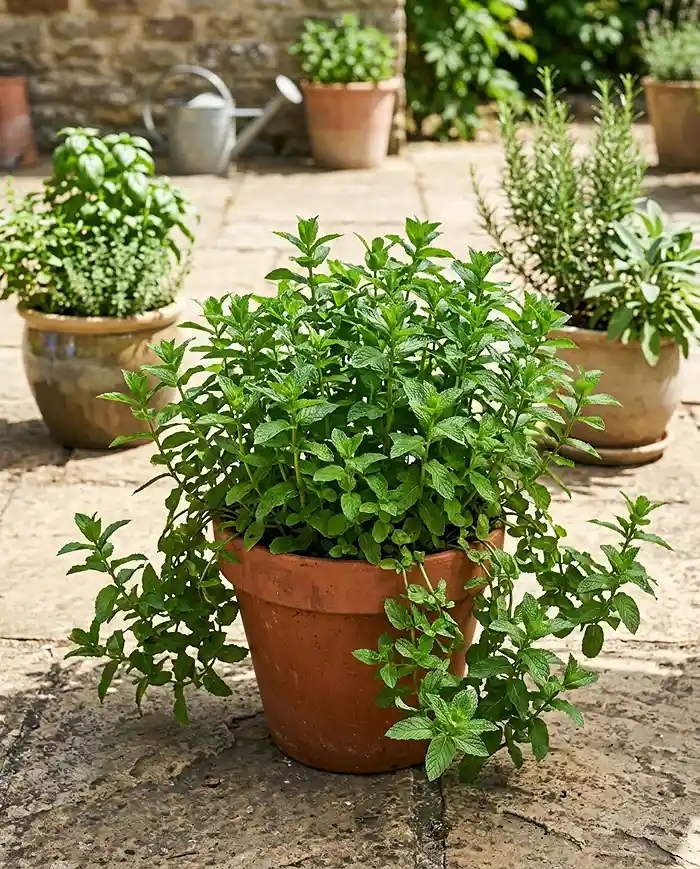
I learned this one the hard way. A single spearmint start took over an entire 16-inch pot shared with chives within one growing season, and the chives never recovered.
Give every mint variety its own dedicated container, no exceptions, and you’ll avoid this headache entirely.
Step-by-Step Guide to Planting Your Herb Container
Once you’ve picked a compatible group, planting takes about 20 minutes:
- Place a small piece of mesh screen over the drainage hole to keep soil in
- Fill the pot roughly two-thirds full with your prepared soil mix
- Gently tease apart root-bound roots from nursery pots before planting
- Space herbs 3 to 4 inches apart to allow airflow and future growth
- Backfill around each plant and firm the soil lightly
- Water thoroughly until it drains from the bottom to help roots settle
Care and Maintenance for Mixed Herb Pots
Frequent harvesting is the single best maintenance habit for a mixed pot. Pinching back growth nodes (the point where a leaf meets the stem) encourages bushier growth instead of one tall, leggy stem.
Harvest a little from every herb every week or two, even if you don’t need it in the kitchen yet. This keeps faster growers like basil from shading out slower ones and prevents any single plant from bolting to seed too early.
Common Problems & Solutions
Two issues account for most mixed herb pot failures: overwatering and one herb overpowering the rest. Here’s how to spot and fix each one fast.
Overwatering and Root Rot Symptoms
Quick Answer: Yellowing lower leaves and foul-smelling, mushy soil signal root rot. Repot into fresh, dry soil immediately and cut back your watering frequency.
Remove the plant, rinse the roots gently, and trim away any black or mushy sections before replanting. Let the new soil dry out more between waterings going forward, especially if drought-tolerant herbs are involved.
One Herb Choking Out the Others
Quick Answer: If one herb is visibly overshadowing weaker neighbors, prune back the aggressive grower’s canopy by about a third to restore light and airflow to the rest of the pot.
This usually happens with fast growers like mint (if you ignored the solo-pot rule) or an oversized basil plant. Cut it back hard and the smaller herbs typically bounce back within a couple of weeks.
best herbs to grow together in pots FAQs
How many herbs can I put in a 12-inch pot?
A 12-inch diameter container can safely support three to four herbs. Packing in more leads to stunted growth, poor airflow, and eventual die-off from root competition.
Can I plant basil and rosemary together?
No. Basil needs damp, rich soil that will quickly kill rosemary through root rot, while rosemary’s dry soil needs would cause the basil to wilt and struggle.
How often should I fertilize mixed herb containers?
Apply a diluted, water-soluble organic fertilizer, like liquid seaweed, every 3 to 4 weeks during the active growing season. Over-fertilizing causes fast growth but weaker culinary flavor.
Can mint ever share a pot with other herbs?
No. Mint’s invasive underground runners will eventually choke out any pot-mate, regardless of container size. Always give mint its own dedicated container.
Conclusion
The best herbs to grow together in pots come down to matching water, soil, and light needs before you think about flavor pairings. Get the microclimates right and the recipes take care of themselves.
If you want to build out your space further, check out this balcony herb garden layout guide for arranging multiple pots together.
Flowering herbs like oregano and thyme also double as a pollinator container garden once they bloom, so pair them with ideas from this native flower balcony guide or these summer flowers for container edges.
For more detail on soil mixes and overwintering, the University of Maryland Extension’s container herb guide is a solid, research-backed reference as of the 2026 growing season.
Key Takeaways
- The best herbs to grow together in pots share the same water, soil, and light needs, not just similar flavors
- Keep drought-tolerant Mediterranean herbs separate from moisture-loving leafy herbs
- Always give mint its own container to prevent it from choking out neighbors
- Use a 12 to 14 inch pot with a well-draining mix (2 parts potting soil to 1 part perlite) for three to four herbs
- Harvest frequently to keep container herbs bushy and prevent one plant from overpowering the rest