

balcony garden shelving
Turn a cramped apartment balcony into an organized garden with balcony garden shelving that displays plants beautifully while keeping tools off the floor.
Table of Contents
Maximizing Vertical Space with Balcony Garden Shelving
I garden on a 6×3-foot east-facing balcony in Chicago, zone 6a, and for my first two seasons everything sat on the floor. Pots, a watering can, a bag of soil, all of it in one tangled pile.
The fix was balcony garden shelving. Adding tiered shelves against the back wall freed up almost 12 square feet of walking space and let me triple my plant count without adding a single inch of footprint.
Vertical shelving is the single biggest upgrade you can make to a small balcony garden. It separates growing space from storage space, so your tools stay dry and your plants get consistent light instead of shading each other out.
Assessing Your Balcony Space and Structural Limits
Before you buy anything, measure your balcony’s usable footprint and note the door swing, railing height, and any posted weight limits from your lease.
Walk the space at different times of day and watch how sun and shadow move across it. That fifteen minutes of observation will save you from building a shelf in the one spot that never gets light.
Measuring and Factoring in Balcony Slopes
Quick Answer: Most balconies slope slightly toward the drain, and a tall shelf set on that slope will lean. Use adjustable leveling feet or shims under the low-side legs to keep it plumb.
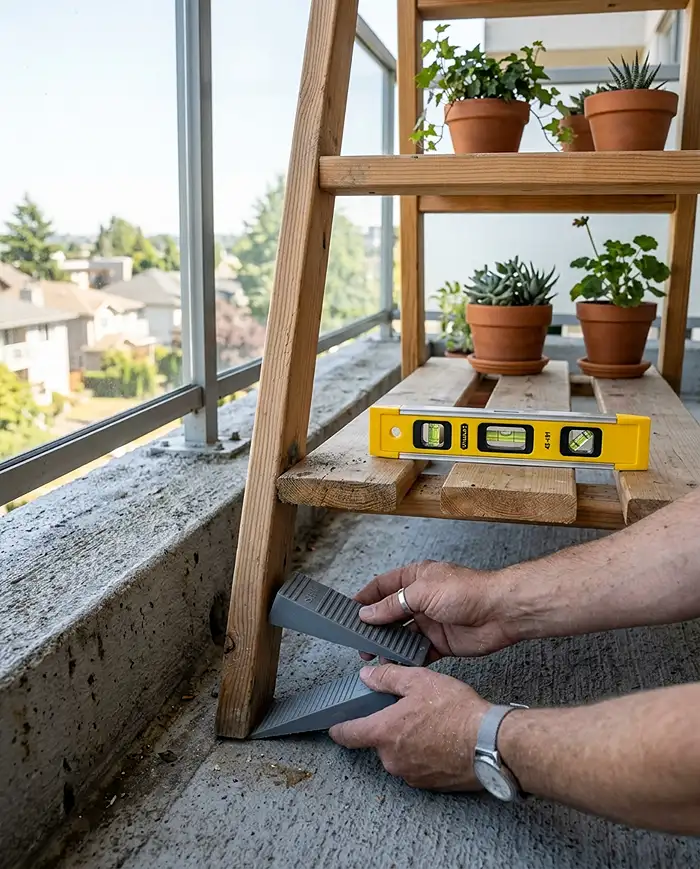
Concrete balconies are typically poured with a half-inch to one-inch drop over their length so rainwater runs off instead of pooling. That’s great for drainage and bad for a five-foot ladder shelf, which will visibly tilt if you set it down without checking.
Real Example: My first cedar ladder shelf sat unlevel for a month before I noticed the top tier was leaning almost two inches off plumb. A $6 pack of rubber shims under the back legs fixed it in ten minutes.
Pro Tip: Set a torpedo level on the top shelf, not the floor, since that’s where a lean actually matters for stability and for keeping saucers from sliding.
Weather Exposure and Material Selection
Quick Answer: Choose powder-coated steel or galvanized metal for balconies with zero cover, and sealed cedar, teak, or acacia for partially covered spaces. Untreated softwood breaks down fast outdoors.
Fully exposed balconies see direct rain, UV, and temperature swings that plain wood and bare metal can’t handle for long. Covered balconies have more flexibility since they’re shielded from the worst of the moisture.
/ima
Real Example: I moved a raw pine spice rack outside as a quick plant shelf in April, and by July the shelves had swollen and cracked from humidity alone.
Pro Tip: If you’re not sure a metal shelf is truly rust-resistant, run a magnet over it. True powder-coated aluminum won’t attract the magnet, while cheaper coated steel will.
Top Balcony Shelf Ideas for Plants and Tools
Different balcony sizes and rental rules call for different shelving styles. Here are the four that show up most often in real apartment gardens, from freestanding ladders to repurposed carts.
Leaning Ladder Shelves for Tight Spaces
Quick Answer: A leaning ladder shelf rests against the wall at an angle, uses almost no floor depth, and gives every tier its own angle of sunlight, which makes it ideal for narrow urban balconies.
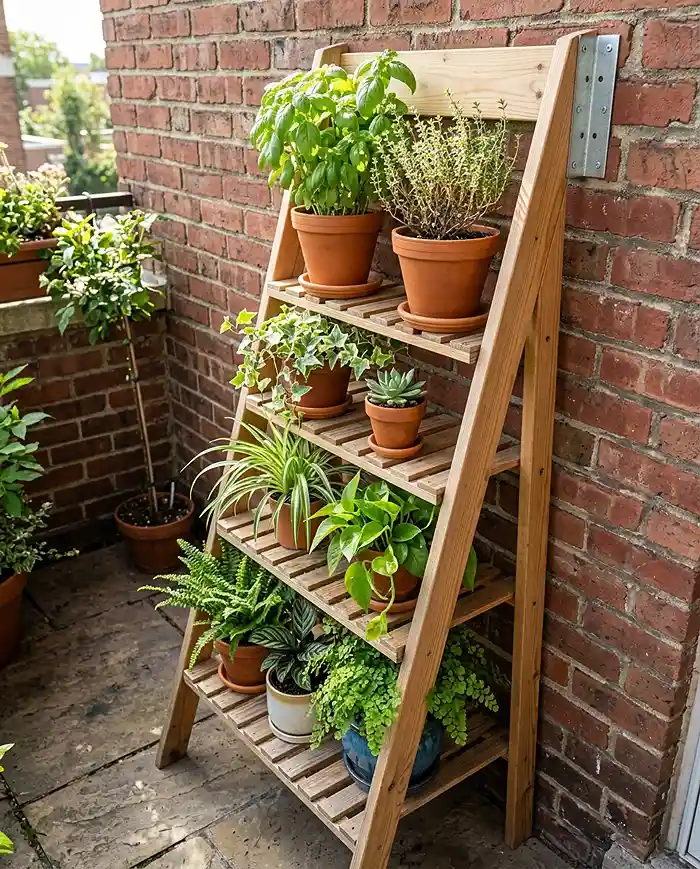
Because each shelf steps back slightly, the top tier isn’t shaded by the one below it. That’s a real advantage over flat étagères, where lower shelves often end up too shady for anything but ferns.
Real Example: I run a five-tier ladder shelf against my balcony’s brick wall. Basil and thyme sit on top where they get full sun, while a maidenhair fern lives on the shaded bottom tier.
Pro Tip: Anchor the top of a leaning ladder shelf to the wall with an L-bracket. Even 20-pound units can walk forward on a windy day if they’re not secured.
Wall-Mounted Floating Shelves and Pegboards
Quick Answer: Pair exterior-rated pegboard with heavy-duty floating shelves to build a potting station that hangs pruners and trowels while displaying trailing plants at eye level.
Pegboard hooks keep small tools visible and off the ground, which matters a lot on a balcony where floor space is often under 20 square feet total. Floating shelves above or beside it hold pothos, string of pearls, or a small herb pot.
- Use exterior-grade HDPE pegboard, not interior particleboard versions, since regular pegboard delaminates in rain
- Mount into masonry with concrete screws and anchors rated for at least 50 pounds
- Keep floating shelves to 18 inches or less deep so wind has less surface to catch
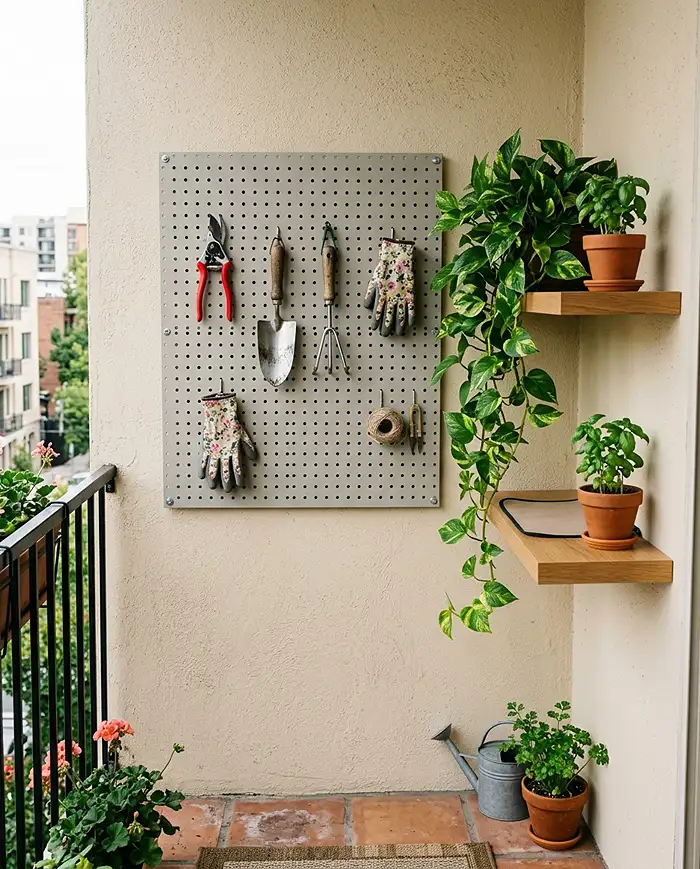
For more layout inspiration, this guide to balcony storage ideas for gardeners walks through several pegboard configurations that work in rentals.
Repurposed Baker’s Racks and Utility Carts
Quick Answer: A metal baker’s rack or rolling bar cart works as a mobile gardening station, with solid lower shelves for hiding soil bags and watering cans out of sight.
Carts have an edge over fixed shelving because you can roll the whole setup to catch more sun in spring or tuck it against the wall before a storm. That mobility is a real plus for renters who can’t drill into railings.
Real Example: I picked up a scratched bar cart at a resale shop for $15, sanded the rust spots, and now use its bottom shelf to store a 20-quart bag of potting mix flat and dry.
Pro Tip: Look for carts with locking caster wheels. Unlocked wheels on a sloped balcony floor will slowly drift toward the drain over a few weeks.
Step-by-Step Guide to Organizing Your Balcony Shelves
Once the shelf is anchored and leveled, load it with a plan. Balance weight low, keep tools reachable, and match each plant to the light its tier actually gets.
Creating a Dedicated Tool Station
Quick Answer: Reserve the lowest, most shaded shelf tier for tools and supplies. Weatherproof bins, S-hooks, and a hook for a collapsible watering can keep everything organized and dry.
- Store fertilizer and seed packets in a sealed plastic bin to block moisture and UV
- Hang pruners, a hand trowel, and gloves on S-hooks along the shelf’s side rail
- Keep a collapsible watering can on its own hook so it drains instead of pooling water
- Group spare pots by size in a stacked crate rather than loose on the shelf
Pro Tip: Label bins with a grease pencil instead of paper tags, which dissolve fast in outdoor humidity.
Styling and Arranging Plants by Sunlight Needs
Quick Answer: Put sun-loving, drought-tolerant herbs on the top, most exposed tier, and keep shade-tolerant ferns or young seedlings on the lower, more protected shelves.
This micro-zoning matters more on shelving than on a flat balcony floor, since each tier can have a genuinely different light level. Treat your shelf like three or four small microclimates stacked on top of each other.
- Top tier: rosemary, thyme, oregano, and other drought-tolerant herbs that want 6+ hours of sun
- Middle tier: compact peppers, marigolds, or trailing petunias in part sun
- Bottom tier: ferns, begonias, and seed trays that prefer indirect light and steadier moisture
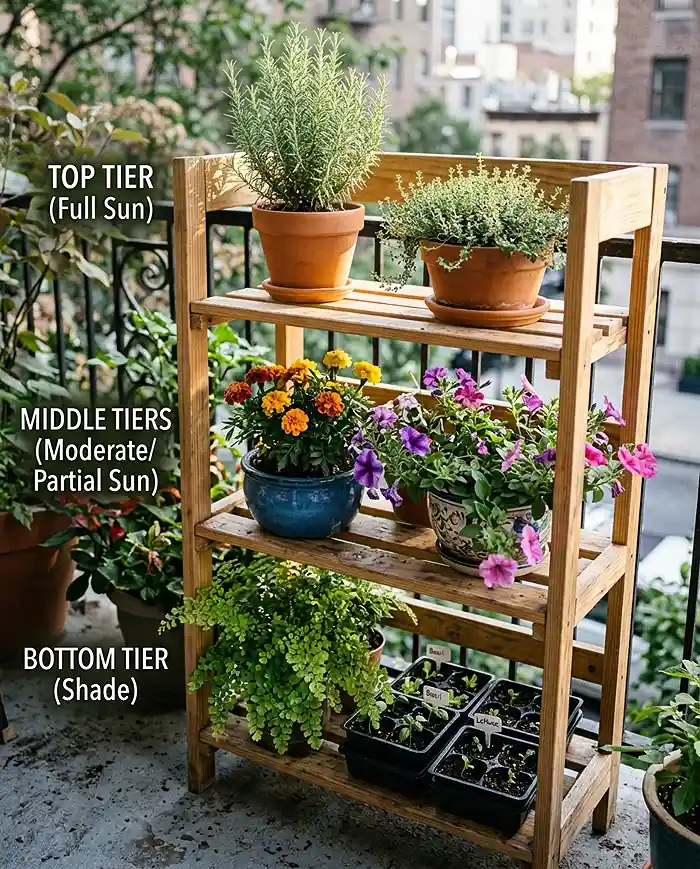
If you want a color scheme to tie the tiers together, this balcony color palette guide pairs plant choices with pot colors by light zone.
Essential Maintenance for Outdoor Shelving
Outdoor shelves take a beating from wind vibration, UV, and moisture even when nothing looks obviously wrong. A short seasonal check keeps small issues from becoming a collapsed shelf.
Twice a year, tighten every bolt and screw, since wind vibration works hardware loose over months. Reapply teak oil or exterior sealant to wood tiers before they start graying, and check metal joints for the first orange freckles of rust before it spreads.
As of the 2026 growing season, more shelving brands are shipping with stainless hardware instead of standard zinc-plated screws specifically because renters report faster corrosion near coastal balconies.
Common Problems & Solutions
High-rise balconies bring two recurring headaches: wind that tips top-heavy shelves, and moisture that rusts metal or rots wood. Both have quick, practical fixes.
Wind Knocking Over Top-Heavy Shelves
Quick Answer: Put your heaviest terracotta pots on the bottom shelf to lower the center of gravity, and secure the top of the unit to the railing with heavy-duty UV-resistant zip ties.
Real Example: One gusty April night in Chicago, a lightweight bamboo étagère loaded top-heavy with terracotta tipped off my balcony rail. I lost a young lavender and cracked two pots learning that lesson the hard way.
Oklahoma State University Extension’s container gardening fact sheet notes that height without weight is exactly what causes containers to tip in wind, which applies just as much to loaded shelving as it does to trellised pots.
Rust and Wood Rot on Outdoor Furniture
Quick Answer: Lightly sand rust spots and apply a rust-inhibiting exterior spray paint, or treat graying wood with a deep-penetrating teak oil to restore both shelf types.
My powder-coated shelf rusted at the welded joints after its first Chicago winter. A quick sanding and a coat of rust-converter primer stopped it from spreading, and it’s held up for three seasons since.
Frequently Asked Questions
What is the best material for outdoor balcony shelves?
Powder-coated galvanized steel and treated acacia wood hold up best long-term. Avoid untreated pine or particleboard, which warps and disintegrates after a single rainy season outdoors.
How do I secure a plant shelf on a rental balcony without drilling?
Tension-rod shelving systems wedge securely between the floor and ceiling without any drilling. Heavy-duty outdoor mounting tape and railing-hook brackets also stabilize lighter units within most lease agreements.
How much weight can a standard tiered plant stand hold?
Most consumer-grade metal plant stands hold 10 to 20 pounds per tier. Always check the manufacturer’s stated weight limit and favor lightweight fiberglass pots over ceramic to avoid buckling the shelves.
Final Thoughts
Balcony garden shelving turns a cluttered floor into an organized, multi-tiered space where plants get better light and tools stay dry and out of the way.
Start with a level base, match materials to your exposure, and load each tier by sunlight need. That’s really all it takes to make a tiny apartment balcony feel like a real garden.
For more layout inspiration beyond shelving, check out these apartment balcony garden ideas for pairing shelves with the rest of your space.
- Balcony garden shelving frees up floor space and lets you micro-zone plants by sunlight tier
- Level shelves on sloped concrete with shims, and anchor tall units to the wall or railing
- Choose powder-coated steel or sealed hardwood for exposed balconies; skip untreated softwood
- Keep heavy pots low and secure tops with zip ties to prevent wind tip-overs
- Check hardware, rust, and sealant twice a year to keep apartment gardening setups safe long-term