
Best Lightweight Pots for Balcony
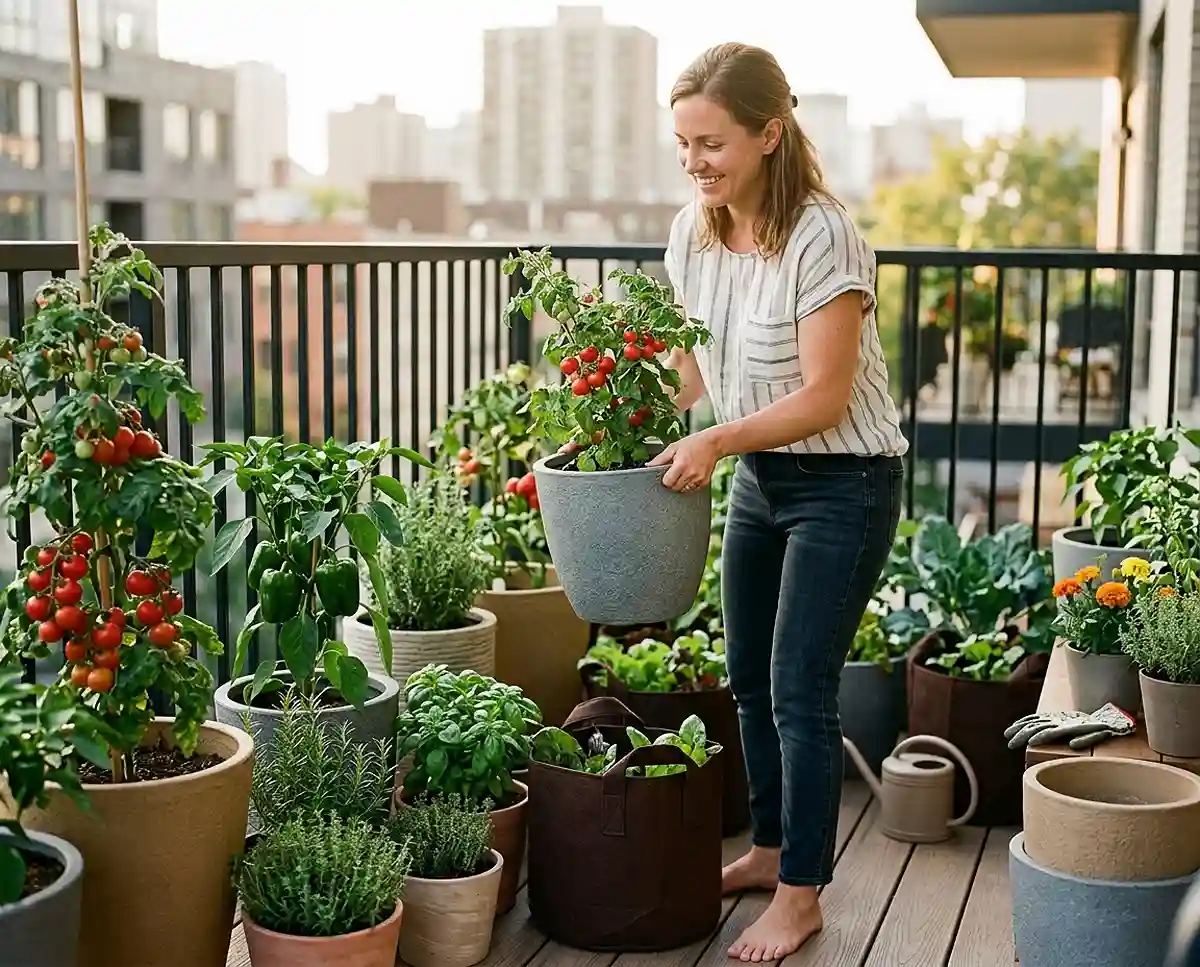
Looking for the best lightweight pots for balcony growing? I’ve spent six seasons testing containers on a south-facing 6th-floor balcony, and the pot you pick matters more than you’d think.
My small balcony garden sits on a building from the 1970s, and the property manager was blunt about weight limits the first year I asked. That conversation changed how I shop for pots completely. Lightweight doesn’t mean flimsy, and heavy doesn’t mean better. It’s about matching the container to your specific space, your plants, and how often you rearrange things.
Table of Contents
Why Lightweight Pots Are Ideal for Small Balconies
A glazed ceramic pot looks gorgeous until you try to move it after a rainstorm. I learned this the hard way with a 16-inch terracotta planter that took two people to shift across my deck.
Lightweight containers let you rearrange your layout in minutes, not with a furniture dolly. That matters for chasing sun as the seasons shift, or pulling pots in before a storm.
More importantly, balconies have real structural weight limits that most renters never check. Wet soil alone can add 8-10 lbs per gallon of container volume. Stack five or six pots on a small balcony garden and you’re carrying real load fast.
What to Consider Before Choosing Lightweight Pots
Before you buy a single pot, think through three things: how much weight your balcony can actually hold, how the material handles weather, and what you’re planning to grow. Skip this step and you’ll end up reordering pots by midsummer, like I did with my first batch of cheap plastic planters that warped in July heat.
Weight, Durability, and Balcony Load Limits
Quick Answer: Most residential balconies handle 50-100 lbs per square foot, but verify with your building before loading up on containers. Lightweight pots help you stay well under that ceiling even with a full garden setup.
I keep my heaviest pots — three 14-inch tomato containers — pushed against the load-bearing wall near my sliding door, not out near the railing. That’s standard advice from extension horticulturists, and it’s saved me from any structural worry in six years.
Pro Tip: Ask your building management for the balcony’s rated load capacity in writing before you commit to a full container garden — most renters never ask, and it takes one email.
Drainage, Insulation, and Weather Resistance
Quick Answer: Material affects both drainage speed and how hot the root zone gets in direct sun. Dark plastic and resin pots heat up fast; lighter colors and fabric stay cooler at the roots.
My first season, I used black resin pots on a west-facing rail in zone 7a. By August, soil temps were cooking my pepper roots even with daily watering.
Real Example: Switching to tan fiberstone pots the next year dropped root-zone heat noticeably — my peppers stopped wilting by 3pm every afternoon.
Best Types of Lightweight Pots
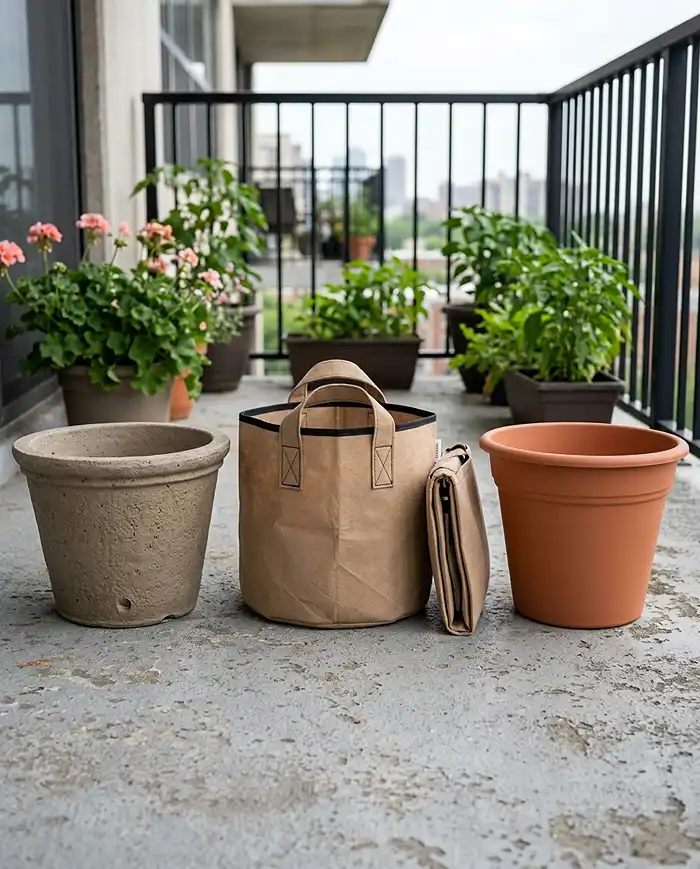
Three materials dominate the lightweight category, and each fits a different style of small space gardening. Here’s how they stack up.
| Material | Best For | Watch Out For |
|---|---|---|
| Plastic/Resin | Budget setups, structured looks | UV fading, cracking in cheap brands |
| Fabric Grow Bags | Vegetables in pots, root health | Dries out fast, less visual polish |
| Fiberstone/Foam Composite | Premium look without the weight | Pricier upfront, check for drainage holes |
Plastic and Resin Pots
Quality resin pots mimic ceramic or stone finishes at a fraction of the weight — a 16-inch resin pot often weighs under 5 lbs empty versus 25+ lbs for true ceramic. Look for UV-stabilized resin, not generic plastic, or you’ll see fading within one summer.
I run three Veradek resin planters on my north corner. Four seasons in, zero cracking, even through a zone 7a winter freeze-thaw cycle.
Fabric Grow Bags
Fabric grow bags are the lightest option going, and they fold flat for off-season storage — a huge win for tiny garden ideas where closet space matters as much as balcony space.
- 10-gallon bags work well for determinate tomatoes and peppers
- 5-gallon bags suit bush beans, dwarf eggplant, and compact herbs
- Breathable fabric air-prunes roots, which actually boosts vegetable yields
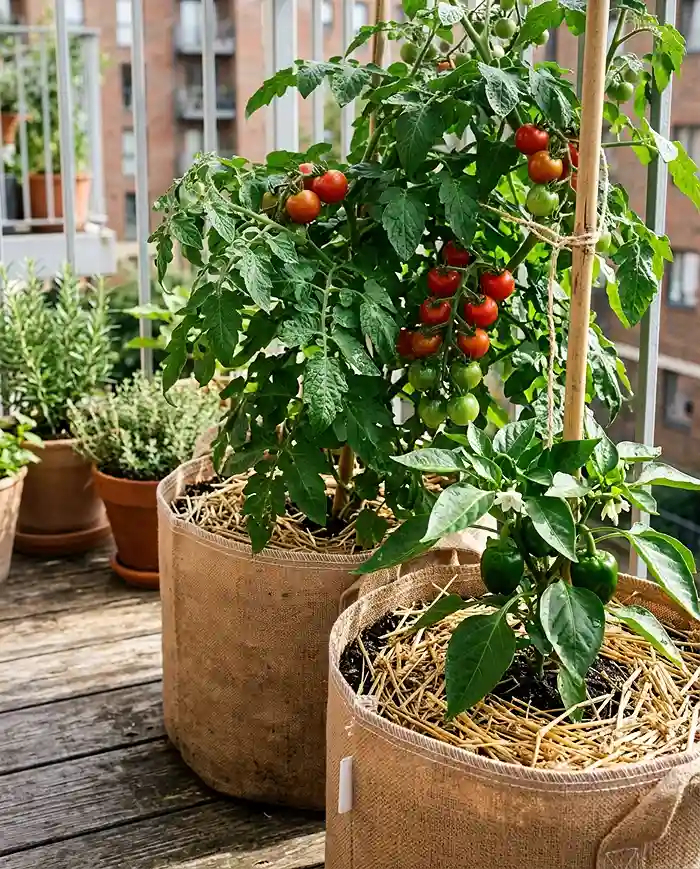
I grow my Patio Princess tomatoes in 7-gallon Smart Pots every year now. The trade-off: they dry out roughly a day faster than plastic in peak summer heat.
Fiberstone, Foam, and Composite Pots
Fiberstone blends crushed stone with lightweight resin for a concrete-look finish that weighs a fraction of real concrete. Foam composite pots go even lighter, sometimes under 3 lbs for a 14-inch size.
Pro Tip: Tap the pot before buying — genuine fiberstone has a slight hollow sound and feels cool, while cheap foam knockoffs feel uniformly light with no density at all.
Matching Pot Size to Your Plants
Lightweight materials solve the weight problem, but size still drives plant success. Get this wrong and even the best pot won’t save a stressed root system.
Pot Size and Depth by Plant Type
Quick Answer: Vegetables generally need 12-16 inches of depth, while herbs and flowers thrive in 6-10 inch containers. Deeper isn’t always better — match depth to root structure.
Check our pot size guide for vegetables for exact gallon recommendations by crop, since tomatoes and lettuce have very different needs.
Avoiding Pots Too Light to Stay Stable
Quick Answer: Very light pots with tall plants tip over in wind, especially on upper-floor balconies where gusts are stronger. Add a stability layer to prevent this.
My first season, a 5-gallon fabric bag with a staked tomato toppled twice in May winds before I learned to weight the base.
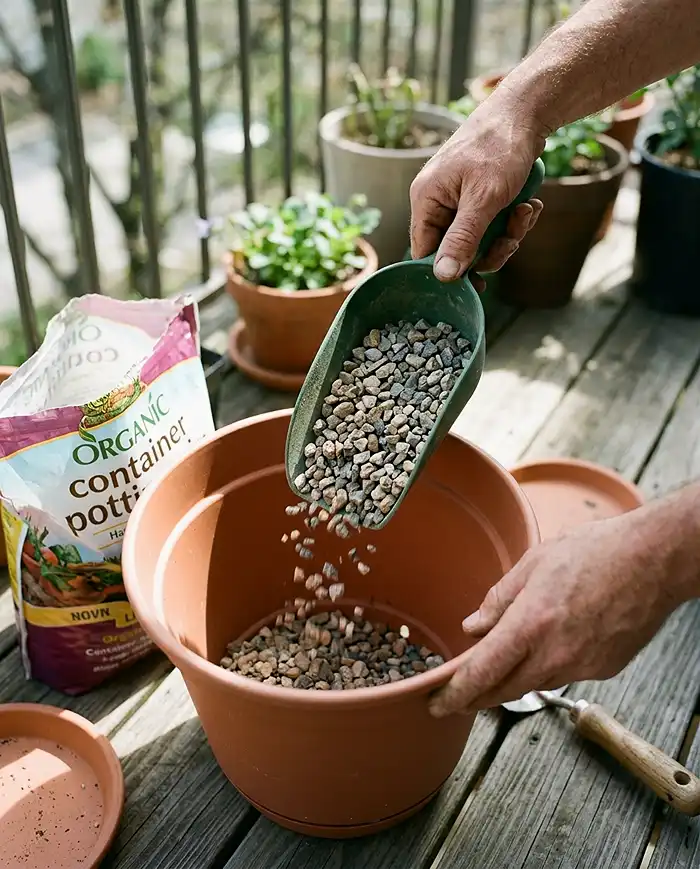
Pro Tip: Drop a few inches of coarse gravel or sand in the bottom third of lightweight pots before adding soil — it adds ballast without adding much overall weight.
Tools and Materials You’ll Need
Keep your shopping list simple for a first lightweight setup:
- Lightweight pots in your chosen material (start with 3-4 for a small balcony garden)
- Quality potting mix — avoid garden soil, which compacts and adds unnecessary weight
- Coarse gravel or perlite for drainage layers
- A trowel and a moisture meter (cheap ones run under $10 and save guesswork)
For more layout inspiration, check out our space-saving small garden ideas guide.
How to Set Up Lightweight Pots Correctly
Preparing the Pot and Drainage
Check that every pot has at least one drainage hole — some decorative lightweight pots ship without them. I drill my own with a 1/2-inch bit if needed.
Add a 1-2 inch gravel layer for pots over 12 inches deep, then fill with a quality potting mix rated for containers, not raw garden soil.
Planting and Stabilizing in Wind
Plant at the same depth the plant sat in its nursery pot, water in well, and let it settle for a day before final placement.
For taller plants in lightweight containers, stake early rather than waiting until wind damage shows up. I use bamboo stakes pushed close to the root ball, tied loosely so stems can still flex.
Caring for Plants in Lightweight Pots
Watering and Moisture Management
Quick Answer: Lightweight pots, especially fabric and thin resin, dry out faster than heavy ceramic. Check moisture daily during summer and add a mulch layer to slow evaporation.
A 1-inch layer of straw mulch on my grow bags cut my watering frequency from daily to every other day during a July heat wave last year.
Preventing Tipping and Heat Buildup
Quick Answer: Group lightweight pots together for mutual wind protection, and avoid dark-colored pots in full afternoon sun where root temperatures can spike above safe levels.
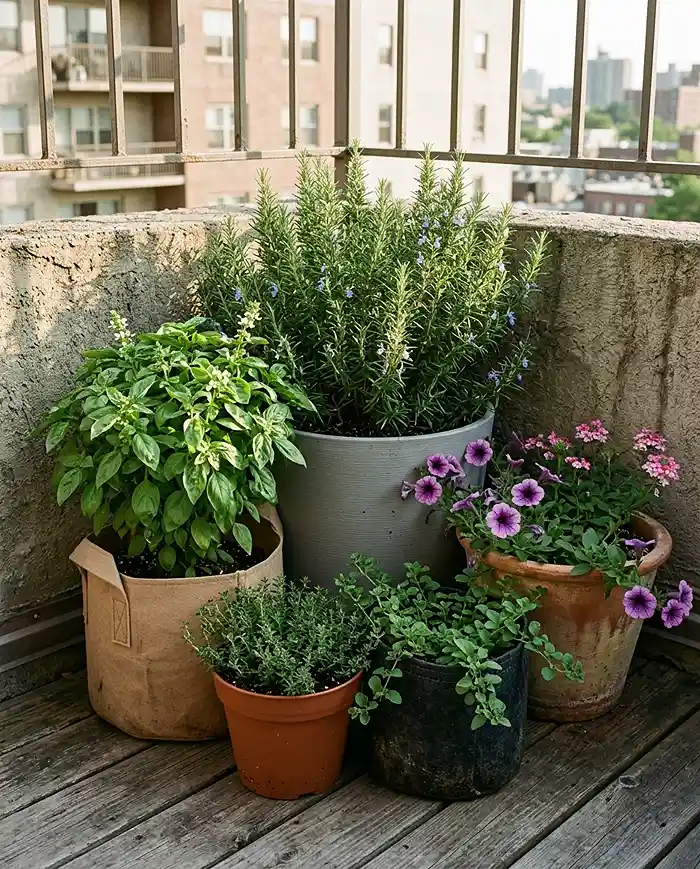
Pro Tip: Cluster three or four pots in a triangle formation instead of a straight line — it breaks up wind gusts noticeably better than a single row.
Seasonal Care and Storage
Overwintering and Easy Off-Season Storage
One real perk of lightweight pots: most fold, stack, or nest for winter storage. My fabric grow bags fold into a shoebox-sized stack once emptied and rinsed.
For resin and fiberstone pots staying outside through winter in zone 6b and colder, empty them fully — frozen wet soil expands and can crack even durable composite materials.
If you’re rethinking your whole layout for next season, our apartment balcony garden ideas post has good winter-to-spring transition tips.
Common Problems and Solutions
Pots Tipping Over in Wind
Add a gravel or sand base layer, group pots together rather than spacing them out, and choose wider-based designs over tall narrow ones for top-heavy plants like staked tomatoes.
Soil Drying Out Too Fast
Mulch the surface, try self-watering inserts for vacation stretches, and size up your pot — smaller containers simply hold less moisture reserve.
Cheap Pots Cracking or Fading
Stick to UV-resistant, name-brand resin or genuine fiberstone rather than bargain-bin plastic. The cheapest pots I bought my first year all cracked within 18 months; the quality ones are still going strong.
Frequently Asked Questions
What are the best lightweight pots for a balcony?
UV-resistant resin pots, fabric grow bags, and fiberstone composite pots are the top choices for balcony gardens. Resin works well for structured looks, fabric bags suit vegetables in pots, and fiberstone offers a premium stone-like finish at a fraction of the weight.
Do lightweight pots blow over easily?
They can, especially with tall plants on upper-floor balconies. Adding a gravel or sand base layer, grouping pots together, and choosing wider-based designs all help stabilize lightweight containers against wind.
Are fabric grow bags good for balconies?
Yes, fabric grow bags are excellent for balcony vegetable growing. They’re extremely lightweight, fold flat for storage, and improve root health through air pruning, though they do dry out faster than plastic or resin pots.
How much weight can a typical balcony hold?
Most residential balconies are rated for 50-100 lbs per square foot, but this varies by building age and construction. Always confirm your balcony’s specific load rating with building management before setting up multiple containers.
What’s the lightest material for large pots?
Foam composite pots are typically the lightest option for large sizes, often weighing under 3 lbs even at 14-16 inches. Fabric grow bags are lighter still when empty, since they have no rigid structure at all.
Conclusion
The best lightweight pots for balcony growing come down to matching material to your specific conditions — wind exposure, sun intensity, and what you’re actually growing.
Start with two or three pots in a mix of resin and fabric, test them through one season, and expand your small space gardening setup from there. As of this 2026 growing season, quality lightweight options are more available and affordable than ever.