
Native Flower Balcony Garden Ideas
Native flower balcony garden ideas work better than most people expect — the right species, the right pot, and you’ve got a pollinator magnet that practically takes care of itself.
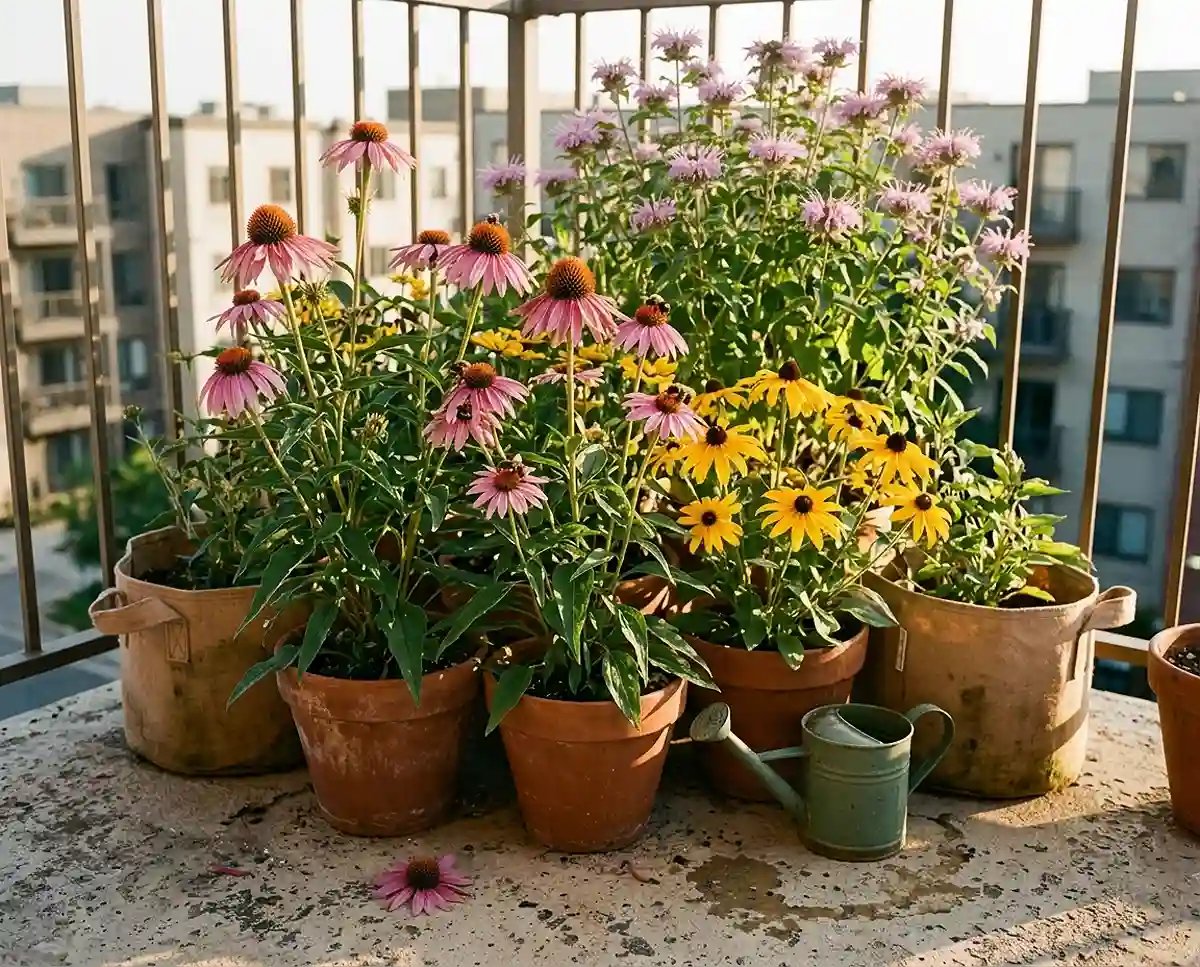
I grow purple coneflower and wild bergamot on a west-facing balcony in zone 6b. They’ve outlasted every annual I’ve tried, asked for almost nothing, and brought more bees than my neighbor’s whole patio border.
Table of Contents
Why Grow Native Flowers on Your Balcony
Native plants evolved alongside local insects, birds, and soil conditions. That means they already know how to survive — and thrive — without much help from you.
They need less water than most ornamentals once established. They’re naturally resistant to regional pests. And they feed pollinators at exactly the right times because they bloom on the same schedule local wildlife depends on.
For a small balcony garden, that’s a huge deal. You’re not fighting the plant. You’re working with it.
There’s also something quietly satisfying about knowing your few square feet of concrete are doing real ecological work — supporting bees, providing seeds for migrating birds, and keeping a thread of the local landscape alive.
Plan Your Native Balcony Garden
Before you buy a single plant, spend a week observing your balcony. What you see will save you a lot of frustration.
Identifying Your Region and Native Plant Options
Native means native to your specific region — not just “North America.” A prairie coneflower from Kansas isn’t native to coastal Maine, and it’ll behave differently in containers too.
Start with the Lady Bird Johnson Wildflower Center’s native plant database — it lets you filter by state and growing conditions. Your local cooperative extension service is another solid resource, often with regional container gardening guides specific to your USDA zone.
Write down 8–10 candidates before narrowing to 3–4 for your first season. Small space gardening rewards restraint.
Assessing Light, Space, and Wind Exposure
Track sunlight across three days — morning, midday, and late afternoon. Most balconies shift between 3–6 hours of direct sun depending on building orientation and upper-floor overhangs.
Measure your usable floor space and note railing width if you plan to hang planters. Wind is the factor most people ignore. High-rise balconies can be brutal — I lost an entire pot of wild columbine in one windy April because I hadn’t accounted for the wind tunnel my building creates above the 5th floor.
Taller natives like blue wild indigo (Baptisia australis) will need staking or a sheltered corner. Compact species are safer for exposed spots.
Best Native Flowers for Containers
Not every native translates well to pot life. Deep taproots, aggressive spreading, or massive size all cause problems. These ones genuinely work.
Sun-Loving Native Flowers
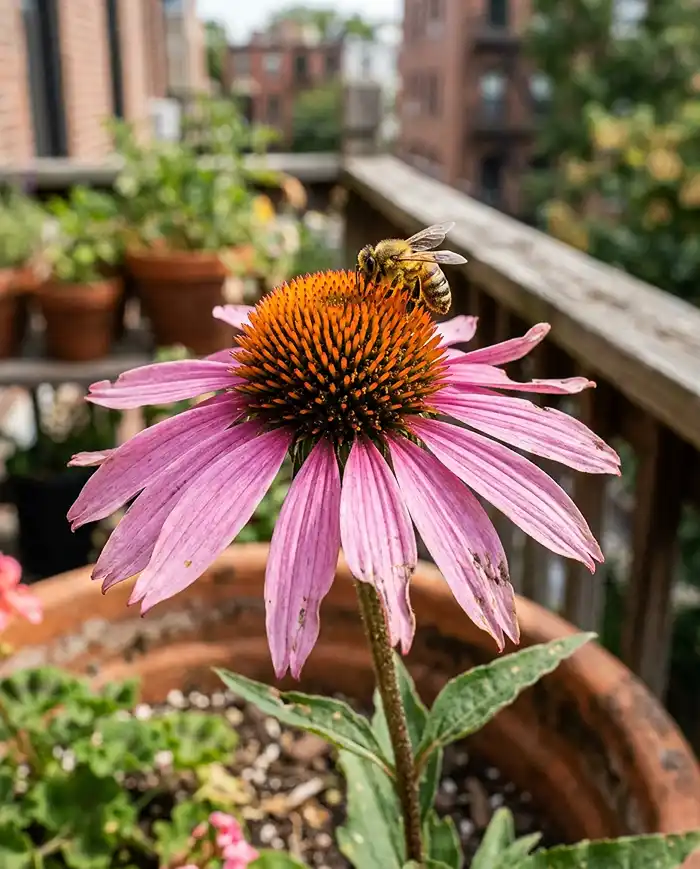
Purple coneflower (Echinacea purpurea ‘Magnus’) is the classic for good reason — it blooms for weeks, tolerates heat, and goldfinches go after the seed heads in fall. Needs at least 6 hours of sun and a 12-inch deep pot minimum.
Black-eyed Susan (Rudbeckia hirta) is shorter-lived as a perennial but blooms its heart out the first year. Great for brightening a sunny rail planter.
Butterfly weed (Asclepias tuberosa) is the milkweed for containers — it has a less aggressive root system than common milkweed and monarch butterflies will find it. It hates being moved once established, so pick the pot’s spot carefully.
Shade-Tolerant Native Flowers
If your balcony gets fewer than 4 hours of direct sun, lean into woodland natives.
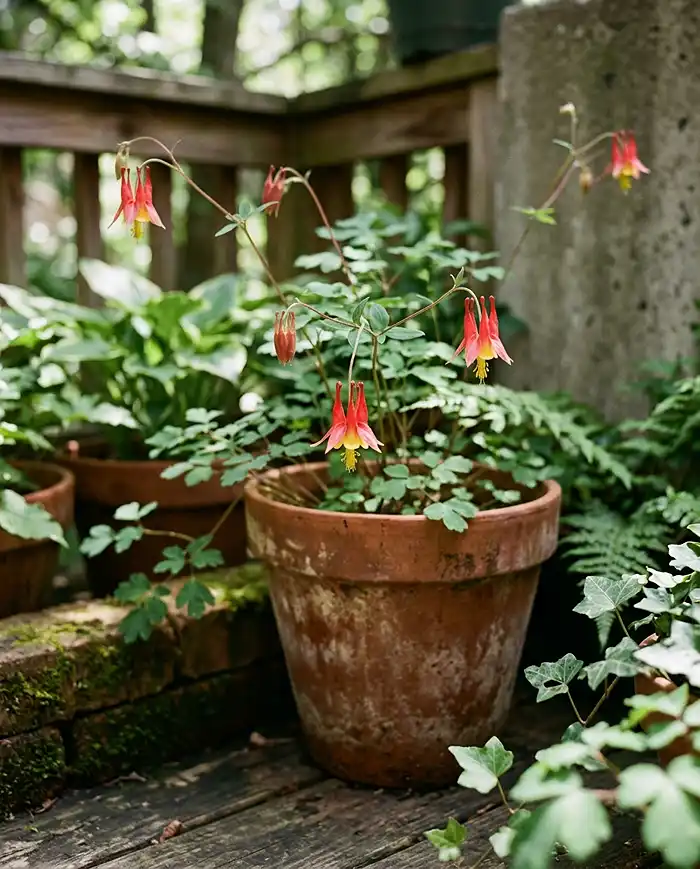
Wild columbine (Aquilegia canadensis) is stunning in partial shade, blooms in early spring before most pollinator plants wake up, and hummingbirds love it. It self-seeds readily — deadhead if you want to control spread.
Wild geranium (Geranium maculatum) works beautifully as a filler around taller specimens. It’s genuinely low-maintenance, handles dappled shade well, and comes back reliably in zones 3–8.
Native alumroot (Heuchera americana) adds foliage interest even when not in bloom and tolerates surprisingly deep shade for a flowering perennial.
Compact and Container-Friendly Natives
Look for cultivars specifically bred for smaller habits. ‘Little Goldstar’ black-eyed Susan tops out at 18 inches. ‘Magnus’ coneflower stays tidier than the straight species.
Prairie dropseed (Sporobolus heterolepis) isn’t a flower, but it anchors a native container planting beautifully and only reaches 18–24 inches. Pair it with shorter flowering natives for a layered look without the height management headaches.
Choosing the Right Containers
The wrong pot can undermine even the toughest native. Most failures I’ve seen trace back to drainage, depth, or material — not the plant.
Pot Size, Depth, and Material for Natives
Match depth to root system. Coneflowers and black-eyed Susans need at least 12 inches of depth. Butterfly weed wants 14–16 inches to develop its taproot properly.
Terracotta breathes well and suits lean-soil natives perfectly — it prevents overwatering because moisture evaporates through the walls. The downside is weight and freeze-thaw cracking in zones 5 and below.
Fabric grow bags are an underrated option for balconies. They’re lightweight, drain well, and air-prune roots naturally. I switched half my containers to 5-gallon fabric bags in spring 2024 and root health improved noticeably.
Drainage and Soil for Native Plants
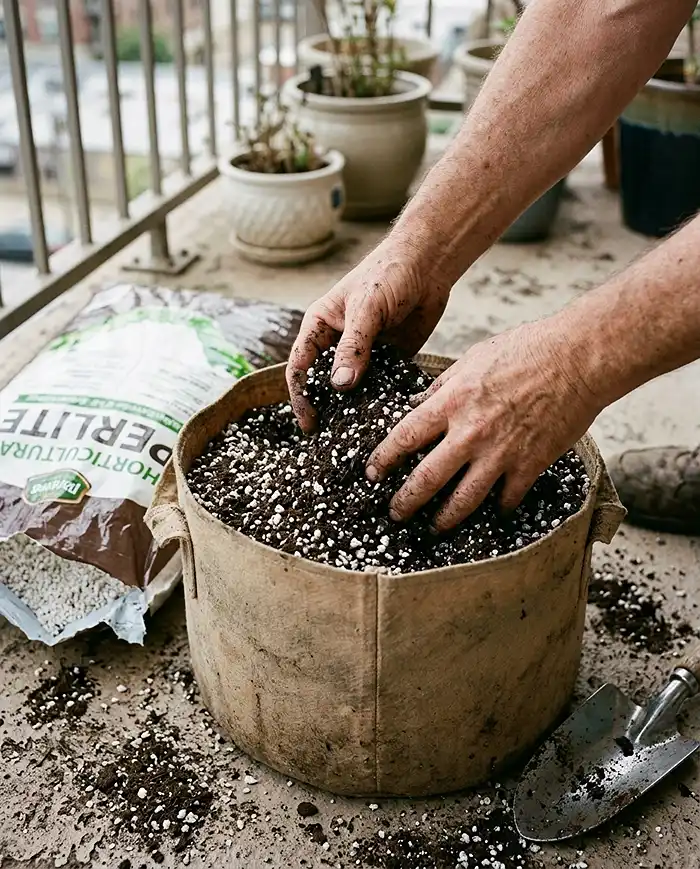
Standard potting mix is too rich and holds too much moisture for most natives. Mix in 20–30% perlite or coarse sand to improve drainage and reduce fertility.
Skip slow-release fertilizers unless you’re growing woodland natives. Prairie and meadow species evolved in lean soil — excess nitrogen produces floppy growth and fewer blooms. A gritty, well-draining mix is the single biggest thing you can do right.
Tools and Materials You’ll Need
You don’t need much. Small space gardening with natives is intentionally low-input.
- Containers: 3–5 gallon minimum for most natives; 7–10 gallon for coneflowers and milkweed
- Soil mix: Standard potting mix cut with 25% perlite — avoid “moisture-retaining” formulas
- Mulch: A thin layer of shredded bark or gravel on top of containers reduces moisture loss and moderates soil temperature
- Watering can with a long spout: Balcony watering is easier without a hose — water at the base, not overhead
- Saucers with feet: Elevate saucers slightly so water doesn’t pool under the pot and cause root rot
That’s genuinely all you need to start. Resist the urge to over-equip.
How to Plant a Native Balcony Garden
The planting process matters more than most people think. A good start means less intervention all season.
Preparing Containers and Soil
Cover drainage holes with mesh or a piece of broken terracotta — not gravel. The “gravel layer” myth has been debunked; it actually raises the water table inside the pot.
Fill with your lean soil mix to about 2 inches below the rim. Don’t fertilize at planting — natives don’t need it, and it can burn roots on transplant. If you’re growing a mixed container with herbs, keep the native section separate since herbs often want richer soil.
Planting and Grouping Native Flowers
Group plants with similar water needs together. Butterfly weed and black-eyed Susan both tolerate dry conditions — they can share a container. Wild columbine and wild geranium both prefer slightly more consistent moisture and pair well.
When arranging multiple pots, place taller plants toward the back or center and shorter ones at the edges. Think in threes — odd numbers look more natural than pairs.
For pollinator impact, cluster your native containers together rather than spreading them across the balcony. A tight grouping is easier for bees and butterflies to find from a distance. See companion planting in containers for more on pairing strategies.
Caring for Native Container Flowers
Here’s where natives genuinely earn their reputation. They want less, not more.
Watering and Feeding Natives Correctly
Water deeply when the top 2 inches of soil feel dry — then stop. Most native failures in containers come from overwatering, not drought.
In summer heat, check containers every 2–3 days. In cooler spring weather, once a week is often enough. A pollinator container garden rarely needs fertilizing. If you must feed, use a half-strength liquid fertilizer with low nitrogen (something like 5-10-10) once in early spring — that’s it for the year.
Deadheading, Pruning, and Supporting Pollinators
Deadhead selectively. Removing spent blooms on black-eyed Susans and coneflowers can extend the flowering period — but leave the last flush of seed heads. Goldfinches, chickadees, and sparrows feed on them through fall and winter.
Cut back floppy growth by one-third in early summer (“Chelsea chop”) if plants are getting leggy. This encourages bushier growth and more blooms without harming the plant. A well-managed pollinator container garden keeps flowering from June through October in most zones.
Seasonal Care for Native Balcony Flowers
Natives are naturally adapted to seasonal cycles. Your job is to support that rhythm, not fight it.
Overwintering and Supporting Wildlife
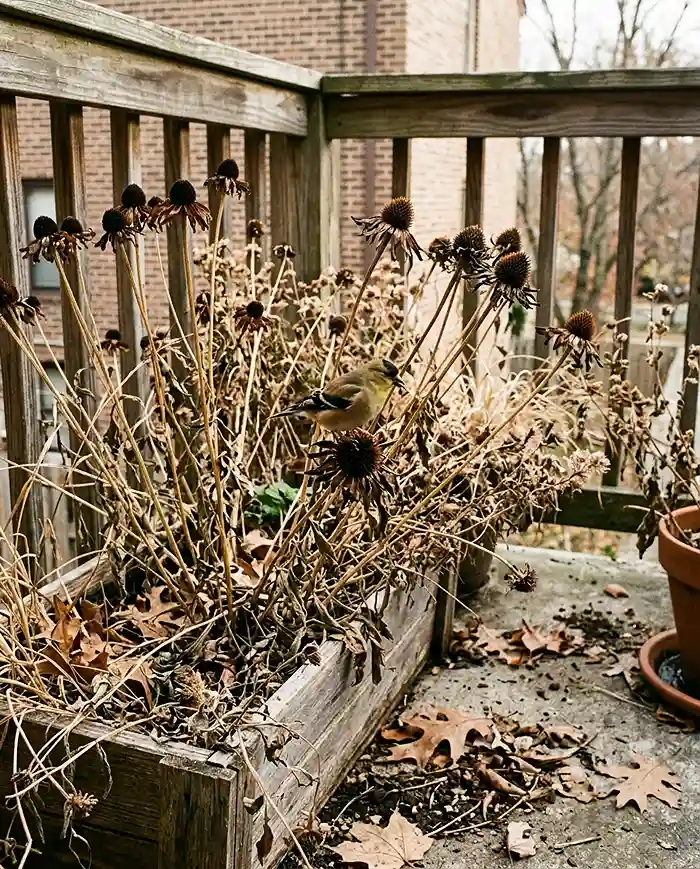
Leave stems standing through winter. Native bees overwinter inside hollow stems — cutting everything back in fall eliminates habitat. Wait until temperatures are consistently above 50°F in spring before any cleanup.
For perennials in containers, the main risk is freeze-thaw damage to roots. Move pots against the building wall or into an unheated garage once temperatures drop below 20°F consistently. You can also insulate pots by wrapping them in burlap or bubble wrap.
Annual natives can be left to drop seed — some will self-sow into neighboring pots. It’s one of the quiet rewards of this type of garden.
Common Problems and Solutions
Most native container issues are easy to diagnose once you know what to look for.
Natives Struggling in Rich Potting Soil
Quick Answer: Rich potting soil causes lush, floppy growth with few blooms in natives. Switch to a lean, gritty mix with 20–30% perlite and skip fertilizing entirely for a season.
Prairie natives evolved in nutrient-poor soils. Overfed plants put energy into leaves, not flowers. If your coneflowers are tall and leafy but barely blooming, soil richness is usually the culprit.
Overwatering and Root Rot
Quick Answer: Yellowing lower leaves and a musty smell from the pot almost always mean overwatering. Let the soil dry down 2 inches between waterings and check that drainage holes are clear.
Lift the pot — a waterlogged container feels dramatically heavier than it should. If roots look brown and mushy when you unpot, trim them back, let the plant dry slightly, and replant in fresh lean mix.
Sparse Blooms or Floppy Growth
Quick Answer: Insufficient light is the most common reason native flowers underperform in containers. Most sun-loving natives need 6+ hours of direct sun daily to bloom well.
If your balcony only gets 3–4 hours, switch to shade-tolerant species like wild columbine or wild geranium. Trying to grow sun natives in shade is a losing battle regardless of how well you water and feed.
native flower balcony garden ideas FAQs
Can native flowers grow in containers?
Yes — many native flowers thrive in containers when given the right pot size, a lean well-draining soil mix, and a species suited to pot life. Good choices include purple coneflower, black-eyed Susan, wild columbine, and butterfly weed. Avoid species with aggressive taproots or spreading rhizomes.
What native flowers attract pollinators on a balcony?
Purple coneflower (Echinacea purpurea), black-eyed Susan (Rudbeckia hirta), and butterfly weed (Asclepias tuberosa) are among the best pollinator magnets for balcony containers. Wild bergamot (Monarda fistulosa) is another strong choice that attracts bees, butterflies, and hummingbirds.
Are native plants low maintenance in pots?
Native plants need less watering and fertilizing than most ornamentals, but they still require proper drainage, appropriate soil, and correct light levels. The biggest adjustment is resisting the urge to overwater or overfeed — natives genuinely do better with less.
How do I find native plants for my specific region?
Use the Lady Bird Johnson Wildflower Center’s native plant database at wildflower.org/plants to filter by state and growing conditions. Your local cooperative extension service often has free regional guides as well.
Can I mix native flowers with a container herb garden?
You can, but keep soil needs in mind. Herbs like basil and parsley prefer richer, moister soil than most prairie natives. Pair natives with drought-tolerant herbs like thyme, oregano, or lavender, which share similar lean-soil preferences.
Key Takeaways
- Native flower balcony garden ideas work best when you match species to your specific region and light conditions — use a native plant database before buying anything.
- Lean, gritty soil with 20–30% perlite is more important than any other care factor; rich potting mix is the most common reason natives fail in containers.
- Compact cultivars like ‘Magnus’ coneflower and ‘Little Goldstar’ black-eyed Susan are purpose-built for small space gardening in pots.
- A pollinator container garden has the most impact when pots are grouped together — clustering makes the planting visible and accessible to foraging bees and butterflies.
- Leave seed heads and stems standing through winter — they’re overwintering habitat for native bees and a food source for birds.