
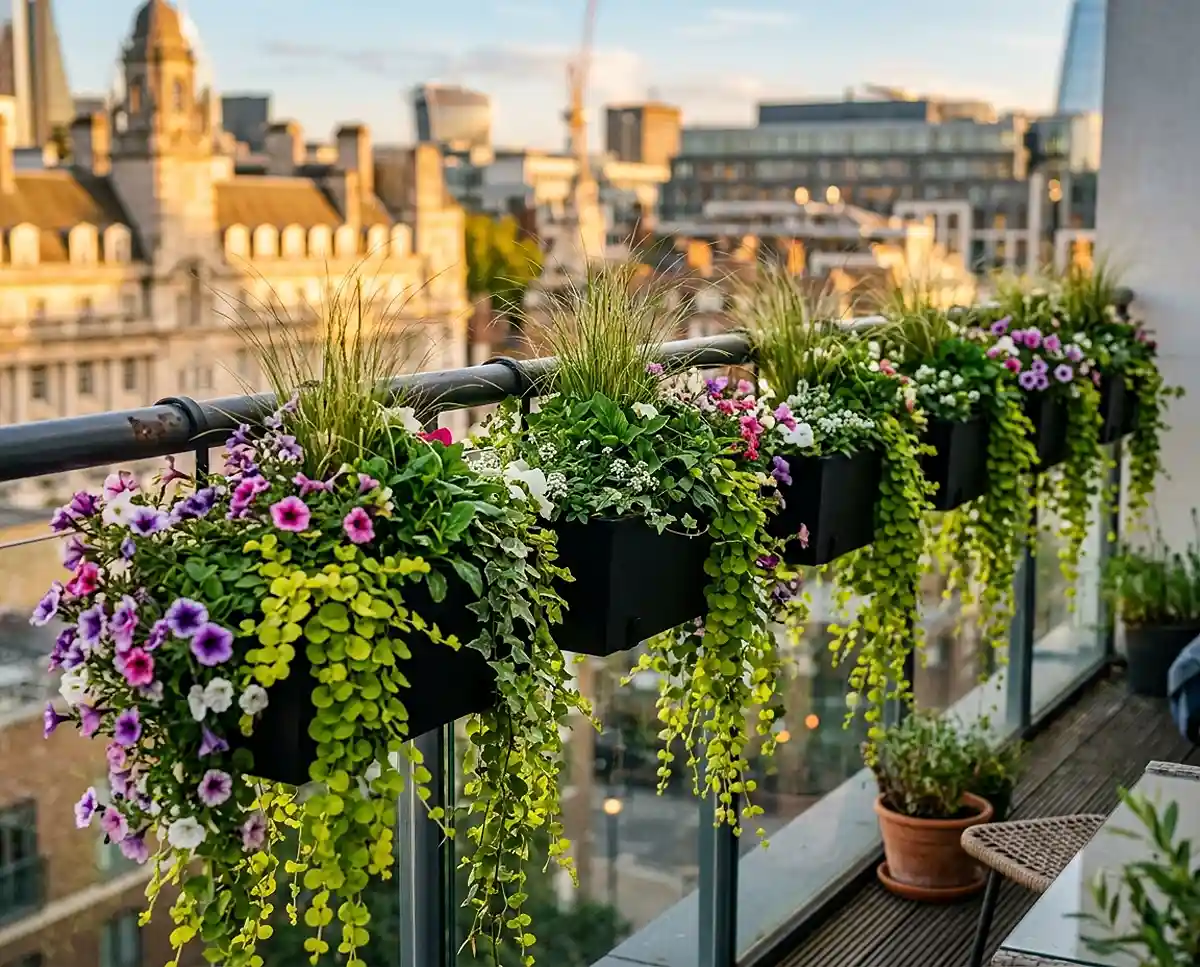
Balcony Railing Planter Ideas
The best balcony railing planter ideas don’t require a big budget — they need the right materials, cohesive style, and lush plants. If your small balcony garden looks flat or cheap, this fixes it.
Table of Contents
How to Make Railing Planters Look Expensive
Three things separate a polished railing display from a random collection of pots: cohesion, quality-looking materials, and full planting. Get all three right and your balcony garden ideas will look like they cost twice what they did.
Cohesion means your planters match — same material, same color family, or same style. Even budget containers look intentional when they’re unified.
Quality materials don’t mean expensive. Powder-coated steel, dark fiberglass, and natural wood all read as high-end. Faded plastic doesn’t — no matter how good the plants are.
Lush planting is the fastest upgrade. Sparse pots look cheap. Packed, trailing, layered planting looks like a designer did it. Use the thriller-filler-spiller method (more on this below) and you’ll nail it every time.
The ideas ahead cover everything — from measuring your railing to the exact plants that create that full, expensive look in apartment gardening setups of any size.
Planning Your Railing Planter Display
Before you buy a single planter, check three things: your railing type, your sun exposure, and your building’s rules. Skipping this step is one of the most common small space gardening mistakes that ruins an otherwise great setup.
Most balcony railings are round metal, square metal, glass, or wood. Each takes different mounting hardware. Round railings need saddle-style mounts. Square railings work best with hook brackets. Glass panels require clamp-on or freestanding solutions.
Check your lease or building rules before mounting anything. Many apartments allow hook-style planters that don’t drill into the railing. If you’re unsure, ask — it saves you a headache later.
Measuring Your Railing and Checking Fit
Quick Answer: Measure railing diameter or width, then match it to the planter’s bracket spec. Most standard brackets fit railings between 1 and 2.5 inches wide.
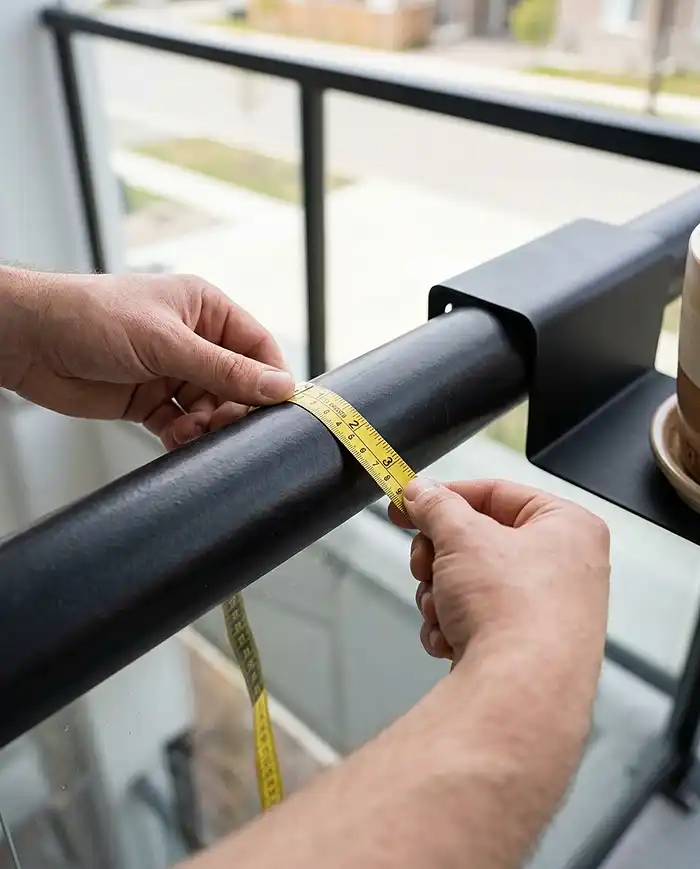
Use a tape measure to get the outer diameter of round railings, or the flat width of square ones. Write it down before shopping — bracket sizing is not universal.
Also check railing depth (how far it sticks out from your balcony wall). You need at least 4–6 inches of clearance behind the planter so it hangs flush and stable.
Pro Tip: Bring your railing measurements to the hardware store — don’t rely on eyeballing it in the aisle.
Mapping Sun and Wind Exposure
Quick Answer: Track sun for one full day before choosing plants. South and west-facing balconies get the most sun; north-facing get the least. Wind changes everything.
- Full sun (6+ hours): petunias, geraniums, lavender, herbs like basil and thyme
- Part shade (3–6 hours): impatiens, ferns, begonias, sweet potato vine
- Full shade (under 3 hours): ferns, coleus, trailing ivy, caladium
- High wind: avoid tall, top-heavy plants — stick to low-growing, mounding varieties
Pro Tip: Wind dries out containers 2–3x faster than still conditions — factor that into your watering schedule from day one.
Choosing Planters That Look High-End
The container is doing 50% of the visual work. Even the most beautiful plants look cheap in the wrong pot. For a minimalist balcony garden aesthetic, your container choice is everything.
Focus on three things: material, finish, and scale. Larger planters (12–16 inches) always look more intentional than a row of tiny 6-inch pots. And one oversized statement planter beats five mismatched small ones every time.
Best Materials: Metal, Fiberglass, and Wood
Quick Answer: Powder-coated steel and fiberglass are the best picks for most balconies. They’re lightweight, weather-resistant, and look genuinely high-end.
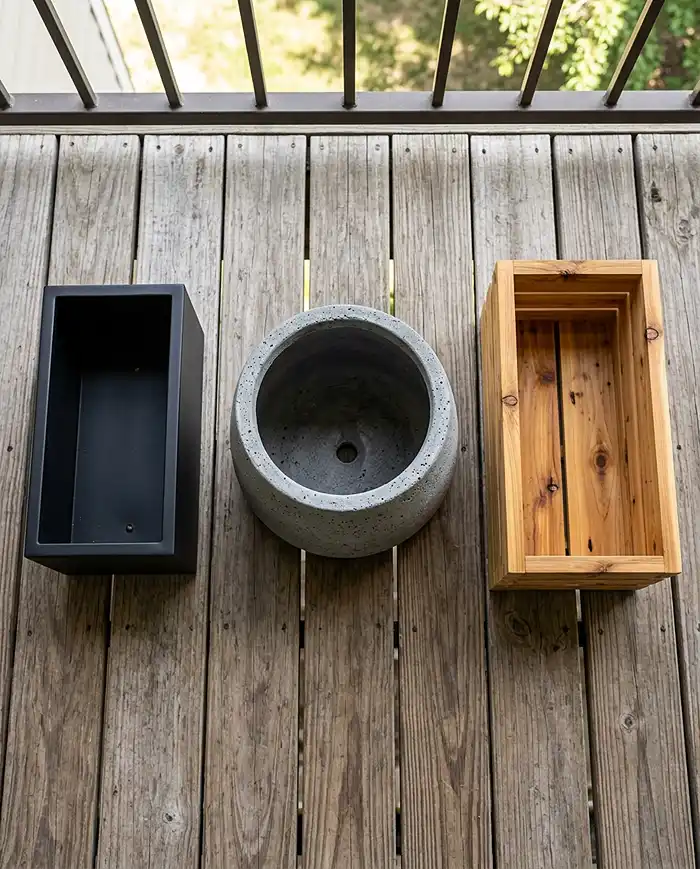
| Material | Best For | Watch Out For |
|---|---|---|
| Powder-coated steel | Modern, industrial aesthetics | Can heat up in direct sun — use liners |
| Fiberglass | Lightweight, any style, faux stone/concrete look | Pricier upfront, but worth it |
| Cedar or teak wood | Warm, natural, cottage or boho styles | Needs annual sealing to prevent rot |
| Galvanized metal | Farmhouse, rustic, or industrial looks | Can rust at joints — check welds before buying |
Pro Tip: Matte and satin finishes photograph better and look more expensive than high-gloss plastics in any lighting.
Cohesive Color and Style for a Designer Look
Quick Answer: Pick one container color and stick to it. Matte black, slate gray, or warm terracotta all work. Mixing three different styles is where most apartment gardening setups go wrong.
- Matte black planters: works with any plant color, reads as modern and intentional
- Warm terracotta or rust tones: pairs beautifully with Mediterranean herbs and trailing greenery
- Concrete gray: suits succulents, ornamental grasses, and minimalist balcony garden ideas
- White or cream: clean and fresh, but shows water stains — use saucers to protect
Pro Tip: Limit yourself to two container styles max per railing run. A third introduces visual noise that kills the designer feel.
Secure and Safe Railing Mounting
A planter that shifts or wobbles doesn’t just look bad — it’s a safety hazard. Secure mounting is non-negotiable, especially if you’re above ground level.
Most railing planters are designed to be non-permanent. That means no drilling required — they rely on gravity, brackets, or hook tension. If installed correctly, they’re completely stable.
Always check weight limits. A 12-inch planter with wet soil and a mature plant can weigh 8–12 lbs. Multiply that by five planters and you’re adding 60 lbs to your railing. Know your limits before you commit.
Bracket, Hook, and Saddle Mounting Options
Quick Answer: For round railings, use saddle-style mounts that clamp over the top. For flat or square railings, hook brackets that loop over and lock are the most secure non-drill option.
| Mount Type | Best Railing | Security Level |
|---|---|---|
| Saddle mount | Round railings 1–2.5 inches | High — cradles planter on both sides |
| Hook bracket | Flat or square railings | High — tension locks under load |
| Clamp-on mount | Glass or wide flat panels | Medium — check tightening every few weeks |
| Freestanding bracket | Any railing type | Medium — best paired with heavier planters |
Pro Tip: After any rain or strong wind, give each planter a firm push to check it hasn’t shifted. Takes 10 seconds and prevents accidents.
Best Plants for a Luxe Railing Display
The right plants make even a $20 planter look like it belongs on a boutique hotel terrace. For a full balcony railing display, you need three layers: a thriller (height and drama), fillers (mounding volume), and spillers (trailing movement). This approach also works perfectly in a vertical planter setup if you want to extend your display upward.
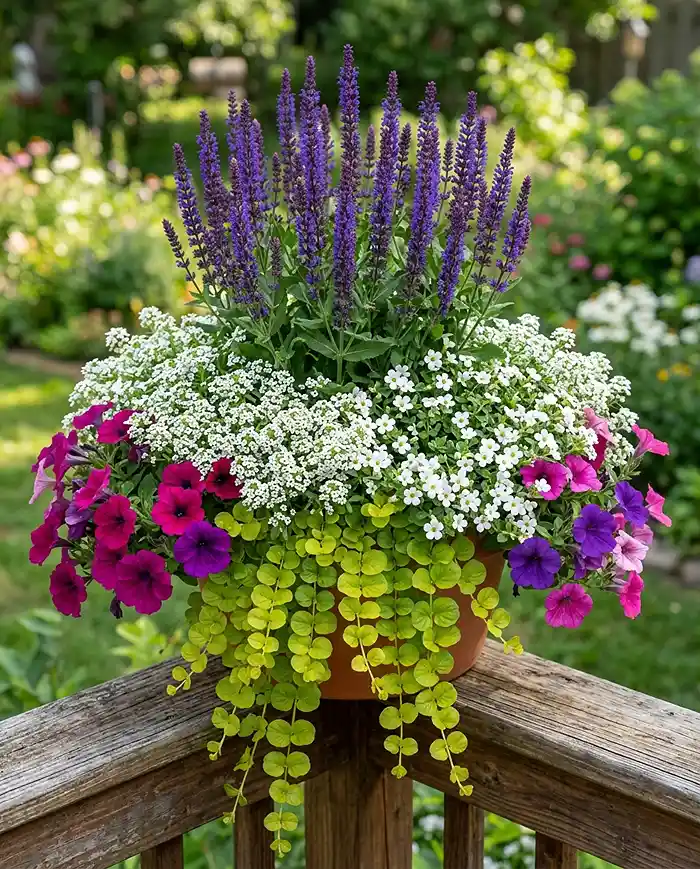
Aim for at least one trailing plant per container. Without spillers, railing planters look flat and stiff — the opposite of lush and expensive.
Trailing and Cascading Plants for Drama
Quick Answer: Trailing plants are what make railing planters look expensive. They add movement, soften the container edge, and create that waterfall effect that reads as intentional design.
- Million Bells (Calibrachoa): tiny petunia-like flowers, incredibly prolific, trails 12–18 inches
- Creeping Jenny (Lysimachia): lime-green foliage, stunning contrast with dark containers, thrives in part shade
- Trailing Petunias (Wave series): bold color, easy care, spills 24+ inches in full sun
- English Ivy: classic, dark green, works in shade — best in USDA zones 4–9
- Sweet Potato Vine: dramatic chartreuse or deep purple foliage, fast grower, heat-tolerant
Pro Tip: Plant spillers at the front edge of the container, angled slightly outward — they’ll cascade naturally within 2–3 weeks.
Structural and Filler Plants for Fullness
Quick Answer: Fillers and thrillers give your railing display volume and a focal point. Without them, spillers alone look weedy rather than intentional.
- Thriller picks: dwarf ornamental grass, upright salvia, tall geranium, or a single spike plant (Dracaena)
- Filler picks: impatiens, lobularia (sweet alyssum), compact zinnias, bacopa, or dwarf begonias
- Use one thriller per container — two compete and look messy
- Pack fillers tight: 3–4 plants per 12-inch container looks full from day one
- Repeat the same thriller plant across multiple containers for a cohesive, designed look
Pro Tip: Repeating one plant — like a single purple salvia — across every third container creates rhythm that ties the whole railing display together visually.
Tools and Materials Checklist
Get everything together before you start mounting. Nothing kills momentum like a mid-project hardware run.
- Railing planters (sized to your railing measurements)
- Matching brackets or saddle mounts (confirm railing diameter)
- Coco coir liners (if using open-wire baskets)
- High-quality potting mix — not garden soil, which compacts and drains poorly
- Slow-release fertilizer granules (mix into soil at planting)
- Thriller, filler, and spiller plants (3–5 plants per 12-inch container)
- Watering can with a narrow spout or a drip irrigation line for high-wind spots
- Zip ties or rubber-coated wire for extra security in windy conditions
Step-by-Step: Creating Your Designer Railing Garden
Follow this sequence once and you’ll have a display that looks like you hired someone to do it.
- Mount brackets first — attach all hardware before adding soil or plants. Test each bracket with a firm tug.
- Line containers — add coco coir liners to wire baskets; skip this step for solid containers.
- Fill with potting mix — fill to 2 inches below the rim. Mix in slow-release fertilizer per package directions.
- Place your thriller — center or back of the container, upright and tall.
- Pack in fillers — surround the thriller on all sides, leaving no bare soil visible.
- Add spillers at the front edge — angled outward so they cascade over the container rim.
- Water thoroughly — water until it drains from the bottom, then set in brackets.
- Step back and adjust — check spacing and level from 10 feet away before calling it done.
Arranging Plants for a Full, Layered Look
Quick Answer: Don’t leave gaps. Plant so leaves just touch each other at planting time — they’ll fill in completely within 2–3 weeks for that instant lushness look.
Use odd numbers: 1 thriller, 3 fillers, 2 spillers works well in a 12-inch container. Even numbers look rigid and formal — odd numbers read as natural and abundant.
Vary height within the container. Your thriller should be 2–3x taller than your fillers at maturity. That height contrast is what creates visual depth from the street or neighboring windows.
Pro Tip: Water the plants in their nursery pots first — it makes roots easier to separate and reduces transplant shock.
Styling Touches That Add Luxury
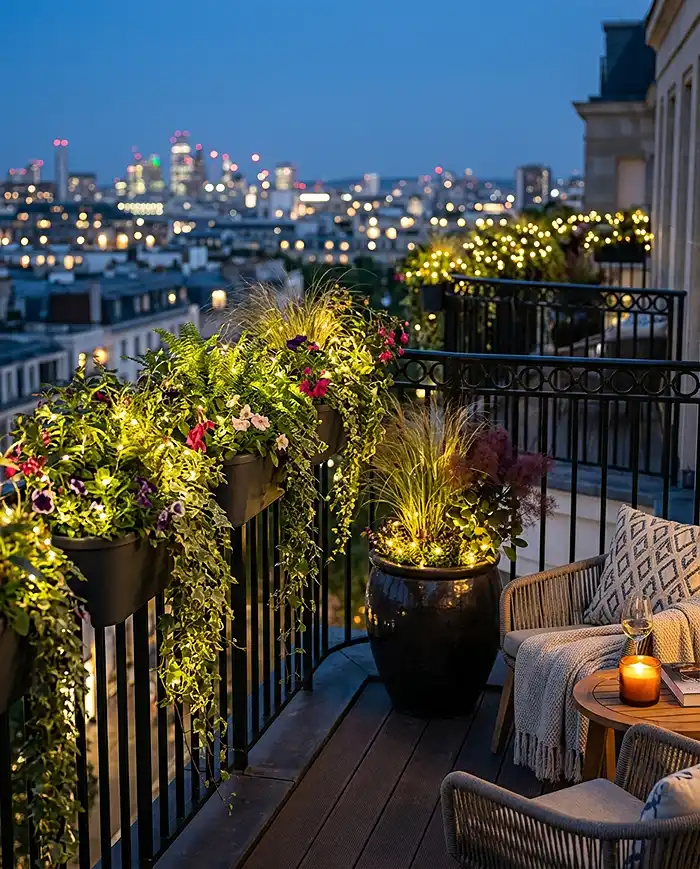
Once your planters are up and planted, a few finishing touches push the look from nice to genuinely impressive. These are the details most balcony garden ideas skip, but they make a real difference.
- String lights: warm white lights woven through trailing plants add evening ambiance with almost no effort
- Matching saucers or drip trays: they protect the railing and add a finished look to the base of each planter
- Greenery repetition: use the same trailing plant — creeping jenny or ivy — in every container for visual rhythm
- One oversized statement pot: place a larger floor planter at the corner of your balcony to anchor the railing display
For more ideas on making a small outdoor space feel cohesive and intentional, check out these budget ideas for small space gardens that don’t compromise on style.
Seasonal Care to Keep It Looking Lush
A great-looking railing display in June can look ragged by August if you skip maintenance. These habits take 10 minutes a week and make a visible difference.
Watering: Railing containers dry out fast — check daily in summer, especially in wind-exposed spots. Stick your finger 1 inch into the soil. If it’s dry, water thoroughly.
Deadheading [removing spent flowers] is the single best thing you can do for continuous bloom. Snip faded flowers every few days. Most annuals will rebloom within a week.
Fertilizing: Liquid fertilizer every 2 weeks from May through September keeps plants producing. Slow-release granules added at planting give a baseline, but they’re not enough alone for heavy bloomers.
Seasonal swaps: Pull spent summer annuals in September and replace with ornamental kale, pansies, or mums for a fresh fall look. In spring, swap in cool-season flowers like snapdragons and lobularia before summer heat arrives.
Common Problems and Solutions
Planters Looking Sparse or Cheap
Quick Answer: Under-planting and mismatched containers are the two most common culprits. Both have easy fixes.
- Under-planting fix: add 1–2 filler plants per container immediately — nurseries sell affordable 4-inch annuals all season
- Mismatched containers fix: spray paint plastic pots the same matte color to unify them fast
- Leggy plants fix: pinch back stems by one-third to encourage bushy, full growth rather than tall and sparse
Pro Tip: A single can of matte black spray paint can unify five different containers in an afternoon — cheapest design upgrade you can make.
Plants Drying Out in Exposed Railing Spots
Quick Answer: Wind and reflected heat from railings are the main causes. Fix the environment first, then adjust your watering.
- Add coco coir liners inside wire baskets — they retain moisture 30–40% longer than bare containers
- Mulch the soil surface with moss or fine bark chips to reduce evaporation
- Switch to self-watering planters with built-in reservoirs for the windiest spots
- Move drought-tolerant plants (succulents, lavender, herbs) to the most exposed positions
Pro Tip: Water in the early morning — it reduces evaporation and gives foliage time to dry before nightfall, lowering fungal disease risk.
Planters Shifting or Feeling Unstable
Quick Answer: Check bracket fit first. Most instability comes from brackets that are slightly too large for the railing diameter.
- Wrap railing with rubber grip tape at mount points — adds friction and prevents sliding
- Use zip ties as a secondary attachment point on each bracket
- Add heavier, moisture-retaining soil to lower the center of gravity in top-heavy containers
- Avoid planting tall, top-heavy thrillers in the most wind-exposed positions
balcony railing planter ideas FAQs
How do I make my balcony railing planters look expensive?
Use matching containers in a single material and color family — matte black, concrete gray, or warm terracotta all work. Pack them with thriller-filler-spiller planting so no bare soil shows. Trailing plants are the biggest visual upgrade: they add movement and softness that reads as intentional, high-end design.
What plants are best for railing planters?
For a full, luxe look you need all three layers: a trailing spiller like creeping jenny or wave petunias, mounding fillers like bacopa or sweet alyssum, and one upright thriller like an ornamental grass or spike. Repeat the same trailing plant across all containers for a cohesive, designer feel.
How do I attach planters to a balcony railing safely?
Use saddle mounts for round railings and hook brackets for square or flat railings. No drilling required for most styles. Always check the manufacturer’s weight rating, test each mount with a firm push after installing, and re-check after rain or strong wind.
How do I keep railing planters from drying out?
Line wire baskets with coco coir, mulch the soil surface with moss or bark, and water in the early morning. For the windiest spots, switch to self-watering planters with built-in reservoirs. Check soil moisture daily in summer — railing containers dry out 2-3x faster than ground-level pots.
Key Takeaways
- The best balcony railing planter ideas combine cohesive containers, secure mounting, and lush thriller-filler-spiller planting
- Measure your railing before buying — bracket sizing is not universal and the wrong fit creates instability
- Trailing plants like wave petunias and creeping jenny do more visual work than any other plant choice
- Unified container color (pick one: matte black, terracotta, or gray) is the fastest way to make apartment gardening look designed rather than random
- Weekly deadheading and every-two-week liquid fertilizing keeps your small balcony garden looking full and fresh all season long