

5 Herbs That Handle Balcony Heat
If your small balcony garden turns into a furnace every summer, these Herbs That Handle Balcony growing are exactly what you need. Most herb guides ignore the brutal reality of container herb gardens on sun-baked concrete — but these five actually thrive there.
Table of Contents
Why Balcony Heat Is Different (And Harder)
Ground-level gardens have it easy compared to a hot balcony. Concrete floors, metal railings, and pale walls all bounce radiant heat back at your pots — creating a microclimate that runs 10–15°F hotter than anything at ground level.
That extra heat also means containers dry out two to three times faster than in-ground beds. A pot that needs water every other day in spring might need it twice daily in July.
Understanding this changes everything about how you pick plants, pots, and placement for your balcony garden setup.
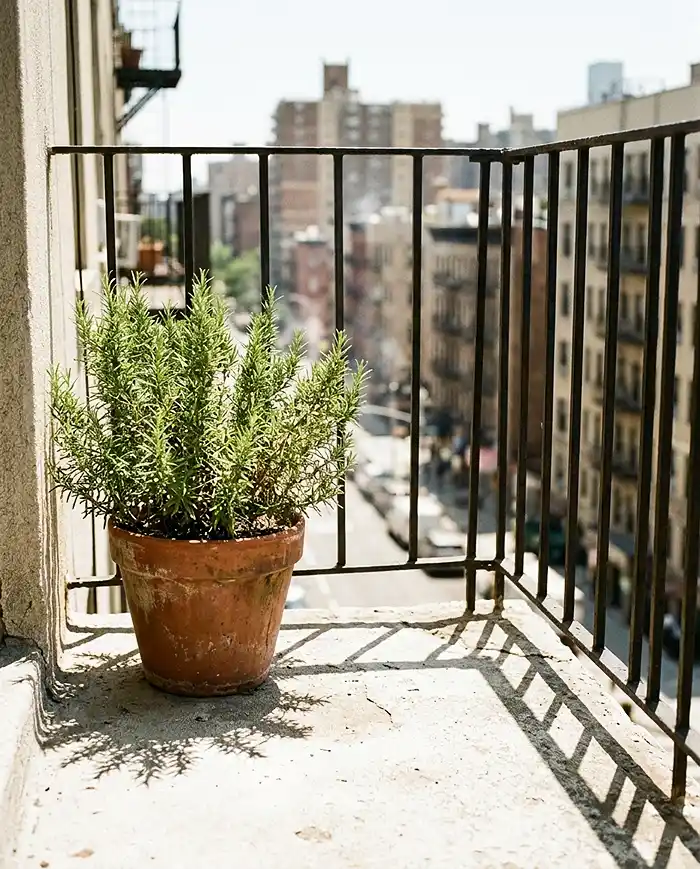
The 5 Heat-Champion Herbs for Hot Balconies
Not every herb cracks under pressure. These five are built for the kind of summer heat that turns a south-facing balcony into a slow cooker.
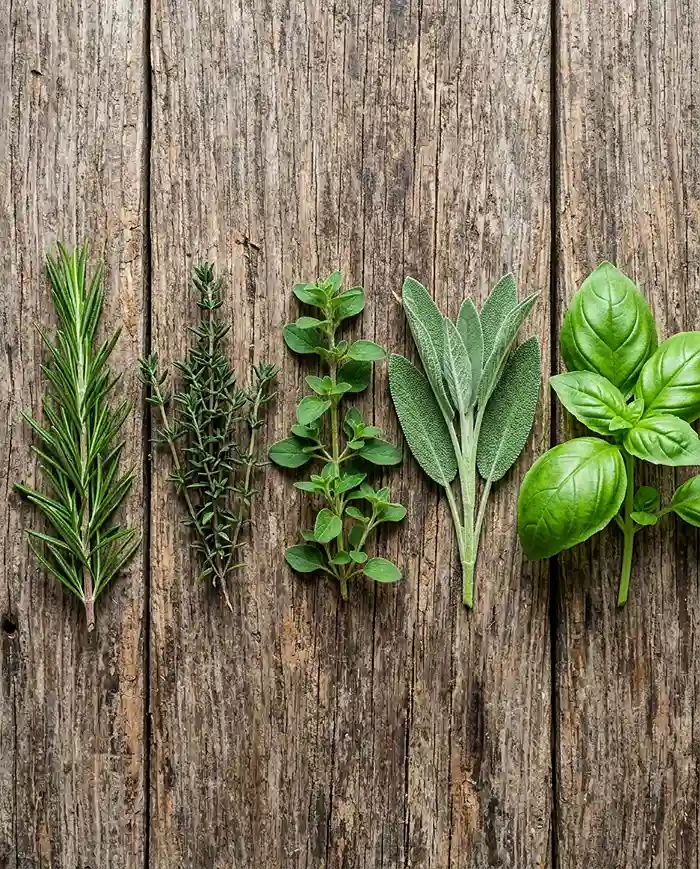
- Rosemary — native to sun-scorched Mediterranean cliffs, thrives on neglect
- Thyme — shallow roots, loves gravel-mix soil, handles drought like a champ
- Oregano — gets more flavorful as temperatures climb
- Sage — silver foliage literally reflects sunlight to stay cool
- Basil — loves heat, just needs consistent moisture (not drought)
Each one earns its place in a summer container gardening setup. Here’s how to grow them right.
1. Rosemary — The Mediterranean Survivor
Quick Answer: Rosemary is the single most heat-tolerant herb you can grow in a container. Full sun, minimal water, and sharp drainage are all it asks for.
Rosemary evolved on rocky Mediterranean hillsides with blazing sun and almost no rain. That background makes it perfectly suited for the punishing conditions of a hot balcony in summer container gardening.
Place it in your sunniest spot — ideally 8+ hours of direct sun. Use a fast-draining mix (more on that below) and water only when the top 2 inches of soil are completely dry.
What actually kills rosemary isn’t heat — it’s overwatering. Wet roots in a hot pot leads to root rot within days. Less is more.
Real Example: I grew a Tuscan Blue rosemary in a terracotta pot on a west-facing balcony through a 95°F heat wave. I watered it once that entire week. It didn’t flinch.
Pro Tip: Elevate the pot slightly on pot feet to ensure airflow under the drainage hole — standing water underneath is just as dangerous as overwatering from above.
2. Thyme — The Low-Water Groundcover
Quick Answer: Thyme is a drought-resistant low-grower that thrives in the kind of gritty, dry conditions most herbs hate. Perfect for railing planters and window boxes.
Thyme has shallow, fine roots that actually prefer lean, slightly gravelly soil over rich potting mix. Mix in 20–30% perlite or coarse sand for best results in your container herb garden.
Its sprawling habit makes it ideal for narrow railing planters where it can cascade over the edge. Water deeply but infrequently — roughly every 5–7 days in peak summer, adjusting by feel.
Real Example: Last August I planted Creeping Thyme in a 6-inch railing planter facing south. It spread 8 inches in six weeks and needed water just twice a week even at 90°F.
Pro Tip: After flowering, trim thyme back by one-third to prevent it going woody and to trigger a flush of fresh, tender growth.
3. Oregano — The Sun-Loving Spreader
Quick Answer: Oregano doesn’t just survive heat — it rewards you for it. Essential oils concentrate in hot, dry conditions, making the flavor dramatically stronger come harvest time.
In a container herb garden on a hot balcony, oregano will spread aggressively. Plan for a pot at least 10 inches wide, or give it its own dedicated container so it doesn’t crowd neighbors.
The key maintenance task is regular trimming. Cut stems back by half every 3–4 weeks to keep the plant bushy and prevent it bolting (going to seed) in the heat.
Real Example: My Greek oregano in a glazed 12-inch pot produced more flavor in one hot July than it had all spring — I could smell it from 3 feet away.
Pro Tip: Harvest just before it flowers for peak flavor — that’s when essential oil content peaks in hot-weather herbs like oregano.
4. Sage — The Silver-Leaf Heat Reflector
Quick Answer: Sage’s fuzzy, silver-green leaves aren’t just decorative — they act like tiny mirrors, reflecting intense sunlight and slowing moisture loss. It’s engineered for heat.
Sage prefers what gardeners call “dry feet” — it wants the soil to dry out between waterings. In summer container gardening, water it every 6–8 days and never let it sit in a saucer of water.
Good airflow matters too. Don’t crowd sage with humidity-loving plants. Give it space on the balcony where breeze can move around it freely.
It’s also one of the most drought-forgiving herbs you’ll grow — missing a watering by a day or two won’t cause drama the way it would with basil.
Real Example: In zones 7–9, sage sailed through a two-week stretch above 90°F with zero special treatment beyond weekly watering.
Pro Tip: Purple sage and tricolor sage handle heat just as well as common sage — and they add serious visual interest to a small balcony garden.
5. Basil — The Surprising Heat Lover
Quick Answer: Basil loves heat but hates drought. The key is deep, consistent watering — not frequent shallow splashes. Get that right and basil thrives on a hot balcony all summer.
The biggest mistake people make with balcony basil is confusing heat stress with drought stress. Wilting at noon on a 95°F day is normal — it’s not dying. Wilting at 8am means it’s thirsty.
Water deeply (until it drains from the bottom) every 1–2 days in peak heat. On a scorching afternoon, a little reflected shade from a neighboring pot can prevent leaf scorch.
Check out these small space garden layouts for summer heat for smart ways to arrange basil alongside your other herbs.
Real Example: I positioned a Genovese basil behind a larger sage plant — the dappled afternoon shade kept leaves lush well into September without sacrificing flavor.
Pro Tip: Pinch flower buds the moment you see them — letting basil bloom triggers bitterness almost overnight.
Choosing the Right Containers and Soil for Heat
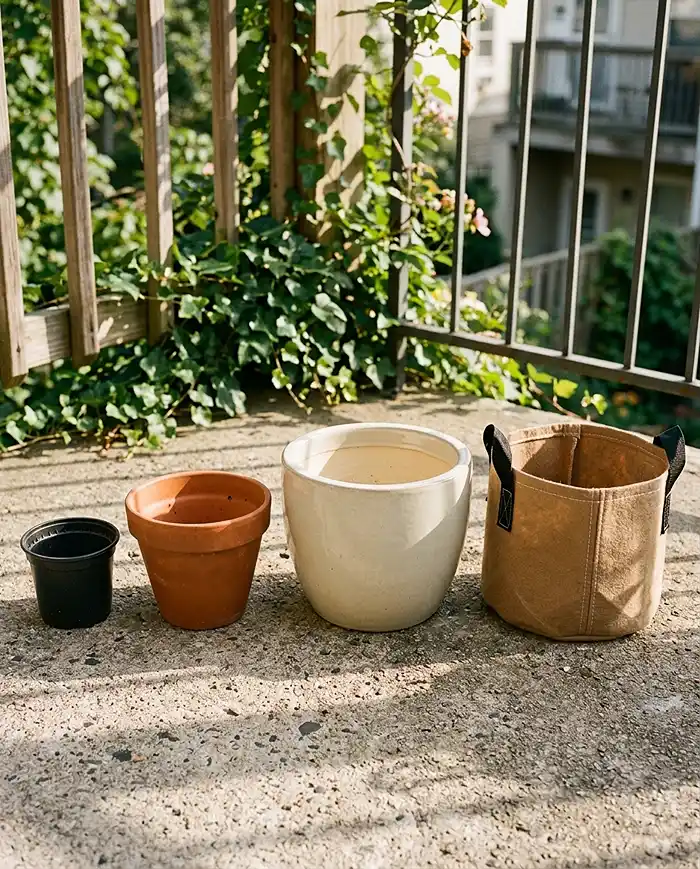
The pot you choose matters almost as much as the plant inside it. On a hot balcony, container material directly affects root temperature — and roots above 85°F start to shut down.
| Pot Material | Best For | Watch Out For |
|---|---|---|
| Terracotta | Rosemary, thyme, sage (breathable, dries fast) | Dries out very quickly — daily watering in peak heat |
| Glazed ceramic | Oregano, basil (retains moisture longer) | Heavier; check drainage holes aren’t blocked |
| Light-colored plastic | All herbs — lightweight and moisture-retentive | Dark plastic absorbs heat and cooks roots |
| Fabric grow bags | Basil, oregano — air-prunes roots, prevents overheating | Dries fastest of all — needs close monitoring |
For soil, skip standard potting mix straight from the bag. Blend in 25–30% perlite for drainage and a handful of coconut coir for moisture retention. This combination drains fast enough to prevent rot but holds enough water to buffer between waterings.
Pot Size and Color Guide
Quick Answer: Go bigger and lighter. A larger pot buffers root temperature better, and a pale pot reflects heat instead of absorbing it.
| Herb | Minimum Pot Size | Best Pot Color |
|---|---|---|
| Rosemary | 10–12 inches | White, cream, or terracotta |
| Thyme | 6–8 inches (per plant) | Light grey, white, or terracotta |
| Oregano | 10–12 inches | White, light blue |
| Sage | 10 inches | Terracotta or pale ceramic |
| Basil | 8–10 inches | White or glazed light colors |
A dark 4-inch nursery pot sitting on a concrete floor in full sun can reach soil temps above 100°F. Upsizing to a 10-inch white pot can drop that by 15–20 degrees.
Pro Tip: Group pots together — the cluster shades each other’s sides and slows moisture loss from all containers at once.
Smart Placement and Sun Management
Where you place your pots matters as much as what’s in them. The goal on a hot balcony is to maximize morning sun (gentle, productive) and soften brutal afternoon exposure.
- Place moisture-sensitive herbs like basil where taller pots or railings create afternoon shade after 2–3pm
- Put drought-tolerant herbs (rosemary, thyme, sage) in the most exposed, hottest spots
- Use a vertical planter or railing organizer to get herbs off the heat-radiating floor — even 12 inches of height helps
- Cluster pots in groups of 3–5 so they shade each other’s sides and reduce overall water loss
For renters who can’t drill into walls, these renter-friendly vertical garden ideas show how to add height and shade without permanent fixtures.
East-facing balconies are actually ideal — morning sun runs 6–8 hours, then natural shade kicks in. South and west-facing balconies need the most strategic placement to protect roots from afternoon heat.
Watering Strategy for a Hot Balcony
Watering on a hot balcony isn’t just about frequency — it’s about method. Shallow, frequent watering keeps only the top inch of soil moist and trains roots to stay near the surface where they’re most vulnerable to heat.
Water deeply and less often. Pour slowly until water runs freely from the drainage holes. Then don’t water again until the top 1–2 inches of soil are dry to the touch — the finger test.
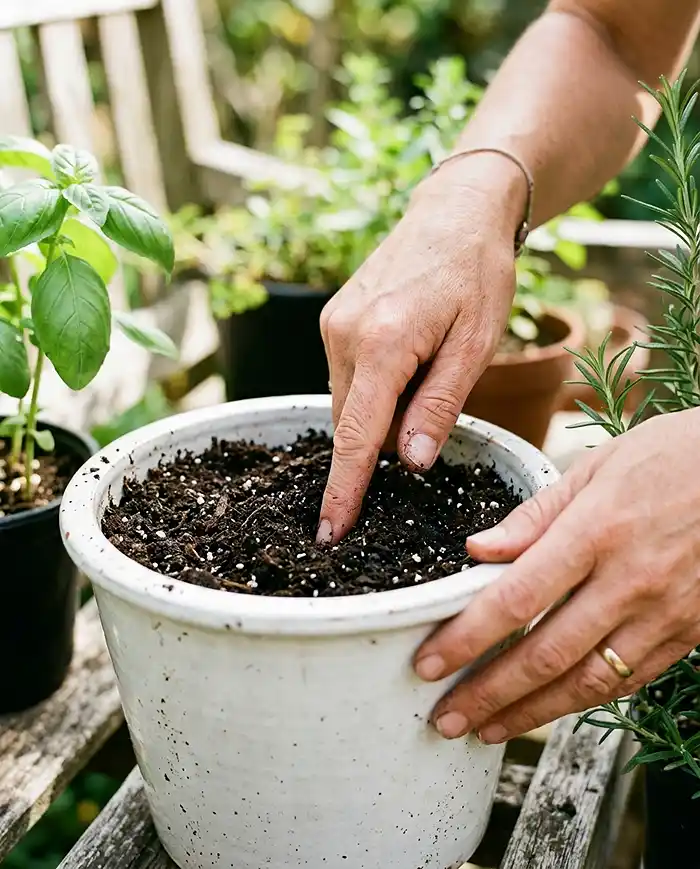
Always water in the early morning. Evening watering on a hot balcony invites fungal problems. Midday watering can shock roots when cold water hits scorching soil.
According to the University of Maryland Extension’s container gardening guide, container plants in summer may need watering once or even twice daily during heat waves — so monitoring is key.
DIY Self-Watering Setup
Quick Answer: A simple wicking system keeps containers hydrated during heat waves or short trips away — no expensive gadgets needed.
Here’s a basic DIY wicking setup using items you likely already have:
- Cut a cotton shoelace or strip of old t-shirt into a 12-inch wick
- Thread one end through the drainage hole up into the root zone
- Place the other end in a water-filled container (mason jar or tray) set beside the pot
- The cotton draws water up continuously via capillary action
- Refill the reservoir every 2–3 days in peak summer heat
For a more robust option, self-watering pots with a bottom reservoir work excellently for basil and oregano — just don’t use them for rosemary or thyme, which prefer drier conditions.
Pro Tip: Add a thin layer of mulch (straw or bark chips) over the soil surface in larger containers to cut evaporation by up to 30%.
Seasonal Care and Timing
Timing your plantings and maintenance right makes the whole summer smoother. Here’s how the season breaks down for heat tolerant herbs for balcony growing.
- Spring (after last frost): Plant rosemary, thyme, oregano, and sage outdoors once nighttime temps stay above 40°F
- Late spring: Plant basil only after nights consistently stay above 55°F — it sulks in cold
- Summer peak: Harvest frequently to prevent bolting; trim oregano and basil every 2–3 weeks
- Early fall: Begin reducing watering for perennial herbs to harden them before cooler nights
- First frost: Bring basil indoors or compost it — it’s an annual and won’t survive frost
Regular harvesting is your single best tool against bolting. Taking one-third of the plant every few weeks keeps energy focused on foliage rather than seed production.
Heat-Wave Emergency Checklist
Quick Answer: When temps spike above 95°F, take immediate action — waiting 24 hours can mean losing plants that took months to establish.
- Water deeply in the early morning before heat peaks
- Move basil and oregano to a shadier spot temporarily if afternoon temps exceed 100°F
- Double-check drainage — standing water in saucers cooks roots fast in extreme heat
- Mist foliage lightly in early morning only (never midday — causes leaf scorch)
- Group all pots together to reduce collective moisture loss
- Check moisture at noon as well as morning — containers can dry out completely in a single day above 100°F
Common Problems and Solutions
Even the most heat-adapted herbs run into trouble on a scorching balcony. Here’s how to spot what’s wrong and fix it fast.
Wilting Despite Watering
Quick Answer: Wilting even after watering usually means either root rot (from overwatering) or compacted soil blocking water absorption — not underwatering.
Check the soil a few inches down. If it’s wet and smells musty, you’ve got root rot — ease off watering immediately and improve drainage.
If the soil is bone dry despite watering, the mix has compacted and water is running straight through without absorbing. Fix it by soaking the pot in a tray of water for 20 minutes to rehydrate the mix fully.
Pro Tip: Midday wilting on basil in heat above 90°F is normal heat stress — not a problem. If it perks up by evening, the plant is fine.
Crispy Brown Leaf Edges
Quick Answer: Brown leaf edges are either sunscald from intense reflected heat or salt buildup from tap water and fertilizer — both are fixable.
For sunscald, reposition the affected plant to reduce peak afternoon sun exposure. For salt buildup, flush the pot thoroughly with plain water until it drains freely — do this once a month during summer.
According to the Clemson University Home and Garden Information Center, salt accumulation on container soil surfaces is one of the most overlooked causes of leaf-edge burn in hot-weather container gardening.
Leggy, Sparse Growth
Quick Answer: Leggy herbs are almost always reaching for more light — even on a sunny balcony, blocked angles can leave plants stretching and thin.
Rotate pots a quarter-turn every week to ensure even light exposure on all sides. If stems are stretching upward rather than outward, that’s a light issue.
If the plant is getting enough light but still bolting and going sparse, it’s likely heat-triggered premature flowering. Pinch stem tips aggressively every 1–2 weeks.
Bolting and Bitter Flavor
Quick Answer: Bolting — when a plant rushes to flower and set seed — is triggered by heat and long days. It turns basil and oregano bitter almost immediately.
The fix is consistent pinching. Remove any flower buds the moment they appear. For basil, pinch the top two sets of leaves weekly to keep the plant in vegetative mode.
For oregano and thyme, a hard trim back by one-third after flowering resets the plant and brings back flavorful new growth within two weeks.
Herbs That Handle Balcony FAQs
Which herb survives the hottest balcony with the least care?
Rosemary and thyme are your best bets. Both evolved in hot, dry Mediterranean climates and genuinely prefer minimal watering and maximum sun. Rosemary can go a full week without water in peak summer. Thyme will sprawl and thrive in the hottest railing planter you have. Neither will punish you for forgetting to water for a few days.
How often should I water herbs on a hot balcony?
Drought-tolerant herbs like rosemary, thyme, and sage need water every 5–7 days in moderate heat and every 3–4 days above 90°F. Basil and oregano need water every 1–2 days in peak summer. Always use the finger test — if the top 1–2 inches are dry, water deeply. Container size and material change these ranges significantly.
Can I grow these herbs in full afternoon sun?
Rosemary, thyme, sage, and oregano handle full afternoon sun without issue — they actually prefer it. Basil tolerates full afternoon sun but benefits from light shade after 3pm when temperatures exceed 95°F. If your balcony faces west and gets blasting late-day sun, group basil behind taller pots for natural afternoon relief.
Do I need bigger pots for hot conditions?
Yes. Larger pots buffer root temperature significantly better than small ones. A 4-inch pot in direct sun can reach 100°F+ at the root zone. A 10–12 inch pot in the same conditions stays 15–20 degrees cooler. Bigger pots also hold more water, reducing how often you need to water during a heat wave.
Will these herbs come back next year?
Rosemary, thyme, oregano, and sage are perennials in USDA zones 5–10 and will return each year if not killed by hard frost. Basil is an annual and won’t survive frost — compost it or take cuttings to root indoors before the first cold night. In colder zones, bring rosemary and sage indoors for winter as they can be frost-sensitive.
Key Takeaways
- The best heat tolerant herbs for balcony growing are rosemary, thyme, oregano, sage, and basil — each with slightly different needs that are easy to meet in containers
- Balcony microclimates run 10–15°F hotter than ground level — choose pots, soil, and placement accordingly
- Light-colored pots sized 10–12 inches protect roots from temperature spikes that small dark containers can’t handle
- Water deeply and infrequently for most herbs — the finger test beats any fixed schedule
- Regular harvesting and pinching are your best defense against bolting and bitter flavor all summer long