

Best DIY Potting Mix Recipe
Steal my best DIY potting mix recipe — 3 tested blends for veggies, herbs & seedlings that beat store-bought for half the price. Start mixing today!
Okay, real talk — after fifteen years of stuffing soil into raised beds, balcony pots, and one truly chaotic greenhouse, I’ve learned that what you put in your containers matters way more than what you plant in them.
That’s exactly why I geek out over finding the best DIY potting mix recipe for veggies, herbs, and seedlings. Once you mix your own, those sad bagged mixes from the garden center start looking pretty embarrassing.
This guide walks you through the why, the what, and three tested recipes you can whip up this weekend. Whether you’re babying tomatoes on a sunny patio or hunting for a peat-free potting mix because you care about the planet (high five), there’s something here for you.
If you also want a deeper dive into feeding your container plants, check out my guide on the Best Soil and Fertilizer for Container Vegetable Gardens — it pairs perfectly with this one.
Table of Contents
Potting Soil vs Garden Dirt — What’s the Deal?
Plot twist: potting soil isn’t actually soil. It’s a soilless growing medium engineered for drainage, airflow, and happy roots inside a pot.
Garden dirt? That’s the real deal — clay, silt, microbes, and a surprise army of weed seeds. Out in the yard, it’s amazing. Stuff it into a pot, though, and it turns into a brick that suffocates your plants faster than you can say “why is my basil dead?”
Why Pots Need Their Own Special Mix
A container has zero earthworms, no deep root network, and only as much drainage as you give it. Whatever you scoop in there is basically your plant’s entire universe — so make it a good one.
My promise: practical, tested DIY recipes that beat most premium bagged mixes for about half the price.
Why Bother Making Your Own?
Store-Bought Mixes Have Issues
Most bagged stuff is mostly finely milled peat that breaks down in one season. Once it does, your mix compacts, air vanishes, and roots start rotting. Add in mystery fillers like sawdust and inconsistent quality between bags, and yeah… you can do better.
The Sneaky Physics of Pot Soil
Here’s something nobody warns beginners about: the perched water table. Basically, gravity can’t fully drag water out the bottom of a pot, so a soggy zone always sits there.
In dense soil, that wet zone climbs way up into the root area, and your plant slowly drowns. A chunky DIY mix shrinks that swampy zone fast. Curious about the science? Oregon State University Extension has a great breakdown of how container soil physics actually work.
Cost vs Performance
Buying coir, compost, and pumice in bulk is dramatically cheaper than premium bagged mixes once you scale up. Plus, a well-built DIY blend can be rejuvenated and reused for two or three seasons. Your wallet will thank you.
What Makes a Great Mix?
Three pillars: structure, water retention, and biology.
1. Structure & Aeration (The Skeleton)
This is what keeps things fluffy and breathable.
- Perlite: cheap and light, but floats to the top like styrofoam at a beach party.
- Vermiculite: holds more water — better for seedlings than veggies.
- Pumice: my personal MVP. Heavier, doesn’t break down, and holds its structure for years.
2. Water Retention (The Sponge)
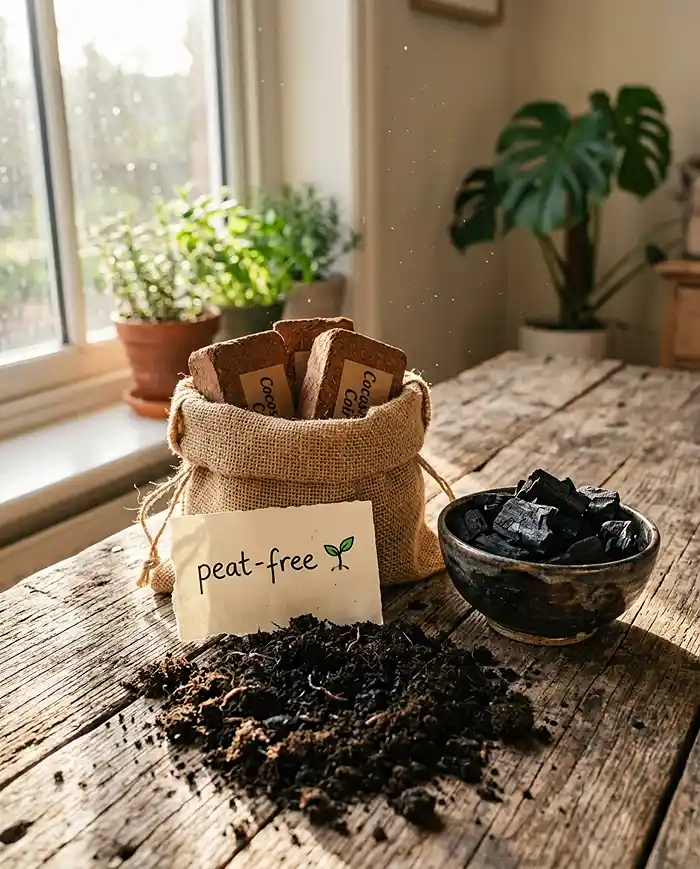
Peat moss has been the default forever, but it’s slow to rewet and harvested from carbon-rich bogs that take centuries to recover. Not great.
Coconut coir rehydrates fast, has a friendly pH, and is a renewable byproduct of the coconut industry. For a true peat-free potting mix, coir is the easy winner.
3. The Nutrient Engine
Mature compost is the heart of any living mix. It’s gotta be fully done — dark, crumbly, smells like a forest floor. Half-finished compost will scorch your roots and steal nitrogen. Worm castings are the cherry on top: gentle nutrients plus a microbe party in the root zone.
The Best DIY Potting Mix Recipes
These three cover about 95% of home gardening situations.
The Heavyweight Champion (Vegetable Mix)
This is my go-to homemade potting soil for vegetables. Heavy feeders demand it.
- 33% coconut coir
- 33% compost (fully matured)
- 10% pumice (or perlite)
- 10% coarse sand
- 5% worm castings
- 5% biochar (pre-charged with compost tea)
Why it slaps: drainage, nutrients, and microbes all working together. Tomatoes, peppers, cucumbers, eggplants — they’ll all thrive.
The Mediterranean Herb Mix
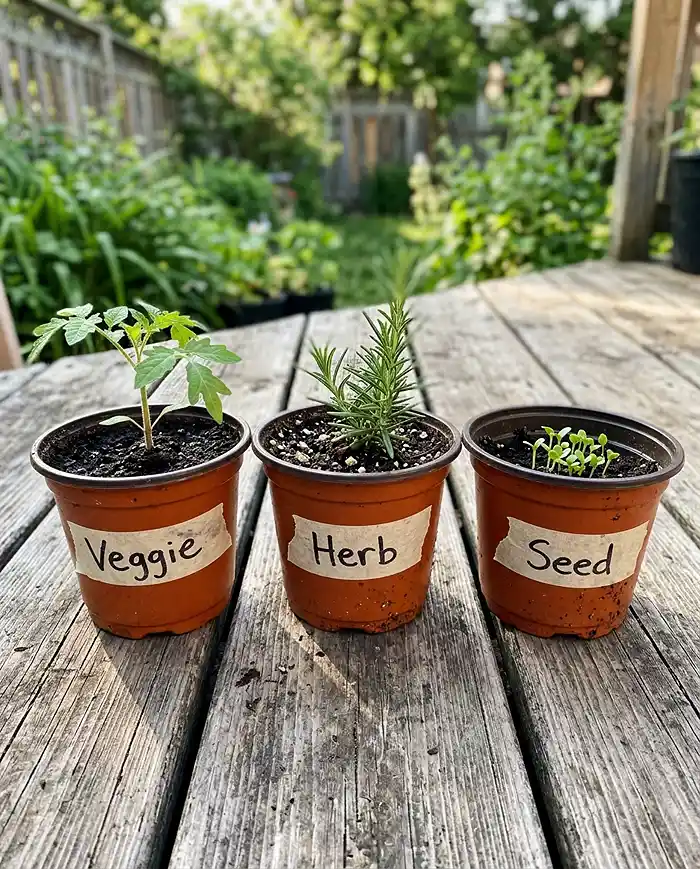
Mediterranean herbs hate wet feet. This lean, gritty blend mimics rocky hillside vibes.
- 1 part compost
- 1 part coarse sand
- 1 part bark fines
- 1 part pumice
Best for: rosemary, thyme, oregano, sage, lavender. Skip the worm castings here — too much nitrogen turns flavorful herbs into bland green sticks.
Seed-Starting Mix
- 2 parts sterilized compost
- 2 parts coir (or peat if that’s what you’ve got)
- 1 part perlite
- 1 part vermiculite
Why it works: low nutrients = no fertilizer burn on baby plants, plus the sterile base prevents damping-off (the fungal disease that wipes out seedlings overnight — heartbreaking, ten out of ten do not recommend).
How to Actually Mix It Up
What You’ll Need
A big tarp or mixing tub, a few identical buckets for measuring “parts,” gloves, and a dust mask. Trust me on the mask — perlite and biochar dust are no joke.
The Process
- Mix dry first — get everything evenly distributed before water enters the chat.
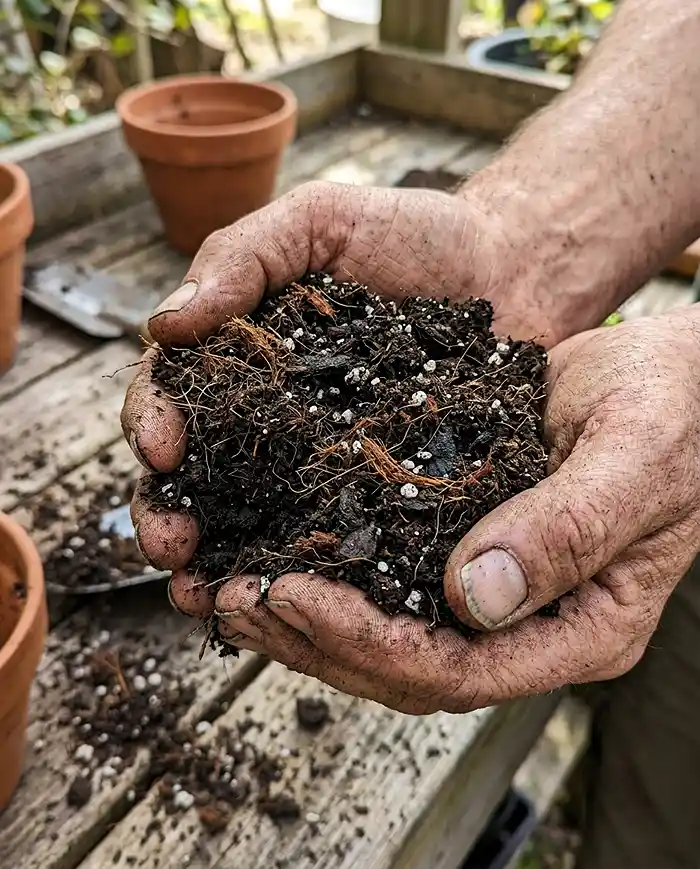
- Add moisture slowly — mist with a hose, turning as you go. Pre-soak coir bricks separately.
- Squeeze test — grab a handful. It should clump lightly and crumble when poked. If water drips out, you’ve gone too far.
Scaling It Up
For container gardening soil ratios, a “part” is whatever bucket you grab.
- 1 standard 5-gallon bucket ≈ 19 liters
- A 10-gallon grow bag needs about 38 liters
- A 4×4 raised bed (12 inches deep) needs roughly 450 liters
Pro-Level Tricks
The 4-Week “Cooking” Trick
Fresh mix is biologically chaotic. Moisten it, cover with a tarp, and let it chill for three to four weeks. Microbes stabilize, ammonia dissipates, pH evens out. Plants set into rested mix establish noticeably faster — it’s almost cheating.
Sterilizing Indoor Mixes
For seed starting and houseplants, sterilization kills fungus gnat eggs and pathogens. Spread moist mix in a roasting pan, cover with foil, bake at 180°F (82°C) for 30 minutes. Don’t go hotter — your kitchen will smell weird and you’ll release nasty compounds.
pH Stuff
- Veggies: 6.0–6.8
- Herbs: 6.5–7.5
- Blueberries and acid-lovers: 4.5–5.5
Add garden lime to raise pH, elemental sulfur to lower it. A $15 pH meter pays for itself in one season.
When Things Go Sideways
Water Pooling on Top
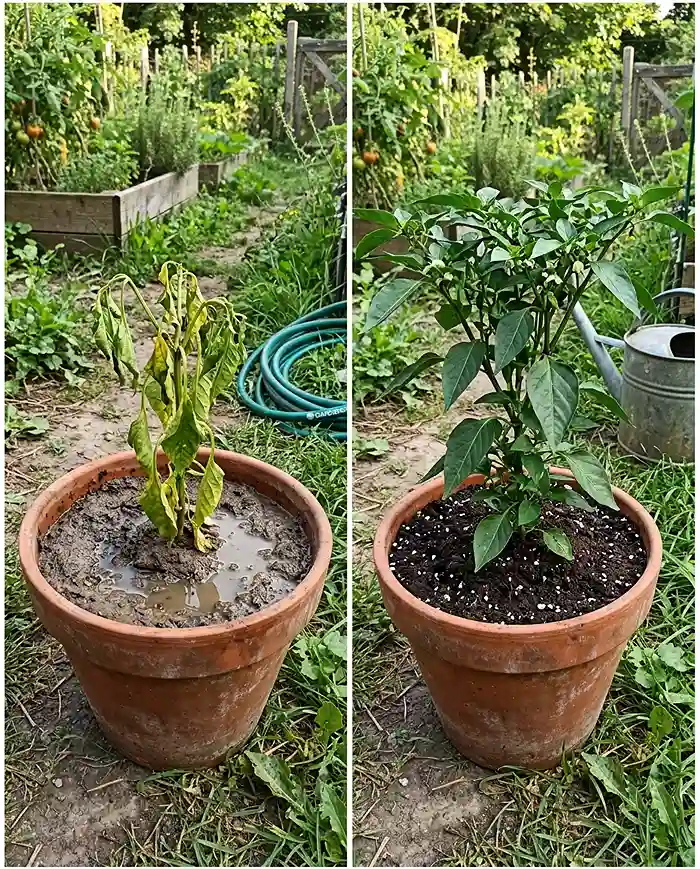
Your mix has compacted. Top-dress with perlite or bark fines and gently fork it in.
Dry, Water-Repellent Soil
The coir or peat dried out completely and is now repelling water like a teenager avoiding chores. Set the pot in a tray of water for 30 minutes (bottom watering for the win).
Fungus Gnats
Too much wet organic matter on top. Switch to bottom watering, sprinkle a thin layer of coarse sand on the surface, and use sterilized compost next time.
Sustainability Talk
Move Past Peat
Peat bogs store more carbon per acre than tropical rainforests. Harvesting them is genuinely awful for the climate. Coir, rice hulls, leaf mold, and composted wood fines all do the job beautifully — and a peat-free potting mix is where the whole industry is heading anyway.
Biochar Is Magic
Biochar locks carbon away for centuries, creates microscopic homes for beneficial microbes, and improves soil structure long-term. Just always pre-charge it by soaking in compost tea for a week — raw biochar will temporarily steal nutrients.
Best DIY Potting Mix Recipe FAQs
Can I just use garden soil in pots?
Nope. It compacts, drains poorly, and brings weed seeds and pests along for the ride. Always use a soilless mix.
How often should I replace my potting soil?
Don’t replace — rejuvenate. Each spring, scoop out the top third, mix in fresh compost, worm castings, and a handful of pumice. A well-built mix can last three seasons.
Does DIY potting mix still need fertilizer?
Yep. Nutrients leach out of containers way faster than out of the ground. Feed with diluted fish emulsion, kelp, or compost tea every two to three weeks during the growing season.
What’s the best ratio for container gardening soil?
The reliable baseline: one-third aeration, one-third organic matter (coir or leaf mold), one-third compost. Tweak from there.
Quick Recipe Cheat Sheet
- Veggie mix (the main one): 33% coir, 33% compost, 10% pumice, 10% sand, 5% worm castings, 5% biochar.
- Herb mix (fast-draining): equal parts compost, sand, bark fines, pumice.
- Seed mix (sterile starter): 2 parts compost, 2 parts coir, 1 part perlite, 1 part vermiculite.
Make a batch of each this season, label your pots, and watch the difference. Honestly, once you nail the best DIY potting mix recipe for your setup, you’ll never look at a bagged mix the same way again. Healthy soil = happy plants = bragging rights at the next backyard barbecue. 🌱