
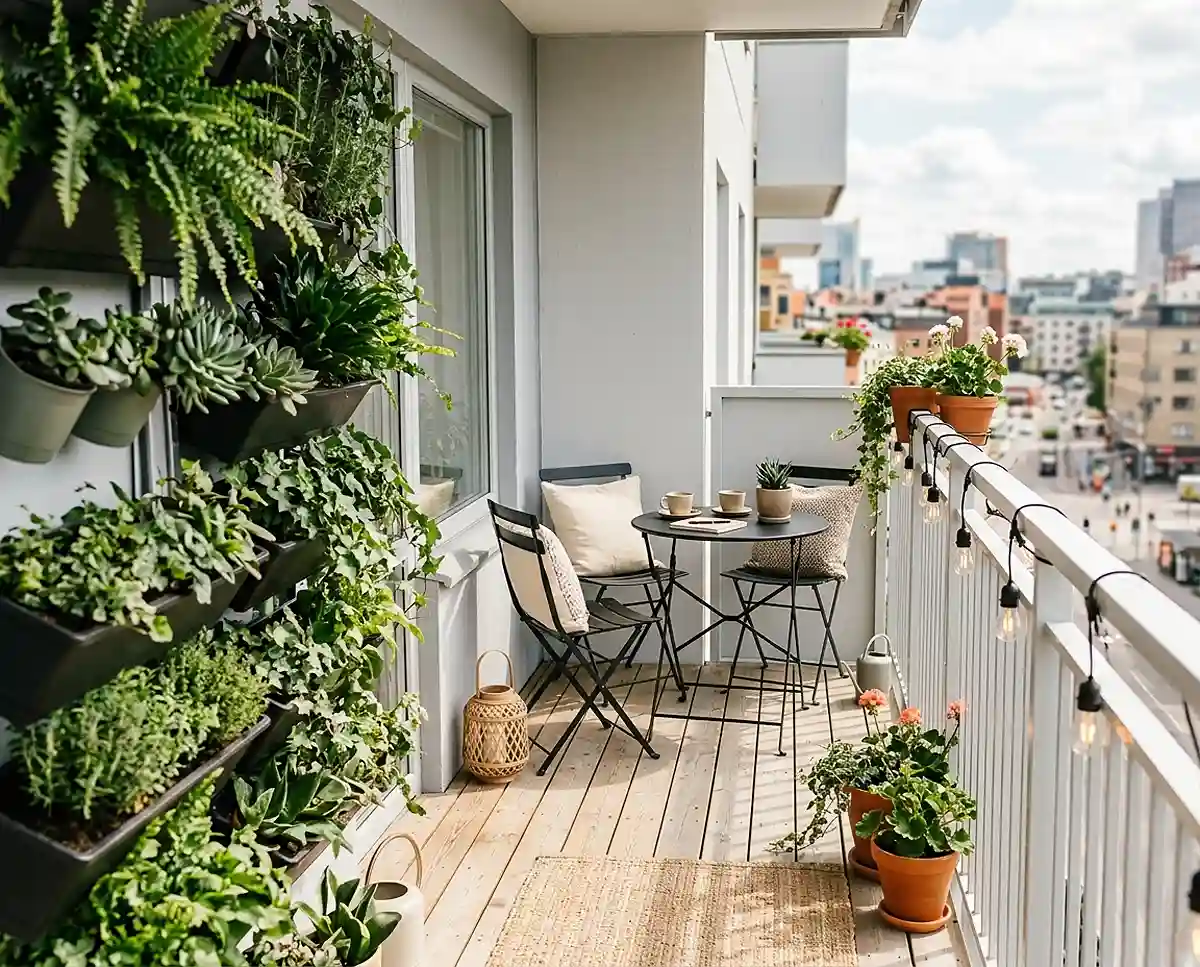
Small Balcony Layout Ideas That Feel Bigger
The best small balcony layout ideas don’t add square footage — they make every inch feel intentional. If your small balcony garden feels cluttered or cramped, the fix is almost always layout, not size.
Table of Contents
How Smart Layout Makes a Tiny Balcony Feel Bigger
Most people fill their balcony randomly and wonder why it feels chaotic. Strategic arrangement changes that fast.
The three levers are vertical space, visual tricks, and traffic flow. Pull all three and a 4×8 ft slab suddenly feels like a proper outdoor room.
Vertical space is the most underused asset in apartment gardening. Walls and railings can hold planters, shelves, and trellises — all without touching the floor.
Visual tricks like light colors, mirrors, and cohesive materials fool the eye into reading more space. A mismatched jumble of items shrinks a space. A unified palette expands it.
Traffic flow matters even in tiny spaces. If you can’t move freely, the whole layout feels smaller than it is. Keep a clear 24-inch path at minimum.
Assess Your Balcony Before You Start
Rushing into furniture and plants without measuring first is the fastest way to waste money. Spend 20 minutes on assessment — it saves hours of frustration later.
You need to know four things: exact dimensions, door swing, sun direction, and sightlines. Everything else builds from there.
Measuring Space and Mapping Traffic Flow
Quick Answer: Measure length, width, and railing height. Note where the door swings and mark a 24-inch walking path before placing anything.
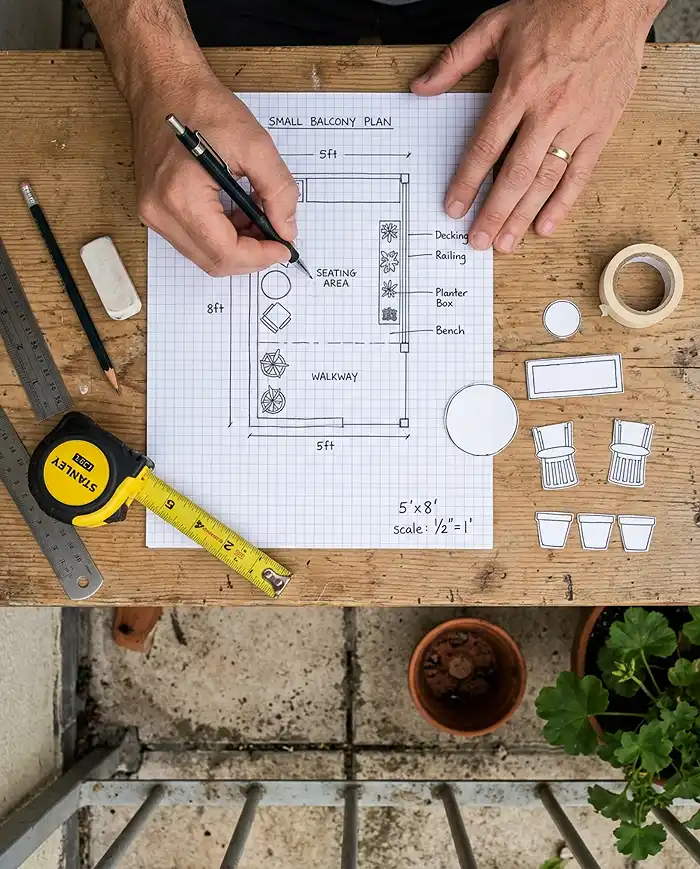
Grab a tape measure and note:
- Floor dimensions (length x width to the nearest inch)
- Railing height and depth — critical for railing planters
- Door swing arc — this space must stay clear always
- Any structural columns or utility boxes that limit placement
Sketch it on paper or use a free app like magicplan to create a digital floor plan. Mark your 24-inch traffic lane in pen before you add a single item.
Pro Tip: Tape out furniture shapes on the floor before buying — it takes 5 minutes and saves a costly return.
Identifying Sun, Shade, and Views
Quick Answer: Track sun for one full day. Note morning vs. afternoon light and decide which views to frame or screen before placing furniture.
Sun direction determines where plants go and where you’ll want shade. A south-facing balcony in USDA zones 6–9 gets intense afternoon sun — that changes everything from plant choice to furniture placement.
Also look outward. Is there a view worth framing with an open layout? Or a neighbor’s window that needs screening? Decide this now — it drives your whole small garden layout.
Real Example: My east-facing apartment balcony got four hours of morning sun. I put shade-tolerant ferns on the shady wall and reserved the sunny railing for herbs. Zero wasted plants that season.
Pro Tip: Check sun in both summer and winter — the angle shifts significantly and can change what thrives where.
Design Principles That Create the Illusion of Space
These aren’t decorating opinions — they’re visual psychology. Used correctly, they reliably make small spaces read as larger.
The core idea: your eye estimates space by reading depth, height, and light. Manipulate those three cues and perception follows.
Using Vertical Space and Drawing the Eye Upward
Quick Answer: Wall planters, tall trellises, and vertical shelving lift the eye up and free up the floor. This is the single biggest multiplier in balcony garden ideas.
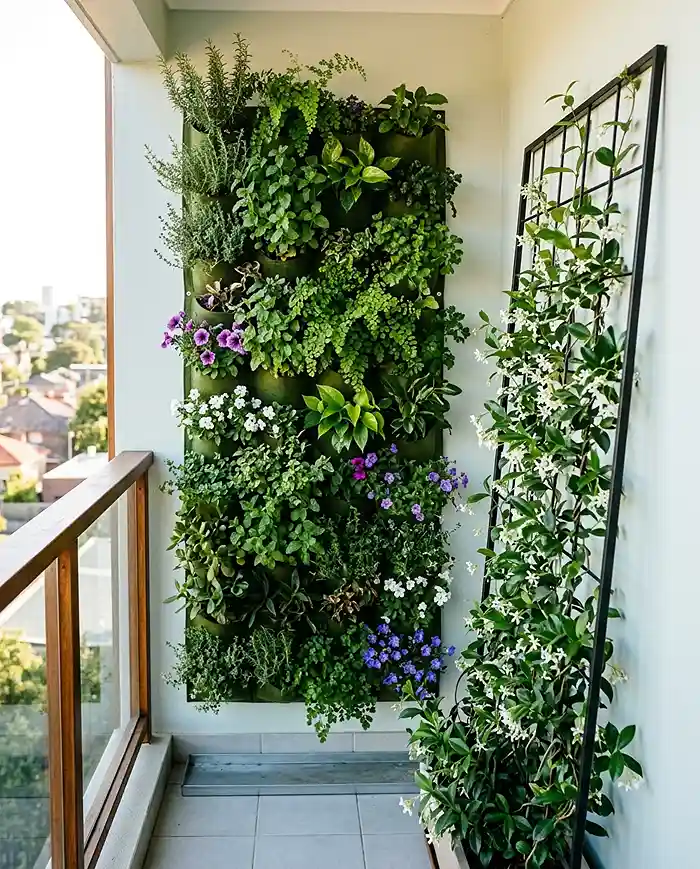
Vertical elements that work hard:
- Wall-mounted planter grids (holds 6–12 pots in 2 sq ft of wall)
- A slim trellis, 6 ft tall, with climbing plants like jasmine or clematis
- Tiered plant stands — 3 levels, less than 18 inches wide
- Over-railing planter boxes on the exterior face
Check out these balcony garden ideas with herbs and flowers for vertical inspiration that doubles as a food garden.
Pro Tip: Paint the wall behind a trellis in a slightly lighter shade — it adds visual depth that makes the space feel like it extends further back.
Color, Light, and Mirror Tricks
Quick Answer: Light palettes, an outdoor mirror, and string lights make a compact balcony feel open and airy. Dark colors close space in. Light opens it up.
| Trick | Best For | Watch Out For |
|---|---|---|
| Outdoor mirror | Doubling perceived depth | Direct sun glare; angle it away |
| White or cream palette | Brightening a dark north-facing balcony | Shows dirt faster — clean regularly |
| Warm string lights | Evening use; defines the zone | Avoid cool white — it feels clinical |
| Metallic planters | Reflecting light on shady balconies | Heat up in full sun — protect roots |
Real Example: I added a 24×36-inch outdoor mirror to a 5×7 ft balcony. Visitors consistently thought the space was larger than it was. Total cost: $35 from a hardware store.
Space-Saving Furniture and Layout Solutions
Standard patio furniture is designed for sprawling decks. On a tiny balcony, it just blocks everything. The fix is furniture that earns its place twice over.
Foldable, Multi-Functional, and Built-In Furniture
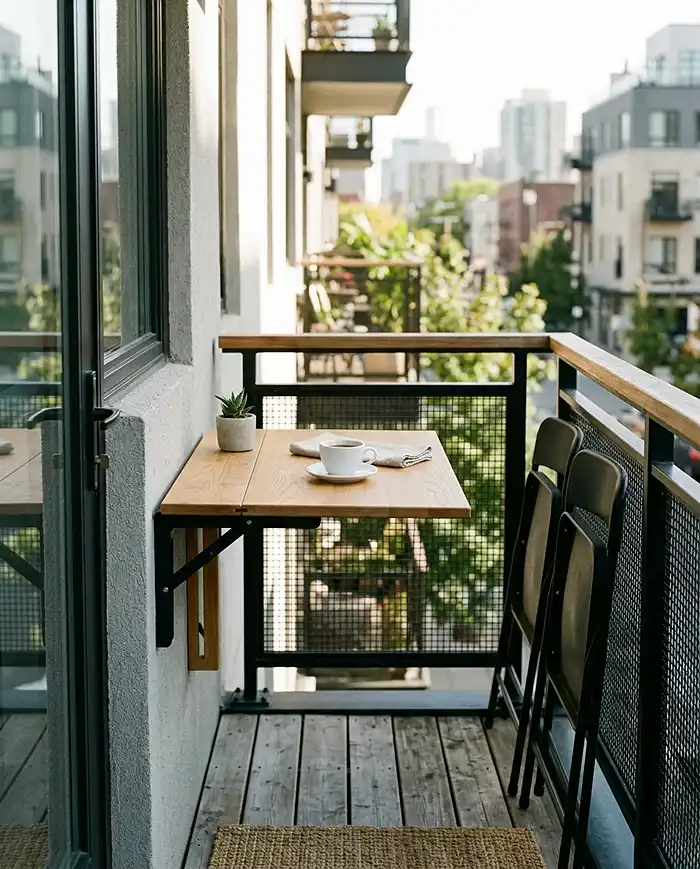
Quick Answer: Wall-mounted drop-leaf tables, folding chairs, and storage benches give you full function and fold flat when not in use. These are the backbone of any good small balcony layout idea.
| Furniture Type | Best For | Watch Out For |
|---|---|---|
| Wall-mounted drop-leaf table | Dining + work without a footprint | Check wall load capacity first |
| Folding bistro set | Seating for two with storage inside | Cheap hinges rust — buy stainless |
| Storage bench/ottoman | Seating + cushion/accessory storage | Size to your traffic lane first |
| Railing bar shelf | Drinks surface without floor space | Confirm railing weight rating |
Pro Tip: A wall-mounted drop-leaf table that folds to 4 inches converts a 6 ft wall into a full dining area in 10 seconds flat.
Arranging Furniture for Flow and Function
Quick Answer: Push furniture to the edges. Leave the center open. Zone the space into one purpose (sitting OR dining) rather than trying to do both at once.
Layout rules that always work:
- Largest piece goes to the back wall or corner — never centered
- One clear zone per layout: seating nook, dining spot, or garden corner
- Leave 24 inches from door to first furniture piece
- Avoid parallel rows — an angled chair opens the walkway
Real Example: I moved a two-person bistro set from the center to a back corner and suddenly had a full walking path plus room for a plant stand. Same furniture, completely different feel.
Vertical Gardening to Save Floor Space
The floor of a small balcony is prime real estate. Stop putting pots there and start growing upward — the results are dramatic.
Vertical gardening also improves air circulation and makes plants easier to water and harvest. It’s not just a space trick; it’s better horticulture.
Railing Planters and Hanging Gardens
Quick Answer: Railing boxes, hanging baskets, and tiered plant stands turn overlooked vertical zones into a productive small balcony garden.
Best railing and hanging options:
- Dual-sided railing planters (plant inside and outside simultaneously)
- Hanging baskets on adjustable-height ceiling hooks
- 3-tier plant stands — fits 9 pots in a 12×12 inch floor footprint
- Clip-on rail planters for fences or metal railings
For windy balconies, check these best containers for windy balconies before buying railing planters — standard ones can blow off in gusts above 25 mph.
Pro Tip: Self-watering railing planters cut watering frequency in half — a big deal when you’re growing herbs that need consistent moisture.
Living Walls and Trellis Systems
Quick Answer: Vertical pocket planters, modular wall systems, and climbing plants on trellises create a lush green backdrop using zero floor space.
Climbing plants that work well in containers:
- Clematis — blooms in zones 4–9, grows 6–8 ft on a slim trellis
- Nasturtium — edible, fast-growing, thrives in small pots
- Dwarf pole beans — food-producing and decorative
- Sweet potato vine — dramatic foliage, cascades and climbs
Pocket planters (felt or fabric) mount flat to the wall and hold 12–20 plants in the space of a picture frame. Great for herbs and lettuces in a small garden layout.
Tiny Balcony Layout Ideas by Shape and Size
Generic advice only goes so far. Here are concrete templates based on actual balcony shapes — copy whichever matches yours.
Narrow and Long Balconies
Quick Answer: Run slim furniture along one long wall. Zone the two ends for different uses — seating at one end, plants at the other. Avoid anything that crosses the width.
For a 4×10 ft narrow balcony:
- One wall-hugging bench with storage (near the door end)
- Folding side table that drops flat when not needed
- Plant zone at far end: vertical shelf or railing planters
- Outdoor rug to visually break the corridor into two zones
Pro Tip: A runner rug placed lengthwise actually emphasizes the narrow corridor feeling — use two square rugs to zone instead.
Square and Compact Balconies
Quick Answer: Corner seating + a bistro set in the opposite corner + clear center floor. This layout feels intentional and leaves room to move.
For a 6×6 ft square balcony:
- L-shaped corner seating (bench + one chair) in the back corner
- Small folding table in front — fold it away when not dining
- Vertical plant wall on one side wall for greenery without bulk
- Open center: just an outdoor rug
Real Example: My 6×7 square balcony runs this layout. Seats three comfortably for dinner, and the plant wall means I grow tomatoes, herbs, and flowers all summer. See dwarf tomatoes and peppers for small patios for what performs best in compact containers.
Juliet and Sliver Balconies
Quick Answer: When the floor space is less than 2 ft deep, forget floor furniture entirely. Railing planters, fold-down wall shelves, and a standing nook are your whole toolkit.
For Juliet balconies (railing only, no usable floor):
- Exterior-mounted window boxes on the railing rail
- A fold-down shelf inside the door frame for a morning coffee spot
- String lights along the railing for atmosphere in zero floor space
Pro Tip: A single beautiful climbing plant (like a miniature rose in a deep railing box) does more visual work than five random pots crammed into a sliver.
Tools and Materials to Bring Your Layout to Life
You don’t need much. Here’s what actually gets used:
- Tape measure + chalk tape — mock up furniture positions before buying
- Wall anchor kit — for mounting trellises or shelves securely
- Railing planter clips — check railing diameter before ordering
- Outdoor rug (UV-resistant) — defines zones and protects flooring
- Weatherproof string lights — IP44 rating minimum for outdoor use
- Self-watering planters — reduces maintenance by 50% in summer heat
- Lightweight potting mix — load-bearing limits matter on upper floors
For weight concerns: a good rule is 15 lbs per square foot as a conservative maximum for most balconies. Check your building’s structural guidelines first.
Adding Comfort, Privacy, and Atmosphere
A functional layout is the foundation. But comfort and atmosphere are what make you actually use the space every day. These finishing touches take 30 minutes and make a huge difference.
Outdoor Rugs, Cushions, and Lighting
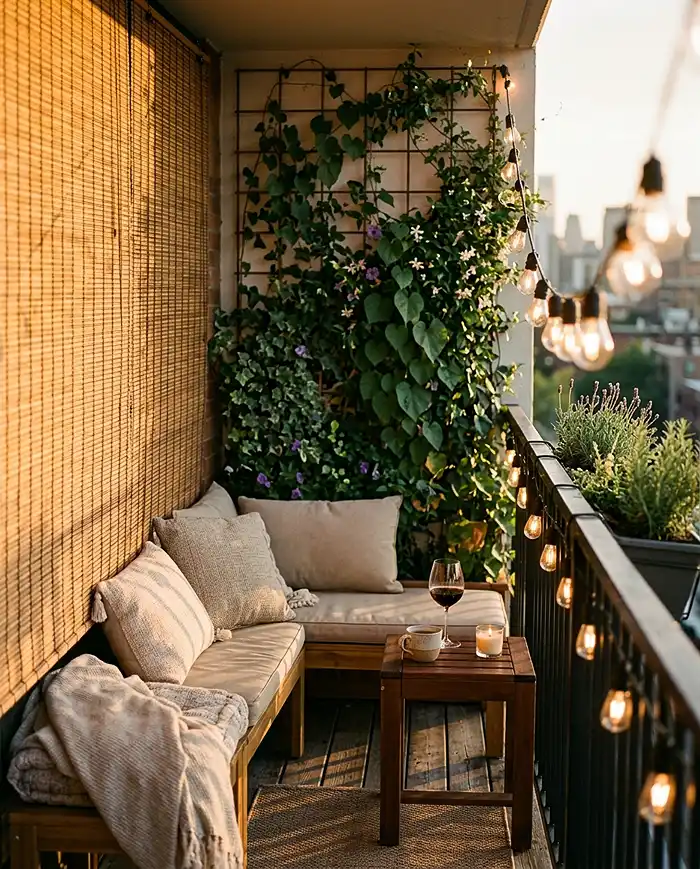
Quick Answer: A rug defines the zone. Cushions add comfort. Warm string lights make the space feel like a destination. Together they transform a bare balcony into an outdoor room.
Textile and lighting tips:
- Choose a rug color that ties your plant colors and furniture together
- Waterproof cushion covers (solution-dyed acrylic) resist mold and fade
- Hang string lights at railing height, not overhead — it feels cozier
- Use a single color temperature (2700K warm white) for all lights
Pro Tip: Outdoor cushions stored in a weather-resistant bench last 3x longer than ones left on furniture — the UV and moisture damage is cumulative.
Privacy Screens and Greenery Barriers
Quick Answer: Bamboo roll screens, outdoor curtains, and trellised climbing plants all add privacy without blocking airflow or light significantly.
Privacy options ranked by light impact:
- Outdoor sheer curtains — most light-preserving, minimal privacy
- Bamboo roll screen — blocks views, filters light nicely
- Trellis with climbing plants — living screen, grows denser over time
- Solid fabric shade sail — most privacy and sun blocking
The top-rated outdoor privacy screens that hold up through multiple seasons are almost always bamboo or powder-coated steel frames. Avoid cheap plastic lattice — it warps and discolors fast.
Seasonal and Weather Considerations
A layout that works in June needs a plan for January. Weather and seasonal shifts are where most balcony setups fall apart.
Weatherproofing and Off-Season Storage
Quick Answer: Choose materials rated for outdoor use, fold or store cushions and lightweight furniture in winter, and protect plants from wind and frost before temperatures drop.
Seasonal prep checklist:
- Spring: Wipe down furniture, check railing hardware, re-pot plants that overwintered
- Summer: Add shade sail if west-facing; water containers daily in heat over 85F
- Fall: Bring in cushions, move tender plants inside before first frost
- Winter: Store folding pieces flat; cover fixed furniture with breathable covers
Material durability guide:
| Material | Lifespan Outdoors | Best For |
|---|---|---|
| Powder-coated steel | 10+ years | Furniture frames, trellises |
| Teak wood | 15+ years (oiled) | Tables, benches |
| HDPE plastic | 5–8 years | Planters, lightweight chairs |
| Untreated pine | 2–3 years | Avoid for permanent pieces |
Pro Tip: A breathable furniture cover (not plastic) prevents moisture buildup that causes rust and mold — it’s the single best investment for off-season storage.
Common Problems and Solutions
Most tiny balcony problems are layout problems. Here are the most common ones and how to fix them fast.
The Balcony Feels Cluttered and Cramped
Quick Answer: Edit ruthlessly. Remove anything you haven’t used in two weeks. Then go vertical with storage and plants, and keep the floor as clear as possible.
The clutter fix protocol:
- Remove everything. Start fresh on paper before putting anything back.
- Keep only items with a specific, regular job
- Move plants from floor to wall, railing, or tiered stand
- Replace multiple small pots with one statement planter
Pro Tip: Five large pots feel less cluttered than ten small ones growing the same amount — go bigger and fewer.
Not Enough Seating or Surface Space
Quick Answer: Add a railing-mounted bar shelf for surface space. Replace fixed chairs with folding ones that stack or hang. Every piece should do two jobs.
- Railing bar shelf: adds a full drinks/work surface using zero floor space
- Stackable stools: seat 2–3, stack to one when not in use
- Ottoman with lid: seating + storage in one footprint
Wind, Sun, or Lack of Privacy
Quick Answer: A shade sail handles sun. A bamboo screen or trellis handles privacy. Anchor planters with weight, or choose low-profile railing boxes rated for wind.
- Wind: heavy ceramic planters, or fill lightweight pots with water for ballast in gusts
- Sun: a cantilevered shade sail covers 6–10 sq ft for under $40
- Privacy: bamboo roll screens install in 15 minutes with zip ties
small balcony layout ideas FAQs
How do I make my small balcony look bigger?
Use vertical space with wall planters and trellises to lift the eye upward. Stick to a light color palette for furniture and walls. Add an outdoor mirror to double perceived depth. Keep the floor as clear as possible — a clean floor reads as more space.
What furniture is best for a tiny balcony?
Foldable, multi-functional, and railing-mounted pieces work best. A wall-mounted drop-leaf table, two folding bistro chairs, and a storage bench cover dining, seating, and storage in minimal floor space. Look for powder-coated steel frames — they’re lightweight, durable, and weather-resistant.
How can I add privacy to a small balcony?
Bamboo roll screens install in minutes and block sightlines without stopping airflow. Outdoor sheer curtains filter views while preserving light. A trellis with climbing plants like clematis or jasmine creates a living screen that grows denser each season.
What plants work best in a small balcony garden?
Herbs (basil, mint, chives) are compact, useful, and grow well in railing planters. Dwarf tomatoes and compact peppers produce heavily in small containers. For flowers, calibrachoa and petunias trail beautifully from hanging baskets and need minimal floor space.
How do I stop my balcony feeling like a corridor?
Two things create the corridor feeling: parallel furniture rows and a single long rug. Instead, angle one chair, use two square rugs to zone the space, and place your largest piece in the back corner rather than along one wall.
Key Takeaways
- The best small balcony layout ideas start with measuring, sketching, and mapping traffic flow before buying anything.
- Vertical space — wall planters, trellises, railing boxes — is the single biggest multiplier for a small balcony garden.
- Light palettes, an outdoor mirror, and warm string lights make any compact space feel significantly larger.
- Foldable, multi-functional furniture earns its place twice — use it, fold it flat, reclaim the floor.
- Edit ruthlessly: five large pots beat ten small ones, and a clear floor always reads as more space than a crowded one.