

14 Balcony Shade Ideas for Plants and Seating
Need balcony shade ideas that cool your seating without starving your plants? These 14 apartment balcony shade ideas, from sails to screens, are renter-safe. I garden on a west-facing fifth-floor balcony in zone 7b, so I’ve scorched my share of tomatoes.
I compare sails, screens, umbrellas, and living canopies below as of summer 2026.
Table of Contents
Planning Balcony Shade for Both People and Plants: Light Percentages and Wind Safety
Quick Answer: Block 85% to 90% of glare over your chairs, but only 30% to 50% over your plants. People need relief from UV and heat. Plants still need enough light to photosynthesize. Choose breathable shade over solid tarps for wind safety.
I learned this in July 2024. I hung a 90% black sail over my whole balcony. My ‘Sungold’ tomatoes stopped flowering within two weeks and stretched six inches taller than normal. Splitting the zones fixed it.
Comparing Shade Solutions: Sails vs. Vertical Screens vs. Movable Umbrellas vs. Living Canopies
Quick Answer: Sails win on overhead coverage, screens win against low sun, umbrellas win on flexibility, and vines win on plant light. No single option tops every column, so most balconies need two.
| Option | Wind Resistance | No-Drill Renter Safety | Afternoon-Sun Blocking | Plant Light Transmission | HOA Compliance |
|---|---|---|---|---|---|
| Overhead shade sail | Good (porous HDPE) | Medium (needs poles or clips) | Weak (sun slips underneath) | Good (30%-70% choices) | Medium |
| Roll-down screen | Medium | Medium (clips or tension rods) | Strong | Medium | Good |
| Railing-clamped umbrella | Weak in gusts | Strong | Medium (tilts) | Medium | Strong |
| Trellis vines | Strong | Strong (freestanding troughs) | Medium | Strong (dappled) | Strong |
Mapping Overhead Midday Sun (South) vs. Low-Angle Afternoon Glare (West)
South-facing balconies get hammered from 11:00 AM to 2:00 PM, when the sun sits high. Overhead canopies like sails and awnings handle that well, because the light comes from above.
West-facing balconies are trickier. Around 4:00 PM the sun drops low and shoots horizontally right under standard umbrellas. You need vertical drop-down screens, reed blinds, or tall plants along the western edge.
Essential Prep: Breathable Shade Fabrics, No-Drill Anchors, and Cooling Soil Mix
Quick Answer: Pair breathable HDPE shade cloth, non-destructive anchors, and a moisture-holding soil mix. Together they can drop balcony temperatures by roughly 15°F (8.3°C) without drilling a single hole.
Here’s the short checklist before you buy anything:
- Knitted HDPE shade cloth, 30% to 70% density, in white, sand, or Aluminet
- Marine-grade snap carabiners and stainless steel turnbuckles
- Rubber-lined railing C-clamps and brick clips
- Floor-to-ceiling tension poles
- Coco-coir, vermiculite, and pine-bark soil mix with light gravel mulch
Choosing Breathable HDPE Knitted Shade Cloth (30%-70%) Over Solid Wind-Sail Tarps
Knitted HDPE [high-density polyethylene] is porous, so hot rising air escapes and wind passes through. That can cut wind-load pull on your railings by as much as 60%.
Solid waterproof canvas does the opposite. On a high-rise balcony it acts like a parachute and can rip out hardware. Skip it above the third floor.
Renter-Safe Mounting Hardware and the “Root-Cooling” Potting Soil Recipe
Non-destructive anchors do the heavy lifting. Pick from this list:
- Floor-to-ceiling tension poles rated for your exact ceiling height
- Rubber-lined railing C-clamps that won’t scratch the finish
- Brick clips that grip mortar lines without drilling
- Concrete-filled or gravel-filled 15-gallon planters as corner ballast
Not sure which planters are heavy enough? Browse these renter-friendly balcony planter solutions for options that won’t damage your lease.
Then cool the root zone. My mix is 50% coco coir, 25% vermiculite, and 25% pine bark fines. Top it with an inch of light-colored gravel to reflect heat and slow evaporation.
14 Balcony Shade Ideas for Plants and Seating: Sails, Screens & Movable Options
Here are fourteen balcony shade ideas grouped into overhead sails, vertical screens, movable shelters, and botanical canopies. Each one names the plants that thrive underneath, so you can match shade to your pots.
Idea 1: Renter-Friendly Floor-to-Ceiling Tension Awning with Adjustable Pitch Arm
A clamp-on crank awning wedges between your concrete floor and the ceiling overhang with zero drilling. Pitch it down at about 45 degrees to shade a bistro set. Ferns and fuchsias underneath stay happy through afternoon heat.

Idea 2: Breathable Triangular HDPE Shade Sail Anchored to Planter-Ballasted Corner Poles
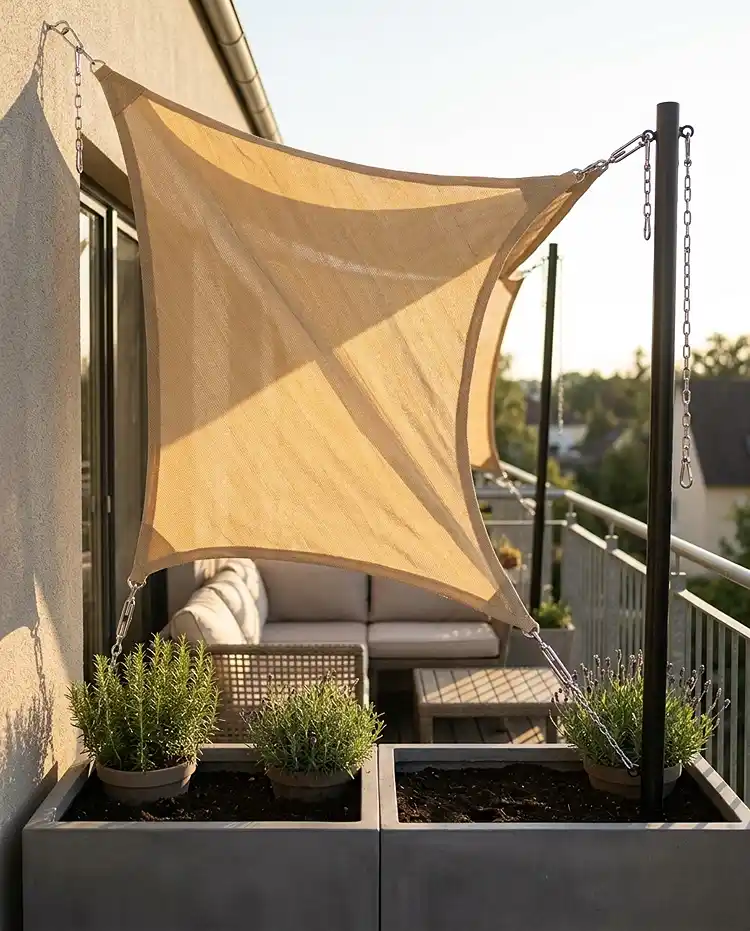
A shade sail balcony setup only works if the fabric breathes. Tension a 70%-block, sand-colored triangle between indoor wall brick clips and 7-foot steel poles cemented inside 16-inch corner planters. Fill those planters with rosemary and lavender.
Idea 3: Half-Round “Flush-Against-the-Wall” Balcony Umbrella with a Half-Base
A flat-backed half-umbrella hugs your sliding door or railing, so it fits a 3-foot-wide balcony. It shades chairs and potted hydrangeas without bumping the wall.
Idea 4: Clip-On 40% Horticultural Shade Cloth Curtain for Scorched Tomato & Pepper Pots
Market gardeners use this trick, and it works on balconies. Clip a strip of white or green 30% to 40% knitted mesh along the sunny railing with spring clamps during 90°F+ (32.2°C) July heatwaves. It stops tomato blossom drop and leaf scald.
Real Example: My ‘Better Boy’ dropped every blossom at 95°F last July. Ten days after I clipped on 40% cloth, it set fruit again.

Idea 5: Railing-Clamped Articulating Cantilever Umbrella That Tilts With the Sun
Swap the bulky 50-lb floor base for a heavy-duty steel railing clamp. That frees up nearly all your floor space for container lettuce and herbs. The arm swivels 360 degrees, so you can chase the shifting west sun.

Idea 6: Roll-Up Split-Bamboo or Matchstick Reed Blinds Hung From the Ceiling Overhang
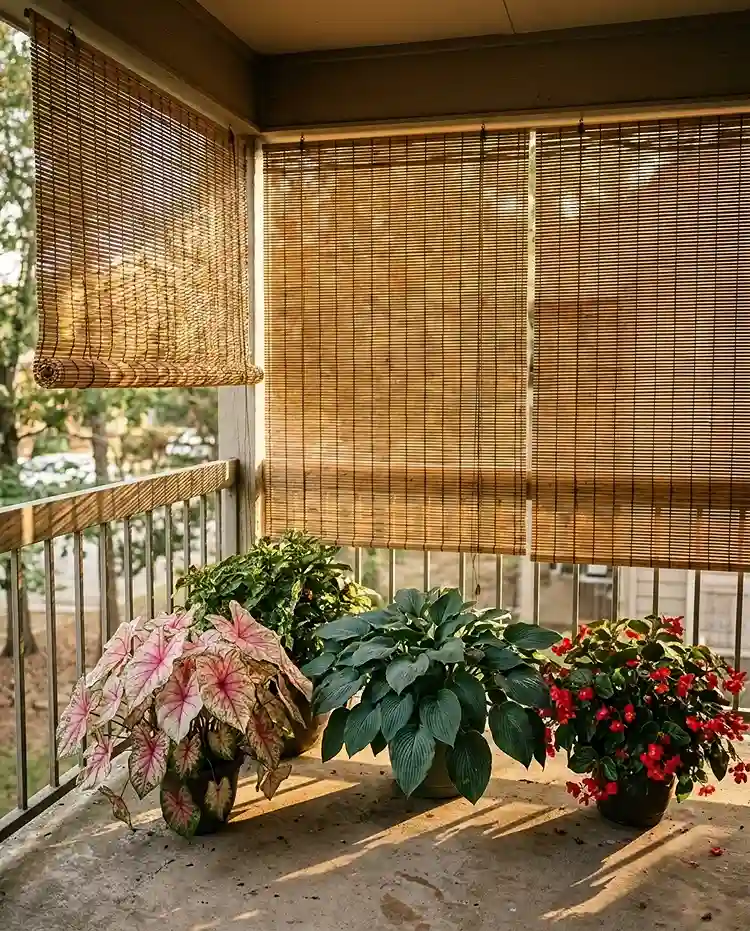
Hang natural bamboo roll-up blinds from ceiling beam clamps. They create dappled, woodland-style light with roughly 50% transmission. Caladiums, hostas, and begonias love that glow.
Idea 7: Living Overhead Canopy Using a Dwarf Patio Olive, Citrus, or Japanese Maple Tree
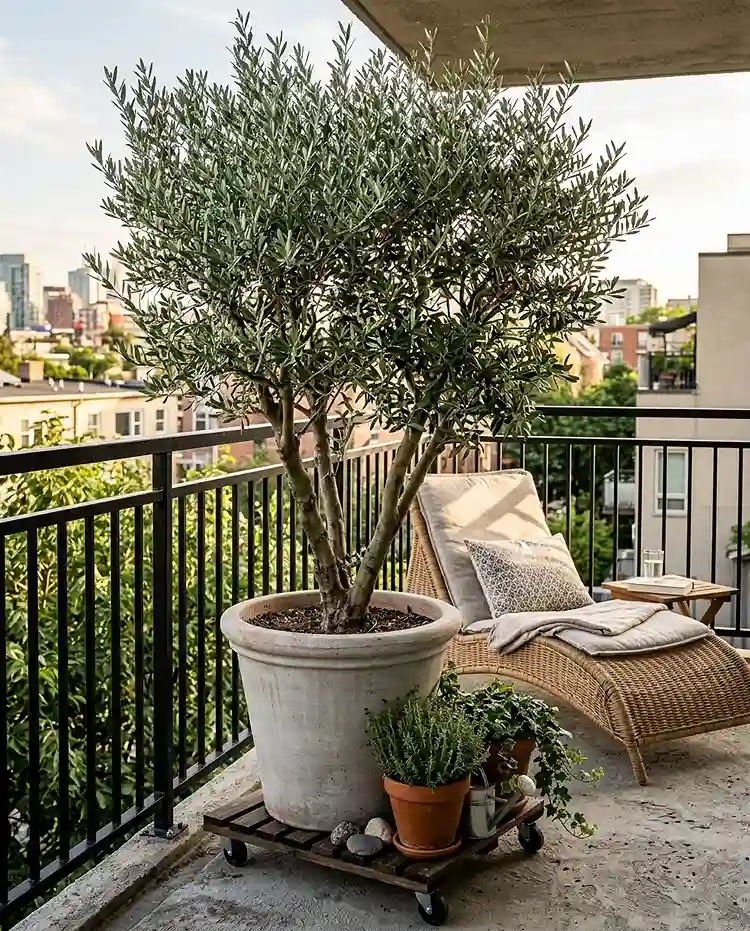
Park a multi-stemmed 6-foot dwarf olive (Olea europaea) or ‘Emperor I’ Japanese maple on a wheeled caddy at the sunny corner. A dwarf citrus works too. The leafy crown shades your chair and the understory pots below.
Check your zone on the USDA Plant Hardiness Zone Map first. Container olives need winter protection in zones colder than 8.
Idea 8: Slatted Cedar Privacy Screen with a Hinged Overhead Pergola Louver Arm
Build a freestanding slatted cedar screen anchored to planter boxes, then top it with a 24-inch angled louver overhang. It slices harsh midday UV into gentle, moving shadow stripes.
Idea 9: Fast-Growing Passionflower & Mandevilla “Living Curtain” on Floor-to-Ceiling Netting
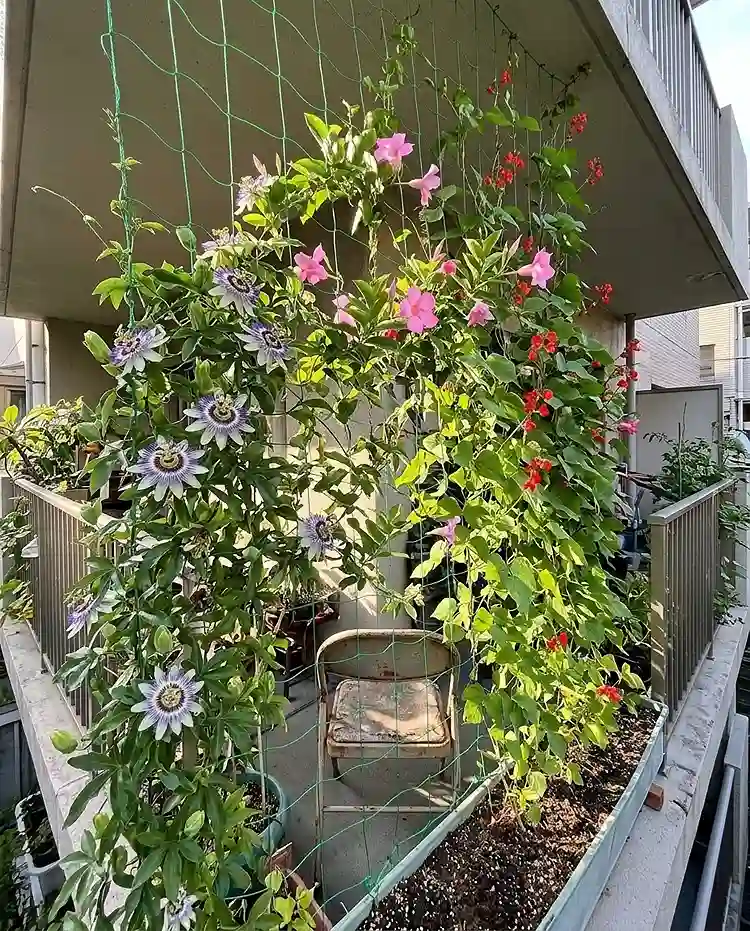
Stretch nylon trellis netting from a narrow railing trough up to the ceiling overhang. Heat-loving Passiflora, mandevilla, or scarlet runner beans will weave a green wall that cools itself through transpiration [plants releasing water vapor].
Want more cover? This list of balcony privacy plants covers climbers that fill in fast.
Idea 10: Accordion-Style Retractable Roman Slide Canopy on Stainless Steel Guide Wires
Run two taut aircraft cables across a recessed balcony alcove. Slide pleated shade fabric open on cloudy mornings so veggies get full sun, then close it at 2:00 PM for lounging.
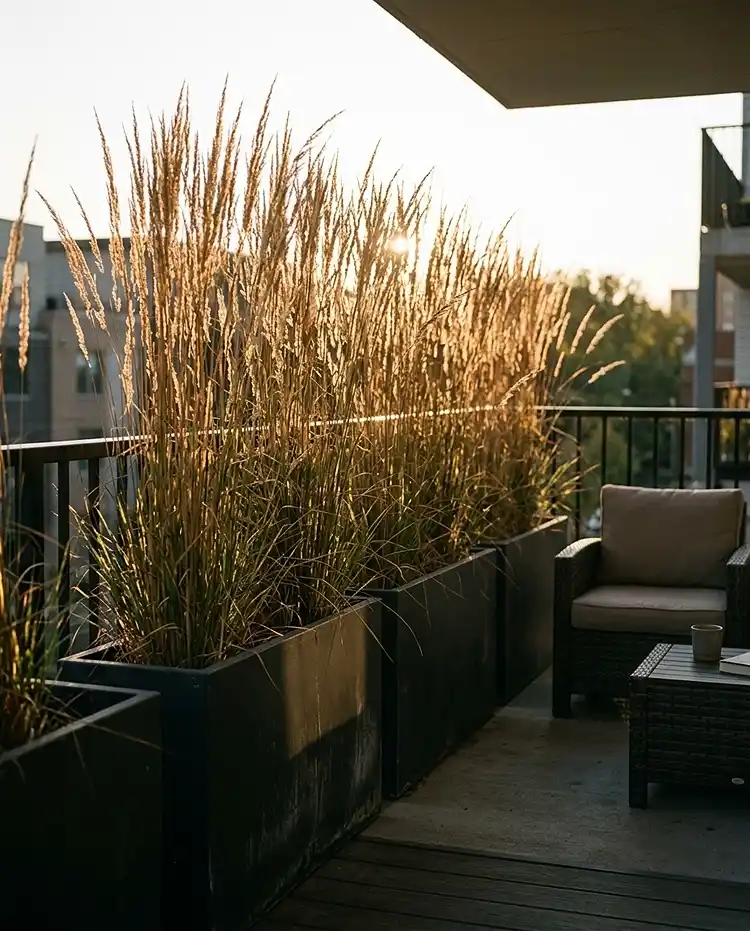
Idea 11: Tall Feather Reed Grass and Clumping Bamboo Troughs as a Low-Sun West Barrier
Line the western railing with 5-foot plumes of Calamagrostis ‘Karl Foerster’ or Fargesia bamboo. They block blinding horizontal sunset glare and rustle in the breeze. Stick to clumping bamboo, since running types escape their pots.
Idea 12: Movable Folding Shoji-Style Louvered Wood Screen for Renters with No Overhang
On a top-floor, open-sky balcony, skip installation entirely. A 3-panel hinged outdoor teak louver screen stands on its own. Weigh the base down with saddlebag planters of trailing portulaca.
For more low-effort screens, see these renter-friendly balcony privacy ideas.
Idea 13: Over-the-Railing Breathable Mesh Privacy Banner to Cool Black Metal Pots
Black metal pots can hit 125°F (51.7°C) in full sun, which cooks roots. Zip-tie a 3-foot-high strip of 85% UV-block mesh along the lower railing. It shades the pots and root zones while the upper leaves stay in bright light.

Idea 14: Tiered “Big Plant / Little Plant” Micro-Shading Layout on Rolling Caddies
Stage tall sun-lovers like canna lilies, hibiscus, or staked tomatoes along the outer perimeter. They cast afternoon shadows over lower pots of cilantro, spinach, and mint tucked right behind.
Mastering Shade Management: Seasonal Adjustments, Wind Takedowns, and Watering Shifts
Adjusting Watering & Fertilizer Schedules Once Your Balcony Is Shaded (Avoiding Root Rot)
Quick Answer: Shade cuts container soil evaporation by roughly 35% to 50%. Stop watering daily out of habit. Use the 2-inch knuckle test instead, and water only when soil feels dry. Also reduce nitrogen so shaded stems don’t stretch leggy.
Real Example: After I added a sail over my rosemary in June, I kept watering daily. Within three weeks the lower needles browned from root rot. Switching to the knuckle test saved the plant.
High-Wind Quick-Release Carabiners and Seasonal Shade Calendar (Spring Sun vs. August Heat)
Attach sails with marine-grade snap carabiners so you can take them down in 30 seconds before thunderstorms.
Keep shades rolled open in April, May, September, and October, when vegetables need maximum solar warmth. Close them from June through August, when afternoon heat peaks.
Common Problems & Solutions
Sun-Loving Vegetables and Flowers Turning Leggy and Stopping Blooming Under Dark Shade Sails
A dark 90%-block patio sail over the whole balcony starves tomatoes, geraniums, and lavender of photosynthetically active radiation (PAR) [the light range plants actually use]. The fix is zoning. Keep 90% shade strictly over your chairs, and use white 30% to 40% garden cloth over plant pots.
Umbrellas and Tension Screens Buckling or Ripping Railings in High-Rise Wind Gusts
Above the fourth floor, canyon-effect updrafts turn tilted umbrellas into sails. Choose vented double-canopy umbrellas and add a secondary lower stabilizer strap to your railing clamps. Never leave movable shades open unattended.
Heat Trapping (“The Greenhouse Oven Effect”) Behind Solid Dark Privacy Tarps
Solid black or dark-gray polyester screens absorb solar radiation and block cross-breezes. That can make your balcony about 10°F (5.5°C) hotter for plants. Swap them for light-colored, open-weave knitted HDPE mesh in ivory, sand, or Aluminet.
Frequently Asked Questions
What percentage shade cloth is best for balcony plants vs. a seating area?
Sun-loving vegetables and flowers like tomatoes, peppers, roses, and herbs do best under 30% to 40% shade cloth, which blocks leaf-burning heat without slowing growth. Shade-loving ferns and begonias prefer 50% to 60%. Human seating areas need 80% to 90% UV block.
How can I shade an apartment balcony that has no roof or ceiling overhang above it?
Use one of three overhang-free options: a heavy-duty railing-clamped cantilever umbrella, a freestanding hinged louvered folding screen, or a triangular shade sail stretched between wall-mounted brick clips and two 7-foot metal poles anchored inside 15-gallon gravel-ballasted corner planters.
Does white or black shade cloth keep a hot west-facing balcony cooler?
White, sand, or reflective silver (Aluminet) shade cloth keeps hot south- and west-facing balconies cooler. These colors reflect radiant solar heat away and bounce diffused light to lower leaves. Black cloth absorbs heat and radiates it downward onto your plants.
Which plants create the fastest natural shade on a sunny balcony?
Rapid-climbing annual vines like Purple Hyacinth Bean, Morning Glory, Scarlet Runner Beans, and Passionflower (Passiflora) grow 6 to 10 feet up overhead trellis netting in 6 to 8 weeks. For instant day-one canopy shade, use a 5-foot potted dwarf olive or clumping bamboo.
Key Takeaways
- The best balcony shade ideas split your space into two zones: 85% to 90% block over seating and 30% to 40% over sun-loving plants.
- Choose breathable knitted HDPE in light colors over solid dark tarps, which trap heat and act like parachutes in wind.
- South-facing balconies need overhead canopies from 11:00 AM to 2:00 PM. West-facing ones need vertical screens for the 4:00 PM sun.
- After adding shade, water by the 2-inch knuckle test and cut back nitrogen to prevent root rot and leggy growth.