
Balcony Garden Pests: Identify Before You Treat
Your basil looked fine at breakfast, then lace by dinner. Balcony garden pests move fast, and different container plant pests need different fixes. Spray the wrong one and you can burn leaves or wipe out your helpers, so identify first.
I garden on a sunny rooftop terrace in zone 7a. Eight hours of sun, a brick parapet that holds heat, and a mix of 5-gallon fabric pots and 12-inch ceramic planters. After 12 years helping renters grow food in tight spaces, I’ve met most of these bugs twice.
Table of Contents
Why Balcony Garden Pests Explode (And Why You Must Diagnose First)
Short Answer: Balcony garden pests explode because overhangs block rain that washes bugs off. Warm walls speed up breeding, and few predators climb this high. Spraying blind wastes time and can hurt helpers, so identify the culprit first, then match one targeted treatment.
Spider mites can finish a generation in five to seven days when it’s hot and dry. My brick parapet bakes all afternoon. Birds, lacewings, and frogs rarely visit a rooftop, so nothing resets the count.
The Danger of Blind Spraying
Short Answer: One spray doesn’t kill every bug. Neem won’t stop a caterpillar fast, and Bt [Bacillus thuringiensis, a soil bacterium] ignores spider mites entirely. Wrong picks waste money, scorch leaves, and wipe out ladybug larvae and hoverfly maggots, the free pest crew already working your pots.
The 60-Second Crime Scene Triage
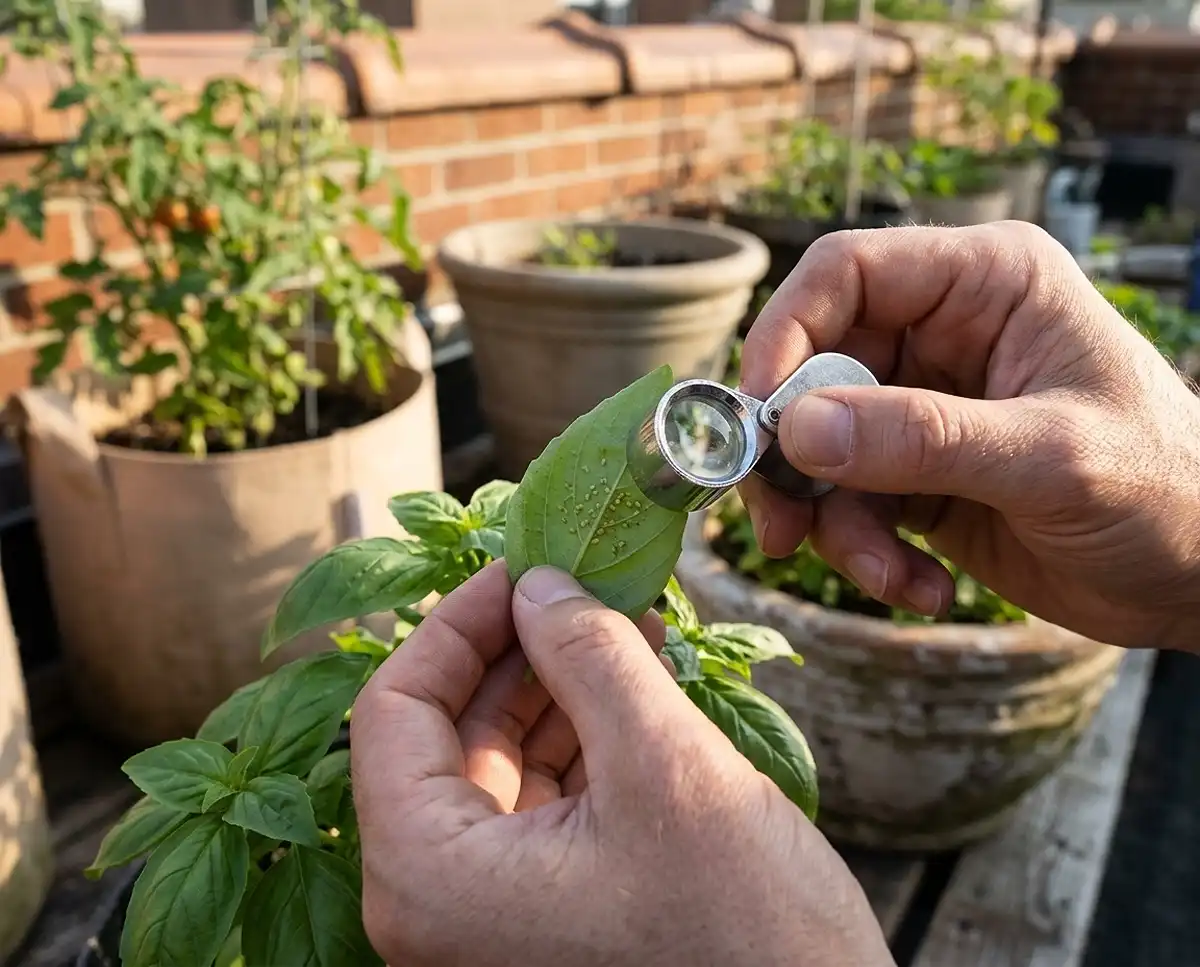
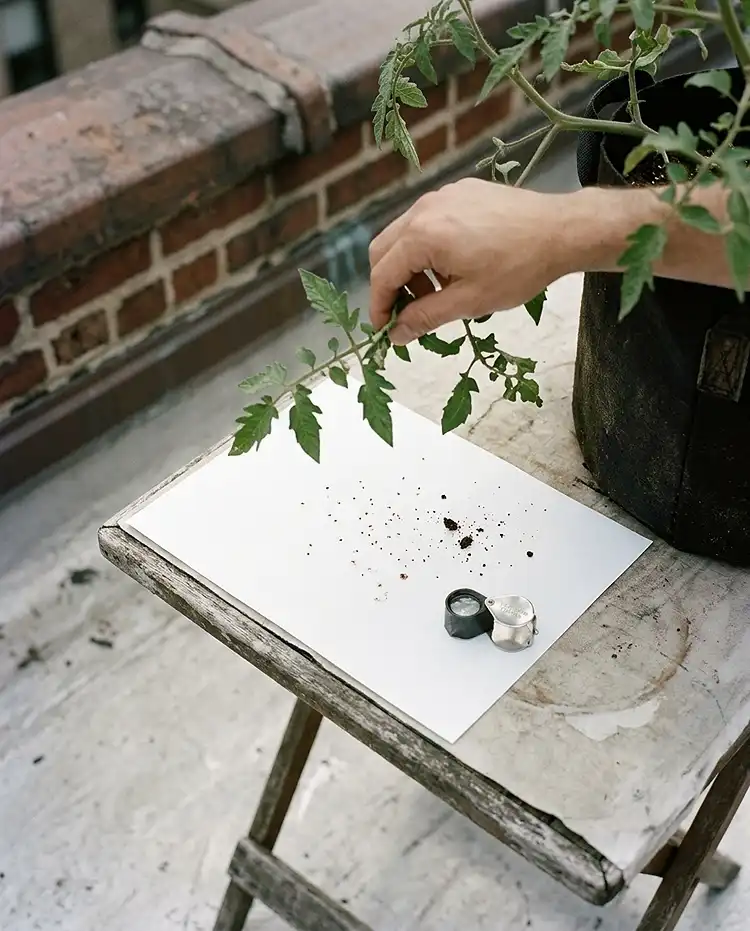
Short Answer: Check three hidden zones before buying anything: leaf undersides, stem axils [where leaves meet the stem], and the top inch of soil. Then run the white paper tap test. Shake a branch over printer paper. Specks that crawl are pests; specks that sit still are dirt.
The Apartment Gardener’s Organic Pest Diagnostic and Treatment Kit
Short Answer: A small kit handles most cases: a 10x loupe, yellow sticky cards, a hand-pump mister, insecticidal soap, neem, horticultural oil, 70% rubbing alcohol, Bt, and Mosquito Bits. Everything here suits edibles when used as labeled. Keep it in one shoebox by the balcony door, sprays on the top shelf, and keep pets away until sprays dry.
Diagnostic and Physical Tools
Short Answer: Buy tools before sprays. A pocket loupe, sticky cards, and a hand-pump mister cost little and tell you what you’re fighting before you spend another dollar. Gather them in a shoebox by the balcony door, then check plants every Sunday morning.
- 10x jeweler’s loupe: a pocket magnifier, about $6, that reveals mites and thrips.
- Yellow sticky cards: dual-sided cards that monitor flying adults like gnats and whiteflies.
- 1-liter hand-pump mister: blasts leaf undersides with water or spray.
- Coarse horticultural sand: a top-dressing that discourages fungus gnats.

Targeted Organic Treatments
Short Answer: Match the active ingredient to the target, and pick one per pest. Soap hits soft-bodied sap-suckers, neem smothers pests and disrupts their growth, horticultural oil smothers scale, Bt kurstaki handles caterpillars, and Bt israelensis handles fungus gnat larvae. Spinosad covers thrips but harms bees while wet.
| Treatment | Targets | Notes |
|---|---|---|
| Potassium-salt insecticidal soap (OMRI-listed [approved for organic use]) | Aphids, mites, whiteflies, mealybugs | Must touch the bug while wet; no lasting residue |
| 100% cold-pressed neem oil (azadirachtin [neem’s insect-disrupting compound]) | Mites, whiteflies, aphids, mealybugs | Spray at dusk; test one leaf first |
| Horticultural oil | Scale crawlers, mealybugs, mites, whiteflies | Spray at dusk below 90°F; test one leaf first |
| 70% rubbing alcohol | Mealybugs (spot treatment) | Dab with a cotton swab; can burn tender growth, so test first |
| Bt kurstaki | Caterpillars | Works only on young, feeding larvae |
| Bt israelensis (Mosquito Bits) | Fungus gnat larvae | Soak soil as a drench |
| Spinosad | Thrips, caterpillars | Toxic to bees when wet; spray after sunset |
Timing matters with Bt, and University of Missouri Extension’s Bt guidance explains why small, actively feeding caterpillars are the target. Skip essential-oil recipes around pets, since many oils are toxic to cats and dogs.
Identify and Treat the 12 Most Common Pests by Symptom
Short Answer: Read the damage, not the bug. Webbing, tunnels, notches, and holes each point to a different culprit with a different two-step fix. Find your symptom, confirm it with a loupe, then treat only that pest at dusk. Test one leaf first, and never spray a stressed, wilting plant.
Symptom 1: Fine Webbing and Yellow Dots on Leaves: Spider Mites
Short Answer: Fine silky webbing plus yellow stippling [tiny pale dots] means two-spotted spider mites, which love hot, dusty corners. Step one: blast leaf undersides with cool water each morning for three days. Step two: spray insecticidal soap at dusk every four days, for three rounds.
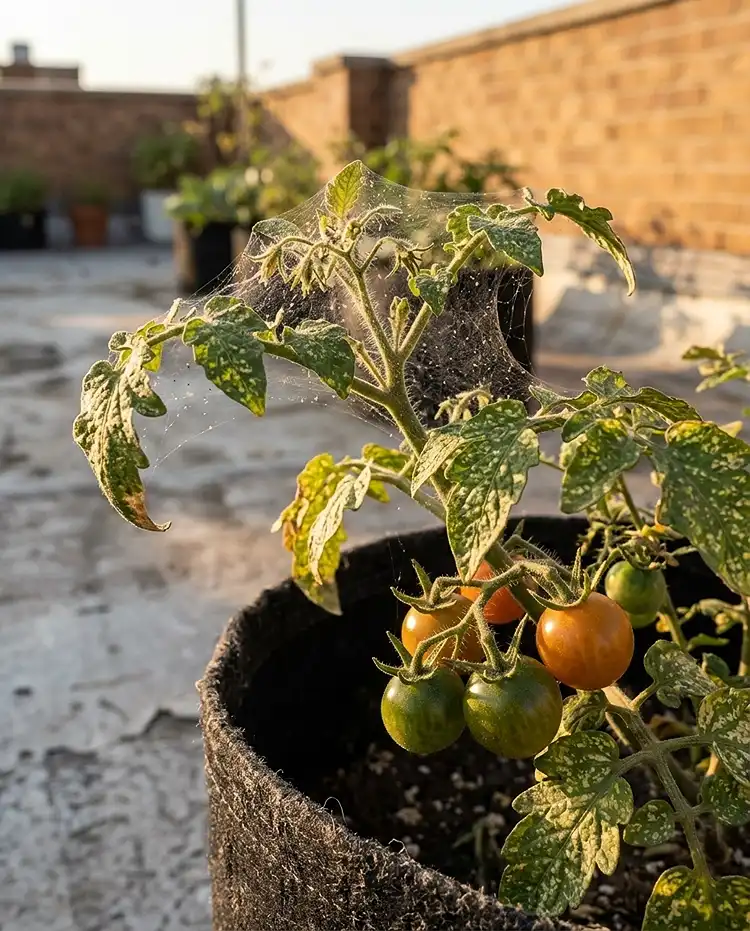
Why four days instead of five to seven? In hot weather, spider mites can finish a generation in less than a week, so a tighter gap hits each hatch before it matures. The UC IPM spider mite guide has details and close-up photos.
In August 2026, my ‘Sungold’ tomato in a 5-gallon pot was webbed to the top. Three rinses and three soap rounds cleared it in 12 days.
Symptom 2: Sticky Residue and Curled Shoot Tips: Aphids
Short Answer: Sticky honeydew [sugary pest waste] and curled shoot tips mean aphids. Look for pear-shaped clusters, green, black, or pink, on rose, basil, and pepper tips. Pinch off badly infested tips, rinse stems with a sharp water stream, then spray potassium-salt insecticidal soap directly on the bugs.
Symptom 3: Tiny Black Flies Over Damp Soil: Fungus Gnats
Short Answer: Tiny black flies hovering over damp soil are fungus gnats, not fruit flies. Let the top 2 inches of soil dry out. Drench pots with Bt israelensis (Mosquito Bits tea) to kill larvae. Top-dress with a half inch of coarse sand to block egg-laying.
In April 2026, a sticky card beside my jalapeño seedlings in 4-inch pots caught about 30 gnats in three days. After one Bits drench and a dry-down, it caught 3 in eight days.

Symptom 4: White Moth-Like Clouds When You Touch Leaves: Whiteflies
Short Answer: Tiny white moth-like insects that puff up when you touch a leaf are whiteflies. They love tomatoes, eggplants, and fuchsias. Vacuum adults off in the cool early morning with a handheld vacuum, and stake yellow sticky cards at canopy height. Then spray leaf undersides with neem oil at dusk.
Symptom 5: White Cottony Fluffs in Stem Crooks: Mealybugs
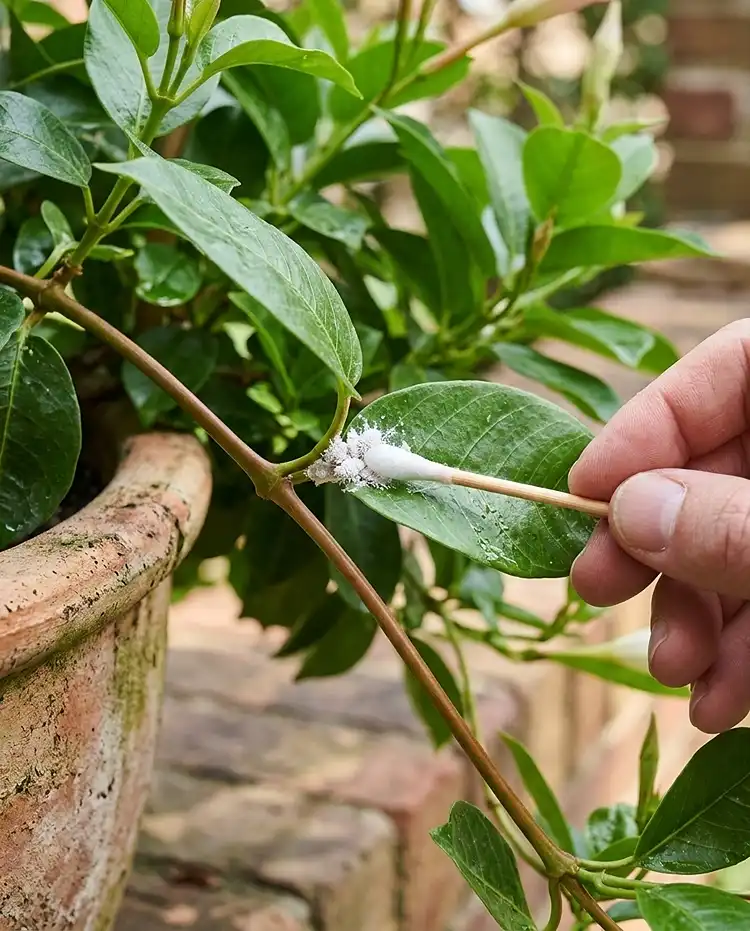
Short Answer: White cottony fluffs in stem crooks and under leaves are mealybugs, hiding on mandevilla, hibiscus, and herbs. Dab visible clusters with a cotton swab dipped in 70% rubbing alcohol, which dissolves their waxy coat. Then follow with neem oil. Test one leaf first, because alcohol can burn tender growth.
Symptom 6: Hard Brown Bumps on Woody Stems: Scale Insects
Short Answer: Hard brown or tan bumps stuck to woody stems are scale insects, sucking sap from citrus, olive, bay laurel, and rosemary. Scrape bumps off gently with a soft toothbrush. Then smother crawlers [newly hatched, mobile scale] with horticultural oil at dusk, and repeat in seven days.
Symptom 7: Silvery Streaks and Black-Speckled Buds: Thrips
Short Answer: Silvery scratched streaks and deformed buds flecked with black specks mean thrips, which rasp roses, dahlias, and verbena. Prune and bag infested buds right away. Then spray spinosad on foliage after sunset, because it harms bees while wet. Add blue or yellow sticky cards to track what’s left.
Symptom 8: Ragged Holes and Green Droppings: Caterpillars and Budworms
Short Answer: Ragged holes, hollowed-out buds, and dark frass [insect droppings] point to hornworms, cabbage loopers, or geranium budworms. Hand-pick big ones at night with a UV flashlight, since hornworms glow. Spray Bt kurstaki on small ones. It spares bees, though it also hits butterfly caterpillars.
Symptom 9: White Squiggly Tunnels Inside Leaves: Leafminers
Short Answer: White squiggly tunnels inside spinach, chard, and tomato leaves are leafminer trails. The larvae feed between leaf surfaces, where contact sprays can’t reach. Pinch off tunneled leaves and bag them, then cover salad troughs with fine insect mesh to block egg-laying adults.
Symptom 10: U-Shaped Notches and Sudden Wilt: Vine Weevils
Short Answer: U-shaped notches along leaf edges plus sudden wilting mean vine weevils. Black adults notch Heuchera, hydrangea, and euonymus at night, while white C-shaped grubs eat roots below. In late summer, drench pots with beneficial nematodes [microscopic worms that kill grubs].
Match the species to your soil temperature. Heterorhabditis bacteriophora needs soil above about 54°F (12°C), while Steinernema kraussei works down to 41°F (5°C).
Symptom 11: Lacy Skeletonized Leaves: Japanese Beetles
Short Answer: Lacy, skeletonized leaves on roses, basil, and berries mean metallic beetles feeding in groups on sunny railings, usually Japanese beetles. At 7 AM, when they’re sluggish, knock them into a cup of soapy water. Drape breathable organza bags over ripening berries and buds.
Symptom 12: Dug-Up Soil and Bitten Tomatoes: Squirrels and Birds
Short Answer: Dug-up soil and missing bulbs usually mean squirrels. Bitten tomatoes and pecked seedlings more often point to pigeons or other birds. Pin ½-inch chicken wire or heavy river stones over freshly planted soil, and hang reflective tape or taut nylon line 4 inches above railings.
A clean water dish may also help, since thirsty birds sometimes peck juicy fruit, though results vary.
Mastering Prevention: The Quarantine Rule and Balcony IPM Routine
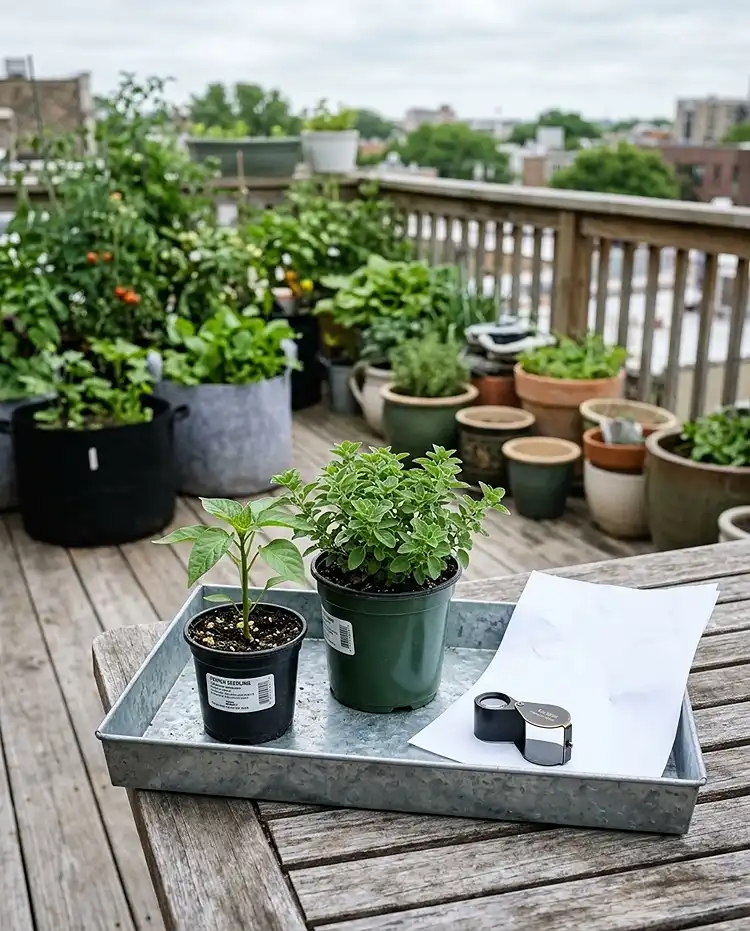
Short Answer: Balcony IPM [integrated pest management: prevent first, treat only what you’ve identified] starts at the door. Quarantine new plants for 14 days, rinse foliage weekly, and go easy on nitrogen. Most pests hitchhike in on transplants, so a holding tray stops many outbreaks early.
The 14-Day New Plant Quarantine and Weekly Rinse
Short Answer: Isolate every new plant on a separate tray for 14 days and inspect it three times, on Days 1, 7, and 14. Rinse dusty balcony foliage every Sunday morning with a gentle shower wand. Hitchhiking eggs hatch inside that window, so you catch them before they reach your healthy pots.
- Day 1: loupe-check undersides, stem axils, and soil.
- Day 7: repeat, plus the white paper tap test.
- Day 14: final check, then move the plant in.
- Every Sunday: rinse all foliage.
Avoiding High-Nitrogen Fertilizer Spikes
Short Answer: Heavy synthetic nitrogen pushes soft, sugary, thin-walled growth that aphids and spider mites love. Switch to slow-release worm castings and kelp, and feed lightly. Steady, modest feeding builds tougher leaves that sap-suckers struggle to pierce, so pests find fewer easy meals.
Fast fertilizer is an all-you-can-eat buffet for aphids. Slow feeding keeps growth firm. Choosing tougher balcony plants helps too, since some herbs and flowers shrug off pressure that flattens a tender tomato.
Common Problems and Solutions
Short Answer: Three mistakes sink most treatments: spraying in hot sun, spraying only once, and killing helpful insects by accident. Spray at dusk below 90°F. Repeat every 5 to 7 days for three rounds, or every four days for spider mites. Learn what ladybug larvae look like first, so you never spray your own helpers.
Spraying Neem Oil or Soap in Direct Sunlight
Short Answer: Oil and soap sprays can cause phytotoxicity [chemical leaf burn] in hot sun. Spray only at dusk, keep temperatures below 90°F, and test one leaf first, then wait two to three days. Damage from a bad reaction shows up within that window, so the test costs you nothing.
My mistake: one July afternoon in 2026, at 92°F, I sprayed neem on ‘Genovese’ basil in a 10-inch pot. By morning, about half the leaves had crispy brown patches. Now I spray after sunset only.
Pests Returning Five Days Later After One Spray
Short Answer: Contact sprays kill crawling adults and nymphs but rarely reach unhatched eggs. Repeat your spray on a strict 5-to-7-day schedule (every four days for spider mites) for three consecutive rounds. Each new hatch then gets hit before it can lay more eggs, which finally breaks the cycle.
Accidentally Killing Ladybug Larvae and Hoverflies
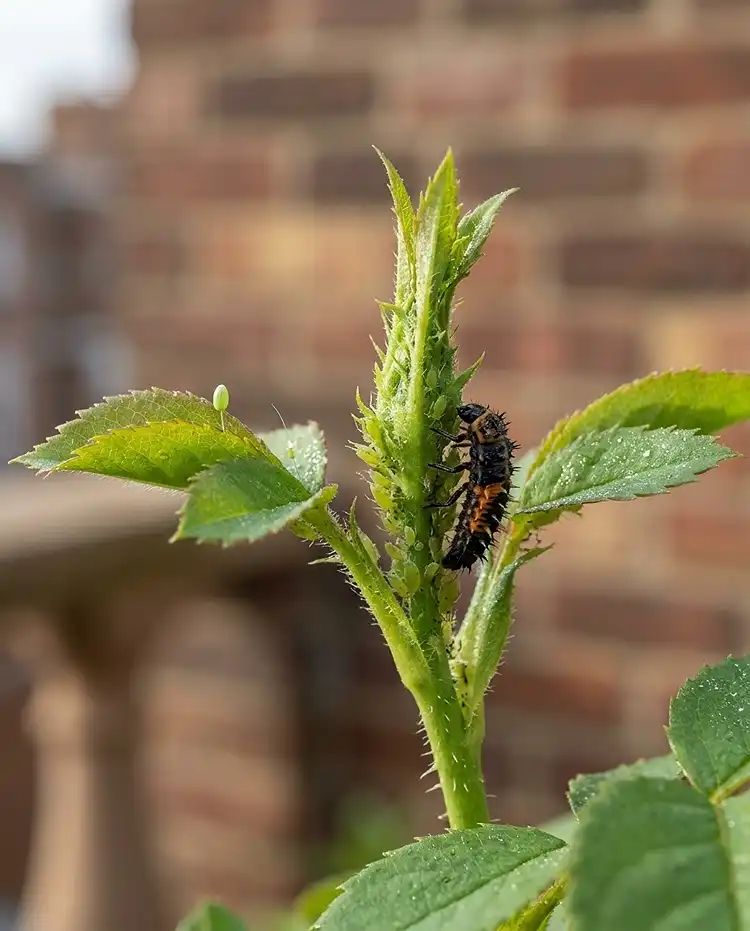
Short Answer: Ladybug larvae look like tiny spiky black-and-orange alligators. Green lacewing eggs sit on thin stalks, and hoverfly maggots are pale, legless slugs. Leave all three alone. A single ladybug larva can devour hundreds of aphids before it pupates, which is free pest control.
Frequently Asked Questions
How did bugs get on my 15th-floor apartment balcony in the first place?
Most arrive as eggs on store-bought plants or in bagged potting soil. Spider mites also drift upward on silk threads in the wind, and winged aphids and whiteflies fly in.
Can I use kitchen dish soap and water to kill bugs on my plants?
I don’t recommend it. Dish soaps are detergents that can strip the waxy coating off leaves and cause brown scorching. Commercial insecticidal soap is tested on plants and is the safer pick. Even then, spray below 90°F and test one leaf first.
Should I throw away the potting soil after a pest infestation?
For foliar pests like aphids, whiteflies, or spider mites, soil is fine to reuse once you remove fallen leaves. Discard soil that held vine weevil grubs, root mealybugs, or severe fungal wilt. You can also seal it in a black bag in full sun for several weeks.
What is the safest pest spray for balcony herbs and vegetables I plan to eat?
Start with a forceful plain-water rinse. Next, use insecticidal soap or Bt kurstaki for caterpillars. Many labels allow same-day harvest, but check your product’s pre-harvest interval and rinse leaves in cold tap water before eating.
Are neem oil and insecticidal soap safe around cats and dogs?
Dried residue is low risk, but wet sprays can upset a pet’s stomach if licked. Keep cats and dogs away until leaves dry. Skip homemade essential-oil sprays, since tea tree and similar oils can poison pets.
How do I tell a pest problem from a plant disease?
Look for bugs, webbing, sticky residue, or droppings. If you find none and leaves yellow or spot, the cause may be watering, light, or disease. This guide to why balcony plants die covers those causes.
Quick Recap
- Diagnose first: check leaf undersides, stem axils, and the top inch of soil, then do the tap test.
- Match the fix: soap for sap-suckers, Bt kurstaki for caterpillars, Bt israelensis for fungus gnats.
- Spray at dusk below 90°F, test one leaf, and repeat every 5 to 7 days for three rounds (every four days for spider mites).
- Quarantine new plants for 14 days, rinse foliage weekly, and go light on nitrogen.
- Keeping balcony garden pests in check means protecting ladybug larvae, hoverflies, and lacewings.