
Protect Balcony Plants From Heat in a Heatwave
Want to protect balcony plants from heat before the next heatwave? Shade, mulch and an early-morning soak save most pots. Here’s my plan: one prep session, then a 20-minute daily routine.
I grow tomatoes, basil, and lavender on a west-facing fourth-floor balcony in zone 7b. Heat has killed more of my pots than any pest ever has. This guide covers what finally worked. For heat-tough picks, see my guide to the best balcony plants.
Table of Contents
Why Heatwaves Hit Balcony Plants Harder Than Ground Gardens
Quick Answer: Sun on the pot wall does most of the damage, more than the air temperature. University of Kentucky researchers report that nursery pot walls in full summer sun usually pass 120°F (48.9°C). Balcony pots add hot surfaces on every side and too little soil to buffer the heat.
In the ground, roots sit in soil that stays far cooler than the air. In a pot, there’s no buffer. A 10-inch container holds only a couple of gallons of soil, and the sun heats it from every side.
Oregon State Extension’s heat wave guide, reviewed in 2026, says sustained temperatures above 90°F (32.2°C) slow growth and stress some plants. On a balcony, you reach that point sooner and stay there longer.
The “Concrete Oven” Effect: Radiant Heat Bounce Off Walls, Glass Doors, and Metal Railings
Brick facades, concrete slabs, and double-paned sliding glass doors soak up sun all afternoon. Metal railings heat even faster. Then they release that heat back onto your foliage.
On my balcony, the concrete and railings often still radiate heat after 9:00 PM. That’s why a heatwave feels worse on a balcony than the forecast says. Plants rarely get a proper overnight reset.
Root-Zone Death Thresholds: What Happens Inside a Pot Above 104°F (40°C)
The University of Kentucky guide to container heat stress says a root-zone temperature of 104°F (40°C) for 5 to 6 hours a day can impair most plants studied. It advises keeping roots below 108–113°F (42–45°C).
Direct injury, where root cells die outright, starts around 113°F (45°C) after about 30 minutes, and the guide knows of no direct-injury threshold below 108°F. The authors note these roots do not recover.
The damage hits the sunny side of the pot first, where the smaller, fleshy roots sit against the wall. Those roots can die even when the soil is soaking wet. That’s why heat-stressed container plants can keep wilting after you water them.
Real Example: One July I left ‘Genovese’ basil in a black 8-inch plastic pot on my west railing. By 4:00 PM it was limp, though the soil was damp. When I tipped it out, the sun-side roots were brown and some were mushy. My read: heat killed the outer roots first, and rot moved in afterward. I lost the plant in three days.
The Heatwave Emergency Kit: Shade Fabrics, Mulches, and Cooling Gear
Gather these during your prep session, a day or two before a 3-to-7-day heat dome arrives:
- 30%–50% shade cloth or white cotton bedsheets
- Spring clamps, clothespins, or zip ties
- Light-colored mulch: straw, pine straw, or light gravel
- Burlap, for wrapping pot sides
- Reflective bubble wrap and tape
- Larger light-colored cachepots and damp sphagnum moss, for double-potting
- Half-inch rubber pot feet
- Gravel-filled boot trays
- A bucket and pure castile soap, for bottom-soaking dry pots
- A soil thermometer and liquid kelp (optional)
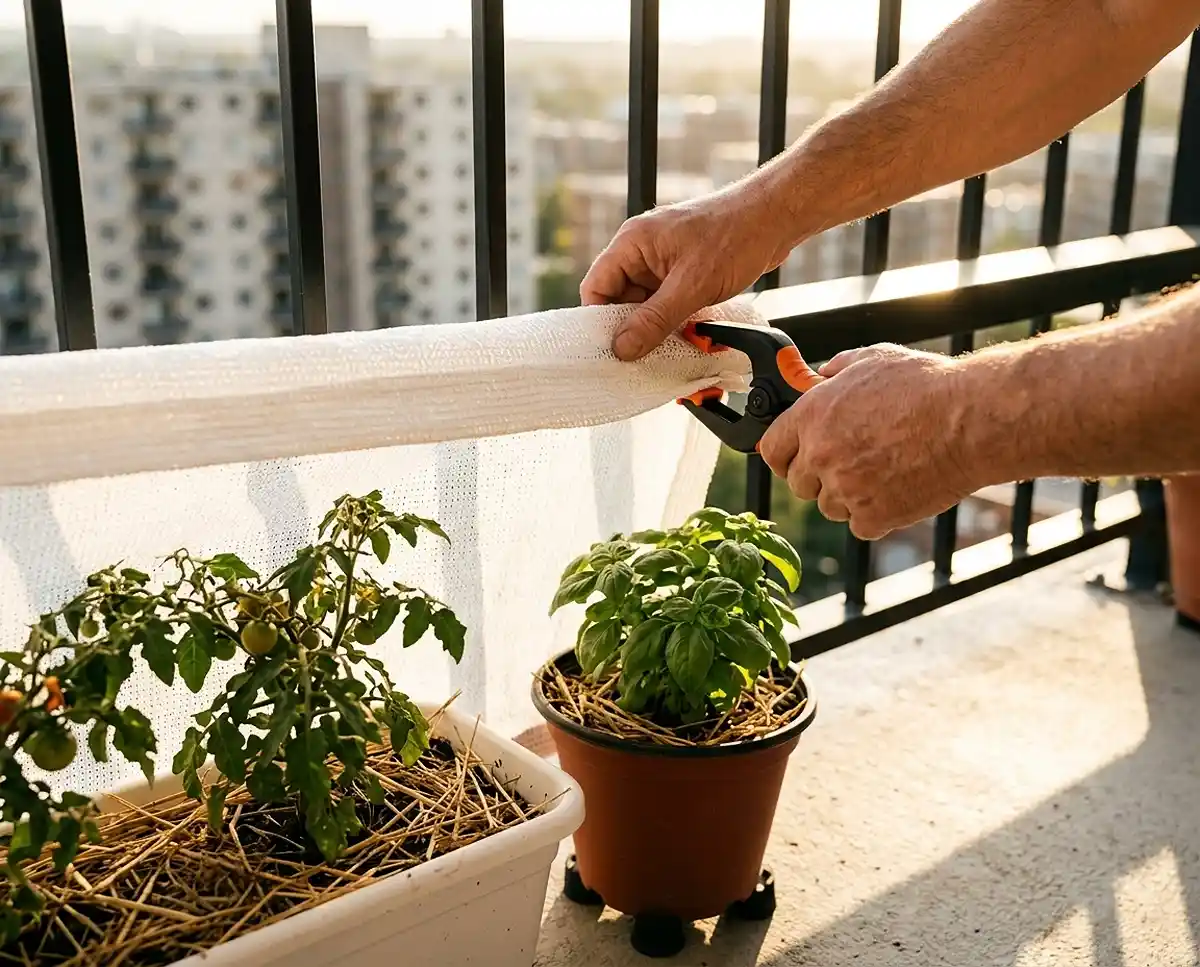
Emergency Shade: 30%–50% Horticultural Shade Cloth, Sheer White Sheets, and Spring Clamps
Quick Answer: Use 30%–50% shade cloth, ideally white or silver Aluminet knitted fabric. Hang it at least 6 inches above the leaves so air keeps moving. White sheets and bamboo blinds work in a pinch and cut leaf temperatures by several degrees.
| Option | Best For | Watch Out For |
|---|---|---|
| Aluminet knitted shade cloth (30%–50%) | Full-sun south and west balconies; reusable for seasons | Costs more up front and needs strong clamps |
| White cotton bedsheet | Free, same-day shade | Blocks airflow, sags onto leaves, and gets heavy when wet |
| Bamboo roll blind | Blocking low afternoon sun on west railings | Catches wind and sheds bits |
Clamp it down hard. On gusty railings, pair it with wind-resistant balcony plants so your shade setup isn’t fighting the weather.
Root-Zone Insulators: Light-Colored Mulch, Pot Feet, Cardboard Wraps, and Deep Saucers
Anything that breaks the heat path into the pot helps. Here’s what earns a spot in my kit:
- Straw, pine straw, or light gravel: a 2-inch layer of light-colored mulch over bare soil.
- Wet burlap: wrap pot sides so evaporation cools the wall.
- Reflective bubble wrap: shiny side out, taped around dark pots.
- Rubber pot risers: stop hot concrete from conducting into the base.
- Gravel-filled saucers: use them as pebble trays only, so roots never sit in water.
- Diluted liquid kelp: an optional stress aid, though the evidence is modest.
Pro Tip: Re-wet burlap at midday; dry burlap insulates far less.
Step-by-Step Action Plan: 8 Moves Before and During a Heatwave
Think of this as one prep session about 48 hours ahead, plus a daily routine. Steps 2 through 5 are the one-time prep.
Steps 1, 6, and 8 repeat each day and take me about 20 minutes. Step 7 is what you hold off on until the heat breaks.
Step 1: Deep-Soak at 6:00 AM (And Flush Dry Hydrophobic Pots With a Drop of Castile Soap)
Quick Answer: Water every pot deeply at 6:00 AM, before UV peaks. For shrunken, water-repellent peat mixes, bottom-soak the pot once in a bucket with two drops of pure castile soap so water reaches the core.
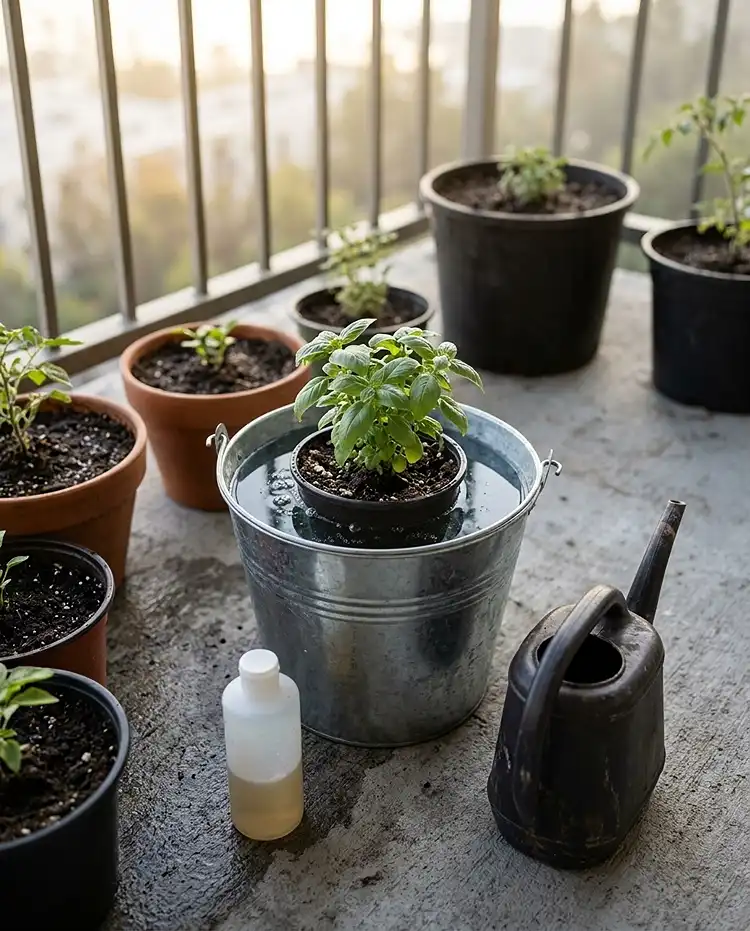
Pre-dawn watering builds cell turgor [the internal water pressure that keeps leaves firm] before the sun hits. The University of Kentucky guide found it keeps peak soil temperatures slightly lower than afternoon watering.
Dry peat repels water, so it runs down the pot’s sides. A bottom soak takes 10 to 15 minutes, then drain. Normal daily watering is much quicker.
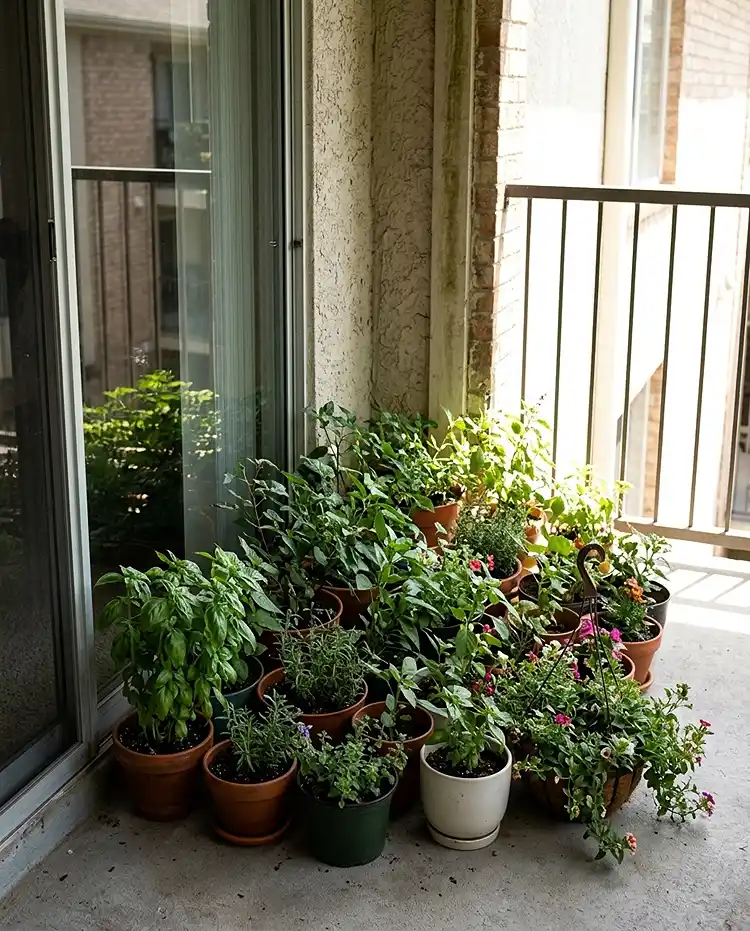
Step 2: Take Down Hanging Baskets and Railing Boxes Into a Floor “Micro-Humidity Huddle”
Hanging baskets and railing boxes cook first. Move your 6-to-10-inch pots off the railing and cluster them tightly in a shaded interior corner. Leaves shade neighboring pot walls, and the group shares transpired moisture. Keep lavender out of the huddle (see Step 6).
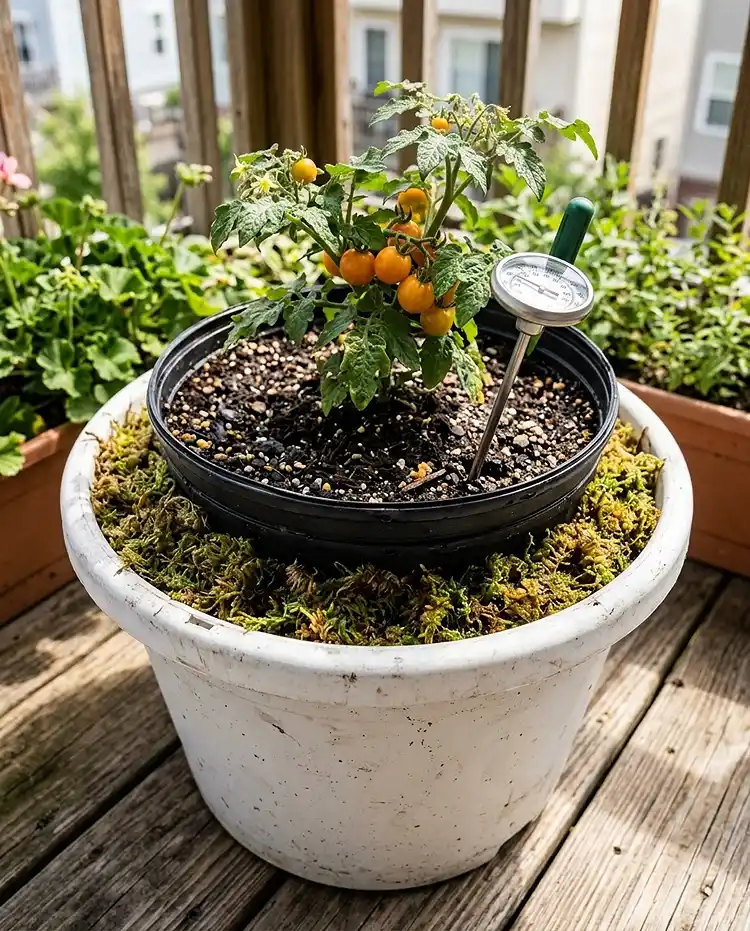
Step 3: “Double-Pot” or Wrap Dark Plastic, Metal, and Terracotta Containers
Quick Answer: Drop the dark nursery pot inside a larger light-colored cachepot and pack damp sphagnum moss into the gap. Or wrap exposed sides in burlap or white cardboard. Both stop direct sun from baking the root zone.
Real Example: One summer, my black 5-gallon ‘Sungold’ tomato pot hit 108°F on a probe thermometer in afternoon sun. After I double-potted it in a white 7-gallon planter with damp moss, the same soil read 91°F by 3:00 PM.
Step 4: Apply a 2-Inch Blanket of Light-Colored Mulch or Damp Sheet Moss Over Bare Soil
Dark potting mix absorbs heat, so cover it with 2 inches of straw, pine straw, or light gravel. Mulch slows evaporation and moderates soil temperature swings, according to Oregon State Extension.
Step 5: Rig a Temporary Railing Shade Canopy and Elevate Pots Off Burning Concrete
On south- and west-facing sides, clamp 40% shade cloth from the top railing to chair backs. Then slip half-inch rubber pot feet under every container.
Concrete conducts heat straight into bottom roots. Even a small air gap slows that transfer.
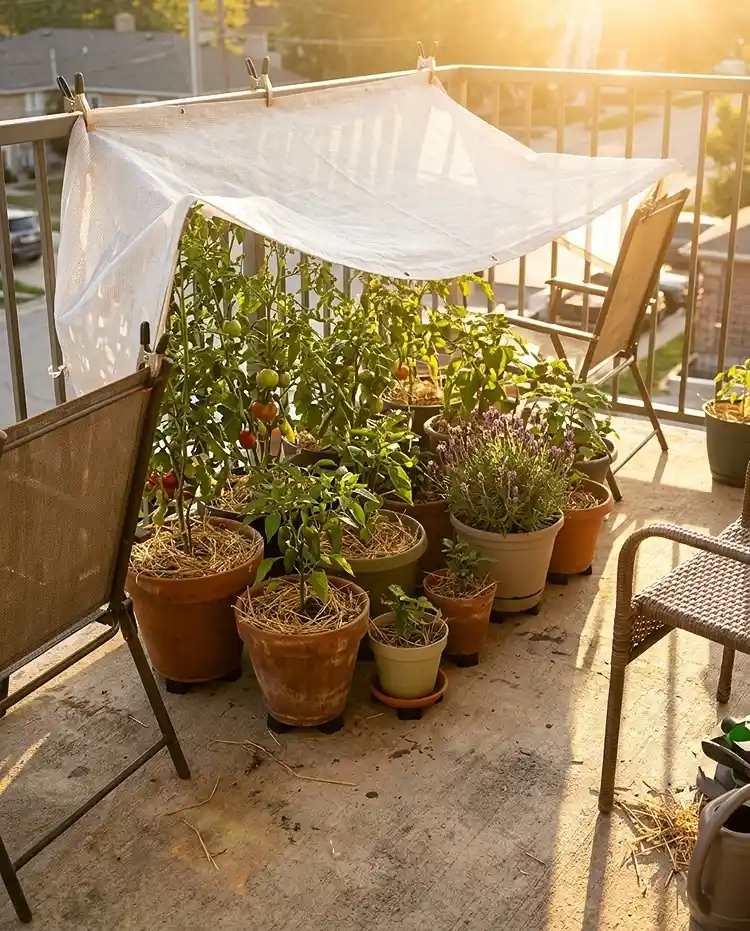
Step 6: Set Up Evaporative Pebble Trays and Damp-Down the Balcony Floor at 2:00 PM
First, check your building’s rules and what sits below you, since runoff can drip onto neighbors. Use a damp mop instead of a hose if you’re unsure. Also check your balcony’s weight limit, because trays of water add real load.
Rest pots on gravel-filled boot trays holding 1 inch of water, keeping pot bases above the waterline. Dump and refill the trays every day, since standing water breeds mosquitoes within days.
At 2:00 PM, mop the bare deck tiles. Evaporation cools the air around the leaf pores [stomata].
Lavender handles heat well but rots in pebble trays and when grouped with thirsty plants. Keep it out of both, and water it only when the soil is dry 2 inches down.
Step 7: Pause All High-Nitrogen Fertilizers, Repotting, and Heavy Pruning Until Temperatures Drop
Skip synthetic fertilizer, repotting, and heavy pruning until highs fall. Fertilizer salts burn roots in dry soil, and Oregon State Extension warns against forcing new growth in extreme heat. Pruning exposes shaded stems to sunscald.
If you must feed, use diluted liquid kelp.
Step 8: Divert AC Condenser Exhaust and Harvest Ripe Fruit Early to Lower Plant Stress
Balcony air-conditioner condensers can blow air well above 100°F (37.8°C) while running nonstop. Move pots out of the exhaust path. If you can’t, deflect the air sideways with a slatted baffle, and never block the unit’s airflow.
Pick ripe tomatoes, peppers, and spent blooms too, so plants put their energy into survival.
Post-Heatwave Recovery Protocol: How to Revive Heat-Shocked Plants
The 7 days after the heat breaks decide which plants recover. Stay patient and resist the urge to tidy up.
Why You Should Wait 7 Days Before Pruning Crispy Brown Leaves + The Kelp Recovery Soak
Half-scorched leaves still shade the green tissue underneath. Wait until temperatures normalize and new green buds swell at the nodes [the points where leaves attach to stems]. Then snip dead foliage just above a healthy bud.
Meanwhile, give a half-strength seaweed drench and water as usual.
Real Example: Once, I cut back a scorched ‘Endless Summer’ hydrangea two days after a heat spike. The newly exposed inner stems sunscalded, and I lost two canes. The next time I waited seven days, saw buds swell, and pruned once.
Heat-Resilient Replacement Plants If You Lose Cool-Season Casualties
If heat killed your pansies, lobelia, or bolted lettuce, wait until highs drop below about 90°F (32.2°C). Then plant one of these swaps. Lettuce is a fall crop here, so don’t expect it to survive a midsummer replant:
| Plant | Why It Works |
|---|---|
| Portulaca | Succulent leaves store water |
| Lantana | Thrives in full sun and heat |
| Scaevola | Keeps blooming through hot spells |
| Zinnias (‘Profusion’ series) | Heat-tolerant, flower for months |
| Rosemary | Mediterranean, drought-tolerant |
| ‘Jericho’ romaine lettuce (fall replacement only) | Bred to resist bolting, but it still bolts in midsummer heat in zone 7b, so sow it for fall |
Common Problems & Solutions
Three confusing emergencies tend to hit between 3:00 and 4:00 PM at the peak of the heat.
Dramatic 3:00 PM Wilting When the Soil Is Still Wet (“Transpirational Wilt” vs. Dry Wilt)
Quick Answer: Push a finger 2 inches into the soil before you water. If it’s damp and heavy, the plant is drooping to reduce sun exposure. Move it into shade instead of watering again.
Hydrangeas, squash, and basil do this a lot. Flooding them can drown the roots.
Boiling Roots by Watering With a Sun-Heated Watering Can or Hose at Midday
Water sitting in an outdoor watering can or hose can climb past 100°F (37.8°C) in afternoon sun. Run the hose until it’s cool, or fill your can from the indoor tap.
For a bone-dry pot at 4:00 PM, pour cool tap water slowly at the shaded stem base. Keep sun-baked leaves dry.
Sudden Blossom Drop on Tomatoes/Peppers and Two-Spotted Spider Mite Explosions
Daytime highs above 90°F (32.2°C) can make tomato and pepper pollen unviable, so flowers drop. Most plants resume normal production once the heat ends.
Hot, dry conditions also invite two-spotted spider mites, with fine webbing on leaf undersides within days. Hang 30% shade cloth and rinse the undersides with cool water each morning.
Frequently Asked Questions
Should I water my balcony plants twice a day during a 95°F (35°C) heatwave?
For small 6-to-10-inch pots, hanging baskets, and fabric grow bags in full sun, yes. Give a deep soaking at 6:00 AM to 7:00 AM, then check the soil at 4:00 PM. If the pot feels feather-light and dry 2 inches down, give a second cool-water drink at the base.
Can I bring my outdoor balcony plants inside into the air conditioning during a heatwave?
Yes, for tender potted herbs, ferns, fuchsias, and flowering annuals. Set them on a towel near a bright window for 2 to 3 peak days of 100°F (37.8°C) or more. Avoid direct AC vents, and move them out once highs drop below 90°F (32.2°C).
Does misting plant leaves in the afternoon help cool them down?
Not much. Misting foliage in hot afternoon sun adds little cooling, and wet leaves can invite fungal disease. Oregon State Extension says added humidity can still help in prolonged heat, so mist the balcony floor, shade cloth, and outer pot walls, or lightly mist grouped pots in the morning.
Can I put ice cubes on my balcony potting soil to cool my plants?
It’s not worth it. Ice melts unevenly and wets only one spot, so it won’t cool the whole root ball, and chilling-sensitive tropical plants can suffer cold shock. Use cool room-temperature water and mulch instead.
How can I tell if my plant is heat stressed or just thirsty?
Check the soil 2 inches down. If it’s damp and the plant wilts in the afternoon but recovers by evening, it’s heat stress, so add shade. If the pot is light and the soil is dry, the plant is thirsty and needs a deep drink.
Key Takeaways
- Shade the leaves and insulate the roots at the same time.
- Soak every pot at 6:00 AM, and cluster small pots away from hot railings (lavender excepted).
- Double-pot dark containers, mulch bare soil 2 inches deep, and lift pots off concrete.
- Check soil 2 inches down before watering, since afternoon wilting in damp soil is usually heat stress.
- Hold off on fertilizing and pruning until the heat breaks, then wait 7 days before cutting scorched leaves.