
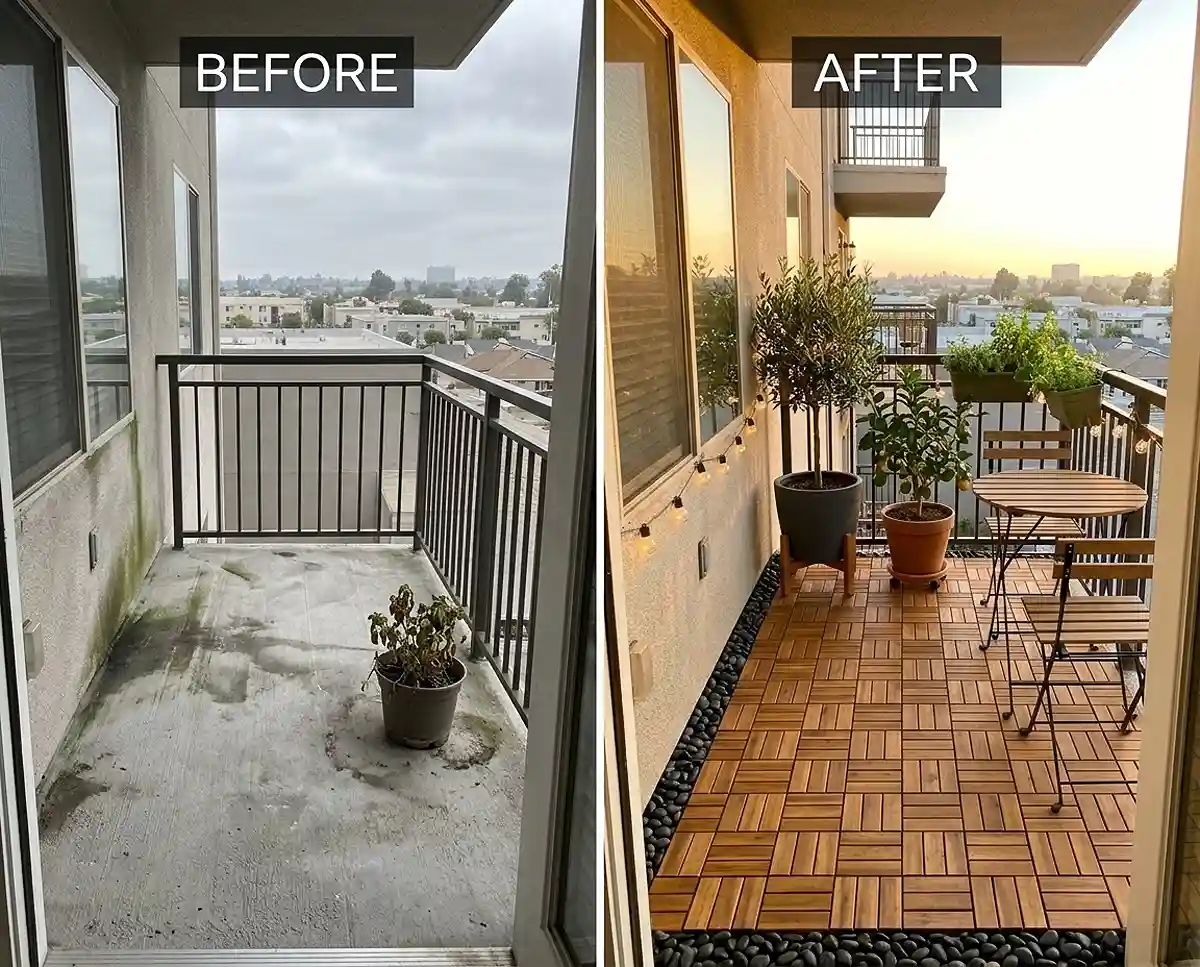
Balcony Flooring Ideas: Deck Tile Before & After
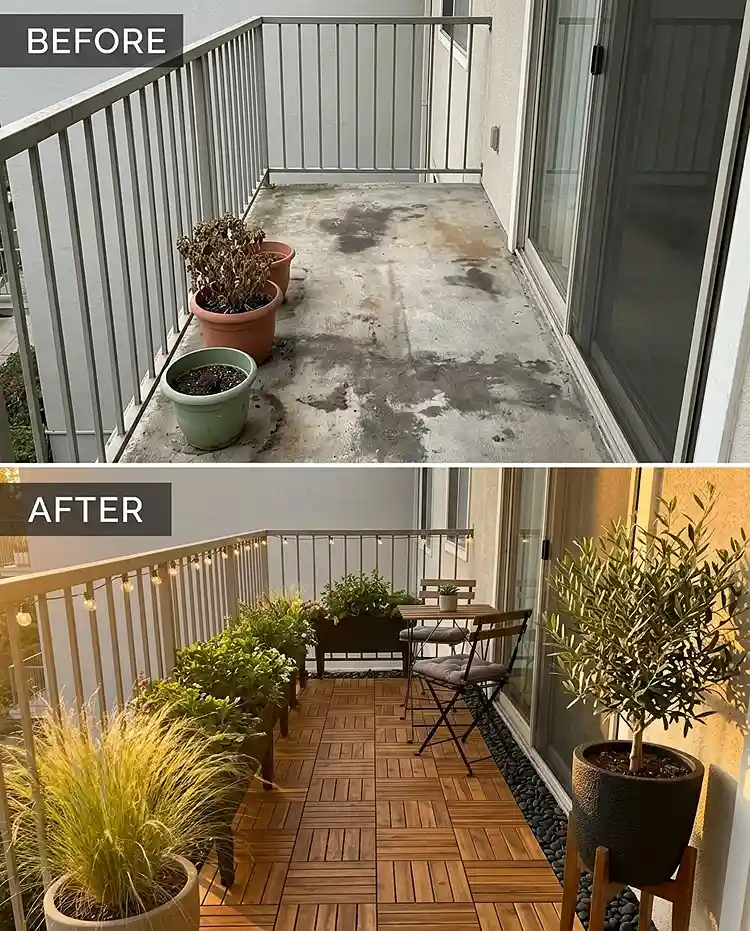
These balcony flooring ideas turned my stained concrete slab into a plant-filled retreat in 4 hours using interlocking deck tiles. No glue, no lost deposit.
I grow herbs, a dwarf olive, and a Meyer lemon on a west-facing 5×9-foot balcony in zone 6b. Not sure of your zone? Check the USDA Plant Hardiness Zone Map, because it decides which plants can stay out all winter.
Below is the exact before and after: what I measured, what I bought, and what went wrong. For railing, furniture, and styling beyond the floor, see these small balcony decor ideas.
Table of Contents
The “Before” Audit: Why Bare Concrete Ruins Both Balcony Aesthetics and Plant Health
Quick Answer: Bare concrete is a heat sink. It soaks up afternoon sun, bakes pot walls in summer, and chills roots hard in winter. Stains and algae make it look worse too.
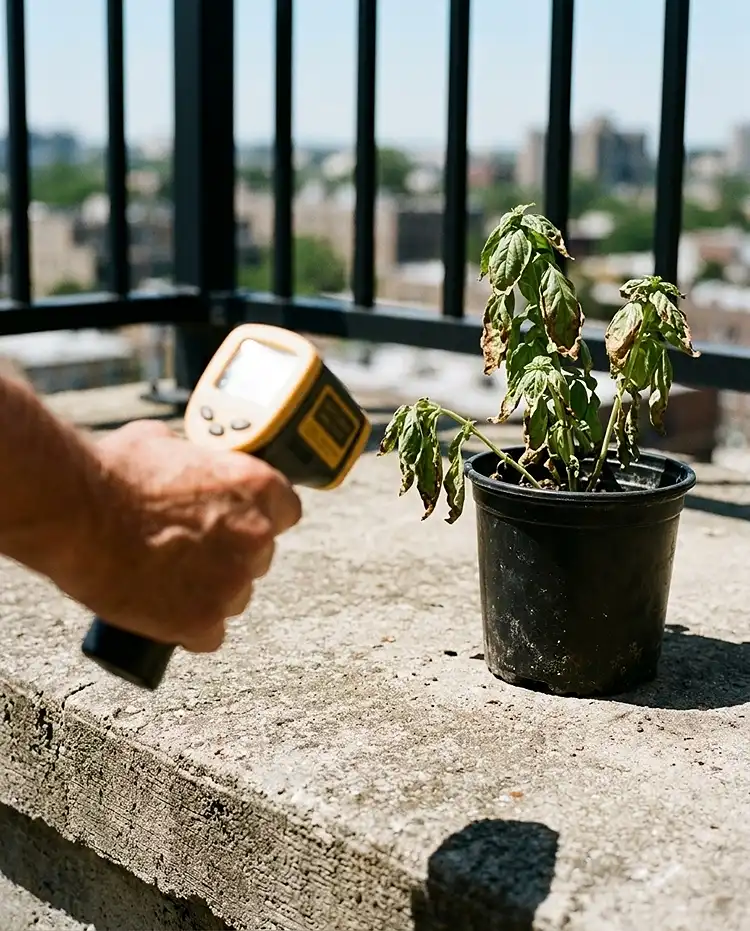
My slab read 118°F on a July afternoon, measured with an infrared thermometer. My first basil sat right on it and fried within a week. The next summer, pots on tiles stayed cooler to the touch.
Pro Tip: Press the back of your hand to the slab at 3 p.m. If you can’t hold it for five seconds, roots can’t handle it either.
Measuring Square Footage, Doorway Clearance, Scupper Drains, and Slope
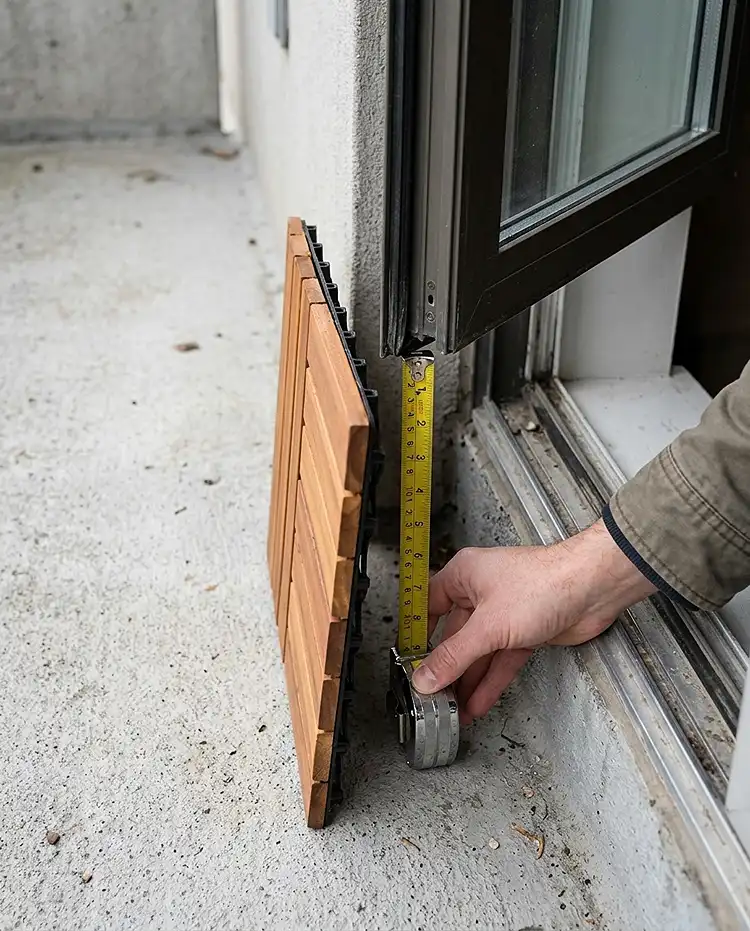
Quick Answer: Multiply length by width, add 10% for edge cuts, and measure the gap under your balcony door. Tiles must be under 3/4 to 1 inch thick to clear an outward-swinging door.
- Door gap: measure from slab to the bottom of the door, then buy tiles thinner than that.
- Drains: find each scupper [the small drain opening at the base of the wall] and note which way water slopes.
- Square footage: mine is 45 sq ft, so I ordered 50 tiles.
Checking HOA Rules, Renter Reversibility, and Structural Weight Capacities
Why choose the interlocking deck tiles balcony route? Nothing bonds to the slab. Tiles snap together with no glue or screws into concrete, so you can lift the whole floor out when your lease ends. Send your landlord the spec sheet anyway.
Weight matters too. Hardwood or composite tiles run about 1.5 to 2 lbs per sq ft, so my 45 sq ft added roughly 70 to 90 lbs. A wet 20-inch trough can top 50 lbs, so ask your building manager about the load limit.
Comparing Balcony Flooring Ideas: What Works Best Under Live Plants?
Not every floor handles daily watering. I compared five renter-safe options on runoff, soil spills, UV, and root-zone temperature. As of fall 2026, most 12×12-inch tiles ship in packs of 10 or more, so you can match your square footage closely.
| Material | Heat and UV | Water and Soil | Upkeep |
|---|---|---|---|
| Acacia hardwood tiles | Warm underfoot; grays in strong UV | Tannins stain if pots sit flat | Oil yearly |
| WPC composite tiles | Fade-resistant; dark colors run hot | Never rots; hoses clean | Almost none |
| Porcelain pavers | Cool in shade, hot in full sun | Non-porous; wipes clean | Rinse |
| Faux-grass turf tiles | Heats up in sun | Traps fertilizer and soil | Rinse often |
| Outdoor rugs | Fades over time | Needs raised grid backing | Lift to dry |
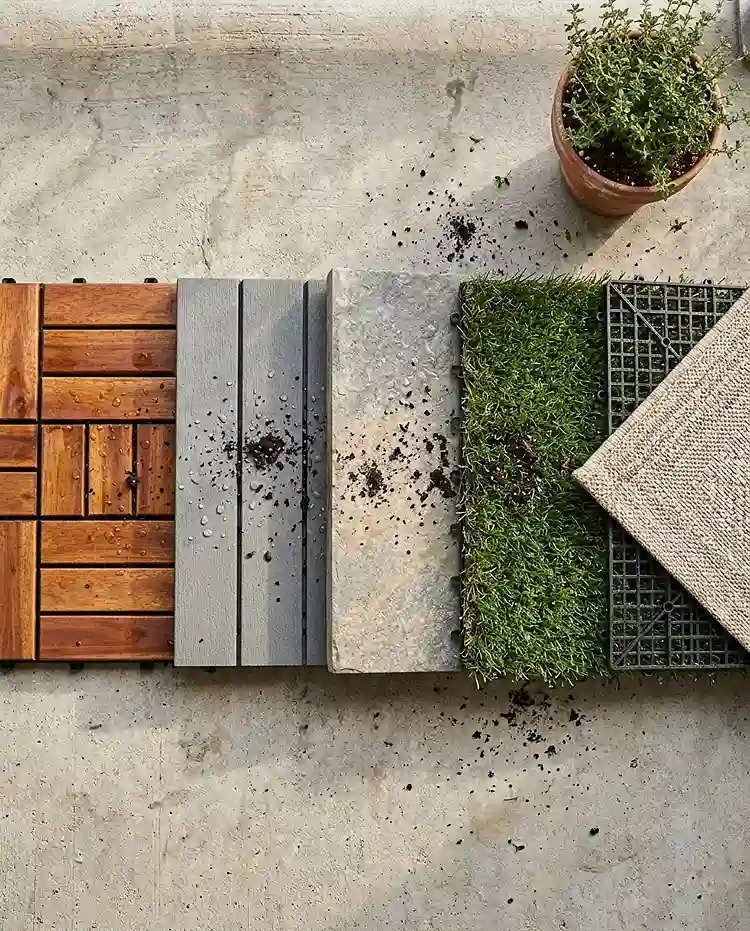
Acacia & Teak Hardwood Interlocking Deck Tiles vs. WPC Composite Tiles
Quick Answer: Choose oiled acacia or teak for warmth and a natural look. Choose WPC [wood-plastic composite] if you water daily and hate maintenance, since it never rots under dripping pots.
Acacia tiles feel cooler than bare concrete, but they need linseed or teak oil once a year. WPC skips that chore. I went with acacia on the sunny half and learned the oiling lesson the hard way, which I cover below.
Interlocking Porcelain Pavers, Faux-Grass Turf Tiles, and Breathable Outdoor Rugs
Heavy snap-together porcelain tiles shrug off soil and stay put. Perforated turf drains well but holds fertilizer salts. In the artificial grass vs tiles debate, turf wins on softness and loses on cleanup when you garden daily.
Polypropylene rugs work only with a raised plastic-grid backing, so plant runoff can flow freely to the scupper. A flat rug pools water and breeds mildew.
The Makeover Toolkit: Tile Saws, River Pebble Fillers, Pot Feet, and Lightweight Soil
- 50 interlocking 12×12-inch deck tiles
- Fine-tooth handsaw or jigsaw, plus a rubber mallet
- Mesh-backed river pebbles for awkward perimeter gaps
- Rubber pot risers or pot feet
- Coco-coir potting mix, which weighs less than peat-heavy blends
Best Plants and Planter Pairings to Frame Your New Deck Tile Floor
Warm wood looks best against tall green anchors and soft trailing edges. The goal is keeping roots insulated and slats dry. Every planter below sits on feet or a stand, never flat on the tiles.
Tall Corner Anchors in Legged Planters: Dwarf Olives, Bamboo Palms, and Feather Grass
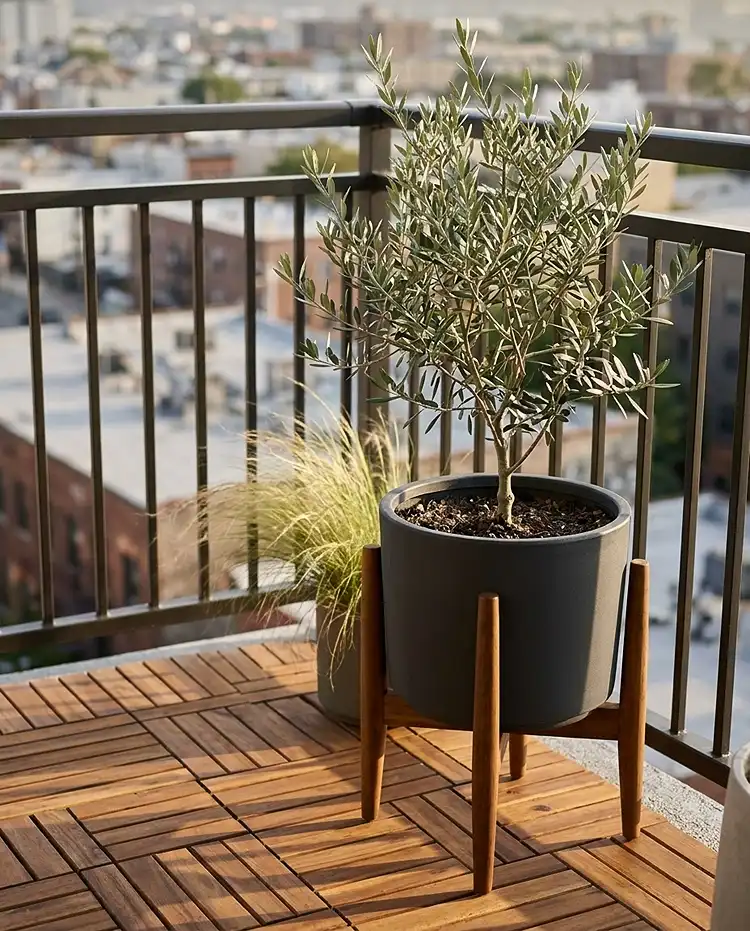
Quick Answer: Raise medium-to-large fiberglass or ceramic planters on wooden mid-century stands or rubber feet. Air under the pot prevents moisture rings and frames corners with vertical greenery.
My dwarf olive ‘Arbequina’ anchors one corner, with ‘Pony Tails’ feather grass opposite. Olives and bamboo palms (Chamaedorea) are tender in zone 6b, so they come inside before the first frost.
Cascading Railing and Perimeter Troughs: Star Jasmine, Trailing Rosemary, and Creeping Jenny
Chartreuse creeping Jenny (Lysimachia ‘Aurea’), silver dichondra, and star jasmine (Trachelospermum jasminoides) spill over dark acacia or slate tiles for high contrast. Hang them from the railing so the walkable floor stays clear.
Star jasmine and ‘Prostratus’ rosemary are tender below zone 8, so treat them as container plants that winter indoors.
Shade vs. Sun Floor-Level Clusters: Hostas & Ferns vs. Lavender, Sedums, and Citrus
North-facing balcony? Pair variegated hostas and tassel ferns with gray composite tiles for a cool, calm look. Both are hardy in zone 5 and up.
Sunny balcony? Put ‘Munstead’ lavender, ‘Angelina’ sedum, and a ‘Meyer’ lemon in terracotta pots on golden teak. Terracotta breathes, which helps in hot afternoons.
Step-by-Step “Before & After” Makeover: Installing Deck Tiles and Staging the Garden
The whole transformation took one Saturday, about four hours from first scrub to last string light. Here’s the order that worked.
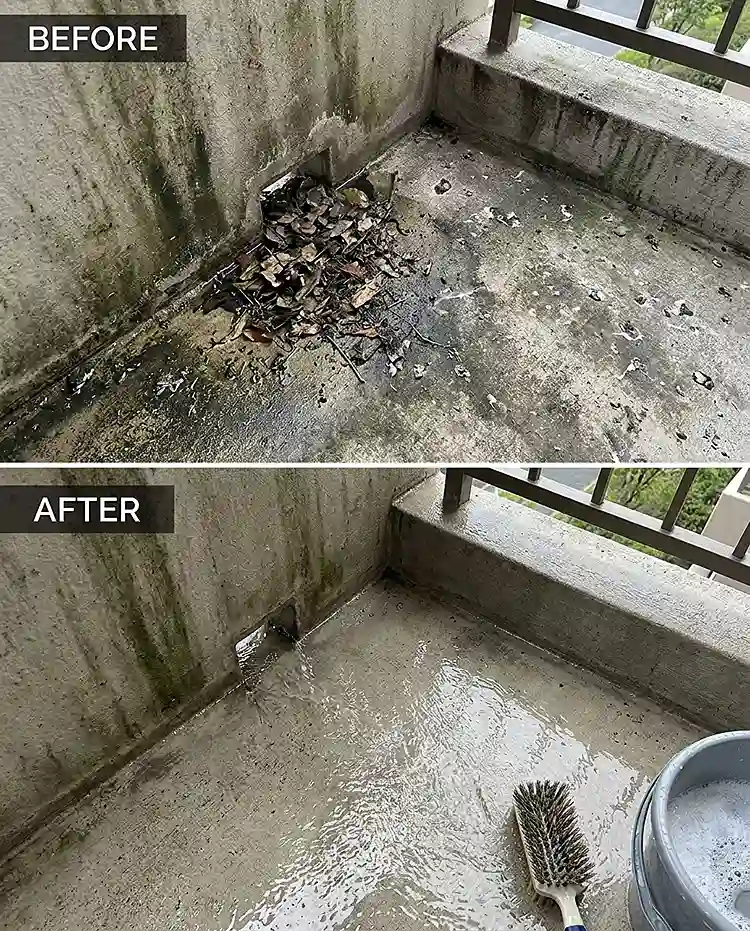
Step 1: Deep-Cleaning the Concrete Slab and Clearing Drainage Channels
Scrub away winter algae and pigeon grime with an oxygen-bleach solution, then rinse. Pour a bucket of water across the slab and confirm it sheets toward the outer drain spout. Fix any blockage before laying a single tile.
Step 2: Clicking Interlocking Tiles Together in a Basketweave or Linear Pattern
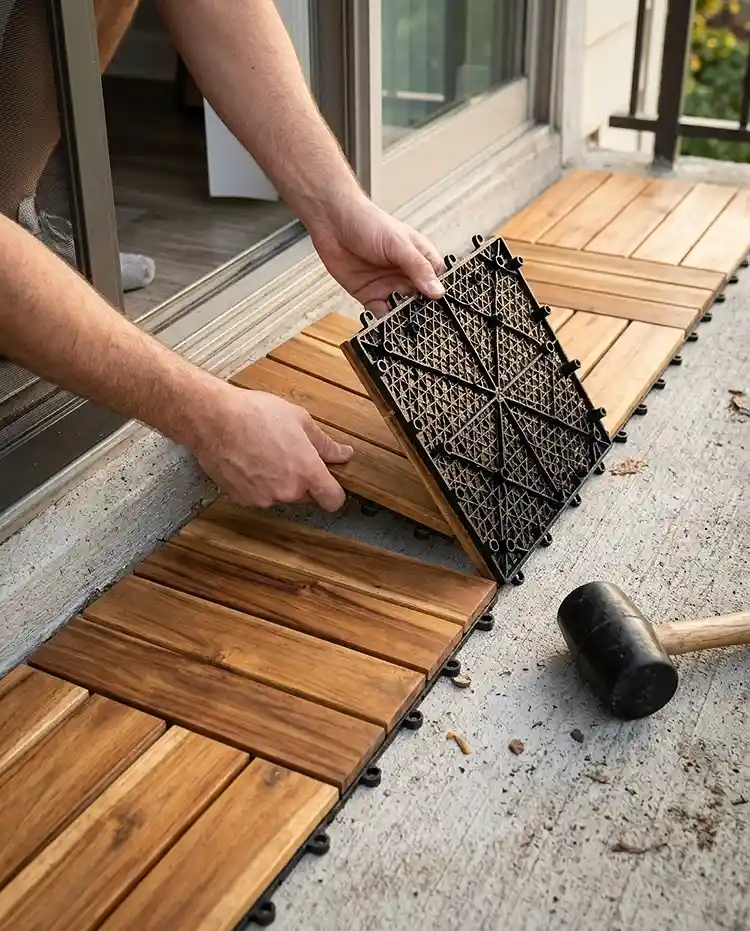
Start at the balcony doorway threshold and work outward. Snap the male-to-female plastic grid loops together, tapping with a rubber mallet. Trim plastic base tabs with a saw to fit around railing posts.
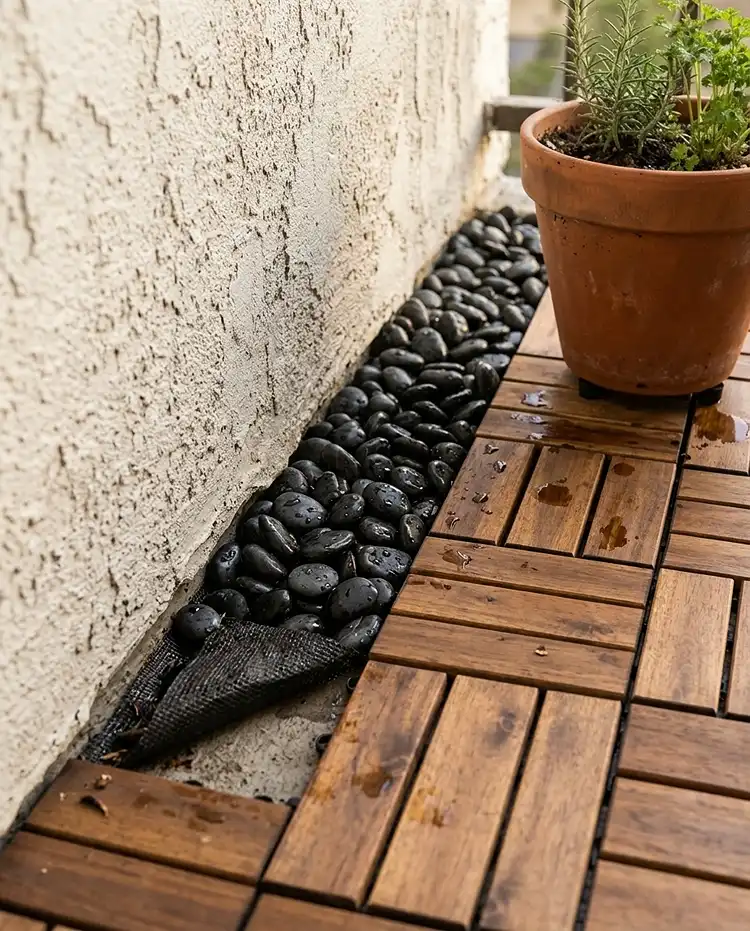
Step 3: Filling Odd-Angled Perimeter Gaps with Loose River Stones and Edging Trim
Skip tricky cuts along curved or uneven walls. Lay landscape mesh in the leftover 2-to-4-inch border and fill it with black polished river pebbles. The border doubles as a splash zone when you water.
Step 4: Staging Elevated Planters, Drip Containment Saucers, and Warm Bistro Lighting
Set heavy trough planters along load-bearing wall edges on pot feet over hidden saucers. Finish with a folding bistro set and planter-anchored LED string lights. If runoff worries you, read this guide on balcony planters leaking downstairs.
Mastering Deck Tile & Garden Maintenance Across the Seasons
A simple routine keeps wood from graying or warping under containers. Oil in spring, wipe spills right away, sweep underneath in fall, and prep for winter freezes.
No-Stain Watering Habits, Tannin Prevention, and Annual Teak-Oil Refreshing
Line pot drainage holes with geotextile mesh to stop muddy washout between slats. Wipe fertilizer spills immediately. Every spring, apply UV-protective teak oil to hardwood tiles. Composite tiles only need a rinse.
Lifting Tiles for Annual Sub-Floor Sweeping and Winterizing in Zones 3-7
Each autumn, unsnap one row of tiles and flush fallen leaves and soil dust off the concrete. In zones 3-7, stack hardwood tiles indoors during brutal icy winters. Composite and porcelain can usually stay put.
Common Problems & Solutions
Three issues show up most often when interlocking flooring meets an active container garden. I’ve hit all three.
Black Water Rings, Rot, and Trapped Moisture Under Flat-Bottomed Plant Pots
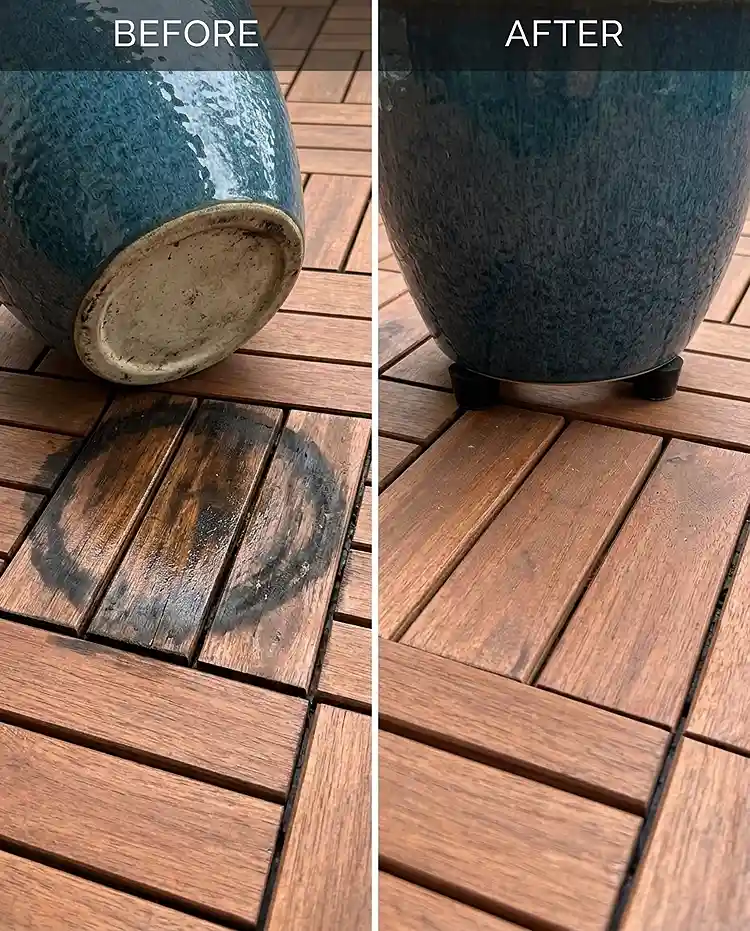
My flat ceramic pot left a black ring and a soft slat within one summer. Flat bottoms trap condensation against wood. Slip 1/2-inch invisible rubber pot feet under every pot, or use wheeled slatted caddies.
Potting Soil, Fallen Leaves, and Fertilizer Granules Clogging the Under-Tile Grid
Debris washing through slat gaps creates smelly, mosquito-friendly sludge on the concrete below. Vacuum the gaps with a shop vac, then flush under the grid with a pump sprayer.
Acacia Wood Tiles Fading to Silver-Gray or Cupping in Scorching Afternoon Sun
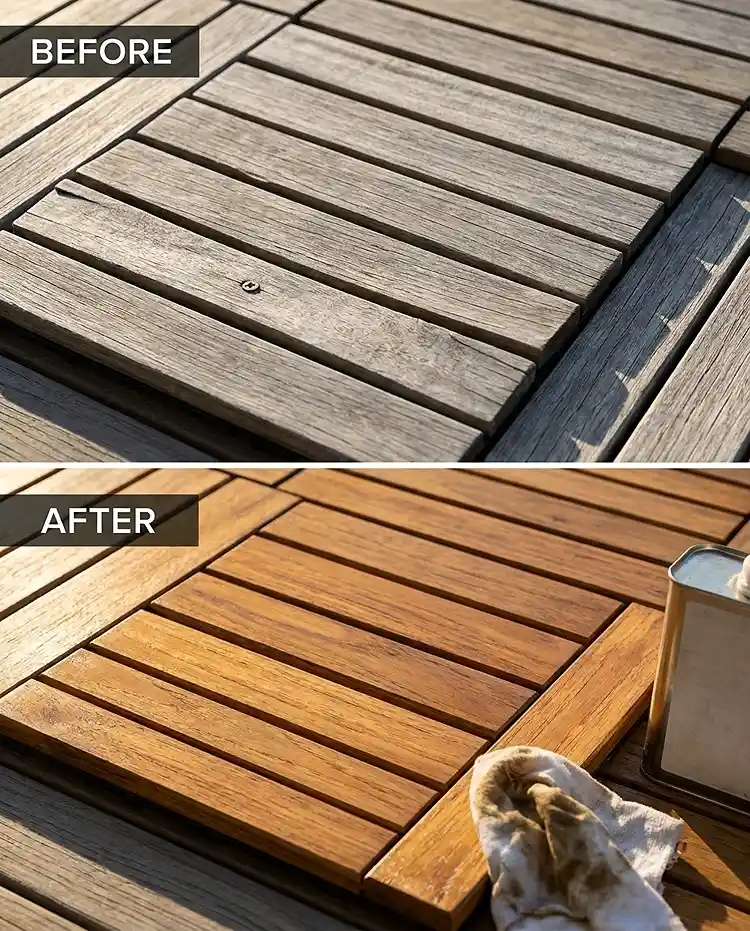
I skipped oiling my first summer, and my west-facing acacia grayed fast. Strong UV dries slats and can pop screws from the base. Sand lightly, tighten the underside screws, and seal with marine-grade tung or teak oil.
Frequently Asked Questions
Do interlocking deck tiles trap water or cause mold on a concrete balcony?
Quality interlocking tiles sit on a 1/2-inch raised polypropylene peg grid that lifts the wood or composite surface off the concrete. Rainwater and plant runoff flow freely underneath and evaporate.
Can you put heavy plant pots on top of interlocking balcony deck tiles?
Yes. Many flexible PVC or PE grid backings list ratings of 300+ lbs per sq ft of distributed load, so check your spec sheet. Set pots on feet or a wide saucer so weight spans several pegs instead of one slat.
How do you cut interlocking deck tiles to fit around balcony railing posts?
Snap the plastic grid backing with heavy-duty utility shears where no wood slats sit. For notches around metal posts, use a fine-tooth carpenter’s handsaw or jigsaw, which costs about $15.
What is the best balcony flooring if I water lots of messy vegetables and herbs daily?
Choose WPC composite or snap-together porcelain tiles over natural wood or faux grass. Composite and stone resist tannin stains and fertilizer salts, and they hose or wipe clean in seconds.
Key Takeaways
- The best balcony flooring ideas for renters use snap-together tiles with no glue, so your deposit stays safe.
- Measure door clearance (tiles under 3/4 to 1 inch) and add 10% to your square footage.
- Choose WPC composite or porcelain if you water daily; choose oiled acacia for warmth.
- Raise every planter on 1/2-inch pot feet to prevent rings, rot, and trapped moisture.
- Sweep under the grid each fall and oil hardwood tiles each spring.