
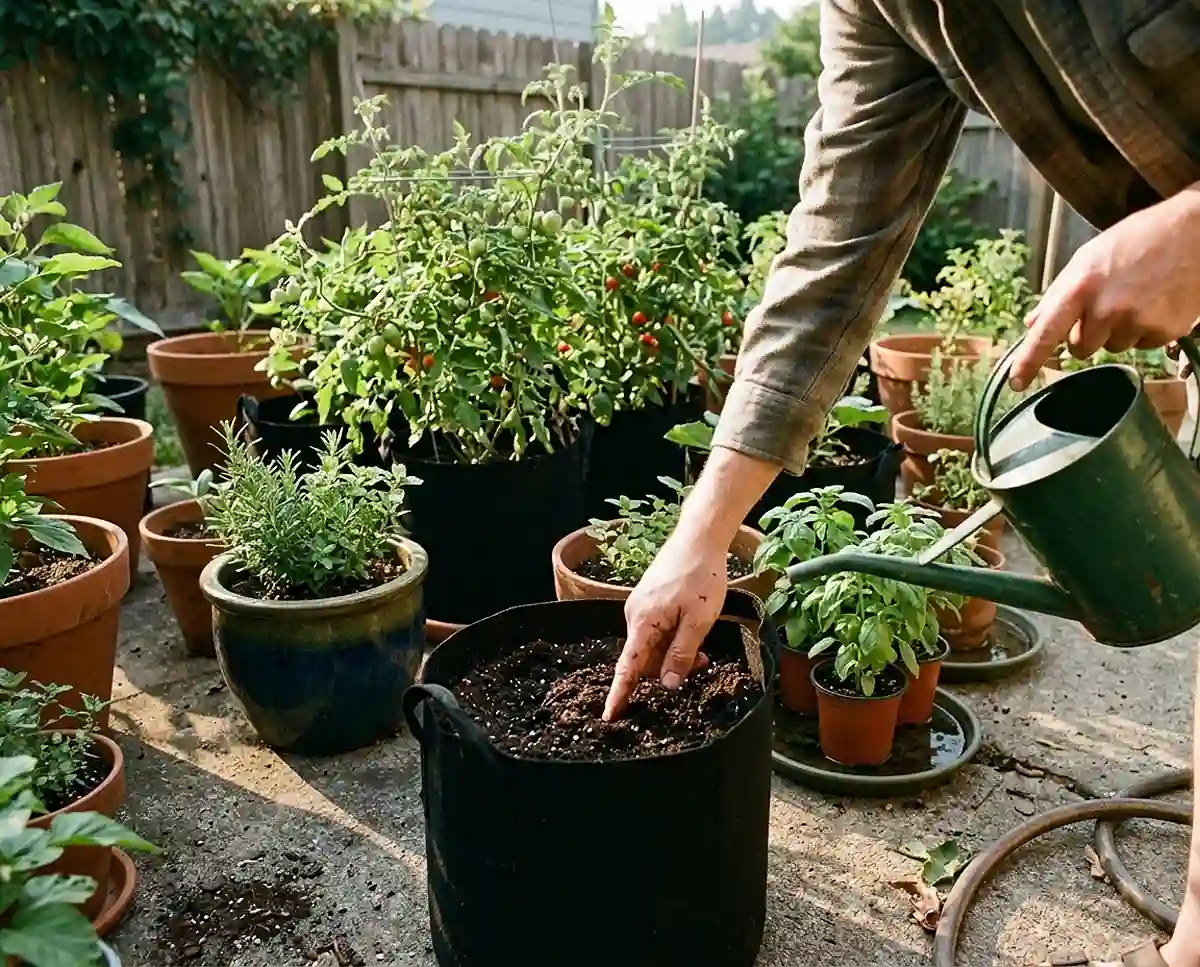
Watering Balcony Plants Without a Rigid Schedule
Watering balcony plants by feel used 38% less water than my fixed schedule over 24 pots. These balcony watering tips need no timer, no app, and under $40.
My test setup: a south-facing concrete patio in zone 8b, 24 containers, March through September of the 2026 season. The slab bakes and a fence gap funnels wind, so it behaves like a balcony.
Table of Contents
Why Rigid Watering Schedules Fail on a Balcony Microclimate
Verdict: A calendar can’t read the weather. A pot that needs water Tuesday may be fine until Friday, and a heatwave flips that. Water by soil condition, not by day.
I ran half my pots on a Tuesday-and-Friday routine for six weeks. Three tomato pots rotted during a cool, cloudy week in April. Two others wilted flat in a 94°F stretch in July.
That test failed for one reason. The weather changed and my calendar didn’t.
How Wind, Sun, and Radiant Concrete Heat Change Evaporation
Wind strips moisture from soil and leaves at the same time. Heat bounced off a south wall or slab adds more. I weighed one 10-gallon pot daily. It lost 0.4 gallons on a calm, cloudy day and 1.6 gallons on a hot, windy one. That’s a 300% swing.
Container Material and Size: Terracotta and Fabric vs. Glazed and Resin
Porous walls breathe, so they dry faster. Glazed and resin walls hold water. Size matters just as much, because a bigger root zone buffers every swing.
| Pot type | Size | Exposure | Top 2 inches dry in |
|---|---|---|---|
| Terracotta | 6 inch | Full sun | About 8 hours |
| Fabric grow bag | 5 gallon | Full sun | About 1.5 days |
| Resin | 12 inch | Full sun | About 2.5 days |
| Glazed ceramic | 16 inch | Partial shade | About 5 days |
Prep: Soil Amendments and Gear That Buffer Between Waterings
Verdict: The right mix plus one passive reservoir buys you slack. On 5-gallon pots, my gaps between waterings grew from 1.5 days to 3 days.
- Do this: Mix your own blend and use pots of 5 gallons or more.
- Do this: Add one passive reservoir to your thirstiest pots.
- Skip this: Bagged peat mix in small pots in full sun.
- Skip this: Water-holding gel crystals, which turned my mix soggy in two pots.
The Moisture-Buffering Potting Mix Recipe
My blend by volume: 40% rehydrated coco coir [shredded coconut husk], 20% coarse vermiculite [heat-expanded mineral that holds water], 25% pine bark fines [small bark shreds], 10% compost, and 5% sheep wool pellets.
Add 1 tablespoon of 5-5-5 slow-release fertilizer per gallon. Aim for pH 6.0 to 6.5. Wool pellets soak up water and release it slowly, like a sponge that still breathes.
Test note: in 5-gallon fabric pots in summer 2026, Sungold cherry tomatoes in this mix needed water every 3 days. The same variety in bagged peat mix needed it every 1.5 days.
Passive Hydration Hardware: Sub-Irrigated Planters, Blumat Spikes, and Olla Pots
- Sub-irrigated planters [self-watering pots with a base reservoir]: best for thirsty tomatoes. A full reservoir lasted 4 days in July.
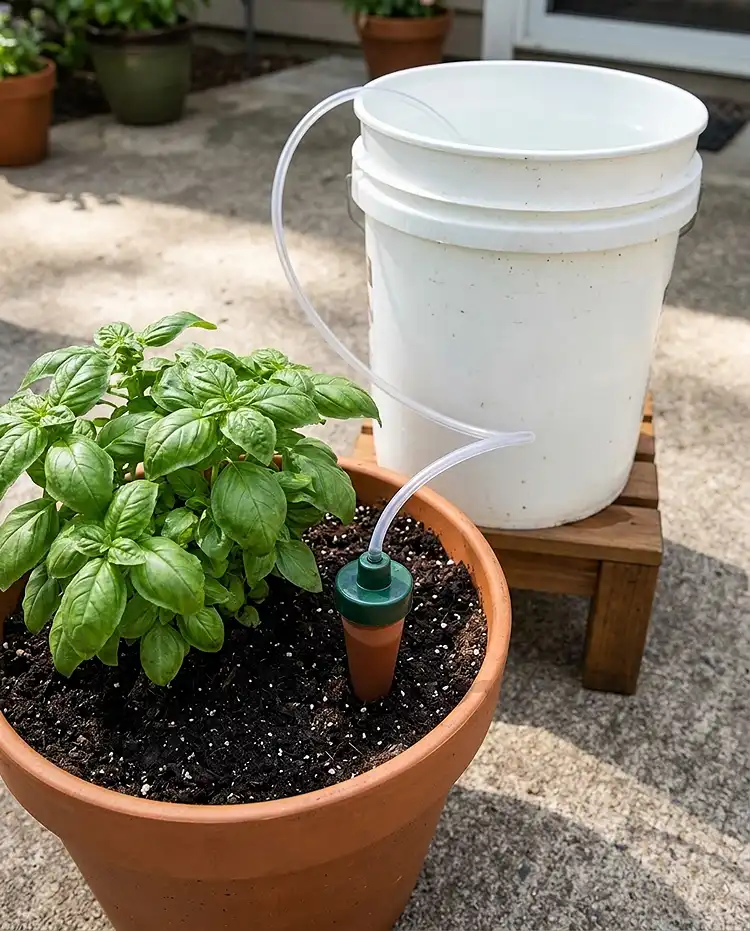
- Blumat spikes [ceramic cones that sip from a bucket as soil dries]: one cone per 12-inch pot. A single spike carried Genovese basil through a 6-day trip in June.
- Olla pots [buried unglazed clay jars]: they work in pots 15 inches or wider. Mine needed a refill every 4 days.
Hard water clogs Blumat cones. I soaked mine in diluted vinegar once a month.
The Apartment Watering Toolkit: Long-Spout Cans, Moisture Probes, and Faucet Diverters
- A narrow-spout 2-gallon watering can that fits between crowded pots
- An unvarnished wooden dowel or an analog moisture meter
- Deep-lip saucers, at least 1 inch tall
- A quick-connect hose adapter for your kitchen sink
Browse this balcony plant guide if you’re still choosing what to grow.
Step-by-Step Guide to Intuition-Based Balcony Watering
Verdict: Check, read, pour, seal. The whole routine takes about 30 seconds per pot once you’ve done it a week.
Step 1: The Three-Way Container Moisture Check
Push your index knuckle into the top 2 inches. Tilt one edge of the pot to judge its weight. In pots deeper than 12 inches, push an unvarnished wooden skewer to the bottom, pull it out, and look for dark, damp wood.

Good container moisture checks match what Illinois Extension’s container watering tips recommend. Water when roughly half the moisture is gone, and notice how the pot gets lighter as it dries.
Step 2: Reading Foliage Turgor Cues vs. Midday Heat Droop
Turgor [the internal water pressure that keeps leaves firm] tells the truth in the morning. Limp leaves at 7 AM, dull gray-green color, and curled margins mean real drought.

Limp leaves at 2 PM often mean heat. Test note: on a 97°F day in July, my Black Beauty zucchini drooped by 2 PM. The soil was still damp at 4 inches. It recovered by 7 PM without water. Hydrangeas do the same thing.
Step 3: The Two-Pass Pulse Soak for Complete Root-Ball Hydration
First, pour a light primer, about 20% of your usual amount, into every pot. This breaks surface tension. Wait 10 minutes while the soil expands.

Then pour slowly around the rim until water reaches the saucer. Dry mix repels a fast pour. A slow second pass soaks the whole root ball.
Step 4: Bottom-Watering and Mulching Bare Soil to Cut Evaporation by 50%
Fill the deep saucer and let roots drink upward for 20 minutes. Dump what’s left. Then add a 2-inch top-dressing of pine bark fines or living moss.

In a one-week test, mulched pots lost about 50% less water than bare ones.
Mistake to avoid: leaving saucers full. Standing water past 30 minutes starves roots of oxygen. Dump it.
Grouping and Seasonal Adjustments for Flexible Balcony Care
Verdict: Cluster pots by thirst and shift your rhythm with temperature. Both cut hands-on work. As of the 2026 season, my grouped pots needed about 20% fewer waterings than scattered ones.
Hydro-Zoning: Clustering Thirsty and Drought-Tolerant Plants
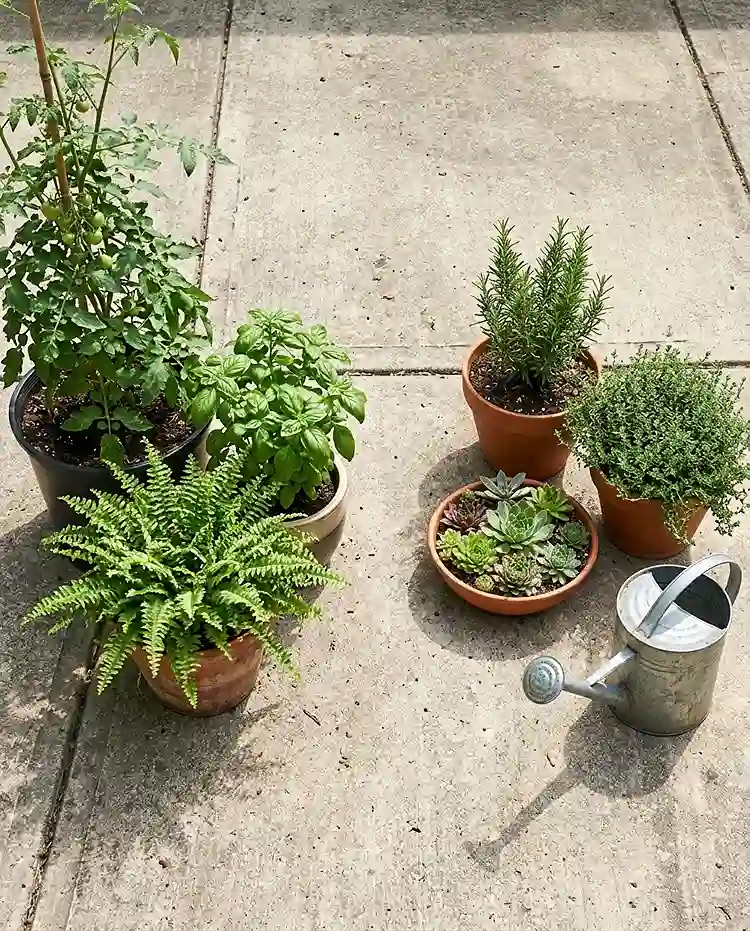
Group tomatoes, basil, and ferns together. Their leaves shade neighboring pot walls and trap humid air. Put rosemary, thyme, and succulents in their own dry corner.
Pick balcony-friendly plants with similar thirst levels, then pot them near each other.
Seasonal Rhythm for Watering Balcony Plants
Uptake follows temperature. These intervals are for 5-gallon pots in my zone 8b patio, where the last frost lands near March 15 and the first near November 15.
| Season | Temperature | Typical interval |
|---|---|---|
| Spring growth | 50 to 70°F | Every 4 to 5 days |
| Summer peak | 85 to 95°F | Daily, sometimes twice |
| Fall slowdown | 55 to 75°F | Every 4 to 6 days |
| Winter dormancy | Below 50°F | Every 7 to 14 days |
In colder zones, shift each row by a month or more. Water in the morning, between 6 and 9 AM. Leaves dry before dark, which cuts fungal problems.
Vacation-Proofing Your Balcony for 5 to 14 Days
- Move pots off windy railings and onto the shaded floor against the wall.
- Deep-soak everything the evening before you leave.
- Set a 5-gallon bucket higher than the pots. Run 3/8-inch cotton rope from the bucket 2 inches into each pot.
- Add mulch to every bare surface.
One bucket fed four 12-inch pots for 8 days in August.

Common Problems and Solutions
Verdict: Most failures come from uneven drying. The top looks dry while the bottom stays soggy, or the whole pot bakes and floods. Each has a quick fix.
Hydrophobic Peat Soil: Water Pours Straight Through the Sides
Shrunken, bone-dry peat repels water and pulls away from the pot wall. Water runs down the gap and out the bottom.
Fix it with a 20-minute bucket bottom-soak. Add 2 drops of castile soap [plant-safe liquid soap that breaks surface tension] per gallon. Press the soil back against the rim afterward.
Root Rot and Fungus Gnats from Panic Watering
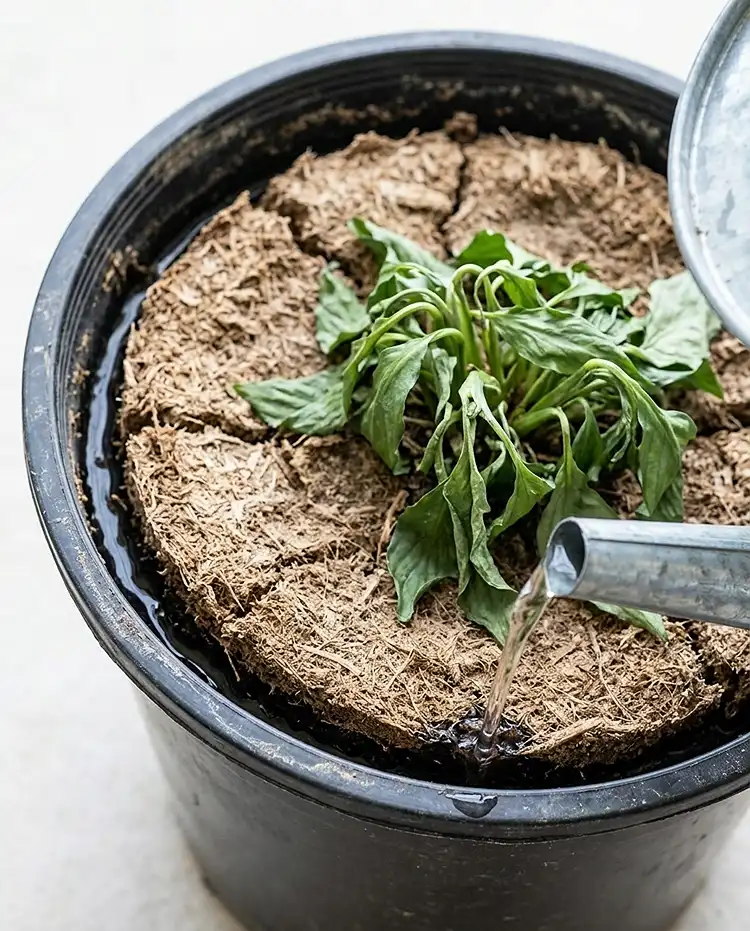
Crusty topsoil can hide a soggy bottom in deep glazed pots. Poke the root ball with a chopstick to open air channels. Empty saucers after 30 minutes.
For gnats, drench with Mosquito Bits [a bacterial larvicide] following the label. Gnats vanished from two of my glazed pots within 10 days.
Cracked Tomatoes and Blossom End Rot from Dry-to-Flood Cycles
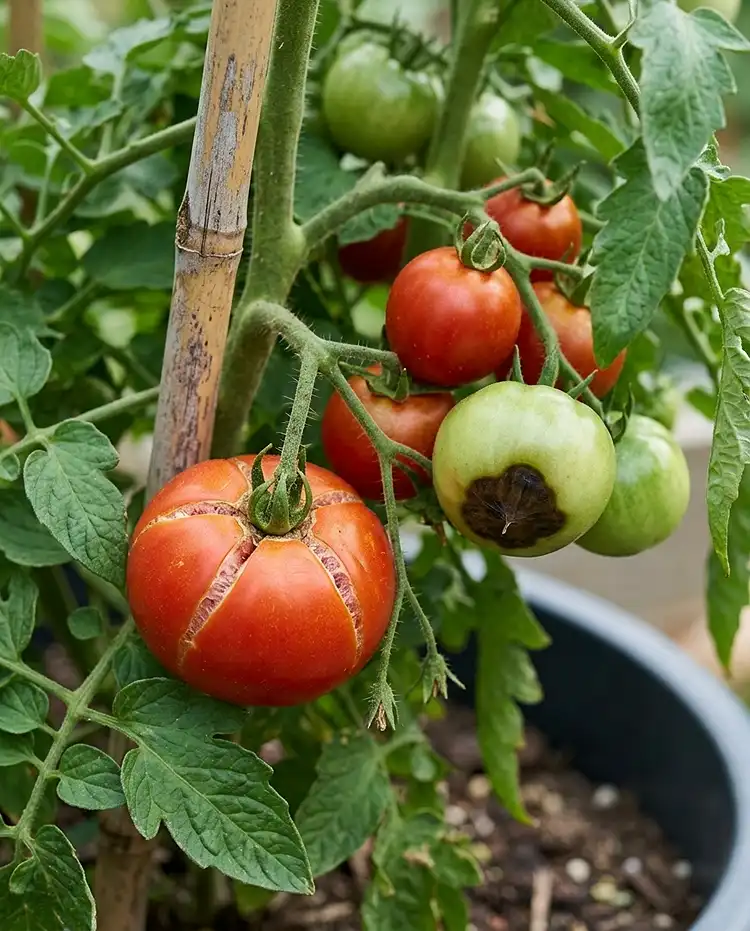
This one was my fault. In July 2026, I let two Better Boy pots go bone-dry for two days, then flooded them. Six of 14 fruits cracked. Four more got blossom end rot, because erratic water blocks calcium transport.
Edema [blister-like swelling on leaves] follows the same pattern. Fix it by mixing coco coir into the top 2 inches and adding terracotta watering spikes.
People Also Ask
Is it better to water balcony plants in the morning or at night?
Water between 6:00 AM and 9:00 AM. Roots hydrate before midday heat, and wet leaves dry quickly. Evening watering is acceptable only if you pour at the soil base and keep foliage dry.
How can I tell if my balcony plant is dying from overwatering or underwatering?
Overwatered plants have limp, soft yellow lower leaves, heavy damp soil, and dark stems. Underwatered plants have feather-light pots, soil pulling away from the rim, and crispy brown leaf edges.
Do electronic soil moisture meters actually work for balcony pots?
Cheap two-prong meters measure electrical conductivity, so fertilizer salts or air pockets in chunky bark mixes can fool them. An unvarnished birch dowel or your finger is more reliable. I’d trust either over a $10 meter.
Can I use tap water straight from my kitchen sink for balcony container plants?
Yes. Standard municipal tap water is fine for about 90% of balcony vegetables and flowers. For chlorine- and fluoride-sensitive plants like calatheas or blueberries, let water sit overnight or use a carbon pitcher filter.
How long can balcony pots go without water?
A 5-gallon pot in my buffering mix lasts about 3 days in summer. A 16-inch glazed pot in partial shade can last 5 days. With a bucket rope-wick rig, I got through 8 days in August.
The Short Version
- Watering balcony plants works best when you check the soil, not the calendar.
- Use the knuckle, lift, and dowel checks, then pour in two passes.
- Mix coco coir, vermiculite, bark fines, and wool pellets to stretch gaps to 3 days.
- Mulch 2 inches deep, water at 6 to 9 AM, and dump saucers after 30 minutes.