
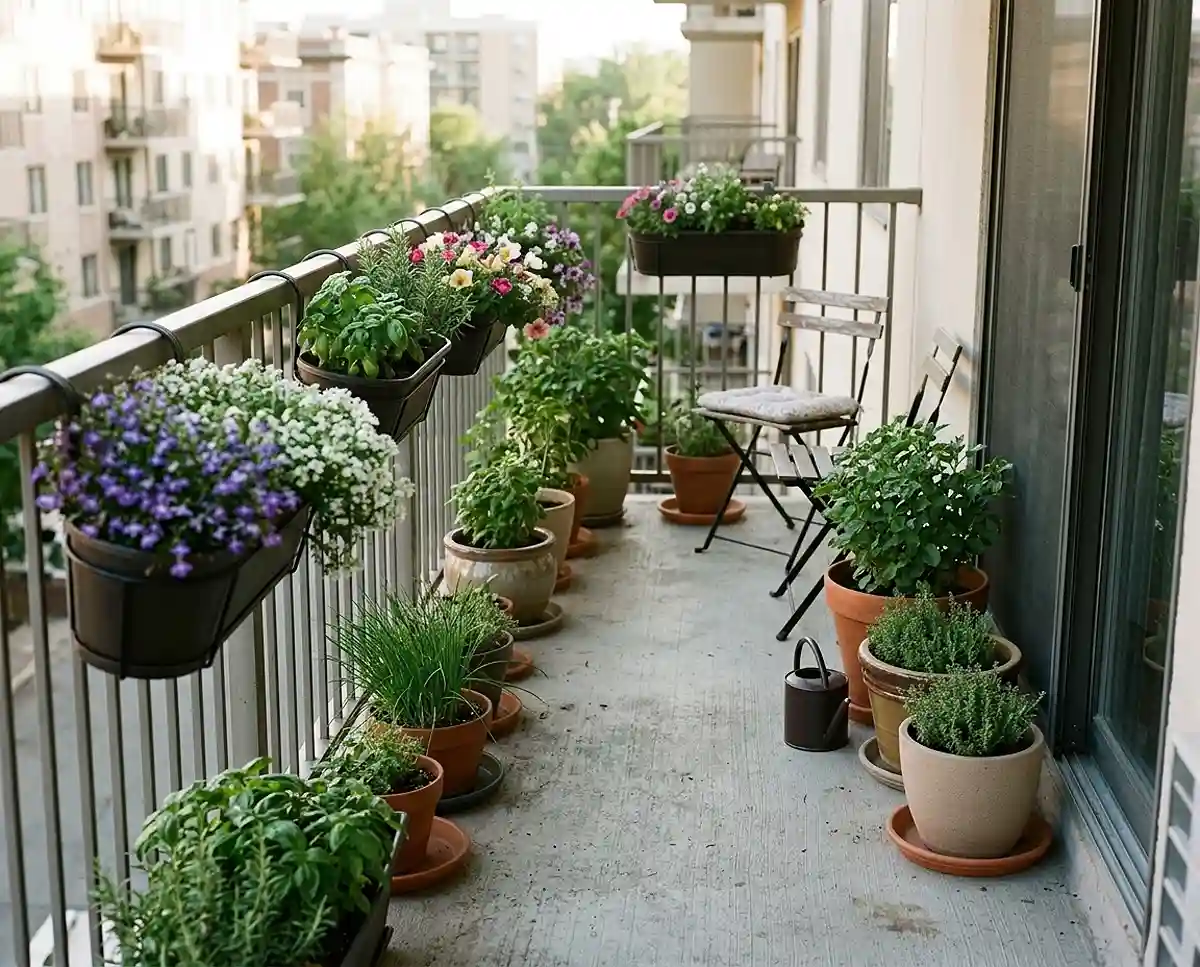
Balcony Planters: Privacy, Layout & Watering Tips
Balcony planters made easy: discover smart layouts, privacy ideas, and watering tips to grow more in a small space without upsetting your landlord.
Key Takeaways
- Check your lease and building rules before you attach a planter, install a screen or add any structure.
- Freestanding containers are usually the simplest starting point when your building permits them. Railing planters need to match your rail’s profile.
- Run a controlled watering check while you’re home, and trace where the water goes before you expand.
- Sketch the floor first: doors, walking routes and seating come before plants.
- Container weight, cat netting and plant suitability for pets or kids need advice from qualified sources, not guesswork.
The first time I watered my rented balcony, a drip landed on my downstairs neighbor’s window. I stood there holding a watering can, breathing in damp potting mix and warm terracotta, wondering how I’d already messed up. That’s when I started taking balcony planters seriously.
Turns out, a good rental balcony isn’t about the prettiest pots. It’s about knowing where the water goes, what your lease allows, and where you actually want to sit with your morning coffee while the bees inspect your herbs.
So I slowed down, measured everything, and tested each new setup while I was home to watch it. This guide shares that approach, plus a few things I won’t pretend to know. Stick around for the watering test I now run on every new pot.
How Do You Choose Balcony Planters for Your Space and Restrictions?
Pretty comes last. First comes what your rail, your floor and your building rules will actually allow. Here’s how I compare the options, starting with the ones that attach and ending with the one I build myself.
Balcony Railing Planters
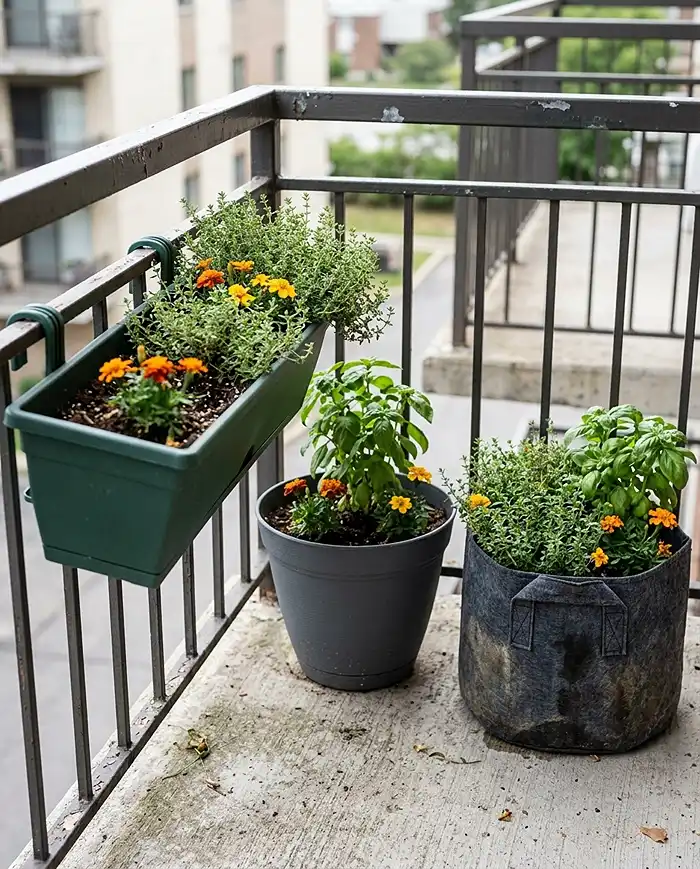
Balcony railing planters are long, narrow boxes that sit on or hook over the rail. They suit herbs and trailing flowers. Before buying, compare your rail’s profile, the product instructions and your building’s restrictions, then plan watering access and drip containment alongside the looks.
I once fell for a rail box without checking my rail’s shape, and the return was a hassle. Now I plan the watering and catch-tray situation first. The full Balcony Railing Planters Guide covers rail profiles and restrictions in detail.
Lightweight Freestanding Balcony Planters
Lightweight freestanding balcony planters stand on the floor and don’t attach to anything, which makes them a natural fit for rentals. Compare each container’s dimensions and material, and picture the filled setup before buying. When your building allows it, start here rather than with rail attachments.
Freestanding pots became my default because nothing needed permission to hang. I mark each footprint on the floor before buying. The full Lightweight Freestanding Balcony Planters Guide shows how to compare sizes and materials for your own space.
Pots Versus Grow Bags on a Balcony
Pots versus grow bags on a balcony comes down to handling, appearance, water management and storage. Pots hold their shape and look tidy, while grow bags are soft, easy to move and fold away when empty. Pick the format that fits your balcony’s practical limits.
I use both. Bags win when I need to tuck things away, and pots win when guests come over. The full Pots Versus Grow Bags on a Balcony guide lays out the trade-offs side by side.
Self-Watering Versus Regular Balcony Pots
Self-watering balcony pots have a built-in reservoir that feeds the soil, while regular pots depend on you to water. A reservoir can save effort, but it doesn’t erase the need for checks. Try one pot first and see how it behaves before converting everything.
I assumed my first self-watering pot was set-and-forget. It wasn’t. I still peek at it, and I’m glad I tested just one. The full Self-Watering Versus Regular Balcony Pots guide shows what to compare before you commit.
DIY Self Watering Balcony Planter
A DIY self watering balcony planter is a homemade container with a water reservoir, built from a documented design. Choose a design with clear instructions and check its intended materials before you build. Then test the finished planter while you’re home and confirm it contains its water.
My rule is that no homemade planter goes outside until it’s sat through a full test under my watchful eye. I write down what it does. The full DIY Self Watering Balcony Planter Guide walks through what to check before you build.
How Do You Manage Water, Waste and Garden Supplies on a Balcony?
Water is where renters get into trouble, so I’d rather sort it out before the garden grows. This is also where my downstairs-neighbor lesson lives.
Balcony Planter Drainage Without Downstairs Leaks
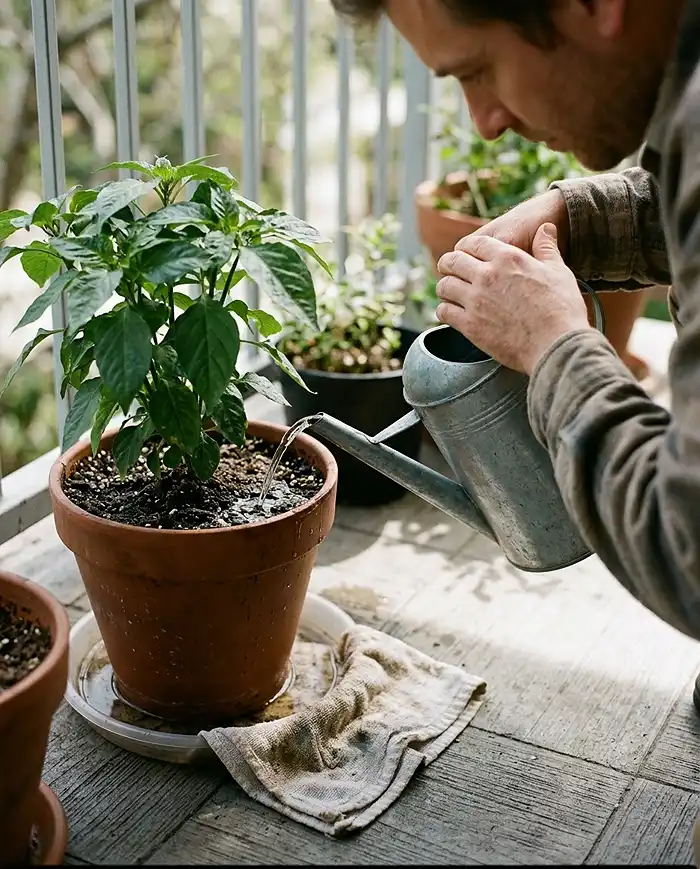
Balcony planter drainage without downstairs leaks starts with knowing where water goes. Do a controlled watering check while you’re standing right there, and trace every drip. Review your container and collection arrangement before you add more pots.
This is the test I promised. I water a new pot slowly with a towel and a bowl nearby, watching the whole time. It isn’t glamorous, but it’s saved me from awkward chats. The full Balcony Planter Drainage Guide goes through the check step by step.
Balcony Watering Systems for Time Away
Balcony watering systems for time away are setups that water your containers while you travel. Compare options against your containers and your water access, then trial your choice while you’re still home. Write down the checks you’ll need to do before you leave.
I never trust a system I haven’t watched run. I take notes, fix the surprises, and only then pull out the suitcase. The full Balcony Watering Systems for Time Away guide helps you compare your options.
Balcony Garden Tool Storage
Balcony garden tool storage means finding a reachable home for your trowel, gloves and spare pots without swallowing your growing space. List what needs storing, measure the growing area that’s left, and compare reachable spots before you change anything.
I used to stack everything in one corner, then couldn’t reach my herbs. Now I photograph the before and after to see whether a change actually helped. The full Balcony Garden Tool Storage guide shows how to compare positions.
Balcony Compost Bin
A balcony compost bin is a small container for kitchen and plant waste, and your building’s rules and your space decide whether it fits. Check restrictions first, choose a method that suits your space and upkeep, then plan the bin’s location and a monitoring routine before adding anything.
I’ll be honest: composting on a balcony takes attention. If something smells off, investigate instead of hoping it goes away. The full Balcony Compost Bin guide helps you decide whether it’s worth it for your space.
How Do You Plan a Usable, Permission-Aware Balcony Garden?
A garden you can’t walk through isn’t much of a garden. These are the layouts and checks I’d do before buying a single pot, including a cheap way to test your plan with temporary markers.
Starting a Small Balcony Garden
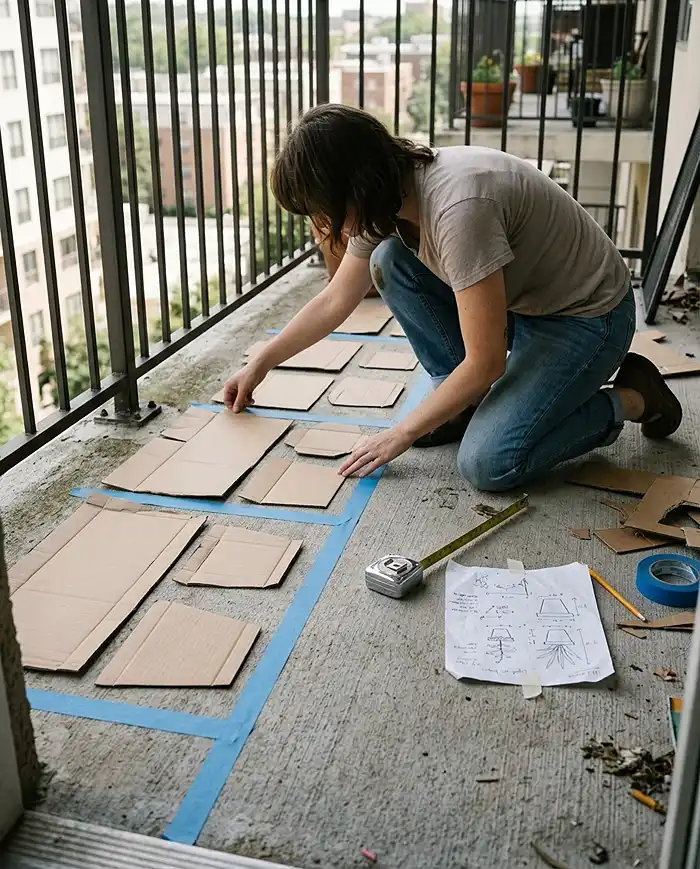
Starting a small balcony garden begins with a tape measure, not a shopping cart. Measure the space, list your restrictions and choose one first goal, like fresh herbs or a leafy reading corner. Only then build a short shopping list, once you know where plants and people will go.
My first balcony was a mess of impulse buys with nowhere to sit. Picking one goal fixed that. The full Starting a Small Balcony Garden guide walks you through measuring and choosing.
Renter-Friendly Balcony Gardening Without Drilling
Renter-friendly balcony gardening without drilling means choosing reversible options like freestanding pots and stands. List the changes you want and check the relevant permissions first. Don’t assume every no-drill product is allowed, because buildings differ.
I ask first, then buy. A quick message to the landlord beats a return trip with a heavy box. The full Renter-Friendly Balcony Gardening Without Drilling guide helps you compare reversible options.
Small Balcony Garden Layouts
Small balcony garden layouts work best when you draw the usable floor area and mark doors, views and access routes. Then test container positions with temporary markers before buying a complete setup. Moving a sketch is far cheaper than moving a full pot.
Cardboard cut-outs on my floor showed me that my “perfect” layout blocked the door swing. Plants stay put, but doors don’t. The full Small Balcony Garden Layouts guide shows how to test yours.
Long Narrow Balcony Garden Layouts
Long narrow balcony garden layouts depend on keeping a clear path. Sketch the narrowest points and the route through the balcony, then compare planting positions that keep access practical. You don’t have to fill every edge.
On a narrow balcony, I treat the floor like a hallway and keep one lane clear. Everything else works around it. The full Long Narrow Balcony Garden Layouts guide helps you sketch and compare.
Balcony Seating and Plant Layouts
Balcony seating and plant layouts work together when you pick the seating you truly need before adding containers. Test how a chair moves and how you’ll reach each plant, including any bar-stool arrangement you’re considering.
I wanted a cozy coffee spot and ended up wedged between pots. Now it’s chair first, plants second. The full Balcony Seating and Plant Layouts guide shows how to test both at once.
Square Balcony Garden Layouts
Square balcony garden layouts are easiest to plan on a scaled sketch with doors and your main sitting position marked. Compare corner and perimeter arrangements before committing to a central feature, since a piece in the middle can take over the whole space.
I used to put my biggest pot dead center because it looked balanced. It also blocked everything. The full Square Balcony Garden Layouts guide compares corner and perimeter options.
Shared Balcony Garden Layouts
Shared balcony garden layouts need an agreement before any pots move. Decide access, storage and maintenance responsibilities together, then use a shared sketch to make room for each person’s activities.
Shared spaces go sideways when the plan lives in one person’s head. A sketch on the table and a chat about who waters what keeps the peace. The full Shared Balcony Garden Layouts guide helps you set that up.
Large Balcony Garden Zones
Large balcony garden zones are sections divided by what you actually do there, like sitting, plant care and storage. Skip the urge to fill the space evenly. Plan the zones as connected areas so care, seating and storage flow together.
A bigger balcony is tempting to fill wall to wall, but mine feels better with breathing room. The full Large Balcony Garden Zones guide shows how to divide space by activity.
Balcony Container Weight
Balcony container weight deserves a careful approach. List your proposed containers and collect each product’s information. Keep estimates of what’s inside separate from your building’s permitted load, and get guidance from your building or a qualified professional before calling a layout acceptable.
I won’t toss out numbers here, because this one isn’t mine to guess. The full Balcony Container Weight guide shows how to organize the list you’ll bring to that conversation.
Juliet Balcony Plants
Juliet balcony plants call for a different plan, because a Juliet balcony is typically a railing at a door or window rather than a space you can stand in. Identify your exact configuration and check permitted planting arrangements before buying.
Plan how you’ll reach and water each container, and don’t copy a walk-out balcony layout or assume an outside attachment is allowed. The full Juliet Balcony Plants guide helps you work through those checks.
Kid Friendly Balcony Garden
A kid friendly balcony garden starts with the actual kids using it. Plan activities around who’s there, and get appropriate guidance on plant and product suitability. Keep supervision, access and upkeep needs explicit.
Fragrant herbs and bright flowers are lovely for little hands, but a sensory plant isn’t a safety plan. The full Kid Friendly Balcony Garden guide helps you plan around your own household.
Balcony Ideas With Air Conditioner
Balcony ideas with an air conditioner start with identifying your equipment and getting placement and maintenance guidance for it before you plan containers. Keep your layout reversible and document real changes. Don’t infer clearances or safe screening from a decorative photo.
I treat the unit as the boss of its corner and plan around it. The full Balcony Ideas With Air Conditioner guide helps you document your layout as you go.
How Do You Add Privacy and Plan for Exposure on a Balcony?
Nothing ruins a quiet coffee like feeling watched or blown about. Here’s how I think about screens, climbers, shade and weather, without promising miracles.
Renter-Friendly Balcony Privacy Screens
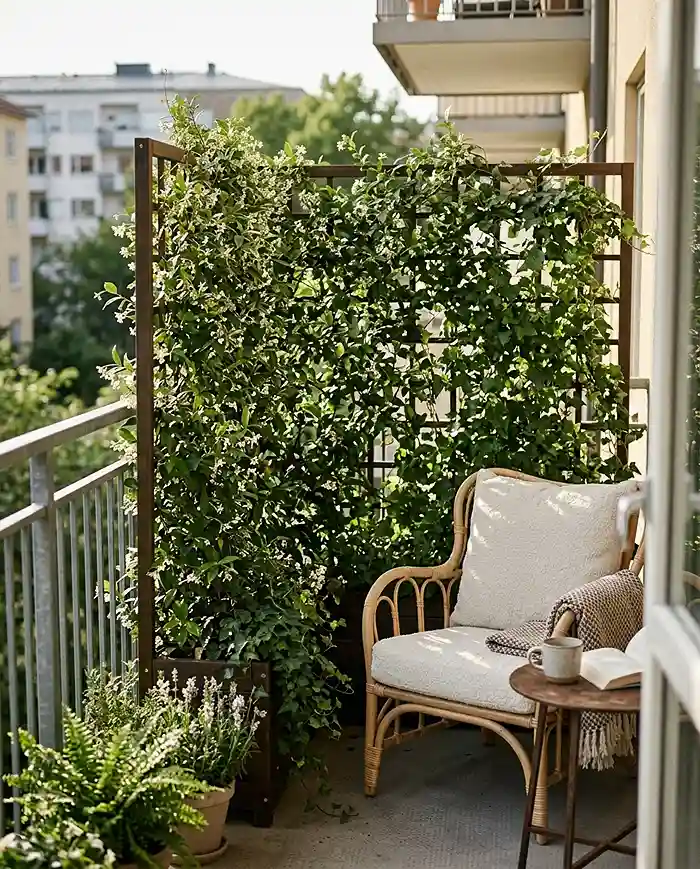
Renter-friendly balcony privacy screens block a specific sightline without permanent changes, though no method suits every balcony. Identify the view you want to interrupt, check which installation methods your building permits, then compare screen dimensions and upkeep.
I stood on my balcony and pointed at the exact window I wanted to block. It felt silly and it worked. The full Renter-Friendly Balcony Privacy Screens guide helps you compare your options.
Balcony Privacy Plants and Climbers
Balcony privacy plants and climbers use greenery to soften unwanted views. Map the view you want to block, choose a planting position that suits your conditions, and compare plant dimensions before picking the container or trellis that will support them.
Plants take their time, so I plan for a gradual result rather than an instant wall. The full Balcony Privacy Plants and Climbers guide helps you match plants to your conditions.
Balcony Shade Ideas
Balcony shade ideas start with recording where the sun lands and where you want to sit. Compare shade products after that, and check each product’s requirements and permissions. A shade purchase isn’t a complete answer for your plants.
Shade for you and shade for your plants are separate puzzles, and I treat them that way. The full Balcony Shade Ideas guide helps you sort through both.
Windy Balcony Planter Stability
Windy balcony planter stability begins with noting which positions are most exposed. Review product and building guidance before installing anything, and be wary of any generic added-weight or fastening trick sold as universal protection.
I can’t promise windproof, and neither should anyone. I watch where the gusts hit on a breezy day and take notes. The full Windy Balcony Planter Stability guide helps you record and review exposed spots.
Balcony Mosquito Net Ideas
Balcony mosquito net ideas start with defining what you want the screen to do: keep insects out. Review suitable products before choosing a layout, and keep access and plant care practical. Don’t swap in privacy mesh or pet-enclosure advice for the product’s own requirements.
One mesh doesn’t do every job, which I learned the annoying way. The full Balcony Mosquito Net Ideas guide helps you match a product to its purpose.
How Do You Add Vertical Growing Space Without Guesswork?
Going up is the classic small-balcony move, but only if you can still reach everything you grow.
Vertical Balcony Garden Systems
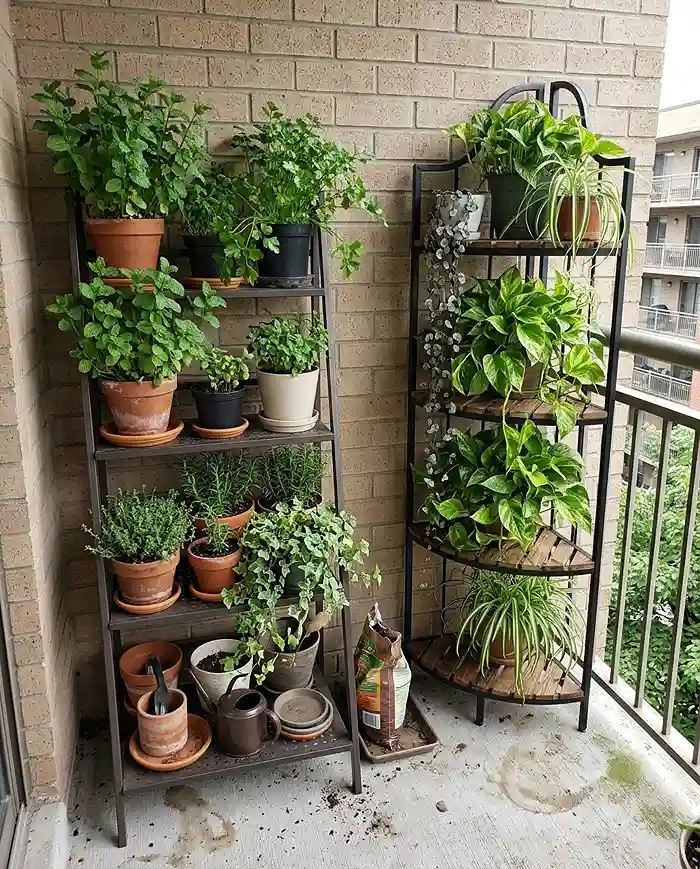
Vertical balcony garden systems stack plants upward using freestanding units, shelving and other permitted setups. Compare those options before choosing plants, and plan access to every container rather than designing only for the front-view photo.
I once built a lovely wall of pots that I couldn’t water without a stepladder. The full Vertical Balcony Garden Systems guide helps you compare systems with access in mind.
Balcony Plant Shelves and Corner Stands
Balcony plant shelves and corner stands tuck pots into unused corners. Measure the intended corner and check product instructions before loading a stand, then arrange plants so each container stays reachable for care.
Back-row plants are the ones I forget about, so I place them where I can still see them. The full Balcony Plant Shelves and Corner Stands guide shows how to plan your corner.
Hanging Balcony Planters
Hanging balcony planters bring greenery to eye level, but only with an approved support arrangement. Identify that before you buy. Compare access, watering and removal needs as part of the design.
Watering something overhead is a chore if you plan it badly. I think through the reach before I buy. The full Hanging Balcony Planters guide helps you compare supports and access.
DIY Balcony Planters Versus Ready-Made Options
DIY balcony planters versus ready-made options comes down to materials, tools, upkeep and total project effort. Compare all four before committing to DIY, and document the actual result, since homemade doesn’t always mean cheaper.
My “cheap” homemade box cost me in tools, time and one very crooked board. The full DIY Balcony Planters Versus Ready-Made Options guide helps you compare honestly.
Accessible Raised Balcony Planters
Accessible raised balcony planters bring soil up to a comfortable working height. Plan the setup around the user’s preferred reach and working position, and test access with a mock-up before selecting a planter.
A stack of cardboard boxes made a surprisingly good mock-up for me. The full Accessible Raised Balcony Planters guide shows how to test your setup before buying.
Balcony Greenhouse Ideas
Balcony greenhouse ideas cover small enclosed growing structures. Measure your usable area and check applicable restrictions before comparing products, then plan access and the growing conditions you want. Choosing a system is a separate task from winterizing plants you already have.
I get excited about these, then remind myself to check the rules first. The full Balcony Greenhouse Ideas guide helps you compare products and restrictions.
How Do You Plan Pet-Conscious Balcony Access?
This is where I’m most careful, because pets and fall risks aren’t things to improvise. Treat this section as a list of questions to ask, not answers to rely on.
No-Drill Balcony Cat Netting
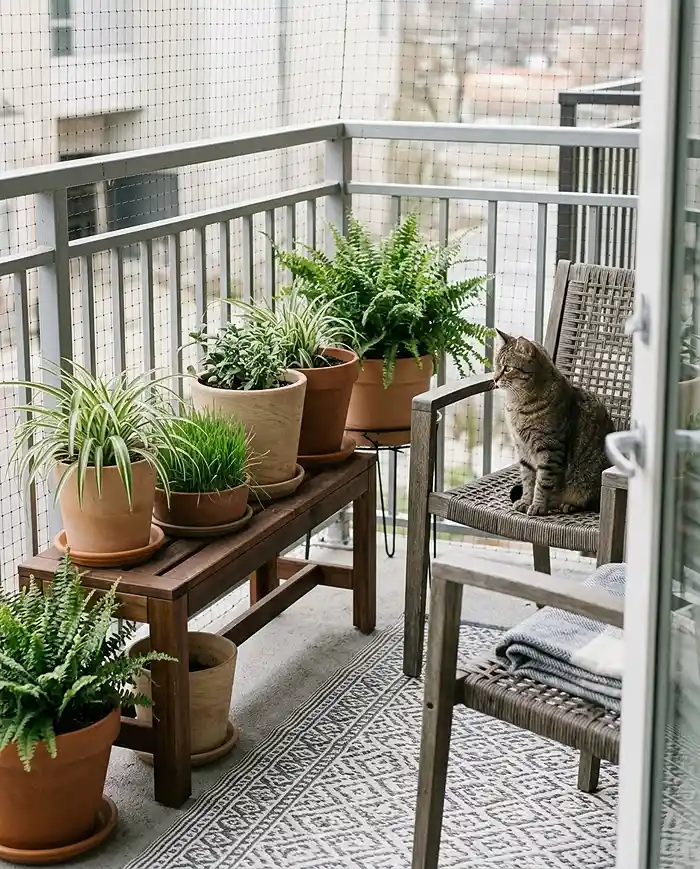
No-drill balcony cat netting is a safety-sensitive project, not a decorative hack. Get appropriate advice before relying on any attachment method, and don’t assume a product’s claims cover your balcony or your cat.
This is one I leave to the experts. The full No-Drill Balcony Cat Netting guide helps you prepare the right questions to ask.
Pet-Conscious Balcony Garden Plants
Pet-conscious balcony garden plants should be identified by their proper names and checked against authoritative veterinary references. Keep plant selection separate from enclosure and fall-risk decisions, since each needs its own check.
Common names can be slippery, so I look up the proper name first. I’m not naming any plants as safe here. The full Pet-Conscious Balcony Garden Plants guide shows how to check them properly.
Stop Cats Digging in Plant Pots
To stop cats digging in plant pots, first work out what’s driving the digging. Verify any response with appropriate veterinary guidance, keep plant suitability and enclosure planning as separate checks, and skip a household remedy just because it’s called natural.
The full Stop Cats Digging in Plant Pots guide helps you describe the problem clearly before you ask for advice.
Balcony Planter Comparison Table
| Option | Check First | Best For | Watch Out For |
|---|---|---|---|
| Railing planters | Rail profile, product instructions, building rules | Saving floor space where rail attachments are allowed | Watering access and drips |
| Freestanding planters | Container dimensions, material, filled setup | Rentals that don’t allow attachments | Taking over floor space |
| Grow bags | Handling, storage, water management | Easy moving and tucking away | Appearance and water on the floor |
| Self-watering pots | How the reservoir works, upkeep needed | Easing the routine while you’re home | Skipping regular checks |
| Vertical systems | Permitted system types, access to every container | Adding growing space on a small floor | Unreachable back plants |
| Hanging planters | Approved support, removal, watering reach | Eye-level greenery | Awkward watering |
| Privacy screens | Permitted installation, the sightline | Blocking one specific view | Universal no-drill claims |
| Raised planters | Preferred reach and working position | Comfortable tending | Skipping the mock-up |
Use the table as a shopping filter. Pick the row that matches your biggest constraint, then check the second column before you buy anything.
It also helps to pair choices, like freestanding planters with one privacy screen, so each part of your setup solves a different problem.
Expert Tips and Variations
Small-Space Swaps
The easiest small-space swap is trading one big feature for a few flexible pieces. Instead of a large central planter, try grow bags or a corner stand that you can shift as your balcony planters and seating needs change.
Keeping things movable also makes reversible, renter-friendly changes much simpler when your lease or layout shifts.
Trial Everything While You’re Home
Test every new setup while you’re home to watch it. That goes for watering systems, DIY planters, self-watering pots and anything with a reservoir.
Write down what happened, then fix surprises before you rely on the setup. It’s the habit that’s saved me the most trouble.
Seasonal Prep Tips
Seasonal prep is mostly a quick review. When the weather changes, revisit your sketch, recheck drainage and decide what stays out and what gets stored.
Check your storage plan before the season turns, so tools and spare containers don’t crowd the growing space. If you’re planning an enclosure, treat it as its own project and keep winterizing existing plants separate.
Frequently Asked Questions
What are the best balcony planters for renters?
The best balcony planters for renters are usually freestanding ones, since they don’t need attachments. Compare container dimensions, material and your filled setup, and check your lease or building rules before choosing. Use railing planters only where your building clearly permits them and the product fits your rail.
How do I stop balcony planters from leaking onto the neighbors below?
Start with a controlled watering check: water slowly while you’re standing there and trace where every drop goes. Then review your container and collection arrangement before adding more pots. If something still drips, fix it before expanding. No setup guarantees zero leaks, so keep checking.
Can I garden on a rental balcony without drilling?
Often yes, using freestanding pots, shelves and stands, though what’s allowed depends on your building. List the changes you want and check permissions first. Compare reversible options, and don’t assume every no-drill product is acceptable to your landlord.
Are self-watering balcony planters worth it?
They can be, depending on your containers and routine, but a reservoir doesn’t remove the need for checks. Try one pot first and watch how it behaves, then decide whether to expand. Testing while you’re home beats discovering a problem mid-trip.
How do I add privacy to a balcony as a renter?
Identify the exact sightline you want to interrupt, then check which installation methods your building permits. Compare screen dimensions and upkeep, or consider climbers in a suitable container. No method fits every balcony, so confirm requirements before you buy.
Final Thoughts: Pick One Planter and Start
You don’t need to do everything at once. Pick one idea, like a single freestanding planter in a spot you’ve marked with tape, and try it for a while. That’s how my balcony went from a drip on the neighbor’s window to my favorite room in the apartment.
I’d love to hear what you’re growing out there. Leave a comment with your balcony setup and your biggest renter headache, and I’ll point you to the guide that fits.
And if this helped, save it to Pinterest or share it with a fellow balcony gardener who’s still staring at an empty corner.