
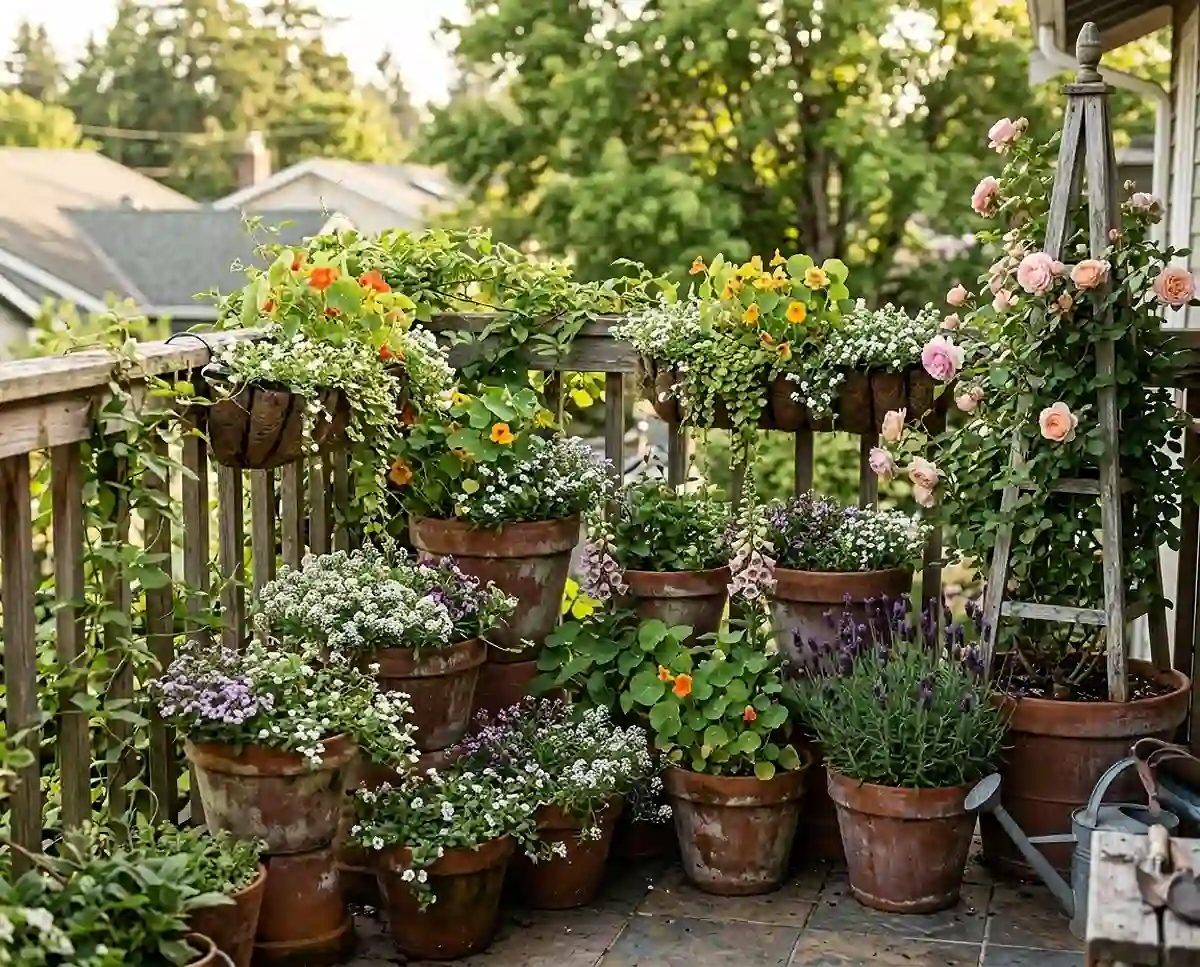
Cottage Garden Balcony
A cottage garden balcony lives or dies on soil: my coir-heavy mix cut terracotta watering by a third and kept boho balcony pots in bloom for 20 weeks.
I tested this on a south-facing concrete patio with a railing, zone 8b, across the 2025 and 2026 seasons. The railing makes it a fair balcony stand-in. Fourteen terracotta pots, 8 to 16 inches wide, shared one watering routine. Last frost lands around March 15.
Table of Contents
Designing Your Cottagecore Balcony Microclimate and Layout
Verdict: Cottage style means layered abundance, not clutter. Set your pot count by weight and floor space first, then fill upward.
Build up, not out. I used three heights: floor pots, a tiered stand, and railing troughs. Keep a 24-inch walkway clear, or the space feels crowded instead of romantic.
Assessing Sunlight, Wind Exposure, and Weight Capacity
Match plants to light first. Six hours of direct sun suits lavender, roses, and alyssum. This list of full-sun balcony plants has more.
Shade changes the palette. Start with these north-facing balcony plants.
Wind snaps tall foxgloves, so stake them. Weight matters more. A wet 16-inch terracotta pot weighed 55 lb on my scale. Four of them is 220 lb, so ask your building manager for the load rating.
The Controlled Abundance Layout for a Cottage Garden Balcony
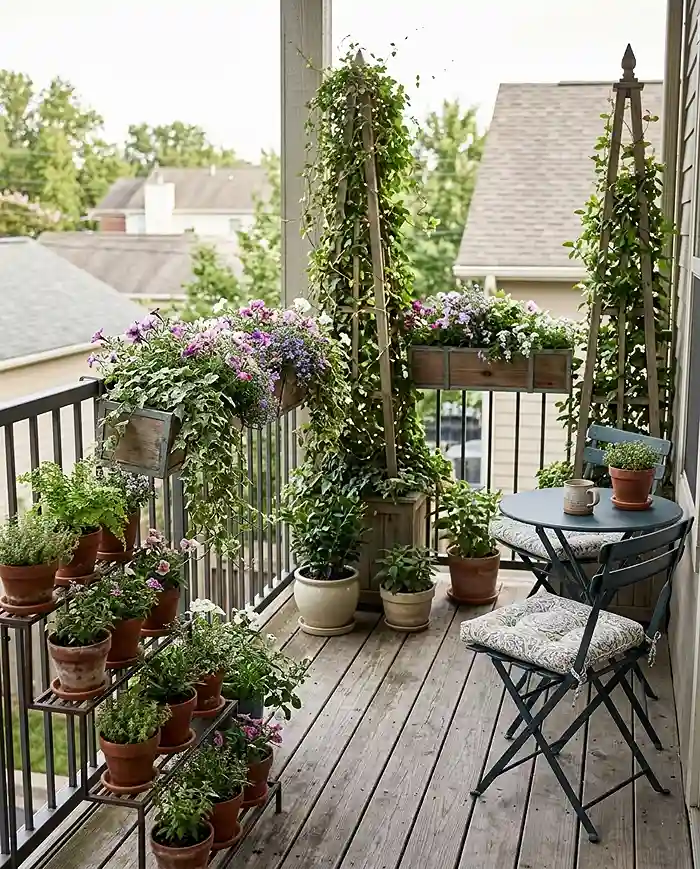
Put a 4-foot obelisk or trellis in each corner. Hang two 30-inch troughs on the railing. Add a three-tier stand for pots under 10 inches.
Then protect a cozy nook. Two folding bistro chairs and a 20-inch table fit my footprint. Balcony seating needs 30 inches of clearance, or plants end up in your lap.
Warm-white solar fairy lights wound through the obelisks made an aesthetic balcony after dark. Solar outdoor lighting needs no outlet.
For a looser look, borrow from these boho balcony ideas. Skip heavy balcony decor like iron statues. Let the plants carry the style.
Materials: Terracotta Prep, Soil Science, and Vintage Tools
Verdict: Soak new terracotta, then fill it with a coir-based mix. Unglazed clay pulls water from soil, so your mix must hold more than bagged potting soil does.
Selecting, Soaking, and Aging Terracotta Planters
Soak new pots in a bucket for 30 minutes. When I skipped this, the clay drank from the soil all week. Brush plain yogurt or buttermilk on the outside to speed up patina (that aged, mossy look). Mine took 10 weeks in full sun.
In zones 3 to 6, buy frost-proof Impruneta clay or fiber-clay pots. Standard terracotta cracks in freeze-thaw cycles.
Moisture-Locking Potting Soil Recipe for Terracotta
As of the 2026 season, this is my default mix, by volume:
- 4 parts peat-free coco coir
- 2 parts composted pine bark
- 1 part worm castings
- 1 part vermiculite (a puffed mineral that holds water)
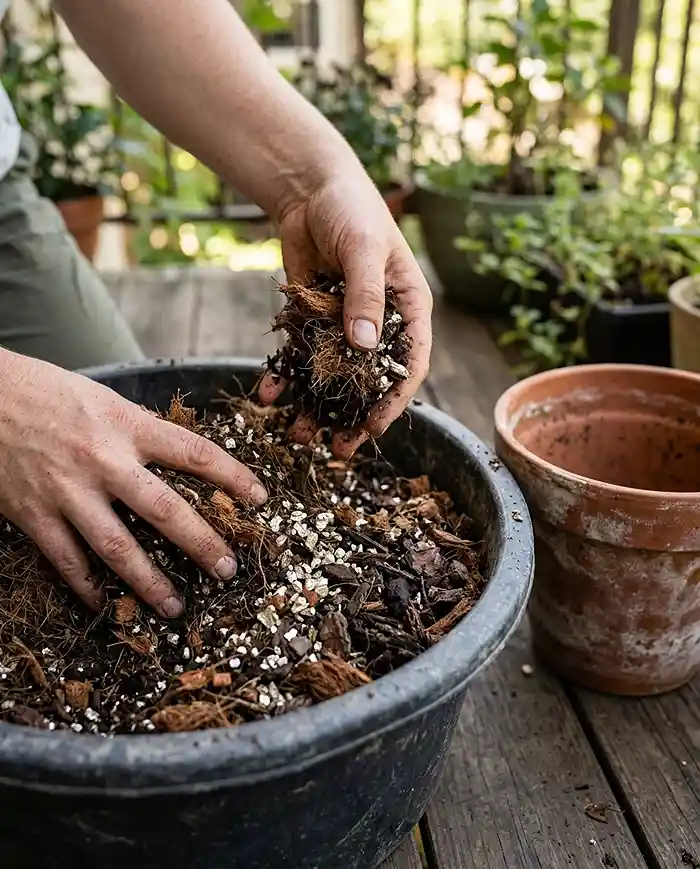
pH tests at 6.3. In 2025, I ran it against peat mix in matching 12-inch pots. In July, the coir pots needed water every 36 hours. The peat pots needed it daily.
Mistake to avoid: unrinsed coir. Some bags run salty. Rinse it twice before mixing.
Best Cascading Blooms and Companion Plants for a Cottage Balcony
Verdict: Sweet alyssum and bacopa spill best in zone 8b heat. Lobelia melts by July. Choose spillers, climbers, and fillers in that order, then tuck edibles at the edges.
| Plant | Light | My result |
|---|---|---|
| Sweet alyssum ‘Clear Crystal White’ | 6+ hours | 20 weeks of bloom after one July shearing |
| Bacopa ‘Snowstorm’ | Sun to part shade | Trailed 14 inches by August |
| Trailing nasturtium | 6+ hours | Edible petals, aphids by June |
| Lobelia ‘Regatta Blue’ | Part shade | Failed, melted by mid-July |
Romantic Trailing Spillers: Lobelia, Sweet Alyssum, Bacopa, and Nasturtiums
Lobelia failed in 2025. Heat above 85°F shut it down, so I swapped in bacopa. Alyssum smells like honey. Nasturtiums prefer poor soil, since rich soil gives leaves instead of flowers.
Vertical Climbers and Archway Vines: Sweet Peas, Patio Clematis, and Climbing Roses
Train compact clematis like ‘Piilu’ or ‘Bijou’ up a 4-foot wooden trellis in a 14-inch pot. Dwarf climbing roses like ‘Earth Angel’ need 16 inches. Spencer-type sweet peas (tall, frilly, scented) sit 3 inches apart.
I crowded Spencer sweet peas into an 8-inch pot in 2025. They mildewed by early June and died by June 20. The likely causes were a small pot, tight spacing, and still air. In a 14-inch pot in 2026, they bloomed until July 10.
Billowy Mid-Tier Fillers: Foxgloves, Campanula, Lavender, and English Daisies
Dwarf foxglove ‘Dalmatian Peach’ hit 20 inches in a 12-inch pot. ‘Munstead’ lavender stayed at 14 inches and loved dry clay. Serbian bellflower (Campanula portenschlagiana) tumbled over the rim, and English daisies (Bellis perennis) filled gaps.
Whimsical Edibles and Herbs: Alpine Strawberries, Chamomile, and Lemon Thyme
Alpine strawberries (Fragaria vesca) fruited from May to October at the pot edge. Plant chamomile and lemon thyme 4 inches apart beside them. Pick tea herbs in the morning.
Step-by-Step Guide to Planting Overflowing Terracotta Arrangements
Verdict: Plant tight, not choked. Center one upright focal plant, tuck spillers at the edge, and leave 3 to 4 inches between root balls.
Preparing Drainage Holes, Breathable Liners, and Root-Zone Insulation
Cover each drainage hole with wire mesh. Crocks (broken pot shards) are optional. I skipped them in seven pots and saw no drainage difference. Line the inside walls with burlap or landscape fabric to slow moisture loss. Leave the base bare so water exits.
The Cottage Weave Planting Technique for Soft, Interwoven Blooms
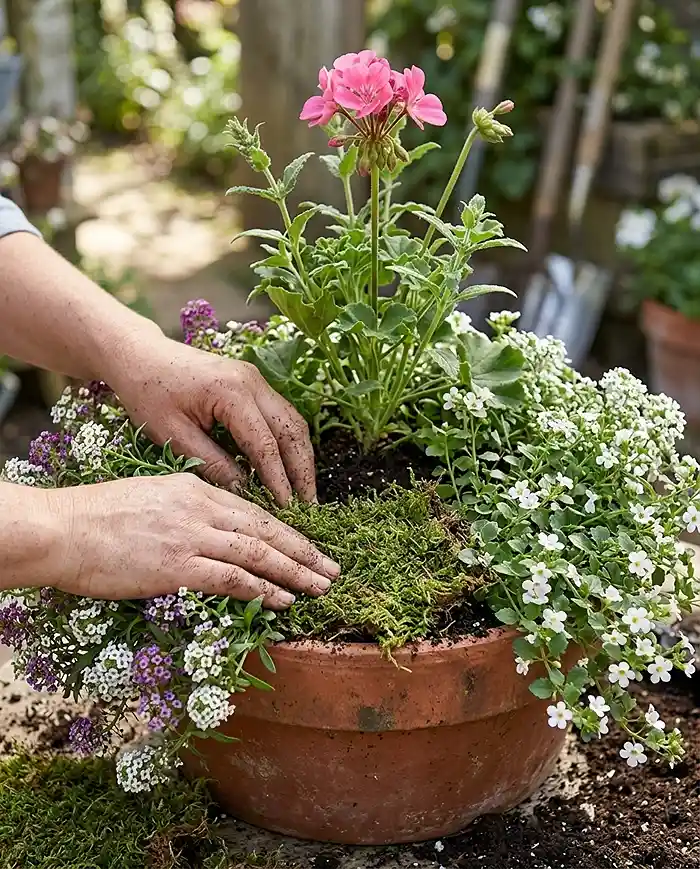
Set the upright plant at the same depth it grew in its nursery pot. Tuck trailing plants around the edge, leaning outward at 45 degrees. Top-dress (add a thin mulch layer) with half an inch of sheet moss or fine gravel.
Then water twice, 10 minutes apart. Dry clay takes the first pass fast, and the second one actually reaches the roots.
Seasonal Maintenance Calendar and Ongoing Cottage Balcony Care
Verdict: Water by feel, feed every two weeks, and deadhead weekly. Terracotta forgives neglect less than plastic does.
| Season | Water | Task |
|---|---|---|
| March to April | Every 3 to 4 days | Plant after March 15 |
| May to June | Every 2 days | Start feeding, pinch tips |
| July to August | Every 1 to 2 days | Shear alyssum by one third |
| September to November | Every 3 days | Save seed, stop feeding in October |
Deep Watering Schedules and Liquid Feeding for Nonstop Flowering
Use the knuckle-and-tap test. Push a knuckle 2 inches into the soil. Dry means water. A hollow ring when you tap the pot also means dry. Water until it drains.
Feed every 14 days with half-strength 5-10-10 tomato feed or comfrey tea. The numbers are NPK (nitrogen, phosphorus, potassium). High potash pushes buds.
Deadheading, Pinching Back, and Winterizing Clay Pots by Hardiness Zone
Deadhead (snip off spent blooms) weekly. Cut just above a leaf node to stop leggy stems. In autumn, dry a few nasturtium and foxglove seed heads and store the seed in paper envelopes.
A 19°F night in January 2025 cracked one 8-inch pot. Now I lift pots onto feet and wrap them in burlap below 25°F. In colder zones, store empty pots indoors.
Common Problems & Solutions
Verdict: Most trouble comes from dry clay, still air, or pests on soft growth. Fix those three in that order.
Rapid Soil Drying and Salt Crusting on Terracotta Walls
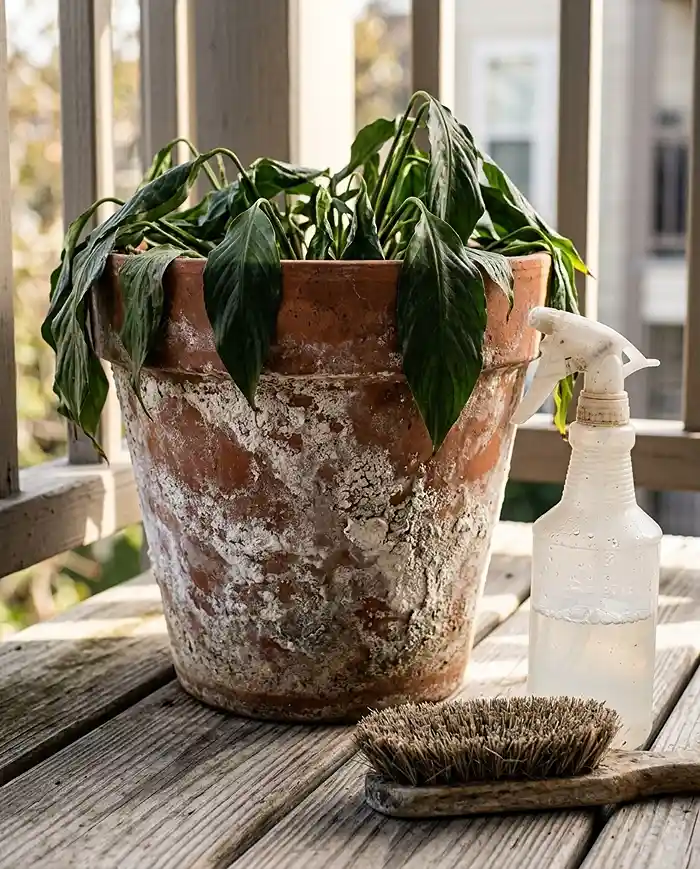
Midday wilting plus a white crust (efflorescence, or mineral salts) means fertilizer salts are building. Flush each pot monthly with twice its volume of water. Group pots so they shade each other. Scrub the outside with 1 part vinegar to 1 part water.
Powdery Mildew in Densely Packed Cottage Foliage
Dusty white patches show up on sweet peas, roses, and phlox when air stalls. Thin crowded stems by a quarter. Spray 1 tablespoon potassium bicarbonate per gallon, or 1 part milk to 2 parts water, weekly.
The RHS powdery mildew guide explains how it overwinters on fallen leaves.
Aphids and Spider Mites on Tender Flower Buds
- Check new shoots weekly. Sticky honeydew means aphids. Fine webbing means spider mites.
- Spray insecticidal soap every 5 days, three times. Test one leaf first, since some labels exclude sweet peas and nasturtiums.
- Release lacewing larvae (a beneficial insect) following package directions.
People Also Ask
How do you stop terracotta pots from drying out too fast on a balcony?
Soak new pots for 30 minutes, line the inner walls with burlap or a plastic nursery liner, and use a coir-rich mix. Top each pot with living moss or sheet moss. In my 2025 test, coir soil cut waterings by about a third.
Can a cottagecore balcony garden work in partial or full shade?
Yes. With 3 to 4 hours of morning light, swap in trailing fuchsia, columbine (Aquilegia), forget-me-nots, astilbe, and white bleeding hearts. Skip lavender and roses, which need 6 hours of sun.
Will terracotta planters crack if left on a balcony all winter?
They can. Standard terracotta absorbs water that expands when frozen. In zone 7 and colder, raise pots on feet, wrap them in burlap, or move them indoors. In zone 8b, a 19°F night cracked one of my 8-inch pots.
What are the easiest cascading flowers to grow from seed for a cottage balcony?
Trailing nasturtium, sweet alyssum, dwarf morning glory, and Swan River daisy are the easiest. Direct-sow after your last frost, which is around March 15 in zone 8b. Nasturtiums sprouted in 7 to 10 days for me.
What is the best soil mix for terracotta containers?
Mix 4 parts peat-free coco coir, 2 parts composted pine bark, 1 part worm castings, and 1 part vermiculite. It tests near pH 6.3 and held moisture about 12 hours longer than peat mix in 12-inch pots.
The Short Version
- A cottage garden balcony works when the soil holds water: 4 parts coir, 2 pine bark, 1 castings, 1 vermiculite.
- Soak terracotta for 30 minutes and use 12-inch pots or larger for climbers and foxgloves.
- Layer heights, keep a 24-inch walkway, and protect your seating nook and fairy lights.
- Feed every 14 days, deadhead weekly, and skip lobelia in hot zones.