
North Facing Balcony Plants: 10 Ideas Beyond Ferns
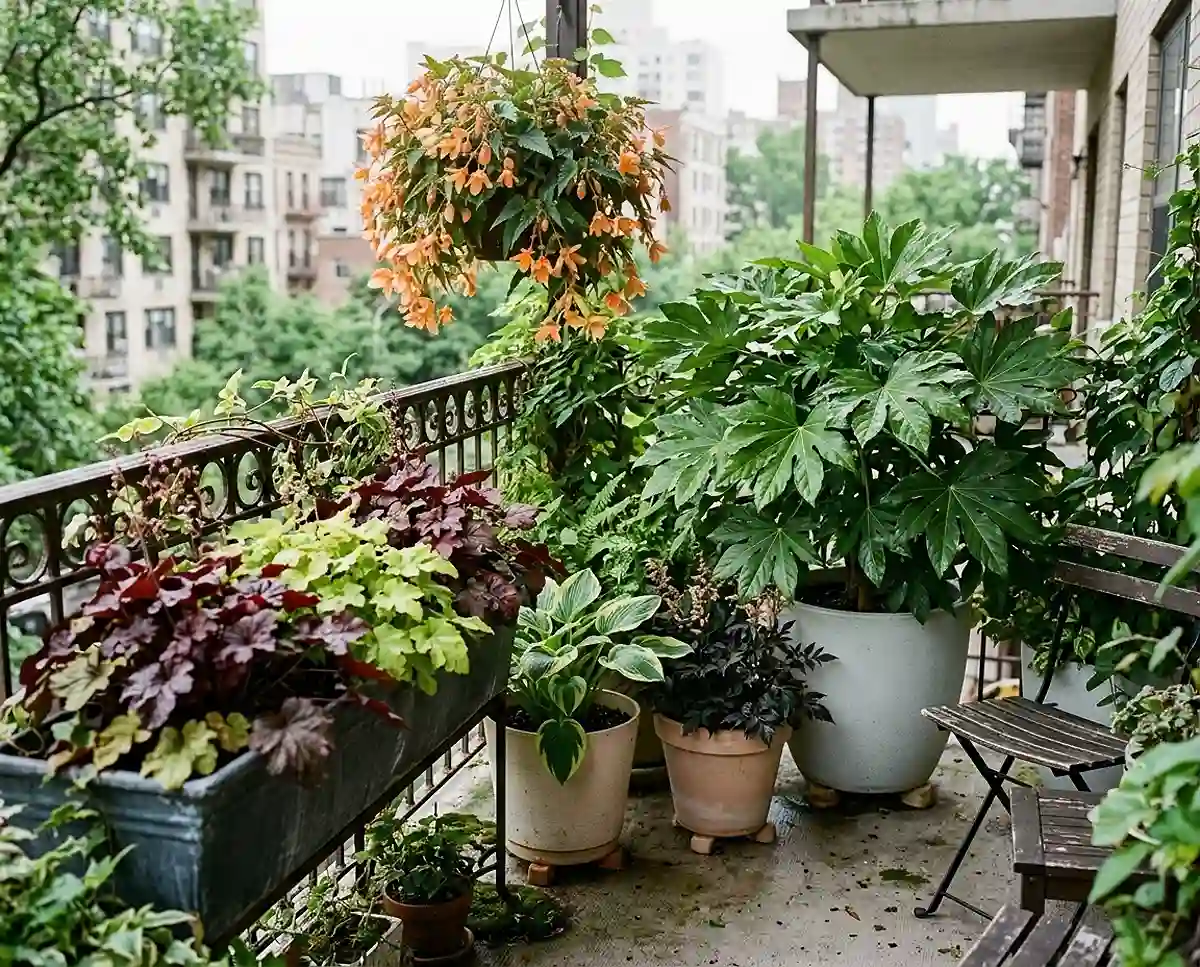
North facing balcony plants don’t have to mean another pot of ferns. These 10 colorful, tested combos turn a shady balcony garden into something you’ll show off.
I garden on a third-floor, north-facing balcony in zone 6b with about three hours of weak morning light. Some plants thrived here. Others died fast. Everything below survived at least one full year.
Table of Contents
Understanding Your Shade Balcony Microclimate
Spend one week watching your space before you buy anything. A north-facing balcony gets no direct sun for most of the year, but it isn’t uniform. Corners, railings, and walls all behave differently.
Light, wind, and heat shift with height and neighboring buildings. A sun-baked brick wall nearby can push summer temperatures high, so you’ll want heat-tolerant shade plants in some spots and moisture lovers in others.
Decoding Light Levels: Dappled, Bright Indirect, and Deep Shade
Quick Answer: Check your balcony at 9 a.m., noon, and 4 p.m. for a week. Bright indirect light casts a soft shadow, dappled light flickers, and deep shade casts no shadow at all.
| Light Level | What You See | Good Fits |
|---|---|---|
| Bright indirect | Faint, soft shadow | Begonias, coleus, fuchsia |
| Dappled | Moving light patches | Heuchera, astilbe, hostas |
| Deep shade | No shadow | Aspidistra, sweet box |
Also note glare bouncing off pale buildings across the street. That reflected light can noticeably brighten one corner while the other stays gloomy.
Wind Tunnel Effects, Hardiness Zones, and Structural Weight Limits
High-rise balconies run windier and colder than ground level. Drop your USDA Plant Hardiness Zone Map result by one to two zones for containers, since roots freeze from every side. My zone 6b behaves like zone 5.
- Wind: tie a ribbon to the railing for a day. If it stays horizontal, choose low, tough plants.
- Weight: wet potting mix weighs roughly 40 to 60 pounds per cubic foot. Many codes assume 40 to 60 pounds per square foot, so ask your building manager.
Essential Materials and Prep for Low-Light Container Gardening
Shade container plants sit wet far longer than sun lovers, because nothing is baking moisture out of the pot. Drainage matters more than fertilizer here. Gather this before planting:
- Pots with large drainage holes and pot feet
- Peat-free coir, pine bark fines, and perlite
- Horticultural grit for top-dressing
- A moisture meter or your index finger
- Slow-release organic fertilizer and liquid kelp
Selecting Lightweight Pots, Vertical Planters, and Drainage Aids
Choose frost-resistant fiberglass pots. They’re light, they won’t crack in winter, and they come in pale finishes that bounce ambient brightness back onto foliage. Breathable fabric wall pockets free up floor space and dry out faster than plastic.
Lift every pot on feet so water escapes and the base never sits in a puddle on cold concrete.
The Ideal Fast-Draining Potting Mix Recipe for Shade Plants
Here’s the mix I use now, measured by volume:
- 4 parts peat-free coir
- 3 parts pine bark fines
- 2 parts perlite
- Slow-release organic fertilizer, at the label rate
It keeps air around roots where sun can’t help dry the soil. Bagged all-purpose soil alone stays soggy for days in shade.
10 Creative Shade Balcony Garden Ideas Beyond Basic Ferns
These combinations blend color, architectural foliage, and a few edibles. Each one is built for low light. For more species to test, browse these balcony plant profiles. Also you can check how to Choose Plants for Your Balcony’s Actual Light
Idea 1: The Jewel-Toned Foliage Tapestry with Heuchera and Coleus
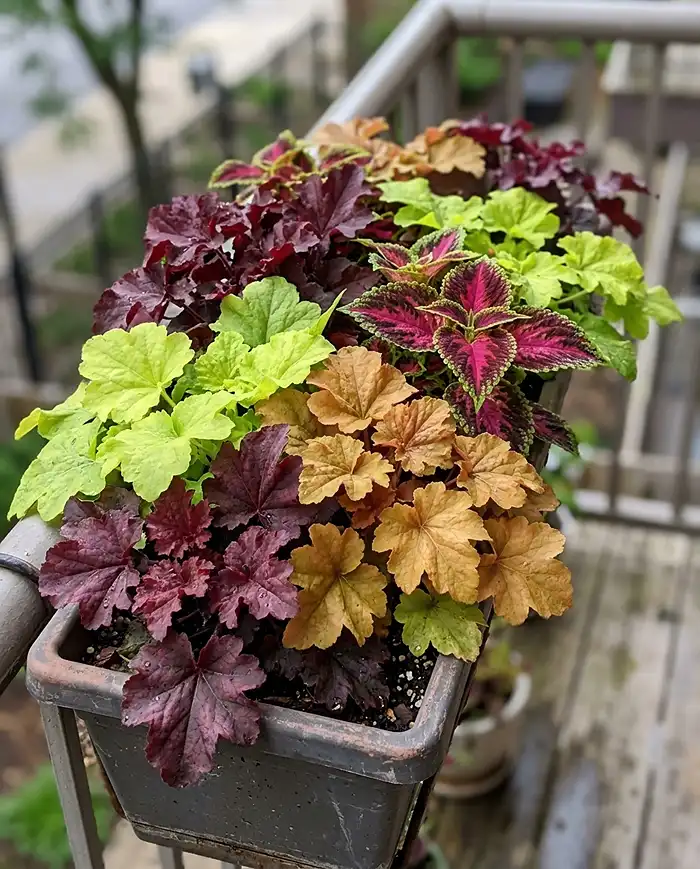
Fill a 24-inch trough with Heuchera [coral bells] ‘Obsidian’ (burgundy), ‘Lime Rickey’ (chartreuse), and ‘Caramel’ (copper). Heuchera holds color most of the year in zones 4 to 9. Tuck in coleus for summer fireworks. Pinch off coleus flower spikes to keep leaves full.
Idea 2: Cascading Trailing Begonia and Fuchsia Hanging Baskets
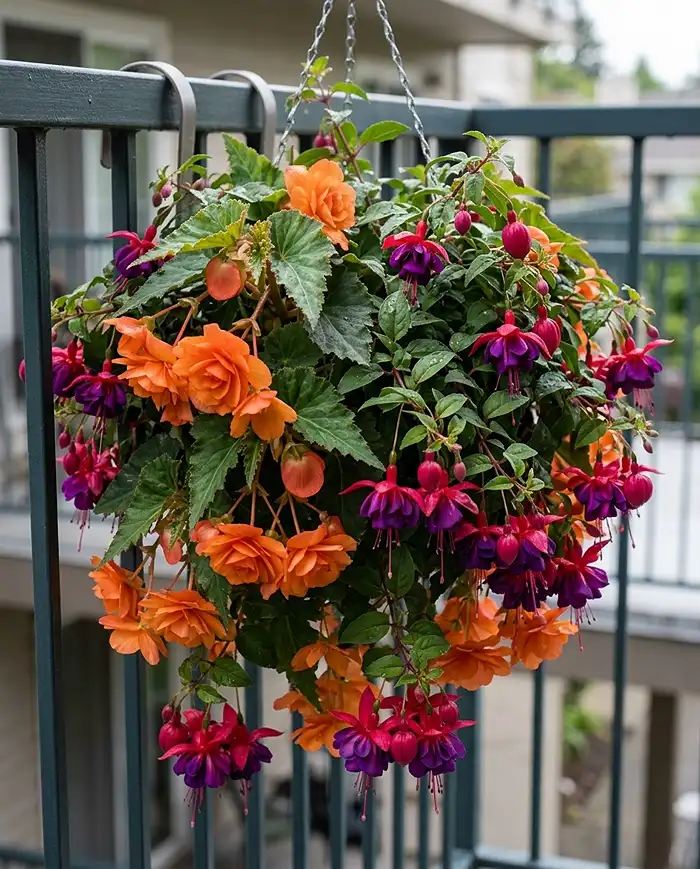
Hang 12-inch baskets from the overhead rail and clip more onto the railing. Pair trailing tuberous begonias like ‘Illumination’ with dual-toned fuchsias such as ‘Dollar Princess’. One ‘Dollar Princess’ basket of mine bloomed from early June until the first frost in October.
Idea 3: The Fragrant Woodland Corner with Sweet Box and Astilbe
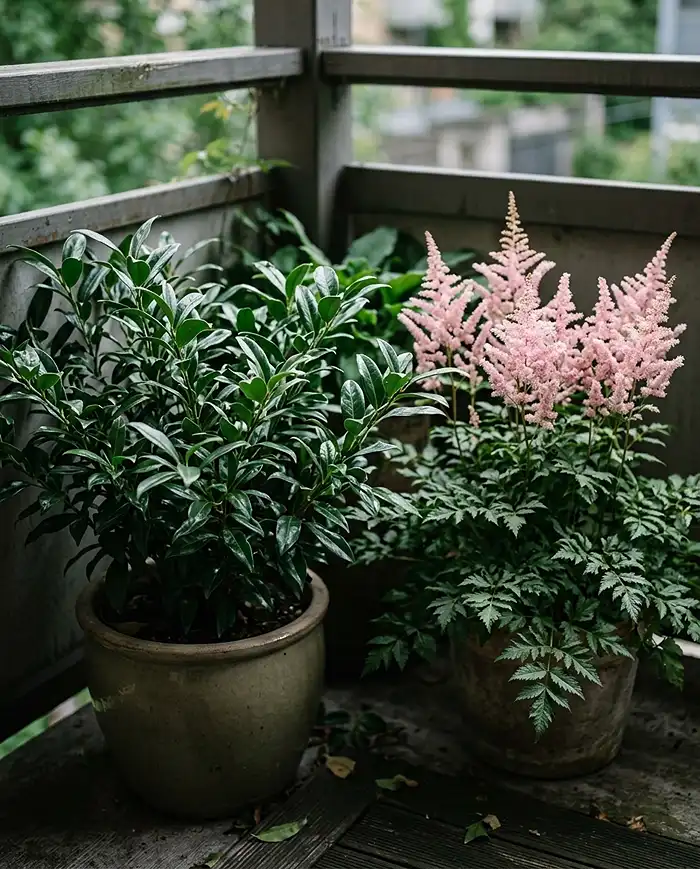
Evergreen Sarcococca confusa (sweet box) releases honey-sweet fragrance in January and February, when nothing else is blooming. Pair it with Astilbe ‘Visions’ for feathery plumes in early summer. Keep astilbe evenly moist, since dry soil scorches its leaf edges.
Idea 4: Architectural Drama with Cast Iron Plants and Spotted Laurel
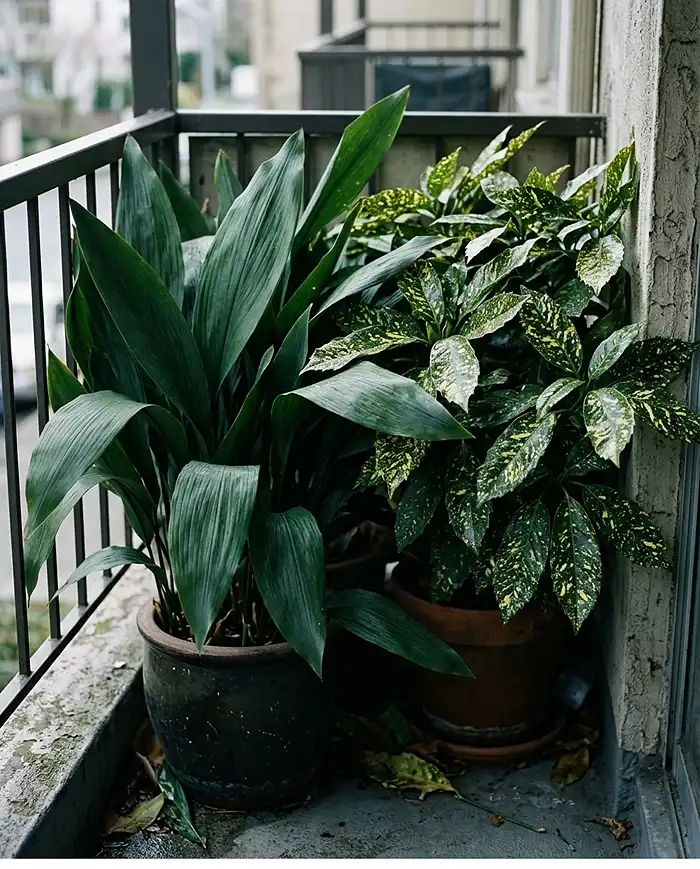
Anchor windy corners with Aspidistra elatior and gold-flecked Aucuba japonica ‘Crotonifolia’. Both shrug off deep shade and neglect. They’re reliably hardy only to zone 7, so I move mine into an unheated garage from December through March.
Idea 5: The Edible Shade Sanctuary with Leafy Greens and Forest Berries
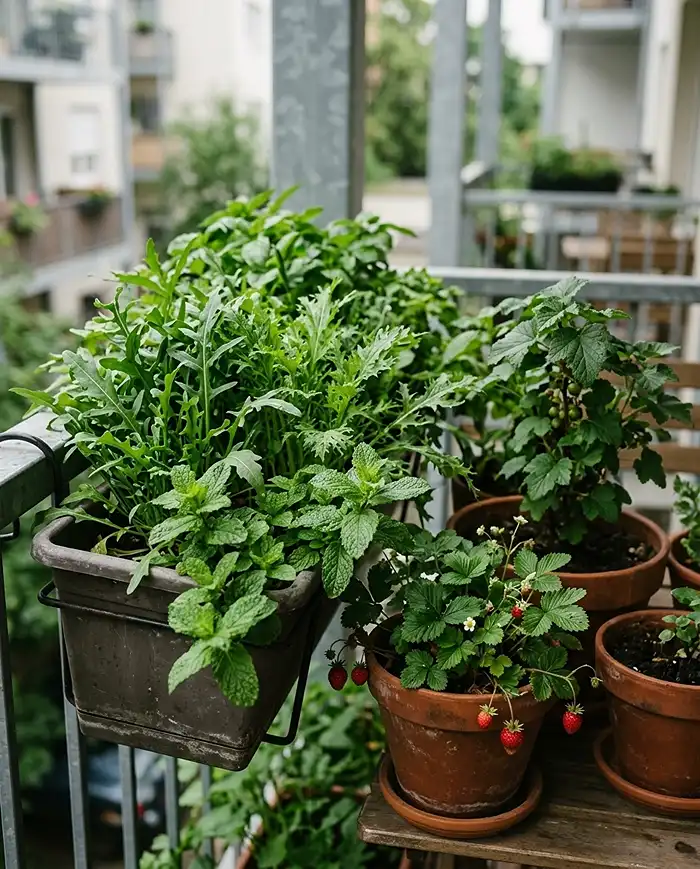
Fill 6-inch-deep railing boxes with arugula, mizuna, and mint. Add compact pots of alpine strawberries like ‘Mignonette’ and a dwarf blackcurrant such as ‘Ben Sarek’. Expect handfuls, not buckets. Shade slows fruiting, but the leaves taste great.
Idea 6: A Vertical Living Wall of Variegated Hostas and Lamium
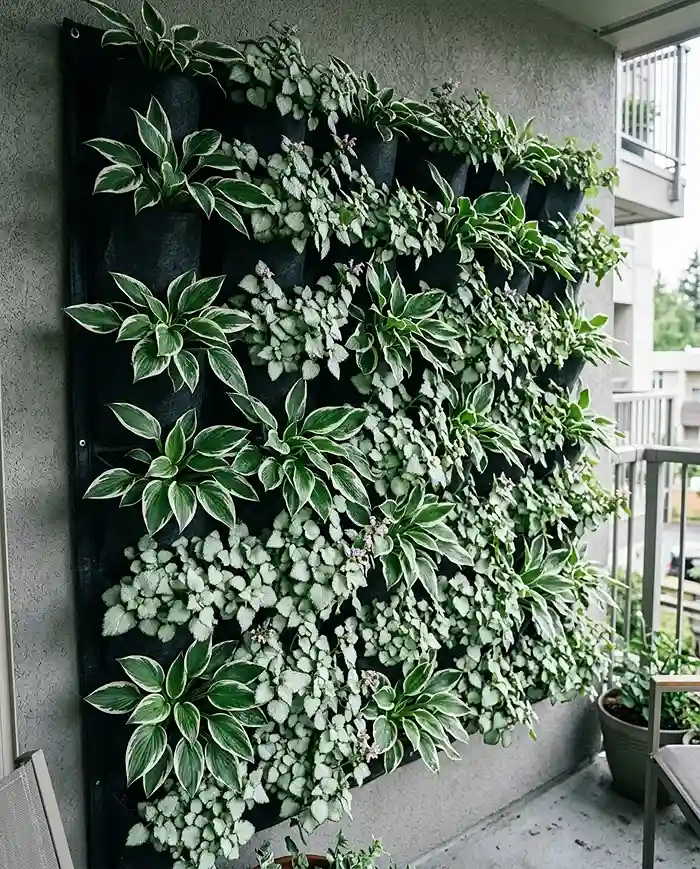
Mount modular pocket planters and fill them with miniature white-edged hostas and silver Lamium maculatum ‘Beacon Silver’. My first attempt was a failure. I used garden soil, the pockets stayed soggy, and the hosta crowns rotted by July. The fast-draining mix above fixed it.
Idea 7: Climbing Hydrangea and Star Jasmine Privacy Screen
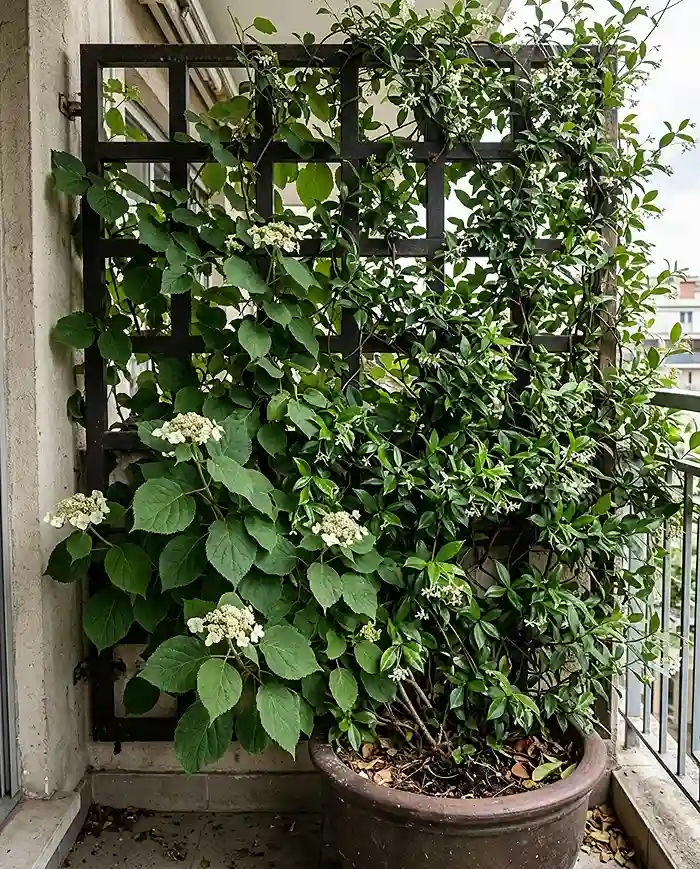
Secure a heavy-duty trellis to the wall or railing first. Climbing hydrangea (Hydrangea anomala subsp. petiolaris) clings on its own and suits zones 4 to 8, but it needs a 20-gallon pot and patience. Star jasmine (Trachelospermum jasminoides) only survives outdoors in zones 8 to 10 and flowers less in shade.
Idea 8: The Japanese Zen Sanctuary with Dwarf Bamboo and Hakonechloa
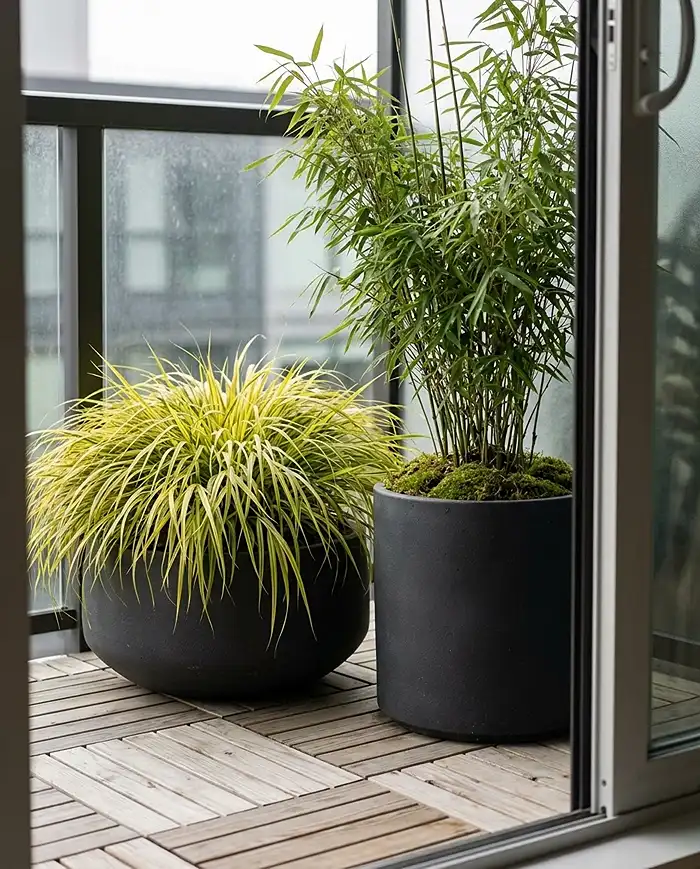
Combine golden Japanese forest grass (Hakonechloa macra ‘Aureola’), clumping Fargesia rufa bamboo, and a moss top-dressing. Set them on pale interlocking wood tiles in matte containers for a Japandi feel. Skip the olive tree, though. It needs six or more hours of direct sun.
Idea 9: Spring Bulb Lasagna Pots with Snowdrops, Corydalis, and Bleeding Hearts
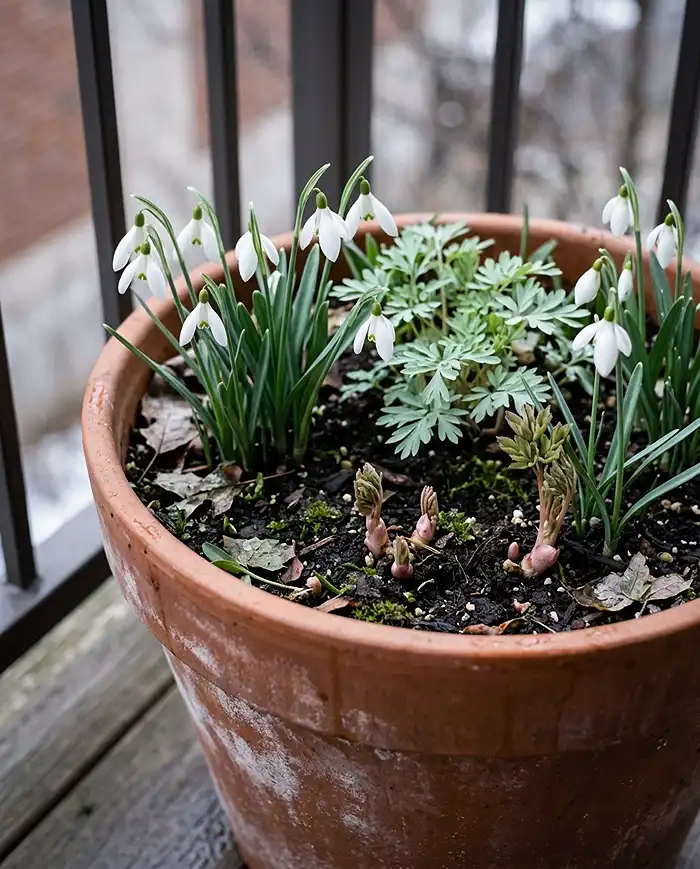
Use a 16-inch-deep pot with the mix above, and layer from the bottom up:
- Plant Corydalis solida tubers about 7 inches below the final soil line.
- Cover with soil, then add snowdrops (Galanthus nivalis) at 5 inches.
- Top with a bleeding heart (Lamprocapnos spectabilis) crown, planted 1 to 2 inches deep.
Snowdrops open in late winter, corydalis in early spring, and the bleeding heart carries on into early summer.
Idea 10: Subtropical Jungle Vibes with Caladiums and Fatsia Japonica
Bold, palmate Fatsia japonica leaves look stunning beside neon-veined caladiums like ‘White Christmas’. Caladiums are heat-tolerant shade performers that love hot, humid summers. Dig tubers when leaves yellow and store them dry at 55 to 60°F. Eight of my ten sprouted the next May.

Mastering Shade Balcony Maintenance and Seasonal Care
Shade plants grow slower and hold moisture longer, so your routine should run lighter than a sunny balcony’s. Water by touch rather than by calendar, feed gently, and adjust with the seasons.
Precision Watering and Feeding Schedules for Low-Evaporation Spaces
Quick Answer: Push a finger in to your second knuckle. If the soil feels damp, wait. If it’s dry, water thoroughly until it drains from the bottom.
| Season | Check Soil | Feeding |
|---|---|---|
| Spring | Every 3 to 4 days | Half-strength liquid kelp every 2 weeks |
| Summer | Every 2 to 3 days | Half-strength liquid kelp every 2 weeks |
| Fall | Every 5 to 7 days | Stop by October |
| Winter | Every 2 to 3 weeks | None |
Diluted kelp prevents leggy, weak stems that heavy nitrogen feeding causes in low light.
Winterizing Containers and Rotating Seasonal Displays
In zones 4 to 7, wrap root balls in burlap and group pots against the wall. Raise them off freezing concrete and shelter them from cold rain. Wet, frozen soil kills more plants than cold air.
Cut back spent perennials in early spring, then rotate in fresh pansies, begonias, or caladiums.
Common Problems & Solutions
Damp, shaded containers invite a predictable set of troubles: rot, gnats, stretched stems, and slugs. Most are easy to prevent if you catch the early signs. Here’s what I see most often.
Root Rot and Fungal Gnats in Damp Potting Soil
Yellowing lower leaves and black stem bases signal root rot. Let the pot dry out and drain freely. Drench with mosquito bits (Bti) steeped in water to kill fungus gnat larvae, then top-dress with horticultural grit.
Etiolation and Leggy Growth Reaching for Light
Etiolation [stretching toward light] shows up as pale, spindly stems. Pinch back tips to force bushier growth. Rotate pots a quarter turn weekly, and mount a weatherproof outdoor mirror panel to bounce light onto foliage.
Slug, Snail, and Vine Weevil Damage in Shady Pots
Notched leaf margins mean adult vine weevils. Damaged roots mean their grubs. Wrap copper tape around pot rims to deter slugs, and apply beneficial Steinernema kraussei nematodes to the soil when it’s above 41°F.
North Facing Balcony Plants FAQs
What flowers bloom all summer on a north-facing balcony?
Impatiens, torenia (wishbone flower), fibrous begonias, and fuchsias bloom nonstop in shade from early summer to frost. Deadhead (remove spent flowers) every week or two to keep new buds coming.
Can I grow vegetables or herbs on a balcony with no direct sunlight?
Leafy greens like spinach, Swiss chard, and lettuce grow well in ambient daylight, as do soft herbs such as parsley, chives, cilantro, and mint. Fruiting crops like tomatoes will fail without direct sun.
How do I brighten up a dark, shady balcony garden?
Combine white- and silver-variegated plants such as Brunnera ‘Jack Frost’ with whitewashed planters, warm solar string lights, and weatherproof outdoor mirrors. Together they bounce and add light where little arrives naturally.
Why do my shade balcony plants keep dying over winter?
Wet, frozen soil kills more shade plants than cold air alone. Shelter winter pots from cold rain, lift them off concrete, and choose perennials rated two zones hardier than your area.
Key Takeaways
- The best north facing balcony plants mix foliage color, texture, and a few reliable bloomers rather than relying on ferns.
- Drop your hardiness zone by one to two zones for containers, and check weight limits before loading up.
- Use a fast-draining mix of coir, pine bark fines, and perlite, plus pots on feet.
- Water by the knuckle test, and feed lightly with diluted kelp to avoid leggy growth.
- Protect winter pots from cold rain. Wet, frozen soil is the real killer. Explore more shade-friendly balcony plants for your next round.