
Balcony Plants by Sun, Shade, Wind & Weather
Find the right balcony plants for your light, wind, and weather, then fix problems before replacing everything. A calm, practical apartment guide.
Key Takeaways
- Full sun usually means six or more hours of direct sun a day, so watch your balcony’s light before you shop.
- A north-facing balcony gets the least direct sun in the northern hemisphere, and the most in the southern. Hemisphere matters.
- Frost begins at 32°F (0°C), so decide where each pot will spend the cold months before you buy it.
- A short log of watering, feeding, and changes beats any fixed calendar you copy from someone else.
- Start with a small trial group, photograph it, and expand only after it works.
My first spring on the balcony, I bought nine balcony plants in one afternoon because they looked gorgeous at the garden center. By June, six of them were crispy, sulking, or both. I stood there in my slippers holding a watering can, blaming the plants, the weather, and possibly the neighbor’s cat.
Table of Contents
Here’s what I’d missed. I never once checked where the sun actually landed. I’d chosen plants the way you choose throw pillows, by color and mood, and then wondered why a sun-lover was sulking in the one corner that stays shady all day.
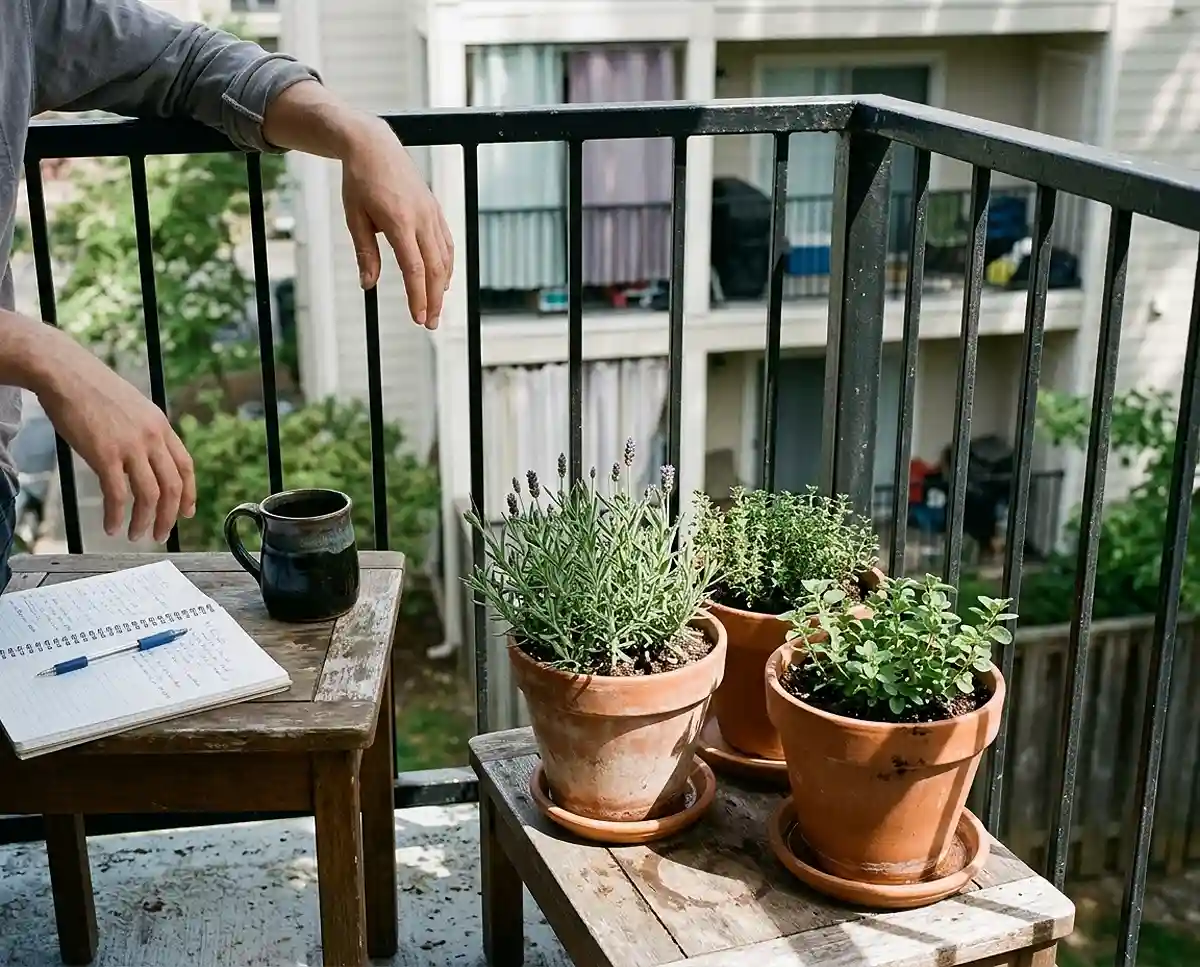
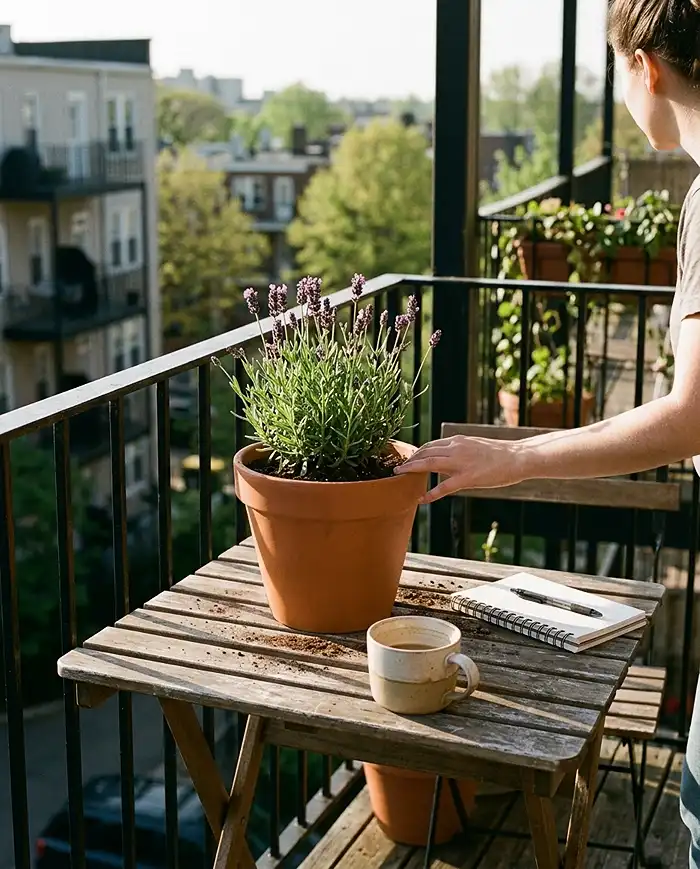
These days my mornings start with coffee, the smell of damp potting mix after watering, warm terracotta under my palm, and a small notebook balanced on the railing. That notebook has saved more plants than any gadget I’ve bought. I’ll show you exactly how I use it in the diagnosing section.
First, though, we need to talk about light. Get that right and a lot of your balcony problems never start. And the way you check it costs nothing.
Which Balcony Plants Fit Your Actual Light?
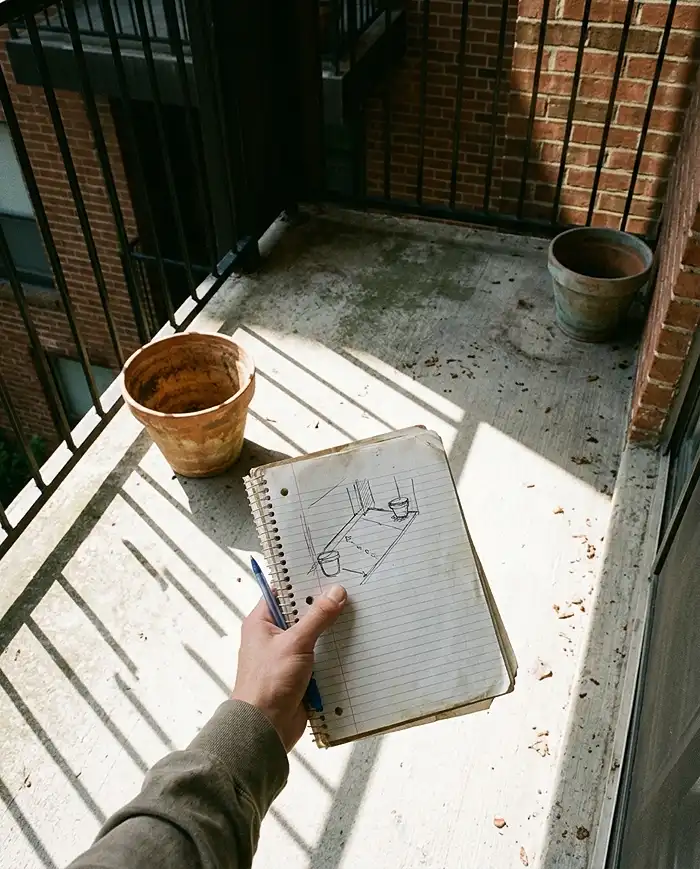
Pick plants for the light you actually have, not the light you wish you had. Note which way your balcony faces, which hemisphere you live in, and what casts shade, like a neighboring wall, a railing, or a tree. Jot it all down, because you’ll use those notes through the rest of this guide.
North-Facing Balcony Plants
In the northern hemisphere, a north-facing balcony gets the least direct sun, so shade-tolerant plants (the ones labeled for shade or part shade) are your friends. Below the equator it flips, so write down what your balcony actually gets before you shop.
I’ve learned that surrounding buildings matter as much as the compass. A bright wall across the way can bounce light around, while a deep overhang can make a sunny balcony feel like a cave. Shortlist from your notes, not from the compass.
The full North-Facing Balcony Plants guide will help you build that shortlist this weekend.
Full-Sun Balcony Plants
Full-sun balcony plants are the ones that want six or more hours of direct light a day. Compare each plant label with what your balcony really gets, because a bright spot isn’t always a sunny one. Heat bouncing off glass or walls can also dry pots out fast.
My rule for a sunny balcony is to start small. Pick a manageable handful, photograph them every few weeks, and only then add more. It’s far less painful to learn from three plants than from thirty.
When you’re ready to match labels to light, the full Full-Sun Balcony Plants guide walks you through it.
West-Facing Balcony Plants
West-facing balcony plants need to handle afternoon and evening sun, usually the hottest light of the day. Choose heat-tolerant, sun-loving plants, and watch which spots bake while others sit in a bit of shelter. A railing edge and a spot near the wall can behave very differently.
Before committing the whole balcony to one planting scheme, I like to compare a sheltered pot and an exposed pot side by side. Photograph both through the first hot weeks. The difference tells you where the tough plants go and where the fussy ones can hide.
The full West-Facing Balcony Plants guide has more on reading those hot spots.
East-Facing Balcony Plants
East-facing balcony plants get gentler morning sun followed by afternoon shade, which suits many plants that dislike harsh heat. Track how long the morning light lasts across your planting area, since a nearby building can cut it short. Plants that need full sun may struggle if the morning window is brief.
East is the exposure I’d call forgiving. Pick a small trial group, tuck it where the morning sun lands, and nudge pots around if something sulks. Moving a pot is free, and it’s the quickest experiment you’ll ever run.
For a ready-made trial list, see the full East-Facing Balcony Plants guide.
Plants for a Covered Balcony
Plants for a covered balcony start with a simple fact: a roof or overhang changes how much light and rain reach your pots. Map where light actually lands under the cover, then choose plants for those spots instead of copying an uncovered balcony’s arrangement. Rain won’t do your watering for you, either.
Watering convenience matters more than you’d expect under cover. I put the thirstiest pots right beside the watering station and the pickier light-lovers closest to the open edge. Your map will show you the sweet spots.
The full Plants for a Covered Balcony guide shows how to turn that map into a planting plan.
How Do You Build a Manageable Soil, Water & Feeding Routine?
A routine you can keep up beats a perfect one you abandon in three weeks. The trick is to adjust to what your pots tell you, and to write down what you did so the next decision is easier.
Watering Balcony Plants
Watering balcony plants works best when you check the pot, not the calendar. Feel how the soil is doing, compare that with what your particular plant prefers, and make sure extra water can drain out of the pot. A short log turns guesses into patterns.
My overwatered-pot disaster taught me this. I’d copied a fixed schedule from a friend’s sunnier balcony, and my plant sat soggy for weeks. Now I note what I saw and what I did, and the notes tell me when to change course.
The full Watering Balcony Plants guide shows how to set up a simple log.
Potting Soil for Balcony Containers
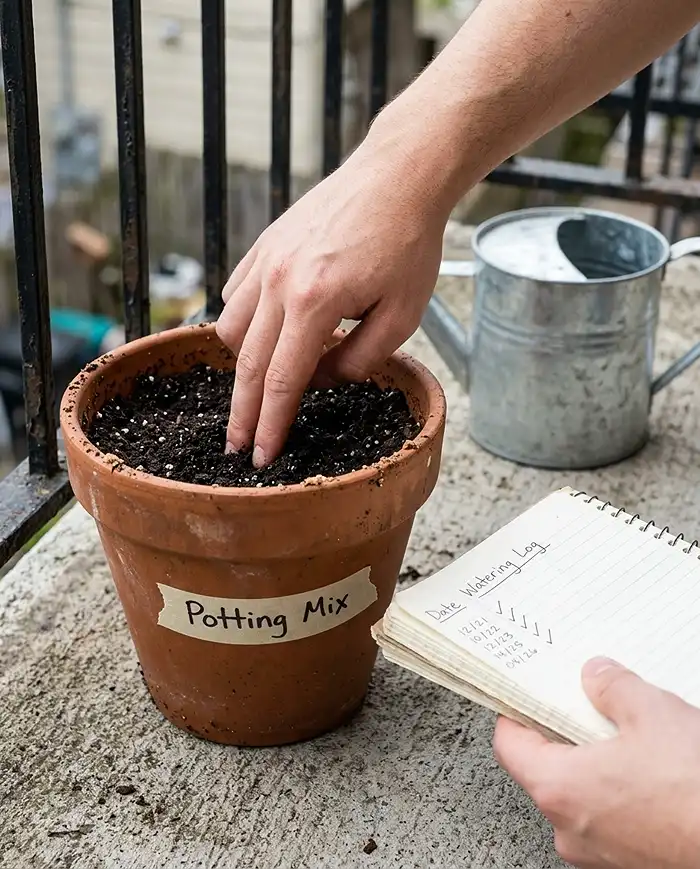
Potting soil for balcony containers should match the plants you’re growing and the pots you’re using. Read the bag label, compare it with each plant’s needs (some like fast-draining mixes, others like more moisture), and write down the mix you chose. Soil dug from the ground isn’t the same thing as potting mix.
Noting the mix sounds fussy, but it’s the detail you’ll wish you’d saved when a pot acts up months later. A strip of tape on the pot, or one line in your notebook, is plenty.
The full Potting Soil for Balcony Containers guide helps you compare labels before you buy.
Low-Maintenance Balcony Plants
Low-maintenance balcony plants are the ones whose needs match the time you actually have, not plants that need nothing. Decide how much care time you can realistically give your balcony in a normal week, then choose a small, compatible collection that fits it. Low-maintenance still means some care.
I’ve fallen for the word unkillable more than once. What really lightens the routine is grouping plants with similar light and water needs, so one quick round of watering covers the whole group.
For plant ideas that fit a busy week, the full Low-Maintenance Balcony Plants guide is a good place to start.
Fertilizing Balcony Plants
Fertilizing balcony plants starts with what you already own. Read the label on each product, follow its instructions, and write down what you gave which plant and when. That way you can tell a deliberate change from a guess when something looks off.
More feeding isn’t automatically better, and the log keeps me honest. If a plant perks up after a change, I know why. If it doesn’t, I know what not to repeat.
The full Fertilizing Balcony Plants guide covers how to build a simple feeding log.
Diagnose Plant Problems Before Replacing Everything
When something looks wrong, the urge is to rip it all out and start over. Slow down first. Photos and notes turn a mystery into a short list of suspects.
Why Balcony Plants Keep Dying
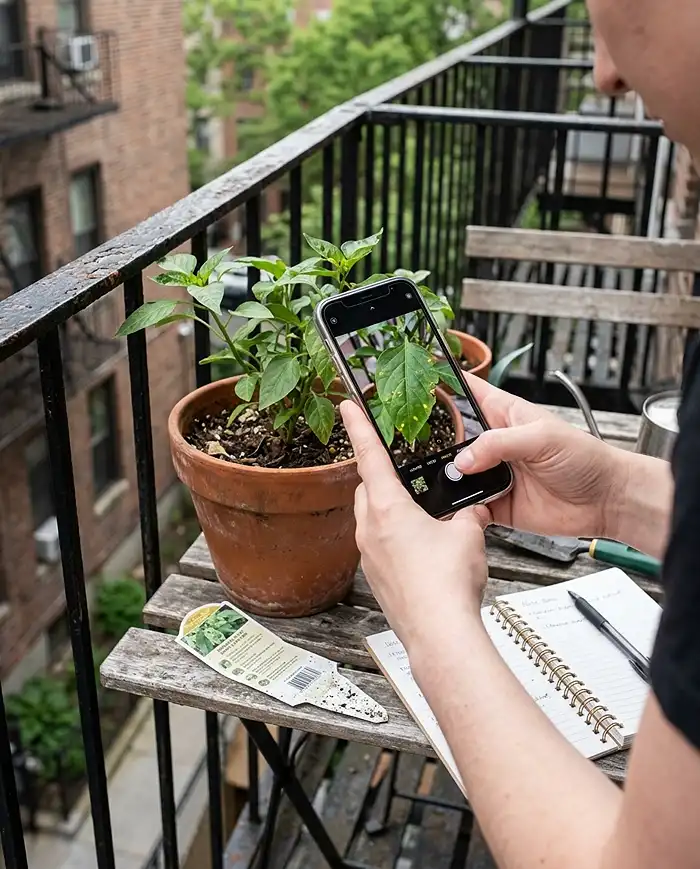
Balcony plants keep dying for reasons you can often track down: the wrong light, too much or too little water, poor drainage, or a recent change in weather or care. Gather photos, plant names, watering notes, and recent changes, then work through causes one at a time before replacing anything.
Here’s the three-question check I promised. What changed lately? What do my notes say about water and light? What does the plant label say this plant wants? Once I stopped replacing everything and started reading that notebook, my balcony got calmer, and so did I.
The full Why Balcony Plants Keep Dying guide walks through the causes step by step.
Balcony Garden Pest Identification
Balcony garden pest identification begins with a clear, close photo of the plant and the suspected pest in good light. Don’t treat every damaged leaf the same way, because holes, spots, and sticky leaves can have different causes. Match what you see against a trusted horticultural source for your area.
A local horticultural society, botanical garden, or garden center can often help with identification. I send a clear photo and a short note about the plant, which saves me from guessing and from overreacting.
The full Balcony Garden Pest Identification guide shows how to take photos that make identification easier.
Mold and Mildew in Balcony Containers
Mold and mildew in balcony containers can appear on the soil surface, on leaves, or on the pot itself, and each spot may point to a different cause. Photograph the affected area and note exactly where the growth appears before you do anything. Then check a plant-health reference for the right response.
I know the urge to scrub, toss, and start over. Resist it for a day. Photos plus notes about airflow, watering, and recent weather give you something real to compare against a reliable source.
The full Mold and Mildew in Balcony Containers guide explains what to look for and where to look it up.
How Do You Adapt Balcony Plants to Heat, Cold, Salt & Rain?
Weather is the part of balcony gardening you can’t control, so the goal is to observe it and plan around it. Small trials, careful notes, and local advice carry you a long way.
Wind-Resistant Balcony Plants
Wind-resistant balcony plants are the ones that cope better with constant buffeting, but no plant choice solves wind on its own. Note your most exposed positions, check local plant guidance, and trial a small selection. Pots and how they’re secured are a separate job, covered in the container stability guide.
Wind also dries pots out faster and can batter big, soft leaves, so exposed corners deserve their own notes. I’d photograph the trial plants after a gusty week and decide from there.
The full Wind-Resistant Balcony Plants guide helps you pick a trial group for those exposed spots.
Protecting Balcony Plants from Summer Heat
Protecting balcony plants from summer heat starts with observation. Photograph the symptoms, note recent weather, and change one thing at a time so you know what actually helped. Compare exposure, watering notes, and container placement to build a practical troubleshooting record.
When it gets hot, I’m tempted to fix everything in one panicked Saturday. Don’t. If I move a pot, change the watering, and add shade all at once, I never learn which step worked.
The full Protecting Balcony Plants from Summer Heat guide gives you a way to record what you tried.
Cold-Climate Balcony Plants
Cold-climate balcony plants need a winter plan before you buy them. Check local advice on overwintering (getting a potted plant through the cold months). Frost begins at 32°F (0°C), and roots in pots feel the cold more than roots in the ground, so decide where each plant will stay when the outdoor season ends.
It’s a bit like reserving a parking spot for a car you haven’t bought yet. Sounds silly, but where will this live in the cold months is the question that saves the most plants.
The full Cold-Climate Balcony Plants guide covers what to check before you buy.
Coastal Balcony Plants
Coastal balcony plants have to cope with salty air and often more wind, so look for plants recommended for seaside conditions in your area. Record your balcony’s exposure, consult local planting guidance, and trial a small selection before buying an entire coastal scheme.
A coastal balcony can look calm and still be tough on plants. Start with a few candidates, watch how their leaves look over a few weeks, and keep notes before you commit.
The full Coastal Balcony Plants guide can help you choose that first small group.
Rainy-Climate Balcony Gardening
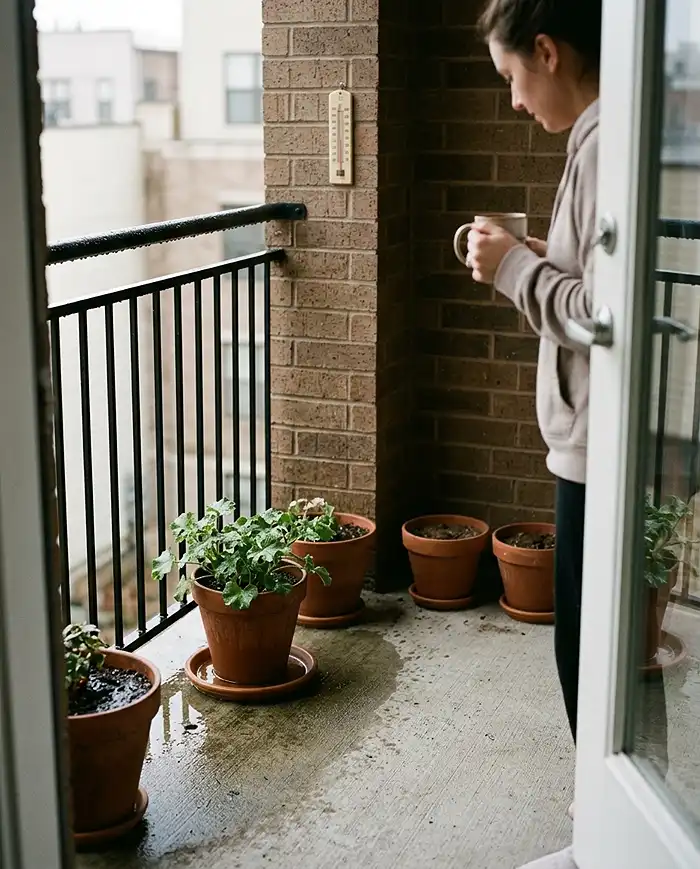
Rainy-climate balcony gardening is mostly about watching where rain reaches your pots and where water collects. Use those observations to review which plants suit the wet conditions, then look at drainage hardware if water lingers. Plants that dislike soggy soil need extra attention.
After a few rainy days, I walk the balcony with my coffee and look. Which pots got soaked? Which stayed dry under the overhang? Where did puddles sit? That short walk teaches me more than any forecast.
The full Rainy-Climate Balcony Gardening guide and the drainage guide pick up where this walk-around leaves off.
Which Specialist Plant Collections Are Worth Growing on a Balcony?
Specialist collections are fun, but they’re easy to buy from a photo. A styled picture tells you nothing about whether a plant suits your balcony, so check every candidate against your notes first.
Balcony Rose Garden
A balcony rose garden works when you choose correctly identified rose varieties and compare their needs with your balcony’s light and space. Most roses do best with plenty of direct sun, so read the label first. Plan the container and how you’ll reach the plant for care before you style anything.
Quick facts: Light: most roses like six or more hours of direct sun. Care level: medium.
I love a rose-covered balcony as much as anyone, but I’ve learned not to trust a styled photograph. Ask for the exact variety name, and read what local growers say about it.
The full Balcony Rose Garden guide helps you shortlist varieties for your light.
Hydrangea on Balcony
Hydrangea on a balcony starts with knowing exactly which hydrangea you’re buying, because types differ in their needs. Compare the candidate with your balcony’s light and with local guidance, and plan how you’ll reach the pot for watering and care before choosing a decorative spot.
Quick facts: Light: varies by type, and many like morning sun with afternoon shade. Care level: medium, with regular attention to water.
A hydrangea looks effortless in a magazine photo. On a real balcony, it’s a plant with opinions about light and water. Pick it for your conditions, not for its picture.
The full Hydrangea on Balcony guide covers how to compare types before you buy.
Lavender in Balcony Pots
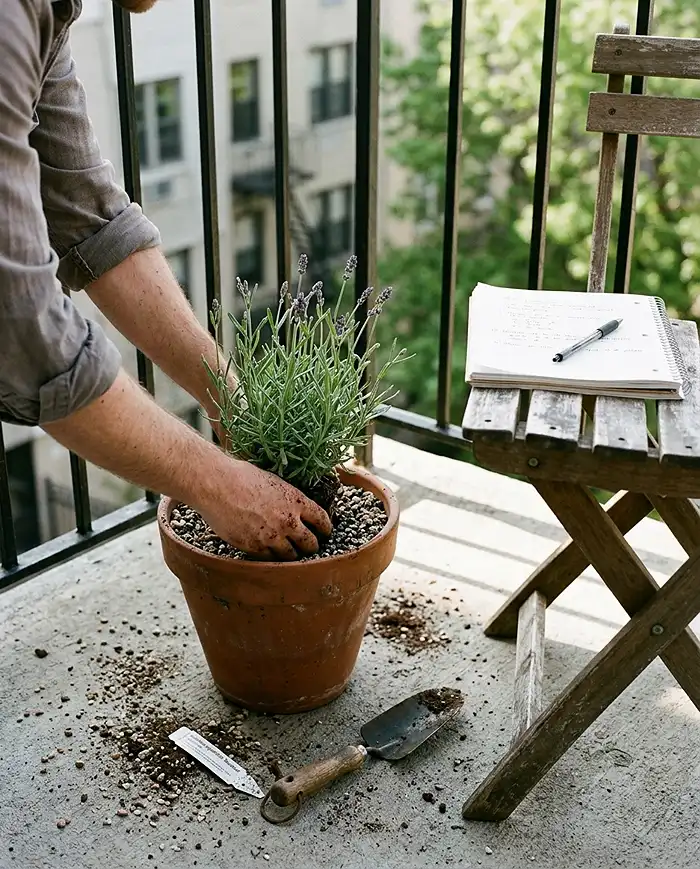
Lavender in balcony pots wants lots of sun and well-draining soil, meaning water passes through the pot quickly instead of sitting in it. Identify the exact lavender you’re buying, check locally appropriate advice, and record the container and care plan so later changes are assessed, not guessed.
Quick facts: Light: full sun. Care level: easy to medium, and it dislikes soggy soil.
Lavender is the plant I’d pick for a hot, bright corner that makes other plants cranky. Note how the pot is set up on day one, so if it sulks later you can work backward.
The full Lavender in Balcony Pots guide has everything you need to plant yours this weekend.
Succulents for Outdoor Balconies
Succulents for outdoor balconies need a match between each plant and your real conditions, since some want bright sun and others struggle outside. Check each candidate’s outdoor requirements against your balcony, and group plants with compatible care needs rather than choosing by looks alone.
Quick facts: Light: varies, and many like bright light. Care level: easy, though many aren’t frost-hardy and dislike soggy soil.
Cute mixed bowls are tempting, but I only combine succulents that want the same light and watering. Pretty and compatible is the goal.
The full Succulents for Outdoor Balconies guide helps you build a matching group.
Growing Bougainvillea on a Balcony
Growing bougainvillea on a balcony means planning for a big, sprawling plant that loves warmth and sun. Check its mature size and local care guidance before you buy, and plan container access, support, and where it will spend the cooler months before styling the space.
Quick facts: Light: full sun. Care level: medium, and it’s frost-tender.
It’s the plant that makes people look up at your balcony. It’s also the one where asking what it will look like in a year matters most. Support, access, and a seasonal plan come first.
The full Growing Bougainvillea on a Balcony guide covers size, support, and seasonal planning.
Tropical Balcony Plants
Tropical balcony plants work when your balcony can give them the conditions they need all year, or when you have a realistic seasonal care plan. Work out what your balcony offers through the seasons, then build the lush look around suitable plants rather than forcing the look first.
Quick facts: Light: varies by plant, and many like bright light. Care level: medium to high, mostly because of seasonal planning.
I’m a sucker for big leaves. But a tropical balcony is a seasonal commitment, and it’s kinder to decide that on day one than to find out in the first cold snap.
The full Tropical Balcony Plants guide helps you plan the whole year, not just the pretty part.
Native Balcony Plants for Pollinators
Native balcony plants for pollinators are plants that grow naturally in your region, so start with your location and local native-plant guidance. Choose a small, focused container collection and record which visitors actually show up, such as bees, butterflies, or hoverflies.
Quick facts: Light: varies by species, so check local guidance. Care level: depends on the plant.
I like keeping a visitor list in my notebook. It’s oddly satisfying to see who turned up and which pots they preferred. A focused collection makes the pattern easier to spot.
The full Native Balcony Plants for Pollinators guide shows where to find local recommendations.
Fragrant Balcony Plants
Fragrant balcony plants are best planned around where you actually sit and how close your plants are to shared spaces, like a neighbor’s window. Compare suitable candidates with your balcony’s light, then build a concentrated scented planting near your seat. Scent can be lovely at arm’s length and overwhelming in a small space.
Quick facts: Light: check each label. Care level: varies by plant.
I put my scented pots right beside my chair, not across the balcony. A little goes a long way.
The full Fragrant Balcony Plants guide helps you plan the seating spot first.
Balcony Plant Collections at a Glance
| Collection | Light It Likes | Care Level | Best For |
|---|---|---|---|
| Roses | Most want six or more hours of direct sun | Medium | A focal-point container |
| Hydrangea | Varies by type; many like morning sun and afternoon shade | Medium | Lush blooms in a part-sun spot |
| Lavender | Full sun | Easy to medium | Hot, bright corners with fast drainage |
| Succulents | Varies; many like bright light | Easy | Compact, drier setups |
| Bougainvillea | Full sun | Medium | Warm balconies with room and support |
| Tropical plants | Varies by plant | Medium to high | Balconies with a seasonal plan |
| Native pollinator plants | Varies by species | Varies | Local suitability and visitors |
| Fragrant plants | Varies by plant | Varies | Seating areas |
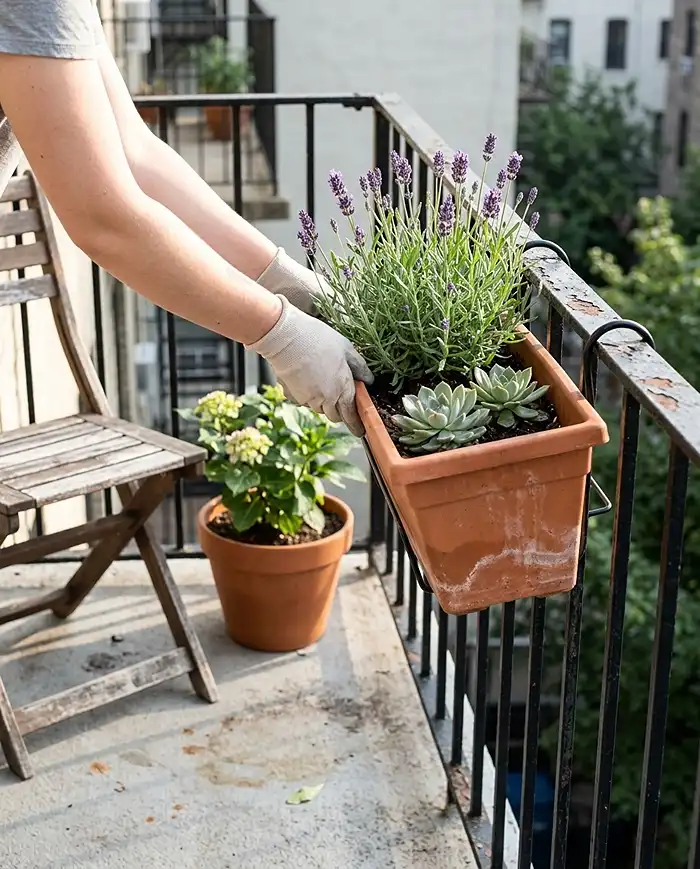
Use the table to group pots with similar light and watering needs, like lavender and succulents sharing one sunny railing planter, so a single routine covers both. Treat every Varies as a reminder to check the plant label and local advice.
Expert Tips & Variations
Small-Space Swaps
If space is tight, swap one big statement plant for a few compact ones that share light and water needs. Matching pots make watering quicker and keep your log simple.
A single railing planter can hold two compatible plants, and moving one pot to a better spot often beats buying a new one. Pick the balcony plants you can reach easily, because the ones you can’t reach are the ones you forget.
Soil & Fertilizer Tweaks
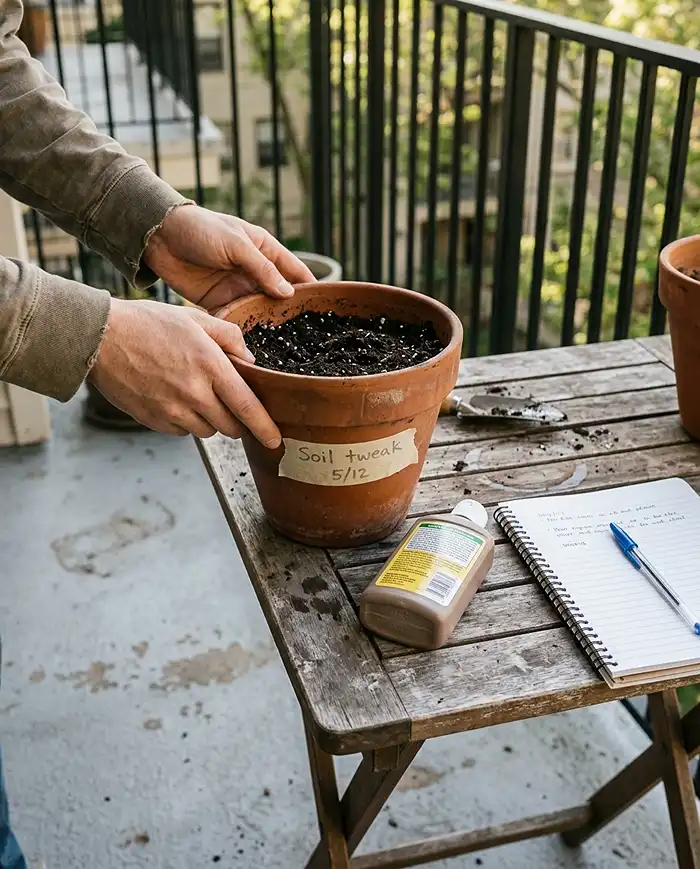
Change one thing at a time and write it down. If you switch potting mix or add a new product, follow its label, note the change in your log, and watch how the plant responds over the following weeks.
A pot that dries out too fast or stays soggy usually says more about the mix and your watering than about the plant itself. That’s why recording the mix matters.
Seasonal Prep Tips
Plan each pot’s cold-season spot before the first cold snap. Frost begins at 32°F (0°C), and plants in pots feel it more than plants in the ground, so decide which pots stay out, which move to shelter, and which are done for the season.
In hot weather, use the same one-change-at-a-time habit. Watch the symptoms, note the weather, then adjust. Low-maintenance balcony plants still appreciate a plan when the season changes.
Frequently Asked Questions
What are the best balcony plants for beginners?
The best balcony plants for beginners are ones that match your balcony’s real light, because a good match makes everything else easier. Lavender and succulents are popular choices for sunny spots, and shade-tolerant plants suit darker ones. Start with a small group, keep a short log, and expand once they settle in.
How do I know how much sun my balcony gets?
Watch your balcony at a few times of day and write down where direct sun lands and what casts shade. Full sun usually means six or more hours of direct light. Repeat this over several days, since the sun’s angle changes through the year.
How often should I water balcony plants?
There’s no single schedule, because it depends on the plant, pot, soil, light, and weather. Check how the soil feels and what that plant prefers, and keep a short log of what you did. Over a few weeks, your notes will show you a routine that fits your balcony.
Why do my balcony plants keep dying?
It’s often a mismatch in light, water, or drainage, or a recent change you haven’t linked yet. Gather photos, plant names, watering notes, and recent changes, then check causes one by one before replacing anything. A clear photo also helps if you ask a local plant expert.
Can I grow balcony plants in a covered or windy space?
Yes, but you need to match plants to the conditions. Under a cover, map where light and rain actually reach. In wind, note the most exposed positions and trial a few locally recommended plants. Plant choice helps, but it isn’t a complete wind solution on its own.
Final Thoughts
Pick one thing from this guide and try it this weekend. My favorite starting point is a pot of lavender if your balcony gets full sun, or a small group of shade-friendly plants if it doesn’t. Add a notebook and a coffee, and you’re set.
Tell me in the comments what you’re growing on your balcony and which corner is giving you grief. I read every one, and the stubborn corners are my favorite puzzles.
If this guide helped, save it to Pinterest or share it with a friend who’s staring at a sulking plant right now. It’ll be there the next time a pot needs a second look.