
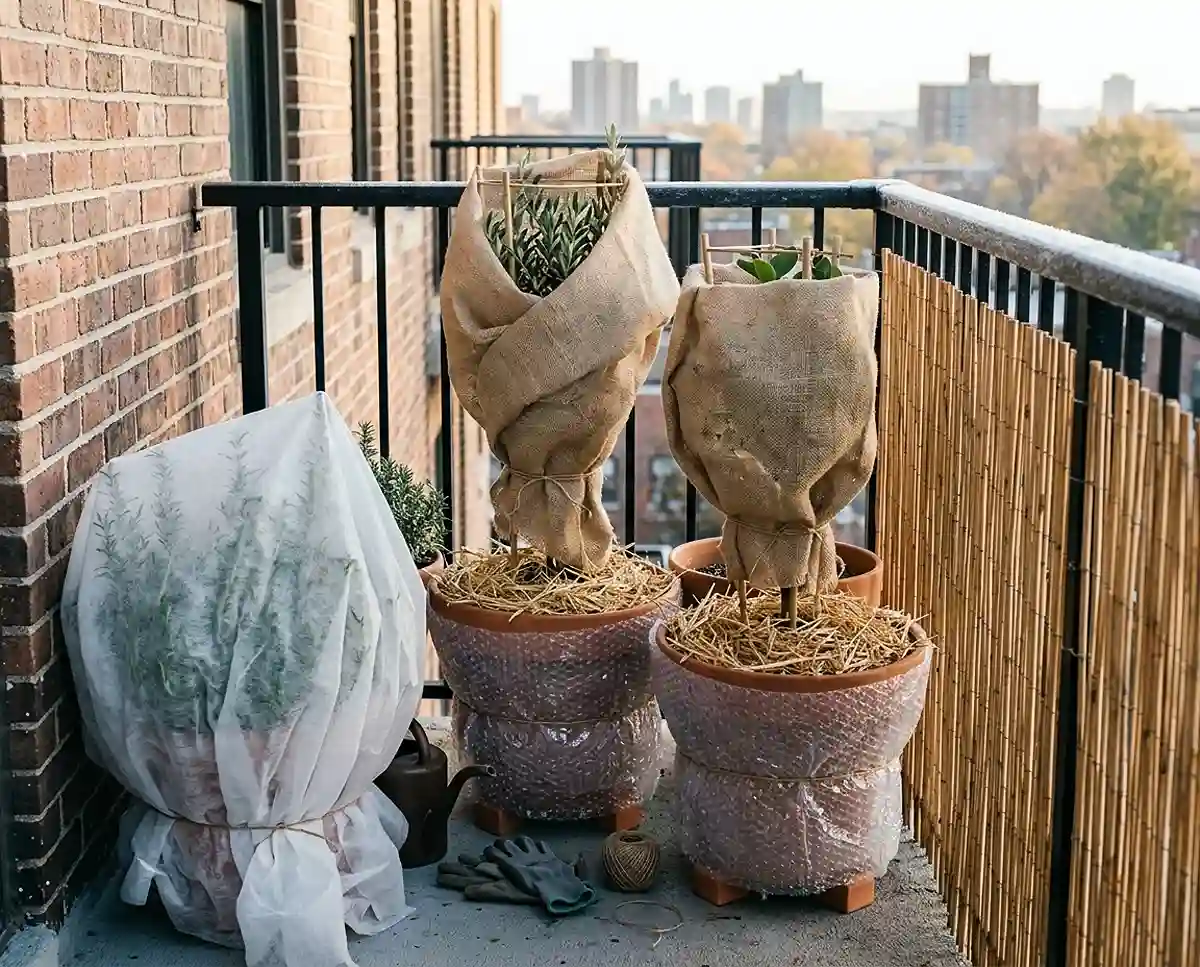
Overwintering Mediterranean Plants in Pots
Overwintering Mediterranean plants in pots takes more than a blanket. Here’s how to insulate, prune, and protect Mediterranean balcony plants from freezing. I killed a Meyer lemon with a plastic bag once, so you don’t have to.
I grow olives, citrus, rosemary, and a fig on a south-facing, third-floor balcony in zone 7a. Winter lows usually hit 18°F to 22°F, and one January night in 2024 dropped to 14°F.
It’s mid-October 2026, which is the right time to start. Plan on one weekend and roughly $40 to $60 in supplies for a handful of pots.
Table of Contents
The Challenge of Overwintering Mediterranean Plants in Pots
Olives, citrus, and rosemary evolved where winters are mild and dry. In the ground, their roots sit in deep, insulated soil. Put them in a container on an exposed balcony and that protection disappears.
A pot’s roots face cold air on every side, plus concrete underneath. Roots freeze long before the leaves show damage. Because these plants keep their leaves all winter, they keep losing water while frozen roots can’t replace it.
That’s why a cold snap a garden-planted olive shrugs off can kill the same variety in a pot. If you’re still choosing plants, these balcony garden ideas include cold-tolerant picks.
Assessing Your Balcony’s Winter Microclimate
Spend a week watching your balcony before you buy anything. Three things decide how much protection your plants need. For layout inspiration, see these fall Mediterranean balcony ideas on grouping pots.
- Frost dates: Note your average first and last frost. Mine run from early November to mid-April.
- Wind exposure: Feel which corners catch the breeze. Open balconies on upper floors take the worst of it.
- Radiant heat: A south-facing brick or concrete wall stores daytime heat and releases it at night, often keeping nearby spots a few degrees warmer.
Hardiness Zones and the “Two-Zone” Container Rule
Quick Answer: Potted plants need to be rated two USDA zones colder than your local zone to survive outdoors unprotected. Roots in pots lack the earth’s insulation, so a zone 7 balcony calls for plants hardy to zone 5.
Find your zone on the USDA Plant Hardiness Zone Map. The 2023 update shifted much of the country about half a zone warmer, but pots still behave as if they’re a zone or two colder. Here’s how common plants stack up in zone 7:
| Plant | Rated Hardy To | Passes Two-Zone Rule? | Plan |
|---|---|---|---|
| Fig ‘Chicago Hardy’ | Zone 5 | Yes | Mulch only |
| Lavender ‘Hidcote’ | Zone 5 | Yes | Mulch only |
| Rosemary ‘Arp’ | Zone 6 | Borderline | Light wrap |
| Rosemary ‘Tuscan Blue’ | Zone 8 | No | Full wrap |
| Olive ‘Arbequina’ | Zone 8 | No | Full wrap, sheltered spot |
| Meyer lemon | Zone 9 | No | Unheated garage or indoors |
Pro Tip: Pot size is free insurance. A 16-inch pot holds cold at bay longer than a 10-inch one, giving roots extra cushion.
Wind Chill and Winter Desiccation
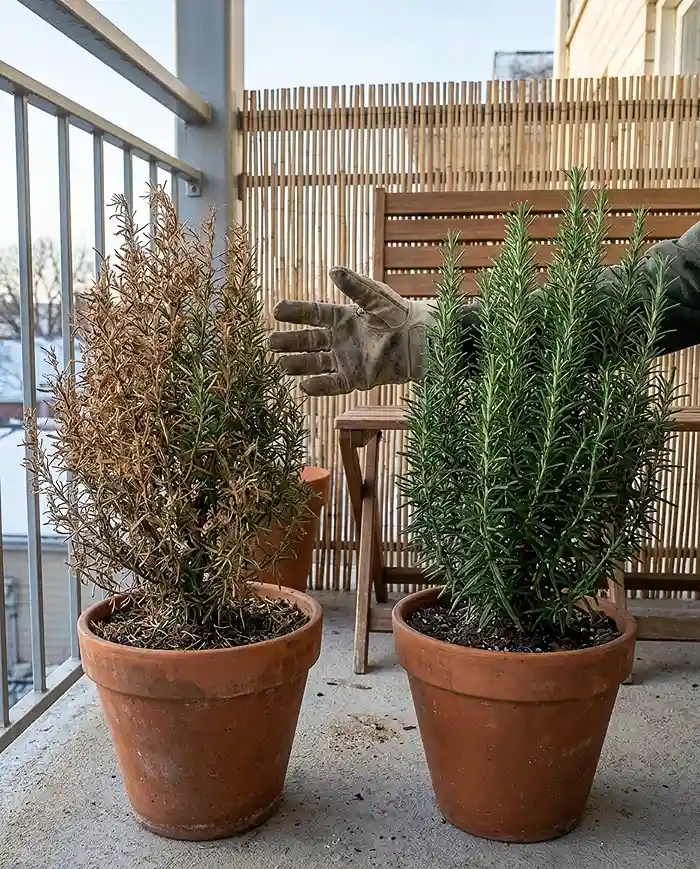
Wind does damage that thermometers miss. Evergreen Mediterranean leaves keep releasing water vapor (transpiration) all winter. Cold or frozen roots can’t absorb water fast enough to replace it, so leaves dry out from the tips inward. That’s winter desiccation, or windburn.
I saw it in February 2023. A ‘Tuscan Blue’ rosemary on my windward corner turned brown and brittle, while the same variety behind a bench stayed green. Same cold, different wind.
Pro Tip: A bamboo screen or lattice panel on the windward side often protects better than extra layers of wrap.
Essential Winterization Gear for Balcony Gardens
Here’s what I buy each fall. Everything either breathes or insulates, and nothing traps water against the plant:
- Horticultural fleece (frost cloth) at about 1.5 oz per square yard
- Natural burlap, roughly 3 feet wide
- Large-bubble wrap, 1-inch bubbles
- Pot feet, 1 inch tall or more
- Straw or bark mulch, enough for a 3 to 4 inch layer
- Garden twine, clothespins, and a few bamboo stakes
Horticultural Fleece and Burlap Wraps
Quick Answer: Wrap the plant canopy in horticultural fleece or natural burlap, never plastic. Both materials breathe, so moisture escapes. Plastic traps condensation that freezes on leaves and invites rot.
Real Example: I learned this the hard way. In December 2022, I put a clear plastic bag over my Meyer lemon during a three-day freeze. By February the leaves were moldy and about 60% had dropped. The tree died by June.
Pro Tip: Wrap loosely around a bamboo stake frame so fabric doesn’t press on leaves. Contact points freeze first.
Bubble Wrap and Pot Feet for Root Insulation
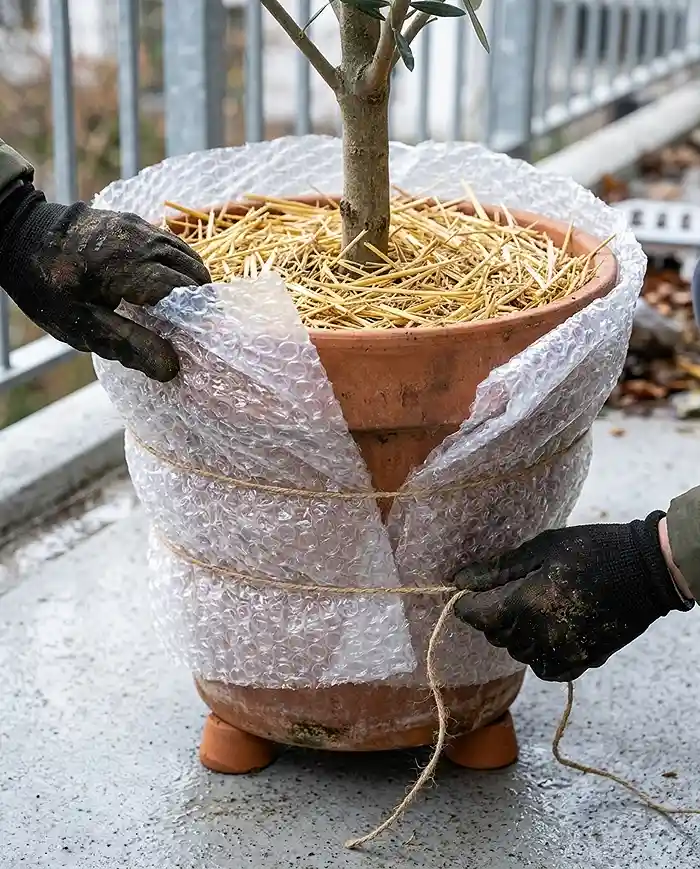
Wrap the outside of each container in two layers of bubble wrap, bubbles facing the pot, and tie it with twine. The trapped air slows heat loss from the root zone.
Then lift the pot onto pot feet so it’s off the freezing concrete and the drainage holes stay clear. This matters most for terracotta pots. Clay is porous, so it soaks up water, and that water expands when it freezes and cracks the pot.
Pro Tip: Leave the drainage holes uncovered. Wrapping the bottom of the pot is the fastest route to waterlogged roots.
Step-by-Step Guide to Winterizing Mediterranean Pots
Timing matters as much as gear. Finish these three steps about one week before your first hard freeze (28°F or lower for several hours). In zone 7a, that’s usually early to mid-November. The order is prune, water, wrap. See our fall Mediterranean balcony guide for earlier prep.
Step 1: Pre-Winter Pruning and Cleaning
Quick Answer: Remove only dead or damaged wood and clear fallen leaves from the soil surface. Skip heavy pruning in fall, because it triggers tender new growth that frost will kill.
Use clean bypass pruners (scissor-style snips) and cut out brown or crossing branches. Scrape away leaf litter and the top inch of soil, where fungal spores overwinter, and top up with fresh potting mix.
Save shaping cuts for late spring, once new growth starts.
Step 2: Deep Watering Before the Freeze
Quick Answer: Water pots deeply 24 to 48 hours before a hard freeze. Moist soil holds heat better than dry soil, and hydrated plant cells resist freezing. Let excess water drain fully so roots never sit in it.
Water slowly until it runs from the drainage holes, wait ten minutes, then empty the saucers.
Real Example: Before that 14°F night in January 2024, I soaked my 16-inch ‘Arbequina’ olive and wrapped it. The next morning the soil was unfrozen 3 inches down, and the tree lost only a few leaf tips.
Step 3: Wrapping the Container and Crown
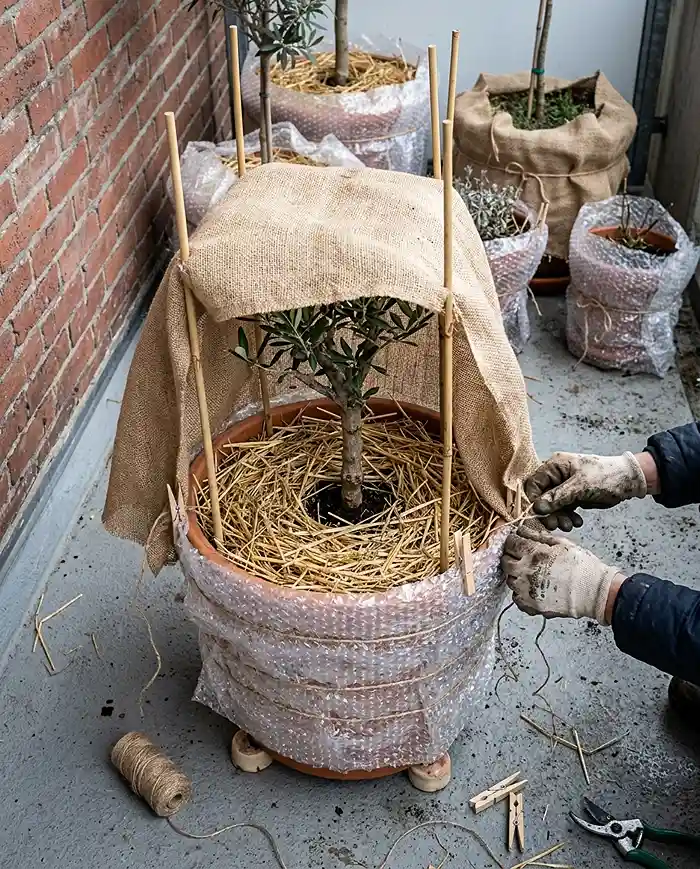
Do these in order, and finish before the freeze arrives:
- Wrap the pot in two layers of bubble wrap and tie it with twine.
- Spread 3 to 4 inches of straw or bark mulch over the soil, leaving a 1-inch gap around the trunk.
- Drape fleece or burlap loosely over the canopy and secure it at the pot rim.
- Cluster the pots against the warmest wall so they shelter each other.
Pro Tip: Use two fleece layers for olives and citrus, and one for rosemary. Extra layers add roughly 4 to 6°F of protection each.
Ongoing Winter Maintenance for Dormant Plants
Winter plant care for dormant Mediterranean plants is mostly restraint. Nothing is growing, so little is needed. A five-minute check every week or two covers soil moisture, wrap condition, and the forecast. Skip fertilizer until you see new growth in spring.
Managing Watering During Mid-Winter Thaws
Quick Answer: Check soil moisture on sunny days above 40°F, and water only when the top 2 inches are dry. Use about a quarter of your summer volume so roots rehydrate without sitting in cold mud.
Water in the morning so excess drains before nightfall. The big pre-freeze soak in Step 2 is a one-time event. After that, you’re only topping up bone-dry soil.
Venting the Foliage Wraps
On unseasonably warm days, anything above 45°F, open your fleece or burlap wraps. Airflow keeps mold from building on the leaves. Humidity trapped under a cover climbs fast, even in January.
I unwrap in the morning and re-wrap before sunset. It takes about two minutes per plant.
Pro Tip: Fasten wraps with clothespins instead of knots, so you can open them in seconds.
Common Problems & Solutions
Most winter losses come from two things: too much moisture and too little airflow. Both are fixable if you catch them early. Here’s what to watch for from December through February.
Root Rot from Winter Rains
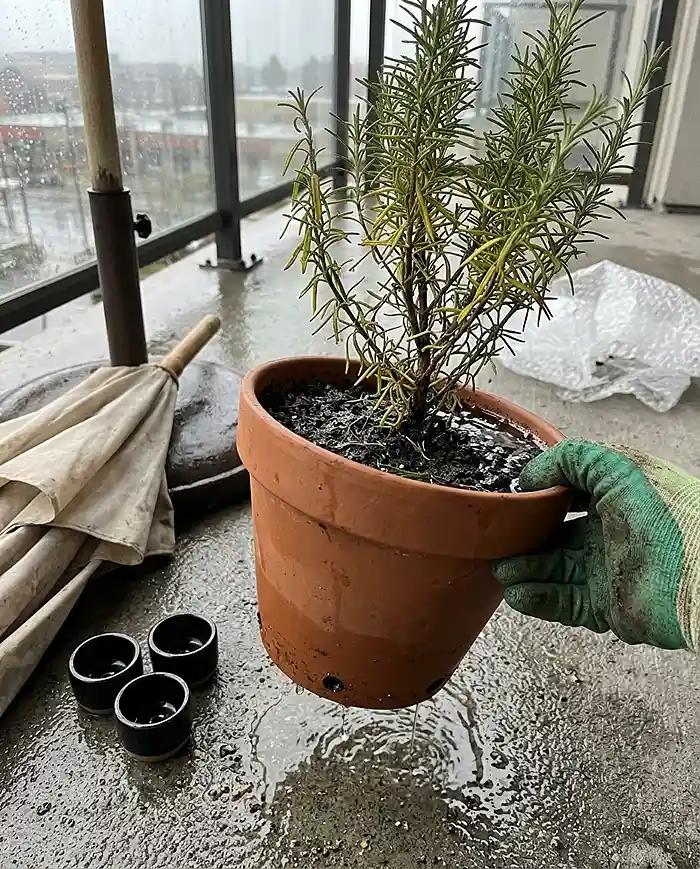
Quick Answer: Cold, waterlogged soil kills Mediterranean plants faster than frost. Raise pots on pot feet and add overhead cover so heavy winter rain runs off instead of soaking the roots.
Warning signs are yellowing leaves, a sour smell from the drainage holes, and soil that stays soggy for days. If you see them, stop watering, unwrap the pot, and let it dry out.
Pro Tip: A clip-on balcony rain cover, or even an old patio umbrella, keeps rain off the soil without blocking airflow.
Powdery Mildew Under Winter Covers
Powdery mildew looks like white, dusty patches on leaves. It usually appears inside wraps with poor ventilation. Remove the cover on a dry day and let the foliage air out for 24 hours.
Snip off badly affected leaves, then re-wrap with stakes holding the fabric away from the plant. Check again weekly.
Frequently Asked Questions
Should I bring my potted olive tree indoors for the winter?
Usually not. Olives need a chill period (vernalization) to flower and fruit. An unheated garage or sheltered porch at 35°F to 45°F beats a warm, dry living room. Bring the pot inside only if temperatures will fall below about 15°F.
When should I remove the winter protection from my balcony plants?
Wait until the last spring frost has passed. Then remove wraps gradually over about a week so the plant can harden off. Keep the mulch and bubble wrap on a few extra days if nights still dip near freezing.
Why did my rosemary turn black after a frost?
Black, crispy leaves mean frostbite. Don’t prune right away, because the dead tips still shield the tissue below. Wait until late spring. Then cut just above the new growth lower on the stem.
Can I leave terracotta pots outside all winter?
Only with protection. Unglazed terracotta absorbs water, and freezing moisture flakes or cracks the clay. Raise pots on pot feet, wrap them in bubble wrap, and keep them out of direct rain. Or keep the plant in a plastic nursery pot and slip it inside the terracotta.
How cold is too cold for potted citrus?
Most citrus leaves take damage around 28°F, and roots in pots are more exposed than roots in the ground. Move lemons and limes to an unheated garage when the forecast drops below 30°F. Kumquats and satsumas tolerate the low 20s.
Key Takeaways
- Overwintering Mediterranean plants in pots means insulating the roots, keeping foliage dry, and watering with restraint.
- Follow the two-zone rule: potted plants need to be rated two USDA zones colder than your local zone.
- Wrap canopies in breathable fleece or burlap, never plastic.
- Prune lightly, soak the pot 24 to 48 hours before a hard freeze, and wrap the container and crown.
- Vent wraps on warm days and water only when the top 2 inches are dry.