
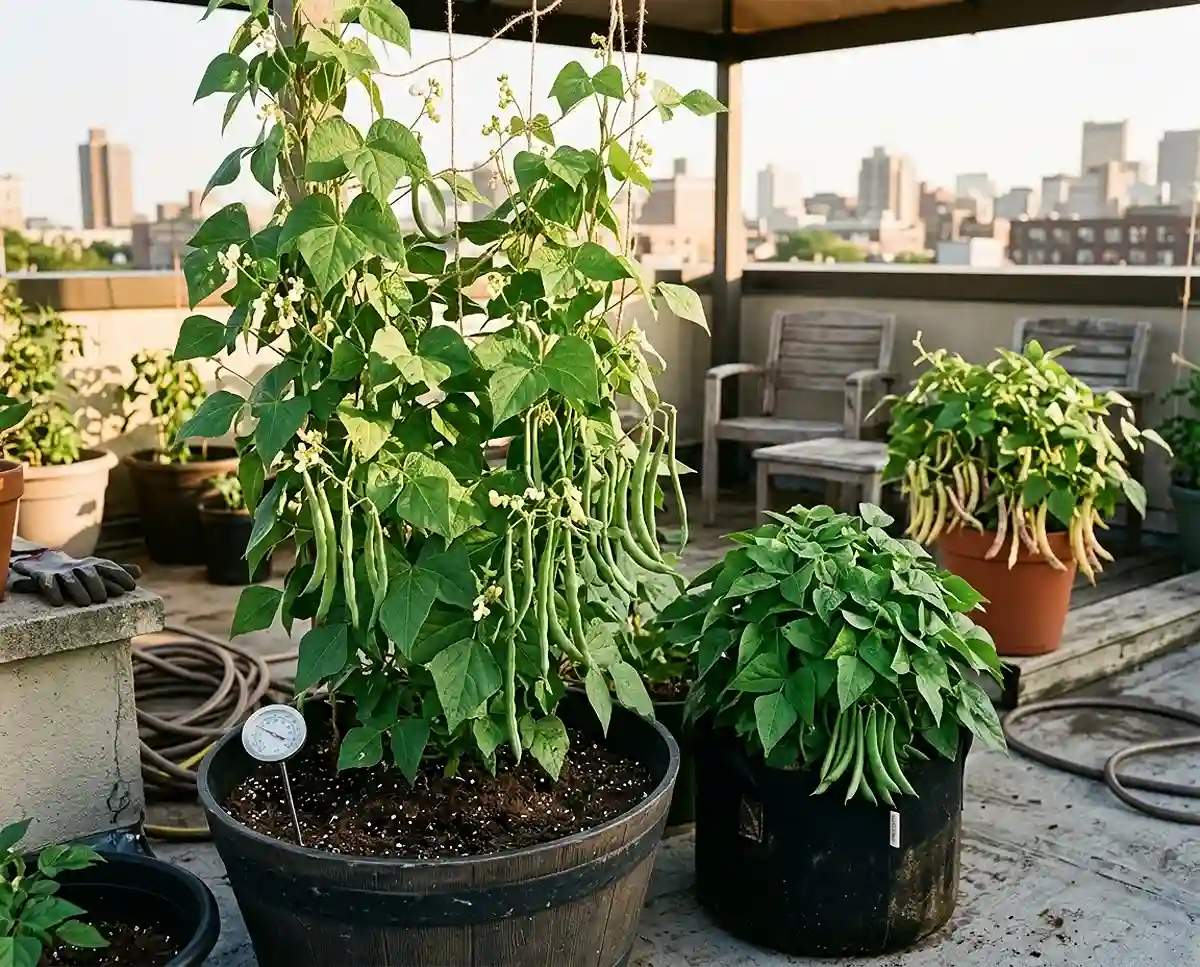
Best Beans for Containers
Your balcony railing looks bare, and you want the best beans for containers without the guesswork. Here’s how to grow beans in containers this spring.
I’m a former community-garden coordinator, and I now garden on a sunny rooftop in zone 7a. My setup: six fabric pots, two 10-gallon tubs, and about eight hours of direct sun. Every bean below has been tested up there.
Table of Contents
The Joy of Growing Beans in Small Spaces
Short Answer: Beans are fast, generous, and forgiving, which makes them ideal for spring container vegetable gardening on a balcony or patio. Most bush types give you pods in about 50 to 60 days from a single pot, and pole types keep producing for weeks.
Picture a 12-inch pot on your patio in June. Within two months, it’s heavy with pods you can snap off while your coffee cools.
Beans sprout in a week, climb fast, and ask for very little. If you’re brand new to growing food, my beginner small-space gardening guide covers the basics.
Bush Beans vs. Pole Beans: Which Is Better for Containers?
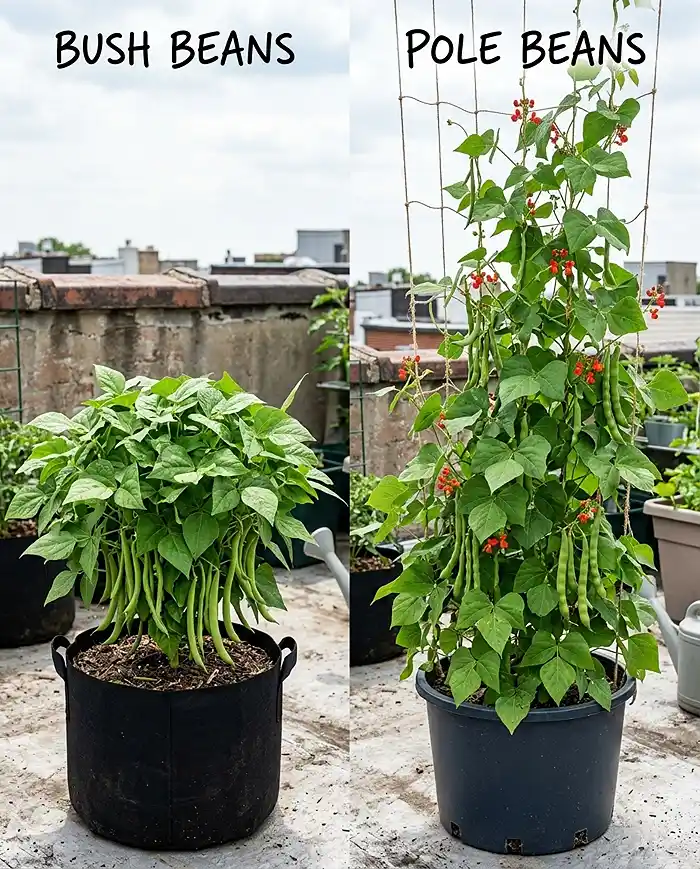
Short Answer: Choose bush beans if you have shallow pots, wind, or little time. Choose pole beans if you have a railing or trellis and want pods all summer. Bush beans stay about 18 inches tall, while pole beans climb 6 to 8 feet.
The Why: Bush beans stop growing once they set pods, so they stay compact. Pole beans keep climbing and flowering until frost, which is why they out-produce bush types over a full season.
| Feature | Bush Beans | Pole Beans |
|---|---|---|
| Height | 15 to 24 inches | 6 to 8 feet |
| Support needed | None | Trellis, netting, or string |
| Harvest window | 2 to 3 weeks | 6 to 8 weeks |
| Days to harvest | 50 to 60 | 60 to 75 |
| Minimum container | 8 inches deep | 5 to 10 gallons |
The Case for Compact Bush Beans
Short Answer: Bush beans grow into sturdy, self-supporting mounds and deliver most of their harvest in two to three weeks. That makes them ideal for shallow pots and windy balconies, where tall plants get tossed around. Sow a fresh pot every two weeks to stretch the harvest.
Their mounded habit also shrugs off wind. On my breezy rooftop, bush beans never needed staking, while my first pole beans bent sideways in April gusts.
Vertical Gardening with Pole Beans
Short Answer: Pole beans trade a little setup for a lot of harvest. They climb a trellis or string, using vertical growing to fit more plants into a tiny footprint, and they keep producing for weeks as long as you pick often. Set the support before you sow.
In warm weather, a healthy vine can gain several inches a day. I use an 8-foot string trellis anchored to the railing.
For more ideas, see this guide to container trellis setups for cucumbers and beans.
Best Beans for Containers: Top Varieties for Spring
Short Answer: The most reliable picks are Provider and Blue Lake 274 for bush, Dragon Tongue and Royal Burgundy for color, and Kentucky Wonder and Scarlet Runner for climbing. All handle pots well, and as of spring 2026, all six are widely sold.
- Provider (bush): about 50 days, tolerates cool soil
- Blue Lake 274 (bush): about 55 days, tender green pods
- Dragon Tongue (bush): about 60 days, purple-streaked yellow pods
- Royal Burgundy (bush): about 55 days, deep purple pods
- Kentucky Wonder (pole): about 65 days, long pods, heavy yields
- Scarlet Runner (pole): about 70 days, red flowers, edible pods
High-Yield Bush Bean Cultivars (Provider and Blue Lake 274)
Short Answer: Provider and Blue Lake 274 are top choices for beginners. Provider tolerates cool soil and resists bean common mosaic virus, while Blue Lake 274 gives straight, tender pods on compact plants. Both stay under two feet tall and shrug off crowded pots.
What Happened to Me: In spring 2025, I sowed Provider in a 14-inch pot on April 28. I picked my first pods 51 days later and harvested 1.3 pounds over three weeks.
Colorful and Unique Beans (Dragon Tongue and Royal Burgundy)
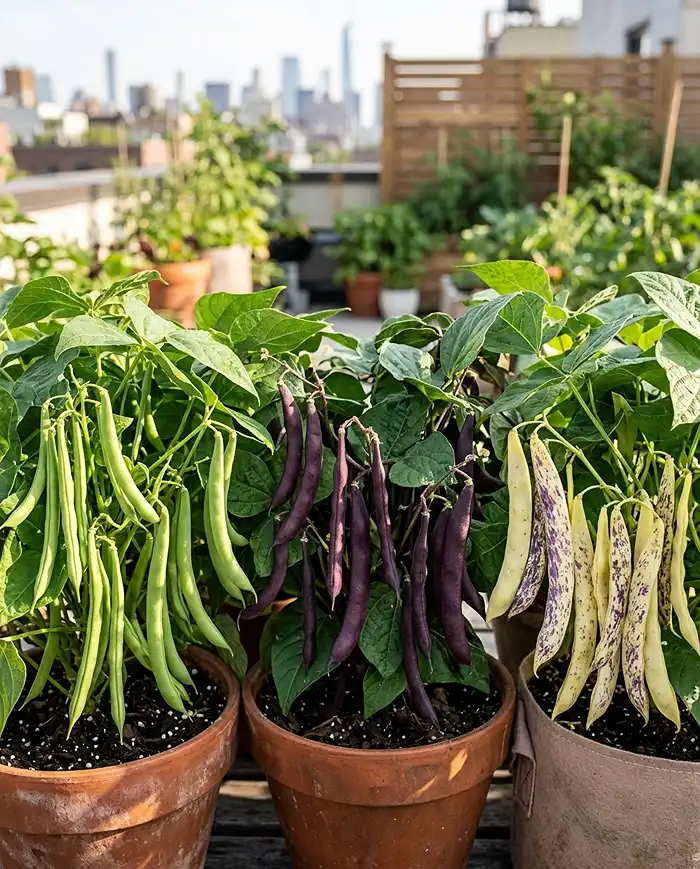
Short Answer: Dragon Tongue has creamy yellow pods streaked with purple, and Royal Burgundy has deep purple pods. Both look striking on a sunny patio. Purple pods are easy to spot against green leaves. Heads up: the color fades to green once cooked.
Try This: Grow one Dragon Tongue in a 12-inch pot near your seating area. Pick when pods are about 6 inches long and still glossy.
Best Pole Beans for Balcony Trellises (Kentucky Wonder and Scarlet Runner)
Short Answer: Kentucky Wonder is a vigorous, reliable climber with long, meaty pods. Scarlet Runner adds bright red flowers that draw hummingbirds in spring. Both need a trellis at least six feet tall and a deep pot. Plan the support before you plant.
What Happened to Me: In spring 2024, I trained Scarlet Runner up an 8-foot string trellis from a 10-gallon tub. Hummingbirds arrived by early June, and I picked 2 pounds of pods by August.
Runner beans drop blooms in heat above 85°F, so give them afternoon shade in zone 7a summers.
Essential Gear and Soil Preparation
Short Answer: Before the spring planting window opens, gather pots with drainage holes, a light potting mix, a trellis for pole types, and a soil thermometer. Beans are simple, but they hate wet feet, so drainage matters most. This is spring container planning at its simplest.
- Pots with drainage holes, at least 8 inches deep
- Quality potting mix, perlite, and compost
- Trellis, netting, or string for pole beans
- A soil thermometer
- Rhizobia inoculant powder (optional)
Choosing the Right Pot Size and Depth
Short Answer: Bush beans need pots at least 8 inches deep, though 10 to 12 inches grows stronger plants. Pole beans need a 5- to 10-gallon container, so tall vines stay anchored and roots don’t dry out. Always choose pots with drainage holes.
| Container | Bush Beans | Pole Beans |
|---|---|---|
| 12-inch pot | 3 plants | 1 to 2 plants |
| 5-gallon bucket | 3 to 4 plants | 2 to 3 plants |
| 10-gallon tub | 6 to 8 plants | 4 to 5 plants |
Want to fit several pots together? See this container garden plan for a balcony.
Formulating a Well-Draining Soil Mix
Short Answer: Mix 2 parts quality potting mix, 1 part perlite, and 1 part compost. This stays light and airy, and it drains fast. Aim for a pH of 6.0 to 6.8. Beans rot quickly in heavy, waterlogged soil, so skip garden dirt entirely.
The Why: Roots need air as much as water. Heavy soil packs tight, squeezes out oxygen, and invites rot. Perlite keeps the mix fluffy even after a downpour.
Step-by-Step Guide to Sowing Beans in Spring
Short Answer: Wait for warm soil, sow seeds directly in their final pots, and plant them 1 inch deep. Water gently, add the trellis, and watch for sprouts in 7 to 10 days. Skip indoor starts. That’s the whole plan, and it works.
- Check that soil is at least 60°F.
- Fill pots with mix, leaving an inch below the rim.
- Sow seeds 1 inch deep and cover lightly.
- Water gently, then set up the trellis for pole types.
Timing Your Planting Based on Soil Temperature
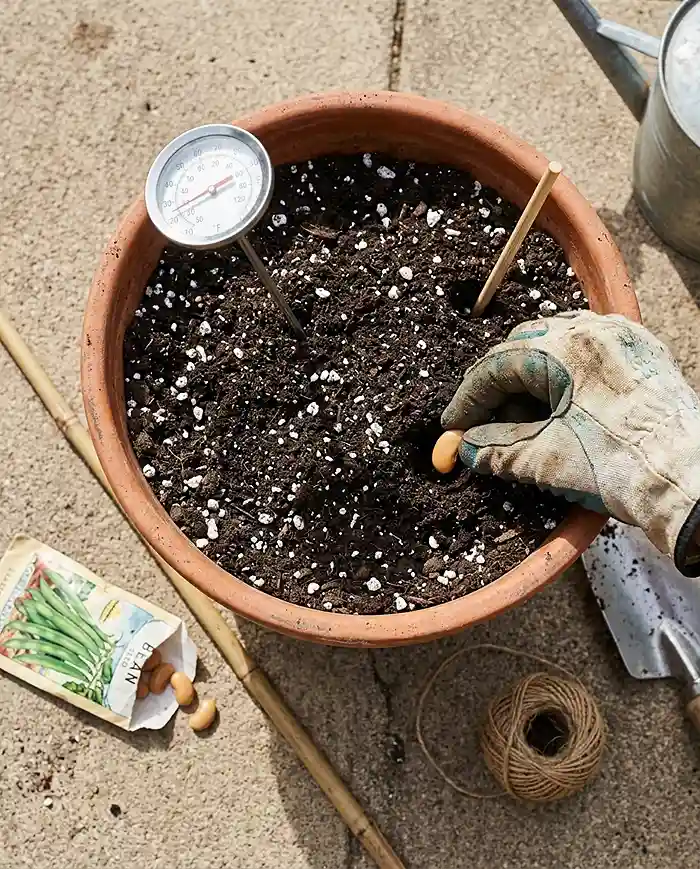
Short Answer: Wait until soil stays at 60°F (15°C) or warmer. Cold, wet spring soil makes seeds crack and rot before they sprout. In zone 7a, that usually means mid-to-late April. Push a soil thermometer 2 inches deep each morning.
What Happened to Me: In March 2024, I sowed 12 Blue Lake 274 seeds when the soil read 48°F. Only 3 came up. The rest cracked and rotted.
I waited until late April, when the soil hit 62°F, and resowed. Eleven of 12 sprouted in 8 days.
Oregon State University Extension explains that cold soil cracks bean seeds, which lets rot-causing microbes in.
The Direct Sowing Method (Why Beans Hate Transplanting)
Short Answer: Beans form a fragile taproot [a single thick main root] that snaps easily when moved. So sow seeds 1 inch deep right in the final pot. Starting indoors rarely helps and often stunts the plant. Place two seeds per spot and thin to the strongest.
Try This: Mark each seed spot with a chopstick, then press each seed in to your fingertip’s depth.
Maintenance and Harvesting for Peak Production
Short Answer: Water deeply when the top inch of soil dries, pick pods every two or three days, and skip high-nitrogen fertilizer. Beans make their own nitrogen, so extra feeding gives you leaves instead of pods. Container beans stay productive with surprisingly little fuss.
Harvest often. Every pod you pick signals the plant to flower again.
Watering and Low-Nitrogen Fertilization Strategies
Short Answer: Use the soak-and-dry method: water until it drains from the bottom, then wait until the top inch feels dry. Feed lightly with a low-nitrogen fertilizer, such as a 5-10-10 blend, once flowers appear. Too much nitrogen means lush leaves and zero pods.
The Why: Legumes fix their own nitrogen [pull it from the air with help from soil bacteria]. My rooftop pots dry out in two days in July, so I check them daily.
Common Problems & Solutions
Short Answer: Most container bean problems come from water or insects. Yellow leaves usually mean too much water or poor drainage, and tiny sap-sucking pests show up on tender growth. Both are fixable with simple, organic steps. Here’s how to spot each one.
Yellowing Leaves and Root Rot
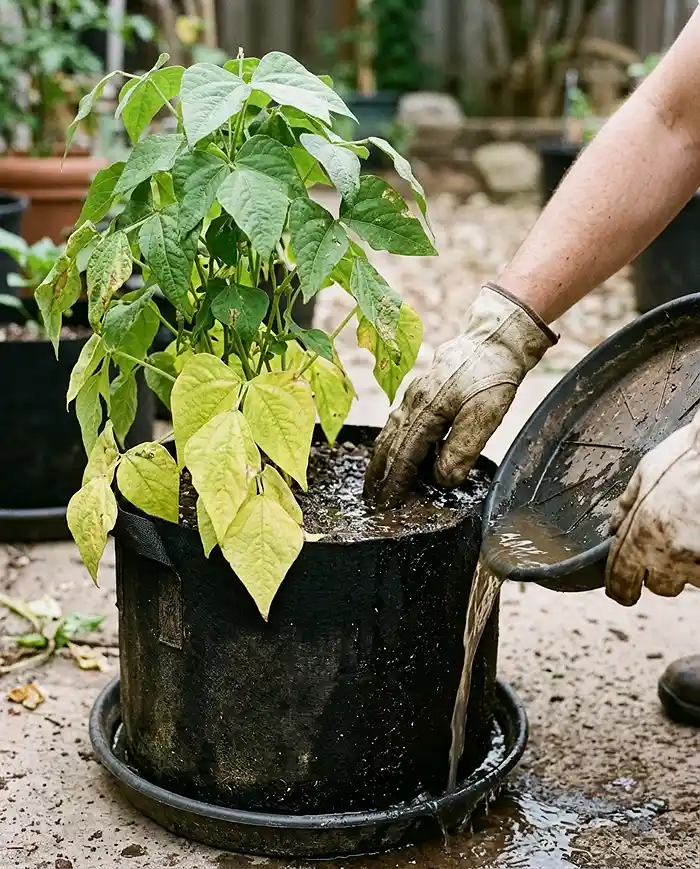
Short Answer: Yellow, dropping leaves usually signal overwatering or poor drainage, not hunger. Check that holes aren’t blocked, let the top inch dry out, and tip out any standing water from saucers. If roots smell sour and look brown, repot into fresh mix.
Defeating Aphids and Spider Mites
Short Answer: Blast aphids with a strong spray of water, then spray neem oil [a plant-based oil that disrupts soft-bodied pests] every 5 to 7 days in the evening. Spider mites hate humidity, so misting leaves helps. Remove badly infested leaves by hand.
Frequently Asked Questions
How many bean plants can I put in a 5-gallon bucket?
Plant 3 to 4 bush bean plants or 2 to 3 pole bean plants in a standard 5-gallon bucket. Crowding blocks airflow, invites mildew, and cuts your yield. Drill several drainage holes in the bottom first.
Do I need to use a legume inoculant for container beans?
It’s not strictly required, but it helps. Fresh potting soil often lacks rhizobia [the soil bacteria that let beans fix nitrogen]. Dusting seeds with inoculant powder before sowing usually boosts plant health and yields.
How often should I harvest beans to keep the plant producing?
Pick every 2 to 3 days once pods are plump but before the seeds inside bulge. Regular picking tells the plant to make more flowers. Leave pods on too long, and production slows down.
Can I grow beans in containers on a shady balcony?
Beans need at least 6 hours of direct sun for good pod set. With 4 to 5 hours, expect smaller harvests and leggier plants. Bush types like Provider handle partial sun better than pole beans.
Can I reuse potting soil for beans next year?
Yes, if the plants stayed healthy. Remove old roots, mix in fresh compost, and top up with new potting mix. Don’t reuse soil from diseased plants.
Which beans for containers are easiest for beginners?
Start with Provider. It sprouts in cooler soil, resists bean common mosaic virus, and gives pods in about 50 days. One 12-inch pot gives you a quick, confident first harvest.
Quick Recap
- Pick the best beans for containers: Provider and Blue Lake 274 for bush, Kentucky Wonder for climbing.
- Use pots 8 inches deep for bush beans and 5 to 10 gallons for pole beans, always with drainage holes.
- Wait for 60°F soil, then sow seeds 1 inch deep directly in the final pot.
- Water with the soak-and-dry method and skip high-nitrogen fertilizer.
- Harvest every 2 to 3 days, and check leaves for yellowing or pests.