
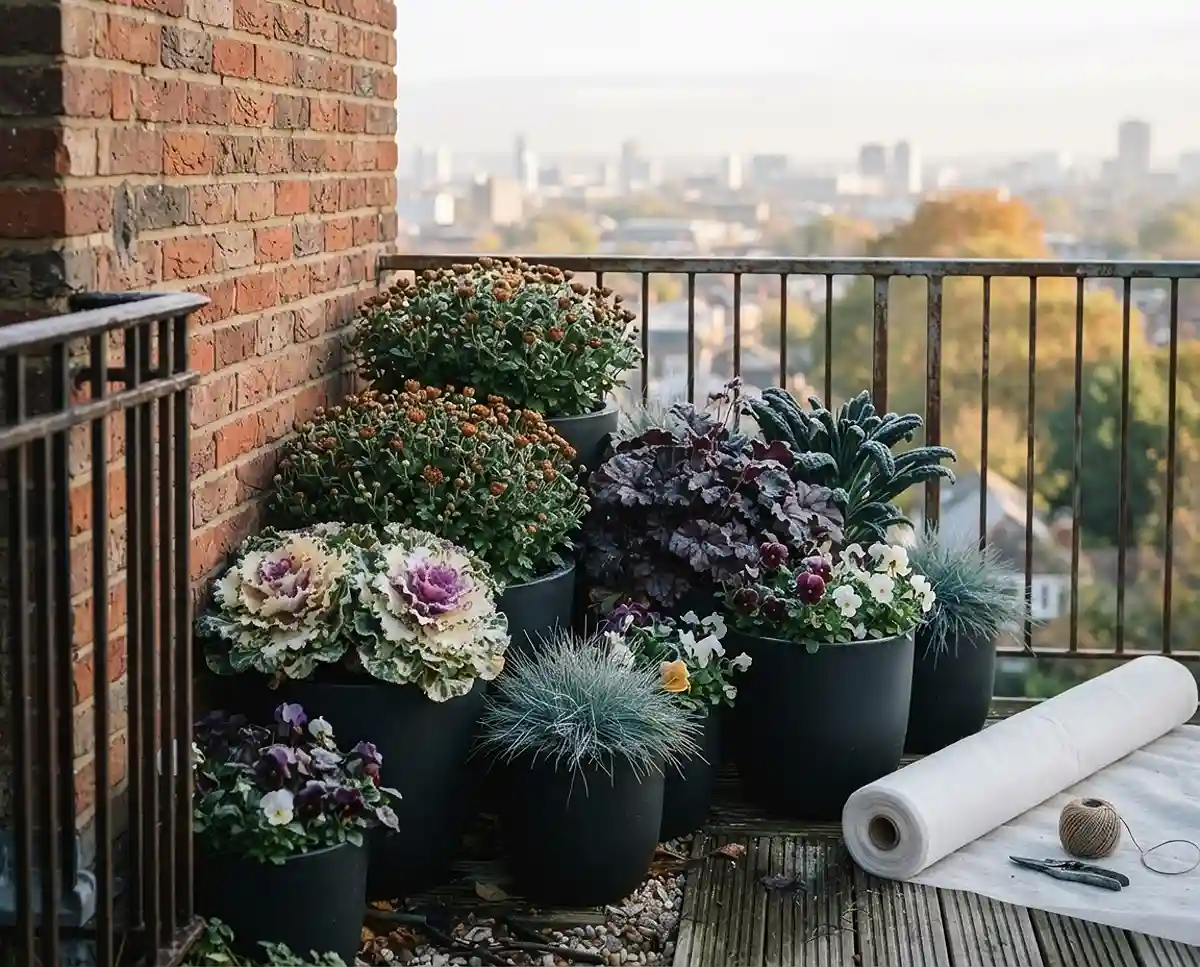
Best Fall Balcony Plants for Changing Autumn Weather
The best fall balcony plants share one trait: they shrug off wild temperature swings. I grow mine on a west-facing balcony in zone 6b, and autumn is brutal — 70°F afternoons followed by 28°F nights within the same week.
Most summer plants collapse the moment that first cold snap hits. The right small balcony garden selections won’t just survive those swings — they’ll thrive through them.
Table of Contents
Surviving the Swing: Why Autumn Balcony Gardening Is Unique
Autumn isn’t just “cooler summer.” It’s a gauntlet. One afternoon your balcony bakes at 75°F. That same night, a cold front rolls in and temps crash to 31°F.
The problem isn’t cold alone — it’s the whiplash. Containers have no insulating soil mass to buffer those swings, unlike in-ground beds. Roots experience the full shock every single time.
In 2023, I lost an entire trough of late-season basil and impatiens to a single overnight freeze I didn’t see coming. That failure taught me to stop guessing and start planting things engineered for this chaos.
Choosing genetically resilient plants is the single most important decision you make for an autumn balcony garden — before soil, before containers, before anything else.
Assessing Your Balcony’s Shifting Autumn Microclimate
Before you buy a single plant, spend a week observing your space. Urban balconies are microclimates within microclimates. Wind tunnels form between buildings and can drop the perceived temperature by 10°F or more.
Note where the sun hits in October versus July — it’s a completely different angle. And check which walls radiate heat after sunset. That information shapes every planting decision you’ll make.
Navigating Erratic Temperature Drops and Spikes
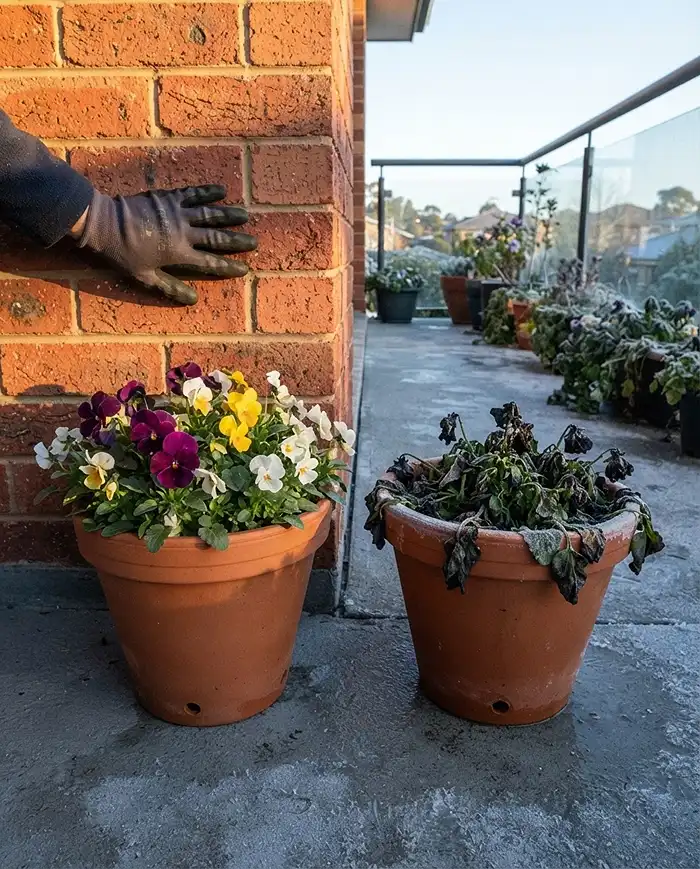
Pull your containers flush against an exterior brick or concrete wall on the coldest-facing side of your balcony. Masonry absorbs heat during the day and radiates it overnight, creating a narrow thermal buffer around your pots.
I tested this in fall 2024 with two identical pots of ‘Sorbet’ violas. The pot against the brick wall survived a 27°F night with minimal damage. The one left in the open corner was blackened by morning.
Even 3-4°F of difference is enough to protect roots through a light frost.
Pro tip: Thermal mass zones work best when containers are touching or nearly touching the wall, not just close to it.
Tracking the Lowering Autumn Sun
By October in most of the northern hemisphere, the sun drops 20-30 degrees lower in the sky than it was in June. Shade that barely existed in summer becomes a serious problem.
Move your containers to the brightest, most open corners of your balcony to chase that lower arc. South and southwest exposures become far more valuable in autumn than they were in midsummer.
Spend 20 minutes on a clear October morning watching where light actually falls. Then rearrange your pots accordingly. Most gardeners set them and forget them — don’t be that gardener.
The Best Hardy Fall Balcony Plants for Fluctuating Weather
The following plants are organized by structural role. Use all three categories together and you’ll have a container display that looks intentional, not accidental. Each of these has personally survived my zone 6b balcony through multiple hard frosts without collapsing.
Think in terms of thrillers (tall, dramatic), fillers (mid-height, lush), and spillers (trailing, softening edges). This approach works especially well for tiny garden ideas where every pot needs to carry visual weight.
Resilient Floral Thrillers: Pansies, Violas, and Mums
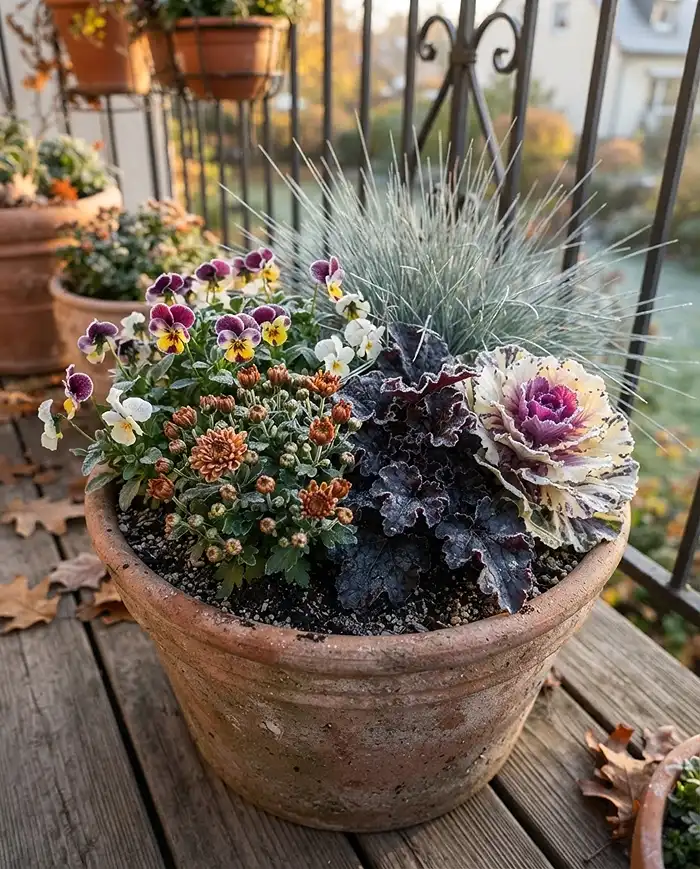
These are the workhorses of the autumn balcony garden. Violas and pansies tolerate temperatures down to 20°F when hardened off properly. Plant the ‘Matrix’ pansy series or ‘Sorbet’ violas for the best cold tolerance.
Chrysanthemums — tight budded garden mums, not florist types — are nearly bomb-proof down to 25°F. Buy them with mostly closed buds so they open slowly over weeks rather than peaking in the first week.
Yes, pansies droop dramatically during a hard frost. They look dead. They’re not. By noon, when the balcony warms up, they perk right back. I’ve watched this happen a dozen times and it still feels like a miracle.
Pro tip: Deadhead [remove spent flowers] mums weekly to force new bud production deep into November.
Frost-Tolerant Foliage: Heuchera and Ornamental Cabbage
Heuchera — sold as Coral Bells — is one of the most underused fall container plants. The deep purple varieties like ‘Obsidian’ and ‘Black Pearl’ actually intensify in color as temperatures drop. Cold stress triggers more anthocyanin production.
Ornamental cabbage and kale (Brassica oleracea) follow the same logic. The rosettes get more dramatically colored — deeper purples, brighter whites — after repeated frost exposure. They look their best in November, not September.
Both are hardy to around 5°F when established, which makes them exceptional anchors for a small space gardening container through late autumn.
Pro tip: Avoid overhead watering on ornamental cabbage — it sits in the leaf rosette and can cause rot during cold, damp nights.
Tough Evergreen Shrubs and Ornamental Grasses
Every autumn container needs a structural anchor — something that holds the display together when flowers are finished. Blue Fescue grass (‘Elijah Blue’) forms tight silvery-blue tufts that shrug off wind and frost with zero drama.
Dwarf boxwood (Buxus ‘Green Velvet’) in a classic tapered planter gives permanence and formality. It’s essentially impossible to kill with cold in zones 5-8. I’ve had the same boxwood in a pot for four autumns straight.
Both handle wind tunnel conditions far better than broad-leaved alternatives. On an exposed balcony, that matters more than almost any other quality.
Cold-Hardy Edibles: Swiss Chard, Kale, and Thyme
This is where an autumn balcony garden becomes genuinely useful. ‘Lacinato’ kale (also called Dinosaur kale) sweetens after frost — the cold converts starches to sugars. Harvest outer leaves and the plant keeps producing.
‘Bright Lights’ Swiss chard gives you hot-pink, orange, and yellow stems alongside deep green leaves. It handles temperatures into the mid-20s°F without flinching.
Creeping thyme fills gaps between larger plants and handles frost down to 15°F without batting an eye. I harvest sprigs from my balcony thyme well into December in zone 6b.
For more ideas on cold-season herbs for containers, there’s a full breakdown of what performs best in exposed pots during the shoulder season.
| Plant | Cold Tolerance | Best Role | Watch Out For |
|---|---|---|---|
| ‘Matrix’ Pansy | 20°F | Floral color | Droops in frost (recovers) |
| Garden Mum | 25°F | Thriller height | Needs weekly deadheading |
| Heuchera ‘Obsidian’ | 5°F | Foliage anchor | Crown rot in waterlogged soil |
| Ornamental Cabbage | 5°F | Bold center piece | Aphids in warm spells |
| Blue Fescue | -10°F | Structure/texture | Needs dividing every 2-3 years |
| ‘Lacinato’ Kale | 15°F | Edible + ornamental | Aphid magnet — check undersides |
| Creeping Thyme | 15°F | Spiller + herb | Dislikes wet feet in winter |
Essential Gear to Protect Plants from Autumn Weather Swings
The right containers and protective gear cut the risk of plant loss dramatically. This isn’t about buying expensive equipment — it’s about understanding how cold physics affects your containers and staying one step ahead of it.
Two items alone — insulated pots and horticultural fleece — cover 90% of the situations an autumn balcony garden throws at you. Get both before the season starts.
Insulating Containers to Prevent Root Shock
Unglazed terracotta is a trap in autumn. The porous clay absorbs moisture, that moisture freezes, and the pot cracks. I lost three beautiful Italian pots this way before I finally accepted the physics of it.
Switch to double-walled resin or fiberglass planters — they create a dead-air insulation layer around the root ball that slows temperature swings significantly.
Dark-colored resin pots also absorb solar heat during the day, which helps maintain warmer root zone temperatures through the evening hours. That combination of insulation and heat retention protects against the rapid spikes and drops that damage roots most.
Horticultural Fleece for Sudden Frost Warnings
Keep a roll of lightweight garden fleece — also sold as floating row cover — on your balcony throughout autumn. When a frost warning drops overnight, drape it over your railing pots and anchor it with a few clips.
Even a single layer of 0.5oz fleece raises the temperature under it by 4-6°F, which is often enough to protect pansies and violas from a brief hard freeze.
The fleece is breathable, so you can leave it on for 2-3 days without harming the plants. It’s the cheapest insurance policy in small space gardening.
Step-by-Step Guide to Planting a Weather-Proof Autumn Container
The setup process matters as much as plant selection. Done right, your containers will require minimal intervention even through erratic weather.
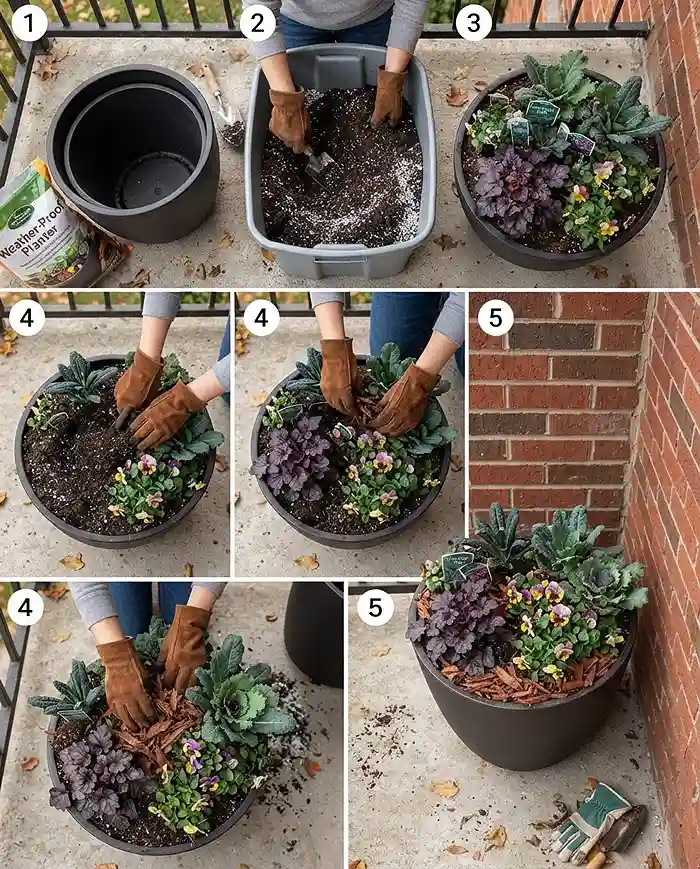
- Choose insulated pots: Double-walled resin, minimum 12-inch diameter to provide adequate root insulation mass.
- Mix fast-draining soil: Blend standard potting mix with 25% perlite to prevent waterlogging during cold, wet autumn spells. Cold waterlogged soil is more damaging than frost alone.
- Plant tightly: Pack plants closer than summer spacing — 4 to 6 inches apart. This creates an instant, full look and the plants protect each other’s crowns through contact.
- Top-dress with mulch: Add 1 to 2 inches of bark chips or pine straw over the soil surface. This insulates roots and slows evaporation during unexpectedly warm spells.
- Position against a wall: Use your thermal mass zones immediately — don’t wait for the first frost to move pots.
For renters dealing with restrictions on drilling or heavy containers, check out these fall balcony ideas for renters that work within lease limitations.
Adapting Your Maintenance Routine for Erratic Fall Weather
Your summer maintenance routine will actively hurt your plants in autumn if you don’t adjust it. Autumn plants run slower — their metabolism drops as days shorten and temperatures cool. They need less from you, not more.
The two biggest mistakes I see in autumn balcony garden maintenance: overwatering during cold snaps, and continuing to fertilize. Both create more problems than they solve.
Dynamic Watering During Hot and Cold Spells
Stop watering on a fixed schedule in autumn. Use the finger test: push your finger 2 inches into the soil. Water only if it’s dry at that depth.
During an unexpected Indian summer warm spell, container soil dries fast and plants may need water every 2-3 days. During a cold snap, a single watering can last 7-10 days before the soil dries again.
Wet roots in near-freezing soil is the most common way balcony gardeners kill otherwise cold-hardy plants. The water chills the root zone to lethal temperatures far faster than dry soil would.
Pro tip: Water in the morning, not evening, in autumn. This gives surface moisture time to evaporate before nighttime temperatures drop.
Pausing Fertilizer to Prevent Vulnerable New Growth
Stop all liquid, high-nitrogen fertilizer by the end of August in zones 5-7. Fast-acting nitrogen pushes soft, watery new growth. That new growth is the first thing a frost kills.
If you want to give your containers a boost in early autumn, use a slow-release granular fertilizer with a lower nitrogen number — something like a 5-10-10 ratio — to support roots and cold hardening without forcing new top growth.
I made the mistake of giving my ornamental cabbages a liquid feed in mid-September one year. A frost two weeks later blackened all the new growth it had forced. The lesson was expensive but clear.
Common Problems and Solutions
Even with the right plants and setup, autumn’s volatility throws curveballs. Here’s what to watch for and how to respond fast.
Wilting from Sudden Heat Spikes
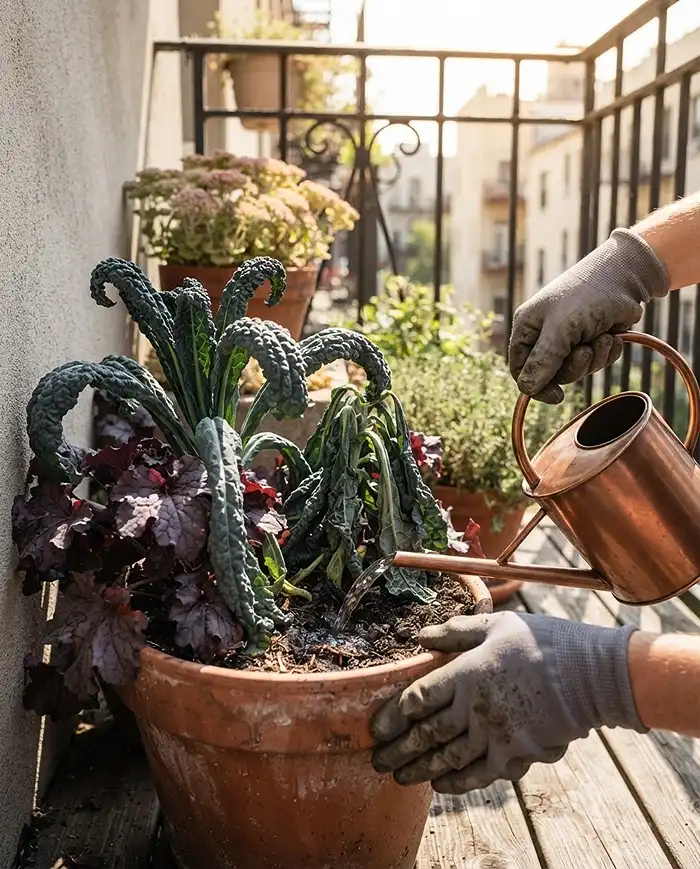
Indian summer heatwaves hit containers hard. Cool-season plants like kale, pansies, and Heuchera can wilt dramatically when temperatures spike above 80°F unexpectedly.
Don’t panic. Move pots to a shadier spot temporarily and give them a deep morning watering to cool the root zone. Within 24 hours of temperatures normalizing, the plants will recover fully.
Avoid overhead watering during a heat spike — it can scorch leaves already stressed from heat. Water at the soil level only.
Powdery Mildew from Cool, Damp Nights
Hot days followed by cold, humid nights create ideal conditions for powdery mildew — that white, dusty fungal coating you’ll notice on leaves first.
Treat it immediately with an organic potassium bicarbonate spray (mix 1 tablespoon per gallon of water). It raises the pH on leaf surfaces and kills the fungal spores within days.
Also thin crowded inner foliage aggressively to improve airflow. Mildew spreads in stagnant, damp air pockets — open the plant up and the problem often resolves itself.
For more autumn balcony garden ideas covering plant combinations, container design, and seasonal transitions, that resource covers the full picture of fall setup.
Best Fall Balcony Plants FAQs
Do I need to water my balcony plants before a frost?
Yes — and this is counterintuitive. Moist soil retains and radiates heat better than dry soil. Water your containers deeply the morning before a predicted frost. The water acts as a thermal buffer, keeping root zone temperatures a few degrees warmer overnight. Just don’t water the evening before, as surface moisture near leaves can freeze and cause cell damage.
How long will these autumn plants survive into winter?
Cold-hardy selections like violas, Heuchera, ornamental grasses, and kale will typically thrive for 2-3 months into autumn, surviving multiple light frosts with ease. They’ll continue until a sustained hard freeze — sustained temperatures below 15°F for several nights in a row — drives them into dormancy or kills them outright.
Can I reuse my summer potting soil for fall plants?
Yes, in most cases. If your summer plant died of disease, replace the soil entirely. Otherwise, remove the old root mass, loosen the remaining soil, and amend the top third of the pot with fresh compost. This refreshes nutrients without the expense of a full soil replacement.
What size pot is best for an autumn balcony container?
Larger is always better in autumn. A minimum of 12 inches in diameter gives roots enough mass to stay insulated against temperature swings. Smaller pots freeze and thaw too rapidly, stressing roots with every weather shift. If space is limited, use one large container over multiple small ones.
Can I mix edibles and ornamentals in the same autumn container?
Absolutely — it’s actually the most space-efficient approach for small balcony gardens. Lacinato kale and Bright Lights Swiss chard are both beautiful and edible. Pair them with Heuchera or violas for a container that looks intentional and feeds you. Just make sure edibles and ornamentals share similar water and light needs.
Key Takeaways
- The best fall balcony plants — violas, Heuchera, ornamental cabbage, kale, and Blue Fescue — are selected specifically for their ability to handle temperature whiplash, not just cold.
- Your balcony microclimate shifts dramatically in autumn: map your thermal mass zones and track the lower sun angle before placing a single pot.
- Switch to double-walled resin containers and add 25% perlite to your potting mix — cold waterlogging kills more autumn plants than frost alone.
- Stop nitrogen fertilizer by late August and shift to the finger-test watering method — autumn plants run slow and need far less intervention than summer ones.
- Keep horticultural fleece on hand throughout autumn. One overnight frost warning handled correctly saves an entire container display.