
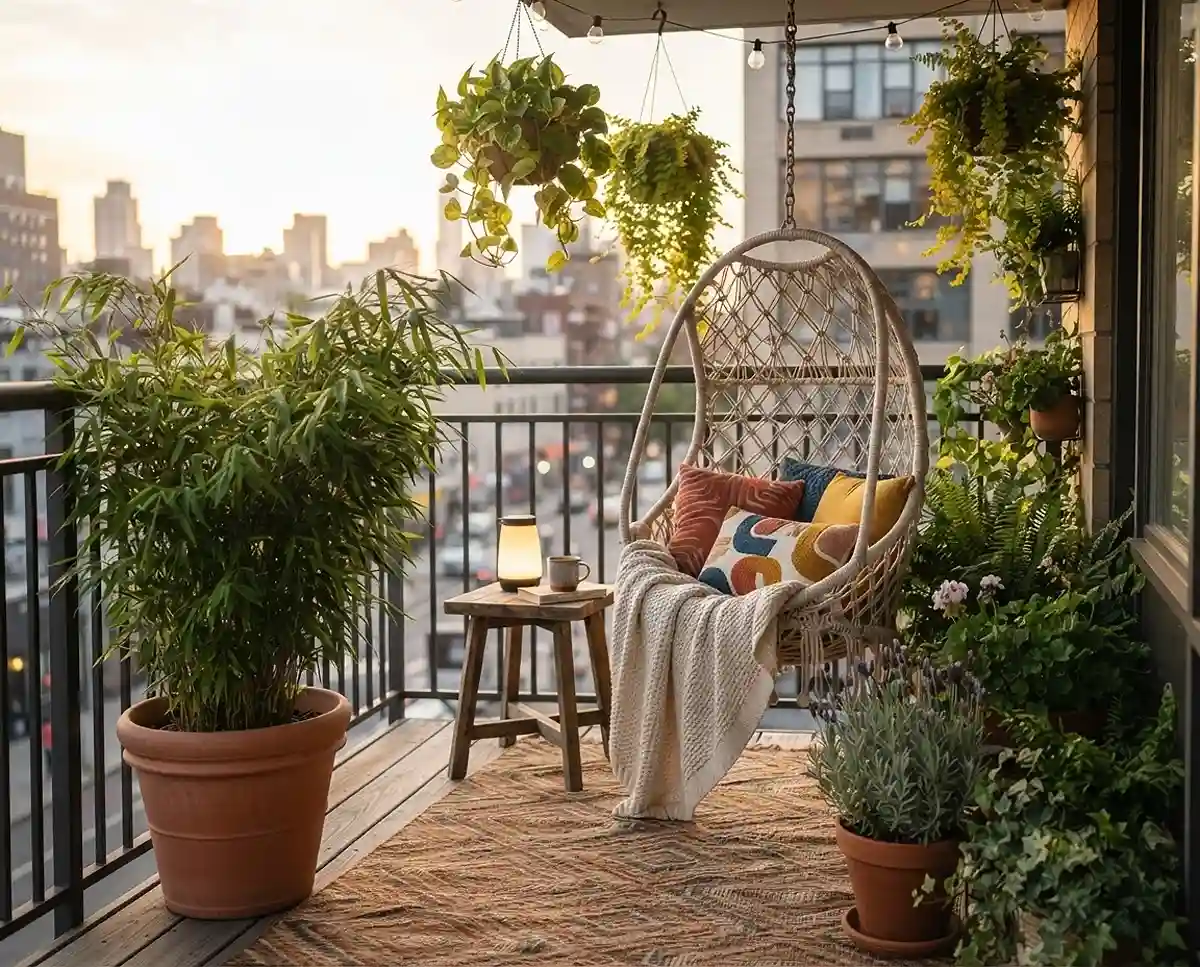
Cozy Balcony Garden Nook
A cozy balcony garden nook can completely change how you use your outdoor space — turning a bare concrete slab into a private retreat you’ll actually want to sit in. Here’s how to blend seating, blankets, and container plants into a small balcony garden that feels intentional and livable.
I grow herbs and trailing vines on a west-facing, 6 x 9-foot balcony in zone 7a. I’ve messed this up before — soggy cushions, knocked-over pots, plants shading out each other. What follows is what actually works.
Table of Contents
Designing Your Cozy Balcony Garden Nook
There’s something genuinely restorative about stepping outside into a space that feels lush and enclosed — even if it’s 48 square feet above a parking lot.
The psychological effect is real. Surrounding yourself with greenery lowers cortisol. Adding a comfortable chair and a warm blanket signals to your brain that it’s okay to stop.
The key is layering: furniture first, then tall plants for enclosure, then sensory details like herbs and trailing vines. Think of it as building a cozy outdoor room with plants as the walls.
The best apartment balcony garden ideas treat every vertical inch as usable space. Height is your friend when floor space is limited.
Evaluating Your Space for Seating and Plants
Before you buy anything, spend 10 minutes with a tape measure and a notepad. The single biggest mistake people make is placing furniture without accounting for plant access.
You need to be able to water everything without contorting around chair legs or stepping on trailing foliage. Map out traffic flow first, then fill in with plants and decor.
Measuring for Chairs and Traffic Flow
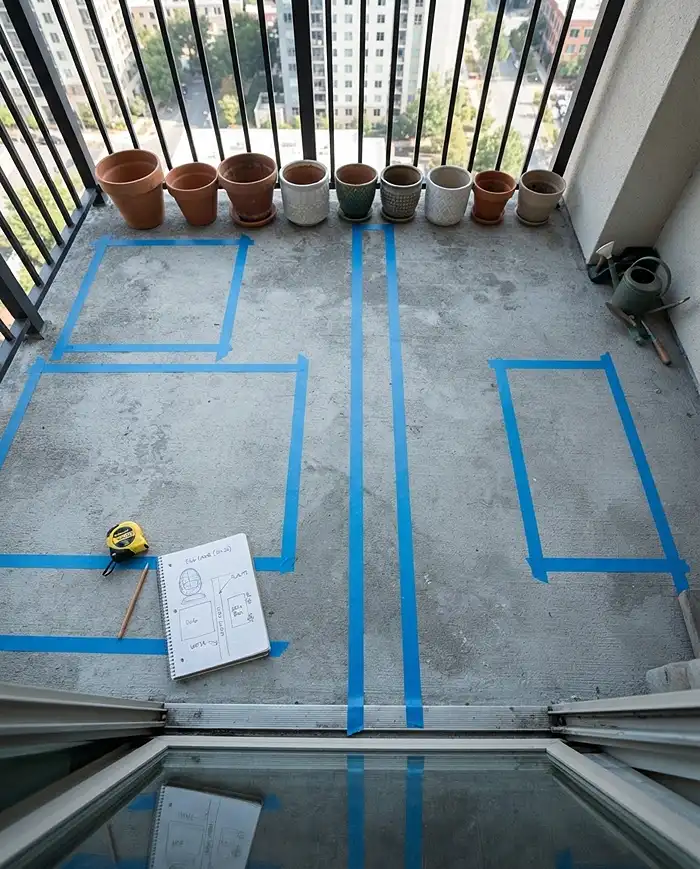
Quick Answer: Measure your total balcony floor space and subtract your furniture footprint. Leave a minimum 18-inch clear path between your chair and any pot so you can water without tripping.
Use painter’s tape on the floor to mock up furniture placement before buying anything. A chair that looks right in a showroom can eat your entire balcony.
For a narrow balcony under 5 feet wide, one chair plus a small side table is the right call. Trying to squeeze two chairs in always kills the plant display.
If your balcony is L-shaped or wider, you can angle the seating toward a focal plant — usually a tall structural pot — which creates a natural sightline and makes the space feel designed rather than accidental.
Assessing Microclimates for Textiles and Foliage
Quick Answer: Spend one full day tracking where sun falls and where wind comes from. High-wind corners will dry out plants fast and send lightweight blankets flying.
I learned this the hard way in spring 2023 — a fringed throw ended up three balconies down after an afternoon gust. Now I keep textiles in a deck box unless I’m actively sitting outside.
Wind corridors are usually the outer railing corners. That’s where you want your heaviest, most wind-tolerant pots — ornamental grasses or bamboo — not your delicate herbs or open baskets.
Sun tracking matters for both plant health and textile longevity. Fade-resistant acrylic fabrics handle UV well, but even those degrade faster on south-facing balconies baking in direct afternoon sun for 6+ hours.
Choosing the Perfect Chair and Blankets
For a small balcony garden to feel cozy, your seating has to be genuinely comfortable — not just visually appealing. And your textiles need to survive outdoor conditions without looking dingy after one season.
Space-Saving, Comfortable Seating Options
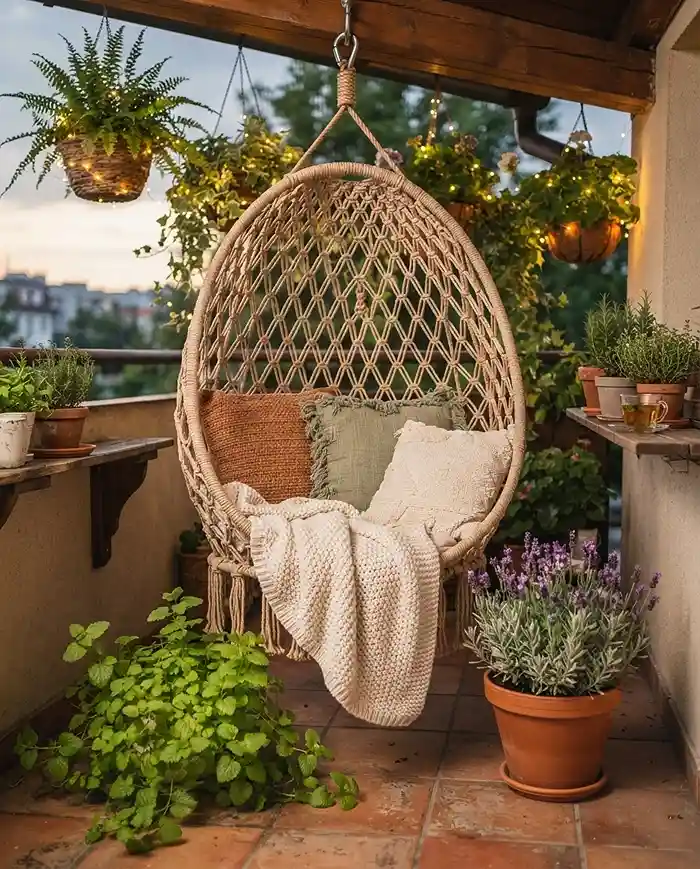
Quick Answer: A hanging macrame egg chair, a slim foldable Adirondack, or a narrow papasan gives you comfort without dominating the space. Aim for seating with a footprint under 24 x 24 inches.
The hanging egg chair is my personal pick for small balcony garden setups — it lifts off the floor entirely, leaving room underneath for a trailing plant or a small pot of lemon balm.
Verify your balcony’s load rating and the ceiling or beam anchor point before hanging anything. Most standard balconies support 40–60 lbs per square foot, but the mounting hardware needs to handle swing-load, not just static weight.
- Hanging egg chair: footprint-free, visually light, max comfort — verify structural anchor first
- Foldable Adirondack: stores flat when not in use, weather-resistant poly lumber options available
- Narrow papasan (24-inch bowl): cozy and low-profile, but requires a weather-rated cushion replacement
- Bistro-style folding chair: smallest footprint, works if you add a thick outdoor seat cushion
Pro Tip: Choose seating in a neutral color — cream, black, or natural wood — so it doesn’t compete visually with your plant display.
Weather-Resistant Blankets and Outdoor Textiles
Quick Answer: Use heavy-knit washable throws for evening use, fade-resistant acrylic pillows that live outside full-time, and a polypropylene outdoor rug to ground the whole setup.
The rug is more important than it sounds. A polypropylene outdoor rug (like those from Ruggable’s outdoor line or IKEA’s TIPHEDE) defines the “room” visually, keeps feet warm, and dries fast after rain.
For pillows, Sunbrella-fabric or 100% acrylic-filled options resist mildew and fade far better than standard indoor covers. They can stay outside indefinitely in most climates through spring to fall.
Blankets are different — bring them in. Even a heavy cotton knit absorbs humidity from transpiring plants overnight. Keep one folded in your deck box for evening use.
Best Potted Plants to Frame Your Nook
Plants do two jobs in a balcony garden nook: they create a sense of enclosure, and they deliver sensory rewards — scent, texture, movement. Pick plants with both roles in mind.
Check out these apartment balcony garden ideas organized by sunlight exposure to match your plant picks to your specific microclimate.
Tall Structural Plants for Privacy
Quick Answer: Clumping bamboo (Fargesia ‘Rufa’), tall ornamental grasses like Pennisetum ‘Rubrum’, or a potted Ficus ‘Audrey’ all grow upright and create a privacy screen without needing a trellis.
Fargesia ‘Rufa’ is my go-to for balcony privacy — it’s clumping (not running), cold-hardy to zone 5, and reaches 6–8 feet in a 15-gallon pot within two seasons. It also handles wind far better than a Ficus.
Place your tallest structural plants along the outer railing or the side facing an adjacent balcony. That’s where you need visual blocking the most, and the extra weight on the railing edge is structurally sound.
| Plant | Height in Container | Zone | Wind Tolerance |
|---|---|---|---|
| Fargesia ‘Rufa’ bamboo | 6–8 ft | 5–9 | High |
| Pennisetum ‘Rubrum’ grass | 3–4 ft | 9–11 (annual elsewhere) | High |
| Ficus ‘Audrey’ | 4–6 ft | 10–12 (indoor/out) | Low |
| Arborvitae ‘Emerald Green’ | 4–5 ft | 3–8 | Medium |
Aromatic Herbs for a Sensory Experience
Quick Answer: Place lavender, creeping thyme, or lemon balm within arm’s reach of your seating. Brushing their foliage releases calming oils that actively change the feel of the space.
I keep a 10-inch pot of ‘Hidcote’ lavender and a trailing pot of lemon balm on either side of my egg chair. On warm evenings, the ambient scent is reason enough to sit outside.
Creeping thyme works especially well if you’ve got a low shelf or pot riser near the chair — it cascades slightly and releases scent underfoot or when touched, even without flowering.
Rosemary ‘Tuscan Blue’ also earns its place: upright enough to provide some structure, incredibly fragrant, and doubles as a kitchen herb. Plant it in full sun for best oil production.
Trailing Spillers to Soften Edges
Quick Answer: Hang baskets of Golden Pothos, Creeping Jenny, or String of Pearls overhead or from railing hooks. Their trailing vines create a soft foliage canopy that makes the nook feel enclosed and intimate.
Golden Pothos (‘Epipremnum aureum’) is the most forgiving of the trailers — it tolerates low light, irregular watering, and keeps growing even through neglect. Stems can reach 4+ feet in a single season in a 6-inch hanging basket.
Creeping Jenny (‘Lysimachia nummularia Aurea’) is hardier (zone 3) and gives you bright chartreuse color that reads beautifully against dark railing or furniture. It also handles more sun than Pothos.
- Golden Pothos: deep shade to bright indirect light, fast-growing, wipe leaves clean monthly
- Creeping Jenny ‘Aurea’: full sun to part shade, zone 3+, vivid gold-green color
- String of Pearls: bright direct sun, drought-tolerant, dramatic drape from overhead hooks
- Sweet potato vine ‘Blackie’: full sun, vigorous seasonal trailer, deep purple-black foliage
Step-by-Step Styling Guide
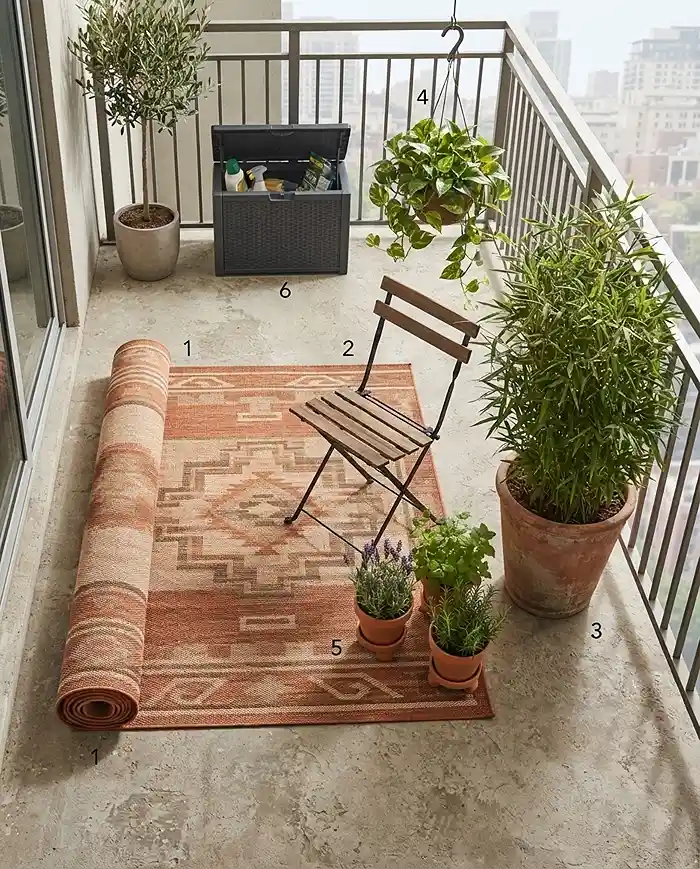
Order matters here. Getting the sequence wrong means moving heavy pots around a placed chair — not fun on a 7th-floor balcony.
- Roll out the outdoor rug first — it defines the boundary of your nook and everything else gets placed relative to it.
- Position the chair so it faces your best view or focal plant spot. Check that you have 18 inches clearance on at least one side.
- Place tall privacy planters along the outer edges and the side facing adjacent balconies. These are your walls.
- Hang trailing baskets from overhead hooks, railing brackets, or a tension rod across the doorframe. Aim for 12–18 inches of drape at sitting eye level.
- Add aromatic herbs on low stools or pot risers within arm’s reach of the chair.
- Layer in the cozy details last: blanket in the deck box nearby, outdoor pillows on the chair, a solar lantern or string lights (see balcony garden lighting ideas for evening ambiance) hung among the foliage.
Maintenance for a Tidy, Cozy Nook
A densely planted balcony nook gets messy fast if you don’t build clean watering habits from day one. Wet soil on a throw blanket or muddy runoff on a polypropylene rug isn’t cozy — it’s a chore.
Managing Watering to Protect Textiles
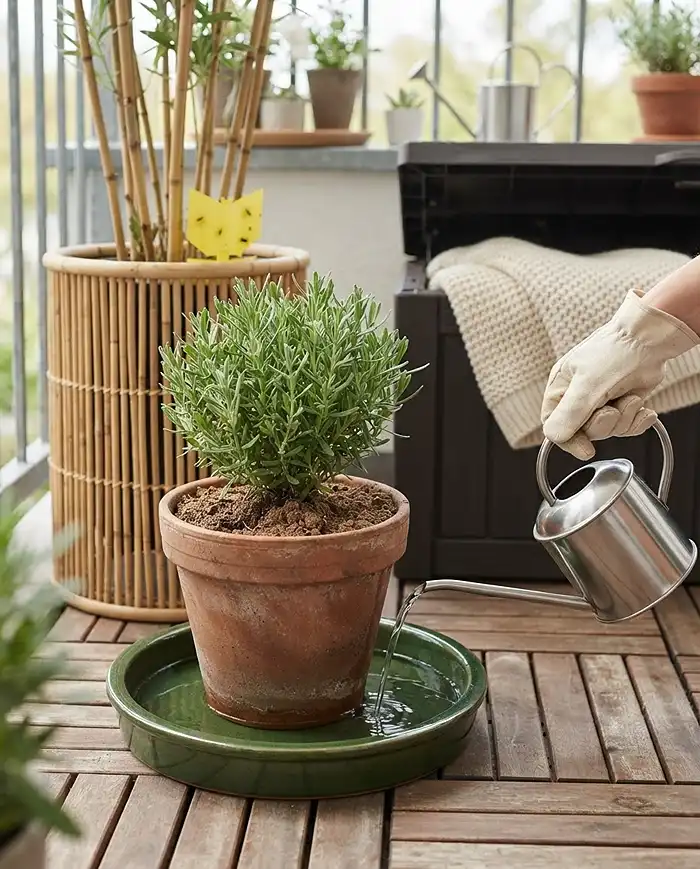
Quick Answer: Use exact-fit glazed drip trays under every pot and switch to bottom-watering — filling the tray rather than watering from above — to eliminate muddy splash entirely.
Bottom-watering also encourages deeper root growth and reduces fungus gnat issues, since the soil surface stays dry. Fill each tray, wait 30 minutes, then drain any standing water so roots don’t stay wet.
For pots that are too large to bottom-water easily, use a long-necked watering can directed at the soil base, not the foliage. A slow trickle beats a splash every time in a textile-heavy space.
Storing Blankets and Cushions Safely
Quick Answer: A small waterproof resin deck box (18–30 gallon size) stores your blankets and cushions safely and doubles as a side table or extra seat when closed.
Keter, Suncast, and Lifetime all make resin deck boxes in the 18–30 gallon range that are compact enough for small balconies and hold two full throw blankets plus four pillow covers easily.
Get in the habit of stashing textiles before any watering session, not after. It takes 15 seconds and saves you the frustration of a damp blanket on a cool evening.
Common Problems and Solutions
Two issues come up almost universally when mixing plants and soft furnishings on a balcony. Both are easy to prevent once you know what to watch for.
Mold and Mildew on Fabrics
Quick Answer: Plants transpire moisture overnight, and that ambient humidity settles on fabrics left outdoors. Wash blankets every 2–3 weeks during active use and never leave them bunched up outside overnight.
Mildew smell develops faster than visible spotting. If a blanket smells musty, wash it with a cup of white vinegar in the rinse cycle before it spreads to your cushion covers.
Acrylic and solution-dyed polyester fabrics resist mildew better than cotton or wool. If you’re buying cushions to live outside, read the fiber content label — not just the “outdoor” marketing claim.
Pests Invading the Seating Area
Quick Answer: Move nectar-heavy flowers to the far outer railing to pull bees away from your seating. Use yellow sticky traps hidden behind structural pots to control fungus gnats without chemicals.
Fungus gnats are the most common pest complaint in container-heavy balcony setups. They breed in consistently moist topsoil. Bottom-watering (keeping the surface dry) cuts populations dramatically within 2 weeks.
Avoid placing flowering annuals directly adjacent to the chair — sweet alyssum, calibrachoa, and petunias attract pollinators, which is great for the outer railing but annoying next to your head.
Frequently Asked Questions
How do I protect blankets on an open balcony?
Only bring standard indoor blankets out when you’re actively using the space. For a more permanent solution, buy a water-repellent outdoor camping blanket rated for morning dew — brands like Rumpl and Kelty make washable options designed for exactly this. Store everything in a waterproof deck box between uses.
What are the best mosquito-repelling plants for a sitting area?
Surround your chair with peppermint, citronella geranium (sold as ‘mosquito plant’), and rosemary. Their strong volatile oils confuse and deter biting insects during evening hours. These work best when you lightly brush the foliage to release the oils — passive placement alone has limited effect.
How close can pots be to my outdoor chair?
Maintain a minimum 12 to 18 inches between the edge of your chair and the nearest foliage canopy. This prevents wet or soil-dusted leaves from brushing against clothing and blankets, and keeps your seating area from feeling claustrophobic rather than cozy.
What’s the best rug material for a balcony garden nook?
Polypropylene (also marketed as polyolefin) is the best choice. It’s mold-resistant, dries within hours of rain, handles UV exposure without fading for 2-3 seasons, and cleans easily with a hose. Avoid jute or seagrass — they absorb moisture and rot outdoors.
Can I create a cozy nook on a tiny balcony under 40 square feet?
Yes — a single hanging egg chair, one tall bamboo privacy pot, one hanging basket of trailing Pothos, and a small aromatic herb pot is all you need. Keep the floor clear except for the rug and you’ll have a functional, genuinely cozy nook without overcrowding.
Key Takeaways
- A cozy balcony garden nook starts with measuring your floor space and traffic flow before buying any furniture or plants — 18 inches of clear path is the minimum.
- Layer from the ground up: rug first, chair second, tall privacy plants third, trailing spillers and herbs last.
- Use bottom-watering and exact-fit drip trays to protect textiles from muddy splash — this one habit prevents 90% of maintenance headaches.
- Store blankets and cushions in a waterproof resin deck box between uses; never leave them bunched outdoors overnight near transpiring plants.
- For small balcony garden setups under 50 square feet, one chair, one tall structural plant, one trailing basket, and one aromatic herb is all you need — restraint creates coziness, clutter kills it.