
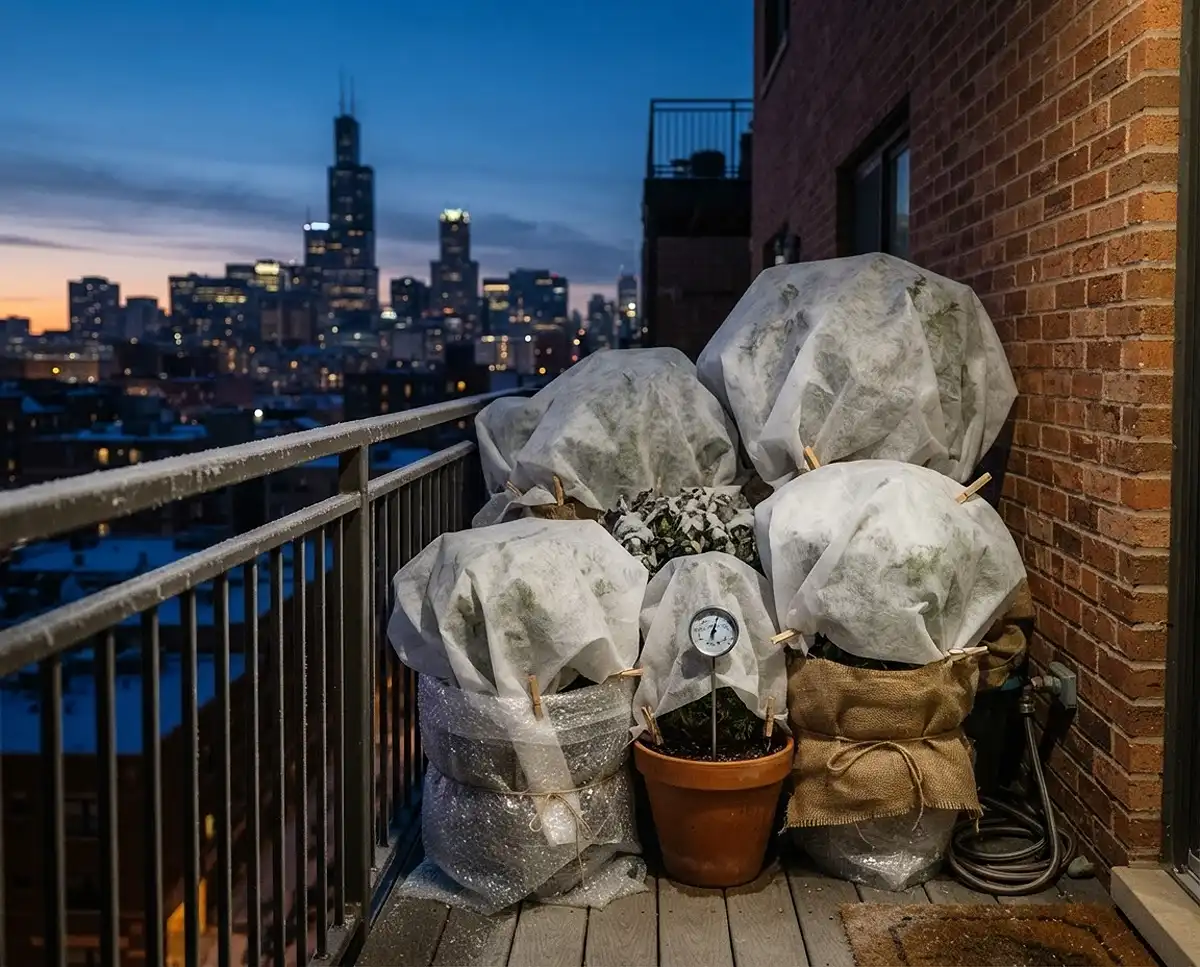
How to Protect Balcony Plants From Frost
Learn how to protect balcony plants from frost using insulation tricks built for a small balcony garden, so your containers survive the first hard freeze instead of turning to mush overnight.
I’ve kept pots alive through nine winters on a 4th-floor balcony in Chicago, zone 6b, where wind off the lake makes the “real feel” temperature drop faster than any forecast admits. The lesson that took me three dead rosemary plants to learn: containers don’t get the insulation ground soil gives you, so you have to fake it yourself.
Table of Contents
The Hidden Threat of Cold Nights to Container Gardens
In-ground plants sit inside a giant thermal battery. The earth around their roots barely changes temperature overnight, even when the air above drops into the 20s.
Potted plants don’t get that buffer. A container’s soil is exposed on every side, top, bottom, and around the pot wall, so it tracks the air temperature almost exactly.
That’s why cold weather container plants can freeze solid in a single night even when nearby in-ground perennials shrug it off. On a small balcony, where pots often sit against railings with wind hitting from multiple directions, the exposure is even worse. Targeted cold-weather prep isn’t optional if you want to protect balcony plants from frost through a whole season.
Monitoring the Microclimate on Your Balcony
Before the first frost warning hits your phone, walk your balcony at night with a flashlight and figure out where cold air actually collects. Corners near metal railings, gaps under glass balustrades, and any spot with a through-draft are your danger zones.
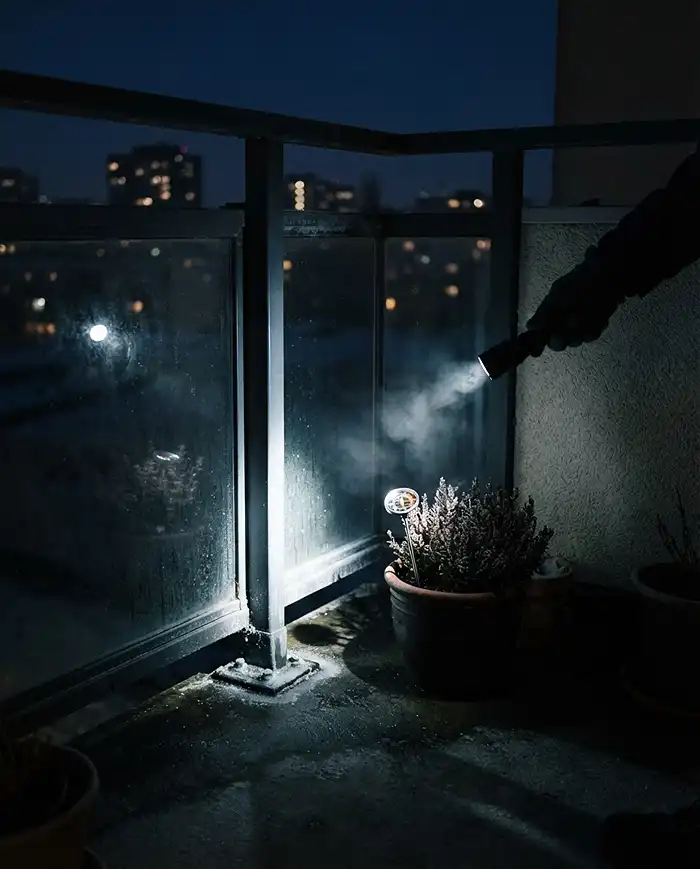
I learned this the hard way my first year: a corner I thought was “sheltered” backed onto a stairwell vent that funneled freezing air straight across my pansies. They blackened by morning while pots six feet away were fine.
Identifying Frost Dates and Temperature Thresholds
Quick Answer: A light frost hits between 28°F and 32°F and mainly damages tender annuals and tropical foliage, while a hard freeze drops below 28°F and can kill roots inside unprotected containers.
Check your average first frost date through your local extension office or a site like the MU Extension frost and freeze probabilities guide, then start prepping about two weeks before that date, not after it.
- Light frost (28°F to 32°F): tender annuals like basil and impatiens suffer, but hardy pansies and mums usually survive uncovered
- Hard freeze (below 28°F): even cold-hardy perennials in pots need root insulation, and tropicals must come indoors
- Deep freeze (below 20°F): unprotected terracotta and thin plastic pots risk cracking on top of plant damage
Utilizing Radiant Heat from Apartment Walls
Quick Answer: Push containers flush against a south- or west-facing brick or concrete wall to borrow the heat the building releases overnight.
Masonry absorbs heat all day and radiates it back out for hours after sunset. On my balcony, the brick wall shared with my heated living room stays noticeably warmer to the touch than the railing side, even at 11 p.m.
Pro Tip: Test this yourself by holding the back of your hand against different wall sections after dark; the warmest spot is where your most cold-sensitive pots should live.
Essential Gear for Cold Night Protection
You don’t need a shed full of equipment for small space gardening. A short list of packable materials covers almost every cold snap:
- Horticultural fleece or frost blankets (not plastic sheeting)
- Bubble wrap or burlap for wrapping pot exteriors
- Clothespins or binder clips to secure covers against wind
- A soil thermometer to check root-zone temperature directly
Horticultural Fleece and Frost Blankets
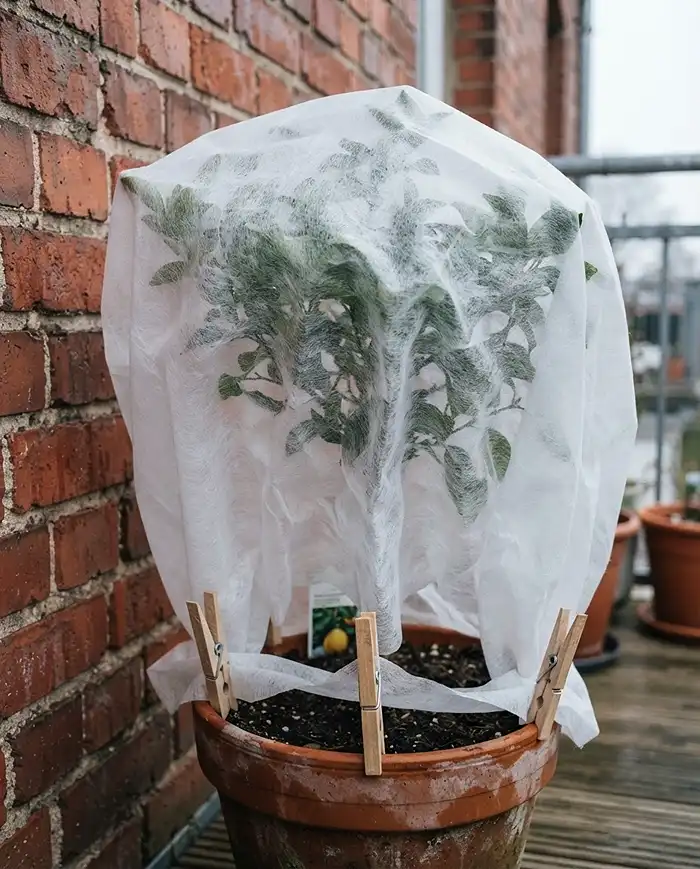
Quick Answer: Use breathable, spun-bound frost cloth draped loosely over the foliage, not plastic, so rising soil heat gets trapped without cooking or suffocating the plant.
Drape the fleece so it reaches the container’s soil line, then anchor it with clips or a couple of bricks. Leave enough slack that fabric doesn’t press flat against leaves, since contact points can still freeze.
Real Example: The first frost blanket I bought was a leftover painter’s drop cloth. It looked identical to fleece but held moisture against the leaves; my citrus dropped half its foliage within a week from that trapped damp cold.
Root Insulation Materials: Bubble Wrap and Burlap
Quick Answer: Wrap the outside of each pot in a double layer of bubble wrap, burlap, or an old moving blanket to keep the root zone from freezing solid in crosswinds.
| Material | Best For | Watch Out For |
|---|---|---|
| Bubble wrap | Plastic and glazed ceramic pots, quick wrapping | Traps moisture against unglazed clay if left too long |
| Burlap | Breathable wrap for terracotta, natural look | Less insulating alone; layer with straw for hard freezes |
| Old moving blankets | Large pots, tree-form citrus or fig | Bulky on a tiny balcony; fold and store between uses |
Secure whatever you choose with packing tape or twine so wind doesn’t strip it off by midnight, which happens more often than most guides admit.
Step-by-Step Guide to Preparing Pots for a Cold Snap
When a freeze warning shows up in the forecast, work through this sequence the afternoon before:
- Cluster pots tightly together in your warmest corner so they share radiant heat
- Water the soil deeply in the morning, well before temperatures drop
- Wrap container exteriors in bubble wrap or burlap
- Drape frost cloth over the foliage and secure it to the ground or railing before dusk
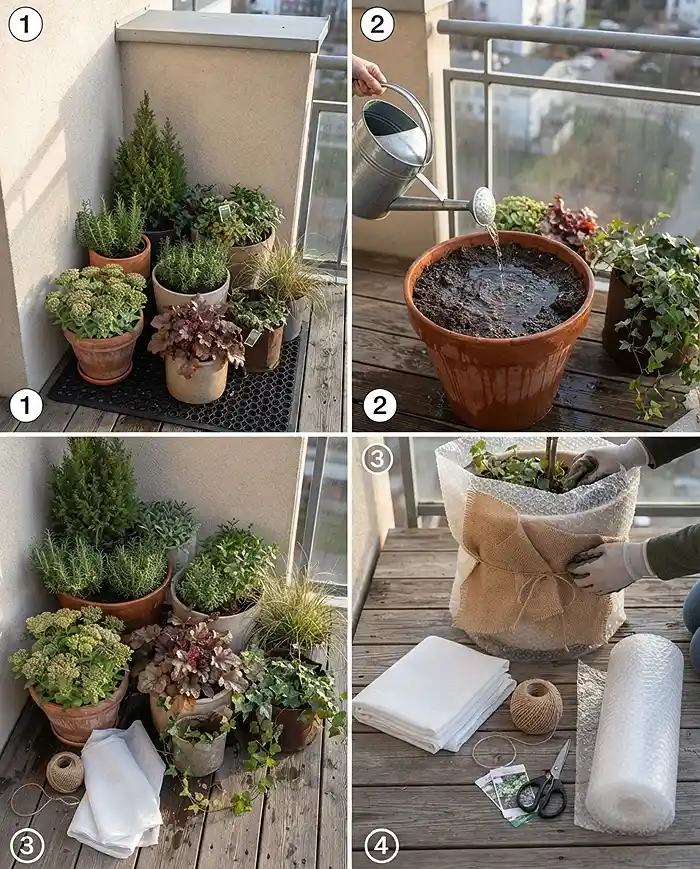
Doing this in order matters. Watering first, then wrapping, then covering foliage means you’re not fumbling with soggy gloves in the dark at 9 p.m., which is exactly how I’ve forgotten to secure a frost cloth before.
Maintenance and Care During Cold Weather
Overwintering care for a small balcony garden is mostly about restraint. Resist the urge to “tidy up” or feed struggling plants during a cold snap.
The Counterintuitive Rule of Watering Before a Freeze
Quick Answer: Water your pots thoroughly the morning before a forecasted freeze, since moist soil holds and releases heat far better than dry, air-filled soil.
Dry potting mix is full of air pockets, and air loses heat fast. Moist soil has higher thermal mass, so it stays warmer longer and buffers roots from a sudden drop.
Water in the morning, not right before the freeze hits, so excess moisture has time to drain and roots aren’t sitting in ice-cold standing water overnight.
Halting Fertilization and Pruning
Quick Answer: Stop all nitrogen fertilizer and heavy pruning once cool weather sets in, because both push tender new growth that blackens instantly in a freeze.
I made this mistake with a potted hydrangea, giving it a “boost” fertilizer in late October. It pushed soft new shoots that turned to black mush after the very next cold snap, weeks before the plant would have gone dormant naturally.
Hold off on fertilizing again until you see new spring growth, and save any structural pruning for late winter once the hard freezes have passed.
Common Problems and Solutions
Even with good prep, cold nights sometimes win. Here’s how to triage the damage without panicking or overcorrecting.
Treating Frost-Nipped Foliage
Quick Answer: Leave blackened, mushy leaves on the plant until spring; the dead tissue insulates the still-living growth underneath from further cold.
Cutting damaged foliage off immediately exposes healthy tissue to the next cold snap. Wait until new growth appears in spring, then prune back to just above the first healthy bud.
Terracotta Pots Cracking From Frost Heave
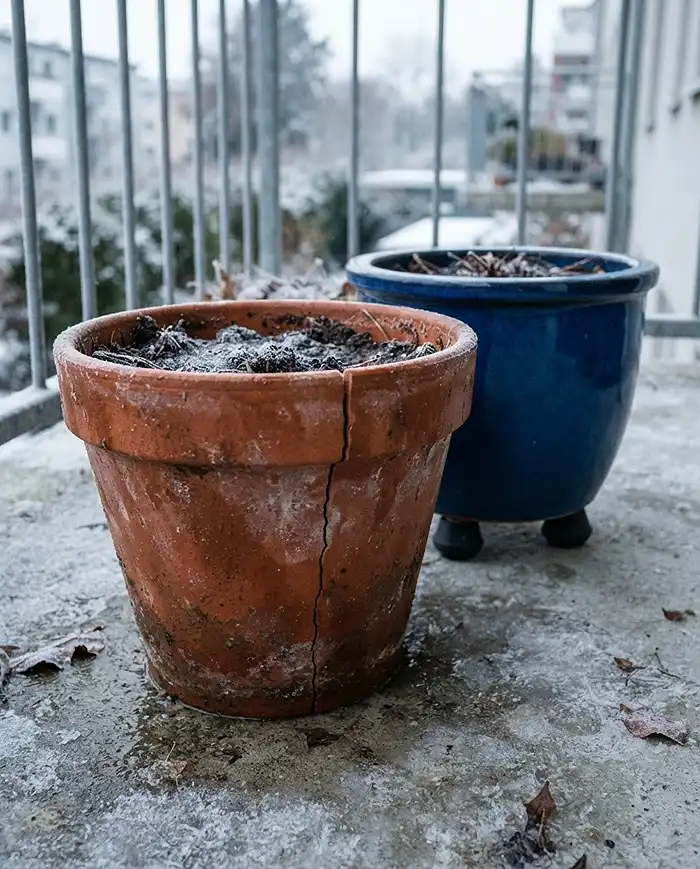
Quick Answer: Water expands as it freezes, and porous terracotta can’t flex, so saturated clay pots crack or shatter in a hard freeze.
Either bring unglazed terracotta indoors for winter or set it on pot feet so it drains fully and never sits in standing water that can freeze solid inside the clay walls.
Pro Tip: If you’re short on indoor space, swap terracotta for glazed ceramic or resin pots seasonally; they handle freeze-thaw cycles far better on an exposed balcony.
For more low-effort swaps like this, our guide to fall balcony ideas for renters covers container choices that survive being moved in and out each season.
Frequently Asked Questions
Can I use plastic garbage bags to cover my plants?
No. Non-breathable plastic traps condensation that freezes directly onto the leaves overnight, and it magnifies morning sunlight enough to cook the plant the next day. Use breathable frost cloth or an old bedsheet instead.
When should I bring my potted plants indoors?
Tropical plants like hibiscus, basil, or citrus need to come indoors before temperatures drop below 50°F. Hardy perennials can usually stay outside unless a deep, sustained freeze below their hardiness zone is forecasted.
Should I remove the frost blankets during the day?
Yes. Uncover plants on sunny days once the temperature rises safely above freezing, so foliage can photosynthesize and the microclimate under the cover doesn’t overheat.
What temperature is actually too cold for potted plants?
Most tropicals struggle below 50°F, tender annuals suffer between 28°F and 32°F, and even hardy perennials in containers need root protection once temperatures drop below 28°F, since pot walls offer no insulation.
Do all terracotta pots need winter protection?
Unglazed terracotta is the most vulnerable to cracking because it’s porous and holds moisture that expands when frozen. Glazed ceramic and resin pots handle freeze-thaw cycles much better and often don’t need special protection.
Conclusion
You don’t need a greenhouse to protect balcony plants from frost, just a little planning before the forecast turns. Water deeply, cluster your pots, wrap the containers, and cover the foliage before dusk.
Every tiny garden ideas list looks great in September, but the ones that survive January are the ones prepped a season ahead. For more cool-season inspiration, check out our autumn balcony garden ideas and cool weather herbs for pots guides.
Key Takeaways
- Container roots have zero insulation from the ground, so you have to protect balcony plants from frost manually, not rely on soil buffering
- Water pots deeply the morning before a freeze; moist soil holds heat far better than dry soil
- Use breathable frost cloth, never plastic, and remove covers once daytime temps clear freezing
- Wrap pot exteriors in bubble wrap or burlap, and cluster containers against a heat-radiating wall
- Leave frost-damaged foliage in place until spring; it protects the living tissue underneath