

Fall Terracotta Balcony Ideas for a Modern Cozy Look
Fall terracotta balcony ideas don’t have to mean pumpkins and hay bales. Done right, clay pots and cool-season plants create something sharper — a small balcony garden with real visual edge.
Table of Contents
Autumn Aesthetics with Modern Terracotta
Most autumn balconies go cluttered fast. Gourds pile up, mums explode in every direction, and the whole thing looks like a roadside farm stand by mid-October.
A terracotta balcony garden takes a different direction. The burnt orange of unglazed clay already carries warmth — you don’t need to pile on.
Pair that earthy tone with architectural plant shapes, a restrained color palette, and clean-lined pots, and you get something that actually feels considered. Crisp autumn light does the rest.
I switched to this approach on my zone 6b south-facing balcony in fall 2022. Swapped out six mismatched plastic planters for three terracotta cylinders in graduated heights. The difference was immediate — it looked intentional instead of accumulated.
Preparing Your Balcony and Terracotta for the Cold
Before a single plant goes in, there’s prep work. Terracotta behaves very differently once summer heat fades — and skipping this step costs you pots and plants.
Clay that handled July’s dry heat will absorb autumn rain like a sponge. That matters a lot once temperatures start dropping below freezing at night.
The Science of Terracotta in Cooler Temperatures
Unglazed terracotta is porous. That breathability is great in summer — roots don’t cook, excess moisture escapes. In autumn, it works against you.
Cold autumn rain saturates the clay walls. That moisture lowers the root zone temperature faster than the air temp alone would. For heat-loving plants, that cold clay can be fatal even before a frost hits.
The clay wall also wicks moisture away from the soil, which sounds helpful until you realize it’s pulling warmth with it. On a wet October night in zone 6b, a saturated terracotta pot can drop root-zone temps by 5-8°F compared to a plastic container.
Check out these autumn balcony garden ideas for more on choosing the right containers for your climate.
Weatherproofing and Frost-Protection Strategies
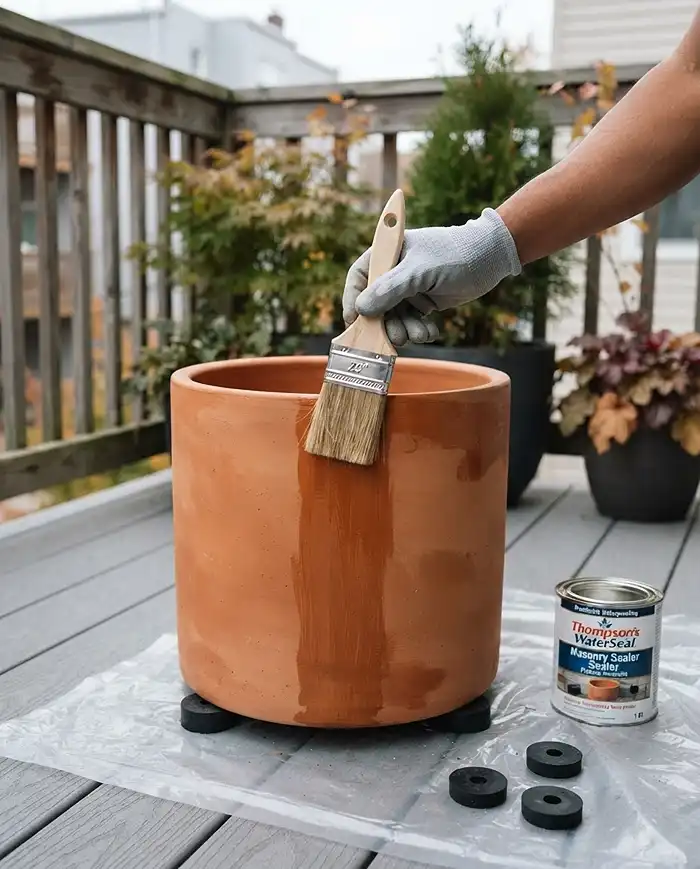
Apply a breathable masonry sealer to the outside of each pot before the rains arrive. Look for a product labeled “penetrating” or “breathable” — not a surface coating that traps moisture inside the walls.
Brands like DryLok Masonry Waterproofer work well for this. One coat on the exterior cuts moisture absorption significantly without interfering with root breathability.
Also raise every pot off the balcony floor on rubber pot feet. It stops water pooling under the drainage hole — a common cause of winter cracking on flat concrete surfaces.
Achieving a Modern Aesthetic with Classic Clay
Traditional terracotta reads rustic because of pot shape, not material. Change the shape and the whole feel shifts.
The goal is making your terracotta balcony garden look deliberate — like it was styled, not just planted.
Minimalist Shapes and Clean Lines
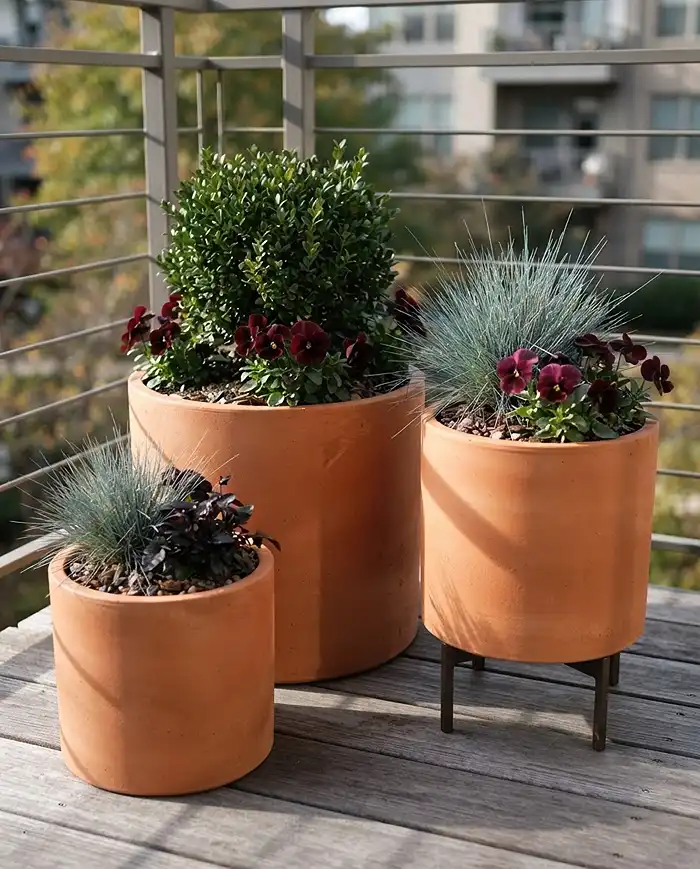
Quick Answer: Replace ornate, flared-rim pots with sleek cylinders, cubes, or tall tapered squares. Group them in threes at varying heights for an architectural look that reads as modern, not rustic.
The “rule of three” works here: one tall anchor pot (14-16 inches), one mid-height (10 inches), one low and wide (8 inches). Cluster them at different depths from the railing, not lined up in a row.
Avoid pots with decorative relief, scalloped rims, or wide flared lips. Those details are what make terracotta feel old-fashioned. A straight-sided cylinder in the same material looks completely different.
I picked up a set of Italian-style cylinder pots from a local garden center in September 2023. Zero ornamentation, just clean straight walls. Against my concrete balcony railing, they looked like they belonged in an architectural magazine.
Pro Tip: Odd numbers always look more intentional than even — three pots of different heights beats four matched ones every time.
Curating a Sophisticated Autumn Color Palette
Quick Answer: Build your palette around the terracotta itself. Deep burgundy, icy silver, and dark olive green are your anchors. Avoid bright orange, yellow, or neon flower mixes — they fight the clay instead of complementing it.
Think of the pot color as a fixed element, like a wall color in interior design. Everything else plays off it.
- Deep burgundy: ‘Burgundy Lace’ Heuchera or dark plum pansies at the front edge
- Icy silver: Silver Falls Dichondra trailing over the lip, or Dusty Miller as a mid-layer filler
- Dark olive green: Clipped boxwood spheres, Italian Cypress topiaries, or ‘Evergreen Giant’ Sedge
This palette works because none of those tones compete with burnt orange — they amplify it. Add a single white Cyclamen for a focal pop if the scheme feels too dark.
Best Cool-Season Plants for Terracotta Pots
Clay drains fast, which suits cool-season plants perfectly. Most autumn bloomers hate soggy roots — terracotta’s natural drainage is an asset, not a liability.
These are the plants I reliably use in my apartment balcony garden ideas for fall. All tested in zone 6b, all genuinely frost-tolerant.
Structural Evergreens and Ornamental Grasses
Quick Answer: Use clipped Boxwood spheres, Blue Fescue, or Mexican Feather Grass as your focal-point plants. Their clean geometry anchors the modern look, and they handle cool temperatures without drama.
‘Elijah Blue’ Fescue stays a tight steel-blue mound all season — frost doesn’t faze it until well below 20°F. Plant one in the tallest center pot as your visual anchor.
Mexican Feather Grass (Nassella tenuissima) adds movement. Its fine, straw-colored plumes catch autumn breeze beautifully, softening the rigid clay edges without chaos.
Boxwood spheres — even small 6-inch clipped ones — read as intentional and structured. ‘Green Velvet’ or ‘Baby Gem’ cultivars hold their shape well in containers through zone 5b.
| Plant | Best Pot Size | Cold Hardiness | Light Need |
|---|---|---|---|
| Blue Fescue ‘Elijah Blue’ | 8-10 inch | Zone 4 | Full sun |
| Mexican Feather Grass | 10-12 inch | Zone 6 | Full sun |
| Boxwood ‘Baby Gem’ | 10-14 inch | Zone 5b | Part to full sun |
| Cyclamen persicum | 8 inch | Zone 7 (treat as annual) | Bright indirect |
| Hellebore ‘Christmas Rose’ | 12 inch | Zone 4 | Part shade |
Cold-Hardy Flowers: Hellebores, Pansies, and Cyclamen
Quick Answer: Hellebores, deep plum pansies, and Cyclamen are the three cold-tolerant bloomers that look genuinely sophisticated in terracotta through autumn. All three handle light frost and complement the warm clay tone with jewel-toned color.
‘Christmas Rose’ Hellebore (Helleborus niger) blooms through zone 4 winters and looks dramatic — dark leathery leaves with waxy white or blush flowers that deepen with cold. It’s the one plant that actually looks better after a frost than before.
Deep plum pansies (try ‘Matrix Midnight Glow’ or ‘Colossus Burgundy’) hold color well down to about 25°F. Planted in early October, they’ll bloom through December in zone 6.
Cyclamen adds something pansies don’t — swept-back petals with a sculptural quality that photographs beautifully against terracotta. Treat them as cool-season annuals unless you’re in zone 7 or warmer.
Honest failure: I lost a flat of Cyclamen in November 2021 by leaving them out on a night that hit 18°F with wind chill. They’re hardy to about 28°F, not lower. Move them inside when hard freezes are forecast.
Trailing Foliage for Softening Modern Edges
Quick Answer: Plant Silver Falls Dichondra or dark English Ivy at the edges of tall column planters. Both cascade naturally and break the hard line between pot and balcony concrete without adding visual clutter.
Silver Falls Dichondra (Dichondra argentea) is frost-tender — treat it as an annual in zones below 9 — but its silver coin-shaped leaves trail 18-24 inches and shimmer in autumn light. Stunning against orange clay.
English Ivy in a dark cultivar like ‘Thorndale’ or ‘Glacier’ is fully hardy to zone 4. It’s slower to trail but permanent, and its deep green-and-white variegation reads as elegant rather than wild.
See our full guide to fall Mediterranean balcony styling for more trailing plant combinations that work in clay containers.
Step-by-Step Styling and Planting Guide
Sequence matters here. Do this in the right order and the whole setup takes under two hours. Skip steps and you’ll be repotting in November.
- Select and seal your anchor pots first. Apply breathable masonry sealer to the exterior. Let cure 24 hours before adding soil.
- Set pot feet before anything goes in. Rubber feet (3 per pot minimum) keep drainage clear and protect the balcony surface.
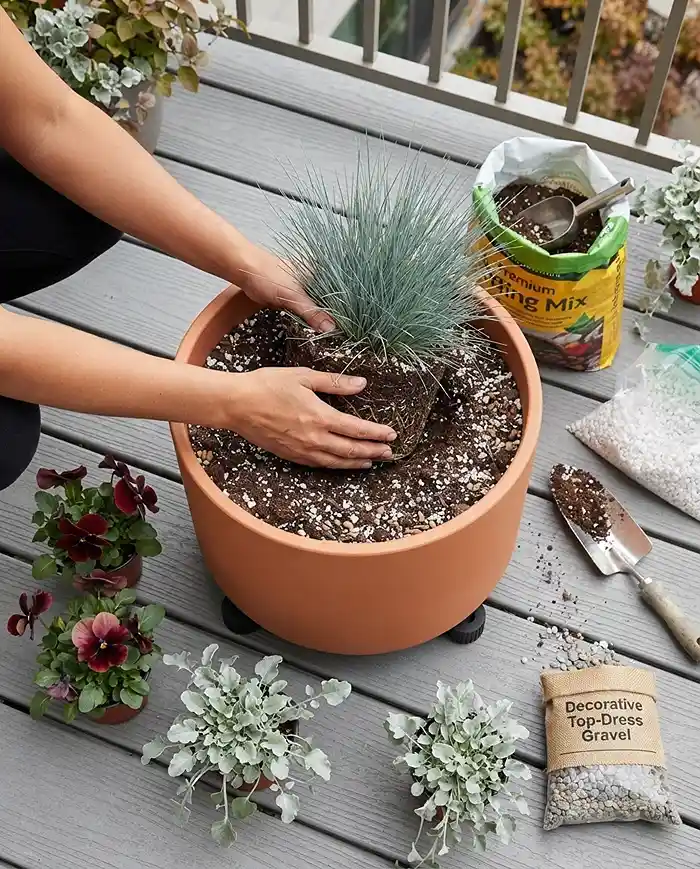
- Mix your potting medium. Blend premium potting soil with 30% coarse perlite and 10% horticultural grit. This prevents cold-damp compaction.
- Place the anchor plant first. Set the structural evergreen or grass off-center in the pot — not dead-center — for a natural look.
- Pack in the mid-layer plants densely. Cool-season plants need closer spacing than summer annuals — aim for 4-6 inches between root balls for an instant full look.
- Tuck in trailing plants at the very edge, angled slightly outward so they cascade over the pot rim from day one.
As of autumn 2024, most garden centers stock cool-season plants through late October in zones 5-7. Don’t wait — selection narrows fast after the first hard frost hits.
Maintenance Routine for Autumn Terracotta Gardens
Plants slow down in autumn. Their water needs drop, but clay’s behavior shifts too — and the two changes don’t always sync up. Your maintenance routine needs to adjust for both.
Adjusting Watering for Porous Pots in Autumn
Quick Answer: Switch from regular watering schedules to the finger-test method. Push your finger 2 inches into the soil — water only when it’s dry at that depth. In cool weather, clay pots that once needed daily water may only need watering every 4-7 days.
Lower temperatures slow evaporation dramatically. What dried out in 24 hours in July might take 5 days in October. But the clay is also absorbing ambient moisture from rain.
Overwatering in cold conditions is the single fastest way to trigger root rot. The soil stays cold, oxygen exchange slows, and saturated roots suffocate before they can recover.
These cool weather herbs for pots follow the same finger-test watering principle — worth reading if you’re adding culinary plants to your terracotta setup.
Pruning and Grooming for a Tidy Modern Look
Quick Answer: Deadhead spent blooms weekly and remove any yellowing leaves immediately. On a modern minimalist balcony, one decaying stem ruins the whole composition.
Pansies in particular need aggressive deadheading [removing spent flowers at the base of the stem]. Skip a week and they go rangy, diverting energy from new buds to seed production.
For Hellebores, remove any blackened or spotted leaves at ground level. They’re prone to a fungal leaf spot that spreads fast in cool damp conditions. Clean removal beats any spray treatment.
Pro Tip: Keep a small pair of snips on the balcony itself — a 30-second grooming habit every morning keeps the display looking editorial all season.
Common Problems and Solutions
Two issues hit terracotta users hardest in autumn: cracking from freeze-thaw cycles, and the white powdery crust that appears after wet weather. Both are fixable and preventable.
Preventing Cracking in Freezing Temperatures
Quick Answer: Empty saucers completely after every rain or watering. Water sitting in the saucer gets absorbed back into the pot base and freezes, expanding and shattering the clay from the bottom up.
Frost-heave works like this: water soaks into the porous clay, temperatures drop below 32°F, the water expands as it freezes (by about 9% in volume), and the rigid clay cracks. It happens fast — one hard overnight freeze is enough.
For smaller pots, pull them flush against the heated apartment wall on nights below 28°F. The wall radiates enough warmth to push the root zone temperature 3-5°F above ambient, which is often enough.
Move any pots smaller than 8 inches indoors when extended freezes are forecast. Small pots don’t have enough thermal mass to buffer the cold.
Managing White Efflorescence (Salt Stains) on Clay
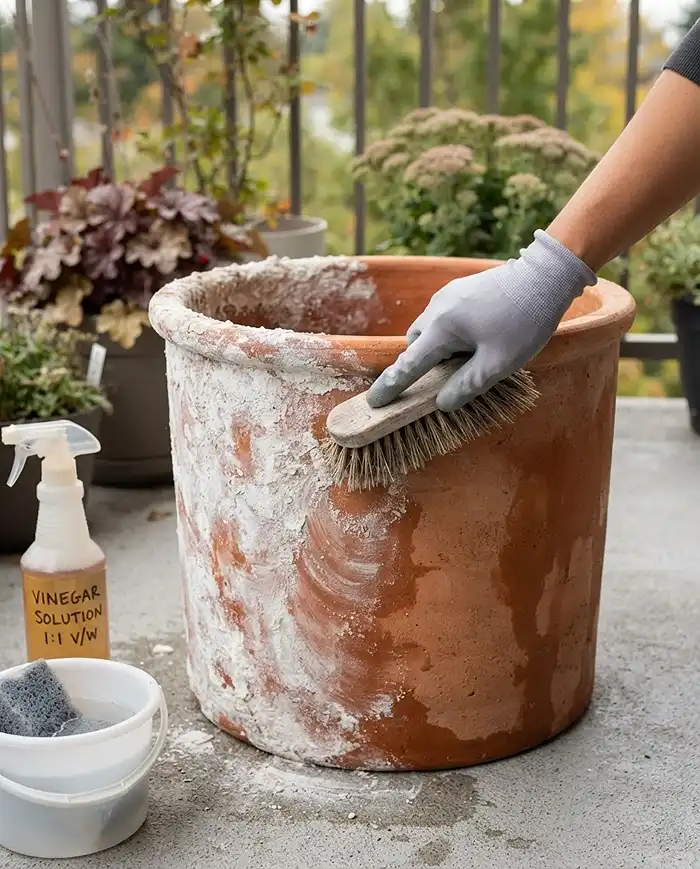
Quick Answer: White powdery crust on terracotta is efflorescence — mineral salts pulled to the surface by water movement through the clay. Clean it with equal parts white vinegar and water, scrubbing with a stiff brush. It’s cosmetic, not harmful, but it ruins the look of a modern display.
Autumn rain accelerates efflorescence because repeated wet-dry cycles continuously pull hard water minerals and fertilizer salts through the clay walls.
Switch to a low-salt fertilizer if you’re feeding in autumn at all (most plants need minimal feeding from October onward). The less salt going in, the less that migrates out.
The vinegar solution works well — let it sit on the stain for 5 minutes before scrubbing. For heavy buildup, a second application usually handles it. Rinse thoroughly so the acid doesn’t linger near roots.
fall terracotta balcony ideas FAQs
Can I leave terracotta pots outside all winter?
Standard terracotta will crack during prolonged deep freezes unless it is Italian Impruneta clay, which is fired at much higher temperatures and is frost-resistant. For regular terracotta, wrap smaller pots in bubble wrap or burlap before hard winter sets in, or move them indoors. Always empty saucers completely so no standing water freezes at the base.
What is the best potting soil for autumn terracotta containers?
Blend a premium organic potting soil with at least 30% coarse perlite and 10% horticultural grit. This keeps drainage fast enough to prevent cold, waterlogged soil — the primary cause of root rot in autumn containers. Never use straight garden dirt in pots; it compacts and stays cold and wet far too long.
How do I seal the inside of a terracotta pot to retain moisture and prevent cracks?
Spray the interior walls of an empty pot with liquid rubber or acrylic sealant before adding soil. This slows the clay from wicking moisture out of the soil mix, protecting roots from drying too fast and reducing the moisture saturation that leads to winter cracking. Let the sealant cure fully before planting.
Which cool weather herbs for pots work best in terracotta?
Rosemary, thyme, sage, and chives all thrive in terracotta’s fast-draining environment through autumn. Avoid basil — it collapses at temperatures below 50°F. Plant Mediterranean herbs in the same aerated soil mix recommended for ornamental pots, and position them in your sunniest balcony spot.
How many pots should I use on a small balcony garden for fall?
For a small balcony garden, three to five pots in varied heights is the sweet spot. Fewer than three looks sparse; more than five gets crowded and loses the modern, edited feel. Group them in one or two clusters rather than lining them up along the railing — it reads as intentional rather than accidental.
Key Takeaways
- The best fall terracotta balcony ideas rely on restraint — fewer pots, fewer colors, more intentional plant choices
- Seal the exterior of pots with breathable masonry sealer before autumn rains arrive to prevent cracking and root-zone chilling
- Stick to a palette of deep burgundy, icy silver, and dark olive green to complement the burnt orange of the clay without visual chaos
- Switch to the finger-test watering method in October — cool temperatures dramatically slow evaporation in porous clay, making overwatering the biggest autumn risk
- Empty saucers after every watering and move small pots against the apartment wall on nights below 28°F to prevent frost-heave cracking