
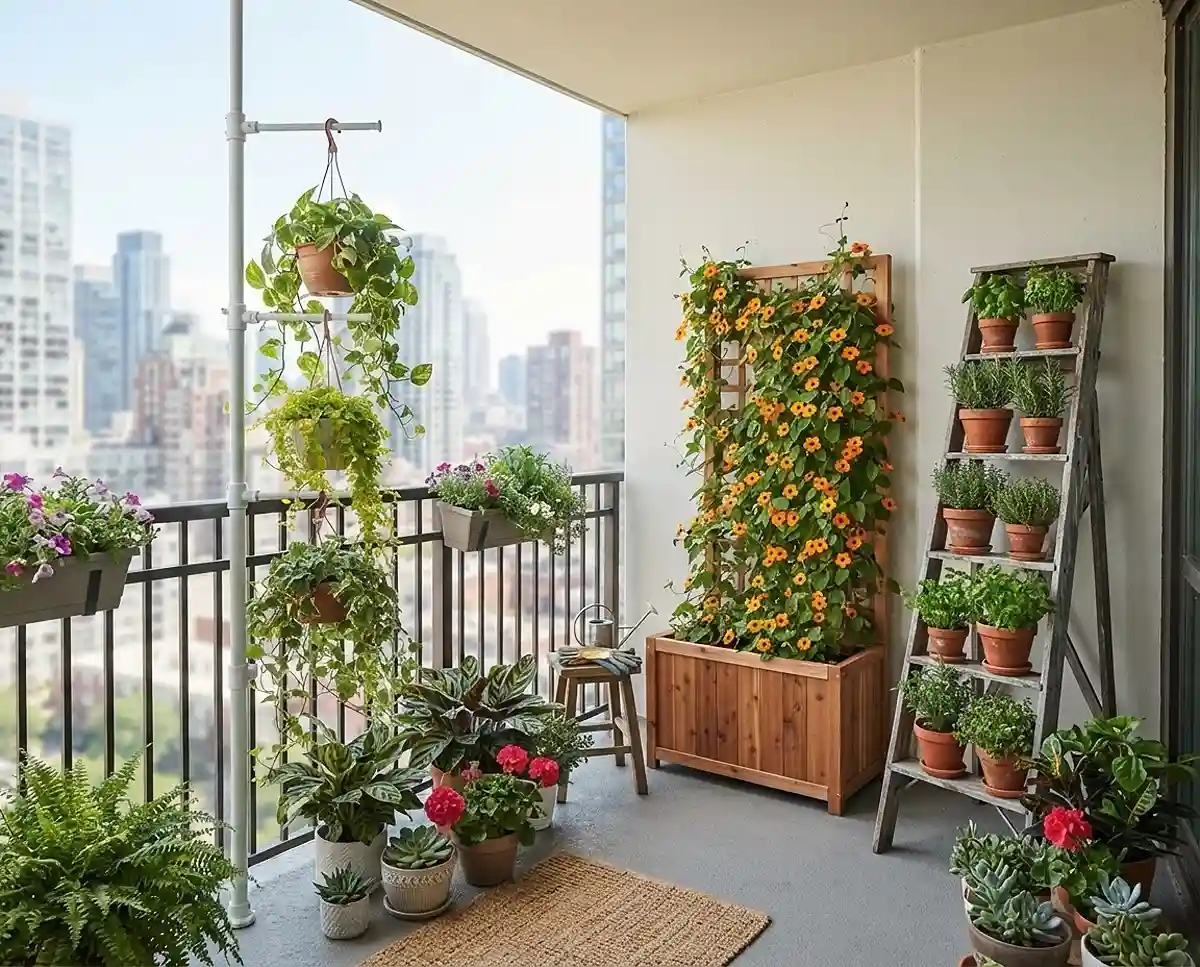
No Drill Vertical Balcony Garden Ideas for Small Spaces
A no drill vertical balcony garden lets renters build a lush, multi-level oasis without touching a single wall. Tight lease clauses and fear of losing your security deposit don’t have to kill your green dreams.
Using tension poles, freestanding planter screens, and leaning ladder shelves, you can explore more no-drill balcony garden ideas and stack plants floor to ceiling — then walk away with zero damage when you move out.
Table of Contents
Transforming Your Rental Space with a No-Drill Vertical Balcony Garden
Most renters assume vertical gardening means drilling brackets into brick or screwing hooks into stucco. It doesn’t. The real secret is using weight and tension as your anchors instead of hardware.
Spring-loaded tension poles wedge between your floor and ceiling with serious holding force. Heavy soil-filled planter boxes become self-anchoring bases for tall privacy trellises. Ladder shelves lean safely into corners with rubber feet doing the grip work.
As of spring 2025, the market for renter-friendly vertical garden hardware has expanded hugely. There are now full kits designed specifically for small balcony garden use with no permanent modifications required.
The result? A space-saving garden that looks intentional, grows real food and flowers, and protects your deposit entirely. Here’s exactly how to build one.
Assessing Your Balcony’s Microclimate and Spatial Limits
Before you buy a single pole or planter, spend a week observing your balcony. Tall freestanding structures behave very differently depending on floor-to-ceiling height, wind exposure, and how much direct sun you actually get.
Skipping this step is the most common reason vertical balcony gardens fail — not bad plants, not cheap hardware. Mismatched structures and conditions.
Measuring for Freestanding Screens and Tension Shelves
Grab a tape measure and record your exact floor-to-ceiling height. Most tension poles are adjustable between 7 and 10 feet, but you need to confirm your clearance before ordering.
Next, map your usable floor footprint. Mark out where planter boxes will sit, then physically walk the path from your door to the railing. You need at least 28 inches of clear walkway — more if local fire codes require it.
Measure twice. A planter box that blocks a fire escape egress point is a lease violation waiting to happen, not just an inconvenience.
Mapping Wind Corridors and Sunlight Exposure
High-rise balconies create wind tunnel effects that ground-floor gardens never see. A tall freestanding screen full of foliage acts like a sail — and on an upper floor, that’s a real tipping risk.
Spend a few evenings watching where the wind enters and exits your balcony. Note the strongest corridors. Those are exactly where you don’t want an unanchored tall trellis.
For sun, track morning and afternoon light separately. A south-facing balcony in zone 7b might get 8 hours in summer but only 3 in December. That gap changes which plants you can grow year-round on tiered shelves versus which ones need to rotate inside.
Best No-Drill Hardware for Vertical Balcony Gardens
The right hardware makes or breaks a zero-drill setup. These three options cover almost every balcony configuration and budget, and all of them leave zero permanent marks behind.
Tension Rod Plant Shelves and Poles
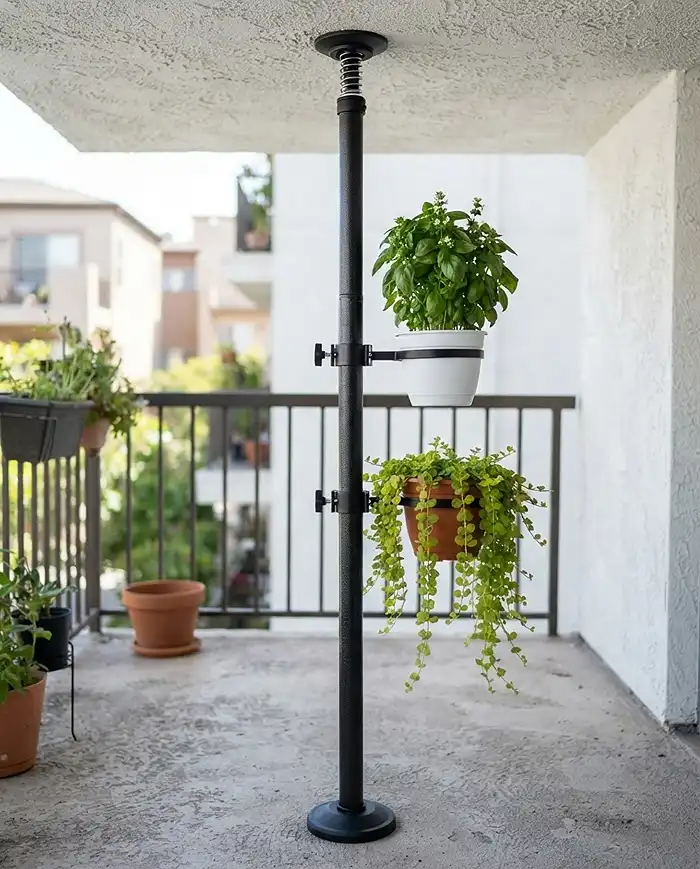
Spring-loaded tension poles are the workhorses of the no-drill vertical balcony garden world. They wedge between your floor and ceiling using a central threaded mechanism that you tighten until the pole is rock solid.
Most poles come with adjustable horizontal arms and removable trays. Load each arm with lightweight plastic or fiberglass pots — not terracotta — and you’ve got a vertical gardening column that takes up less than a square foot of floor space.
Look for poles with rubberized end caps on both the floor pad and ceiling plate. Bare metal will slide on tile and leave ceiling marks, which defeats the whole purpose.
Freestanding Planter Boxes with Integrated Privacy Screens
This is my favorite structure for a true living privacy wall. The concept is simple: a large rectangular planter box — typically 24 to 36 inches long and 10 to 12 inches deep — has a tall trellis panel built directly into the back.
You fill the box with soil, and that wet soil weight (easily 40 to 60 pounds once planted) anchors the entire screen from below. No screws, no wall brackets. Gravity does the job.
I used three of these side by side on my east-facing balcony in zone 6b last summer. Planted with ‘Blackie’ sweet potato vine and Black-Eyed Susan vine, they created a solid green wall by July — and I could move the whole setup in an afternoon when I left.
The key structural rule: the taller the trellis, the wider the planter box base needs to be. A 6-foot screen needs at least a 14-inch-deep box. An 8-foot screen needs 18 inches minimum to avoid forward lean.
Leaning Ladder Shelves for Corner Nooks
Corner space on balconies is almost always wasted. A wooden ladder shelf with rubber anti-slip feet solves that problem cleanly.
Lean the shelf at roughly a 15-degree angle into the corner. The two walls prevent lateral sway, and the rubber feet keep it from sliding forward on tile or composite decking.
Stick to herbs and small annuals on the top rungs — weight distribution matters on a leaning structure. Heavier pots go on the bottom two shelves where the load transfers directly to the floor.
A dedicated vertical herb ladder for small balconies can give you a purpose-built version of this with shelves already sized for standard nursery pots.
Top Plants for Vertical Screens and Shelves
Matching the plant to the structure is just as important as the hardware itself. Overload a tension shelf arm with a heavy terracotta pot of rosemary and you’ll find out exactly what the weight rating means.
The goal with vertical gardening is pairing lightweight root systems and fast growth habits with the specific structure that supports them best.
Fast-Growing Climbing Vines for Privacy Screens
For freestanding trellis screens, you want climbers that establish quickly and weave themselves through the panel without much help.
- Black-Eyed Susan Vine (Thunbergia alata): Reaches 6 to 8 feet in a single season. Produces cheerful orange and yellow blooms all summer. Annual in most zones.
- Sweet Potato Vine (Ipomoea batatas ‘Marguerite’): Explosive growth — can cover a 6-foot panel by midsummer. Grown for foliage, not flowers. Very heat tolerant.
- Star Jasmine (Trachelospermum jasminoides): Best for zones 8 to 10. Evergreen with fragrant white flowers. Slower to establish but lasts multiple seasons in mild climates.
All three weave naturally through trellis openings without needing clips or ties for the first few feet. After that, a little gentle guidance keeps growth even across the panel.
Shallow-Rooted Herbs and Greens for Tiered Shelves
Tension pole arms and ladder shelf rungs have strict weight limits — typically 10 to 15 pounds per arm. That rules out deep-rooted vegetables and heavy terracotta entirely.
These crops thrive in 4 to 6-inch-deep containers and stay light enough to stay safe:
- Loose-leaf lettuce (‘Black Seeded Simpson’ or ‘Buttercrunch’) — harvest outer leaves continuously
- Basil (‘Genovese’ or ‘Spicy Globe’) — compact habit, productive in 5-inch pots
- Creeping thyme — trails over the pot edge, handles partial shade well
- Chives — nearly indestructible, come back every year in zones 4 and up
- Nasturtiums — edible flowers, self-seeding, featherlight in a 4-inch pot
If you want even more ways to grow herbs vertically, vertical wall planters for herbs are another great renter-friendly option worth exploring.
I grow ‘Buttercrunch’ lettuce in 5-inch nursery pots on my tension pole arms every spring. Six pots give me a weekly salad harvest from March through May before the heat shuts them down.
Cascading Spillers to Hide Structural Hardware
Tension poles and plastic drip trays aren’t exactly beautiful. Cascading spillers solve that problem by covering the mechanics with living color.
Creeping Jenny (Lysimachia nummularia ‘Aurea’) drapes 12 to 18 inches in a single season and turns the edges of any shelf into a waterfall of gold-green. String of Pearls works beautifully in drier climates — each strand reaches 2 feet and hides anything beneath it.
Place spillers on the highest shelf positions so they cascade downward over lower shelves and poles. That top-down drape is what makes the structure disappear into the planting.
Step-by-Step Guide to Assembling Your No-Drill Garden
Order of operations matters here. Set things up wrong and you’ll be dismantling and starting over. Do it in this sequence and the whole structure goes up in under two hours.
Step 1: Prep the floor surface. Sweep thoroughly and wipe down with a dry cloth. Any grit under a rubber foot pad or tension pole base dramatically reduces grip and increases slide risk on windy days.
Step 2: Position and lock tension poles first. Place poles at their planned locations. Extend to floor-to-ceiling height, then tighten the central spring mechanism firmly. Give each pole a firm push sideways — it should not budge at all before you add any weight.
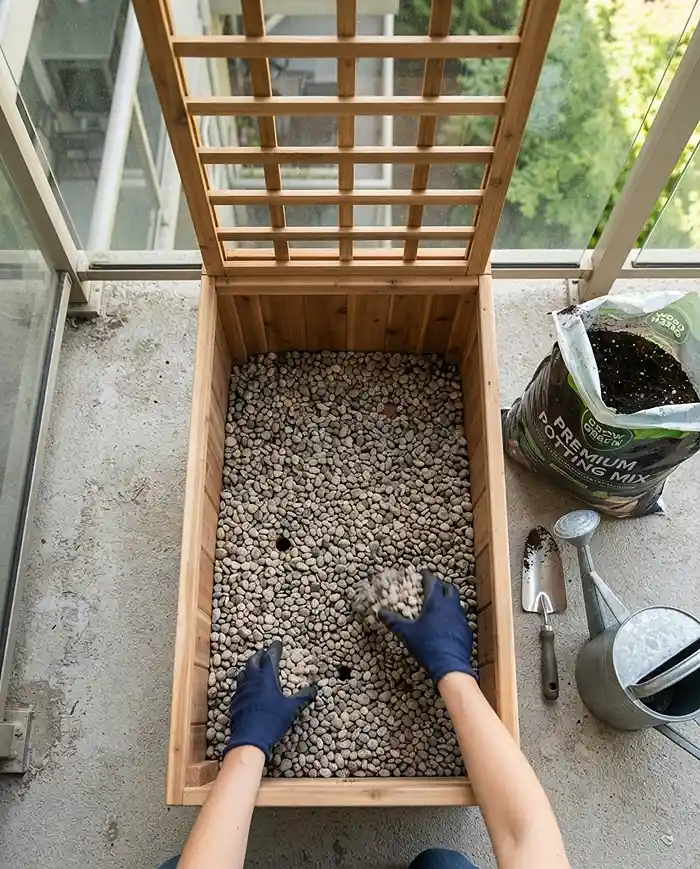
Step 3: Place the freestanding screen planters. Set the heavy planter boxes into position next. These are your heaviest pieces and define the layout. Fill them with potting mix before placing plants — it’s much harder to add soil weight after the trellis panel is upright.
Step 4: Add the ladder shelves last. Lean them into corners after the larger structures are settled. This prevents the shelves from getting bumped or shifted as you move the heavier pieces around.
Step 5: Plant lightweight pots and hang on arms. Start from the top shelf downward. This prevents soil from spilling onto already-planted lower pots during the planting process.
Maintaining and Weatherproofing Temporary Structures
A no-drill setup needs a bit more active maintenance than a permanent one. The structures are stable — but they respond to seasonal changes in ways screwed-in hardware doesn’t.
Build a monthly check into your watering routine. Five minutes of wiggling and tightening prevents the surprises that come after a summer thunderstorm.
Anchoring Against High Winds Without Screws
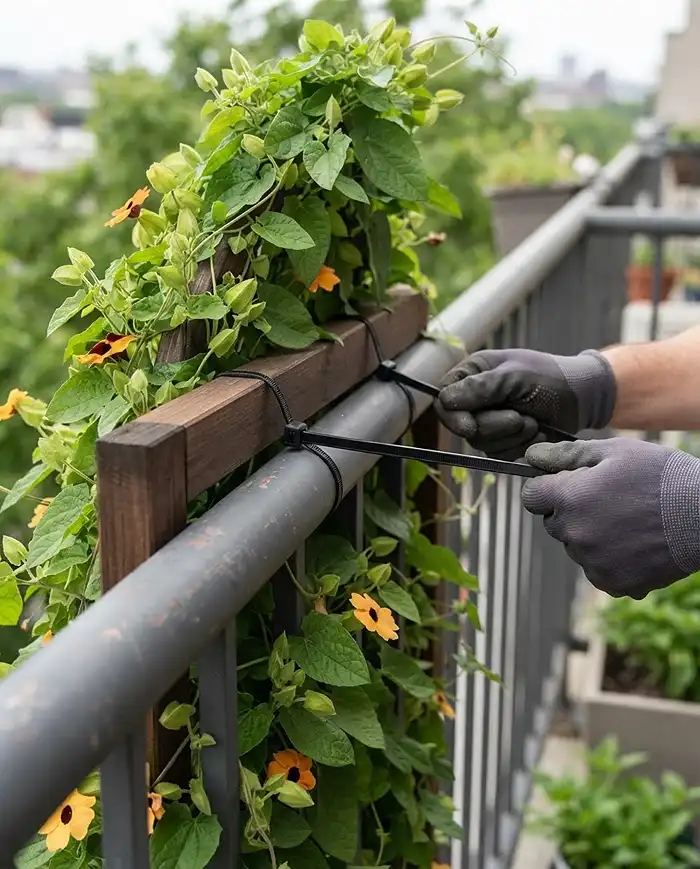
Even well-positioned screens need extra help during storm season. The most effective zero-damage method is heavy-duty UV-resistant zip ties connected from the top rail of the trellis to the permanent balcony railing.
Use two zip ties per screen panel, attached at the highest point of the trellis. Loop them around the permanent railing, not through decorative spindles that might flex. Tighten until there’s no forward or backward play.
For extra ballast, add 2 to 3 inches of coarse drainage gravel to the bottom of every planter box before adding potting mix. That gravel lowers the center of gravity and adds 8 to 12 pounds of base weight per box.
Watering Hacks for Multi-Tiered Shelves
Runoff from upper shelves dripping onto lower plants is a genuine problem — it leads to fungal issues and makes a mess of your floor. Two solutions work well together.
First, use exact-fit drip trays under every pot. Measure your pot base diameter and buy matching saucers — generic oversized trays slide around and miss half the drips.
Second, switch to self-watering pots for the top two shelf positions. The reservoir at the base eliminates overflow entirely and cuts your watering frequency in half during hot weather. In July and August, I water my top-shelf basil every 4 to 5 days instead of daily.
For a deeper dive into balcony watering systems, the University of Minnesota Extension‘s container gardening guide covers reservoir systems and moisture management in detail.
Common Problems and Solutions
Two mechanical issues come up repeatedly with zero-drill vertical setups. Both are easy to fix once you know what’s causing them — and both are avoidable with a regular maintenance habit.
Tension Rods Slipping in Changing Temperatures
Metal contracts in cold weather. A tension pole that was rock-solid in September can develop noticeable wobble by November without any other change. This isn’t a hardware failure — it’s basic physics.
Run a monthly “wiggle test” by pushing each pole firmly from multiple directions. If you feel any give, tighten the central threaded mechanism a quarter turn. In climates with hard temperature swings, check more frequently in October and March when change is most rapid.
Freestanding Screens Leaning Forward
Forward lean usually means one of two things: the planter box base isn’t heavy enough, or the vine canopy has grown too dense and is catching too much wind.
Check the leveling feet on the base of the planter box first. Most boxes have four adjustable rubber feet — if the box isn’t perfectly level, the trellis above it will cant forward over time. Adjust until level, then check again after heavy rain when soil settlement can shift the balance.
If the box is level, thin the vine canopy. Remove every third or fourth stem to reduce the wind-catching surface area by about 30 percent. That’s usually enough to bring a leaning screen back into plumb.
Frequently Asked Questions
How much weight can a tension rod plant shelf actually hold?
Most commercial tension plant poles are rated at 10 to 15 pounds per arm. Always check the manufacturer’s spec sheet for your specific model. Use lightweight plastic or fiberglass pots only — a single 6-inch terracotta pot can weigh 4 to 5 pounds before soil, which adds up fast across multiple arms.
Will leaning ladder shelves damage my apartment’s exterior siding?
They can if there’s direct wood-to-wall contact during windy days. Attach soft felt furniture pads or foam weatherstripping to the top contact points of the ladder before leaning it. This protects stucco, glass, and vinyl siding from scuffing and prevents any damage claims when you move out.
Are freestanding vertical screens safe for high-rise balconies?
Yes, if properly anchored. Fill the planter base with wet soil for maximum ballast, add drainage gravel at the bottom of the box, and use heavy-duty UV-resistant zip ties to strap the top of the trellis to your permanent balcony railing. Never leave a tall screen unstrapped on an upper-floor balcony.
Can I use this setup on a north-facing balcony?
Yes, but adjust your plant choices. North-facing balconies in most zones get minimal direct sun. Focus on shade-tolerant crops like ferns, impatiens, mint, and loose-leaf lettuce. Skip sun-hungry climbers like Black-Eyed Susan vine, which needs at least 6 hours of direct light to bloom well.
How do I move freestanding screen planters without spilling soil?
Water plants lightly 2 days before moving — moist soil holds its structure better than dry. Slide a sheet of cardboard under the planter base to protect your floor, then walk the box slowly on its corners rather than dragging it flat. Two people make this much easier for boxes over 30 inches long.
Key Takeaways
- A no drill vertical balcony garden relies on tension poles, gravity-anchored planter screens, and leaning ladder shelves — no masonry screws or permanent marks required.
- Measure floor-to-ceiling height and map wind corridors before buying any hardware — those two factors determine which structures will stay safe and stable.
- Match plants to structures: lightweight herbs and spillers on tension shelves, fast-climbing vines on freestanding trellis screens.
- Use zip ties to strap tall screens to permanent railings during storm season, and add drainage gravel to planter boxes for extra base ballast.
- Run a monthly wiggle test on all tension poles and adjust leveling feet on planter boxes seasonally — five minutes of prevention beats a collapsed screen mid-summer.