

Fall Vertical Ladder Garden Ideas for Small Balconies
A fall vertical ladder garden turns a cramped balcony into a tiered, frost-hardy display without eating your floor space. Here’s exactly how to plant, secure, and protect one through autumn.
Table of Contents
Maximizing Balcony Space with a Fall Ladder Garden
I run a 6×10-foot balcony in zone 6b, and for years my fall containers just sat in a cluttered row along the railing. Switching to a leaning ladder planter freed up almost half my floor space.
A tiered ladder garden stacks plants vertically instead of spreading them across the deck, so you get three or four growing zones in the footprint of one pot. That matters even more in fall, when you’re often layering edibles, mums, and trailing foliage into a single small area.
The setup also stretches your growing season. Elevated tiers catch more afternoon sun as the angle drops, which means cold-hardy plants keep producing weeks after ground-level containers stall out.
Pre-Planning Your Vertical Fall Microclimate
Before you plant anything, walk your balcony at three different times of day. A ladder garden creates several microclimates on one structure, and they shift fast once summer heat gives way to crisp autumn air.
What worked for your summer herbs on the top rung might turn into a frost trap for cold-sensitive seedlings by late October. Map it first, plant second.
Tracking Autumn Sun Angles on a Vertical Plane
Quick Answer: The sun sits much lower in fall, so upper ladder tiers can shade out the bottom rungs for hours. Track shadow patterns over a few days before committing your frost-sensitive plants to a permanent spot.
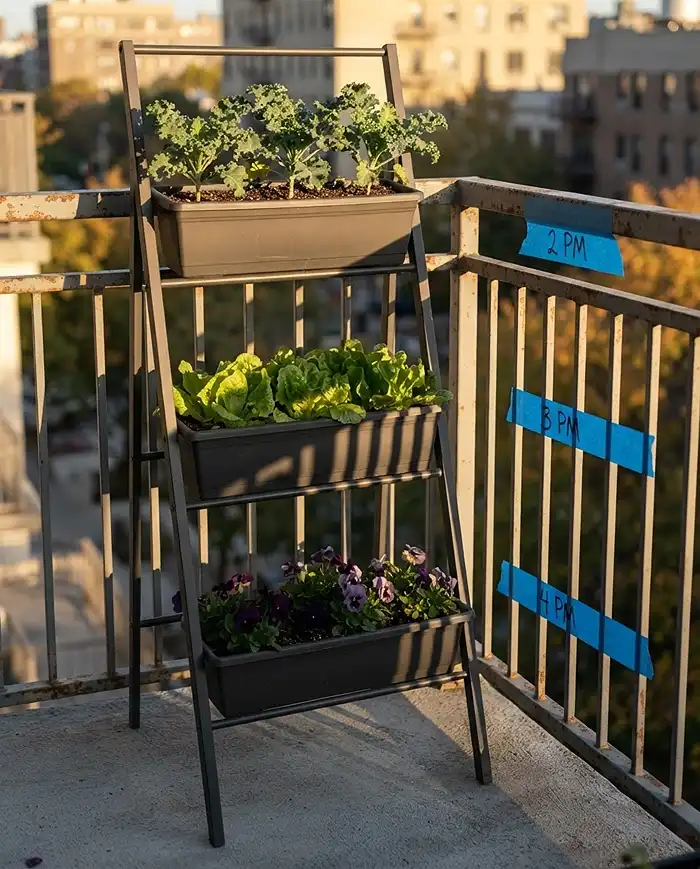
On my own ladder, I noticed by mid-September the top shelf was casting a shadow over the bottom trough from noon until sunset. That’s a problem if your lowest tier holds shade-shy violas or lettuce.
- Check shadow length at 9 a.m., 1 p.m., and 4 p.m. for three consecutive days
- Rotate the ladder 90 degrees if one side stays shaded past 2 p.m.
- Reserve the sunniest tier for kale, chard, or anything needing 4+ hours of direct light
Pro Tip: Mark your shadow observations with painter’s tape on the railing so you’re not guessing week to week as the sun keeps dropping through October.
Managing Freezing Wind Drafts on Elevated Tiers
Quick Answer: Apartment balconies often funnel wind between buildings, and elevated ladder tiers catch the brunt of it. Place the ladder against a solid, heat-retaining wall to cut wind exposure by half or more.
I learned this the hard way in my first fall on a corner balcony. My top-tier Creeping Jenny desiccated within a week because I’d set the ladder near the open railing instead of the brick wall behind it.
- Test for wind tunnels by hanging a ribbon at each corner for a day
- Position the ladder’s back panel flush against brick, concrete, or siding
- Avoid glass sliding doors as a windbreak — they radiate cold instead of holding heat
Pro Tip: A brick or concrete wall that’s absorbed daytime sun will radiate a few extra degrees of warmth overnight, which can be the difference between light frost damage and none.
Choosing and Prepping the Right Ladder Planter
Not every ladder stand survives fall weather. You need a frame rated for wet soil weight, sustained wind, and repeated soaking from autumn rain, not just a decorative summer accent piece.
Weatherproofing Wooden vs. Metal Ladder Stands
Quick Answer: Untreated wood absorbs moisture and rots by winter, while bare metal rusts fast in cold rain. Seal wood with a marine-grade sealant and treat metal with a rust-inhibiting spray before the first soaking rain.
| Material | Best For | Watch Out For |
|---|---|---|
| Acacia or teak wood | Warmer zones, natural look | Rot without annual marine sealant |
| Powder-coated steel | Cold, wet climates | Rust at scratches or weld points |
| Untreated pine | Short-term summer use only | Warps within one wet fall season |
My acacia ladder is now on its fourth fall because I reseal it every September with a marine-grade teak oil, well before the first cold rain hits.
Pro Tip: Check metal joints and welds monthly through fall — that’s where rust starts, long before it’s visible on the flat surfaces.
Securing the Ladder Against Fall Storms
Quick Answer: A top-heavy leaning ladder can tip in autumn wind gusts. Load the bottom tiers with heavy soil and drainage rock, then zip-tie the top rung directly to your balcony railing.
- Fill bottom troughs first with the heaviest soil and rock to lower the center of gravity
- Use UV-resistant, heavy-duty zip ties rated for outdoor exposure
- Anchor the top rung to the railing, not just the wall, for a second stabilization point
- Recheck tension every few weeks — zip ties loosen slightly as wood or plastic expands and contracts
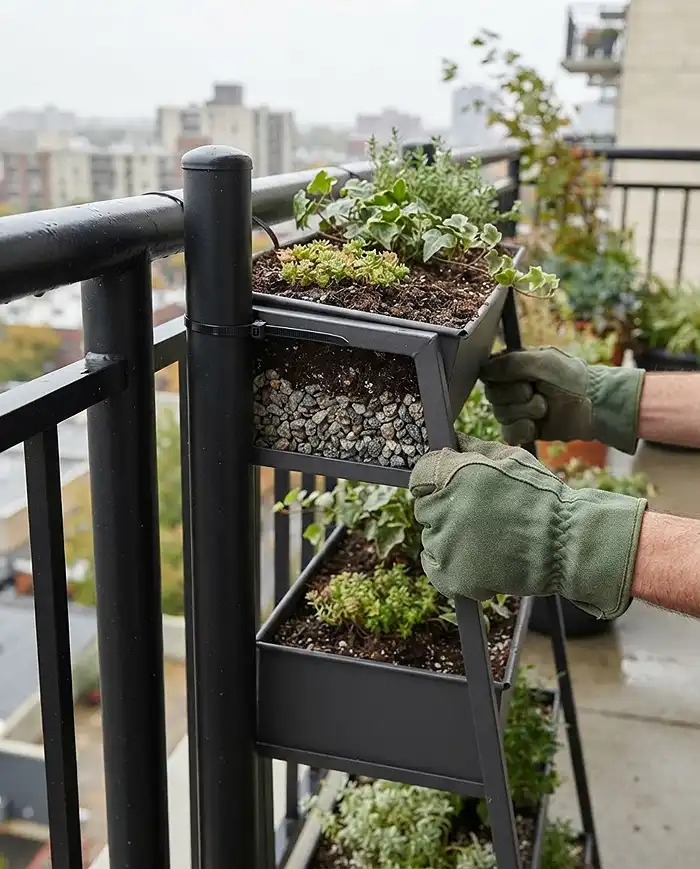
Real Example: After a wind gust knocked over an unsecured ladder in my second fall of vertical gardening, I never skip the zip-tie step again, even on calm-looking weeks.
Best Cool-Weather Plants for Fall Ladder Gardens
Pick plants by their structural role on the ladder — trailing spillers at the bottom, upright anchors on top, and color fillers in the middle. This keeps the display balanced instead of top-heavy or bare.
Trailing Fall Foliage: Creeping Jenny and Ivy
Quick Answer: English Ivy and Creeping Jenny are reliable cold-hardy spillers for the lowest ladder tiers, softening the hard lines of the frame while holding color through early frosts.
Both tolerate light freezes without turning to mush, which sets them apart from summer trailers like sweet potato vine that collapse at the first cold snap.
Real Example: My Creeping Jenny on the bottom rung survived a 28°F night in early November last year with only minor tip damage, while nearby petunias were done for the season.
Pro Tip: Trim trailing vines back by a third in early fall so new growth hardens off before the first hard freeze instead of staying soft and frost-prone.
Frost-Tolerant Edibles for Upper Tiers: Kale and Swiss Chard
Quick Answer: Use your sunniest upper tiers for architectural edibles like ‘Lacinato’ kale and ‘Bright Lights’ Swiss chard, both of which biologically sweeten after light frost instead of suffering from it.
Cold temperatures trigger these plants to convert starches into sugars as a natural antifreeze response, so the flavor actually improves after a light frost rather than declining.
- ‘Lacinato’ (dinosaur) kale: upright, dark blue-green, hardy to about 15°F once established
- ‘Bright Lights’ Swiss chard: colorful stems, hardy to roughly 20°F
- Plant both by early September in zone 6b so they’re mature before the coldest nights hit
Pro Tip: Harvest outer leaves first and let the center keep producing — both varieties will keep pushing new growth into November in most zone 5-7 gardens.
Vibrant Autumn Blooms: Pansies, Violas, and Mums
Quick Answer: Fill the middle rungs with Violas, Pansies, and compact garden Mums for continuous color, since all three keep blooming even as nighttime temperatures dip near freezing.
Violas are the toughest of the three in my experience — they’ve pushed new flowers through several nights in the high 20s (Fahrenheit) on my balcony without any protection.
- Pansies: largest blooms, best in morning sun with afternoon shade on hot fall days
- Violas: smaller but more cold-hardy, keep blooming into December in mild zones
- Compact garden Mums: choose “garden hardy” varieties, not florist mums, for outdoor cold tolerance
Pro Tip: Deadhead (removing spent flowers) pansies and violas weekly to keep them pushing new blooms instead of going to seed early.
Step-by-Step Autumn Planting Guide for Tiered Planters
Here’s the order that’s worked consistently across four fall seasons on my own vertical gardening setup:
- Secure the ladder to the balcony railing with zip ties before adding any soil or plants
- Mix a fast-draining potting blend: standard organic potting soil plus 30% perlite
- Load the bottom tiers first with heavier soil and drainage rock for stability
- Plant anchor edibles like kale and chard into the top, sunniest tier
- Fill middle tiers with pansies, violas, or mums for color
- Add trailing spillers like ivy or Creeping Jenny to the lowest tier
- Top-dress every tier with a 1-inch layer of straw mulch to insulate roots
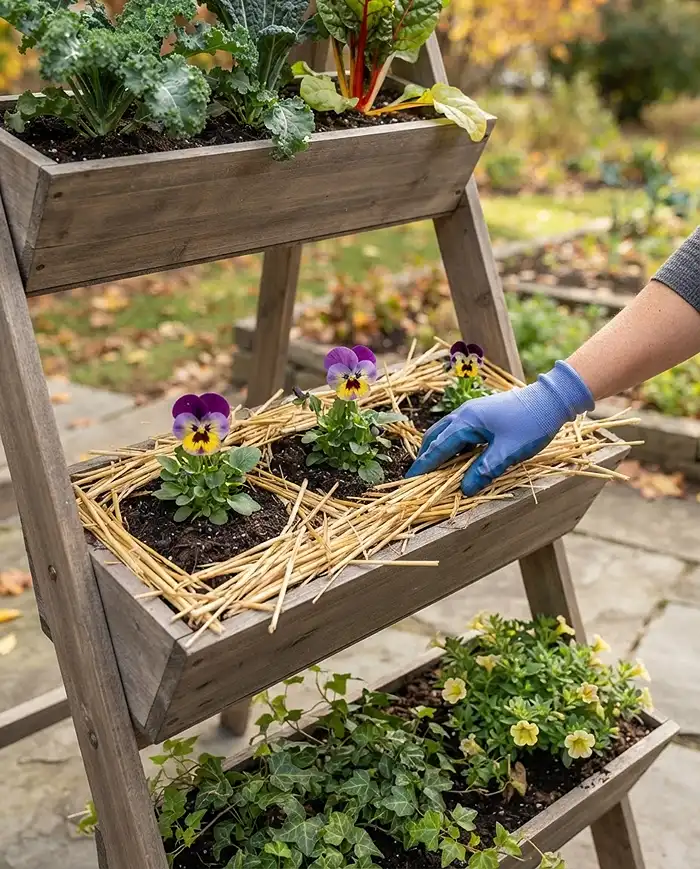
This sequence matters more than it sounds — planting top-down means you’re not compacting soil in lower tiers while reaching over finished ones.
Seasonal Care: Maintaining the Fall Ladder Garden
Plant metabolism slows as temperatures drop, so your maintenance routine needs to shift too. What worked for summer container gardening will overwater and chill your fall setup if you don’t adjust.
Adjusting Watering Routines for Cooling Temperatures
Quick Answer: Switch from daily summer soaking to a finger-test method, watering only when the top inch of soil is dry. Water in the morning so soil isn’t sitting cold and wet overnight.
Evaporation rates drop sharply once nighttime temps fall into the 40s, so containers that needed water daily in July might only need it twice a week by late October.
Real Example: I overwatered my bottom tier one October following my old summer schedule, and root rot took out an entire Creeping Jenny before I caught the pattern.
Pro Tip: Water before 10 a.m. whenever possible — this gives roots time to absorb moisture before the evening cold sets in.
Frost Protection Strategies for Exposed Tiers
Quick Answer: Drape a lightweight horticultural fleece blanket over the entire ladder during sudden frost warnings. This traps ambient heat radiating off the wall and protects exposed upper-tier foliage.
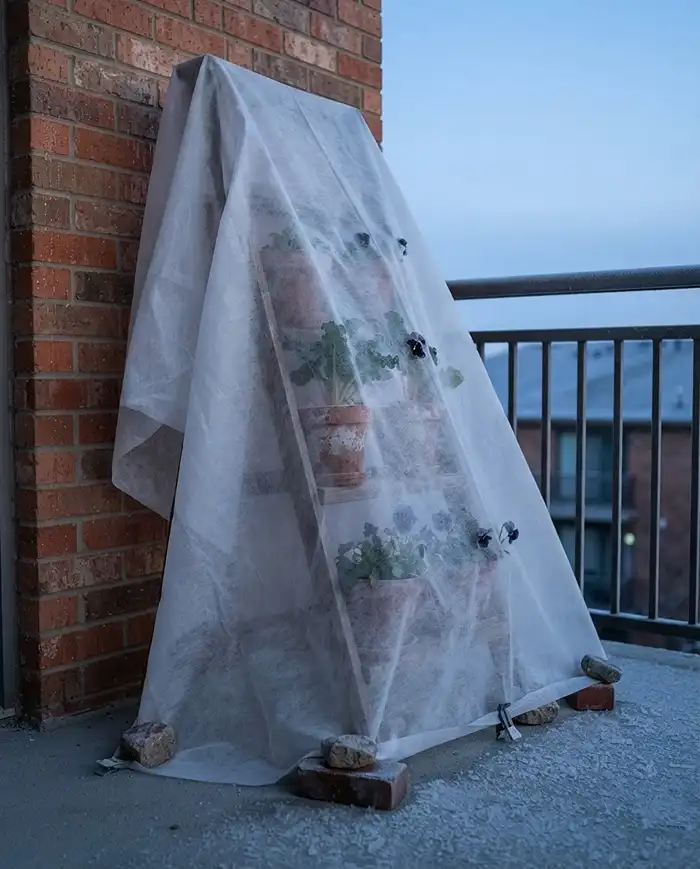
Keep the fleece loosely tented rather than pressed against leaves, since direct contact points can still freeze through the fabric on the coldest nights.
Pro Tip: Remove the fleece by mid-morning once temperatures climb back above freezing, or you risk trapping humidity and encouraging fungal issues.
Common Problems & Solutions
Two issues show up again and again on elevated cool-weather setups: frozen roots in shallow troughs and powdery mildew in dense, shaded tiers.
Root Freeze in Shallow Tiered Troughs
Quick Answer: Shallow ladder troughs hold minimal soil volume and lack the geothermal insulation that in-ground beds have. Heavily mulch the top of each planter with cocoa coir or bark to trap heat around delicate roots.
A trough under 6 inches deep can freeze solid overnight even when nearby ground soil stays workable, simply because there’s not enough soil mass to buffer the temperature swing.
Pro Tip: A 1.5 to 2-inch mulch layer makes a measurable difference — I’ve tracked soil temps roughly 4-5°F warmer under mulched troughs versus bare ones on the same ladder.
Powdery Mildew in Dense Fall Canopies
Quick Answer: Cool temperatures, tiered shading, and seasonal rain combine to create ideal conditions for powdery mildew. Thin inner foliage aggressively to restore airflow between the rungs.
This hit my chard hardest in a particularly rainy October, mostly because the lower tiers stayed damp and shaded by the foliage above them for days at a time.
- Prune overlapping leaves weekly once nights turn consistently cool and damp
- Space plants wider than you would in summer to compensate for slower drying
- Apply a diluted milk spray (40% milk, 60% water) weekly as an organic preventative
Pro Tip: Water at the soil line instead of overhead — wet foliage overnight is the single biggest driver of mildew on shaded lower tiers.
For more on your local frost timing and cold tolerance data, the USDA Plant Hardiness Zone Map is a solid reference before you finalize your plant list. If you’re still deciding between planter styles, our guide to vertical wall planters for herbs covers a wall-mounted alternative, and our vertical herb ladder setup guide walks through herb-specific spacing. Renters should also check our no-drill balcony garden ideas for railing-safe anchoring options.
fall vertical ladder garden FAQs
How deep do ladder planter troughs need to be for fall vegetables?
Shallow 4-inch shelves work fine for ornamental mosses, but cold-hardy edibles like kale or Swiss chard need troughs at least 8 to 10 inches deep. That extra soil depth insulates roots against freezing and gives the plants room to develop a sturdy root system before winter.
Can I overwinter a wooden ladder garden on an exposed balcony?
Untreated wood will warp and break down as freezing moisture repeatedly expands and contracts inside it, so bring untreated ladders indoors for winter. Heavily sealed acacia or teak wood can stay outside if it’s securely covered with a waterproof tarp.
What is the best potting mix for cool weather vertical planters?
Blend a premium organic potting soil with 30% perlite and 10% coarse horticultural sand for maximum drainage. Cold, damp autumn roots are highly susceptible to fatal rot if left sitting in heavy, water-retentive garden dirt.
How many hours of sun does a fall ladder garden need?
Most fall edibles and blooms want at least 4 to 6 hours of direct sun daily, though pansies and violas tolerate partial shade better than kale or chard. Track your balcony’s shifting autumn shadows before assigning plants to tiers.
Will a metal ladder planter rust over one fall season?
A quality powder-coated steel ladder won’t rust significantly in a single season if you treat scratches and weld points with a rust-inhibiting spray before fall rains start. Skipping that step is when rust typically shows up by winter.
Conclusion
A fall vertical ladder garden is one of the highest-payoff space saving garden ideas for anyone working with a tight balcony vertical garden. Map your microclimates, secure the frame, and match plants to tiers by cold tolerance.
Start small this season — even a single well-secured ladder with kale up top and violas below will outperform a cluttered row of loose fall containers.
Key Takeaways
- A fall vertical ladder garden multiplies your growing space without using extra balcony floor area
- Track autumn sun angles and wind drafts before committing frost-sensitive plants to a tier
- Seal wood and rust-proof metal ladder stands before the first cold rain of the season
- Match plants to tiers: edibles up top, blooms in the middle, trailing spillers on the bottom
- Use fast-draining soil with 30% perlite and mulch every tier to protect shallow roots from freezing