

Lightweight Planters for Hot Climates That Stay Cooler
Lightweight planters for hot climates are a game-changer when summer heat turns containers into root ovens. While most gardeners focus on protecting leaves from scorching afternoons, the real battle happens below the soil surface.
Rising root zone temperatures can quickly stress plants, slow growth, and even cause container crops to fail. Choosing the right lightweight planter helps keep roots cooler, healthier, and ready to thrive through the hottest days of the season.
Table of Contents
Why Root Temperature Matters in Container Gardening
In the ground, roots are surrounded by many feet of soil that acts as natural insulation, keeping temperatures relatively stable even on the hottest days. Container plants have no such buffer.
A pot sitting in direct sun absorbs radiant heat through its thin walls, and that heat transfers straight into the damp potting mix inside. Because water conducts heat efficiently, moist soil in a small container can heat up shockingly fast.
This is called heat shock, and it is often fatal. Root hairs, the microscopic structures responsible for absorbing water and nutrients, begin to die once soil temperatures climb past a critical threshold. Once that happens, no amount of watering can save the plant, because it has effectively lost its ability to drink.
The Danger of Traditional, Heat-Absorbing Pots
Many of the most popular container materials on the market were designed for looks and durability, not for thermal performance. In mild climates this rarely matters, but during extreme summer heatwaves, these same pots become part of the problem.
Understanding which materials trap heat and which ones repel it is the first step toward choosing containers that actually protect the plants living inside them, rather than quietly cooking their roots from the outside in.
The Problem with Dark Plastics and Metal
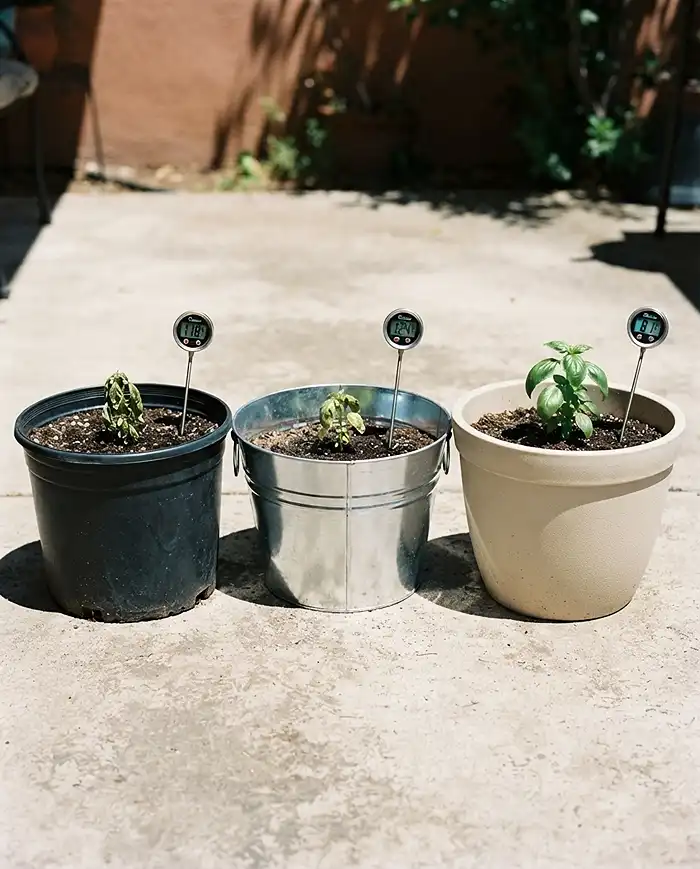
Thin, dark-colored plastic pots and galvanized metal tubs are among the worst offenders. Their thermal conductivity is high, meaning they absorb and transfer heat quickly rather than blocking it.
On a hot afternoon, these containers can function like small ovens, pushing the internal soil temperature above 120°F (49°C). At that point, delicate root hairs are destroyed almost instantly, even if the plant looks perfectly healthy above the soil line.
Because these materials are cheap and widely available, gardeners often do not realize the risk until their plants have already suffered irreversible root damage.
Concrete and Terracotta Drawbacks
Concrete and thick terracotta pots have long been prized for their classic, upscale appearance, but they carry a hidden thermal cost. Both materials absorb enormous amounts of radiant heat throughout the day.
Unlike thin plastic, which heats and cools quickly, dense concrete and terracotta retain that stored heat for hours. This means roots continue baking well after sunset, denying plants the overnight cooldown they need to recover.
On top of the thermal issue, these materials are extremely heavy, making them impractical for apartment balconies, rooftop gardens, or any space with weight restrictions.
Top Lightweight Pot Materials for Heat Insulation
Fortunately, modern manufacturing has produced container materials specifically engineered to solve this problem. These options block UV radiation, resist heat transfer, and stay lightweight enough for balconies and patios.
Double-Walled Resin Planters
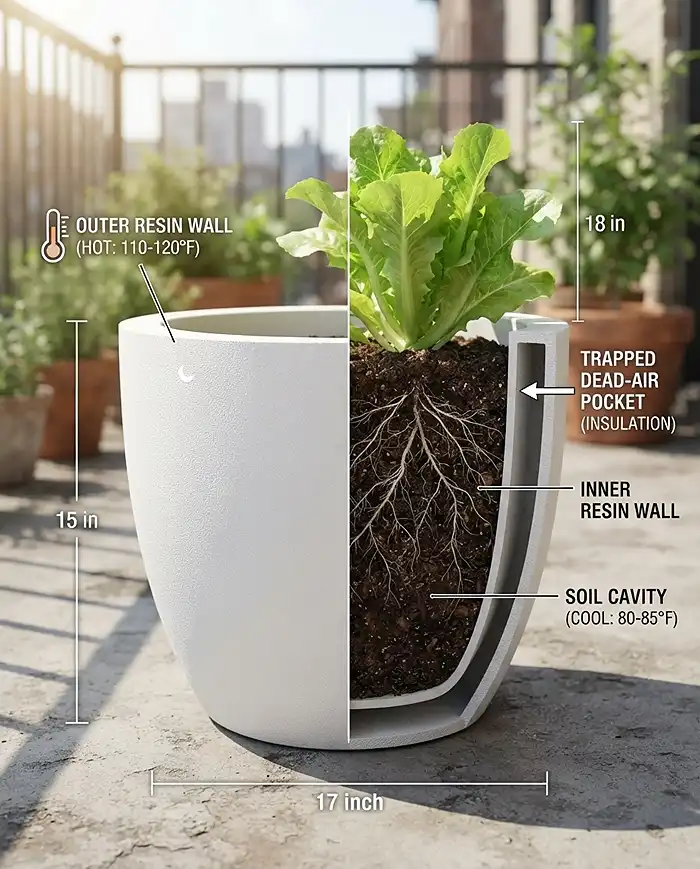
High-density polyethylene (HDPE) double-walled resin pots are one of the most effective solutions available. Their design features two layers of resin with a pocket of air trapped in between.
That trapped air acts much like the vacuum layer in a thermos, physically breaking the path that heat would otherwise take from the hot exterior wall to the cool, damp soil inside. As a result, soil temperatures inside a double-walled resin pot stay dramatically lower than the surrounding air temperature.
These planters are also lightweight, weather-resistant, and available in styles that mimic stone, wood, or ceramic finishes, making them a practical upgrade without sacrificing curb appeal.
Fiberglass and Faux-Stone Composites
Fiberglass planters blended with clay or limestone particles offer another excellent option. These composites are engineered to replicate the elegant, high-end look of heavy concrete or natural stone.
Despite that heavy appearance, fiberglass composite pots are roughly 70 percent lighter than solid concrete equivalents, making them far easier to move, rearrange, or use on elevated surfaces.
Their composite structure also provides natural thermal resistance, meaning they resist absorbing and holding onto midday heat the way solid stone or concrete does.
Breathable Fabric Grow Bags
Heavy-duty geotextile grow bags take a completely different approach to heat management. Rather than blocking heat with insulation, their porous fabric allows constant airflow to reach the root zone.
This continuous air exchange enables evaporative cooling, a natural process where moisture escaping through the fabric walls actively lowers the internal soil temperature, similar to how sweat cools human skin.
For gardeners battling intense summer heat, fabric grow bags offer one of the most effective and affordable cooling strategies on the market today.
Strategic Color Choices for Thermal Control
The color of a container is not just an aesthetic decision, it is a matter of basic physics. Dark colors absorb the visible and infrared light that makes up sunlight, converting it into heat.
Light colors, on the other hand, reflect a much larger portion of that radiation away from the surface. This is why choosing planters in white, beige, light gray, or pale terracotta shades can meaningfully reduce how much heat reaches the soil.
When shopping for summer containers, prioritizing pale, reflective colors alongside insulating materials gives plants the best possible defense against extreme heat.
Step-by-Step Guide to Heat-Proofing Your Containers
Follow this planting sequence to maximize root protection during the hottest months of the year.
- Choose an oversized pot relative to the plant’s root ball, creating a larger buffer of insulating soil between the roots and the exterior walls.
- Formulate a perlite-heavy potting mix, which improves aeration and helps prevent soil from becoming waterlogged and slow to release heat.
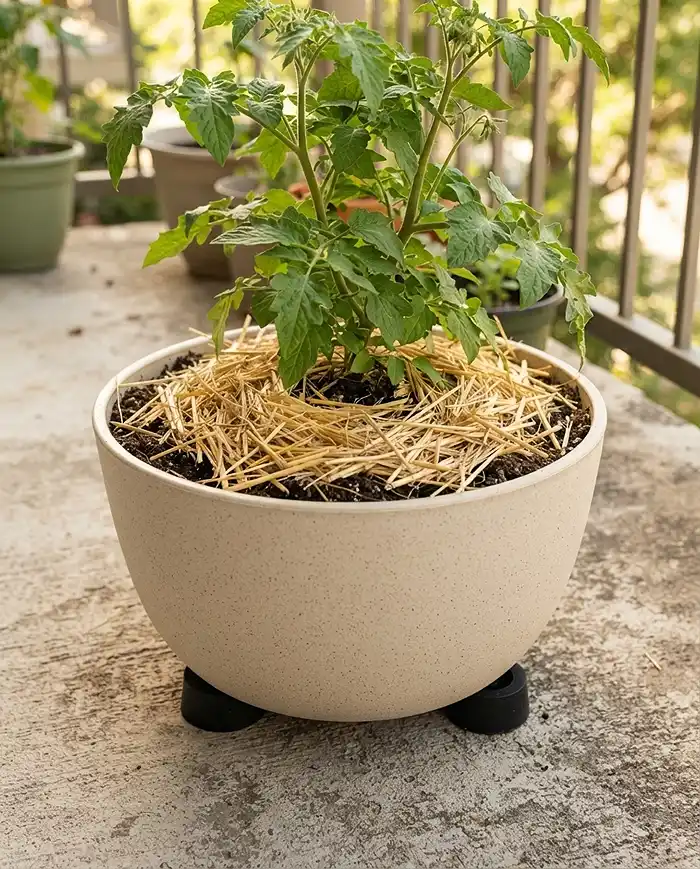
- Immediately apply a thick, two-inch layer of organic straw mulch across the soil surface to shield it from direct sun exposure.
- Position the container in a spot that receives some afternoon shade whenever possible, even partial relief can make a significant difference.
Together, these steps create multiple layers of protection, so that even if one defense falls short, the others continue working to keep root temperatures in a safe range.
Maintenance to Sustain Cool Root Zones
Choosing the right pot is only half the battle. Daily care routines need to adapt during triple-digit heatwaves to actively support the insulating properties already built into your containers.
Utilizing Mulch and Hydrogels
Water-storing hydrogel crystals, when mixed into the lower half of the potting mix, act as tiny reservoirs. These polymers absorb excess water and slowly release it back into the root zone over time.
Because this release happens gradually, hydrogels help buffer against the rapid drying that occurs during peak afternoon heat, giving roots consistent access to moisture exactly when they need it most.
Elevating Pots for Airflow
Flat-bottomed containers sitting directly on concrete patios or wooden decking absorb radiant heat rising from those surfaces. Lifting pots even a few inches off the ground solves this problem.
Rubber pot feet or simple wheeled caddies create a gap that allows cooling air to circulate freely underneath the container, preventing heat from building up against the base where roots are often most concentrated.
Common Problems & Solutions
Lightweight summer containers solve many heat problems, but they introduce a couple of new challenges gardeners should be ready to address.
Soil Drying Too Fast in Fabric Pots
The same breathability that keeps fabric grow bags cool can also cause soil to dry out faster than expected, especially in hot, arid, or windy conditions.
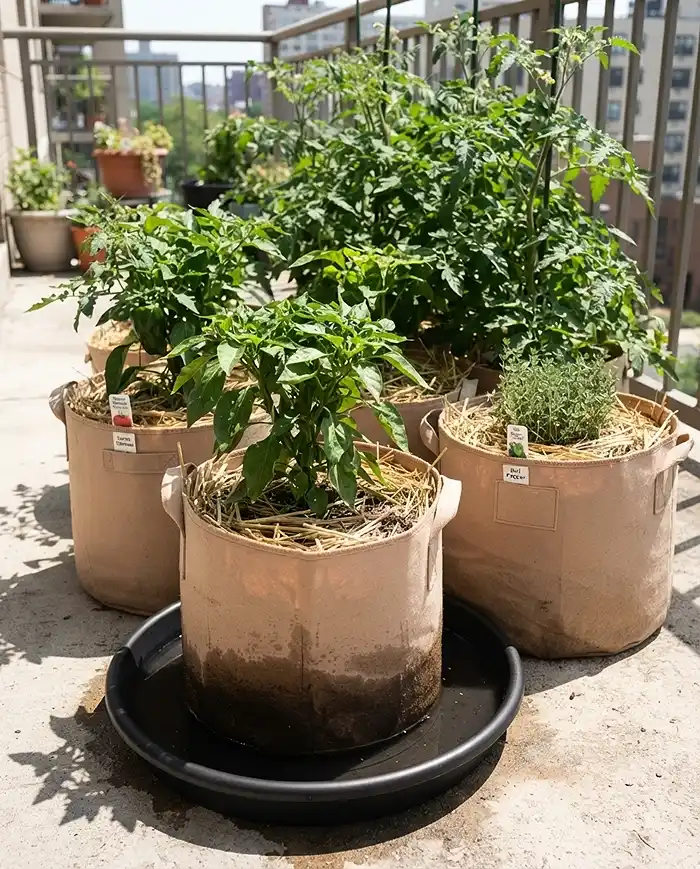
To manage this, try deep saucer bottom-watering so moisture is drawn upward through the fabric, or cluster multiple grow bags tightly together. Grouping bags creates a shaded, humid microclimate that naturally slows moisture loss for every plant in the cluster.
UV Degradation of Synthetic Materials
Intense summer sun does not just heat containers, it also breaks down the molecular structure of many plastics and resins over time, causing them to become brittle and eventually crack.
When purchasing lightweight synthetic planters, look specifically for products labeled “UV-stabilized.” This designation indicates the material has been treated to resist sun damage, ensuring the pot remains durable and functional for many growing seasons.
lightweight planters for hot climates FAQs
Do double-walled planters actually keep roots cooler?
Yes. Double-walled construction is one of the most effective forms of container insulation available. The trapped layer of ambient air between the inner and outer walls physically breaks the thermal bridge between the hot exterior surface and the cool, damp interior soil holding the roots.
How do I keep lightweight pots from blowing over in summer storms?
Lower the container’s center of gravity by adding a two-inch layer of coarse, heavy drainage gravel to the bottom of the pot before adding soil. It also helps to avoid pairing tall, top-heavy plants with exceptionally light resin pots.
Should I line my pots with bubble wrap to keep them cooler?
Lining the inner perimeter of a thin plastic pot with horticultural bubble wrap is a cheap and effective DIY insulation hack for cooling roots. Just be careful not to accidentally cover or block the bottom drainage holes when installing it.
Conclusion
Summer heat does not have to spell disaster for container gardens. By choosing insulating materials like double-walled resin, fiberglass composites, or breathable fabric bags, gardeners can protect roots from dangerous temperature spikes.
Pair the right container with light colors, smart soil amendments, and a few simple maintenance habits, and your plants will stay cool, hydrated, and thriving straight through the hottest days of the year.