

Fall Container Vegetables for September Harvests
Fall container vegetables can fill a small balcony garden with fresh salads by mid-September, if you plant the right crops in the next few weeks. Late summer isn’t the end of the season. It’s a second spring.
I grow vegetables in pots on a south-facing balcony in zone 6b, and my best September harvests always come from crops I sowed in late July, not the ones I babied all summer. Container vegetable gardening rewards fast, deliberate choices right now.
Table of Contents
The Secret to a Bountiful September Balcony Harvest
Most gardeners treat August like cleanup season. That’s a mistake. The soil is warm, the days are still long enough to germinate seeds fast, and cool nights are just around the corner to sweeten root crops and green up leafy greens.
A small balcony garden actually has an edge here. Pots warm up fast in July sun, then hold that heat into September, buying you extra weeks that ground-level gardeners don’t get. Treat this stretch as a second, tighter growing season.
Understanding Late Summer Planting Timelines
The math matters more than the crop list. Work backward from your target harvest date using each variety’s “days to maturity,” and you’ll know exactly which seeds still have time to produce before weather turns unpredictable.
Calculating “Days to Maturity” for a September Yield
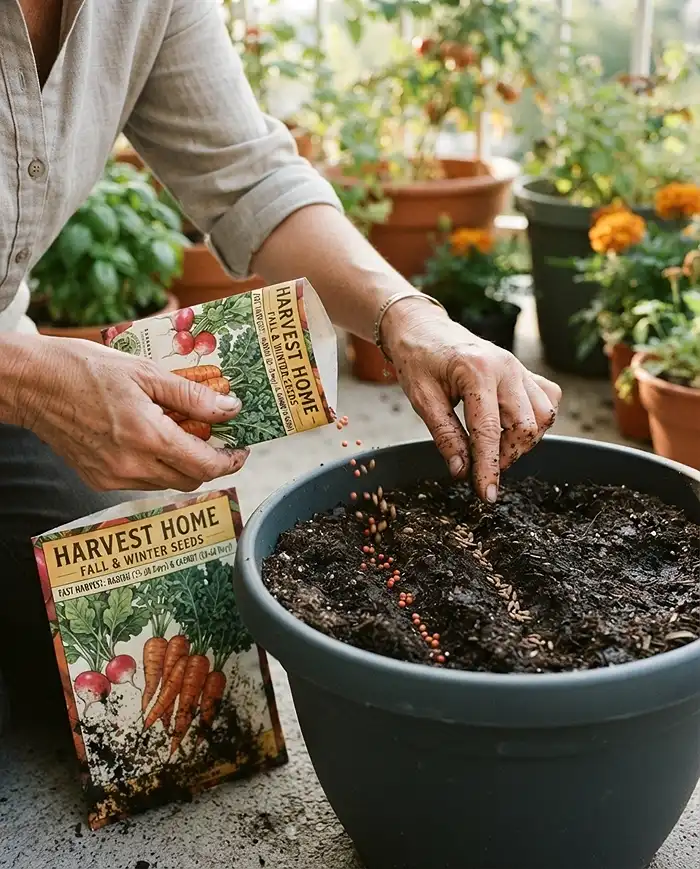
Check the seed packet for “days to maturity,” then count backward from your target harvest date, say, September 15. If a radish takes 25 days, you could sow it as late as August 21 and still make it.
But add a 10-day “fall factor” buffer on top of that number. Shortening daylight in late summer slows photosynthesis, so plants mature slower than the packet promises. A 25-day radish behaves more like a 35-day radish in late August.
Leveraging Your Balcony’s Autumn Microclimate
Concrete, brick, and railings absorb heat all day and release it slowly overnight. That thermal mass keeps balcony containers a few degrees warmer than an open garden bed, which matters enormously once nighttime temps start dropping.
On my balcony, that microclimate has bought me an extra two to three weeks of harvest compared to a friend’s ground-level plot one mile away. It’s the single biggest advantage apartment growers have in September.
Best Vegetables for a September Balcony Harvest
Sow these categories in July or early August for a reliable September payoff. Each one is forgiving of container life, tolerates cooling nights, and matures fast enough to beat the fall factor buffer.
- Fast-maturing root crops: radishes, baby beets, short carrots
- Frost-tolerant leafy greens: spinach, ‘Lacinato’ kale, arugula
- Quick-yielding legumes: bush beans, dwarf snow peas
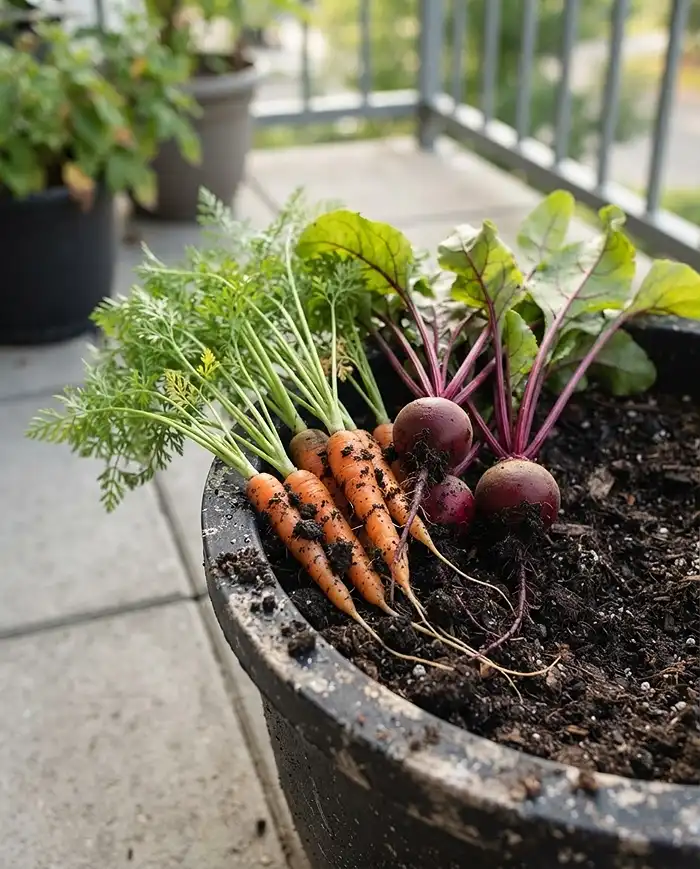
Fast-Maturing Root Crops (Radishes, Baby Beets, Carrots)
Quick Answer: French Breakfast radishes mature in about 25 days, baby beets in 50 to 55, and short “Danvers” or “Little Finger” carrots in 60 to 65. All three do well in deep containers on a small balcony garden.
Use a pot at least 10 to 12 inches deep for carrots and beets so the taproot has room to develop straight rather than forking against the container wall. Radishes tolerate shallower 6-inch bowls just fine.
Real Example: Last September, my ‘Little Finger’ carrots in a 14-inch deep resin pot came out noticeably sweeter than my July batch. Cooler soil converts starches to sugar, and the difference was obvious by the first bite.
Pro Tip: Thin radish and carrot seedlings ruthlessly to 1 to 2 inches apart. Overcrowding is the number one reason container root crops come out stubby and misshapen.
Frost-Tolerant Leafy Greens (Spinach, Kale, Arugula)
Quick Answer: Spinach, arugula, and ‘Lacinato’ kale actually prefer cooling September nights over August heat, and all three can be harvested cut-and-come-again style for weeks instead of one single harvest.
These crops are forgiving of shallow containers, which makes them ideal for vegetables in pots on a tight balcony rail. A 6-to-8-inch-deep window box works well for a full row of arugula or baby spinach.
Real Example: My kale planted in early August kept producing tender new leaves into late October two years ago, well past the first light frost, while my summer lettuce had bolted and turned bitter by then.
Pro Tip: Cut outer leaves first and leave the center growing point intact. That single habit can triple your total harvest from one planting.
Quick-Yielding Legumes (Bush Beans and Snow Peas)
Quick Answer: Determinate bush beans and dwarf snow peas mature in about 50 days and deliver one heavy, concentrated flush of pods rather than a slow trickle, which is exactly what you want from a September balcony garden.
Choose compact varieties bred for containers, like ‘Provider’ bush beans or ‘Tom Thumb’ peas, and give them a pot at least 8 inches deep with good drainage holes.
Real Example: I sowed ‘Provider’ beans on August 2 one year and had a full colander of pods by September 25, all at once, perfect for a single big harvest dinner rather than daily picking.
Pro Tip: Skip pole varieties for a fall planting. They need too many weeks of vertical growth before flowering to reliably beat shortening daylight.
Essential Supplies for Late-Season Containers
Your summer pots need a reset before they can support a new round of seedlings. Container vegetable gardening in fall is really a soil and sizing problem more than a variety problem.
Right-Sizing Pots for Fall Root Systems
| Crop | Minimum Pot Depth | Notes |
|---|---|---|
| Leafy greens (spinach, arugula, kale) | 6 to 8 inches | Shallow bowls or window boxes work fine |
| Radishes | 6 to 8 inches | Thin seedlings to avoid stubby roots |
| Carrots and beets | 10 to 12 inches minimum | Deeper resin pots prevent forked roots |
| Bush beans, snow peas | 8 inches | Needs strong drainage holes |
Match the container to the root system, not the plant’s mature top growth. A shallow, wide pot works for greens; a narrow, deep one is what carrots actually need.
Revitalizing Exhausted Summer Potting Soil
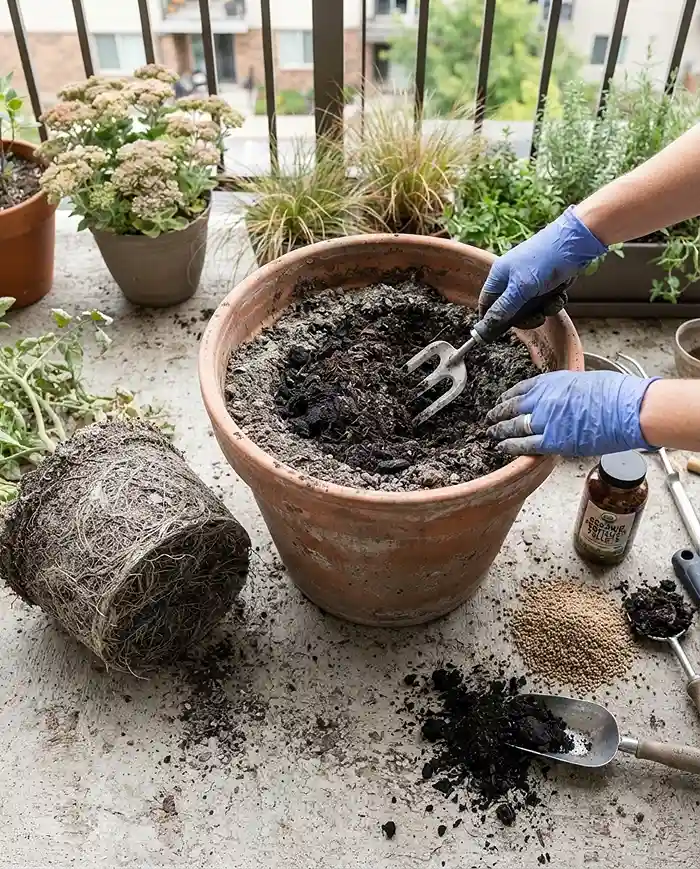
Pull out every dead root ball from spring and summer crops first. Roots left behind can harbor disease and rob your new seedlings of nitrogen as they decompose.
Then blend in fresh material: replace roughly 30 percent of the volume with new organic compost, add a couple handfuls of worm castings per pot, and mix in a slow-release granular fertilizer to feed autumn’s heavier-feeding greens and legumes.
Pro Tip: If your summer tomatoes struggled with blight, discard that soil entirely rather than reusing it. Fall greens are especially vulnerable to soil-borne diseases carried over from nightshades.
Step-by-Step Planting Guide for Late Summer Sowing
- Remove old roots and refresh soil with 30 percent new compost
- Sow seeds slightly deeper than the spring depth listed on the packet, to reach cooler, moister soil
- Water thoroughly right after sowing, then keep soil consistently damp until germination
- Apply a thin layer of straw or shredded leaf mulch to stop a hard, baked crust from forming
- Label each pot with sow date so you can track your days-to-maturity math
That extra planting depth matters more than most guides mention. August sun bakes the top half-inch of container soil dry within hours, and seeds sown at spring depth simply dry out before they sprout.
Seasonal Care and Maintenance for Autumn Crops
Your daily routine needs to shift as August’s brutal heat gives way to September’s cooler, shorter days. What worked in July can actually kill seedlings by early fall.
Adapting Watering Schedules to Cooling Temperatures
Quick Answer: Switch from daily summer soakings to a finger-test method in September. Push a finger 1 inch into the soil, and only water if it comes out dry. Cooler air slows evaporation dramatically.
Overwatering is the top killer of fall container seedlings. Cooler temperatures mean less water loss through the leaves, and soggy soil quickly leads to root rot in root crops especially.
Pro Tip: Water in the morning, not evening, so foliage dries before cool night air settles in and invites fungal problems.
Defending Against Early Frosts and Extreme Heat Swings
Quick Answer: Use a 30 percent UV-blocking shade cloth during the hottest August germination weeks, then swap to a lightweight horticultural row cover once nighttime temperatures start flirting with the mid-40s in September.
Keep the row cover folded and ready by early September rather than waiting for a frost warning. A single unprotected cold snap can wipe out beans and other tender crops overnight.
Common Problems & Solutions
Fall planting brings its own set of hurdles that spring gardeners never deal with. Here’s how to fix the two most common ones fast.
Poor Seed Germination in Baking August Soil
Cool-season crops like spinach go dormant and simply won’t sprout once soil temperature climbs above 80°F. This is a biological trigger, not a watering problem, so more water alone won’t fix it.
Start stubborn seeds indoors under grow lights instead, or shade the container heavily with cloth until temperatures drop and true sprouts appear, usually within a week of relief from direct sun.
Late-Season Pests: Cabbage Worms and Aphids
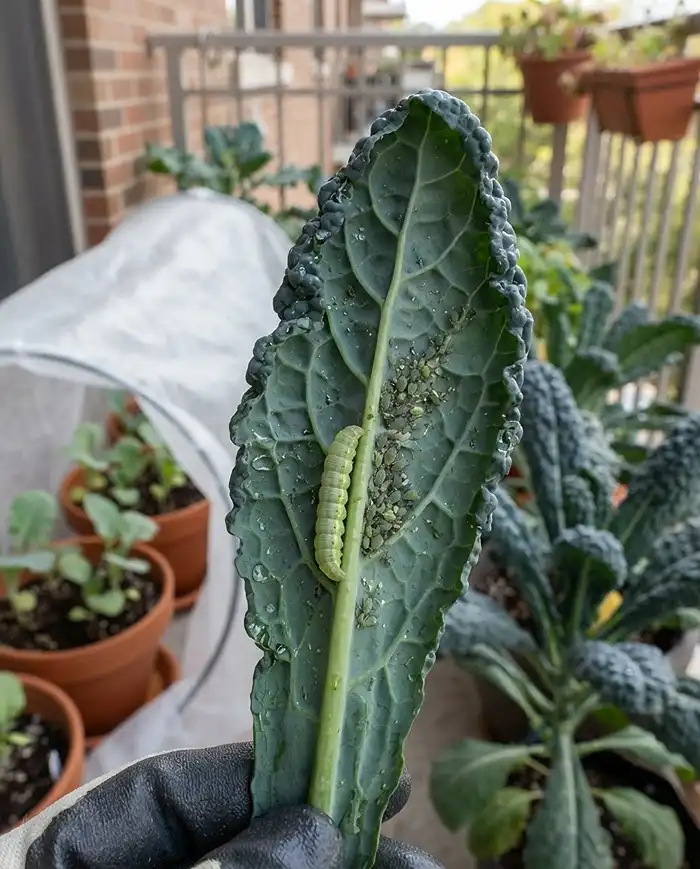
Cabbage worms and aphids target tender new autumn growth aggressively, since there’s less competing vegetation around by late summer. Check the undersides of kale and arugula leaves weekly.
Cover seedlings with a floating row cover from the moment they emerge to block egg-laying moths. For active infestations, spray with Bacillus thuringiensis (Bt), an organic bacterial treatment that targets caterpillars without harming beneficial insects.
For more detail on identifying and timing pest control for cool-season crops, the University of Minnesota Extension’s midsummer planting guide is a solid, research-based reference.
Frequently Asked Questions
Exactly when should I plant seeds for a September harvest?
Target the window between mid-July and early August. That gives fast-maturing crops 45 to 60 days to reach harvest size before September’s shortened daylight slows growth further.
Can I reuse soil from my dead summer tomatoes for fall crops?
The soil structure is reusable, but tomatoes strip macronutrients and can harbor soil-borne blights. Remove all tomato roots completely and amend heavily with fresh compost before planting fall greens.
Do balcony containers need winterizing in September?
True winterizing isn’t necessary in September for most zones. Moving pots closer to an apartment’s heated exterior wall gives extra thermal protection and can extend your harvest into October.
How deep should containers be for fall carrots?
Use a pot at least 10 to 12 inches deep for carrots and beets. Shallower containers cause forked, stubby roots as they hit the container wall.
Do fall vegetables in pots need less water than summer crops?
Yes. Cooler temperatures slow evaporation, so switch to a finger-test method rather than daily watering to avoid root rot in cool-season crops.
Conclusion
Fall container vegetables reward gardeners who act now instead of waiting for spring. A small balcony garden with the right timing can out-produce a much bigger ground-level plot through October.
Do the days-to-maturity math, refresh your soil, and get seeds in the ground this week. For more late-summer planting ideas, see our guide to late summer balcony garden ideas.
You can also check our roundup of the best vegetables for container gardening and our picks for dwarf vegetables for pots.
Key Takeaways
- Count backward from your harvest date using days-to-maturity plus a 10-day fall factor buffer
- Fast-maturing root crops, frost-tolerant greens, and bush legumes are the most reliable fall container vegetables
- Refresh exhausted summer potting soil with 30 percent fresh compost before fall sowing
- Switch to finger-test watering as September temperatures cool to avoid root rot
- A balcony’s thermal mass can extend your harvest window two to three weeks past a ground-level garden