

Balcony Herb Garden Ideas You’ll Want to Copy
Growing your own culinary herbs doesn’t mean settling for ugly black nursery pots lined up on a railing. With a few design tricks, balcony herb garden ideas can turn a slab of concrete into a fragrant little retreat.
I’ve kept a small balcony garden going for six years on a north-facing balcony in zone 6b, and the plants that survive my forgetfulness are the ones I chose for both looks and toughness. This guide blends real horticultural science with styling that actually holds up outdoors, so your herb collection stays lush instead of leggy and sad by August.
Table of Contents
Designing a Cute and Functional Balcony Herb Garden
The best balcony herb garden ideas start with function, then layer style on top. If you pick pretty pots but ignore drainage or sun exposure, you’ll be restyling a graveyard of dead basil by July.
I learned this the hard way my first summer, when I filled three gorgeous ceramic pots with no drainage holes and lost an entire round of cilantro to root rot in about ten days. Now I check function first, aesthetics second, every single time.
Think of your balcony like a tiny landscape plan. You want repetition in color or material, varied heights, and a clear line of sight so the eye has somewhere to land. For a deeper dive into laying out the whole space, check out this apartment balcony garden ideas guide.
Assessing Your Balcony’s Microclimate for Herbs
A pristine, Instagram-ready balcony still needs healthy plants underneath the styling. That means matching your herb selection to the actual light, wind, and heat your specific balcony gets, not the conditions you wish you had.
Spend a weekend tracking your balcony’s real sun pattern before you buy a single herb. It’s the single best predictor of whether your setup looks lush in September or bare and sad.
Mapping Sunlight for Culinary Herbs
Track your balcony’s sun exposure over a full day, checking in every hour or two. Six or more hours of direct sun means full sun; anything less is partial shade.
- Full sun (6+ hours): rosemary, thyme, oregano, sage, and lavender thrive here
- Partial shade (3-5 hours): parsley, cilantro, chives, and mint do better with some relief
- Deep shade (under 3 hours): skip herbs and lean on shade-tolerant foliage instead
My own balcony gets about four hours of afternoon sun, so my rosemary always looks stretched and sparse while my parsley and mint fill out beautifully. Match the plant to the light you actually have.
Wind Protection and Climate Control
High-rise and upper-floor balconies often sit in a wind tunnel that shreds delicate herb foliage and dries out soil twice as fast as ground-level gardens.
Use heavy, low-profile terracotta or ceramic pots instead of lightweight plastic ones, since they resist tipping and hold moisture longer. A bamboo screen, trellis, or a row of taller companion plants like dill can break the worst gusts.
On my 14th-floor test balcony last spring, unprotected basil showed wind-burned, curling leaves within a week. Once I added a bamboo screen along the railing, the same basil variety filled out within a month.
Aesthetic Container Ideas for Your Balcony
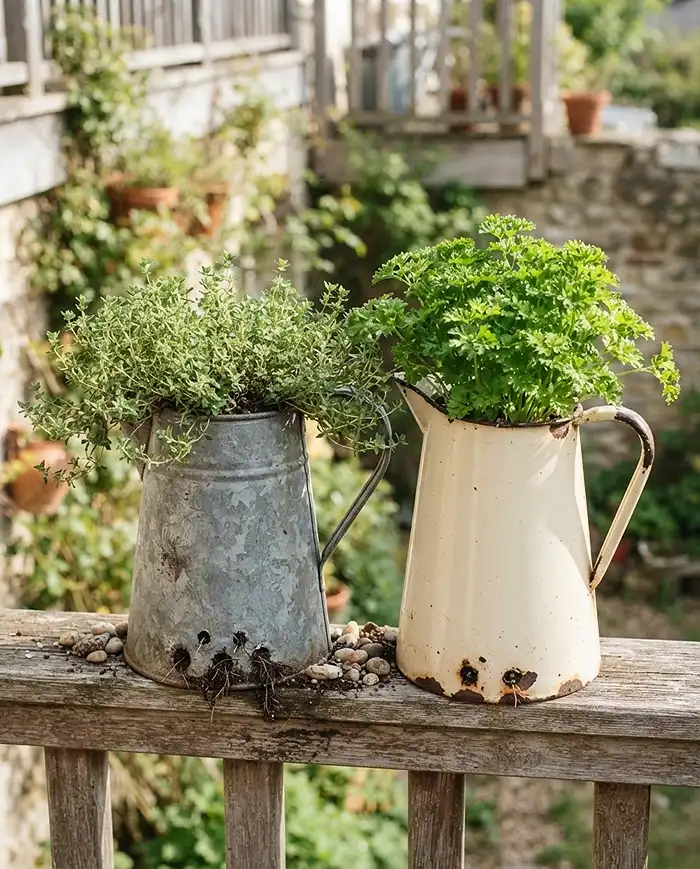
Container herbs don’t have to look like a nursery display. A handful of design-forward styles let you keep the biology right while making the whole setup look intentional.
For a full breakdown of arranging pots by height and zone, this herb garden layout guide for balconies is worth a look before you buy containers.
Vintage Galvanized Tins and Repurposed Tea Caddies
Old galvanized tins, enamelware pitchers, and vintage tea caddies give your balcony an easy cottagecore look without much cost. Thrift stores are full of them for a few dollars each.
The non-negotiable step: drill drainage holes in the bottom before you plant anything. I skipped this once with a cute enamel bucket and lost a whole round of thyme to standing water within two weeks. A 3/8-inch metal drill bit handles most tins in under a minute.
Terracotta Pots for a Warm Mediterranean Vibe
Unglazed terracotta never goes out of style, and it’s genuinely useful for drought-tolerant herbs. The porous clay lets excess moisture evaporate, which prevents the soggy roots that kill rosemary and lavender.
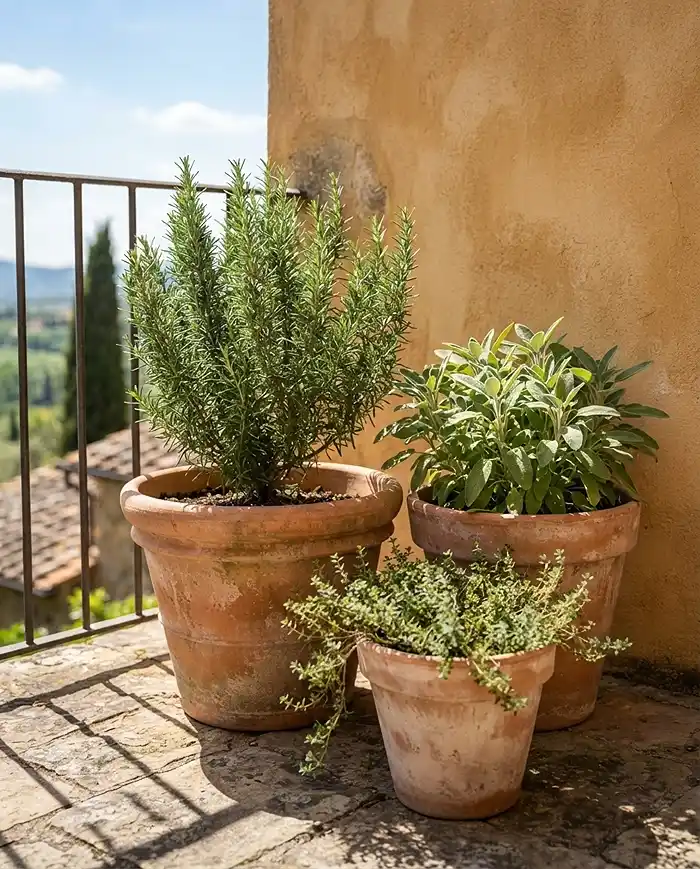
Group three or five pots in different sizes, from a 6-inch pot up to a 14-inch one, for an effortless Tuscan cluster. I run this exact setup with ‘Tuscan Blue’ rosemary, culinary sage, and creeping thyme, and it’s the lowest-maintenance corner of my whole balcony.
Macrame Hanging Baskets and Vertical Wall Pockets
When floor space is tight, look up. Macrame hangers give a soft boho look, while modular vertical wall pockets offer a cleaner, more architectural take on the same idea.
Mint is a natural fit here since hanging it keeps its aggressive roots contained and off your other plants. I hang a single ‘Chocolate Mint’ in a macrame sling by my sliding door, and it cascades nearly a foot by midsummer without ever touching soil below it.
Top Culinary Herbs That Look as Good as They Taste
Some herb varieties earn their spot on looks alone, in addition to flavor. Choosing a mix of colors and textures is what makes small-space herb gardens read as designed rather than accidental.
| Herb Variety | Best For | Watch Out For |
|---|---|---|
| ‘Dark Opal’ purple basil | Deep violet color contrast | Less cold-hardy than green basil |
| Tricolor sage | Pink and cream variegation | Needs excellent drainage |
| Creeping thyme | Trailing over railings and edges | Slow to establish the first season |
| Trailing rosemary | Draping cascades from tall pots | Prone to root rot if overwatered |
| Curly parsley | Compact, ruffled tabletop pots | Bolts fast in high summer heat |
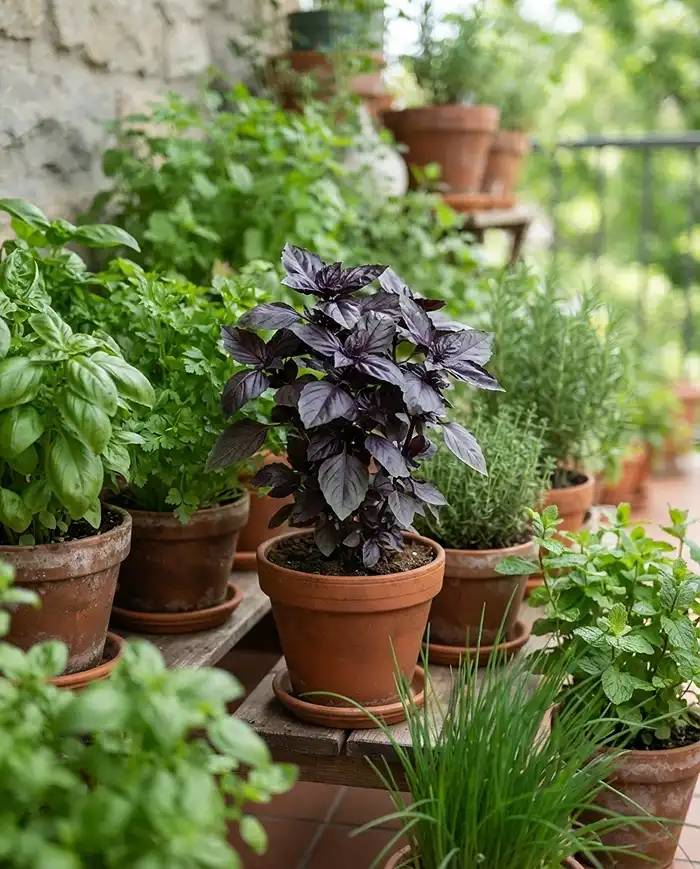
Colorful Thrillers: Purple Basil and Tricolor Sage
‘Dark Opal’ purple basil brings a deep violet that breaks up the endless green you get from a standard herb garden. Tricolor sage does similar work with pink, cream, and green variegated leaves.
I plant one purple basil in the center of an otherwise all-green terracotta grouping every summer, and it’s consistently the plant people ask about first.
Trailing Spillers: Creeping Thyme and Trailing Rosemary
Cascading herbs soften the hard, straight lines of a concrete balcony. Creeping thyme spills over a pot’s edge in a low mat, while prostrate rosemary drapes in longer, woodier trails.
I keep creeping thyme in a railing planter where it drops six to eight inches by late summer, hiding the plastic liner completely. It reads as intentional rather than like the plant is escaping its pot.
Step-by-Step Styling and Planting Guide
Start by clustering pots in odd numbers, typically threes, at slightly staggered distances rather than a straight, even row. This “rule of threes” mimics natural planting and reads as far more designed.
- Choose a color palette first: all terracotta, all white, or one accent color per group
- Mix a lightweight potting soil with 20-30% perlite for drainage and airflow
- Set your tallest pot at the back or center, then step down in height around it
- Leave 2-3 inches between pot rims so herbs have room to fill out without crowding
For a native pollinator container garden pairing herbs with flowering natives, this native flower balcony garden ideas guide covers combinations that work well together.
Maintenance Routine to Keep Your Herb Garden Aesthetic
A weekly routine keeps the “cute” factor intact instead of watching pots slide into a leggy, sunburned mess by midsummer.
Bottom-water when you can, by filling the saucer rather than pouring over the top, since this keeps soil from splashing onto leaves and pot rims. Feed with a diluted organic liquid fertilizer every two to three weeks during active growth to keep foliage a vibrant green rather than pale and stretched. According to University of Illinois Extension’s herb growing guide, most culinary herbs do best in full sun with consistently moist, well-drained soil.
Common Problems and Solutions
Two issues show up again and again on balconies: leggy, sparse growth, and messy water stains on the floor. Both have quick fixes.
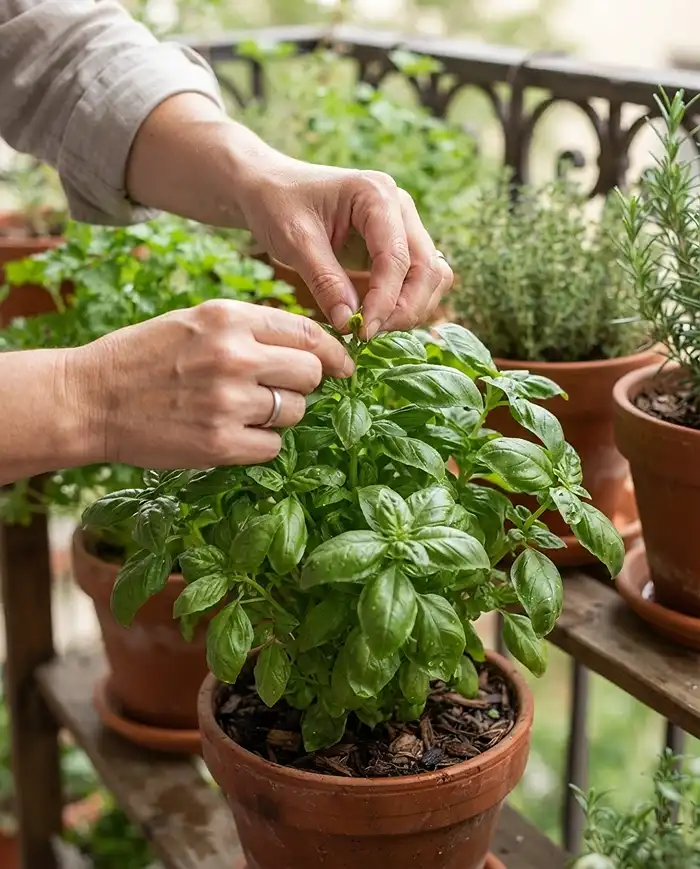
Leggy Herbs Ruining the Aesthetic
Herbs stretch and go sparse when they don’t get enough light or when nobody harvests them regularly. Both problems have the same fix: cut them back.
Pinch back the top growth nodes on basil, mint, and oregano every week or two, even if you’re not cooking with the harvest that day. This forces the plant to branch out sideways into a dense, bushy shape instead of one tall, floppy stem.
Water Stains and Messy Balcony Floors
Muddy runoff dripping onto your own floor, or worse, a neighbor’s balcony below, is one of the fastest ways to ruin a cute setup.
Use matching glazed saucer trays under every pot, and raise containers slightly on wooden “pot feet” for airflow underneath. Top-dressing the soil surface with decorative river stones also cuts down on splash-back when you water.
balcony herb garden ideas FAQs
How do I arrange herb pots to look aesthetic instead of cluttered?
Pick one cohesive color palette for your containers, such as all white or varying shades of terracotta, and group pots of different heights in odd numbers. Adding a tiered plant stand creates vertical dimension without needing more floor space.
What are the cutest small herbs to grow on a balcony?
Curly parsley, chamomile with its small daisy-like flowers, and lemon thyme all stay naturally compact and look decorative in small tabletop planters. They work especially well in a small balcony garden where space is limited.
Can I mix flowers with my balcony herbs for a cuter look?
Yes, companion planting with edible flowers like nasturtiums, calendula, or sweet alyssum adds color while attracting beneficial pollinators and helping repel pests naturally.
How often should I water a balcony herb garden?
Most container herbs need water when the top inch of soil feels dry, which is often daily in hot, windy weather and every two to three days in cooler conditions. Terracotta pots dry out faster than glazed or plastic containers.
Do balcony herb gardens attract pollinators?
Yes, letting a few herbs like basil, oregano, or thyme flower rather than constantly deadheading them turns a container herb garden into a small pollinator stop for bees, especially when paired with a few flowering companions.
Conclusion
The best balcony herb garden ideas balance real plant needs with styling you actually enjoy looking at every day. Match your herbs to your light and wind, choose containers that drain, and let a little trailing thyme or purple basil do the visual heavy lifting.
Start small with three or five pots in one color family, then expand once you see what actually thrives on your specific balcony. As of this 2026 growing season, that’s still the fastest way to a lush, low-stress setup.