

Mediterranean Balcony Plants That Love Heat
If your balcony turns into a frying pan by noon, stop fighting it. Mediterranean balcony plants actually crave that blast of sun, and a scorching spot can become your best growing asset.
I’ve grown herbs, dwarf citrus, and bougainvillea on a west-facing balcony in Phoenix, Arizona (zone 9b), for six summers now. That balcony hits 110°F+ radiant heat off the stucco wall by August, and it’s still my most productive growing space. The trick isn’t fighting the heat, it’s picking plants that evolved for exactly this: rocky, sun-baked coastlines with lean soil and long dry spells.
This guide walks through the exact plants, containers, and soil mix that turn a hostile microclimate into a fragrant, low-maintenance retreat. It’s built for anyone working with a small balcony garden and tired of watering twice a day just to keep things alive.
Table of Contents
Planning Your Heat-Tolerant Oasis
Recreating a Mediterranean coastal environment on an urban balcony isn’t just about picking pretty plants. You need to think about light intensity, radiant heat bouncing off concrete and glass, and how you lay out pots so air can actually move between them.
Get these three things right before you buy a single plant, and you’ll save yourself a season of dead rosemary and crispy lavender.
Assessing Sun Exposure and Wind
Quick Answer: Map your balcony’s light for a full day before planting. Mediterranean plants need six to eight hours of direct sun minimum, and wind exposure changes your watering math more than most people expect.
Spend one Saturday tracking sun with your phone camera, snapping a photo every hour from 8 a.m. to 6 p.m. South and west-facing balconies usually clear the six-hour bar easily. North-facing spots rarely do, and that’s a dealbreaker for true Mediterranean natives.
Wind matters just as much as light. High-floor balconies act like wind tunnels, and that constant airflow pulls moisture out of soil fast. A simple bamboo screen or woven reed fence cuts wind speed significantly and protects tender new growth on plants like bougainvillea.
Choosing the Right Containers for Hot Climates
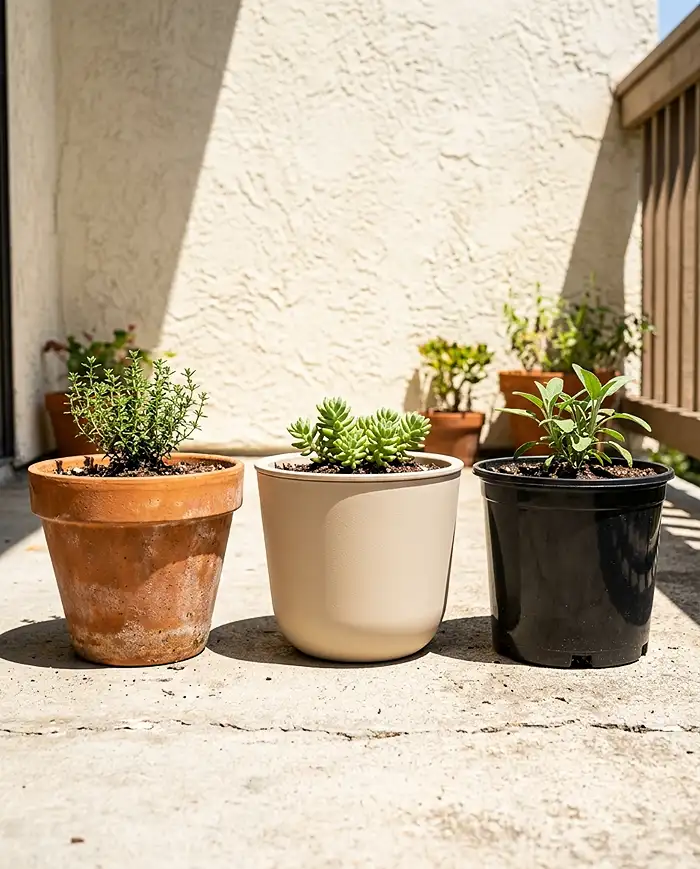
Quick Answer: Thick-walled terracotta or light-colored insulated resin pots beat black plastic every time for heat-loving plants. Dark, thin containers let root zones “bake,” which cooks roots long before the leaves show stress.
I learned this the hard way. My first year, I planted ‘Munstead’ lavender in a black plastic nursery pot left on the balcony rail. Root temps in that pot hit dangerous levels by 2 p.m., and the plant collapsed within three weeks despite regular watering. The soil itself was cooking.
- Terracotta: breathable, heavy, wicks excess moisture away from roots
- Light-colored glazed ceramic: good insulation, holds moisture slightly longer
- Insulated double-walled resin: lightweight for upper-floor balconies, reflects heat
- Avoid: black plastic, thin metal, anything under 12 inches deep for shrubs
Best Mediterranean Balcony Plants for Full Sun
Once your containers and layout are sorted, it’s time for the fun part. These are foolproof performers that combine culinary use, fragrance, and serious visual impact, and every one of them thrives in confined container life.
Aromatic Herbs: Lavender, Rosemary, and Thyme
Quick Answer: ‘Munstead’ lavender, ‘Tuscan Blue’ rosemary, and creeping thyme are the three most reliable heat-loving herbs for compact containers. All three need lean, sandy, nutrient-poor soil to concentrate their essential oils.
| Herb | Container Size | Watch Out For |
|---|---|---|
| ‘Munstead’ Lavender | 12-inch, unglazed terracotta | Root rot in rich, moisture-retentive soil |
| ‘Tuscan Blue’ Rosemary | 14-inch, upright growth habit | Needs staking after year two |
| Creeping Thyme | 8-inch or as a living edge | Spreads fast, trim monthly |
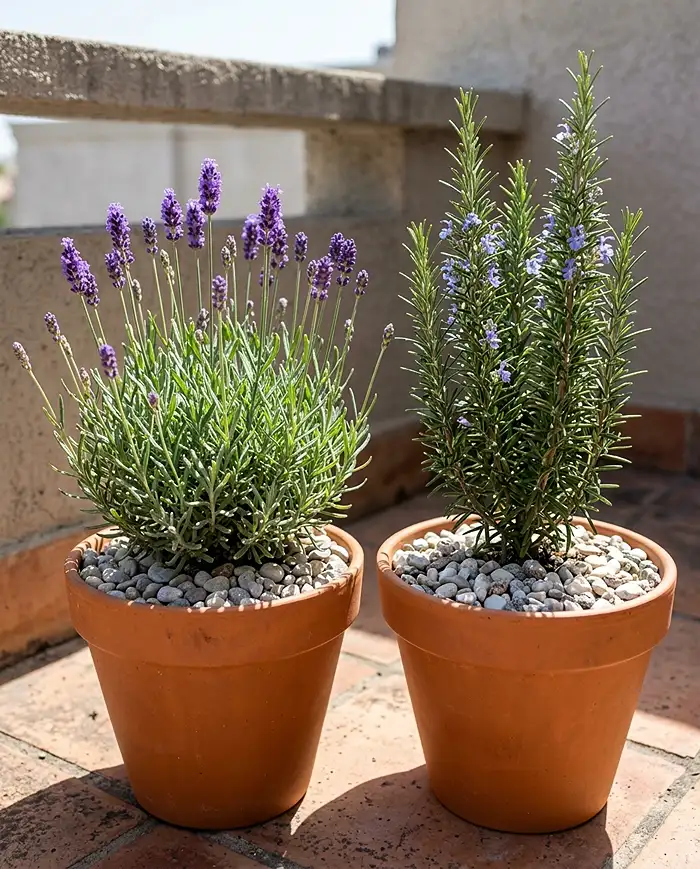
Pro Tip: Rich potting soil actually mutes the fragrance of these herbs. Mix in extra sand or grit rather than adding compost, and you’ll get noticeably stronger scent and flavor by midsummer.
Vibrant Flowers: Bougainvillea, Pelargoniums, and Lantana
Quick Answer: Bougainvillea, pelargoniums (often called geraniums), and lantana bloom hardest when you stress them slightly with infrequent watering. Constant moisture pushes leafy growth instead of flowers.
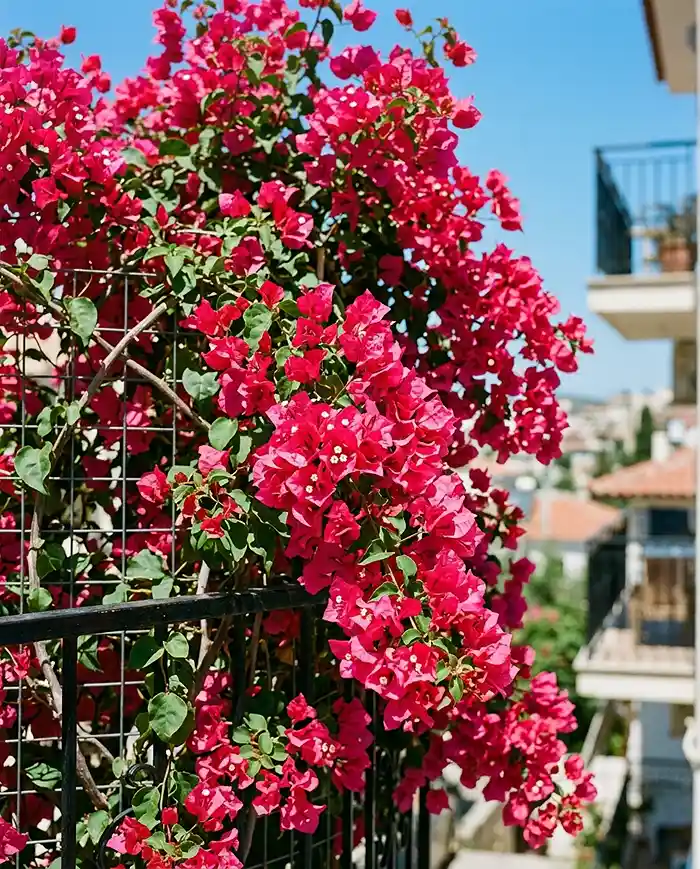
Bougainvillea is the showstopper here. Mine climbs a trellis against the balcony rail and drops watering to once a week during peak summer, which sounds counterintuitive but triggers the heaviest bloom flush of the year. Give it weekly water and it sulks into green leaves with almost no color.
Real Example: In my second summer, I babied a lantana with daily watering out of guilt. It grew huge and leafy but produced maybe a dozen flower clusters all season. The following year I cut watering to twice weekly, and it bloomed continuously from May through October.
Foliage and Trees: Dwarf Citrus and Olive Trees in Pots
Quick Answer: Dwarf Meyer lemon and ‘Arbequina’ olive trees both do well in 15 to 20 gallon containers as structural focal points. Both need a container with excellent drainage and a spot with reflected heat.
Look for citrus grafted onto dwarfing rootstock, sold this way, so it stays compact instead of trying to become a 15-foot tree in a pot. ‘Arbequina’ olives are self-fertile, which matters a lot on a balcony where you won’t have a second tree for cross-pollination.
Both need protection below roughly 30°F. If you’re in a marginal zone, plan on moving these indoors or wrapping the container during hard freezes, since container roots run colder than in-ground roots.
Essential Supplies and Custom Soil Mix
Quick Answer: Mix standard potting soil with coarse sand, pumice, or perlite at a 2:1 ratio to mimic the rocky, fast-draining terrain these plants evolved in. Skip water-retaining crystals entirely.
- Bagged potting soil (peat-free if you can find it)
- Coarse builder’s sand or horticultural grit
- Pumice or perlite for extra drainage
- Light-colored gravel for top dressing
- Slow-release, low-nitrogen organic fertilizer
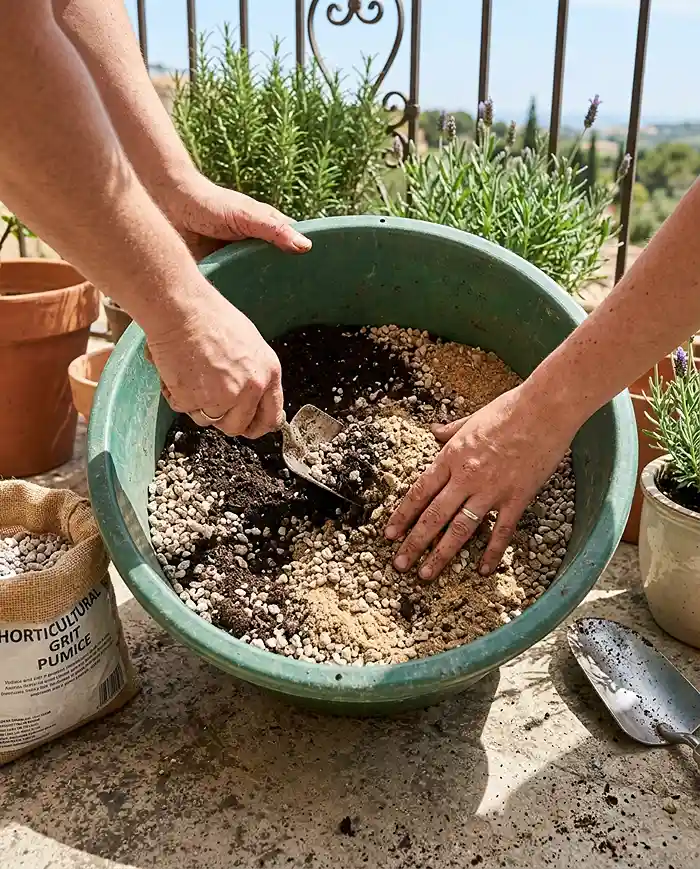
This mix drains within seconds of watering, which is exactly what these Mediterranean balcony ideas depend on. Standard bagged soil alone holds too much water and invites root rot within a season.
Step-by-Step Planting and Staging Guide
Quick Answer: Pot up in early spring once nighttime temps stay above 50°F, and finish every container with a light gravel top dressing to reflect UV rays and slow surface evaporation.
Start with a layer of broken terracotta shards or coarse gravel at the pot’s base for drainage insurance. Add your sand-amended soil mix, settle the root ball at the same depth it sat in the nursery pot, and backfill firmly without compacting the soil.
Finish with an inch of light gravel or crushed shell on top. This single step does double duty: it reflects harsh afternoon UV away from the soil surface, and it slows moisture loss so you’re not watering constantly through July and August.
Seasonal Maintenance: Watering and Feeding in the Heat
Quick Answer: Use the “soak and dry” method: water thoroughly until it runs from drainage holes, then let the top two inches dry out completely before watering again. Feed with a low-nitrogen organic fertilizer monthly during active growth.
Skip the daily light sprinkle habit. It trains roots to stay shallow and near the surface, which is exactly where heat damage happens first. A deep, infrequent soak pushes roots down into cooler, more stable soil.
For fertilizer, avoid high-nitrogen blends. They push soft, leafy growth that wilts fast in direct heat and attracts aphids. A balanced, low-nitrogen organic feed keeps growth slow, sturdy, and naturally more pest-resistant.
Common Problems and Solutions
Two issues show up again and again with arid-climate plants in restricted balcony containers. Catch them early and both are fully reversible.
Overwatering and Root Rot
Quick Answer: Yellowing leaves at the base of the plant plus a mushy, blackened stem near the soil line mean root rot from overwatering. Trim away all mushy roots and repot immediately in a heavily aerated grit mix.
Pull the plant, rinse the root ball gently, and cut back any roots that look brown or slimy rather than firm and white. Repot into fresh, gritty soil in a container with generous drainage holes, and hold off watering for several days.
Scorched Leaves During Extreme Heat Waves
Quick Answer: Normal afternoon wilting recovers by evening; sunburn shows as permanent brown, papery patches that don’t bounce back. A 30% shade cloth during heat waves prevents most scorch damage.
If you see crispy brown patches that stay crispy overnight, that’s sunburn, not thirst. Move containers away from heat-reflecting glass doors, which can nearly double the effective temperature a plant experiences, and drape shade cloth during multi-day heat waves above 105°F.
You can check your area’s average extreme temperatures and first/last frost dates using the official USDA Plant Hardiness Zone map before deciding which plants can handle your specific balcony conditions year-round.
mediterranean balcony plants FAQs
How often should I water Mediterranean plants on a sunny balcony?
Check soil moisture at a two-inch depth with your finger or a moisture meter. Most Mediterranean balcony plants need a deep soak every three to five days during peak summer, not frequent shallow daily watering.
Can Mediterranean plants survive winter in pots?
Container roots run about one USDA zone colder than in-ground roots due to exposure on all sides. Wrap pots in horticultural fleece for hardy herbs, and move frost-tender citrus indoors or to a sheltered spot when temps drop below 30°F.
Do I need to prune my potted olive and citrus trees?
Yes, prune in late winter before new growth starts. Remove crossing interior branches to keep an open, compact canopy that lets light and air reach the center, which improves fruiting and reduces pest and disease issues.
What is the best balcony direction for Mediterranean plants?
South or west-facing balconies are ideal since they get the most direct sun exposure. East-facing balconies can work for less intense sun-lovers like thyme, but full Mediterranean shrubs need at least six hours of direct light.
Why is my lavender leggy and not blooming?
Leggy, sparse lavender usually means too much nitrogen fertilizer or not enough direct sun. Cut back feeding, move the pot to your sunniest spot, and prune lightly after each bloom flush to keep growth compact.
Key Takeaways
A hot, sun-baked balcony isn’t a limitation for apartment gardening, it’s the exact condition Mediterranean balcony plants need to thrive. Get the container, soil, and watering rhythm right and the rest takes care of itself.
- Choose terracotta or light-colored insulated pots over black plastic to protect roots from baking
- Mix potting soil with sand or pumice at a 2:1 ratio for the fast drainage these plants demand
- Water deeply but infrequently, letting the top two inches dry out between soakings
- Stress-flower species like bougainvillea and lantana on purpose to maximize bloom
- Check your winter hardiness zone before committing to frost-tender citrus or olive trees
For more balcony garden ideas on pairing colors and textures, keep exploring.
If you’re working around a lease, check out these renter-friendly patio garden ideas for container setups you can take with you when you move.