
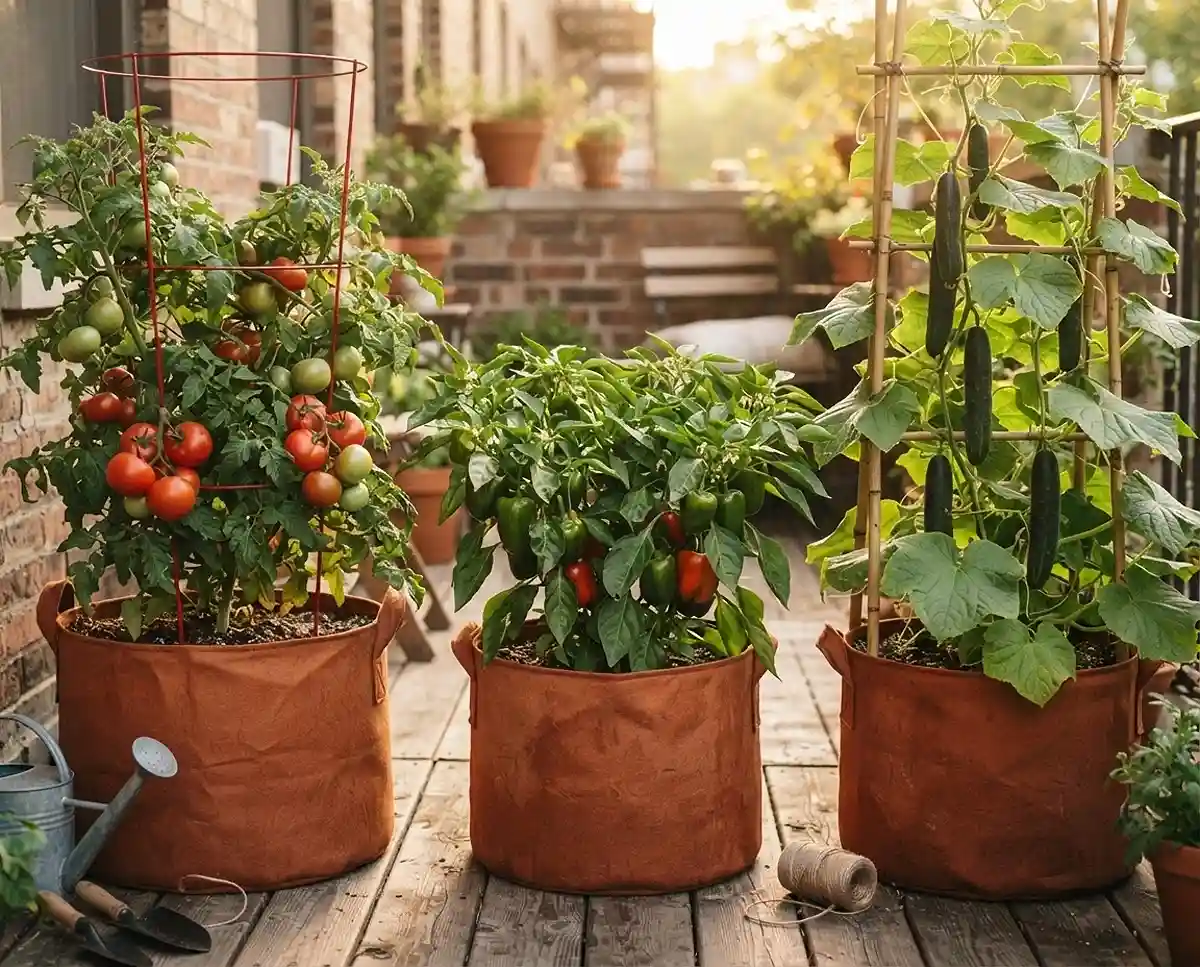
Best Pot Size for Tomatoes Peppers and Cucumbers
Picking the best pot size for tomatoes, peppers, and cucumbers is the single biggest factor in whether your container harvest thrives or limps along all summer.
I grow all three every year on a south-facing concrete patio in zone 6b, and I’ve killed enough plants in undersized pots to know exactly where people go wrong. This guide gives you the real numbers, not vague “big pot” advice.
Table of Contents
Why Pot Size Makes or Breaks Your Harvest
Tomatoes, peppers, and cucumbers are fruiting crops, which means they’re working overtime compared to lettuce or herbs. They need room to build a root system big enough to support flowers, fruit set, and weeks of continuous production.
A pot that’s too small dries out fast, runs out of nutrients, and stunts root growth before the plant ever gets a chance to fruit heavily. I learned this the hard way with a ‘Better Boy’ tomato I crammed into a 10-inch pot my first season. It lived, barely, and gave me maybe six small tomatoes total.
Get the size right from the start and you skip that whole disappointing cycle. It’s the cheapest insurance you’ll buy for your vegetables in pots.
How Pot Size Affects Fruiting Vegetables
These three crops behave differently from leafy greens or herbs once you put them in a container. Their root systems, water demands, and nutrient appetite are all bigger, and the pot has to keep up.
Root Systems of Tomatoes, Peppers, and Cucumbers
Tomatoes send roots down 18 to 24 inches in open ground, and even in a container they’ll fill every inch you give them. Cucumbers develop a fast, sprawling root mass to fuel their vining growth. Peppers are more compact but still need real depth to anchor a plant loaded with fruit. Cramped roots mean a cramped plant, full stop.
How Pot Size Impacts Water, Nutrients, and Yield
Small pots hold less soil, which means less water reserve and fewer available nutrients. On a 90degree day, a 5-gallon pot can dry out in hours, stressing the plant right when it’s trying to set fruit.
That stress shows up as blossom drop, smaller fruit, and fewer harvests overall. Undersized containers are one of the top reasons tomatoes in pots underperform compared to the same variety in the ground.
Quick Pot Size Chart for These Three Crops
Here’s the fast reference. These numbers reflect what I use myself and match standard container gardening guidance from university extension programs.
| Crop | Minimum Size | Ideal Size | Minimum Depth |
|---|---|---|---|
| Tomatoes (determinate) | 5 gallons | 10-15 gallons | 12 inches |
| Tomatoes (indeterminate) | 10 gallons | 20-25 gallons | 18 inches |
| Peppers | 3 gallons | 5-10 gallons | 12 inches |
| Cucumbers (bush) | 5 gallons | 7-10 gallons | 12 inches |
| Cucumbers (vining) | 10 gallons | 15-20 gallons | 16 inches |
For a broader look at sizing across other crops, check our full pot size guide for vegetables.
Best Pot Size for Tomatoes
Tomatoes in pots need the most room of these three crops, and the exact size depends heavily on the type you’re growing.
Minimum vs. Ideal Pot Size by Tomato Type
Quick Answer: Determinate or “bush” tomatoes do fine in a 10 to 15-gallon pot, while indeterminate, vining tomatoes need 20 to 25 gallons to really produce.
- Determinate varieties like ‘Roma’ or ‘Celebrity’ stay compact and fruit once, so a 10-gallon pot (about 15 inches wide) works well
- Indeterminate varieties like ‘Better Boy’ or ‘Sungold’ keep growing and fruiting all season, and need 20+ gallons to sustain that
- Dwarf patio types like ‘Tiny Tim’ can succeed in as little as 3 to 5 gallons
Depth, Support, and Drainage Needs
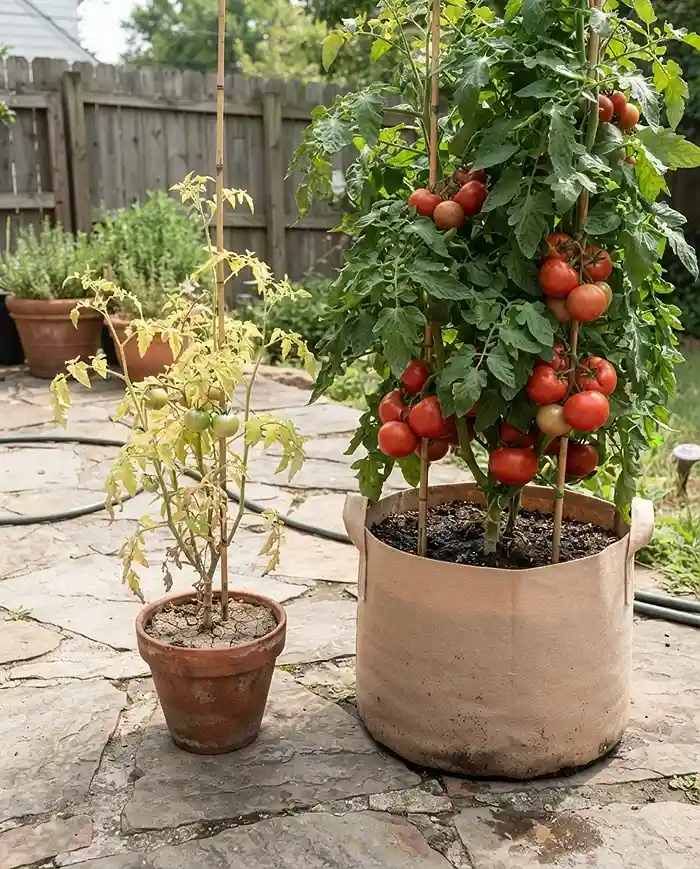
Aim for at least 12 inches of depth for determinate types and 18 inches for indeterminate ones. Tomatoes are heavy feeders, so the pot needs enough volume to hold moisture between waterings without staying soggy.
Always use a pot with multiple drainage holes, and plan for a cage or stake from day one. A top-heavy indeterminate tomato in a lightweight pot will tip over in wind, which I’ve watched happen to a neighbor’s ‘Cherokee Purple’ more than once.
Real Example: I moved my ‘Sungold’ from a 10-gallon grow bag to a 20-gallon one in July last season after it stalled out. Fruit production doubled within three weeks.
Best Pot Size for Peppers
Peppers in containers are more forgiving on space than tomatoes, but size still directly affects yield.
Pot Size for Sweet vs. Hot Peppers
Quick Answer: Sweet peppers like bell peppers need 5 to 10 gallons per plant, while compact hot peppers like jalapeños or ‘Thai Chili’ can thrive in 3 to 5 gallons.
| Pepper Type | Recommended Pot Size |
|---|---|
| Bell peppers | 7-10 gallons |
| Jalapeño, serrano | 3-5 gallons |
| Habanero, Thai chili | 3-5 gallons |
Depth, Spacing, and Support
Give peppers at least 12 inches of depth. One plant per pot is the rule for best yields, since crowding two peppers together splits the root zone and cuts fruit size on both plants.
A short stake or small cage helps once the plant is loaded with fruit, especially for top-heavy bell peppers in containers.
Real Example: I grew three ‘Carmen’ bell pepper plants in one large 20-gallon tub one year to save space. Every plant produced fewer, smaller peppers than the single plants I grew in 7-gallon pots the season before.
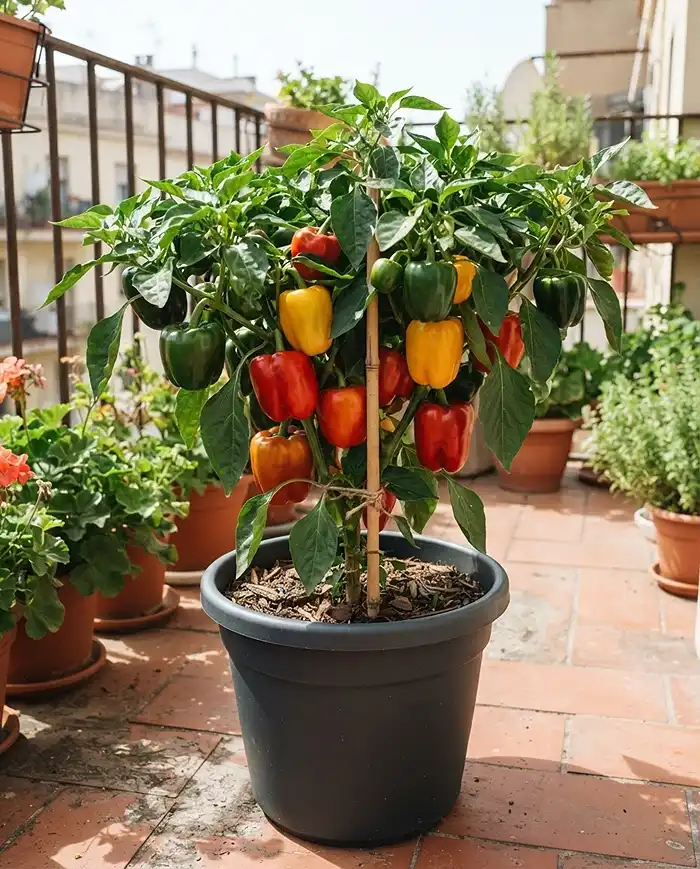
Pro Tip: Dark-colored pots heat up the root zone fast in full sun, which peppers actually enjoy more than tomatoes or cucumbers do.
Best Pot Size for Cucumbers
Cucumber in containers can be one of the most productive crops on a balcony if you match the pot to the growth habit.
Pot Size for Bush vs. Vining Cucumbers
Quick Answer: Bush cucumber varieties like ‘Bush Champion’ need 5 to 10 gallons, while vining types like ‘Marketmore 76’ need 15 to 20 gallons and a trellis.
- Bush types stay under 2 feet and suit a 7-gallon pot around 14 inches wide
- Vining types can stretch 6 feet or more and need a bigger root zone plus vertical support
- One plant per pot avoids the root competition that stunts fruit size
Depth, Trellising, and Drainage
Cucumbers drink a lot of water, so depth matters as much as width here. Go at least 12 inches deep for bush types and 16 inches for vining ones.
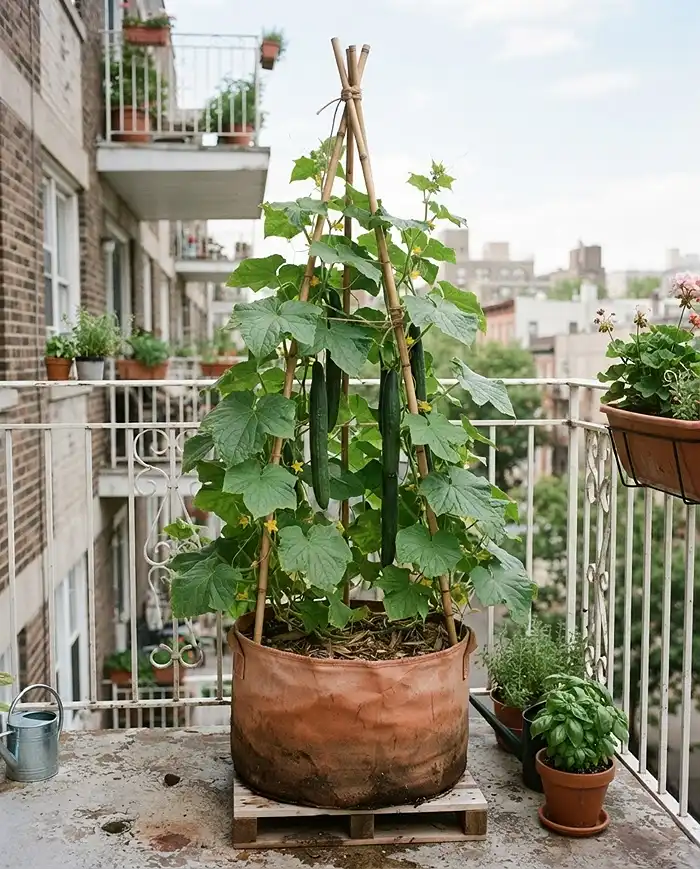
Add a trellis or cage at planting time so roots aren’t disturbed later, and make sure drainage holes are generous since cucumbers hate sitting in soggy soil.
Real Example: My ‘Marketmore 76’ in a 15-gallon pot with a simple bamboo trellis gave me cucumbers every two to three days through most of August 2025.
Tools and Materials You’ll Need
- Pots sized per the chart above, with drainage holes (fabric grow bags work great for tomatoes and cucumbers)
- Quality potting mix, not garden soil, which compacts and drains poorly in containers
- Tomato cages, stakes, or a small trellis depending on the crop
- Balanced slow-release fertilizer plus a liquid feed for the season
- Saucers or pot feet to manage drainage on patios and balconies
How to Pot These Crops Correctly
Getting the planting process right matters almost as much as pot size itself.
Preparing the Container and Soil
Check that your pot has at least three or four drainage holes before filling it. Use a lightweight potting mix formulated for containers, and leave about an inch of headspace at the top so water doesn’t run straight off when you irrigate.
Planting, Spacing, and Adding Support
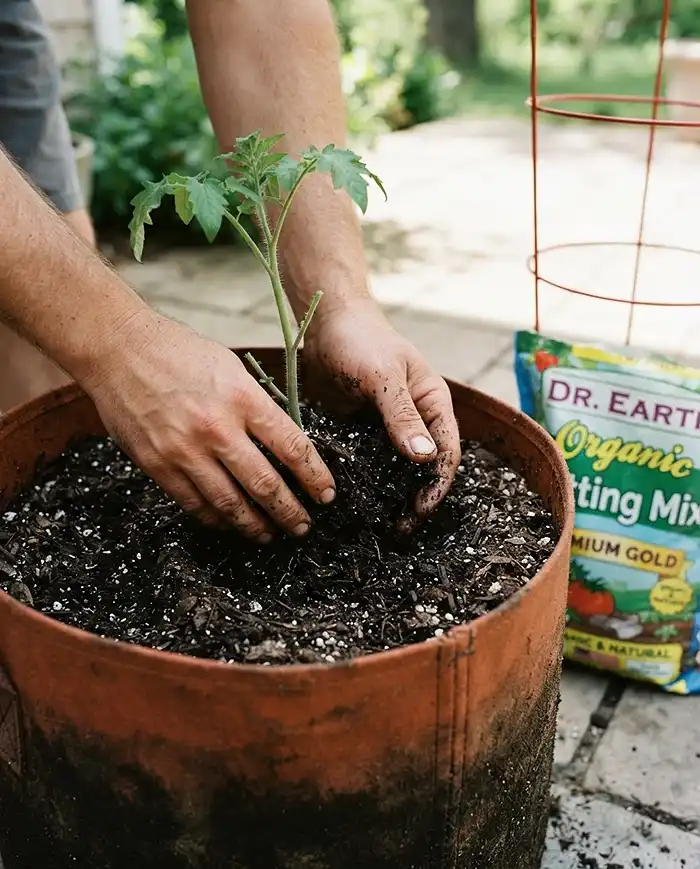
Plant tomatoes deep, burying two-thirds of the stem to encourage extra roots along the buried section. Peppers and cucumbers go in at the same depth they were in their nursery pot.
Stick to one plant per container for all three crops, add your cage, stake, or trellis right away, and water thoroughly until it runs from the drainage holes.
Care Tips for Container-Grown Fruiting Crops
Once planted, these heavy feeders need consistent attention to keep producing.
Watering and Feeding for Fruit Production
Check soil moisture daily in summer, watering when the top inch feels dry. Feed every two to three weeks with a balanced liquid fertilizer once flowering starts, since container nutrients deplete faster than in-ground soil.
Upsizing Pots When Plants Outgrow Them
Watch for roots poking through drainage holes, wilting between waterings even with damp soil, or stalled growth midseason. Any of these mean it’s time to move up to the next pot size, ideally before the plant is fully stressed.
For crops you might rotate in after your summer harvest winds down, see our list of vegetables to plant in late summer in pots.
Common Problems and Solutions
Stunted Growth or Poor Fruiting From Small Pots
Cramped roots can’t support heavy fruiting, so plants stall out and produce less than they should. Upsize to the next container size as soon as you notice slowed growth.
Wilting and Blossom Drop From Drying Out
Undersized pots lose moisture fast, and repeated drought stress causes flowers to drop before fruit even forms. Switch to a larger pot and water more consistently, ideally with a daily check in peak summer.
Toppling Top-Heavy Plants
Tall, fruit-loaded tomatoes and vining cucumbers can tip over, especially in lightweight pots. Use heavier containers, add stakes early, and place pots against a wall or railing when possible.
best pot size for tomatoes peppers and cucumbers FAQs
What size pot do tomatoes need?
Determinate tomatoes need at least a 10 to 15-gallon pot, while indeterminate tomatoes need 20 to 25 gallons to support their continuous growth and fruiting through the season.
Can peppers and cucumbers share a pot?
No, each plant should have its own container. Sharing a pot splits the root zone between plants, which reduces fruit size and overall yield for both crops.
How deep should pots be for these vegetables?
Tomatoes need 12 to 18 inches of depth depending on type, peppers need at least 12 inches, and cucumbers need 12 to 16 inches depending on whether they’re bush or vining varieties.
What happens if I use too small a pot for tomatoes?
Tomatoes in undersized pots develop cramped roots, dry out quickly, and often show stunted growth, blossom drop, and reduced fruit production compared to properly sized containers.
Do vining cucumbers need a trellis in containers?
Yes, vining cucumber varieties need a trellis or cage in their container to support their growth, save space, and keep fruit off the soil for cleaner harvests.
Conclusion
The right pot size for tomatoes, peppers, and cucumbers comes down to matching container volume to each plant’s root system and growth habit.
Size up rather than down whenever you’re unsure, keep drainage solid, and pair your pot size with consistent watering and feeding. For pairing options that make the most of your container space, check our guide to companion plants for containers. You can also find more detailed sizing benchmarks from the University of Maryland Extension’s container gardening guide.
Key Takeaways
- The best pot size for tomatoes, peppers, and cucumbers ranges from 3 gallons for compact peppers to 25 gallons for indeterminate tomatoes
- Depth matters as much as width: aim for 12 to 18 inches depending on the crop
- One plant per pot produces better yields than crowding multiple plants together
- Undersized containers cause blossom drop, stunted growth, and lower harvests
- Upsize pots midseason if you notice roots at the drainage holes or fast wilting