
small space garden layout with containers Using Just 5 Pots
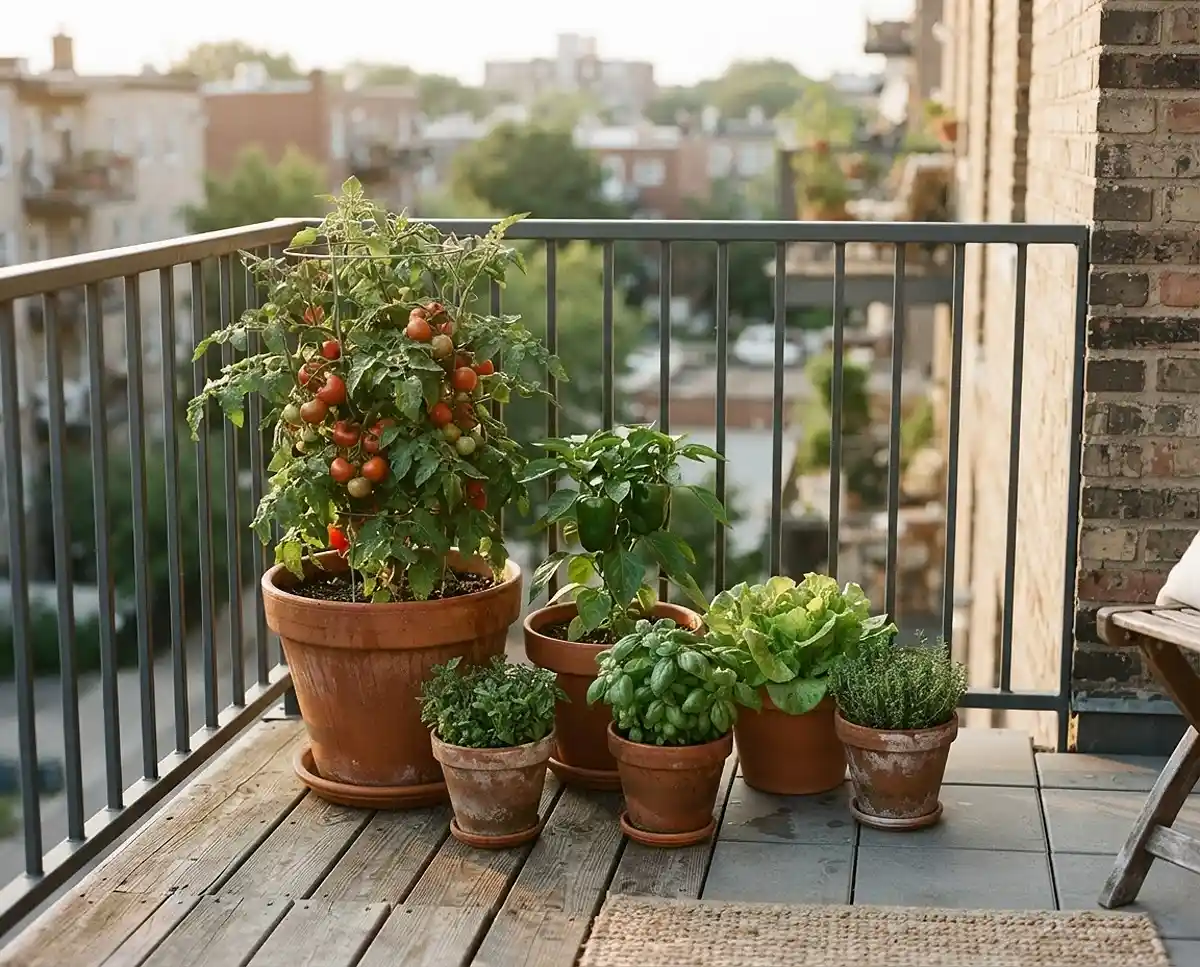
A small space garden layout with containers doesn’t have to feel like a compromise. I’ve run five pots on a 6×4-foot zone 6b balcony for three seasons, and it’s enough for real container gardening, not just a token herb pot.
Table of Contents
Why a 5-Container Layout Works Perfectly for Small Spaces
Five containers hit a sweet spot. It’s enough room to grow something to eat, something that smells good, and something that just looks nice, without turning your patio into an obstacle course.
I started with three pots my first year and felt like something was missing. I added two more the next spring, and suddenly I had tomatoes, herbs, and flowers instead of just one sad tomato plant fighting for its life.
Five is also the ceiling most small space gardening setups can handle before watering becomes a chore. Any more, and daily care starts eating into your evening instead of being the relaxing part of it.
Plan Your 5-Container Layout
Before you buy a single pot, walk your space with a tape measure. I skipped this step my first year and ended up with a container blocking my own door for two months before I moved it.
Measuring Space and Mapping Placement
Measure the full floor area and any railing space separately. On my balcony, that’s 24 square feet of floor plus 8 linear feet of railing, which effectively doubled my usable growing space.
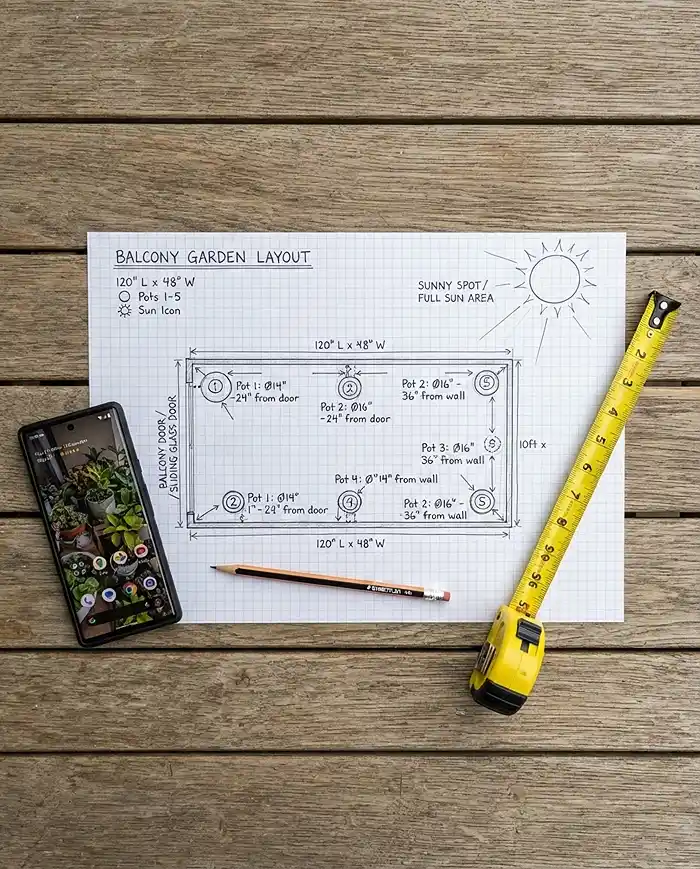
Leave at least 24 inches of clear walking path. Sketch a rough grid on paper or your phone, marking doors, vents, and the spot where the sun actually hits, not where you assume it does.
Assessing Light, Access, and Weight Limits
Track sunlight for one full day before committing to a layout. I thought my east corner got full sun; it turned out to get four hours, which is fine for lettuce but not for peppers.
Keep every container within arm’s reach of your hose or watering can. Check your building’s weight limit too. Most residential balconies handle 50 to 100 pounds per square foot, but a soaked 20-inch pot alone can weigh close to 100 pounds, according to University of Maryland Extension.
Choosing Your 5 Containers
The right mix of containers is what separates a real garden layout from five random pots scattered around a patio. Think in terms of roles: an anchor, a few workhorses, and a couple of fillers.
Varying Sizes and Heights for Depth
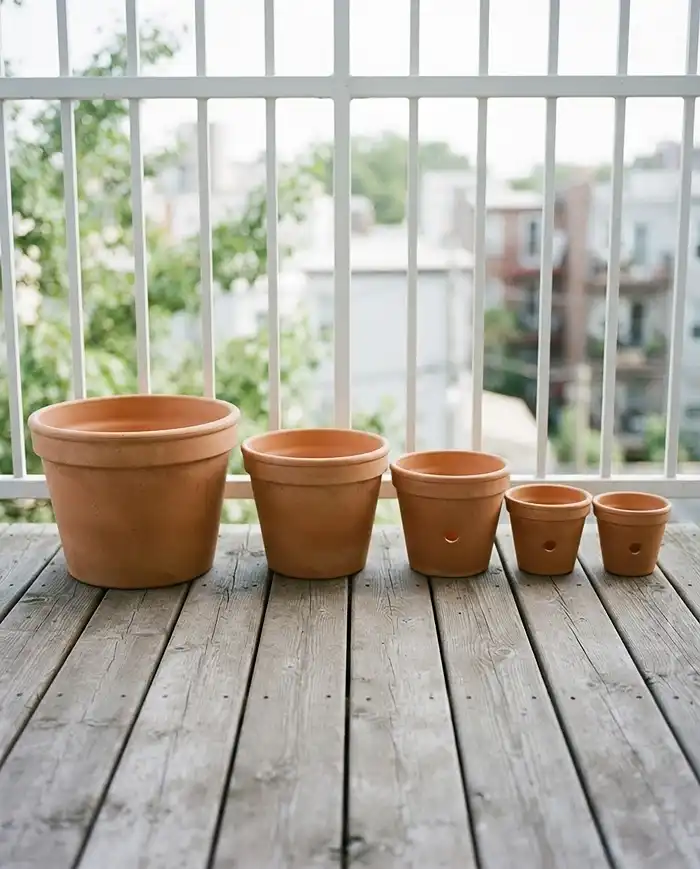
Use one large container (16 to 20 inches), two medium (12 to 14 inches), and two small (8 to 10 inches). The size gap is what creates visual depth instead of a flat row of matching pots.
- Large container: anchor plant like a dwarf tomato or small shrub
- Medium containers: peppers, greens, or a mixed flower planting
- Small containers: herbs, trailing plants, or seasonal color
Matching Material, Drainage, and Style
Every container needs drainage holes, full stop. I lost a rosemary plant in July because I used a decorative pot with none and didn’t drill it out until the roots had already rotted.
Stick to one or two materials for a cohesive look. Glazed ceramic and plastic both hold moisture better than terracotta, which dries out fast and can crack in a hard zone 6b freeze if left outside.
The Best 5-Container Layout Arrangements
Here’s how I’d match a layout style to your actual space. Small space gardening lives or dies on whether the arrangement fits the footprint you actually have, not the one in a magazine photo.
| Layout | Best For | Space Needed |
|---|---|---|
| Corner Cluster | Square patios, apartment balconies | 4×4 ft corner |
| Row and Railing | Narrow, galley-style balconies | 6-8 ft of rail or wall |
| L-Shaped/Tiered | Compact patios needing max floor space | 3×5 ft footprint |
Corner Cluster Layout
Push the large container into the actual corner, flank it with the two medium pots at a diagonal, and tuck the small ones in front. This keeps the center of your space open for a chair or foot traffic.
Row and Railing Layout
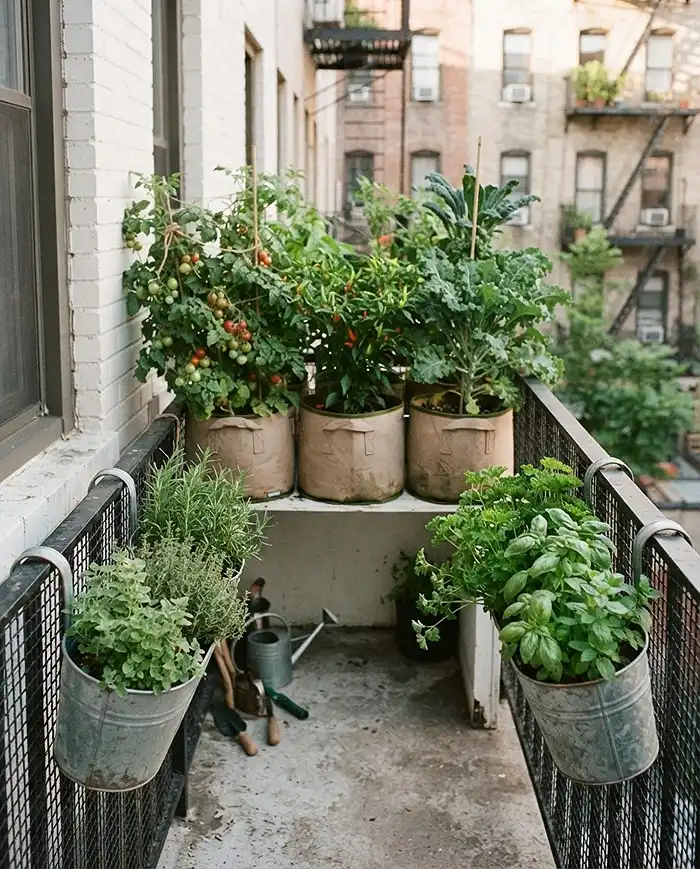
Line all five along a single wall or use railing planters for two of the smaller ones. This is what I run on my own balcony, since the floor is barely 2 feet deep at one end.
L-Shaped and Tiered Layout
Use a 2 or 3-tier plant stand to stack containers vertically along one edge, then extend a second row along the perpendicular wall. It’s the best option for tiny garden ideas on patios under 20 square feet.
What to Plant in Your 5 Containers
Match your five containers to a purpose instead of picking plants one at a time at the nursery, which is how I ended up with three basil plants and no tomato my first year.
Edible 5-Container Plan
Large pot: one ‘Patio Choice Yellow’ cherry tomato. Medium pots: ‘Cayennetta’ peppers and a cut-and-come-again lettuce mix. Small pots: ‘Genovese’ basil and a chive plant.
This combination fed my household salads and pasta toppings from June through September, with the tomato producing steadily once nighttime lows stayed above 55°F.
Flower and Mixed 5-Container Plan
Large pot: a dwarf hydrangea or small ornamental grass as your anchor. Medium pots: zinnias and marigolds for color. Small pots: trailing lobelia and a rosemary plant for scent.
Urban gardening spaces benefit from this mix because it stays colorful even in months when edibles are between plantings.
Tools and Materials You’ll Need
Keep the list short. Overbuying gear is the fastest way to make a five-container garden feel more complicated than it needs to be.
- Five containers with drainage holes, sized as outlined above
- A quality potting mix (not garden soil, which compacts in containers)
- A watering can with a narrow spout for precise pours
- Slow-release fertilizer and a liquid feed for the growing season
- Small stakes or a tomato cage for the anchor plant
How to Set Up Your 5-Container Layout
Once your containers and plants are chosen, setup takes about an hour for all five if you prep the potting mix ahead of time.
Arranging Containers for Light and Balance
Place sun-loving plants like tomatoes and peppers in your brightest spot first, then work outward. Put the tallest container toward the back or a wall so shorter plants don’t get shaded out.
Step back and look at the grouping from your main viewing angle, usually the doorway, before you commit to final positions.
Planting and Spacing Each Container
Fill each pot to within an inch of the rim with moistened potting mix. Plant at the same depth the plant sat in its nursery pot, except tomatoes, which can go deeper to grow extra roots.
Space smaller plants like basil and lettuce 6 inches apart within a container. Water everything in slowly until it runs from the drainage holes.
Caring for Your 5-Container Garden
Containers dry out faster than ground soil, so your maintenance rhythm looks different from a traditional garden bed.
Watering and Feeding Schedule
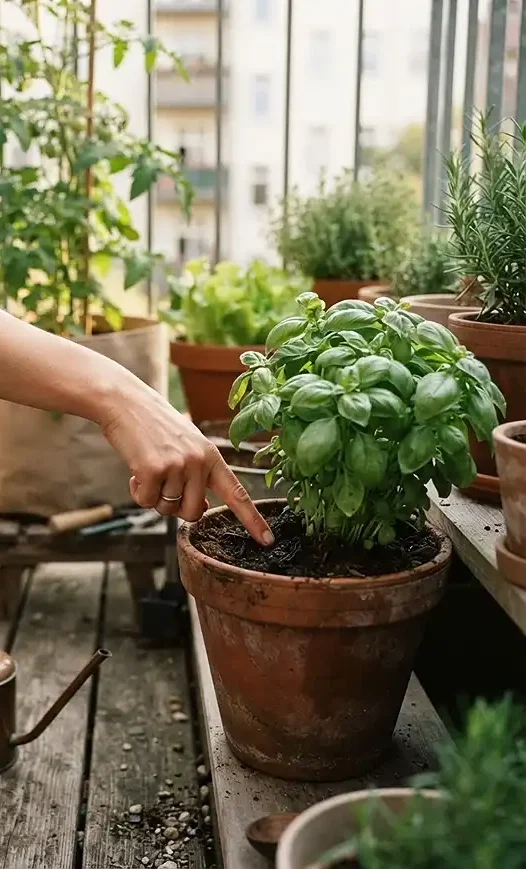
Check moisture daily by pushing a finger 2 inches into the soil. Expect to water small pots daily in summer heat and larger pots every 2 to 3 days.
Feed with a diluted liquid fertilizer every 2 weeks during active growth, alongside a slow-release granular applied at planting.
Pruning, Harvesting, and Deadheading
Deadheading, which just means pinching off spent flowers, keeps zinnias and marigolds blooming longer instead of going to seed early.
Harvest herbs and lettuce regularly. Frequent cutting encourages bushier growth rather than one big harvest followed by nothing.
Seasonal Adjustments for Your Layout
Swapping Plants and Winter Protection
Swap cool-season plants like lettuce and pansies in as spring and fall fillers once summer edibles fade. In zone 6b, I move terracotta pots against the house wall before the first hard freeze to prevent cracking.
Perennials in containers need extra insulation since roots aren’t protected by surrounding ground soil. Wrapping pots in burlap or grouping them together helps them survive winter dips as of the 2025-2026 season’s colder-than-average forecasts.
Common Problems & Solutions
Layout Feeling Cramped or Unbalanced
Vary container heights more dramatically and add 4 to 6 inches of spacing between pots. Reposition your anchor plant if it’s blocking light to smaller containers nearby.
Some Containers Drying Faster Than Others
Smaller and unglazed containers dry out first. Group similar-material pots together and check the fastest-drying ones daily rather than watering on a fixed schedule for all five.
Pests Spreading Between Containers
Inspect leaves weekly and isolate any affected plant immediately. Insecticidal soap or a strong water spray handles most aphids and spider mites before they jump to neighboring pots.
Frequently Asked Questions
How do I arrange 5 containers in a small space?
Vary container heights, group plants by sunlight needs, and place the tallest pot toward the back or a wall. Leave at least 24 inches of walking space and create one focal point with your largest container.
What should I plant in a 5-container garden?
A productive mix includes one tomato, two peppers or greens, and two herbs like basil and chives. For a mixed plan, combine a dwarf shrub, colorful annuals like zinnias, and trailing lobelia.
How much space do container plants need?
Most containers need 6 to 12 inches of clearance from walls or other pots for airflow and root growth. Keep a 24-inch path clear for access, even in a compact layout.
Can 5 containers really produce enough food for a household?
Five well-chosen containers can supply steady salad greens, herbs, and a modest tomato and pepper harvest through the growing season, though it won’t replace a full in-ground vegetable garden.
How do I keep a 5-container layout from becoming top-heavy in wind?
Use wider, lower containers for windy balconies, add a layer of coarse sand to the base of tall pots, and position the largest container against a wall for extra stability.
Conclusion
A small space garden layout with containers really just comes down to varying sizes, matching plants to light, and leaving room to walk. Start with the arrangement that fits your actual footprint.
For a ready-made version of this exact setup, check out our 5-pot container garden layout guide, browse more space-saving small garden ideas, or start from scratch with our apartment gardening guide for beginners.
Key Takeaways
- A small space garden layout with containers works best with one large anchor pot, two medium, and two small containers
- Measure floor and railing space separately before buying a single pot
- Match plants to actual tracked sunlight hours, not assumed exposure
- Check your balcony’s weight limit before filling containers with moist soil
- Corner cluster, row-and-railing, and tiered layouts each suit a different footprint