
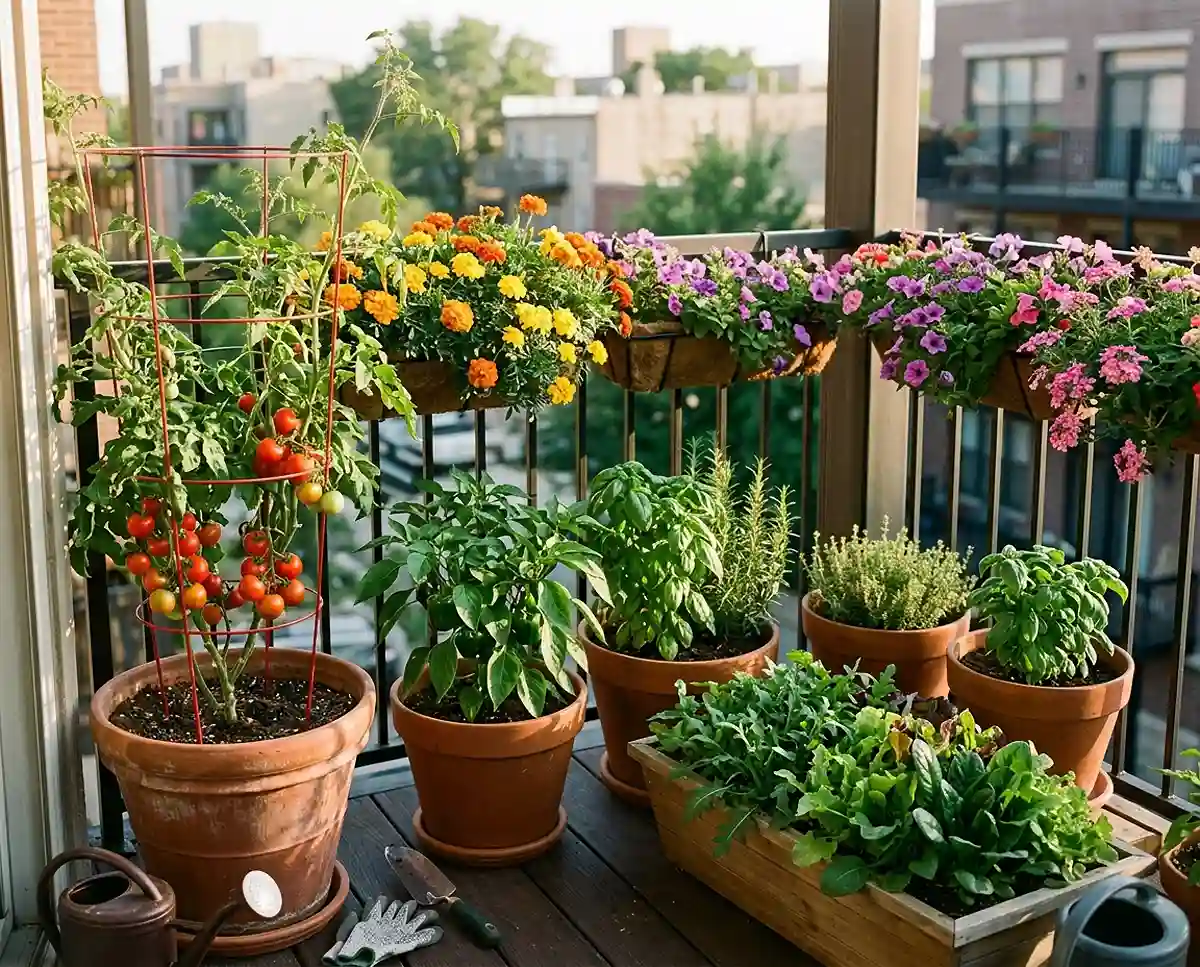
8 Container Garden Plan for Balcony
A solid container garden plan for balcony spaces doesn’t need a lot of room — it needs the right eight pots. This plan gives you a full harvest of vegetables, herbs, and flowers in a manageable, attractive setup.
Table of Contents
Why an 8-Container Plan Maximizes Balcony Productivity
Eight containers hit a sweet spot most balcony gardeners overlook. Fewer pots and you’re leaving real growing potential on the table. More pots and weekend maintenance starts eating your Sunday.
With eight well-chosen containers, you can grow tomatoes, peppers, salad greens, two herb collections, and pollinator flowers — all at once. That’s a genuine small space food garden, not just a couple of sad pots of mint.
The variety matters, too. A mix of edibles and flowers attracts pollinators, which improves yield on your fruiting crops. Container gardening at this scale becomes self-supporting in a way that two or three pots simply can’t replicate.
I’ve been growing food on a 60-square-foot north-facing balcony in zone 6b for over a decade. Eight containers is the number I keep coming back to — enough to feel abundant, small enough to actually manage.
Plan Your 8-Container Balcony Garden
Before you buy a single pot, spend a week observing your balcony. Rushing the planning stage is the fastest way to end up with tomatoes in shade and mint hogging a prime sunny corner.
Assessing Light, Space, and Weight Limits
Track sun across your balcony for at least three days. Note which spots get full sun (6+ hours), partial sun (3–6 hours), and shade. Most vegetables need full sun — this dictates your entire layout.
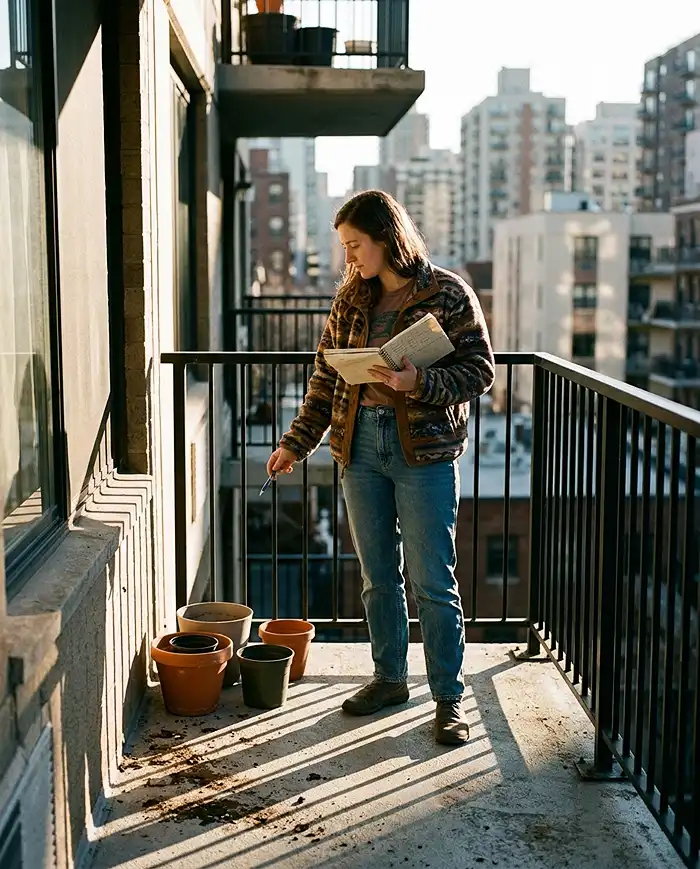
Measure your usable floor space and railing length. Eight filled containers are heavier than most people expect. A 15-gallon pot with wet soil can weigh 60–80 lbs.
Check your building’s balcony weight limit — usually listed in your lease or available from building management. As a rough rule, keep total container weight under 25 lbs per square foot.
Deciding Your Mix: Edibles, Flowers, or Both
If you have 6+ hours of direct sun, you can run a mostly edible layout — tomatoes, peppers, beans, greens, and herbs. That’s the plan we’re building here.
With only 3–5 hours of sun, swap the tomato container for more salad greens or leafy herbs like parsley and cilantro, which tolerate partial shade better than fruiting crops.
Either way, keep at least one or two containers for flowers. Pollinator-friendly blooms like nasturtiums and marigolds aren’t decorative extras — they directly improve your vegetable yield through better pollination.
Choosing Your 8 Containers
The right containers make container vegetable gardening dramatically easier. Wrong pot sizes stunt crops, dry out too fast, or crack in winter. Get this part right and everything else follows.
Varying Pot Sizes and Depths by Crop
Match depth to root requirements. Deep-rooted crops — tomatoes, peppers, beans — need at least 12 inches of soil depth, ideally more. Tomatoes do best in 15-gallon containers (minimum 14 inches deep).
Shallow-rooted crops like lettuce, spinach, and most herbs are happy in 6–8 inch deep containers. This also means lighter pots, which helps with weight limits on upper-floor balconies.
- Tomatoes: 15-gallon container, 14–18 inches deep
- Peppers: 5-gallon container, 12 inches deep
- Bush beans: 12-inch wide, 10-inch deep window box or round pot
- Salad greens: 8-inch deep planter, any width
- Mediterranean herbs: 8–10 inch pot, 8 inches deep
- Moisture-loving herbs: 8–10 inch pot, 8 inches deep
- Pollinator flowers: 10-inch pot or railing planter
- Trailing flowers: 8-inch hanging basket or rail planter
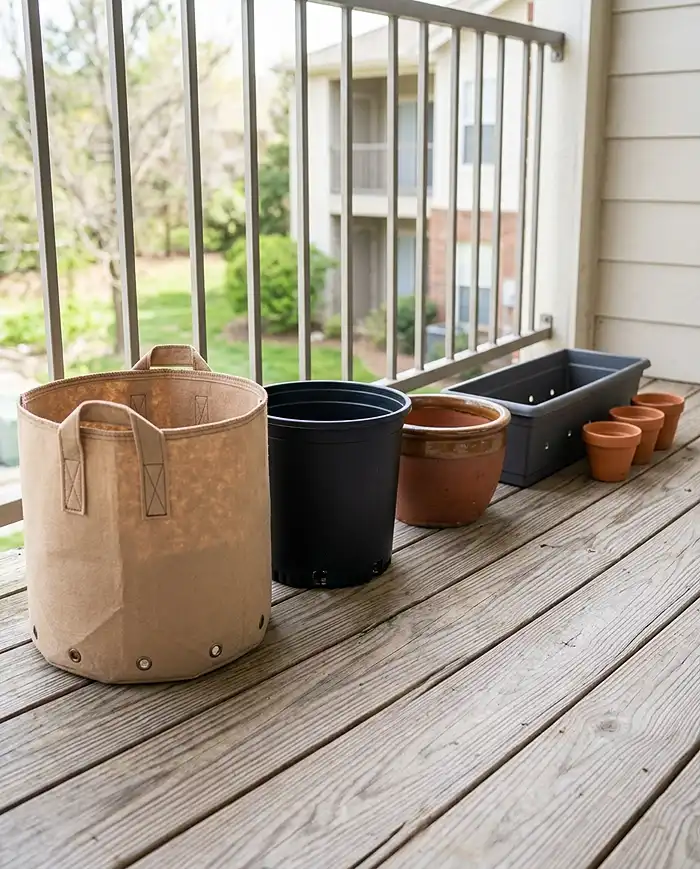
Material, Drainage, and Placement
Lightweight plastic and fabric grow bags are ideal for balconies — they’re easier to move and gentler on weight limits. Terracotta looks great but is heavy and dries out fast, which means more watering on hot days.
Every single container must have drainage holes. No exceptions. Roots sitting in waterlogged soil rot within days. If you love a decorative pot without holes, use it as a cachepot with a plastic nursery pot inside.
Place sun-hungry pots near the railing or brightest exposure first, then fill in with shade-tolerant crops. Check out these railing planter ideas if you want to maximize vertical space along your balcony edge.
The Productive 8-Container Plan
Here’s the ready-to-copy plan. Each container has a job. This layout assumes a south- or west-facing balcony with 6+ hours of sun. Adjust sun placement if your exposure differs.
| Container | Plant(s) | Pot Size | Sun Needed |
|---|---|---|---|
| 1 | Determinate tomato (e.g., ‘Patio’ or ‘Bush Early Girl’) | 15 gallon | Full sun |
| 2 | Sweet peppers (e.g., ‘Pepperoncini’ or ‘Baby Belle’) | 5 gallon | Full sun |
| 3 | Bush beans (e.g., ‘Provider’ or ‘Contender’) | 12-inch round | Full sun |
| 4 | Salad mix (cut-and-come-again lettuce + spinach) | 8-inch deep planter | Partial to full |
| 5 | Mediterranean herbs (basil, thyme, oregano) | 10-inch pot | Full sun |
| 6 | Moisture-loving herbs (parsley, cilantro, chives) | 10-inch pot | Partial sun |
| 7 | Pollinator flowers (marigolds, nasturtiums) | 10-inch pot | Full sun |
| 8 | Trailing flowers (calibrachoa, bacopa, sweet potato vine) | 8-inch rail planter | Full to partial |
Containers 1-4: Vegetables and Fruiting Crops
Container 1 (Tomato): Choose a determinate variety like ‘Patio’ or ‘Bush Early Girl’ — they stay compact and don’t need aggressive pruning. Plant one per 15-gallon pot and install a cage at planting, not after the plant flops.
Container 2 (Peppers): Peppers are slower than tomatoes but incredibly productive once they hit their stride. ‘Baby Belle’ produces sweet mini peppers all summer. One plant per 5-gallon pot is plenty.
Container 3 (Bush Beans): Direct sow ‘Provider’ seeds 2 inches apart in a 12-inch pot. They germinate fast, produce for 3–4 weeks, then you pull them and resow for a second flush.
Container 4 (Salad Greens): This is your cut-and-come-again workhorse. Mix looseleaf lettuce and spinach seeds, scatter them across the surface, and harvest outer leaves once they hit 4 inches. Resow every 3 weeks.
Containers 5-6: Herbs
Group herbs by water needs — it’s the single most useful thing you can do for container herb gardening. Mixing basil with parsley sounds logical but they want different conditions.
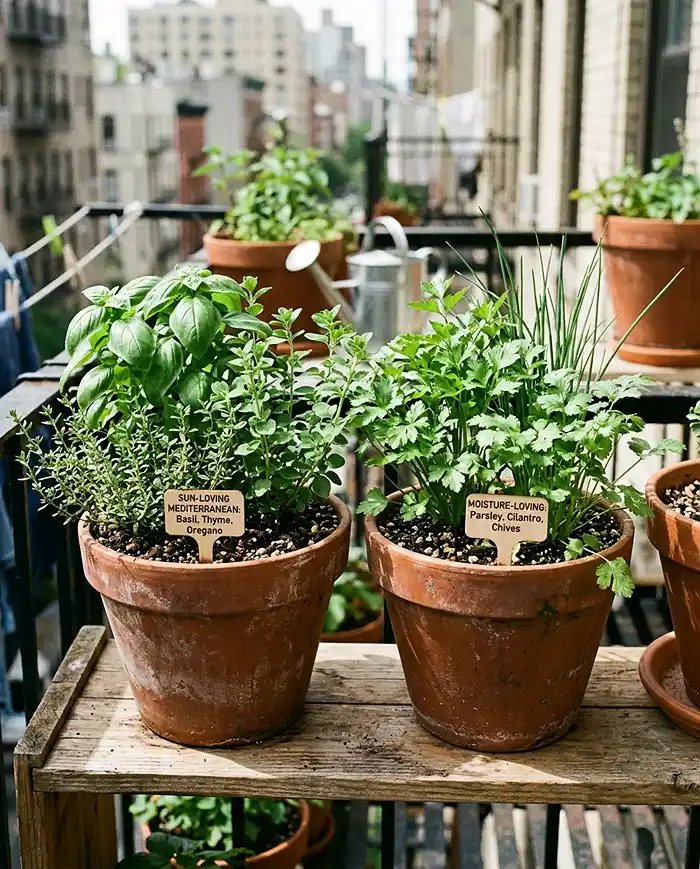
Container 5 (Mediterranean herbs): Basil, thyme, and oregano all want full sun and excellent drainage. Let the soil dry slightly between waterings. These will bolt and rot if kept too wet.
Container 6 (Moisture-loving herbs): Parsley, cilantro, and chives prefer more consistent moisture and tolerate partial shade better than their Mediterranean cousins. Place this pot in a slightly shadier spot if your balcony has one.
Containers 7-8: Flowers and Pollinator Plants
Flowers earn their space in a productive balcony garden. Marigolds and nasturtiums in Container 7 attract bees to your tomatoes and peppers — I saw a measurable improvement in tomato set once I added them in 2022.
Container 7 (Pollinators): French marigolds (‘Bonanza’ series) plus a nasturtium or two. Nasturtiums also deter aphids, which is a bonus on a balcony where pests can’t easily disperse.
Container 8 (Trailing flowers): Calibrachoa or bacopa in a railing planter softens the look of the whole garden and adds color at eye level. These need deadheading [removing spent flowers] every week or two to keep blooming.
Tools and Materials You’ll Need
You don’t need a garage full of gear. Here’s what actually earns its keep in a balcony container garden:
- Potting mix: Use a quality peat- or coco-based potting mix, not garden soil. Garden soil compacts in pots and blocks drainage. Look for mixes with perlite already added.
- Slow-release fertilizer: Mix granules like Osmocote into your potting mix at planting. This feeds crops for 4–6 months with zero effort.
- Liquid fertilizer: A balanced liquid feed (e.g., fish emulsion or a 5-5-5) for weekly feeding during peak summer growth, especially for tomatoes and peppers.
- Tomato cage: Install at planting in Container 1. Trying to add a cage after the plant is established does more harm than good.
- Watering can or hose wand: A wand with a gentle rose head gets water to the soil without blasting seeds out of shallow containers.
- Hand trowel and pruners: The two tools you’ll actually use every single week.
For a deeper look at keeping this all manageable week to week, the low-maintenance small space gardening routine is worth reading before you start.
How to Set Up Your 8-Container Garden
Setup order matters more than most guides admit. Get containers placed before they’re filled — a 15-gallon pot with wet soil is not something you want to drag across a balcony.
Arranging Containers for Light and Access
Place tall crops — your tomato and any staked plants — at the back of the balcony or against a wall. This keeps them from shading shorter pots and blocks wind without cutting airflow entirely.
Sun-lovers (tomato, peppers, Mediterranean herbs, flowers) go in your brightest spots, closest to the railing if that’s where the direct sun hits. Shade-tolerant pots (salad greens, moisture herbs) fill the gaps behind or in corners.
Leave at least 12 inches between containers so you can reach in for harvesting and pruning without knocking anything over. Cramped containers also reduce airflow, which invites fungal problems.
Planting and Spacing Each Container
Fill each container to within 1–2 inches of the rim with potting mix. Mix in slow-release fertilizer granules per the package rate — typically 1 tablespoon per gallon of soil.
For transplants (tomato, peppers, herbs), dig a hole slightly deeper than the root ball. For tomatoes, bury the stem up to the lowest leaves — roots will form along the buried stem and the plant will be stronger for it.
For seeds (beans, salad greens, nasturtiums), follow depth guidelines on the packet. Most vegetable seeds go in at a depth equal to twice their diameter. Water in gently but thoroughly after planting — until water drains from the holes.
Caring for Your 8-Container Garden
Containers need more attention than in-ground gardens. There’s no soil buffer to hold moisture or nutrients — it’s all on you. Build a simple routine and it takes about 20 minutes a day at peak season.
Watering and Feeding Schedule
In summer heat, most containers need daily watering. Stick your finger 1 inch into the soil — if it’s dry, water. Small shallow pots dry out faster than deep ones, so check herb and salad containers first.
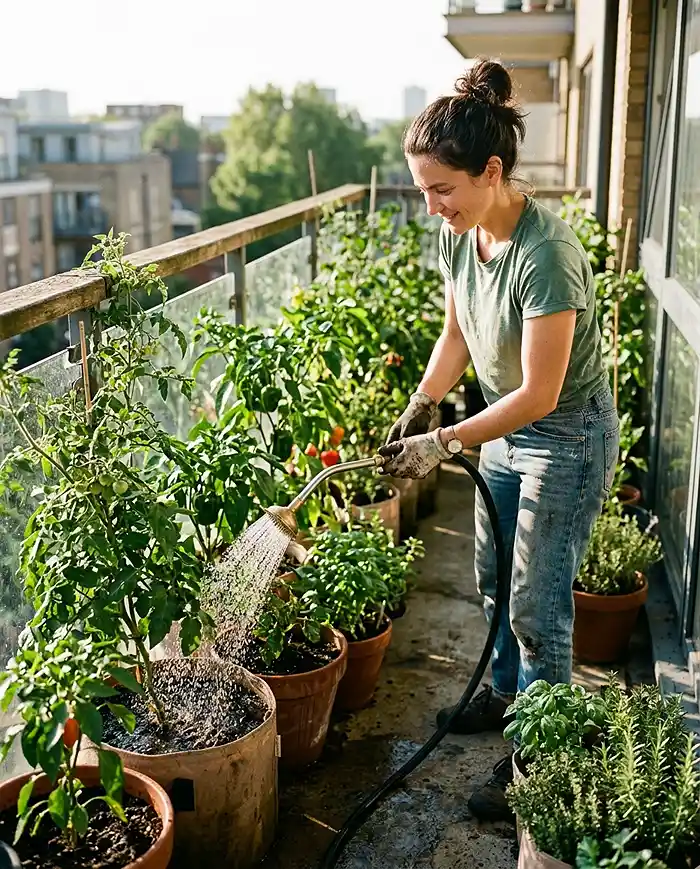
Water until it runs freely from the drainage holes. Shallow watering encourages roots to stay near the surface, making plants more drought-sensitive over time.
Feeding cadence: Tomatoes and peppers are hungry — feed with liquid fertilizer every 7–10 days once flowering starts. Herbs and flowers need feeding every 2 weeks. Salad greens are light feeders; once a month is enough.
Pruning, Harvesting, and Succession Planting
For tomatoes, pinch off suckers [the shoots that grow in the crotch between stem and branch] weekly. This redirects energy to fruit development and keeps the plant from outgrowing its cage.
Harvest salad greens, herbs, and beans frequently — this triggers more production. Leaving mature beans on the plant signals it to stop flowering. Pick every 2–3 days at peak season.
When your bush bean container finishes (around 3–4 weeks of harvest), pull the spent plants and direct-sow a fresh batch. This is succession planting, and it’s the difference between 4 weeks of beans and 12.
Seasonal Plan Adjustments
This plan runs best from late spring through early fall, but with small adjustments you can extend it significantly in both directions.
Spring Setup and Winter Protection
In zone 6b, I start salad greens outdoors in Container 4 from mid-April, but I wait until after last frost (around May 15) to transplant tomatoes and peppers. Starting too early with warm-season crops is one of the most common balcony gardening mistakes.
As temperatures drop in fall, move tender herbs and pepper plants indoors to a bright windowsill — they’ll continue producing through early winter. Tomatoes are done once temperatures fall below 50°F consistently at night.
After frost kills off the summer crops, replant Containers 3 and 4 with cold-hardy greens like kale, arugula, or spinach. These handle light frost and extend your harvest into November in most temperate zones.
Empty and store lightweight plastic pots over winter. Terracotta and ceramic pots can crack if left with wet soil through a freeze cycle — either bring them in or dump the soil and leave them dry.
Common Problems and Solutions
Running eight containers means you’ll occasionally have one underperforming. Here’s how to troubleshoot fast instead of losing the whole season.
Some Containers Underperforming
Quick Answer: An underperforming container usually has one of three problems — not enough light, inconsistent water, or nutrient depletion. Check each factor in that order before assuming it’s the plant.
Move the pot to a brighter spot for one week and observe. If it perks up, light was the issue. If not, check whether it dried out completely between waterings (roots may be damaged) or if it hasn’t been fed in over three weeks.
Uneven Watering Across Containers
Quick Answer: Small pots and unglazed terracotta dry out much faster than large plastic or fabric containers. Check each pot individually rather than watering everything on a fixed schedule.
On hot or windy days, a 6-inch herb pot can go from moist to bone dry in under 12 hours. Group smaller pots together to reduce moisture loss through evaporation and shade each other slightly.
Pests Spreading Between Containers
Quick Answer: On a balcony, aphids and spider mites spread quickly between containers. Inspect the undersides of leaves every few days and treat with insecticidal soap at first sign.
Spray affected plants with a 1% neem oil solution early morning, coating stems and leaf undersides. Repeat every 5–7 days for three applications. Isolate the affected container if pests are severe to slow the spread.
Frequently Asked Questions
What should I plant in a balcony container garden?
A productive balcony container garden works best with a mix of fruiting vegetables (tomatoes, peppers), fast-growing crops (salad greens, bush beans), culinary herbs grouped by water needs, and at least one pollinator flower like marigolds or nasturtiums. This combination gives you food, flavor, and better yields through improved pollination.
How many containers can a balcony hold?
Most balconies safely support 6–10 containers, but the real limit is structural weight capacity, not floor space. A 15-gallon pot with wet soil weighs 60–80 lbs. Check your building’s load rating — typically found in your lease — and aim to stay under 25 lbs per square foot as a conservative rule.
How do I keep multiple containers watered easily?
Group containers close together to reduce evaporation, prioritize self-watering pots for the smallest and fastest-drying containers, and consider a simple drip irrigation kit connected to an outdoor tap with a timer. This cuts daily watering to a quick check rather than a full routine.
Can I grow vegetables in pots on a shaded balcony?
Yes, but your crop selection changes significantly. Swap tomatoes and peppers for salad greens, spinach, kale, parsley, and cilantro — all of which tolerate 3–5 hours of indirect light. Fruiting crops need 6+ hours of direct sun to produce reliably.
What potting mix is best for container vegetable gardening?
Use a quality peat- or coco-based potting mix with perlite already blended in. Never use garden soil in containers — it compacts, drains poorly, and introduces pests. Add a slow-release granular fertilizer at planting and supplement with liquid feed during the growing season.
Key Takeaways
- A container garden plan for balcony spaces works best with eight containers spread across vegetables, herbs, and flowers — enough variety to be productive, small enough to stay manageable.
- Track sunlight for at least three days and check your balcony’s weight limit before buying a single pot. This step saves a lot of frustration later.
- Match pot depth to root needs: 15 gallons for tomatoes, 5 gallons for peppers, 8-inch depth for greens and herbs. Wrong pot size is the most common reason containers underperform.
- Group herbs by water needs — Mediterranean herbs (dry) separate from parsley and cilantro (moist). This one habit makes watering faster and prevents both rot and drought stress.
- Succession plant your bush bean and salad green containers every 3 weeks to keep harvests coming all season instead of a single flush in early summer.
For more ideas on arranging and expanding your setup, the 5-pot container garden layout guide is a great starting point if you want to scale down first, and the small space gardening ideas roundup has inspiration for making even a compact balcony feel like a proper kitchen garden.